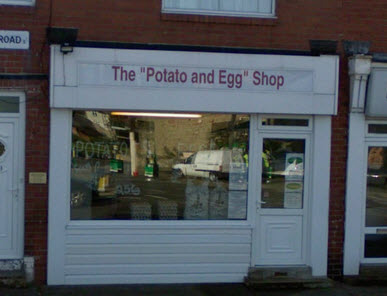
Posted by: Jack Henry | May 21, 2014

Editor’s Corner: Different From or Different Than?

Over the past year or so, I’ve received several emails asking me if the term “different than” is incorrect. Apparently, many of you were taught that you should always use “different from” in your writing and speech. I guess I missed that class or it wasn’t my teacher’s pet peeve. Here is what I’ve found on the topic and I’d like to share it with all of you inquiring minds.

Different From vs. Different Than

Indeed, the standard, most common phrase is different from. The advice of many grammarians is to avoid different than like the plague. (Okay, they might not be quite so adamant about it.) There also seems to be a continental divide as far as this topic goes. While different from is preferred in both America and Great Britain, Americans also use different than, and Brits use different to. (See Oxford Dictionaries for more information.)

Here are a few examples of the two in action:

· Her performance during the final game was different from any of the regular games; she was quick, aggressive, and made every basket.

· His hair was different from his father’s in two ways: it was lighter and curlier.

· It is no different for Frenchmen than it is for Belgians. (Using different…from makes this phrase awkward: It is no different for Frenchmen from the way it is for Belgians.)

So, your safest bet is to use different from. Here is a little tidbit on the topic from Grammar Girl’s Quick and Dirty Tips for Better Writing, by Mignon Fogarty:

Different from is preferred to different than. I remember this by remembering that different has two f’s and only one t, so the best choice between than and from is the one that starts with an f.

Squiggly knew he was different from the other snails.

Kara Church

Technical Editor, Advisory

619-542-6773 | Ext: 766773

www.symitar.com

NOTICE: This electronic mail message and any files transmitted with it are intended
exclusively for the individual or entity to which it is addressed. The message,
together with any attachment, may contain confidential and/or privileged information.
Any unauthorized review, use, printing, saving, copying, disclosure or distribution
is strictly prohibited. If you have received this message in error, please
immediately advise the sender by reply email and delete all copies.


Posted by: Jack Henry | May 20, 2014

Editor’s Corner: Social Media Vocabulary – R

Good morning! I see light at the end of the social media tunnel! I’m sure there must be a few words with “Q” out there, but according toBuilding Brand Character’s list, they didn’t deserve the attention. Let’s pick up where we left off, with the letter “R”:

· Reciprocal Link
(link exchange, link partner) Two sites which link to each other. Search engines usually don’t see these as high value links, because of the reciprocal and potentially incestuous nature.

· Reddit
A social news site built upon a community of users who share and comment on stories.

· Redirect
Any of several methods used to change the address of a landing page such as when a site is moved to a new domain, or in the case of a doorway.

· Regional Long Tail
(RLT) A multi-word keyword term that contains a city or region name. Especially useful for the service industry. [KC – Not to be confused with New England’s long-tailed weasel.]

· Retweet
When someone on Twitter sees your message and decides to re-share it with his or her followers. A retweet button allows them to quickly resend the message with attribution to the original sharer’s name.

· robots.txt
A file in the root directory of a website use to restrict and control the behavior of search engine spiders.

· ROI
(Return on Investment) One use of analytics software is to analyze and quantify return on investment, and thus cost/benefit of different schemes.

· RSS Feed
(Really Simple Syndication) A family of web feed formats used to publish frequently updated content such as blogs and videos in a standardized format. Content publishers can syndicate a feed, which allows users to subscribe to the content and read it when they please, and from a location other than the website.

· RSS Reader
Allows users to aggregate articles from multiple websites into one place using RSS feeds. The purpose of these aggregators is to allow for a faster and more efficient consumption of information.

Kara Church

Technical Editor, Advisory

Posted by: Jack Henry | May 16, 2014

Editor’s Corner: Amount and Number

The same day I sent out the email about less and fewer, I was in a meeting and heard someone say amount when they should’ve said number. I wrote it down for a future discussion topic, drew a few doodles, and realized that both sets of words cause confusion because of the same thing: the difference between count nouns and non-count (mass) nouns. Today we’ll have a quick look at number and amount, along with a few examples of each.

Number

This should be fairly easy to remember—number is used with count nouns. For example, paperclips, teeth, sombreros, and puppies are count nouns.

· A number of boys were at the bonfire; all of them dressed as Eddie Munster. (You can count boys so you use the word number.)

· We saw a flock of seagulls at the beach. Most of them were light grey, a number of them were white, and one was light brown. (It may be tough, but you can count seagulls—just don’t look up with your mouth open.)

Amount

Use amount for non-count nouns. For example, whiskey, anger, and sand are non-count nouns.

· You could see a small amount of blue sky peeking through the black clouds of smoke from the fires. (Since you cannot count “sky,” use the word amount.)

· The rescue crew was generous; they provided an ample amount of water for each family. (As I mentioned the other day, you can count gallons of water, or cups of milk, but in this case water is a non-count noun and requires that the word amount be used as the quantifier.)

Amount can also be a little tricky. Sometimes it is acceptable to use amount to refer to plural count nouns considered as an aggregate, usually encompassing large numbers of something. For example:

· I consider any amount of our tax dollars spent on this project to be a waste. (You can count dollars, but in this case we’re considering everyone’s tax dollars altogether and using the word amount is okay.)

I wish you all a good weekend. Stay cool!

Disclaimer: Spelling and grammar below not approved for human use.

Kara Church

Technical Editor, Advisory

Posted by: Jack Henry | May 15, 2014

Editor’s Corner: Social Media Vocabulary – O & P

We’re more than half-way through the alphabet with our social media vocabulary. Today is a two-for-one deal; you get the letters “O” and “P” from Building Brand Character.

· Organic Link
Organic links are those that are published only because the webmaster considers them to add value for users. [KC – They are grown without pesticides and because of this, they may not be as attractive as the shiny, waxed non-organic links, but they taste much better.]

· Organic Search Results
The search engine results that are not sponsored, or paid for in any way.

· PageRank
(PR) A value between 0 and 1 assigned by the Google algorithm, which quantifies link popularity and trust among other (proprietary) factors.

· Permalink
An address or URL of a particular post within a blog or website. [KC – Not to be confused with permafrost, a thick layer of soil that remains frozen all year.]

· Podcast
A non-streamed webcast and series of digital media files, either audio or video, that are released episodically and often downloaded through an RSS feed.

· PPA
(Pay Per Action) Very similar to Pay-Per-Click except publishers only get paid when clicks result in conversions.

· PPC
(Pay-Per-Click) a contextual advertisement scheme where advertisers pay ad agencies (such as Google) whenever a user clicks their ad.

Kara Church

Technical Editor, Advisory

619-542-6773 | Ext: 766773

www.symitar.com

NOTICE: This electronic mail message and any files transmitted with it are intended
exclusively for the individual or entity to which it is addressed. The message,
together with any attachment, may contain confidential and/or privileged information.
Any unauthorized review, use, printing, saving, copying, disclosure or distribution
is strictly prohibited. If you have received this message in error, please
immediately advise the sender by reply email and delete all copies.
Posted by: Jack Henry | May 14, 2014

Editor’s Corner: Fewer and Less

Hello, good morning, and howdy-do to you!

Today is going to be a flash-back Wednesday, to cover something I’ve discussed before: the misuse of the words fewer and less. I’m not sure why it irks me so much—maybe because it is so prevalent in the media and our everyday life. Here are a few reminders for you if you are confused by this dynamic duo.

Fewer

Fewer is used with count nouns. Count nouns are, well, things you can count. For example, dogs, butterflies, beach balls, waves, and trains are count nouns.

· I have 10 packages of Peeps®. I’m going to go into the line for “12 Items or Fewer.” (Yes! Fewer! You can count the number of grocery items you have. Since items are countable, we should use the word fewer.)

· Fewer than 65 people showed up to the Measlepalooza vaccination event. (People can be counted, so we use the word fewer.)

Less

Less is used with non-count (or “mass”) nouns. Non-count nouns are—yes, you’ve got it—things you can’t count. For example, wood, oxygen, water, sunshine, and happiness are non-count nouns.

· Around 1:00 p.m., there is less shade on this side of the building. (Shade is not something you can count; therefore, we use the word less to quantify it.)

· After Jim performed six cannon balls, there was less water in the pool. (While you can measure water in cups or liters, water itself is not countable and is used with the word less. The same applies to milk and other liquids. You can have a glass of milk, but once you spill it, there is less milk in your glass than you started with. Glass is a countable noun; milk is a non-count noun.)

Exceptions

God bless America! Of course there are exceptions to the rule; this is English. These exceptions include phrases about time, money, and distance.

· It will take you less than ten minutes to get to my house.

· We paid less than $10 for a mule ride to the bottom of the valley.

· “Less than two miles until we reach Rabbit Ridge,” said Mr. Pendlebottom.

You will be fairly safe if you keep with the general rule of using fewer with things you can count, and less with things you can’t count. Memorize the time, space, and money exceptions, and you’ll be golden.

The best punishment ever!

Kara Church

Technical Editor, Advisory

Posted by: Jack Henry | May 13, 2014

Editor’s Corner: Great Resources for JHA Writers

This Editor’s Corner is specifically for my dear co-workers (and maybe some of you smart alecks who are not so dear). J

I have something for all of you who write material for Jack Henry & Associates. The Springfield group has put together a delightful page here, with links to several documents that will help you throughout your day. (An alternate path is to go to JHA Today à Departments à Documentation à JHA Editing Services SharePoint à Consult Style Resources.)

The links include:

· Trademark List – A list of JHA products and services and the correct way to capitalize, spell, and trademark items.

· Corporate Standards – A comprehensive guide to the standards we use to provide the look of one company.

· JHA Style Guide for Technical Communication and Training – Grammar, punctuation, terminology, and wording standards for technical publications, documentation, and training throughout the company. For those of you out there who have asked me for a company writing resource, this is it. It will help with basic guidelines, phrasing, and keep you up-to-date with company standards.

· Corporate Templates – JHA Banking, ProfitStars, Symitar, and JHA Corporate Word templates designed with the current branding standards.

Take the time to browse these guides. When you submit something for editing to any of the editing groups throughout JHA, we use these standards to correct your documents. The closer your submissions follow the standards in these guides, the faster you will get them back with a gold star from your editors!

Kara Church

Technical Editor, Advisory

619-542-6773 | Ext: 766773

www.symitar.com

NOTICE: This electronic mail message and any files transmitted with it are intended
exclusively for the individual or entity to which it is addressed. The message,
together with any attachment, may contain confidential and/or privileged information.
Any unauthorized review, use, printing, saving, copying, disclosure or distribution
is strictly prohibited. If you have received this message in error, please
immediately advise the sender by reply email and delete all copies.

Posted by: Jack Henry | May 9, 2014

Editor’s Corner: Social Media Vocabulary – N

Happy Friday! My apologies for not having some fun and juicy bit of grammar or punctuation to send you off with for the weekend; I suppose you will have to find your own cocktail party topics to discuss. In the meantime, I have the vocabulary for the letter “N” from Building Brand Character.

· NAP
Stands for name, address, and phone number. The NAP should be consistent across all citations; otherwise, it decreases your site’s local authority. [KC – My idea of a nap is much more pleasant. It involves a comfy bed, a snuggly dog, and complete darkness.]

· News Feed
On Facebook, the News Feed is the homepage of users’ accounts where they can see all the latest updates from their friends. The news feed on Twitter is called Timeline.

· Non-reciprocal Link
If site A links to site B, but site B does not link back to site A, then the link is considered non-reciprocal. Search engines tend to give more value to non-reciprocal links than to reciprocal ones because they are less likely to be the result of collusion between sites.

· Network
This can refer to a social network like Facebook, Twitter, or LinkedIn, or the people you are connected to on those sites.

I hope your weekend is enjoyable. Don’t forget your mom on Sunday!

Kara Church

Technical Editor, Advisory

619-542-6773 | Ext: 766773

www.symitar.com

NOTICE: This electronic mail message and any files transmitted with it are intended
exclusively for the individual or entity to which it is addressed. The message,
together with any attachment, may contain confidential and/or privileged information.
Any unauthorized review, use, printing, saving, copying, disclosure or distribution
is strictly prohibited. If you have received this message in error, please
immediately advise the sender by reply email and delete all copies.

Posted by: Jack Henry | May 8, 2014

Editor’s Corner: Social Media Vocabulary – M

It’s a crazy day in Editor’s Corner, so I’m just providing you with a few more definitions from the social media gurus at Building Brand Character. However, the definitions (for meta tags) is from w3schools.com.

· META Tags

o Metadata is data (information) about data.

o The <meta> tag provides metadata about the HTML document. Metadata will not be displayed on the page, but will be machine parsable.

o Meta elements are typically used to specify page description, keywords, author of the document, last modified, and other metadata.

o The metadata can be used by browsers (how to display content or reload page), search engines (keywords), or other web services.

· Metric
A standard of measurement used by analytics programs.

· Mirror Site
An identical site at a different address.

· Microblogging

The act of broadcasting very short messages to an audience, such as on Twitter, where posts are limited to 140 characters each. Other microblogging services include Plurk and Jaiku.

· MySpace

One of the first big social media networks, it’s now mainly used by music acts and other entertainers. MySpace uses many of the same conventions as Facebook. It’s not recommended for businesses outside the entertainment industry.

Kara Church

Technical Editor, Advisory

619-542-6773 | Ext: 766773

www.symitar.com

NOTICE: This electronic mail message and any files transmitted with it are intended
exclusively for the individual or entity to which it is addressed. The message,
together with any attachment, may contain confidential and/or privileged information.
Any unauthorized review, use, printing, saving, copying, disclosure or distribution
is strictly prohibited. If you have received this message in error, please
immediately advise the sender by reply email and delete all copies.
Posted by: Jack Henry | May 7, 2014

Editor’s Corner: Social Media Terms – L

Good morning, folks!

We have a few new subscribers today, including JHA’s own Social Media Recruiting Specialist. I hope I do right by her in reporting this information from the Building Brand Character glossary. Our letter of the day is “L.”

  • Landing Page
    The page that a user lands on when he or she clicks a link in a search engine results page.
  • Like
    An action that can be made by a Facebook user. Instead of writing a comment for a message or a status update, a Facebook user can click the Like button as a quick way to show approval and share the message.
  • Link
    An element on a web page that can be clicked on to cause the browser to jump to another page or another part of the current page.
  • Link Building
    Actively cultivating incoming links to a site.
  • Link Exchange
    A reciprocal linking scheme often facilitated by a site devoted to directory pages. Link exchanges usually allow links to sites of low or no quality, and add no value themselves.
  • Link Farm
    A group of sites which all link to each other.
  • Link Spam
    (Comment Spam) Unwanted links such as those posted in user-generated content, like blog comments.
  • LinkedIn
    A business-oriented social networking site. Founded in December 2002 and launched in May 2003, it is mainly used for professional networking. As of June 2010, LinkedIn had more than 70 million registered users, spanning more than 200 countries and territories worldwide.
  • Live-blogging
    Term used to describe when someone reports "live" from an event by posting short entries to a blog during the event. [KC Also referred to as “live tweeting.
    I suppose this is the opposite of “dead tweeting,” which you do while watching
    or attending anything related to the Zombie Apocalypse.]
  • Local Rankings
    These are separate from organic rankings in that they display the business’s Google+ Local page as opposed to the site. They are often referred to as the maps pack or simply maps.
  • Long Tail
    Longer, more specific search queries that are often less targeted than shorter, broad queries. For example a search for “widgets” might be very broad while “red widgets with reverse threads” would be a long tail search. [KC
    – Not to be confused with the long-tailed chinchilla, which is much cuter.]


Chinchilla lanigera

  • Lurker
    Someone on social networks who simply listens and watches, but doesn’t participate in conversations or the activity on the site.

Kara Church
Technical Editor, Advisory

1

Posted by: Jack Henry | May 6, 2014

Editor’s Corner: The Last Hurrah – Quotation Marks

Today I have the last of the quotation marks for you. Well, the truth is, there are more rules and regulations, but I am giving you the basics and that still seems like more than plenty! These are some of the odds and ends that you might come across while reading and writing. These rules, except the last one, are compiled from the Chicago Manual of Style.

· Quotations and “quotes within quotes”

Quoted words, phrases, and sentences run into the text are enclosed in double quotation marks. Single quotation marks enclose quotations within quotations.

“Don’t be absurd!” said Henry. “To say that ‘I mean what I say’ is the same as ‘I say what I mean’ is to be as confused as Alice at the Mad Hatter’s tea party. You remember what the Hatter said to her: ‘Not the same thing a bit! Why you might just as well say that “I see what I eat” is the same thing as “I eat what I see”!’ ”

Note carefully not only the placement of the single and double closing quotation marks but also that of the exclamation points in relation to those marks in the example above. Question marks and exclamation points are placed just within the set of quotation marks ending the element to which such terminal punctuation belongs.

· Single quotation marks next to double quotation marks

When single quotation marks nested within double quotation marks appear next to each other, no space need be added between the two except as a typographical nicety subject to the publisher’s requirements. For example, most typesetters will use a thin space between the two marks to enhance readability.

“Admit it,” she said. “You haven’t read ‘The Simple Art of Murder.’ ”

· Quotation marks can be used to indicate a translation of a foreign word or phrase

The Prakrit word majjao, “the tomcat,” may be a dialect version of either of two Sanskrit words: madjaro, “my lover,” or marjaro, “the cat” (from the verb mrij, “to wash,” because the cat constantly washes itself).

· Single quotation marks in horticulture

In some horticultural publications, such names are enclosed in single quotation marks; any following punctuation is placed after the closing quotation mark. If the English name follows the Latin name, there is no intervening punctuation.

The hybrid Agastache ‘Apricot Sunrise’, best grown in zone 6, mingles with sheaves of cape fuchsia (Phygelius ‘Salmon Leap’).

And this tidbit is from the Microsoft Manual of Style:

“…placement of the closing quotation mark depends on whether the punctuation is part of the material being quoted. Quotation marks have specialized uses in many computer languages. Follow the conventions of the language in code samples.”

In the following example, the period goes outside of the quotation marks because it is not part of the value:

/*Declare the string to have length of “constant+1”.*/

More from the pages of UnnecessaryQuotes.com:

Kara Church

Technical Editor, Advisory

« Newer Posts - Older Posts »

Categories