Posted by: Jack Henry | December 30, 2025

Editor’s Corner: Word of the Year 2025

Good morning, and happy (almost) New Year!

It is my annual tradition to share the Merriam-Webster word of the year with you when we reach the end of December; this year is no different. I’ve been waiting to see what the different English dictionaries come up with for a few weeks now. You may be familiar with some of these that I covered in earlier episodes of Editor’s Corner, like parasocial and 6 -7. Other winners that I haven’t covered (but will cover soon) are vibe coding and rage bait. But the winning word from Merriam-Webster this year? Slop. From M-W:

Slop

Merriam-Webster’s human editors have chosen slop as the 2025 Word of the Year. We define slop as “digital content of low quality that is produced usually in quantity by means of artificial intelligence.” All that stuff dumped on our screens, captured in just four letters: the English language came through again.

The flood of slop in 2025 included absurd videos, off-kilter advertising images, cheesy propaganda, fake news that looks pretty real, junky AI-written books, “workslop” reports that waste coworkers’ time… and lots of talking cats. People found it annoying, and people ate it up.

“AI Slop is Everywhere,” warned The Wall Street Journal, while admitting to enjoying some of those cats. “AI Slop Has Turned Social Media Into an Antisocial Wasteland,” reported CNET.

Like slime, sludge, and muck, slop has the wet sound of something you don’t want to touch. Slop oozes into everything. The original sense of the word, in the 1700s, was “soft mud.” In the 1800s it came to mean “food waste” (as in “pig slop”), and then more generally, “rubbish” or “a product of little or no value.”

In 2025, amid all the talk about AI threats, slop set a tone that’s less fearful, more mocking. The word sends a little message to AI: when it comes to replacing human creativity, sometimes you don’t seem too superintelligent.

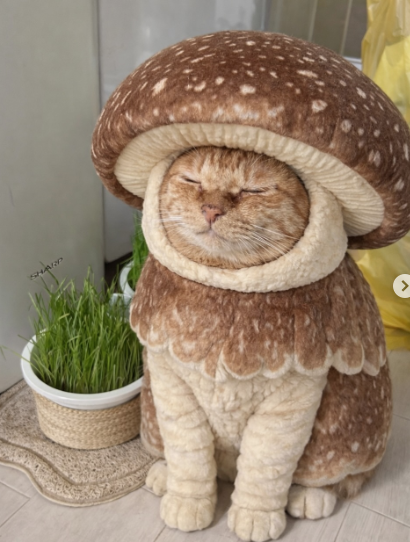
I can’t argue with their conclusion—I complain about slop a lot. I just tend to use a different “s” word. But I also admit to sending someone this AI cat photo just yesterday:

And then there are those Instagram videos of puppies and kittens in the kitchen with the Italian chef making little pizzas, being told that they need to work harder because, “This is not a daycare!” Here is a short Christmas version: working puppies (just click X on the Never miss a post message).

In the weeks to come, I will share some of the other words of the year with you. Until then, have fun, stay safe, and limit the slop!

Kara Church | Technical Editor, Advisory | Knowledge Enablement

Pronouns: she/her | Call via Teams | jackhenry.com

Editor’s Corner Archives: https://episystechpubs.com/

Posted by: Jack Henry | December 23, 2025

Editor’s Corner: A gift for gifting this holiday season

When I first started writing Editor’s Corner, I’d often write about things like serial commas, two spaces after periods, and words that I saw having a heyday (such as leverage) that made my hair stand on end. The older I get, the more I see the bigger picture and that language has all kinds of aspects that wax and wane.

Where am I going with this? Well, it’s the holiday season and I was reading about the word “gift.” When I was growing up, you would say, “How much should we spend on the Secret Santa gift?” “Did she receive an anniversary gift?” Gift was a noun—a present you gave to someone.

Now, gift is used as a verb.

This is where the article surprised me. I was expecting to hear that “gift-as-a-verb” was an invention of a newer generation, but I was wrong. Here is some information from the article in Merriam-Webster:

Yes, Gift Is a Verb

First things first: there are some among you who are asking, "Is the verb gift even a word?"

It’s a good question, and we have a good answer for you, which is, sorry, YES. Gift has been used to mean "to present someone with a gift" for 400 years.

To which you might well reply: "OK, fine, but do we really need it? What’s wrong with using plain, old, utilitarian give?"

And of course there’s nothing wrong with using give. It’s a great word, as is evidenced by the frequency with which we use it and the variety of meanings we’ve bestowed on it…. But a word that has such frequent and varied use can also be ambiguous. Take the sentence "She gave me the book." Without getting more information, we don’t know if the book was a gift or if she simply handed it to the speaker. But in "She gifted me the book" the meaning is instantly clear: the book was a gift.

While it’s true that gift has meant "to present someone with a gift" for 400 years, the verb has never been so widely used as it is now. It’s impossible to say exactly why this is, but we may be able to place a smidgen of the blame on a certain comedian.

Maybe you’ve seen the rerun: in a Seinfeld episode from January 1995 Tim Whatley "regifts" a label maker that Elaine gives him, and then Jerry wants to "degift" some Super Bowl tickets that he gave Tim when he thought he couldn’t use them.

I’m not sure if I’ll ever be able to say that I “gifted my Mom a pair of socks,” or “My husband will be happy if I gift him coffee from Kauai,” but I’ve learned my lesson that it’s okay if someone else uses gift as a verb. As M-W explained, “She gifted me the book" makes it instantly clearer that the book was a present, not just a loan.

And now, I wish all of you a Merry Christmas, Happy Hanukkah, a lovely Kwanza, a festive Winter Solstice, a crazy Festivus, and joy celebrating whatever winter holiday comes your way.

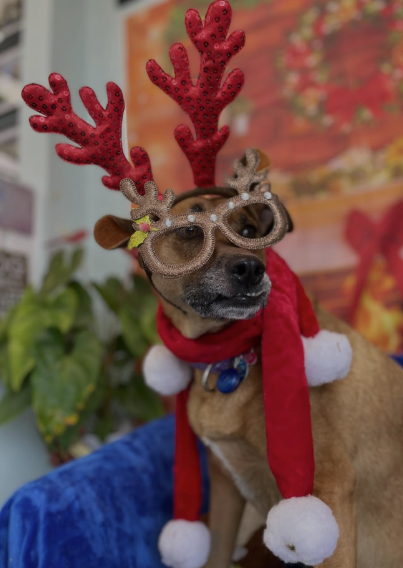
Sylvie just likes getting dressed up in a little bit of everything:

Kara Church | Technical Editor, Advisory | Knowledge Enablement

Pronouns: she/her | Call via Teams | jackhenry.com

Editor’s Corner Archives: https://episystechpubs.com/

Posted by: Jack Henry | December 18, 2025

Editor’s Corner: Bulwarks and Boulevards

Hello there, folks! Today I have a couple more terms that have morphed through the years and through English, Dutch, and French. Again, these started as architectural terms, but their definitions have expanded. The first is bulwark. From Merriam-Webster:

1a: a solid wall-like structure raised for defense:rampart

b: breakwater, seawall

2: a strong support or protection

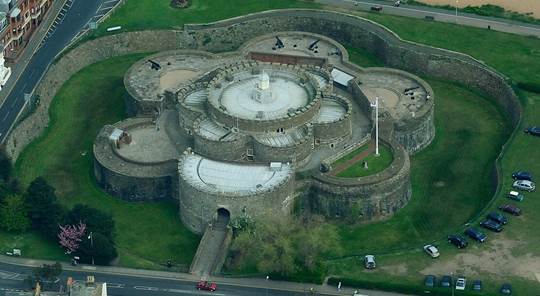
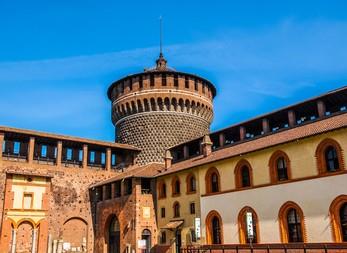
This is a photo of a traditional bulwark:

And this is a covered bulwark:

Sforza Castle Milan, Italy

Here is the modern meaning of bulwark (from AI):

Any person, thing, or system that provides strong support, protection, or a safeguard against danger, doubt, or external threats, like a dam protecting against floods, a policy acting as a bulwark against societal ills, or a strong institution safeguarding liberty. It’s used figuratively for strong defenses, both physical (breakwater, cybersecurity) and abstract (moral principles, national policy).”

And here is the etymology, which links to another term, boulevard. First, from the Online Etymology Dictionary:

bulwark (noun)

early 15c., "a fortification outside a city wall or gate; a rampart, barricade," from Middle Dutch bulwerke or Middle High German bolwerc, probably from bole "plank, tree trunk" + werc "work". Thus "bole-work," a construction of logs. Figurative sense "means of defense or security" is from mid-15c. A doublet of boulevard.

Now let’s see where the etymology of boulevard comes from:

boulevard(n.)

1769, "broad street or promenade planted with rows of trees," from French boulevard, originally "top surface of a military rampart" (15c.), from a garbled attempt to adopt Middle Dutch bolwerc "wall of a fortification" (see bulwark) into French, which at that time lacked a -w- in its alphabet.

The notion is of a promenade atop demolished city walls, which would be wider than the old streets. Originally in English with conscious echoes of Paris; in U.S., since 1929, used of multi-lane limited-access urban highways. Early French attempts to digest the Dutch word also include boloart, boulever, boloirque, and bollvercq.

Modern-day boulevards are much bigger than roads on top of demolished city walls, but as with English words, time can change a lot. Here is a Parisian boulevard today:

Kara Church | Technical Editor, Advisory | Knowledge Enablement

Pronouns: she/her | Call via Teams | jackhenry.com

Editor’s Corner Archives: https://episystechpubs.com/

Posted by: Jack Henry | December 16, 2025

Editor’s Corner: Loophole

Good morning, folks! One of you sent me a speedy Facebook recording of a fellow word nerd a few weeks ago, and I was instantly hooked. Usually, this fellow speaks too fast for me to take notes, or there’s too much for one Editor’s Corner, or the topic might not be that interesting. Well, this time the planets aligned and I went through every minute of his recording. Each of the words he mentioned were originally architectural, but they have evolved over time.

I wrote down each item and have searched for examples of the terms, etymologies, original definitions, and modern definitions.

Today I’m going to start with the word loophole. Historically, a loophole (also called an arrow slit or arrow loop) is “a narrow vertical aperture in a fortification through which an archer can launch arrows or a crossbowman can launch bolts.” (Wikipedia)

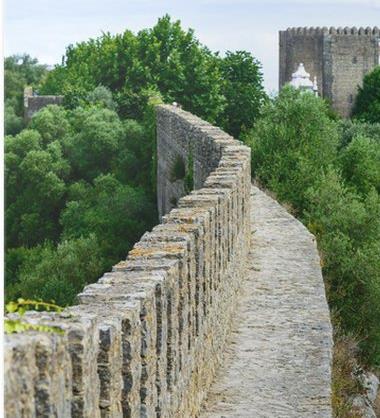
Here is an example of a loophole. You can see there’s a lot of room for a kneeling archer to aim from, but little area for the enemy to return fire to.

And a view of loopholes from the outside of a castle we saw in Ireland.

But what is a loophole now? Here is a brief explanation of where the word came from and how it changed, from The Grammarist:

The term loophole came into use in the seventeenth century figuratively to mean a small opening or an outlet of escape. It soon became applied to legal issues, allowing those practicing the law to find (or watch for) loopholes or ambiguities in the law that could be applied to court matters.

Today the term is used almost exclusively in reference to the law or in legal documents.

Examples:

  • Many loopholes in tax laws allow people to take advantage of certain credits to get more money back.
  • My landlord tried to evict me over keeping a cat in the apartment. But luckily, my cat and I were able to stay due to a loophole in my contract stating no dogs were allowed, with no mention of cats.

Isn’t English interesting? I love taking the voyage from where a word starts to where it ends up. And of course, this may not be the end of the word’s journey. Check back with me in a few hundred years and I’ll let you know what happened!

Kara Church | Technical Editor, Advisory | Knowledge Enablement

Pronouns: she/her | Call via Teams | jackhenry.com

Editor’s Corner Archives: https://episystechpubs.com/
Posted by: Jack Henry | December 11, 2025

Editor’s Corner: Fatherland

Dear Editrix,

I’ve been listening to a podcast about World War II and I have some questions. The Germans refer to their country as “the fatherland.” I don’t think I’ve ever heard another country referred to in the masculine before. I’ve heard “motherland”…have I just not been paying attention or is Germany somewhat unique in that respect? Any idea why theirs is a fatherland?

Hello there, dear reader.

What a good question! Here is some information I found from a site called MCIS Language Solutions, and then I obtained some information from AI.

According to the language site, the term fatherland actually predates motherland in English. Fatherland started being used in the 1200s; motherland in the 1500s. According to the article:

Derived from the Latin word “patria,” “fatherland” implies heritage, tradition, government and order, whereas “motherland” suggests nurturing and a place of birth. While the male image of the country calls for patriotism and loyalty, the female metaphor evokes a sense of belonging and love.

Rather than assigning a particular gender to where we are from, maybe it is just safer to refer to our homeland when speaking English? But back to the article.

…(the) word “motherland” is widely used in languages with Latin roots, such as French, Spanish and Romanian. Even though Russian embraces the female image of one’s nationality “Mother Russia,” the language doesn’t have a word that translates to “motherland” literally.

“Fatherland,” on the other hand, exists universally in Germanic and Slavic languages. German, Dutch, Icelandic, Norwegian, Swedish, Polish and Czech all see their home country as a male.

From AI, here are the words some of those countries use for fatherland:

  • German – Vaterland
  • Netherlands – vaderland
  • Icelandic – föðurland
  • Norway – Fedrelandet
  • Sweden – Fäderneslandet

This is just speculation, but I would guess that countries choose the term fatherland over motherland because of the power associated with the masculine. And as far as history, AI provides us with some additional information about how the word earned its negative connotations:

The term’s strong negative association for English speakers is rooted in modern history:

  • Nazi Propaganda: During the Nazi era, the German government heavily used the term Vaterland in an appeal to extreme nationalism and militarism. The phrase "For Führer and Fatherland" was a common expression of loyalty and appeared in propaganda and educational materials to indoctrinate youth.
  • Modern English Perception: As a result, in modern English, "fatherland" is largely associated with Nazism and is rarely used outside of historical contexts related to Germany….

I hope I managed to answer some of your questions!

Kara Church | Technical Editor, Advisory | Knowledge Enablement

Pronouns: she/her | Call via Teams | jackhenry.com

Editor’s Corner Archives: https://episystechpubs.com/

Posted by: Jack Henry | December 9, 2025

Editor’s Corner: Thralldom

Dear Editrix,

I came across these words the other day: obdurate and thralldom. Can tell me more about them and their roots?

Thank you!

Dear reader,

Of course I’d love to do a little research! I cannot define either one from memory, and I don’t think I’ve ever even heard thralldom. I wonder if it is related to Thunderdome? Let’s have a look!

The definitions are from Merriam-Webster; the etymologies are from the Online Etymology Dictionary.

definition: obdurate (adjective)

1a: stubbornly persistent in wrongdoing (example: an unrepentant, obdurate sinner)

b: hardened in feelings

2: resistant to persuasion or softening influences (example: remaining obdurate to her husband’s advances—Edith Wharton)

etymology: obdurate

From mid-15c., "stubborn, inexorable, unyielding; hardened," especially against moral influences; "stubbornly wicked," from Latin obduratus "hardened," past participle of obdurare "harden, render hard; be hard or hardened; hold out, persist, endure," in Church Latin "to harden the heart against God," from ob "against" (see ob-) + durare "harden, render hard," from durus "hard," from PIE *dru-ro-, suffixed variant form of root *deru- "be firm, solid, steadfast." Variant opturate is from early 15c. in medicine in a literal sense of "stopped, obstructed." Related: Obdurately; obdurateness.

definition: thralldom (noun)

the state of being under the control of another person, a condition of servitude, bondage, or slavery

The etymology of thralldom points to the root word of thrall:

etymology: thrall

late Old English þræl "bondman, serf, slave; person obliged to serve someone else;" from or cognate with a Scandinavian source akin to Old Norse þræll "slave, servant," figuratively "wretch, scoundrel." This is perhaps from Proto-Germanic *thrakhilaz, literally "runner" (hence "attendant"), from root *threh- "to run" (source also of Old High German dregil "servant," properly "runner;" Old English þrægan, Gothic þragjan "to run").

Generally a captive taken in war accepting servitude rather than death, or a freeman guilty of certain crimes and so sentenced; in either case the status passed to children. From late Old English it was extended to "person of low degree" generally, "wretch, inferior." Wycliffe (1382) has thrallesse "female slave or menial servant" in Jeremiah xxxiv.16 where KJV has handmaid.

The meaning "condition of servitude, thralldom" is from early 14c. As a verb, c. 1200, thrallen, "deprive (someone, a people) of freedom, put in bondage," from the noun or Old Norse, also "put under the power of some spell or influence, enthrall." As an adjective, "in a condition of slavery," late Old English, from the noun.

These words are reminiscent of some dark times, my friend. I hope that you are simply reading a history book or something.

One note, in today’s vernacular, enthrall (from the root thrall) means “to hold spellbound” or to “charm.” While being enthralled might seem magical, it has a darker history behind it. Beware, kids!

Kara Church | Technical Editor, Advisory | Knowledge Enablement

Pronouns: she/her | Call via Teams | jackhenry.com

Editor’s Corner Archives: https://episystechpubs.com/
Posted by: Jack Henry | December 4, 2025

Editor’s Corner: Across the Board

Hello, folks! The other day I talked about the term “wheelhouse” and traced its journey from ships, to baseball, to business. Today I have another bit of jargon that you might know from one of your latest meetings: across the board. Synonyms for today’s use of the term are: completely, broadly, and universally.

But where did the term come from originally? My resource today is The Grammarist.

Sometimes idiomatic expressions bring together different walks of life. Across the board is an idiom with roots in horse racing, but it’s not exclusive to equestrian enthusiasts. This phrase has trotted its way into business and politics and is now commonly used. So, sit tight as I break down the meaning behind across the board.

Across the Board Meaning Explained

Simply put, across the board means applying to everyone or everything within a certain group or system. If a decision or change is across the board, it affects every individual or aspect without exception.

It’s like when a big chain of stores makes a change to their store policies. It doesn’t just apply to one store. It would be all of them, so the changes are across the board.

What Does Across the Board Mean in Horse Racing?

In the world of horse racing, an across-the-board bet is one where equal amounts of money are wagered on the same horse to win, place, and show in a race. If the horse succeeds, the bettor gets a payout for each result…

This term was later extended metaphorically to describe a situation that affects all sectors equally.

Across the Board Examples in a Sentence

· The tech CEO announced across-the-board bonuses for all his employees next year.

· Our government promised across-the-board carbon cuts with all major oil companies.

· We need to make across-the-board healthy decisions for our family.

· The system updates are across the board.

If you want more examples and more details about this idiom, you can see The Grammarist link (mentioned earlier). The Grammarist encourages you to sprinkle your writing with idioms, but we are at work and I have to disagree. You might feel like “sprinkling” in more personal writing, but you probably want to keep phrases from the race track out of your business reports!

Kara Church | Technical Editor, Advisory | Knowledge Enablement

Pronouns: she/her | Call via Teams | jackhenry.com

Editor’s Corner Archives: https://episystechpubs.com/
Posted by: Jack Henry | December 2, 2025

Editor’s Corner: Wheelhouse

Good morning, friends. I hope that you had an enjoyable Thanksgiving holiday. While I was out, I received an interesting link to a video from one of you, about jargon. We’ve talked about jargon many times before (and about trying not to use it), but this video had some fascinating tidbits I hadn’t heard before. Let’s look at one of the terms the presenter brings up: wheelhouse.

I remember the first time that I heard, “That’s not in my wheelhouse.” It was years ago here at work, and I remember it like yesterday, because I had no clue what the person was talking about and I couldn’t wait to go back to my desk and look it up. My coworker was using the more modern idiom referring to “area of interest or expertise.” But here are some older uses of the term, courtesy of Grammar Girl.

A wheelhouse is exactly what it sounds like: the little “house” on a ship where the captain stands, and where the ship’s wheel and other navigational equipment are located…

Although people have been steering ships for centuries, the term “wheelhouse” appeared for the first time in the early 1800s. In 1840, a traveler on a ship that burned and sank in Long Island Sound wrote a letter of complaint to Daniel Webster, then U.S. Secretary of State. The ship’s captain “seemed confused,” the traveler wrote. “He went into the wheel house, and that was the last I saw of him.”

And then the term wheelhouse takes a different turn.

For some reason, in the 1950s, this term was picked up by baseball announcers and reporters. They began to refer to a batter’s “wheelhouse,” by that meaning the area of the strike zone where a batter swings with the most power….

Grammar Girl goes on a bit about how this term, when applied to baseball, seems confusing. I found the following photo, and it seems to reflect the sailor’s wheel perfectly. Hit a ball in there and you’ll hear the crowd roar.

Either way, in the 1980s, the meaning of this term extended once again. It came to mean, and still means, an area or field in which a person excels….

Notice that you can use this phrase in one of two ways. You can say something “is your wheelhouse” or that something “is in your wheelhouse.” Either version is correct, but “in your wheelhouse” may be a little more common.

Enjoy your day!

Kara Church | Technical Editor, Advisory | Knowledge Enablement

Pronouns: she/her | Call via Teams | jackhenry.com

Editor’s Corner Archives: https://episystechpubs.com/
Posted by: Jack Henry | November 25, 2025

Editor’s Corner: Turkey

Good morning, folks!

It’s almost Thanksgiving, my favorite holiday of the year. Sure, there have been some challenging ones in the past: a Seattle power outage, which resulted in going to the International District for Chinese food. A misinterpreted recipe for amazing turkey, which resulted in a salt lick that only one of the guests could handle. A turkey thawed in a toxic paint bucket and the search on Thanksgiving Eve for a replacement. But guess what? Nobody died and each of those times were spent with friends and family. And there was pie.

I have an article for you today from Richard Lederer, our San Diego verbivore. The full article is here: Let’s talk turkey about our Thanksgiving holiday. Before you get started, let me say there are a bunch of “dad jokes” at the end of the article. You have been warned.

Have a happy holiday, everyone!

Thanksgiving Day is mainly a celebration of the harvest, giving thanks for bountiful crops. Traditionally, a particular meal in 1621 is thought to be the first Thanksgiving. Plymouth colonists and Wampanoag Indians sat down together to an autumn feast of venison and wild fowl.

On November 26, 1789, George Washington established the first national celebration of Thanksgiving. In 1863, Abraham Lincoln, hoping to unite a sundered nation, issued a proclamation declaring Thanksgiving to be a national holiday. Congress passed a joint resolution in 1941 decreeing that Thanksgiving should fall on the fourth Thursday of each November, where it remains today. Harry S. Truman established the tradition of granting a presidential pardon to a Thanksgiving turkey, who is then retired, alive and gobbling, to a petting farm.

Food and family are the cornerstones of the holiday. Thanksgiving traditions include preparing sumptuous meals that often include turkey, stuffing, gravy, sweet potatoes, cranberry sauce, and pumpkin pie.

The Pilgrims found in America a wild fowl somewhat similar in appearance to a fowl they had known back in England—a bird that had acquired the name turkey because it was first imported by way of Turkey, a Middle Eastern nation that doesn’t celebrate Thanksgiving…

So now’s the time to talk turkey.

Why do turkeys hate Thanksgiving?
Because they’re cut to pieces, they have the stuffing knocked out of them, and they’re picked on for days after Thanksgiving.

What did the turkey say to the turkey hunter on Thanksgiving Eve?
“Quack! Quack!”

Why did the musicians let the turkey join the band?
Because she had the drumsticks.

Why did the turkey cross the road?
It was the chicken’s day off.

Why did the police arrest the turkey?
They suspected it of fowl play.

Why should you keep your eye off the turkey dressing?
Because it makes it blush.

What’s the best dance to do on Thanksgiving?
The turkey trot.

What three keys have legs but can’t open doors?
A turkey, a monkey, and a donkey.

What is the best thing to put into a turkey?
Your teeth.

What do you get when you cross a turkey with an octopus?
Enough drumsticks for a large Thanksgiving dinner.

Why is a Thanksgiving turkey a fashionable bird?
Because it always appears well dressed for dinner.

How do you make a turkey float?
You need two scoops of ice cream, some root beer, and a turkey.

What sort of glass would you serve cream of turkey soup in?
A goblet.

What disasters could happen if you dropped the Thanksgiving turkey?
The downfall of Turkey, the breakup of China, and the overthrow of Greece.

Kara Church | Technical Editor, Advisory | Knowledge Enablement

Pronouns: she/her | Call via Teams | jackhenry.com

Editor’s Corner Archives: https://episystechpubs.com/
Posted by: Jack Henry | November 20, 2025

Editor’s Corner: Terms of Mischief

Dear Editrix,

Please compare the following words:

  • Brawl
  • Brouhaha
  • Fracas
  • Kerfuffle

Sincerely,

Ms. Shenanigan

Dear Ms. Shenanigan,

It looks like you are getting up to some mischief! I am more than happy to provide everyone with definitions from Merriam-Websterand brief “histories” from the Online Etymology Dictionary!

brawl

(verb) to quarrel or fight noisily: wrangle

late 14c., braulen "to cry out, scold, quarrel," probably related to Dutch brallen "to boast," or from French brailler "to shout noisily."

After the town’s two local teams competed for the croquet championship and the Elster Elderflowers lost, every pub had people from both sides brawling until the wee hours.

brouhaha

(noun) hubbub, uproar

"hubbub, uproar, confused and angry scene," 1890, from French brouhaha (15c.), said by Gamillscheg to have been, in medieval theater, "the cry of the devil disguised as clergy." If it has an etymology, it is perhaps from Hebrew barukh habba’ "blessed be the one who comes," used on public occasions.

Lanie heard a scream from the street and looked out of the window to see what caused the brouhaha; it was a Golden Retriever running away with a woman’s handbag and a man’s pocket watch.

fracas

(noun) a noisy quarrel; brawl

1727, from French fracas "crash, sudden noise; tumult, bustle, fuss" (15c.), from Italian fracasso "uproar, crash," back-formation from fracassare "to smash, crash, break in pieces."

While walking down at Waterfront Park, Suzie heard two people yelling at each other, involved in such a fracas she thought she might need to run for cover. It ended up being a couple arguing about where to go to dinner.

kerfuffle

(noun) a disturbance or commotion typically caused by a dispute or conflict

"row, disturbance," 1970; from 1946 as kafuffle, said to have been used c. 1930 in Canadian English, ultimately from Scottish curfuffle.

The question of “Who made the best ambrosia?” caused more than a kerfuffle at the neighborhood block party; Jennifer threw a punch at Don when he won the contest, and all hell broke loose.

Kara Church | Technical Editor, Advisory | Knowledge Enablement

Pronouns: she/her | Call via Teams | jackhenry.com

Editor’s Corner Archives: https://episystechpubs.com/

Older Posts »

Categories