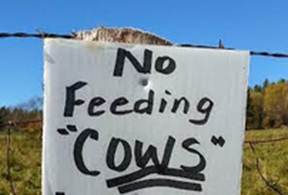
The most common questions I receive about quotation marks are about using quotation marks with other punctuation. There are so many rules and examples, I’m going to divide this into two days of lessons so as not to overwhelm. It is Friday after all!

Remember, these are American rules; England and many formerly English territories use a different set of punctuation rules.

From the Chicago Manual of Style:

· Periods and commas precede closing quotation marks. This is a traditional style, in use well before the first edition of this manual (1906).

o Growing up, we always preferred to “bear those ills we have.”

o “Thus conscience does make cowards of us all,” she replied.

From the Purdue OWL:

· Use a comma to introduce a quotation after a standard dialogue tag, a brief introductory phrase, or a dependent clause.

o The detective said, "I am sure who performed the murder."

o As D.H. Nachas explains, "The gestures used for greeting others differ greatly from one culture to another."

· Put commas and periods within quotation marks, except when a parenthetical reference follows.

o He said, "I may forget your name, but I never forget a face."

o History is stained with blood spilled in the name of "civilization."

o Mullen, criticizing the apparent inaction, writes, "Donahue’s policy was to do nothing" (24).

More from the pages of UnnecessaryQuotes.com:

Kara Church

Technical Editor, Advisory

Posted by: Jack Henry | May 1, 2014

Editor’s Corner: Social Media Terms – K

Good morning,

Let’s take a break from quotation marks to return to our social media vocabulary lesson. Today from the Building Brand Character glossary, when it comes to “K,” it’s all about the keyword.

· Keyword: (KW, key phrase) The word or phrase that a user enters into a search engine.

· Keyword Cannibalization: The excessive reuse of the same keyword on too many web pages within the same site. This practice makes it difficult for the users and the search engines to determine which page is most relevant for the keyword.

· Keyword Density: The percentage of words on a web page that are a particular keyword. If this value is unnaturally high the page may be penalized.

· Keyword Research: The hard work of determining which keywords are appropriate for targeting.

· Keyword Spam: (keyword stuffing) Inappropriately high keyword density. [KC – Thank goodness it isn’t spam stuffing—that would taste terrible!]

· Keyword Stuffing: See keyword spam

· Klout: A measure of social influence. The service allows users to connect various social accounts such as Facebook, Flickr, YouTube, etc., and then provides every user with his or her Klout score. The score is out of 100—the higher the score, the more influence you have on the social world.

Kara Church

Technical Editor, Advisory

619-542-6773 | Ext: 766773

www.symitar.com

NOTICE: This electronic mail message and any files transmitted with it are intended
exclusively for the individual or entity to which it is addressed. The message,
together with any attachment, may contain confidential and/or privileged information.
Any unauthorized review, use, printing, saving, copying, disclosure or distribution
is strictly prohibited. If you have received this message in error, please
immediately advise the sender by reply email and delete all copies.

Posted by: Jack Henry | April 30, 2014

Editor’s Corner: More on quotation marks

Today I’m continuing with a few more rules and examples of how and when to use quotation marks. Here are direct quotation rules four through six, from the Purdue OWL:

4) If a direct quotation is interrupted mid-sentence, do not capitalize the second part of the quotation.

"I didn’t see an actual alien being," Mr. Johnson said, "but I sure wish I had."

5) In the examples above, note how the period or comma punctuation always comes before the final quotation mark. It is important to realize also that when you are using MLA or some other form of documentation, this punctuation rule may change.

When quoting text with a spelling or grammar error, you should transcribe the error exactly in your own text. However, also insert the term sic in italics directly after the mistake, and enclose it in brackets. Sic is from the Latin, and translates to "thus," "so," or "just as that." The word tells the reader that your quote is an exact reproduction of what you found, and the error is not your own.

Mr. Johnson says of the experience, "It’s made me reconsider the existence of extraterrestrials [sic]."

6) Quotations are most effective if you use them sparingly and keep them relatively short. Too many quotations in a research paper will get you accused of not producing original thought or material (they may also bore a reader who wants to know primarily what YOU have to say on the subject).

Kara Church

Technical Editor, Advisory

Posted by: Jack Henry | April 29, 2014

Editor’s Corner: Quotation Marks and Direct Quotations

There’s a good reason I left quotation marks for last in our discussion of overused punctuation. Quotation marks come with many more rules than exclamation points and question marks. Not only is the list of rules long—it changes depending which side of the pond you live on. The British and American standards for using quotation marks are different. We’re going to stick with the American standards.

The primary use of quotation marks is to set off direct spoken or written language. Quotation marks are also used heavily in fiction to indicate dialog. In business writing, you will use them for the former reason, to quote passages from books, people, and resources. As one of my favorite resources, the Purdue OWL says, the “successful use of quotation marks is a practical defense against accidental plagiarism and an excellent practice in academic honesty.”

The following rules and examples are also from the Purdue OWL article on quotation marks. We will cover additional rules over the next day or two.

Direct Quotations

Direct quotations involve incorporating another person’s exact words into your own writing.

1. Quotation marks always come in pairs. Do not open a quotation and fail to close it at the end of the quoted material.

2. Capitalize the first letter of a direct quote when the quoted material is a complete sentence.

Mr. Johnson, who was working in his field that morning, said, "The alien spaceship appeared right before my own two eyes."

3. Do not use a capital letter when the quoted material is a fragment or only a piece of the original material’s complete sentence.

Although Mr. Johnson has seen odd happenings on the farm, he stated that the spaceship "certainly takes the cake" when it comes to unexplainable activity.

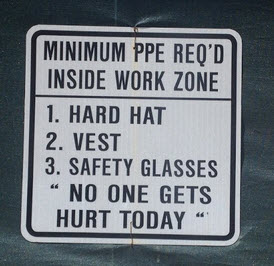
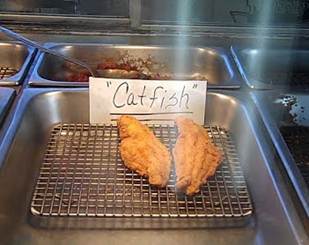
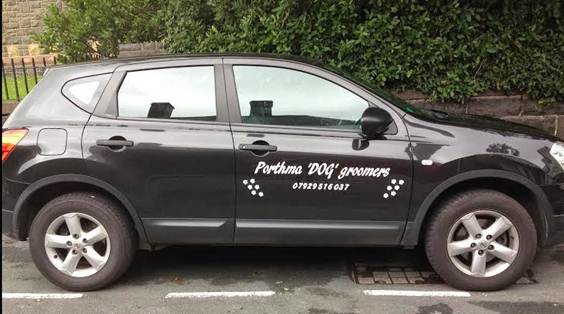
Don’t use quotation marks for emphasis! Italicize the word instead. Quotation marks indicate you are using a word in an unusual or special way. Often the reader will see quotation marks around words as a warning that the word is being used in an abnormal or weird way. In the following examples, you can see that the words in quotations marks should not be seen as abnormal, or the seller will never get rid of their goods or sell their services:

Looks like catfish, tastes like chicken—but what is it really?

So do they groom dogs, or by “dog” to they mean horses? Hamsters? Billy goats?

Kara Church

Technical Editor, Advisory
Posted by: Jack Henry | April 25, 2014

Editor’s Corner: Social Media Vocabulary I and J

Happy Friday! Today from the Building Brand Character social media glossary, we have several “I” terms and one “J” term for you.


I

· Impression: (page view) The event where a user views a webpage one time.

· Inbound Marketing: A style of marketing that essentially focuses on permission-based marketing techniques that businesses can use to get found by potential customers, convert those prospects into leads and customers, and analyze the process along the way. Inbound marketing leverages tactics such as search engine optimization, blogging, social media, lead generation, email marketing, lead nurturing, and analytics. It is in direct contrast to outbound marketing, which utilizes traditional interruptive marketing tactics such as direct mail, trade shows, print and TV advertising, and cold calling.

· Index: (noun) A database of webpages and their content used by search engines.

· Index: (verb) To add a webpage to a search engine index.

· Instagram: A photo sharing application that lets users take photos, apply filters to their images, and share the photos instantly on the Instagram network and other social networks like Facebook, Flickr, Twitter, and Foursquare. The app is targeted toward mobile social sharing, and in just over one year, it has gained almost 15 million users.


J

· Joomla: A content management system (CMS) that enables users to build websites and online applications.

Kara Church

Technical Editor, Advisory

619-542-6773 | Ext: 766773

www.symitar.com

NOTICE: This electronic mail message and any files transmitted with it are intended
exclusively for the individual or entity to which it is addressed. The message,
together with any attachment, may contain confidential and/or privileged information.
Any unauthorized review, use, printing, saving, copying, disclosure or distribution
is strictly prohibited. If you have received this message in error, please
immediately advise the sender by reply email and delete all copies.

Posted by: Jack Henry | April 24, 2014

Editor’s Corner: The Question Mark

Today we’re covering one of the easier pieces of punctuation: the question mark. According to Wikipedia, it is also known as an interrogation point, interrogation mark, question point, query, or eroteme. No matter what you call it, it goes at the end of a sentence, clause, or phrase to indicate a question. Like the exclamation point and period, you only need one at the end of the sentence.

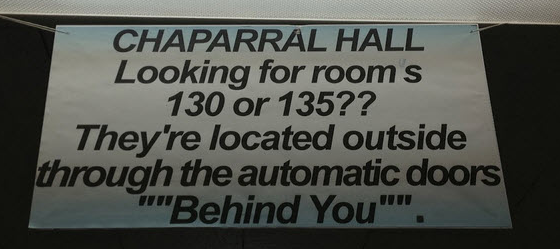
The sign below is full of punctuation horrors: an apostrophe “s” on the word “rooms” (though they whited that out when they were proofreading); two question marks; double sets of unnecessary quotation marks; and, the period outside of the quotation marks. Not to mention the unnecessary capitalization and eerie emphasis of the words behind you. I don’t know what’s happening in rooms 130 and 135, but this sign is enough to make me run away screaming.

Coming soon to an email near you: misused and abused quotation marks.

Kara Church

Technical Editor, Advisory
Posted by: Jack Henry | April 23, 2014

Editor’s Corner: Holy exclamation point, Batman!

Is there such thing as too much punctuation? Of course there is! Over the next couple of days, I have a few reminders for you about when to use quotation marks, question marks, and exclamation points.

Today we start with exclamation points.

Exclamation points are used to indicate something is said with emotion and a raised voice; they are a visual cue that something is important and possibly said with force. Here are the conditions under which exclamation points are appropriate:

· When you want to indicate something should be said with enthusiasm or emotion
Example: “You look fantastic!”

· When you are giving a command
Example: “Go to your room now!”

· When you are providing a warning (This is the only example I can think of when we would use an exclamation point in our business writing.)
Example:
Caution: Proceeding with this command will delete all of the information in your database!

· Batman sound effects
Example: POW! BAM! SNAP! (Okay, he only uses the last exclamation after a particularly good insult towards Robin.)

As you can imagine, most of those situations are not appropriate in business writing. Keep these things in mind when you are tempted to use an exclamation point:

· Exclamation points are generally used for fiction and informal writing (I just read that 30 percent of the Tweets out there contain one or more exclamation points. That’s a lot of yelling.)

· Just like the Highlander, there can (or should) be only one! One sentence? One exclamation point. The exception to that is Spanish, but until we start writing our documentation in Spanish, stick with one exclamation point.)

· If you are writing dialog, keep the exclamation point within the quotation marks. For example, “Rocky! Come back!”

Kara Church

Technical Editor, Advisory
Posted by: Jack Henry | April 23, 2014

Editor’s Corner: Holy exclamation point, Batman!

Is there such thing as too much punctuation? Of course there is! Over the next couple of days, I have a few reminders for you about when to use quotation marks, question marks, and exclamation points.

Today we start with exclamation points.

Exclamation points are used to indicate something is said with emotion and a raised voice; they are a visual cue that something is important and possibly said with force. Here are the conditions under which exclamation points are appropriate:

· When you want to indicate something should be said with enthusiasm or emotion
Example: “You look fantastic!”

· When you are giving a command
Example: “Go to your room now!”

· When you are providing a warning (This is the only example I can think of when we would use an exclamation point in our business writing.)
Example:
Caution: Proceeding with this command will delete all of the information in your database!

· Batman sound effects
Example: POW! BAM! SNAP! (Okay, he only uses the last exclamation after a particularly good insult towards Robin.)

As you can imagine, most of those situations are not appropriate in business writing. Keep these things in mind when you are tempted to use an exclamation point:

· Exclamation points are generally used for fiction and informal writing (I just read that 30 percent of the Tweets out there contain one or more exclamation points. That’s a lot of yelling.)

· Just like the Highlander, there can (or should) be only one! One sentence? One exclamation point. The exception to that is Spanish, but until we start writing our documentation in Spanish, stick with one exclamation point.)

· If you are writing dialog, keep the exclamation point within the quotation marks. For example, “Rocky! Come back!”

Kara Church

Technical Editor, Advisory

619-542-6773 | Ext: 766773

www.symitar.com

NOTICE: This electronic mail message and any files transmitted with it are intended
exclusively for the individual or entity to which it is addressed. The message,
together with any attachment, may contain confidential and/or privileged information.
Any unauthorized review, use, printing, saving, copying, disclosure or distribution
is strictly prohibited. If you have received this message in error, please
immediately advise the sender by reply email and delete all copies.

Posted by: Jack Henry | April 22, 2014

Editor’s Corner: Social Media Terms – H

Good day, all! Today we have a few more social media terms from the Building Brand Character glossary.

· Hashtag: A tag used on the social network Twitter as a way to annotate a message. A hashtag is a word or phrase preceded by a “#.” [KC – This symbol has many names, including “pound sign” and “octothorpe.”]

According to Twitter:
The # symbol, called a hashtag, is used to mark keywords or topics in a Tweet. It was created organically by Twitter users as a way to categorize messages.

o People use the hashtag symbol # before a relevant keyword or phrase (no spaces) in their Tweet to categorize those Tweets and help them show more easily in Twitter Search.

o Clicking on a hashtagged word in any message shows you all other Tweets marked with that keyword.

o Hashtags can occur anywhere in the Tweet—at the beginning, middle, or end.

· HootSuite: A social media management system that helps brands streamline campaigns across social networks such as Twitter, Facebook, LinkedIn, and Google+ Pages. Teams can collaboratively monitor, engage, and measure the results of social campaigns from one secure, web-based dashboard.

· Hub: (expert page) a trusted page with high quality content that links out to related pages.

That’s all for today!

Kara Church

Technical Editor, Advisory

619-542-6773 | Ext: 766773

www.symitar.com

NOTICE: This electronic mail message and any files transmitted with it are intended
exclusively for the individual or entity to which it is addressed. The message,
together with any attachment, may contain confidential and/or privileged information.
Any unauthorized review, use, printing, saving, copying, disclosure or distribution
is strictly prohibited. If you have received this message in error, please
immediately advise the sender by reply email and delete all copies.

Posted by: Jack Henry | April 18, 2014

Editor’s Corner: Mentors

A very happy end of the week to you all! Today I have another question from the blog mailbox:

Dear Editrix,

Does a mentor have a protégé or a mentee? I’ve recently heard mentee but it sounds like a made up word.

Alan (a credit union fan)

Dear Alan,

My apologies that this comes four months after you sent the question.

I’ve often wondered about the legitimacy of the word mentee, too. We have good reason to think that someone who is mentored (tutored, coached, taught) would be called a mentee because of a common pattern in English. We take a word, like advise, lease, or mortgage and then add an –or or –er to indicate the person who is making or doing something with that word; then we add –ee to indicate the person who is receiving or benefitting from the item or action. It’s easier to look at some common examples to see this pattern:

Act/Object Actor One receiving or benefitting from the action
advise/advice advisor advisee
bail out/bail bailer bailee
employ/employment employer employee
grant/grant grantor grantee
lease/lease lessor lessee
mentoring/mentorship mentor mentee
mortgage to/mortgage mortgagor mortgagee
pay/payment payer payee
trust/trust trustor trustee

Yes, dear Alan, mentee has been a word meaning “one who is mentored,” or protégé, since 1965. And now for some additional definitions, from Merriam-Webster:

· manatee (not to be confused with mentee)
A large animal that lives in warm waters and eats plants

· protégé (male); protégée (female)
A young person who is taught and helped by someone who has a lot of knowledge and experience; one who is protected or trained or whose career is furthered by a person of experience, prominence, or influence

Two manatees hanging out in Florida, discussing the dangers of motorboats:

Kara Church

Technical Editor, Advisory
« Newer Posts - Older Posts »

Categories