Posted by: Jack Henry | August 31, 2015

Editor’s Corner: Misplaced Modifier Monday

It’s Monday Misplaced Modifier day! It’s not a real holiday. We don’t get the day off—but this will be fun.

A misplaced modifier is a word or a group of words that are in the wrong place, so the word or phrase ends up modifying the wrong thing. These sentences are confusing, but they are often pretty funny too. Here are some examples (with the misplaced modifiers in italics), and I’m also providing some possible revisions. (These are not the only possible revisions.)

· Oozing slowly across the floor, Marvin watched the salad dressing.

You see what’s wrong here. It sounds like poor Marvin is oozing instead of the salad dressing.
Possible revision: Marvin watched the salad dressing ooze slowly across the floor.

· Born at the age of 43, the baby was a happy surprise to Elaine.

Oh my! That would be a big, old baby!
Possible revision: The baby, born when Elaine was 43, was a happy surprise.

· With tail wagging merrily, Donna took her dog for a walk.

Now, I enjoy walking my dogs, Daisy and Rover, but it’s their tails that wag—not mine. I swear.
Possible revision: With his tail wagging merrily, the dog went for a walk.

· Setting up the Collection Package, your collection system can be online and almost paperless.

As you see, misplaced modifiers aren’t so funny when they’re work-related. You can also see that they can be pretty darn confusing.
Possible revision: The Collection Package provides an online, almost paperless collection system.

Well, you can’t say they weren’t warned!
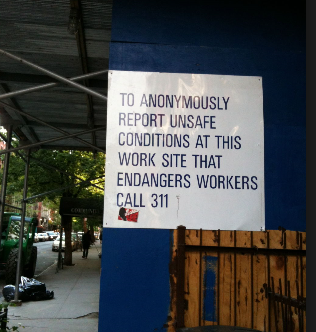
Maybe you want to rethink this promotion?

Donna Bradley Burcher | Senior Technical Editor | Symitar®

8985 Balboa Ave. | San Diego, CA 92123 | Ph. 619.278.0432 | Ext: 765432
Symitar Technical Publications Writing and Editing Requests

Posted by: Jack Henry | August 28, 2015

Editor’s Corner: Still More Swifties

I thought this would be the last day for Tom Swifties, but we have so many that I’m dividing them up over two more weeks. Here is another set of Swifties for your Friday enjoyment.

Todd Herrick

· “Hey! I told you guys to cut that out,” said Tom incisively.

· “If I’ve told you once, I’ve told you a thousand times,” said Tom redundantly.

· “Do you want chocolate in your milk?” said Tom quickly.

Robert Trescott

· “I’ve catalogued an official list of howitzers for Jane’s Publications,” said Tom, canonically.

· “I’m going to sell Farmer Joe’s mushrooms, then buy a European vacation,” said Tom, hoping his plan was fungible.

Kevin Camp

· “I have your biopsy results,” Tom said benignly.

· “Guess I shouldn’t have tried to steal from the sheik,” Tom said offhandedly.

Jon Hillstead

· “Hm…Saturday; should I start my daily chores or my weekly chores?” said Tom dualistically.

Jon Estes

· “Don’t worry, I know we’ll find your lost pet” she said doggedly!

· “Well. That’s the end of that” he said apocalyptically.

Jerianne Strange

· “In the winter, I miss eating cantaloupe,” said Tom, with a touch of melancholy.

· “I’m looking forward to a whitewater excursion,” Tom said rapidly.

Jeremy Anderson

· “Here are my literary submissions,” I said literally.

· “That’s a fact Jack,” Jack said matter-of-factly.

· “I spilled water on my keyboard,” he told the PC tech accidently.

· “Frank, I am going to bill your department for that,” the PC tech responded frankly.

James Hall

· “I’m taking over the nest!” he hissed broodingly.

· “I’m not a cow!” she shouted bullheadedly.

· “I’m making the grocery list now,” he mumbled listlessly.

· “I’m not lazy!” he complained lethargically.

· “I can’t stand Tolkien’s ramblings,” she stated mythologically.

James Folkerts

· “I really enjoy cartoon elephants,” said Tom Babarously.

· “I think that insect just sneezed,” said Tom fluently.

· “Brevity is best,” said Tom supercalifragilisticexpialidociously.

George Duda

· “The nail through your foot will feel better once I remove it,” said Dr. Tom painstakingly.

· “I know it hurts but don’t cry,” said Tom sadistically.

Amy Wallace

· “I fed the pigs,” said Tom sloppily.

· “As well as French and German, I also speak binary,” Tom said logically.

Alice Woodward

· “The jury said he was not guilty by reason of insanity,” said Dave judgmentally.

· “The smell in here is horrible,” said Greg instinctively.

Kara Church

Technical Editor, Advisory

619-542-6773 | Ext: 766773

Symitar Documentation Services

NOTICE: This electronic mail message and any files transmitted with it are intended
exclusively for the individual or entity to which it is addressed. The message,
together with any attachment, may contain confidential and/or privileged information.
Any unauthorized review, use, printing, saving, copying, disclosure or distribution
is strictly prohibited. If you have received this message in error, please
immediately advise the sender by reply email and delete all copies.

Posted by: Jack Henry | August 27, 2015

Editor’s Corner: Passive Voice – Fixing Evasion #2

Here’s…Johnny!

All work and no play makes Jack a dull boy.

Wait, no! It’s not Johnny, it’s your next installment of “5 passive-voice evasions and how to fix them,” by Josh Bernoff. As I mentioned yesterday, Mr. Bernoff uses examples of passive voice from an article about the city of Boston bidding for the 2024 Olympics.

#2 Who is writing this?

Authors use the passive voice to avoid “I” or “we.” This occurs most often in the most controversial statements.

· [I]t is assumed that local revenue sources would have been spent in Massachusetts regardless of the Olympics. [KC – Who is doing the assuming? Avoiding “I” and “we” makes this sound very suspicious.]

· The operations expenditures for the Boston 2024 Olympics are estimated to create or support nearly 34,000 direct jobs during the year of the Olympics. [KC – Again, you may ask, who is performing the action? Who is doing the estimating? Don’t hide behind the passive! Embrace your opinion and make a statement!]

How to fix: Use “I” or “we.”

· We assume that regardless of the Olympics, local sponsors would spend in Massachusetts.

· We estimate that a Boston Olympics would create or support 34,000 jobs in 2024.

Kara Church

Technical Editor, Advisory

Symitar Documentation Services

Posted by: Jack Henry | August 26, 2015

Editor’s Corner: Passive Voice – Fixing Evasion #1

As promised, today is the first real installment of “5 passive-voice evasions and how to fix them,” by Josh Bernoff. To set the stage of this article, Mr. Bernoff uses examples of passive voice from an article about the city of Boston bidding for the 2024 Olympics. The article includes all five of the things you can hide or lose when you write in passive voice. On the left (bold) are Bernoff’s five passive voice evasions, with my additions in parentheses.

· Who is reading this? (Who is the audience?)

· Who is writing this? (Where did this information come from? Who is the source?)

· Who did this stuff? (Who is culpable?)

· Has anybody done this? (Who is accountable? Who will do this?)

· Who is going to pay? (Who is ultimately responsible for this?)

Beginning today, we’ll deal with each one of these and how to fix it. The examples are from the UMass Donahue Institute report. Passive voice is in bold italic.

#1: Who’s reading this?

You want your audience to do something after reading what you write. But who is that audience? Passive obscures the uncertainty, even as it leaves the reader wondering who’s supposed to act.

Examples:

· [These] issues that will need to be closely monitored in order to ensure the public sector is protected from extensive financial commitments. [KC – Who will monitor the issues?]

· It can hardly be considered a “slam dunk” that tourism will increase in Greater Boston and Massachusetts over the long run from hosting the Olympics. [KC – Who is this addressing? Who can hardly consider this?]

How to fix: Be explicit about who in the audience should act, or use “you.”

Examples:

[KC – The actors and audience are clear in these rewritten examples.]

· Public planners must monitor these issues to protect the public from financial commitments.

· You cannot count on an increase in tourism from the Olympics.

Kara Church

Technical Editor, Advisory

619-542-6773 | Ext: 766773

Symitar Documentation Services

NOTICE: This electronic mail message and any files transmitted with it are intended
exclusively for the individual or entity to which it is addressed. The message,
together with any attachment, may contain confidential and/or privileged information.
Any unauthorized review, use, printing, saving, copying, disclosure or distribution
is strictly prohibited. If you have received this message in error, please
immediately advise the sender by reply email and delete all copies.

Posted by: Jack Henry | August 25, 2015

Editor’s Corner: Passive Voice and Zombies

It’s time to get cracking with some lessons on the passive voice. Yes, we’ve covered this before, but it continues to be an issue with almost every type of document we receive from every department. Sometimes, there’s a good argument for using passive voice, but we aren’t discussing those arguments here. We are concentrating on why passive voice makes your writing weak and how to fix it.

The article I’m citing is “5 passive-voice evasions and how to fix them,” by Josh Bernoff. I’ll be supplying the information in tasty, bite-sized pieces for you over the next few days.

What’s wrong with passive voice?

A passive voice sentence starts with the object of an action rather than the subject or actor. For example, in the sentence “Attention must be paid to the state of our nation,” who is supposed to pay attention? That’s the missing subject. Grammatically, passive voice sentences include the verb “to be” (is, was, ought to be) and a past participle, but it’s easier to just use the zombies test: if you can add “by zombies” after the verb and it still makes grammatical sense, it’s passive voice. (“Attention must be paid by zombies . . .”)

[KC – More examples of the missing subject in passive voice:

<![if !supportLists]>· The apple was eaten.

· The report was run in Episys.

· A defect was found in the software.

As you can see, the actor in these sentences remains anonymous, and if you use Bernoff’s test and add “by zombies,” it makes sense with each of these examples. That’s passive voice for you.]

Every passive voice sentence sets up uneasiness in readers’ minds. They wonder what unseen force is responsible for the actions they’re reading about. The more passive, the greater the uneasiness.

KC – Since most of us don’t want to make our reader uneasy, let’s try to stamp out the passive voice!

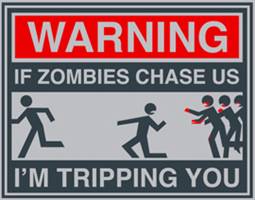
Don’t be passive with zombies or you’ll regret it!

Kara Church

Technical Editor, Advisory

Symitar Documentation Services

Posted by: Jack Henry | August 24, 2015

Editor’s Corner: The Joys of Autocorrection

Some of you may use the autocorrection feature in Microsoft® products or on your smartphone to correct typos and misspelled words. For those of you who use autocorrection, I am sure that you have figured out that the feature doesn’t always get it right. Even if you have customized your dictionaries, you shouldn’t depend on autocorrection to fix or catch all errors.

Here’s an example of autocorrection gone wrong:

Jackie Solano | Technical Editor | Symitar®

8985 Balboa Ave. | San Diego, CA 92123 | Ph. 619.542.6711 | Extension: 766711

Symitar Documentation Services

Posted by: Jack Henry | August 21, 2015

Editor’s Corner: Nifty Swifties for Friday

It’s Friday and that means it is time for more Tom Swifties from the audience. Here are more submissions from friends, clients, co-workers, and family.

Samantha Armistead

· “One day that man will be promoted from captain,” said Tom admirably.

· “I need to take a shower,” said Tom aloofly.

· “I think I’ve gained weight,” said Tom ambiguously.

· “That Thanksgiving dinner was excellent,” said Tom awfully.

· “I once met Gwyneth Paltrow’s mother,” said Tom blithely.

· “I guess that Willis guy was okay in the Die Hard movies,” said Tom brusquely.

· “I do not have a round head,” said Tom cavalierly.

Scott Whitham

· “Bo and Luke Duke are my favorite TV characters,” said Tom hazardously.

· “I hurt my finger while cutting this ribeye,” said Tom painstakingly.

· “This picnic pest is ill,” said Tom fluently.

· “Slow down when you drive through a school zone,’ said Tom idly.

· “I have nothing to hold my canvas while I paint,” said Tom uneasily.

Client Relations Team

· “How many days until pay day? “ she asked brokenly.

· “The HR Reps. try to keep the company out of hot water,” Cheryl said swimmingly.

· “I quit,” Joe sighed resignedly.

· “I’m on PTO next week,” he said absentmindedly.

Steve Jones

· “I never dreamed we would be swallowed by a giant stag on our first camping trip. Be that as it may, I can’t think of anyone I’d rather muck about within a buck than you,” said Tom endearingly.

Todd Herrick

· “I really like tropical fruit,” said Tom passionately.

· “I think you’re the prettiest girl in the contest,” said Tom judiciously.

Cathy Taylor

· “The test was hard,” said Tim quizzically.

· “I installed a new security system,” said Tom alarmingly.

· “I’m sorry I missed my appointment,” said Tom belatedly.

Dave Small (and another Taylor Swiftie)

· "I’m never going to find true love," said Taylor broken-heartedly.

Daniel Martin

· “I’m not going to punch you,” said Tom pacifistically.

· “Ask me again in seven days,” said Tom weakly.

· “Let’s have a lightsaber fight, Vader,” said Tom offhandedly.

Eileen Kreckman

· “Yes, you can use a handbag to cut up these insects,” said Tom with perseverance

Dustin Banks

· “I’m sure that anvil was meant for the Road Runner” Tom said overwily.

Dax Avelino Tuazon

· “I love the beaches in San Diego,” said Tom pacifically.

· “I love cherries from the Northwest,” said Tom numbingly.

David Romano

· “I love red meat, but my doctor says it’s not healthy,” said Tom painstakingly.

· “I don’t care what people say, defense does not win championships,” said Tom offensively.

Kara Church

Technical Editor, Advisory

619-542-6773 | Ext: 766773

Symitar Documentation Services

NOTICE: This electronic mail message and any files transmitted with it are intended
exclusively for the individual or entity to which it is addressed. The message,
together with any attachment, may contain confidential and/or privileged information.
Any unauthorized review, use, printing, saving, copying, disclosure or distribution
is strictly prohibited. If you have received this message in error, please
immediately advise the sender by reply email and delete all copies.

Posted by: Jack Henry | August 19, 2015

Editor’s Corner: Premise and Premises

I never gave too much thought to the words premise or premises, until somebody used the wrong one in a sentence. This is actually a wily word and deserves some further attention. The following bits and pieces of information are from the Merriam-Webster dictionary.

First we have premise. The singular version of this word means:

“a basis of argument: a : a proposition in logic stated or assumed as leading to a conclusion : either of the first two propositions of a syllogism from which the conclusion is drawn b : something assumed or taken for granted : presupposition; especially : something implied as a condition precedent c obsolete : a condition stated beforehand : stipulation.”

Examples:

· “The premise behind doing these back exercises is that you are only as old as your spine feels.”

· The premise of the film is simple: the boy is half human and half dog. Add a deranged clown and a pet cat and this is a guaranteed moneymaker!

The plural form of the word is premises. And this is where it gets tricky.

Premises (plural in form, but singular or plural in construction) means:

a archaic : property that is conveyed by bequest or deed b : a specified piece or tract of land with the structures on it c : a building, buildings, or part of a building covered by or within the stated terms of a policy (as of fire insurance) d : the place of business of an enterprise or institution

Examples:

· The sign reads, “No trespassing! Keep off the premises or you will be violated by killer bees.”

· We walked around the house and looked through the window, trying to determine if anyone still lived on the premises.

So, next time you see the words premise or premises in print, look at the context to make sure the writer got it right! Are they talking about an idea or the basis of an argument, or are they talking about somebody’s property?

Kara Church

Technical Editor, Advisory

619-542-6773 | Ext: 766773

Symitar Documentation Services

NOTICE: This electronic mail message and any files transmitted with it are intended
exclusively for the individual or entity to which it is addressed. The message,
together with any attachment, may contain confidential and/or privileged information.
Any unauthorized review, use, printing, saving, copying, disclosure or distribution
is strictly prohibited. If you have received this message in error, please
immediately advise the sender by reply email and delete all copies.

Posted by: Jack Henry | August 18, 2015

Editor’s Corner: Animate, adamant, Adam Ant

I’ve covered frequently confused words before, but it may be time to look into an updated version of this topic. If any of you want to provide me with some suggestions after reading through the ones we’ve already discussed (below) be my guest.

· Frequently Confused Couples

· Frequently Confused Couples, Part 2

Today, however, I have a bit of an odd couple. I was reading the Grammarist blog and came across this article. While the information is interesting, I find it hard to believe that anyone would confuse these two:

Animate vs adamant

Animate means to make alive or to give inspiration or put into motion, to cause something to move as if alive. Animate is a transitive verb, which is a verb which takes an object. Animate may also be used as an adjective to describe something which has life or vigor. Cartoons which are filmed so as to move and appear to have life are animated, the process is referred to as animation. Other related words are animates, animated, and animating. The antonym of animate is inanimate, which means an object that doesn’t move and has no life force. Reanimate means to revive or give fresh impetus. Animate comes from the fourteenth century Latin word, animatus, which means alive.

Adamant is an adjective which means determined, unpersuadable, refusing to allow one’s mind to be changed. As a noun, adamant refers to an unbreakable substance or archaically, a legendary stone said to be impermeable which was often identified as a diamond or lodestone. Adamant comes from the fourteenth century Latin word, adamantem, which means hardest iron, steel and also the Greek adamantos, which means unbreakable, inflexible.

Now I do see how this might be lumped in with the group:

Adam Ant is an English musician who gained popularity in the early 1980s as the lead singer of post-punk rock group, Adam and the Ants. He had a solo singing career, tried his hand at film, and then went bonkers for a few years. Now he’s touring again, and while his voice is still there he looks more like a crazy pirate than Prince Charming.

Adam Ant, 1982

Kara Church

Technical Editor, Advisory

Symitar Documentation Services

Posted by: Jack Henry | August 14, 2015

Editor’s Corner: Lefties and Swifties

I never thought my email about left-handers would provoke such a response! This information is for those of you left-handers who wanted something more positive about the special 10 percent of you out there. Here are some things I found that are hopefully more current and enlightening.

· NPR discussion on left-handedness: http://www.npr.org/2012/01/01/144441028/left-handedness-no-longer-suspect-still-a-mystery

· The book referred to in NPR discussion: The Puzzle of Left-Handedness

· Wordplay: An interesting documentary on Will Shortz that includes some information about left-handers and their puzzle-solving skills. (Will Shortz is an American puzzle creator and currently the crossword puzzle editor for The New York Times. He’s an all-around amazing fellow for you puzzle lovers out there.) I loved this movie, but I’m a word nerd and lifetime Will Shortz fan.

· Products for left-handers: https://www.leftyslefthanded.com/

And now for Friday’s Tom Swifities. We still have quite a few submissions from the contest last month that I haven’t shared with you yet.

For those of you who don’t know what Tom Swifties are, here is a brief description: Tom Swifties are puns “in which the adverb at the end of the sentence takes off punningly from the quotation, as in ‘I dropped my toothpaste, said Tom crestfallen.’”

Thanks to all of the submitters for the gift that keeps on giving!

Emily Gershbein:

· "No, I will not share my salmon with you," said Tom oafishly.
· "I love these little grains in my tabbouleh," said Tom acoustically.

Robert Trescott

· “I’m working hard on my skating skills so I can play for Anaheim when I grow up,” said Tom, productively.

· “When playing hockey, or soccer, I love having the responsibility of defending the goal,” gushed Thomasina, tenderly.

· “My code only errors out 75% of the time!” said Tom, exceptionally proud of himself.

· “Don’t use global variables! Pass in parameters to your function!” insisted Tom, argumentatively.

Matthew Trescott (Robert’s son)

· “When I’m done shaping this lens for my telescope mirror, I hope I can see Jupiter,” said Tom, reflectively.

Eric Nielsen

· “I love the way that picture is framed” said Tom mattedly.
· “It happened in an industrial accident,” said Tom disarmingly.

James Hall

· “Why must it always be horse races,” my wife puffed naggingly.

· “We’re about one-point-eight-five-two kilometers from land,” he stated nautically.

· "I’ve got a knot in my throat," the sailor said nautically.

Laura Reece

· "Yes, I’m wearing gloves bearing advertisements," Tom admitted.

· "I think it’s a great idea to wear your brand on your shirt," Tom said advisably.

· "Trash takes tons of time to transport," Tom said alliteratively.

· "We’ll never escape this gigantic labyrinth. It’s huge," Tom said amazedly.

· "A racy llama taming," Tom said anagrammatically.

· "I’ve lost a lot of blood," Tom said anemically.

Mary Fleenor

· “Let’s meet on the Spanish steps,” he said romantically.

· "Fluffy’s smiling like the Cheshire Cat," she said anthropomorphically.

· "Are you looking for the mean value?" he said averagely.

· "I prefer lying down," he said horizontally.

· "Yes, my brother and I are both physicians," she said paradoxically.

Melody Christian

· “My dog Kodi does not use her principles when taking walks” “said Tom dogmatically”

Mike Godfrey

· “Let’s build a bridge over that river in Thailand,” said Tom quietly.

Mike Timmerman

· “It’s extended to Bastille Day!” she said, revolutionarily.

Moss Wladock

· "I want to win this!" Tom said contestably.

Paul Ruffin

· “But I’m innocent!” said Tom convictedly.

Rob Sampsel

· “You would have to be really thin to fit through there,” said Tom narrowly.

Kara Church

Technical Editor, Advisory

619-542-6773 | Ext: 766773

Symitar Documentation Services

NOTICE: This electronic mail message and any files transmitted with it are intended
exclusively for the individual or entity to which it is addressed. The message,
together with any attachment, may contain confidential and/or privileged information.
Any unauthorized review, use, printing, saving, copying, disclosure or distribution
is strictly prohibited. If you have received this message in error, please
immediately advise the sender by reply email and delete all copies.

« Newer Posts - Older Posts »

Categories