Posted by: Jack Henry | January 4, 2013

Editor’s Corner: Oronyms

A few months ago, we talked about mondegreens. Mondegreens are misheard or misunderstood phrases, usually in poems or song lyrics. The term is from the song lyrics "And laid him on the green” misheard as “Lady Mondegreen.”

Today I have a similar term for you: oronym. Some say that it is the same as a mondegreen, though other sources say it refers to sentences that can sound the same when read aloud, but contain different words. Here are some examples of oronyms from wordinfo.info:

The stuffy nose can lead to problems.
The stuff he knows can lead to problems.

Are you aware of the words you have just uttered?
Are you aware of the word you have just stuttered?

That’s the biggest hurdle I’ve ever seen.
That’s the biggest turtle I’ve ever seen.

I’m taking a nice cold shower.
I’m taking an ice cold shower.

Reading in the library is sometimes allowed.
Reading in the library is sometimes aloud.

The boy saw some grey pants.
The boy saw some grape ants.

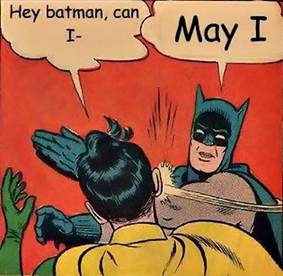
Hope you have a great weekend!

Comic from themetapicture.com

Kara Church

Senior Technical Editor

Posted by: Jack Henry | January 3, 2013

Editor’s Corner: Mixed Metaphors

Thursday is quiz day…but some of us are still easing back into things after the holidays. To make it easy on everyone today, we’ll skip the quiz, and instead, I have some information on mixed metaphors. From The Grammar Devotional, by Mignon Fogarty:

Wake Up and Smell the Coffee on the Wall: Mixed Metaphors

A metaphor is when you use something familiar to explain something else. Sports metaphors tend to be popular, and they’re also easy to mix. A sports metaphor is something like telling your employees It’s our turn at bat when it’s time to give a presentation. You’re comparing work to baseball. But be careful: if you said, “It’s our turn at bat, so let’s make a touchdown for the company,” you’d have mixed baseball and football metaphors, and your employees wouldn’t know whether to put themselves on a metaphorical baseball field or football field.

And now for some mixed metaphors that will hopefully give you a chuckle. These are from a collection at therussler.tripod.com:

· A rolling stone is worth two in the bush.

· Adam wasn’t always the brightest tool.

· Biting the hand that rocks the cradle…

· Can’t you read the handwriting in the wind?

· Dirty laundry is coming home to roost.

· He came out of it smelling like a bandit.

· He’s not the sharpest marble in the drawer.

· I could beat him with my eyes tied behind my back.

· I could see you itching at the bit.

· I’d walk a mile in a camel’s shoes to pass through the eye of a needle.

· I’ve got an ace up my nose.

· Ignorance is golden.

I hope you have a great day!

Kara Church

Senior Technical Editor

Posted by: Jack Henry | January 2, 2013

Editor’s Corner: Happy New Year!

Happy New Year!

I am pleased to welcome everyone back and to thank all of you new subscribers to Editor’s Corner! We’re off to a great start.

The other day we had a look at some of 2012’s most overused terms, but I have to say that this list from The Atlantic Wire (www.theatlanticwire.com) is a bit more entertaining. I’ve selected a few items from what their contributors call “An A-to-Z Guide to 2012’s Worst Words.”

Note: Most of my commentary is in blue, often marked with a KC (my initials, not Kentucky Chicken or Karaoke Cafe). Information from outside resources is labeled, contains a reference, and I generally keep it in black font.

· Baby Bump. Horrid compound noun. [This term…] manages to be both infantilizing and depersonalizing to both baby bump and baby carrier. It’s not a bump; that human woman is pregnant.

· Epic. Adjective. Unless you’re describing The Iliad or The Odyssey (and in a high school or college English class), choose anew, friends. Don’t make me say this again in 2013.

· Fiscal Cliff. Noun. Our Dashiell Bennett says, "The fiscal cliff is the worst kind of jargon because it’s both inaccurate and unhelpful. America’s economy won’t suddenly plummet to the bottom of a crevasse on January 1, and even if it were going to, an imaginary rock formation doesn’t teach anyone about how budgets are made. [KC – This gets my vote. I think I’ll stick with Netflix so I don’t have to hear it anymore.]

· Hehehe. The way a serial killer chuckles. This is a particular spelling of laughter which I personally cannot stand, mostly because it is so very creepy.

· Meggings. Noun. These are "men’s tights" and worse than men wearing tights (let ’em wear what they like, we say!) is the horrifying proliferation of the word meggings to describe tights worn by men. One small up-side is that meggings make jeggings sound rather lovely, actually. [KC – I’m all for men in tights!]

· Ping. Verb.Gizmodo’s Sam Biddle despises this word, saying "I hate ping because it means the exact same thing as contact. There’s no difference between ping and contact. But when we say ping, we can pretend like we’re in a scene from The Social Network, when in fact we’re just regular idiots like everyone else. It’s also too ambiguous—if someone asks me to ping them, do I text, call, ring a bell in their face? I hate ambiguity in language." Do not ping me. Do not dare.

Kara Church

Senior Technical Editor

Posted by: Jack Henry | December 28, 2012

Editor’s Corner New Year Contest

Editor’s Corner Contest

Ready to make your first New Year’s resolution—you know the one where you vow to improve your grammar, punctuation, and vocabulary? How about if I make it easy by inviting you to subscribe to the Editor’s Corner, where you will get several e-mails each week on these topics and more? I use many different resources—including you—to address the quirks of English, to review stubborn grammar rules, and to provide you with lovely golden nuggets of wisdom.

If you are already a subscriber, that’s okay; I have something else to offer you. I would like to invite all new and existing subscribers to join my contest. Here are the details:

Who: Editor’s Corner subscribers (only JHA employees are eligible to win the prize)

What: Encourage your co-workers to sign up for Editor’s Corner. They must e-mail me and mention your name. The person who signs up the most new people is the winner!

Where: From wherever you are.

When: From today until Wednesday, January 9, 2013. I will announce the winner on Friday, January 11.

How: Tell folks about it! If they want examples, you can send them to our website (address below). If you think someone is a fellow word nerd, have them sign up with me!

Why: To learn new vocabulary, to improve your grammar, to learn what an ellipsis is and when to use it—all of this and more, without being smacked on the knuckles with a ruler when you make a mistake. And remember, there is a prize!

Good luck and thank you!

Visit the website for previous topics: https://episystechpubs.com/

Follow our tweets: www.Twitter.com/Symitar_EpisysU

Sign up for the e-mail distribution list: kchurch

Kara Church

Senior Technical Editor

619-542-6773 | Ext: 766773

www.symitar.com

NOTICE: This electronic mail message and any files transmitted with it are intended
exclusively for the individual or entity to which it is addressed. The message,
together with any attachment, may contain confidential and/or privileged information.
Any unauthorized review, use, printing, saving, copying, disclosure or distribution
is strictly prohibited. If you have received this message in error, please
immediately advise the sender by reply email and delete all copies.
Posted by: Jack Henry | December 28, 2012

Editor’s Corner: Random Regional Ravings

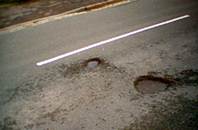
I love hearing about words and terms that people use in different areas of the United States. For example, when I moved to San Diego from Seattle, I called the holes in the road “chuckholes.” In San Diego they’re “potholes” and elsewhere some people call them “kettles.”

http://en.wikipedia.org/wiki/Pothole

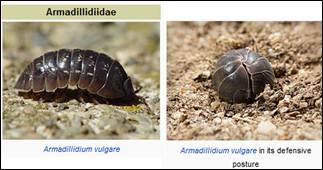
Another example is the Armadillidiidae (arma-diddly-doo to you!], known by this Northwesterner as the “potato bug” (or pill bug). Down here I’ve heard them called “pill bugs” and “roly-polies,” and it seems the common, more accurate name is the “wood louse.” Anybody out there with other names?

http://en.wikipedia.org/wiki/Armadillidium_vulgare

But that aside, today’s tidbit is from the radio show A Way with Words (podcasts at www.waywordradio.org). Host Grant Barrett brings up something I’ve never heard of, and I have it here for you to ponder:

Do you have a saying for when you drive over a bump and plop back down? In the Northeast, it’s common to say thank you, ma’am, since the nodding motion of a head going over a bump is reminiscent of genteel greetings. It’s also known as a dipsy doodle, duck-and-dip, tickle bump, whoop-de-do, belly tickler, and how-do-you-do. Our favorite, though, is kiss-me-quick, a reference to seizing the opportunity when a bump in the road throws passengers closer together. The term goes back to the days of horse-drawn buggies.

Gary Cooper

http://www.hatshapers.com/minnie_pearl.htm

Kara Church

Senior Technical Editor

As we approach the end of the year, lists of the best and the worst of 2012 abound.

From dailywritingtips.com, here are the words of the year according to several of the major dictionary companies (edited for brevity).

· Merriam-Webster’s 2012 Word of the Year is a toss-up between capitalism and socialism, reflecting the controversy and debates about universal health care and discussion about the comparative government systems in the United States and in much of Europe.

The definitions according to M-W:

o capitalism: an economic system characterized by private or corporation ownership of capital goods, by investments that are determined by private decision rather than by state control, and by prices, production, and the distribution of goods that are determined mainly in a free market

o socialism: any of various theories or social and political movements advocating or aiming at collective or governmental ownership and administration of the means of production and control of the distribution of goods

· Dictionary.com’s choice is bluster, which means “loud, swaggering, often empty boasts, threats, or other comments”—an appropriate term, considering the unusually contentious political climate in the United States over the last year.

· The selection by editors at Oxford University Press’s UK headquarters is omnishambles, which denotes a thoroughly mismanaged situation notable for a chain of errors.

And from www.theatlanticwire.com, we have an excerpt on typos and typo corrections. I thought this one was particularly amusing:

A couple of corrections from the New York Times this year were particularly special, not due to typos but for the unique and beautiful quality of the corrections themselves. Take this one from back in January of 2012:

An earlier version of this article incorrectly described imagery from The Shining. The gentleman seen with the weird guy in the bear suit is wearing a tuxedo, but not a top hat.

For more of these, here is the link: http://www.theatlanticwire.com/entertainment/2012/12/best-typos-mistakes-corrections-2012/59828/

Kara Church

Senior Technical Editor

619-542-6773 | Ext: 766773

www.symitar.com

NOTICE: This electronic mail message and any files transmitted with it are intended
exclusively for the individual or entity to which it is addressed. The message,
together with any attachment, may contain confidential and/or privileged information.
Any unauthorized review, use, printing, saving, copying, disclosure or distribution
is strictly prohibited. If you have received this message in error, please
immediately advise the sender by reply email and delete all copies.
Posted by: Jack Henry | December 21, 2012

Editor’s Corner: Pangrams

Happy Friday!

I was looking for something fun and I stumbled on this word and several articles about it. I was in word nerd heaven! I’ve tried to whittle it down, but if you are at all interested, there is more information out there. The definition is from http://en.wikipedia.org/wiki/Pangram, where they also have pangrams in different languages. The other examples and information are from http://www.fun-with-words.com/pang_visitor.html. Enjoy!

Definition

A pangram (Greek: παν γράμμα, pan gramma, "every letter") or holoalphabetic sentence for a given alphabet is a sentence using every letter of the alphabet at least once. Pangrams have been used to display typefaces, test equipment, and develop skills in handwriting, calligraphy, and keyboarding.

Brief History

Almost half a millennium ago, a printer scrambled a galley of type to produce the first pangram for a specimen book. The text was in Latin, so only 23 letters were required (Latin does not use J, V or W; however V is now used to represent the consonantal U, and sometimes J to represent consonantal I). [KC – Many of you may recognize the example below from templates and font research.]

Lorem ipsum dolor sit amet, consectetur adipiscing elit,
diam nonnumy eiusmod tempor incidunt ut labore et dolo…

This means There is no one who loves pain itself, who seeks after it, and wants to have it, simply because it is pain…

Examples

A perfect pangram is one where each letter is used only once, such as these gems:

· The quick brown fox jumps over a lazy dog.

· Pack my box with five dozen liquor jugs.

· How quickly daft jumping zebras vex.

And here are several that use each letter (though some are repeated. The total number of letters is in parentheses after the pangram.

· The five boxing wizards jump quickly. (31)

· Sympathizing would fix Quaker objectives. (36)

· Jim just quit and packed extra bags for Liz Owen. (39)

· A large fawn jumped quickly over white zinc boxes. (41)

· Harry, jogging quickly, axed Zen monks with beef vapor. (44)

· Five or six big jet planes zoomed quickly by the tower. (44)

· My grandfather picks up quartz and valuable onyx jewels. (47)

· Jack amazed a few girls by dropping the antique onyx vase! (47)

· Fred specialized in the job of making very quaint wax toys. (48)

Have a fantastic weekend (and vacation if you’re taking days off for the holidays)!

Kara Church

Senior Technical Editor

619-542-6773 | Ext: 766773

www.symitar.com

NOTICE: This electronic mail message and any files transmitted with it are intended
exclusively for the individual or entity to which it is addressed. The message,
together with any attachment, may contain confidential and/or privileged information.
Any unauthorized review, use, printing, saving, copying, disclosure or distribution
is strictly prohibited. If you have received this message in error, please
immediately advise the sender by reply email and delete all copies.

Posted by: Jack Henry | December 20, 2012

Editor’s Corner: Quiz the Season Answers

As promised, here are today’s answers:

1. Rudolph the Red Nosed Reindeer
2. Silent Night
3. O’ Little Town of Bethlehem
4. Carol Brady (Florence Henderson)
5. Deck the Halls
6. Joy to the World
7. Good King Wenceslas (or some say Jolly Old St. Nicholas)
8. We Three Kings
9. Carol Burnett
10. Come All Ye Faithful
11. O Holy Night
12. I’m Dreaming of a White Christmas
13. Carol Peterson
14. The Twelve Days of Christmas
15. It Came Upon a Midnight Clear
16. Frosty the Snowman
17. Carole King (nee Klein)
18. Silver Bells
19. Walking in a Winter Wonderland
20. Up on the Rooftop/Housetop

NOTICE: This electronic mail message and any files transmitted with it are intended
exclusively for the individual or entity to which it is addressed. The message,
together with any attachment, may contain confidential and/or privileged information.
Any unauthorized review, use, printing, saving, copying, disclosure or distribution
is strictly prohibited. If you have received this message in error, please
immediately advise the sender by reply email and delete all copies.

Posted by: Jack Henry | December 20, 2012

Editor’s Corner: Quiz the Season

It’s quiz day! I have something a little different today, courtesy of Ann Puddister, Tiffany Haynes, and “the Google.”

I have changed the name of the quiz from Name That Christmas Carol, to Name That Carol. If you choose to participate, you will see that I am not declaring war on Christmas, but there are other reasons behind the title change—primarily mischief.

The instructions are to figure out the names of the “carols” without searching the Internet. Here are twenty, and I will send you the answers sometime around noon, Pacific Time. Enjoy!

Name That Carol

1. Quadruped with crimson proboscis

2. 5 p.m. to 6 a.m. without noise

3. Miniscule hamlet in the Far East

4. Fictional maternal figure on 60s and 70s TV series, with a triad of male children and a triad of female children

5. Adorn the vestibule

6. Exuberance directed to the planet

7. Ancient benevolent despot

8. Monarchial trio

9. Red-headed American actress, singer, and variety show funny lady

10. Assemble, everyone who believes

11. Hallowed post meridian

12. Fantasies of a colorless December 25th

13. Female leader in Episys upper management, Capricorn, Billy Idol fan, and sailor

14. A dozen 24-hour Yule periods

15. Befell during the transparent bewitching hour

16. Homo sapiens of crystallized vapor

17. American singer, songwriter, and pianist with fantastically successful album in 1971 (album name synonymous to “embroidered wall-hanging”)

18. Shiny grey metallic tintinnabulums

19. Perambulating through a December solstice fantasy

20. Aloft on the acme of the abode

NOTICE: This electronic mail message and any files transmitted with it are intended
exclusively for the individual or entity to which it is addressed. The message,
together with any attachment, may contain confidential and/or privileged information.
Any unauthorized review, use, printing, saving, copying, disclosure or distribution
is strictly prohibited. If you have received this message in error, please
immediately advise the sender by reply email and delete all copies.

Posted by: Jack Henry | December 19, 2012

Editor’s Corner: Medical Terms with New Meanings, Part II

Although it’s a little belated, this is the follow-up from Monday’s e-mail on names of medical conditions that have taken on new meaning in our language. The newer meaning is first, followed by the medical definitions in parentheses.

The original article is from DailyWritingTips.com.

1. Nerve: boldness, strength, or a sensitive issue (tissue that connects components of an organism’s nervous system, or sinews or tendons)

2. Oral: spoken (pertaining to the mouth, or to personality traits or a stage of psychological development)

3. Paralysis: incapacity or powerlessness (loss of ability to sense and move part or all of the body)

4. Plethora: abundance, excess (an excess of blood)

5. Postmortem: an analysis or discussion of an event after it has occurred (an autopsy)

6. Prognosis: forecast (chances for recovery from disease)

7. Sanguine: bloodthirsty, or optimistic (pertaining to blood, or having a ruddy complexion)

8. Schizophrenia: antagonistic or contrary attitudes or qualities (a psychiatric disorder marked by delusion of perception and thought)

9. Surgical: marked by precision (pertaining to medical operations)

10. Umbilical: used in references to excessive emotional attachment (pertaining to the navel or the center of the abdomen)

Kara

NOTICE: This electronic mail message and any files transmitted with it are intended
exclusively for the individual or entity to which it is addressed. The message,
together with any attachment, may contain confidential and/or privileged information.
Any unauthorized review, use, printing, saving, copying, disclosure or distribution
is strictly prohibited. If you have received this message in error, please
immediately advise the sender by reply email and delete all copies.

« Newer Posts - Older Posts »

Categories