Posted by: Jack Henry | January 29, 2013

Editor’s Corner: A is for Affect

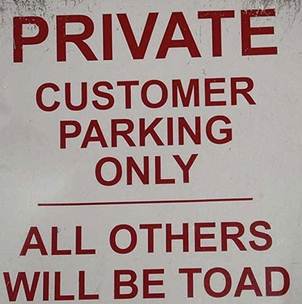
Let’s start getting into some of the homonyms, homophones, and other words that often get a bit confused. Today I have an oldie but a goodie for you. Perhaps these rules from grammarbook.com will stick better than my last tips on this topic.

affect vs. effect

Rule 1: Use effect when you mean bring about or brought about, cause, or caused.

Example: He effected a commotion in the crowd.

Meaning: He caused a commotion in the crowd.

Rule 2: Use effect when you mean result.

Example: What effect did that speech have?

Rule 3: Also use effect whenever any of these words precede it: a, an, any, the, take, into, no. These words may be separated from effect by an adjective.

Examples: That book had a long-lasting effect on my thinking.

Has the medicine produced any noticeable effects?

Rule 4: Use the verb affect when you mean to influence rather than to cause. [KC – Don’t be afraid of this word and overuse the word “impact” instead. Impact and impacted
have other meanings and some of those meanings are pretty gross.]

Example: How do the budget cuts affect your staffing?

Rule 5: Affect is used as a noun to mean emotional expression.

Example: She showed little affect when told she had won the lottery.

And for bonus time, a few homophones:

air – what we breathe

err – make a mistake

heir – one who inherits something

aisle – passageway

I’ll – contraction for I will

isle – a small island

NOTICE: This electronic mail message and any files transmitted with it are intended
exclusively for the individual or entity to which it is addressed. The message,
together with any attachment, may contain confidential and/or privileged information.
Any unauthorized review, use, printing, saving, copying, disclosure or distribution
is strictly prohibited. If you have received this message in error, please
immediately advise the sender by reply email and delete all copies.
Posted by: Jack Henry | January 25, 2013

Editor’s Corner: Homonyms, Homophones, and Homographs

I got some exciting news from the Monett office yesterday after sending out the first e-mail on spelling. Fifth-grader, Miss Alex Sparkman (daughter of Rexanna Hood), won first place in the spelling bee at her school. The outdone sixth-graders will be waving goodbye as Alex makes her way to Joplin for the next competition. Congratulations!

Now, before we get into spelling and frequently confused words, we’re going to learn a little Greek today that will, hopefully, help you remember some definitions. Let’s start with the linguistic terms homonym, homophone, and homograph. (Note: Sometimes these are all lumped under the term “homonym”; the following definitions are from Merriam-Webster.)

homonym

· From Greek homós (common, same) + onoma (name)

· One of two or more words spelled and pronounced alike but different in meaning

o A pool of water vs. pool the game

o A dog’s bark vs. the bark covering a tree

· KC’s hint – The key here is onoma (name); the words are “named” (spelled) the same, but have different meanings.

homophone

· From Greek homós (common, same) + phōnḗ(voice, utterance)

· One of two or more words pronounced alike but different in meaning or derivation or spelling

o aye, eye, I

o they’re, their, there

o to, too, two

· KC’s hint – The key here is phōnḗ (voice); the words sound the same, but have different meanings.

homograph

· From Greek homós (common, same) + gráphō (write)

· One of two or more words spelled alike but different in meaning or pronunciation

o entrance (the way in) vs. entrance (to mesmerize)

o minute (unit of time) vs. minute (tiny)

o bow (a type of knot) vs. bow (to bend at the waist, as sign of respect) vs. bow (“tool” used to shoot an arrow)

· KC’s hint – The key here is gráphō (write); the words are “written” (spelled) the same, but have different meanings or different pronunciation.

Kara Church

Senior Technical Editor

Posted by: Jack Henry | January 24, 2013

Editor’s Corner: Spelling

When I was a little kid, I was a pretty decent speller. In third grade, I was thrilled to be chosen to compete in the spelling bee for grades 3 to 5. We all spelled word after word, until there were four of us remaining—but there were only three ribbons. “Miss Church,” the librarian said, “Your word is potpourri.” The sweat started to pour. I was at a complete loss for letters. I asked them to repeat the word, as I stalled for time. I asked for a definition and my mind raced. “Hmm,” I said to my 8-year-old self, “If the place where nuns live is called a nunnery, I guess the place the Pope lives is called a popery.” That’s how I spelled it, and that’s how I lost.

Many of you have asked for more tips and tricks on spelling; some have asked about homonyms and homophones. I’ve been pondering how I can help, and I’ve been gathering information for months. I have some interesting information on homonyms, heteronyms, homographs, Spirographs (okay, maybe not this one); I’ve collected fascinating tidbits about Greek and Latin prefixes and suffixes; I have lists of homophones (words that sound the same but are spelled differently, such as there, their, and they’re) coming out of my ears. But where do I start?

Let’s start here, with some historical highlights of English spelling (original information from http://englishspellingproblems.co.uk/html/history.html):

· ~ 600: English spelling first developed in England

· 1066: Norman French becomes the official language of England after Norman Conquest

· ~ 1350: England began to re-establish its own identity

o English language had become very different from the Anglo-Saxon of pre-Norman times

o English writers, like Geoffrey Chaucer and William Tyndale, tried to give English a consistent spelling system, but their efforts were much undermined.

o Educated people had only written French or Latin before. They continued to use many of the French spellings they had become used to.

· 1476: Begin printing books in England

o Newly invented spelling system severely tampered with

o Foreign printers committed many spelling errors

o Printers paid by the line often inserted additional letters to earn more money

o Many errors eventually became accepted English spellings

· 1500-1600s: Imported many words from Latin and Greek into English

o Imported words usually keep original spellings

§ Latin and Greek were regarded as superior to English

o To show Greek origin, many words were spelt with y instead of i: symbol, system, symmetry.

o Silent letters proliferated: pneumonia, rheumatism.

o During this time the use of ea as an alternative spelling for both the ee and e sounds also became firmly established (speech – speak, bed – bread)

· 1700: All of the different influences had transformed English spelling into the phonically incoherent jumble we still use today

o Samuel Johnson’s dictionary of 1755 fixed spelling like a law

o English is spelled by dictionary rather than by phonetic rules or common sense [KC – Okay, this guy sounds a little bit angry!]

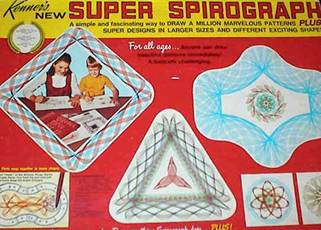
The things you can do with your Spirograph…

Photo from http://www.samstoybox.com/toys/Spirograph.html

Kara Church

Senior Technical Editor

Posted by: Jack Henry | January 23, 2013

Editor’s Corner: The Return of the Quotation Marks

Good afternoon all! It seems like forever since we shared a special candle-lit moment discussing punctuation or vocabulary. Rather than ease back into it, I’m ripping off the Band-Aid and continuing where we left off—with more quotation mark rules. These are the remaining rules from www.grammarbook.com, with examples from yours truly.

Rule 4: Use single quotation marks for quotes within quotes. Note that the period goes inside all quote marks.

Example:
Bonnie said, "Joy told Alexander, ‘You can’t treat me that way.’” (KC – Yes, the single quotes go within the double quotes, which means you’re including the three quote marks after the period.)

Rule 5: Use quotation marks to set off a direct quotation only.

Examples:
"Will you be coming to my bachelor party?" he asked.

He asked if you would be at his bachelor party.

“Are you allergic to hedgehogs?” Mary asked.

Mary wanted to know if you are allergic to hedgehogs.

Rule 6: Do not use quotation marks with quoted material that is more than three lines in length. (KC – There are different ways to handle this. Generally I indent longer quotations.)

Rule 7: When you are quoting something that has a spelling or grammar mistake or presents material in a confusing way, insert the term sic in italics and enclose it in brackets. Sic means, "This is the way the original material was."

Example:
Mickey Junior wrote, "My grandpa is my favorite pursun [sic] in the world."

And now for something completely different:

A man’s wife was in labor with their first child and suddenly she began to shout, “Shouldn’t, couldn’t, wouldn’t, didn’t, can’t!” He asked the nurse what was wrong with her. The nurse said, “She’s having contractions.” – Garrison Keillor

NOTICE: This electronic mail message and any files transmitted with it are intended
exclusively for the individual or entity to which it is addressed. The message,
together with any attachment, may contain confidential and/or privileged information.
Any unauthorized review, use, printing, saving, copying, disclosure or distribution
is strictly prohibited. If you have received this message in error, please
immediately advise the sender by reply email and delete all copies.
No time for punctuation today, and tomorrow I have jury duty, so you’ll just have to hold any unanswered questions you have about quotation marks for another day. Here are ten terms that are synonyms for law, order, or rule, from DailyWritingTips.com. There’s a chance I might’ve added a few comments here and there.

· Behest: an order or prompting

· Commandment: something ordered

· Decree: an order, or a decision by a judicial or religious official

· Directive: an order issued by a government entity, an official, an organization, or Starfleet

· Edict: an order or proclamation

· Injunction: an order, or a legal requirement to do or not do something (not to be confused with a conjunction, the part of speech that is used to combine two or more words, clauses, or sentences)

· Mandate: an order handed down from one court or other judicial body to another, or an authorization granted to a government official or a government, an order for establishment of a government, or a territory under such an order (and rarely, a term referring to several guys hanging out together, usually in a “man cave”)

· Ordinance: a law or order established by a government entity, especially on the municipal level, a specified ceremony or custom, or something ordered by a god or determined by fate

· Precept: an order given to an official by the person’s superior, or an order or a principle that is to be considered a general rule

· Word: a direction or order (Sometimes used as an interjection [Word!] to indicate agreement.)

Kara Church

Senior Technical Editor

Posted by: Jack Henry | January 14, 2013

Editor’s Corner: Hello, Monday! It’s Quotation Mark Time!

Okay, no more messing around—the weekend is over and it’s time to get back to business! Today’s topic (and tomorrow’s) is quotation marks. Hopefully, these rules and examples will address the questions that arose during our discussion of the power-packed period and its use with other punctuation.

These rules are courtesy of The Blue Book of Grammar and Punctuation (www.grammarbook.com); the examples are my gifts to you.

Quotation Marks

Rule 1: Periods and commas always go inside quotation marks, even inside single quotes. [KC – These are the American English rules; British English rules keep the punctuation outside of the quote marks.]

Examples:

· The display changed from "Welcome," to "Access Denied," to "Welcome" again within 30 seconds.

· He said, "We don’t need to bring a flashlight."

· She said, "He told me that I should say, ‘On, Bojangles!’ when I want the horse to move forward.” [KC – Note single quotes for the quotation within the standard (double) quotes.]

Rule 2: The placement of question marks with quotes follows logic. If a question is in quotation marks, the question mark should be placed inside the quotation marks.

Examples:

· Grandpa asked, "Can you please bring five pounds of bacon with you?"

· Are you familiar with the phrase, "As cross as a frog in a sock"?

Note: Only one ending punctuation mark is used with quotation marks. Also, the stronger punctuation mark wins. Therefore, no period after sock is used. [KC – Punctuation “strength” is another topic completely.]

Rule 3: When you have a question outside quoted material AND inside quoted material, use only one question mark and place it inside the quotation mark.

Example:

· Did Pepper say, "Are you kidding me?"

Kara Church

Senior Technical Editor

Posted by: Jack Henry | January 11, 2013

Editor’s Corner: And the winner is…

I want to thank everyone who recently signed up for Editor’s Corner, and all of you who recommended it to your coworkers. In particular, I’d like to thank the winner of the Starbucks card: Tomya Fason. Tomya brings 21 new readers to the “club.” Coming up a close second with 18 submissions is Peggy Esch. In the days from January 2 to January 9, we have gone from 505 subscribers to 685.

Please feel free to have people e-mail me (kchurch) any time of year to be added to the list! Remember, they can get a taste at https://episystechpubs.com/ before making such a serious commitment. 🙂

I know I owe you some more answers about punctuation and quotation marks, but it is Friday, my dog got skunked, and I think we need something more relaxing. The following article is from the Common Errors in English Usage website (http://public.wsu.edu/~brians/errors/errors.html).

CONFIDENT/CONFIDANT/CONFIDANTE

In modern English “confident” is almost always an adjective. Having studied for a test you feel confident about passing it. You’re in a confident frame of mind. This spelling is often misused as a noun meaning “person you confide in,” especially in the misspelled phrase “close confident.”

The spelling “confidante” suggests that such a close friend might be a female, and conservatives prefer to confine its use to refer to women. But this spelling is also very common for males, and the spelling “confidant” is also used for both males and females. Either one will do in most contexts, but the person you trust with your deep secrets is not your “confident.”

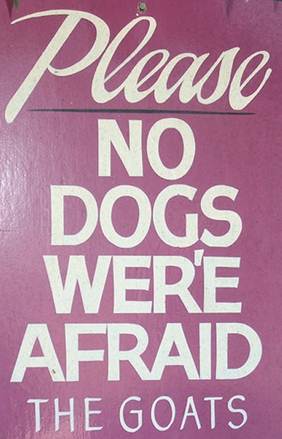
The incorrect, seldom-used apostrophe “e” from a family of semi-literate goats:

Have a good weekend!

Kara Church

Senior Technical Editor

Posted by: Jack Henry | January 9, 2013

Editor’s Corner: Parentheses

Good afternoon! Don’t forget, today is the last day to get points for encouraging people to sign up for the Editor’s Corner. You can recommend it any time of the year, but today your points go towards a $20 Starbucks card that is burning a hole in my pocket!

I received a lot of questions yesterday about punctuation combinations at the end of sentences. Most of them revolved around parentheses and quotation marks, so let’s tackle parentheses today.

Some of the questions:

· When a sentence has a parenthetical phrase at the end, does the end punctuation go inside or outside the parentheses?

· If a sentence ends with a question in parentheses, do you put the question mark inside the parentheses and end with the closing parentheses? Or do you put a period after that? For example: (right?).

Parentheses

The rules from grammarbook.com; the definition and examples are from The Chicago Manual of Style and from me.

Definition: Parentheses are used to set off material from the surrounding text.

Rule 1: Use parentheses to enclose words or figures that clarify or are used as an aside.

· He suspected that the noble gases (helium, neon, etc.) could produce a similar effect.

· Wexford’s analysis (see chapter 3) is more to the point.

Rule 2: Use full parentheses to enclose numbers or letters used for listed items.

· Myrtle dumped Duncan because as a boyfriend he was (1) selfish, (2) a messy eater, and (3) he liked sleeping with his pet boa.

Rule 3: Periods go inside parentheses only if an entire sentence is inside the parentheses.

· Five new watches were on display. (Shellahan coveted the battery-powered quartz model.)

Additional Examples:

· Intelligence tests (e.g., the Stanford-Binet) are no longer widely used.

· Come on in (quietly, please!) and take a seat.

· On display were the watchmakers’ five latest creations (all of which Shellahan coveted).

Final Word:

Sometimes it’s best just to rewrite the sentence a different way to get around crazy punctuation.

NOTICE: This electronic mail message and any files transmitted with it are intended
exclusively for the individual or entity to which it is addressed. The message,
together with any attachment, may contain confidential and/or privileged information.
Any unauthorized review, use, printing, saving, copying, disclosure or distribution
is strictly prohibited. If you have received this message in error, please
immediately advise the sender by reply email and delete all copies.

Posted by: Jack Henry | January 8, 2013

Editor’s Corner: One space. Period.

Little did I know that yesterday’s topic of (one) space after a period would cause such an uproar! I received countless e-mails from readers. Some folks were thankful and said they’d try to switch to one space; others were adamant about using two spaces “I’ll give up placing two spaces after sentences when they pry my mouse from my cold dead hands!” And one person asked if we could design a 12-step program to help ease the pain of letting the extra space go.

Considering all of that, I’m taking a step back to a (hopefully) safer punctuation mark: the period. Child’s play, you say? Well, I’m here to tell you that some people just don’t like ending their sentences and they habitually leave the period off. Others aren’t sure if they should put an extra period when the sentence ends with an abbreviation. Here are three simple rules to help you (rules from grammarbook.com; examples mine):

· Rule 1: Use a period at the end of a complete sentence that is a statement.

Example: I made a new sweater for my dog.

Photo from www.lionbrand.com

· Rule 2: If the last word in the sentence ends in a period, do not follow it with another period.

Examples:

o After ten years, Jodi earned her Ph.D. We threw a party for her on June 30.

o I added ginger, mint, fish sauce, etc.

· Rule 3: Use the period after an indirect question.

Example: She asked where we kept the butter.

Kara Church

Senior Technical Editor

Posted by: Jack Henry | January 7, 2013

Editor’s Corner: Spaces and Punctuation

Okay, enough with the fun and games; today I have a couple rules for you on spacing with punctuation. This is probably familiar to most of you, but I still see two spaces after periods in some of the things I edit.

Rule 1: If you learned to type on a typewriter rather than a computer keyboard, it is time to give up the two spaces after punctuation. I know, it can be tough—you press that spacebar twice like you have a nervous tic. Now it’s time to tame your reflexes and press it only once. Despite what you might’ve learned as a young ‘un, in our world of Word, you only need one space after the following punctuation marks:

· periods

· commas

· semicolons

· colons

· exclamation points

· question marks

· quotation marks

Rule 2: Do not use spaces on either side of a hyphen. (We’ll save other types of dashes for another day.) For example, “My house was built eighty-eight years ago.”

Go forth and prosper!

Kara Church

Senior Technical Editor

« Newer Posts - Older Posts »

Categories