Posted by: Jack Henry | December 17, 2012

Editor’s Corner: A morbid hallucination

Here are some great vocabulary words for Monday meetings! See how many you can use when called in to talk with your peers or your boss! For example, “Mr. Dithers, you used to happily flesh out your project plans to the minutest detail; today you have a dyspeptic attitude, your plan is anemic, and unless you diagnose and articulate the problem you will find yourself being transferred to the division of the company that has suffered from unstoppable hemorrhaging since layoffs began.”

Most of these words describe medical conditions or phenomena, but have acquired new connotations. In some cases, the medical meaning followed the original meaning. The list includes the terms and newer meanings, as well as the initial definition. (From DailyWritingTips.com, “Figurative and Alternate Meanings for 20 Medical Terms🙂 The first ten, for your reading pleasure:

1. Anemic: lacking in some quality, such as energy, interest, quantity, or substance (blood deficiency, resulting in a lack of vitality)

2. Artery: a communication or transportation channel, especially a major one (vessels that carry blood from the heart throughout the body)

3. Articulation: the action, manner, or state of being joined, or expressing or uttering sounds or words; also, an obstruction (a joint or juncture in an animal)

4. Cataracts: waterfalls or steep rapids, or torrents (a clouding of the eye that obstructs light) — this word, from the Latin term for a portcullis, a gate that is lowered from above, likely acquired the medical connotation later, from the resemblance of the clouding to a sheet of water

5. Diagnosis: an analysis or investigation, or its conclusion (using signs and symptoms to identify a disease, or the identification itself)

6. Dyspeptic: disgruntled (suffering from indigestion)

7. Hallucination: delusion (false perception caused by drugs or a nervous system disorder, or the object so perceived)

8. Hemorrhage: a significant loss or release (a heavy flow of blood)

9. Nasal: a vocal quality suggestion obstruction in the nose (pertaining to the nose)

10. Morbid: melancholy or gruesome, or related to death (pertaining to or affected by or causing disease)

NOTICE: This electronic mail message and any files transmitted with it are intended
exclusively for the individual or entity to which it is addressed. The message,
together with any attachment, may contain confidential and/or privileged information.
Any unauthorized review, use, printing, saving, copying, disclosure or distribution
is strictly prohibited. If you have received this message in error, please
immediately advise the sender by reply email and delete all copies.

Posted by: Jack Henry | December 12, 2012

Editor’s Corner: Assure, Ensure, and Insure

Good morning! I apologize to anyone who got an accidental Tweet today; unfortunately, it contained nothing of value.

Today we return to the peeves from last week. I’ve covered this one before, but it is still one of the most frequently requested topics. These definitions (and the tips) are from Grammar Girl. I’ve edited the article down quite a bit, so if you want to read the entire piece, it’s at: http://grammar.quickanddirtytips.com/assure-ensure-insure.aspx.

· Assureis something you do to a person, a group of people, or an animal to remove doubt or anxiety. You can remember that assure can only be used with things that are alive (and both assure and alive start with a). Only things that are alive can feel doubt or anxiety, so only they can be assured.

· Ensureis something you do to guarantee an event or condition. You can remember that guarantee has those two e‘s on the end to help you remember that to ensure (with an e) is to guarantee something.

· Insurecan be done to a person, place, or thing, but it’s reserved for limiting financial liability, most commonly by obtaining an insurance policy. You can remember that we take out insurance to protect our income if we become unemployed, disabled, or injured in an accident. Both insure and income begin with in.

Kara Church

Senior Technical Editor

Posted by: Jack Henry | December 11, 2012

Editor’s Corner: Two winter holiday considerations

Both of these holiday tidbits are from Grammar Girl at www.quickanddirtytips.com.

· "Hanukkah" or "Chanukah"?

Hanukkah begins soon, and you may be wondering why you see it spelled different ways. There are many acceptable spellings for the Jewish holiday also known as the Festival of Lights; the name of the celebration is translated from Hebrew and there are multiple credible ways to make the translation. (It’s actually a transliteration rather than a straight translation because Hebrew and English use different alphabets.) Some acceptable spellings include Hanukkah, Chanukah, Hanukah, and Hannukah.

A word like this is a great example of why organizations need a style guide. The best way to deal with the variations is to pick a spelling and use it consistently.

· "Xmas" or "Christmas"?

Retailers have long been accused of secularizing Christmas by using "Xmas" in signs and advertisements; therefore, I suspect many of you will be surprised to learn that "Xmas" has a religious origin.

In Greek, the letter "chi" is written as an X, and chi is the first letter of the Greek word for "Christ." Greeks sometimes abbreviated "Christ" as "X." For example, they abbreviated "Christ savior" as "XP." ("P" is the symbol for the Greek letter "rho," which is the first letter of the word "savior" in Greek.) The Oxford English Dictionary shows the first known English use of "Xmas" in 1551.

As for appropriateness, "Xmas" may have a religious origin and fit better on signs, but many people—both those who use "Xmas" and those who complain about its use—are unaware of the religious origin. If you choose to use "Xmas," you should know that some people will be infuriated.

NOTICE: This electronic mail message and any files transmitted with it are intended
exclusively for the individual or entity to which it is addressed. The message,
together with any attachment, may contain confidential and/or privileged information.
Any unauthorized review, use, printing, saving, copying, disclosure or distribution
is strictly prohibited. If you have received this message in error, please
immediately advise the sender by reply email and delete all copies.

Posted by: Jack Henry | December 10, 2012

Editor’s Corner: Colors, Part II

Good <yawn> morning! Following up on Friday’s article from DailyWritingTips.com (“Idioms Referring to Colors of the Rainbow”), here are a few idioms using the other three colors of the rainbow: green, blue, and violet.

Green

The phrases “green-eyed monster,” an epithet for jealousy, and “green with envy” are perhaps based on the idea that one’s complexion turns a sickly hue when feeling these emotions; similarly, to say that someone looks green (or is green around the gills) means that they appear to be sick.

But green also has positive connotations: To give someone the green light, based on the universal traffic-signal color to indicate “Go,” is to approve a proposal. If you have a green thumb (or, in British English, green fingers), you are adept in gardening—probably because successful gardeners are apparent from the green pigmentation that rubs off from healthy plants to their hands as they handle the vegetation.

Because US paper currency is green, in American English, the color is associated with money and wealth.

Blue

Because it is the color of the sky, blue is associated with idioms such as “out of the blue,” “like a bolt from the blue,” and “out of a clear blue sky” that refer to a person, thing, or idea that arrives as if from nowhere. (“Into the wild blue yonder,” meanwhile, refers to a venture into unknown territory.)

“Blue collar” connotes people who work at a trade or as laborers, because such workers at one time commonly wore durable shirts made of blue cotton (as opposed to “white collar,” referring to dress shirts worn by professionals and office workers, and “pink collar,” a later, now frowned-on, reference to women in clerical positions, so labeled because men rarely wore pink.)

Two idioms generally negative in sense include blue-blooded, meaning “aristocratic,” probably because during the era in which the term was coined, nobility tended not to spend time in the sun and their veins showed blue under their pale skin, and “blue-eyed boy,” referring to a favored protégé; this phrase likely stems from the fact that fair-skinned and fair-haired people, who at one time had a social advantage over their swarthier counterparts, are likely to have blue eyes.

Other negative idioms include the use of blue to refer to a sad or bleak mood, as well as “black and blue,” meaning “bruised,” from the color of bruised skin, and “blue in the face,” referring to someone trying (in vain) to persuade another until, from lack of breath, they attain this state.

Purple or Violet

Purple, also called violet, like its color-spectrum counterpart yellow, has little representation in idiomatic language. Purple prose is that which is overwrought or overly complicated, and a shrinking violet is a shy person, though the usage is usually employed in such phrases as “not a shrinking violet” to refer to someone who is anything but shy.

The color purple, because materials for dying fabric in that color were rare and therefore expensive, was reserved for royalty or the wealthy in western cultures and still has an association with nobility. This association resulted in another idiom, “born to the purple,” meaning “someone born to royalty during their reign” and, by extension, referring to children of prominent people.

NOTICE: This electronic mail message and any files transmitted with it are intended
exclusively for the individual or entity to which it is addressed. The message,
together with any attachment, may contain confidential and/or privileged information.
Any unauthorized review, use, printing, saving, copying, disclosure or distribution
is strictly prohibited. If you have received this message in error, please
immediately advise the sender by reply email and delete all copies.
Posted by: Jack Henry | December 7, 2012

Editor’s Corner: White Elephants and Rainbows

Today my fellow word nerds were debating the meaning of “white elephant” gifts and parties. Based on the discussion, I thought it would be fun to look at some other phrases revolving around color. Here are the first three colors from an article in DailyWritingTips.com, “Idioms Referring to Colors of the Rainbow.”

Red

Because of the association of the color red with danger and deficits, most idioms that include the word red—for example, “in the red” (meaning “in debt”), “red tape” (referring to bureaucratic complications), and “seeing red” (being so angry that one’s vision is blurred)—have negative associations.

However, they overshadow a few positive ones: “paint the town red” (enjoying oneself dining and drinking), “red-letter day” (an occasion for celebration), and “red-carpet treatment” or “roll out the red carpet” (referring to paying special attention to someone, based on the color of carpeting usually seen at the entrance to a gala event for celebrities or VIPs).

A red herring is a deliberate diversion, a red-eye flight is a late-night airplane trip (from the bloodshot eyes of tired passengers), and to have a red face or to go beet red is to be embarrassed.

Orange

Among the colors of the rainbow, orange is curiously absent from idiomatic usage. Although it is a bright, cheerful color often found in nature, the only common expression that uses the word orange employs the plural form referring to the fruit of that name—“apples and oranges,” meaning “unrelated subjects or issues,” to emphasize irrelevance.

Yellow

The few idioms incorporating the word yellow have negative connotations. To have a yellow belly or a yellow streak down one’s back (the reason for the choice of locations is obscure) is to be a coward, and yellow journalism, based on an early comic strip character named the Yellow Kid, is that which is sensational and/or biased.

P.S. From Merriam-Webster:

white elephant

noun

1 : an albinic Indian elephant of which more or less of the usual dark pigment is absent from the skin giving it a pale color and which is rare and sometimes venerated in India, Ceylon, Siam, and Burma
2 a : a property requiring much care and expense and yielding little profit b : an object (as a gadget or trinket) that is no longer esteemed by its owner though not without value to others <conducted a white elephant sale to help the church>

Kara Church

Senior Technical Editor

Posted by: Jack Henry | December 6, 2012

Editor’s Corner: -able, -ible, and kibble

Today’s topic isn’t a peeve, it’s a helpful hint for people (like me) who mix up the suffixes –able and –ible when playing the spelling guessing game. If you are heartbroken that it isn’t a Thursday quiz—cheer up! At the bottom I’ve included a link from the same site, where you can take two quizzes, if you desire.

From the Purdue OWL (http://owl.english.purdue.edu/):

Rule 1

If the root is not a complete word, add -ible.

aud + ible = audible

Examples:

  • visible
  • horrible
  • terrible
  • possible
  • edible
  • eligible
  • incredible
  • permissible

Rule 2

If the root is a complete word, add -able.

accept + able = acceptable

Examples:

  • fashionable
  • laughable
  • suitable
  • dependable
  • comfortable

Rule 3

If the root is a complete word ending in -e, drop the final -e and add -able.

excuse – e+ able = excusable

Examples:

  • advisable
  • desirable
  • valuable
  • debatable

Some Exceptions

  • contemptible
  • digestible
  • flexible
  • responsible
  • irritable
  • inevitable

If you’re dying for a quiz to check how knowledgeable you are, click here: http://owl.english.purdue.edu/exercises/4/21/

And the kibble:

(Photo from: http://www.care2.com/news/member/374694206/1097853)

NOTICE: This electronic mail message and any files transmitted with it are intended
exclusively for the individual or entity to which it is addressed. The message,
together with any attachment, may contain confidential and/or privileged information.
Any unauthorized review, use, printing, saving, copying, disclosure or distribution
is strictly prohibited. If you have received this message in error, please
immediately advise the sender by reply email and delete all copies.

Posted by: Jack Henry | December 5, 2012

Editor’s Corner: Flesh and Flush

Dear Editrix,

When I want to indicate that a plan or idea requires more detail, which of the following should I use?

· “That idea requires some fleshing out.”

· “That idea requires some flushing out.”

Sincerely,

Finn from Flushing, NY

******************************

Dear Finn,

Let’s have a look at these two “f” words.

According to Merriam-Webster (http://tinyurl.com/ay9am54):

· Think of fleshing out a skeleton. To flesh out something is to give it substance, or to make it fuller or more nearly complete.

· To flush out something is to cause it to leave a hiding place, e.g., "The birds were flushed out of the tree." It can also be used figuratively, as in "flush out the truth."

So, if you are talking about an idea, concept, or plan that requires additional information and substance, you would use “flesh out.” If you are talking about scaring a covey of quail out of the brush (or driving the Ty-D-bowl man out of his hidey-hole), you would use “flush out.”

(Photos from http://tinyurl.com/ceywp72)

Kara Church

Senior Technical Editor

Posted by: Jack Henry | December 4, 2012

Editor’s Corner: Rein, reign, or range?

This week and next week I’m going to go through some of the questions and pet peeves you’ve brought up over the last few months. Today the question is: Is the phrase free rein, free reign, or free range?

From Daily Writing Tips:

The expression to give free rein to is figurative. It means to give a person freedom to act on his own authority. It derives from an equestrian term:

free rein – a rein held loosely to allow a horse free motion; the freedom that this gives a horse. (OED)

The word reign derives from a Latin word for kingship. To reign means to exercise the power of a king. The sense of this “reign” has become conflated with the expression “to give free rein to.” The confusion has become so complete that it’s beyond correction.

So, the original spelling of the phrase is “to give free rein to,” but more people use the spelling of “reign” and associate it with the power of the king, rather than a happy-go-lucky trotting horse. The last phrase, however, does not relate to either of these, unless you’re talking about the king’s farm animals.

“Free range” is used to refer to livestock and poultry that are allowed to roam around, graze, and forage for their own food, rather than being stuck in a barn and eating whatever is thrown on the ground or piled in the trough.

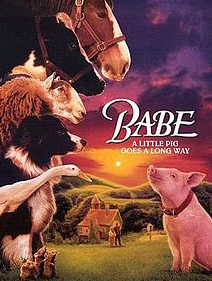
[Photo from
http://en.wikipedia.org/wiki/Babe_(film)]

Kara Church

Senior Technical Editor

Posted by: Jack Henry | November 29, 2012

Editor’s Corner: The Sign of Fire

1. My mom and I learned to cook at the Seattle School of Overcooking. Rather than risk salmonella or trichinosis, we tend to go for high heat and crispy food. Last night, with both of us in the kitchen, it was a two (smoke) alarm dinner, so I thought this was a very fitting article from Grammar Girl (www.quickanddirtytips.com):

2.

The Verb: “Burned” Versus “Burnt”

“Burned” and “burnt” are both acceptable past-tense forms of the verb “burn,” but which one you use depends on where you live because the verb “burned" is the most common form in the United States, and the verb "burnt" is the most common form in Britain.

· Mom burned the muffins.

· Mum burnt the crumpets.

The Adjective: “Burned” Versus “Burnt”

When you’re using the words as adjectives, then "burnt" is also used in the United States, although "burned" is still an option.

· My favorite dessert is burnt cream. [KC – This is a dessert? Mom, I think we’d excel at this!]

· What happened to my burnt umber crayon? [KC – I tried to melt it and make a candle.]

· My husband looked at the burnt turkey and suggested we order pizza. [KC – No, he looked at the burnt salmon, ate it, and liked it.]

That’s the story: “Burned” and “burnt” are both OK. If you’re in the United States, you’ll sound more natural if you stick with “burned” as the verb and save “burnt” to use as an adjective.

Sorry no quiz today folks—just a little too busy!

Kara Church

Senior Technical Editor

619-542-6773 | Ext: 766773

www.symitar.com

NOTICE: This electronic mail message and any files transmitted with it are intended
exclusively for the individual or entity to which it is addressed. The message,
together with any attachment, may contain confidential and/or privileged information.
Any unauthorized review, use, printing, saving, copying, disclosure or distribution
is strictly prohibited. If you have received this message in error, please
immediately advise the sender by reply email and delete all copies.

Posted by: Jack Henry | November 27, 2012

Editor’s Corner: Sticks and Stones

Names of ethnic groups have inspired nonliteral associations, many of them derogatory designations for the “other.” Here are several terms based on such names, from DailyWritingTips.com.

Bohemian: This word for one who adopts an unconventional lifestyle derives from the name of a historic region of Europe that now constitutes much of the present-day Czech Republic. Because many of the Romani people (see gypsy, below) had lived for a time in this area before settling in France, they were called Bohemians. In turn, this designation was attached to artists and writers who, because of poverty (voluntary or otherwise), often lived in city neighborhoods where the “original” Bohemians had concentrated.

Goth: This designation for a modern subculture distinguished by somber attire and demeanor and a fascination with death and the supernatural has its roots in gothic literature and horror imagery inspired by German expressionism. Gothic literature, in turn, derives its name from the standard setting of stories in this genre: castles or monasteries of the Gothic architectural style.

This style, meanwhile, takes its name from a pejorative use of Gothic to mean “barbaric”; the Goths were a loose confederation of tribes from Scandinavia responsible for the conquest of Rome and other centers of civilization in the early Middle Ages.

Gypsy: The Romani, members of a far-flung ethnic group originally from the Indian subcontinent, were long believed to have come from Egypt, and their informal name, now sometimes considered pejorative, derived from Egyptian. The term has also been used to refer to people with nontraditional, nomadic lifestyles and is employed loosely in such terms as “gypsy dancer.” The truncation gyp, meaning “cheat,” in both noun and verb form, results from an association of the Romani with fraud and thievery.

Philistine: Influenced by biblical references to a people of the Near East, called the Philistines, these people were the archenemies of the Israelites (the land they had lived in was later called Palestine). The term came to be used to refer to uncivilized people; later by extension, a philistine was a person lacking refined artistic or cultural tastes and values.

Vandal: This Germanic tribe, originating in Scandinavia, came to be associated with looting and pillaging because, after migrating throughout Europe and settling in North Africa, the Vandals conquered Rome in the early Middle Ages. However, recent historians have argued that the Vandals did not destroy the late Roman civilization but rather adopted the culture. Nevertheless, the word still refers to someone who damages property.

Kara Church

Senior Technical Editor

NOTICE: This electronic mail message and any files transmitted with it are intended
exclusively for the individual or entity to which it is addressed. The message,
together with any attachment, may contain confidential and/or privileged information.
Any unauthorized review, use, printing, saving, copying, disclosure or distribution
is strictly prohibited. If you have received this message in error, please
immediately advise the sender by reply email and delete all copies.

« Newer Posts - Older Posts »

Categories