Posted by: Jack Henry | November 26, 2012

Editor’s Corner: Flock of Seagulls

As we went for coffee this morning, my curious co-worker, Kathryn, told me that there is a name for words that refer to a group of something, like a “gaggle of geese.” They are generally referred to as collective nouns, but more specifically, she was talking about “terms of venery.” (Thanks, Kat!)

A brief history from Wikipedia (even briefer with some editing):

The tradition of using "terms of venery" or "nouns of assembly” stems from an English hunting tradition of the Late Middle Ages. The fashion of a consciously developed hunting language came to England from France. It is marked by an extensive proliferation of specialist vocabulary, applying different names to the same feature in different animals.

The following list was compiled by English Club (http://www.englishclub.com/vocabulary/animal-terms.htm) and not only includes the terms of venery, but the terms for male, female, and young specimens of the animal. These are common animals. For a broader list of terms of venery, see http://en.wikipedia.org/wiki/List_of_collective_nouns.

Animal Male Female Young Collective term
(terms of venery)
ant winged male, aner queen, worker antling a colony of ants, an army of ants
bat male female pup a cloud of bats, a colony of bats
bear boar sow cub a sleuth of bears, a sloth of bears
bee drone queen, worker larva, schadon, fry (plural noun) a hive of bees, a swarm of bees
bird cock hen nestling, fledgling a flock of birds, a flight of birds (in the air)
buffalo bull cow calf a herd of buffalo
cat tom queen kitten a clutter of cats
chicken rooster hen chick a brood of chickens, a flock of chickens
cow bull cow calf a herd of cattle
dog dog bitch puppy, pup a pack of dogs
dolphin bull cow pup a school of dolphins
duck drake duck duckling a raft of ducks
elephant bull cow calf a herd of elephants
fish male female fry (plural noun) a school of fish
fox dog, reynard vixen cub a troop of foxes, an earth of foxes
frog male female tadpole, froglet an army of frogs, a colony of frogs
goose gander goose gosling a flock of geese, a gaggle of geese
goat billy (domestic) nanny kid a flock of goats, a herd of goats
horse stallion, colt (young) mare, filly (young) foal a herd of horses, a team of horses (in harness), a string of horses (for racing)
kangaroo buck doe joey a mob of kangaroos, a troop of kangaroos
lion lion lioness cub a pride of lions
monkey male female infant a troop of monkeys
owl male female owlet a parliament of owls
ox bull, steer (castrated) cow calf a herd of oxen, a drove of oxen (when driven in a group), a team of oxen (in harness)
penguin male female chick a colony of penguins
person man woman baby, infant a crowd of people
pig boar sow suckling, piglet a herd of pigs, a flock of pigs
rabbit buck roe bunny, bunny rabbit a colony of rabbits, a nest of rabbits, a warren of rabbits (strictly, where they live)
sheep ram ewe lamb a flock of sheep
tiger tiger tigress cub, whelp a streak of tigers
whale bull cow calf a school of whales, a shoal of whales, a pod of whales (smaller groups)
wolf dog bitch cub a pack of wolves, a herd of wolves
zebra stallion mare foal a cohort of zebra, a herd of zebra

Kara Church

Senior Technical Editor

Posted by: Jack Henry | November 21, 2012

Editor’s Corner: Toward, backward, and forward

Back by popular demand! Today we have a refresher on forward/forwards, toward/towards, and backward/backwards. The most common question is: Which one of each pair is correct?

The easy answer is that in the U.S. we leave off the “s”; in Britain they include the “s.” So, I like to walk toward the duck pond, while Nigel prefers walking towards the umbrella stand. Again, both are correct. When one of these words is used as an adjective, however, the “s” must be removed. For example, “the backward child,” “forward momentum,” etc.

As a side note, I personally don’t think the general rule of American English versus British English is very consistent. When I was trying to think of an example, I realized I would say I walked “backwards” not “backward.” I think part of it just depends on what sounds right to your ear.

Now, go forth and enjoy the holiday!

Hopefully your dinner looks nothing like this:

Kara Church

Senior Technical Editor

Posted by: Jack Henry | November 19, 2012

Editor’s Corner: Excuse you!

To get us in the mood for the upcoming holiday, the Daily Writing Tips newsletter has shared some “bodily function” words with us today. Ah yes, gurgling stomachs, chowing down on turkey, cheek-pinching from Aunt Mary, and traveling with sick people—we’ve got you covered! I slimmed down the list a little so it’s only moderately disgusting. 🙂

borborygmus: rumbling (“What I thought was the rumbling of a truck was only a bout of borborygmus in my stomach.”)

eructation: belching (“The smokestacks engaged in endless eructation.”)

ingurgitation: guzzling (“We gazed in disbelief at the rampant ingurgitation occurring among the frat boys arrayed around the keg.”)

osculation: kissing (“The odious osculation that takes place between politics and big business will never cease.”)

peristalsis: swallowing (“They accepted the lies with peristaltic enthusiasm — hook, line, and sinker.”)

sternutation: sneezing (“His incessant explosions of sternutation were unsettling.”)

tussis: coughing (“John produced gratuitous tussis to signal his extreme skepticism.”)

For the full list of functions see: http://www.dailywritingtips.com/10-words-for-bodily-functions-and-actions/

Kara Church

Senior Technical Editor

Posted by: Jack Henry | November 16, 2012

Editor’s Corner: Little Star

One of my pet peeves is when I’m reading and there’s an asterisk that indicates there’s more information below, and the information never shows up. The following information is a combination of two Grammar Girl articles, and some of my own edits. Have a great weekend!

The word comes from a Greek word meaning “little star.” In the past, asterisks were used to show the omission of a letter or a passage in time, but that role has largely been taken over by the ellipsis (…).

How to Use an Asterisk

When you use the asterisk as a footnote symbol, it shows that you are planning to comment on something at the bottom of the page. You’ve made a promise, so you’d better keep it. The first rule for using asterisks is if you use one, make sure the reference starts at the bottom of the same page.

Unfortunately often, advertisements will have an asterisk that doesn’t refer to anything on the page. It leaves you wondering what the restrictions are. If the ad reads Zombie Repellant, 20% off,* and the asterisk refers to nothing, you wonder whether the discount only applies on certain days or for certain people. Does the discount apply if the zombie apocalypse has already begun? Are zombies themselves excluded from the offer?

Using an Asterisk as a Footnote Symbol

So, do asterisks differ from other footnote symbols, like numbers or letters? Yes. The Chicago Manual of Style says to use asterisks if you have just a handful of references on which you’re planning to comment. You can also use asterisks when you need to avoid using numbers or letters for indicating footnotes.

The Associated Press Stylebook (AP) says not to use the asterisk in journalism writing because the symbol may not be seen by AP computers or received by newspapers.

[KC – And Editrix says you should avoid using the asterisk if possible, especially in online documentation where the “bottom of the page” may mean scrolling through
dozens of screens. Very few of our document types require footnotes.]

The Grawlix

The asterisk used to be used to omit letters, and there’s at least one place where that practice survives: asterisks can replace letters in swear words you want to sanitize. For example, you could leave the first letter but use asterisks to replace the missing letters, leaving the reader to figure out what the word is, for example: b***h***. You could also use a grawlix, which is the term cartoonist Mort Walker gave to the string of characters (@#*&!) that appear in comic books when someone swears. [KC – For curious minds, I changed Grammar Girl’s swearword to “butthead,” since hers was a little saltier.
Hopefully you will not have the opportunity to use the grawlix in business writing!]

Summary

To summarize, the asterisk is a little star symbol which can be used to indicate a footnote or be used to edit swear words in informal text. A footnote should begin on the bottom of the same page on which the asterisk or other footnote symbol appears. Unlike superscript numbers or letters, the asterisk can be used alone when you need only a handful of footnotes in an article or story.

If you can’t get enough of this symbol, see the following Grammar Girl articles:

http://grammar.quickanddirtytips.com/asterisk.aspx

http://grammar.quickanddirtytips.com/how-to-use-an-asterisk.aspx

Kara Church

Senior Technical Editor

Posted by: Jack Henry | November 15, 2012

Editor’s Corner: “Then” and “Than”

Good morning! I’ve had several requests to cover than and then. Grammar Girl has provided the briefest of articles on that exact topic, so here you go!

From Daily Writing Tips (http://grammar.quickanddirtytips.com/then-versus-than.aspx):

Do you confuse "then" and "than"? Don’t worry; you’re not alone. I get this question all the time.

"Then" has an element of time. For example, it can mean "next" or "at that time."

o We ate and then we went to the movies.

o Movies were a lot cheaper back then.

"Than" conveys a comparison.

o DVDs are more expensive than videocassettes.

o Aardvark is taller than Squiggly.

Quick and Dirty Tip: Both "than" and "comparison" have the letter "a" in them, and "then" and "time" both have the letter "e."

And just for fun:

Kara Church

Senior Technical Editor
Posted by: Jack Henry | November 14, 2012

Quiz Answers

Today’s tally of answers:

BABBB – 52

BAAAB – 52

ABBAB – 3

ABAAA – 0

1. (B) In 1868, General Ulysses S. Grant ran for president.

Explanation: Capitalize a person’s title when it precedes the name.

2. (A) As a general, Ulysses S. Grant fought for the Union in the Civil War.

Explanation: Capitalize a person’s title when it precedes the name. Do not capitalize when the title is acting as a description.

3. (B) Best regards, Battista

Explanation: Capitalize the first word only of a complimentary close.

4. (B) Raul filed a complaint with the Environmental Protection Agency. The Agency was quick to respond.

Explanation: You may capitalize words such as department, bureau, agency, and office if you have already named them specifically in a previous sentence.

5. (B) The summer is such a lazy time of year.

Explanation: Do not capitalize names of seasons.

Kara Church

Senior Technical Editor

619-542-6773 | Ext: 766773

www.symitar.com

NOTICE: This electronic mail message and any files transmitted with it are intended
exclusively for the individual or entity to which it is addressed. The message,
together with any attachment, may contain confidential and/or privileged information.
Any unauthorized review, use, printing, saving, copying, disclosure or distribution
is strictly prohibited. If you have received this message in error, please
immediately advise the sender by reply email and delete all copies.

Posted by: Jack Henry | November 14, 2012

Editor’s Corner: Pop Quiz!

I’m feeling a little evil today, so I’m sending out the quiz today rather than tomorrow.

The way this works:

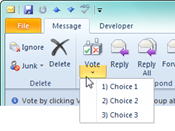
· You choose the correct sentence from each group below

· Write down your answers

· Look for the voting buttons at the top of this e-mail

· Select the set of answers that you think is correct

· Wait until noon (or later, depending where you are) and all will be revealed!

Choose the correct sentence from each group:

Question #1

A) In 1868, general Ulysses S. Grant ran for president.

B) In 1868, General Ulysses S. Grant ran for president.

Question #2

A) As a general, Ulysses S. Grant fought for the Union in the Civil War.

B) As a General, Ulysses S. Grant fought for the Union in the Civil War.

Question #3

A) Best Regards,

Battista

B) Best regards,

Battista

C) best regards,

Battista

Question #4

A) Raul filed a complaint with the Environmental Protection Agency. The agency was quick to respond.

B) Raul filed a complaint with the Environmental Protection Agency. The Agency was quick to respond.

Question #5

A) The Summer is such a lazy time of year.

B) The summer is such a lazy time of year.

NOTICE: This electronic mail message and any files transmitted with it are intended
exclusively for the individual or entity to which it is addressed. The message,
together with any attachment, may contain confidential and/or privileged information.
Any unauthorized review, use, printing, saving, copying, disclosure or distribution
is strictly prohibited. If you have received this message in error, please
immediately advise the sender by reply email and delete all copies.

Posted by: Jack Henry | November 13, 2012

Editor’s Corner: Time Keeps on Slipping…

Time flies when you’re having fun! Reading this sampling of time idioms from DailyWritingTips.com should fly by. (To see additional terms visit: http://www.dailywritingtips.com/15-idioms-for-periods-of-time/)

1. Banker’s hours: A relatively short duration (from the onetime tradition that banks were open for a limited number of hours compared to other businesses; therefore, one who keeps banker’s hours has a light work schedule)

2. Bat/wink/twinkling of an eye: variations of an idiom referring to a period of time so brief that it passes while one’s eyelid moves

3. Eleventh hour: occurring late in a given time frame (from the fact that the eleventh hour is the last in the day before midnight)

4. Flash: an instant (from the fact that a flash of flame is short lived)

5. Jiffy: an instant (perhaps from slang for lightning); also shortened to jiff [KC – “Jiffy…perhaps from slang for lightening”? Huh? More information please. Here is what I found as far as an etymology:
1785, "a moment, an instant," colloquial, origin unknown; said to be originally thieves’ slang for "lightning."

<![if !supportLists]>6. New York minute: a brief time (from the notion that minutes in the hectic milieu of New York City pass more quickly than those in more relaxed locales)

7. Small hours: the early morning (from the low numbers on the clock that indicate the time during that period) [KC – Never heard “small” hours. Maybe this is a regional thing? We always referred to the “wee” hours.]

8. Split second: a fraction of a second (from the notion that a second can be split, or subdivided); a split is also a fraction of the total elapsed time for a race

9. Trice: a short period of time (from a word meaning “pull”); often seen in the phrase “in a trice”

10. Witching hour: midnight or the middle of the night (with the connotation that unsettling or unusual things happen then, from the superstition that witches are about at that time)

Kara Church

Senior Technical Editor

Posted by: Jack Henry | November 9, 2012

Editor’s Corner: Pride Capitals and Ideal Forms

Today is the final e-mail about capitalization—at least for now. I’m returning to Grammar Girl’s write-up/podcast about capitalization in the corporate world. The last section is called “Pride Capitals and Ideal Forms.”

One mistake business writers often make is capitalizing words simply for emphasis or to augment their importance. [KC – This is particularly prevalent in some of our more technical documentation.] Such errant capitalization happens frequently in press releases and other promotional materials. Hyperbole is no stranger in that realm. Nevertheless, it does not make your pork rinds crunchier and tastier if you capitalize the words “Pork” and “Rinds.”

Murray Munn commented on the “Pork Rind” kind of capitalization on the Grammar Girl Facebook page. He calls them “pride capitals” and speculates that “What we admire, we capitalize.” For example, he says he often sees librarians write “library” with a capital L. [KC – I think “pride capitals” is a fantastic term. When you’re writing, consider whether
the topic is a common term or an actual product with a trademark or copyright. For example, “Blade Network Technologies®” as opposed to “the network technology used at this company.”]

Murray isn’t far from the truth because sometimes it actually is okay to capitalize words we admire. In its section on Platonic words, the Chicago Manual of Style offers this:

“Words for transcendent ideas in the Platonic sense, especially when used in a religious context, are often capitalized. Good; Beauty; Truth; the One.”

So here’s the Quick and Dirty Tip on random or vanity capitalization: don’t.

Save uppercase for conventional uses such as a proper name or one of Plato’s lofty ideals.

When in doubt, look up a word to see whether its meaning varies depending on capitalization.

I hope you have a great holiday weekend!

Kara Church

Senior Technical Editor

Instead of using Grammar Girl’s example for today’s topic (capitalization of department names) I’m providing you with information from the Chicago Manual of Style. This portion ofthe CMOS reviews groups, companies, department names, and other entities that are named using similar rules—the same rules we use here (at least at the Symitar branch of JHA).

The full names of institutions, groups, and companies and the names of their departments, and often the shortened forms of such names (e.g., the Art Institute), are capitalized. A the preceding a name, even when part of the official title, is lowercased in running text. Such generic terms as company and university are usually lowercased when used alone (though they are routinely capitalized in promotional materials, business documents, and the like).

Examples:

· the University of Chicago; the university

· the Department of History; the department

· the University of Chicago Press; the press

· the Board of Trustees of the University of Chicago; the board of trustees; the board

· the Art Institute of Chicago; the Art Institute

· the Beach Boys; the Beatles; the Grateful Dead, the Dead; the Who (but Tha Eastsidaz)

· Captain Beefheart and His Magic Band; the band

· the Cleveland Orchestra; the orchestra

· the General Foods Corporation; General Foods; the corporation

· the Green Bay Packers; the Packers

· the Hudson’s Bay Company; the company

· the Illinois Central Railroad; the Illinois Central; the railroad

· the Library of Congress; the library

· the Manuscripts Division of the library

· the Museum of Modern Art; MOMA; the museum

· the New York Stock Exchange; the stock exchange

· Skidmore, Owings & Merrill; SOM; the architectural firm

· the Smithsonian Institution; the Smithsonian

· Miguel Juarez Middle School; the middle school

Kara Church

Senior Technical Editor

« Newer Posts - Older Posts »

Categories