Posted by: Jack Henry | November 7, 2012

Editor’s Corner: Job Titles and Job Descriptions

As we continue on with the topic of capitalization, the next lesson from Grammar Girl (www.quickanddirtytips.com) is about deciding when to capitalize job titles and job descriptions. Here is her advice, though I’ve changed the examples to make them simpler and more pertinent to us.

Note: One caveat before I start: if clients want to be addressed with uppercase titles or job descriptions, we generally don’t argue with them. 🙂 We’ll talk more about this and “pride capitals” later.

Rule – Part I:
If the title is an actual title—not just a job description—and it comes before the person’s name, it should generally be uppercase.

Examples:
Chief Executive Officer, Jack Prim
President of the United States, Barrack Obama

Rule – Part II:
If the title comes after the name, make it lowercase. In this case, it’s an appositive phrase serving as an identifier.

Examples:
Kara Church, editor at JHA, spends $100 on red gel pens in a writing frenzy…
Caesar Milan, dog trainer, is recommended by many movie stars with bad dogs.

Rule – Part III:
For a general job description, use lowercase, regardless of whether it comes before or after a name.

Examples:
The San Diego Zoo’s lead gardener, Fonzie Fatoosh, reports that the fruit fly population is under control.

The Fish Cave’s company spokesman, Lincoln “The Shark” McMahon, delivered the news about the “Lobster Extravaganza” bonuses.

Thursday’s Topic: Capitalization and Department Names

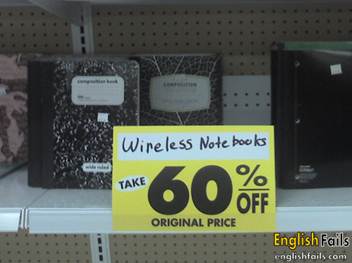
And from englishfails.com, kickin’ it old school:
Kara Church

Senior Technical Editor

Posted by: Jack Henry | November 6, 2012

Editor’s Corner: Capitalization – Meaning Is Key

As promised, I’m starting the week with the return to capitalization and as Grammar Girl says, “…its overuse and its misuse in the business world.” Today we’re starting with a portion of an article called “Meaning Is Key.”

One reason capitalization matters is that a word’s meaning can change depending on whether it’s uppercase or lowercase.

“See those three domiciles over there? Well, I live in the white house.” That’s quite different from, “I live in the White House [capital W, capital H].” That White House is where the president lives.

In English, we capitalize words that are proper nouns—that is, they describe a specific thing or entity. They could be a title, a name, or a specific place such as the president’s residence: [THEE] White House. [KC – As opposed to “thuh white house…” any ordinary house painted white.]

We lowercase words that are considered common nouns—that is, they can be used to describe many things, such as any one of the multitude of white colored houses in the world. [KC – As opposed to “thuh white house…” any ordinary house painted white. Some common nouns I often see capitalized by mistake here include: network, server, software,
core, documentation, department, service, etc.]

Tomorrow: Job Titles and Job Descriptions

(Excerpt from Grammar Girl at: http://www.quickanddirtytips.com)

NOTICE: This electronic mail message and any files transmitted with it are intended
exclusively for the individual or entity to which it is addressed. The message,
together with any attachment, may contain confidential and/or privileged information.
Any unauthorized review, use, printing, saving, copying, disclosure or distribution
is strictly prohibited. If you have received this message in error, please
immediately advise the sender by reply email and delete all copies.

Posted by: Jack Henry | November 2, 2012

Editor’s Corner: Capitalization Q&A

Today’s Q&A is brought to us by Grammar Girl (www.quickanddirtytips.com). Next week we’ll dig a little deeper and discuss capitalization of titles, department names, etc. You’ll be an expert in no time!

Question: Do you capitalize Service Call if it is being used consistently throughout a memo?

Answer: In English, we only capitalize proper nouns—nouns that are the name of something. In your sentence, "service call" seems descriptive; it doesn’t seem like a proper noun that needs to be capitalized.

Business people often capitalize words unnecessarily. It’s one of the more common errors I see, and "service call" in your sentence is a good example of the type of word or phrase people are drawn to errantly capitalize. [KC – This is common here, too. Many times people erroneously
capitalize words because they are an important part of a topic—not because are actually proper nouns.]

I hope you all have a good weekend!

NOTICE: This electronic mail message and any files transmitted with it are intended
exclusively for the individual or entity to which it is addressed. The message,
together with any attachment, may contain confidential and/or privileged information.
Any unauthorized review, use, printing, saving, copying, disclosure or distribution
is strictly prohibited. If you have received this message in error, please
immediately advise the sender by reply email and delete all copies.

Posted by: Jack Henry | October 31, 2012

Editor’s Corner:

Happy Halloween!

I’ve selected a few Halloweenish words for you today and included abbreviated versions of their definitions from the Merriam-Webster Dictionary.

· bogeyman: a monstrous imaginary figure used in threatening children; broadly: a terrifying person or thing
Etymology: from bogey + man (bogey: goblin, specter, phantom; an object of dread, fear, or loathing)

· cadaver: a dead human or animal body usually intended for dissection
Etymology: from Latin, from cadere to fall

· crypt: a vault or other chamber wholly or partly underground; especially: a vault under the main floor of a church

· grim reaper (or Grim Reaper): death especially when personified as a man or skeleton with a scythe

· hocus pocus: 1) obsolete: juggler, trickster, sleight of hand 2) words or a formula used (as by jugglers) in pretended incantations without regard to the usual meaning 3) nonsense or sham used or intended to cloak deception <the hocus-pocus of city politics>; broadly: something that confuses, misleads, or is difficult to comprehend
Etymology: probably invented by jugglers in imitation of Latin

· jack-o’-lantern: 1) obsolete: a man carrying a lantern: a night watchman 2) a lantern made of a pumpkin or other vegetable so prepared as to show in illumination features of a human face

· mausoleum: 1) a magnificent tomb 2) a tomb for more than one person
Etymology: Latin, from Greek mausoleion, from Mausolos Mausolus died 353 B.C. ruler of Caria commemorated by a magnificent tomb at Halicarnassus

· phantasm (or fantasm): 1) illusion, deception 2) ghost, specter, spirit 3) a figment of the imagination, fancy, or disordered mind
Etymology: Middle English fantasme, from Old French, from Latin phantasma, from Greek, from phantazein to present to the mind

· specter (or spectre): 1) a visible disembodied spirit apparition, ghost, phantom 2) a ghostly and usually fear-inspiring vision of the imagination: something that haunts or persistently perturbs the mind
Etymology: French spectre, from Latin spectrum appearance, specter, from specere to look

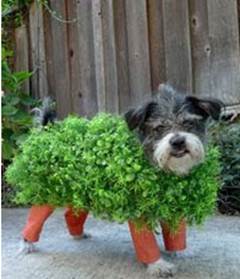
(Photo of Chia Dog from thecutestdogever.com)

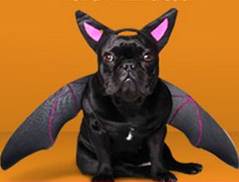
(Photo of Bat-Dog from http://familyfrugalfun.com/wp-content/uploads/2012/10/dog-in-Halloween-bat-costume.jpg)

Posted by: Jack Henry | October 30, 2012

Editor’s Corner: Green Stuff

Good morning! I hope Hurricane Sandy has miraculously missed everyone from JHA that is on the East Coast. The news says billions of dollars will be required to repair damages, so today we’re going to look at fifty different words for the green stuff, from Daily Writing Tips (www.dailywritingtips.com).

1. Bank: money
2. Benjamins: a one-hundred-dollar bill (in reference to the portrait of Benjamin Franklin that distinguishes it)
3. Big ones: multiples of one thousand dollars
4. Bills: multiples of one hundred dollars
5. Bones: dollars (origin unknown)
6. Bread: money in general (on the analogy of it being a staple of life)
7. Bucks: dollars (perhaps from a reference to buckskins, or deerskins, which were once used as currency)
8. Cabbage: paper money (from its color)
9. Cheddar (or chedda): money (origin unknown, but perhaps from the concept of cheese distributed by the government to welfare recipients)
10. Clams: dollars (perhaps from the onetime use of seashells as currency)
11. Coin: money, either paper or coinage
12-13. Cs (or C-notes): multiples of one hundred dollars (from the Roman symbol for “one hundred”)
14. Dead presidents: paper money (from the portraits of various former US presidents that usually distinguish bills of various denominations)
15. Dime: ten dollars (by multiplication of the value of the ten-cent coin)
16. Dough: money in general (akin to the usage of bread)
17-18. Doubles (or dubs): twenty-dollar bills
19. Ducats: money (from the Italian coin)
20. Fins: five-dollar bills (perhaps from the shared initial sound with fives)
21. Five-spots: five-dollar bills
22. Fivers: five-dollar bills
23. Folding stuff: paper money [KC – Not exactly creativity at its best.]
24. Greenbacks: paper money (from the color of the ink)
25. Gs: thousand-dollar bills (an abbreviation for grand)
26. Grand: one thousand dollars (as in “three grand” for “three thousand dollars”)
27. Large: thousand-dollar bills
28. Lettuce: paper money (from its color)
29. Long green: paper money (from its shape and color)
30. Loot: money (originally denoted goods obtained illicitly or as the spoils of war)
31. Lucre: money or profit (from the biblical expression “filthy lucre,” meaning “ill-gained money”)
32. Moola (or moolah): money (origin unknown)
33. Nickel: five dollars (by multiplication of the value of the five-cent coin)
34. Ones: dollars (also, fives for “five-dollar bills,” tens for “ten-dollar bills,” and so on)
35. Quarter: twenty-five dollars (by multiplication of the value of the twenty-five-cent coin)
36. Sawbucks: ten-dollar bills (from the resemblance of X, the Roman symbol for ten, to a sawbuck, or sawhorse)
37. Scratch: money (perhaps from the idea that one has to struggle as if scratching the ground to obtain it)
38. Shekels: dollars (from the biblical currency)
39. Simoleons: dollars (perhaps from a combination of simon, slang for the British sixpence and later the American dollar, and napoleon, a form of French currency)
40. Singles: one-dollar bills
41. Skrilla: money (origin unknown)
42. Smackers: dollars (origin unknown)
43. Spondulix: money (either from spondylus, a Greek word for a shell once used as currency, or from the prefix spondylo-, which means “spine” or “vertebra”; these have a common etymology)
44. Stacks: multiples of a thousand dollars
45. Tenners: ten-dollar bills
46. Ten-spots: ten-dollar bills
47. Two bits: twenty-five cents (a reference to pieces of eight, divisible sections of a Mexican real, or dollar)
48. Wad: a bundle of paper money
49. Wampum: money (from the Native American term wampumpeag, referring to native currency)
50. Yards: one hundred dollars

There are, of course, many other terms, dated or current, including borrowings of foreign terms like dinero.

Posted by: Jack Henry | October 25, 2012

Editor’s Corner: Thursday’s Anagram Answers

The answers for today’s test, according to Games magazine and the Official Scrabble Players Dictionary, Fourth Edition:

EINORTU = ROUTINE

AEGNNTT = TANGENT

DEGINOS = DINGOES

EIOOSTT = TOOTSIE

AAGLNRU = ANGULAR

Congratulations for those of you that came up with the answers!

NOTICE: This electronic mail message and any files transmitted with it are intended
exclusively for the individual or entity to which it is addressed. The message,
together with any attachment, may contain confidential and/or privileged information.
Any unauthorized review, use, printing, saving, copying, disclosure or distribution
is strictly prohibited. If you have received this message in error, please
immediately advise the sender by reply email and delete all copies.

Posted by: Jack Henry | October 25, 2012

Editor’s Corner: Anagram Challenge

Today I have something a little different for you—an anagram test (from the latest edition of Games magazine). I’m only including 5 of 10 so you don’t get too distracted. Here are the instructions:

In a game of Scrabble, it would not be unusual to find any of the following sets of common letters on a player’s rack. Each set can be anagrammed [KC – rearranged] to form one—and only one—seven-letter word recognized by the Official Scrabble Players Dictionary, Fourth Edition.

1. EINORTU

2. AEGNNTT

3. DEGINOS

4. EIOOSTT

5. AAGLNRU

Write your answers down on a sheet of paper and I will send out the official answers around noon so you can compare!

Today we have a timely Q&A article from Grammar Girl. (www.quickanddirtytips.com)

Question: "What’s your take on the apostrophe in ‘Hallowe’en’? To use or not to use?"

Answer: One early spelling of "Halloween" was "all hallows’ even," in which "even" meant "evening." The "all" and "s" got dropped, "hallows’ " and "even" became a closed compound, and the apostrophe took the place of the "v," giving us "Hallowe’en"—just one of many transitional spellings along the way to "Halloween."

If you’ve ever been in training with John Thomas, you may have been asked to share something about yourself that nobody else knows. I always freeze up when on the spot, but today, John, I have an answer for you! I am a secret follower of tattoo contests, tattoo TV shows, documentaries about tattoos, and I’m just fascinated by them. I change my mind often enough that I couldn’t think of something I’d want to look at until I’m on my deathbed—but I like to see what other people want to keep on their bodies forever.

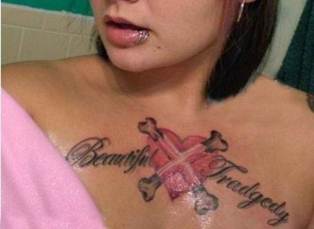
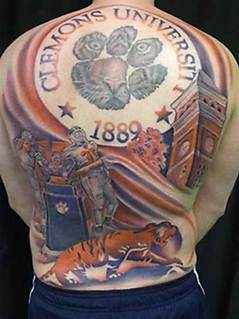
For “Fun Friday,” I have portions of an article from DailyWritingTips.com, that combines English and tattoos! Tip to tattoo lovers: take a dictionary with you if you’re getting a tattoo with script!

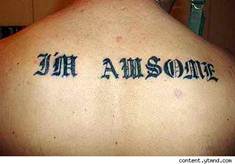
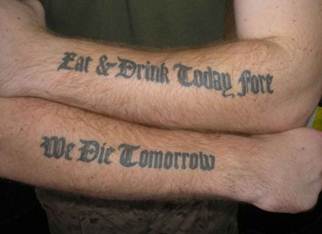
The Internet-o-sphere abounds with images of tattoo tragedies, and it was difficult to pare the possibilities to a manageable number for this post. But here, in order of egregiousness, are four of the most boneheaded blunders:

No, you’re not. Oh, it’s not a misspelling of handsome? It’s supposed to be awesome. But you would be if you returned to the tattoo artist and—free of charge, of course—had a red caret (^) and a matching “e” inscribed.

Um, the biblical verse, as usually translated into English, is, “Let us eat and drink, for tomorrow we die”—the statement elegantly terminates with the key word. This fellow’s artistic license in altering the wording and word order is excusable, but the misspelling of fore—not likely a pun on forearm—is not. I would have recommended the standard version, broken after drink—but “broken after drink” is probably the reason for the mistake in the first place.

This isn’t the only tragedy tattoo typo one can find (and you might be surprised by how many ways tattoo artists can render regret/regrets), but it’s the most prominent—and therefore the most tragic.

This misbegotten masterpiece wins the prize for sheer spectacle, and for lasting significance. My surmise is that this fellow has a spot in his heart for his alma mater. Unfortunately, there’s no Clemons University—it’s Clemson. (I hope he got his money back—that looks like a four-figure flub.)

Happy Friday!

Posted by: Jack Henry | October 18, 2012

Editor’s Corner: I before E

The other day, I reminded someone of the “i before e” rule, and then today received this funny sentence:

“I before e except when you run a feisty heist on a weird beige foreign neighbor.” (Thank you, Mr. Wilms!)

I’ve included some of the exceptions here, from an article on Wikipedia. If you are interested in the specific groupings of the words by sound, root words, and more, see: http://en.wikipedia.org/wiki/I_before_E_except_after_C

Exceptions

cie

· ancient

· bouncier

· conscience

· deficiencies

· efficiencies

· fancied

· fancier

· financier

· glacier

· policies

· prescient

· proficiencies

· science

· society

· species

ei not preceded by c

· atheism

· beige

· caffeine

· casein

· codeine

· counterfeit

· deify

· deign

· deindustrialize

· deity

· eider

· eight

· either

· feign

· feint

· feisty

· foreign

· foreign

· forfeit

· freight

· geisha

· height

· heinous

· herein

· inveigh

· inveigle

· kaleidoscope

· keister

· neigh

· neighbor

· nonpareil

· obeisance

· onomatopoeia

· peignoir

· protein

· reign

· rein

· seismic

· sheikh

· skein

· sleigh

· sleight

· sovereign

· stein

· surfeit

· surveil

· their

· unveil

· veil

· vein

· weigh

· weight

· weird

· zeitgeist

· Many proper names, often because they are adopted from other languages

o Keith, Neil, Sheila, Stein, etc.

o Leith, Keighley, Rheims, Raleigh, etc.

o Rottweiler, Cassiopeia

NOTICE: This electronic mail message and any files transmitted with it are intended
exclusively for the individual or entity to which it is addressed. The message,
together with any attachment, may contain confidential and/or privileged information.
Any unauthorized review, use, printing, saving, copying, disclosure or distribution
is strictly prohibited. If you have received this message in error, please
immediately advise the sender by reply email and delete all copies.

« Newer Posts - Older Posts »

Categories