Posted by: Jack Henry | October 16, 2012

Editor’s Corner: Articles on Particles

As I was looking for some information on capitalization today, I did a double-take when I saw a listing in the Chicago Manual of Style for “Particles.” The only particles I studied in school were in the science courses…what could they be?

Here is what I found in the CMOS:

Names with particles

Many names include particles such as de, d’, de la, von, van, and ten. Practice with regard to capitalizing and spacing the particles varies widely, and confirmation should be sought in a biographical dictionary or other authoritative source. When the surname is used alone, the particle is usually retained, capitalized or lowercased and spaced as in the full name (though always capitalized when beginning a sentence). Le, La, and L’ are always capitalized when not preceded by de; the, which sometimes appears with the English form of a Native American name, is always lowercased.

Here are some examples listing the person’s full name, followed by the last name only:

Alfonse D’Amato; D’Amato

Diana DeGette; DeGette

Walter de la Mare; de la Mare

Thomas De Quincey; De Quincey

W. E. B. DuBois; DuBois

Daphne du Maurier; du Maurier

Robert M. La Follette Sr.; La Follette

John Le Carré; Le Carré

Pierre-Charles L’Enfant; L’Enfant

Anwar el-Sadat; Sadat

Abraham Ten Broeck; Ten Broeck

Robert van Gulik; van Gulik

Stephen Van Rensselaer; Van Rensselaer

Wernher von Braun; von Braun

If that’s not enough for you, CMOS has additional topics and rules for names in each of the following languages: French, German, Portuguese, Italian, Dutch, Spanish, Russian, Hungarian, Arabic, Chinese, and Japanese. I don’t know about you, but I am so thankful that our everyday work no longer includes bibliographies!

NOTICE: This electronic mail message and any files transmitted with it are intended
exclusively for the individual or entity to which it is addressed. The message,
together with any attachment, may contain confidential and/or privileged information.
Any unauthorized review, use, printing, saving, copying, disclosure or distribution
is strictly prohibited. If you have received this message in error, please
immediately advise the sender by reply email and delete all copies.

Posted by: Jack Henry | October 15, 2012

Editor’s Corner: Back from furlough, ready to brawl!

Hello!

It’s time for Editor’s Corner again. Since I’m easing back into work after a vacation filled with the French and Dutch languages, I thought I’d share some words with you that we have borrowed from Dutch. It turns out we share many words, since English and Dutch are both Germanic languages. In particular, the nautical world is full of Dutch terms (only a few listed here).

boss from baas

brawl from brallen

buoy from boei (="shackle" or "buoy")

coleslaw from koolsla (literally "cabbage salad")

cruller from Dutch krullen (="to curl")

dam from Middle Dutch dam (compare Amsterdam or Rotterdam)

domineer from Dutch domineren (="to rule")

elope from ontlopen (run away)

frolic from vrolijk (="cheerful")

furlough from verlof (="permission [to leave]")

grab from grijpen (="to seize, to grasp, to snatch")

kink from kink (referring to a twist in a rope)

knapsack possibly from knapzak (literally "bag of snacks")

landscape from landschap

rucksack from rugzak (="bag that is carried on your back")

skipper from Middle Dutch scipper (now schipper, literally "shipper")

slurp from slurpen

splinter from splinter

split from Middle Dutch splitten

wiggle from wiggelen (="to wobble, to wiggle") or wiegen (="to rock")

Terms from: http://en.wikipedia.org/wiki/List_of_English_words_of_Dutch_origin

Posted by: Jack Henry | September 25, 2012

Editor’s Corner: 12 Imaginary Places

This will be the last Editor’s Corner for a few weeks, as I prepare to go on vacation to some not-so-imaginary places. Today’s gift from me to you is a list of 12 imaginary places, from Daily Writing Tips (http://www.dailywritingtips.com/12-imaginary-places/).

Religion, legends, and literature alike are replete with various conceptions of ethereal or terrestrial paradises or places with romantic flair. Here are a dozen examples of ideal locales, including their names, their origins, and their definitions.

1. Arcadia (the Greek region of Arcadia): an idealized, unattainable pastoral state, bereft of civilization

2. Atlantis (allegorical legend recounted by Plato): an island with a complex, advanced civilization that was submerged in a cataclysmic disaster in preclassical times)

3. Camelot (European legends and folklore): the seat of the court of King Arthur, renowned for its splendor

4. Cockaigne (European medieval legend): a place of idleness and luxury

5. El Dorado or Eldorado (Spanish legend): the name given to a Native American chieftain and, by extension, to the prosperous city and surrounding empire he supposedly ruled; later, a metaphor for happiness or personal fulfillment

6. Erewhon (Samuel Butler’s satirical novel Erewhon): a seemingly utopian society with the same flaws as actual civilization

7. Faerie (European fairy tales and folktales): the magical realm of fairies and other legendary beings

8. Neverland or the Neverlands or Never Never Land (J. M. Barrie’s stage play Peter Pan and his novelization Peter and Wendy): an idyllic land serving as a metaphor for escapism and perpetual childhood

9. Shambhala (Buddhist tradition): a mythical hidden kingdom in Central Asia adopted as an ideal state by believers in mysticism

10. Shangri-La (James Hilton’s romantic novel Lost Horizon): an idealized paradise in a hidden valley in Asia

11. Utopia (Sir Thomas More’s allegorical novel Utopia): an island with a harmonious sociopolitical system; in uncapitalized form, any idealized society

12. Xanadu (Chinese history): a city in what is now Inner Mongolia, the historical summer palace of Kublai Khan, but also, inspired by Samuel Taylor Coleridge’s poem Kubla Khan, an idealized place of luxurious splendor

Kara Church

NOTICE: This electronic mail message and any files transmitted with it are intended
exclusively for the individual or entity to which it is addressed. The message,
together with any attachment, may contain confidential and/or privileged information.
Any unauthorized review, use, printing, saving, copying, disclosure or distribution
is strictly prohibited. If you have received this message in error, please
immediately advise the sender by reply email and delete all copies.

Posted by: Jack Henry | September 24, 2012

Editor’s Corner: No horseplay by the pool!

This morning I received this article from The Grammarist newsletter. I had no plan to talk about horsies, but after reading this article and saying horsey, horsy, horsie out loud, it made me laugh, so I thought I’d send it along. 🙂

I hope you are having a wonderful Monday.

Horsey, horsy, horsie

Some dictionaries list horsy as the primary spelling of the word that can be (1) an adjective meaning horse-like, (2) an adjective meaning of or having to do with horses, or (3) a diminutive of horse. But these dictionaries are behind times. Horsy had a brief heyday in the middle of the 20th century, but horsey was unquestionably the preferred spelling before around 1940, and it is again the preferred spelling. This is the case throughout the English-speaking world.

There is also horsie, which is used most often as the diminutive of horse, but it is rare compared to the other two.

Examples

In Google News searches covering a large selection of major English-language publications and limited to 2000 to the present, most instances of horsy are in the New York Times, which seems to be an outlier on this issue. But outside the Times (where horsey does also appear, but not as often as horsy), horsey is the far more common spelling. Here are few examples from around the English-speaking world:

· They stock the barn with all kinds of horsey goodies: brushes, blankets, water buckets, feeders, saddles, stirrups, bridles, bits, reins. [Denver
Post
]

· Slightly older but less weathered by an outdoor horsey lifestyle, Ann has certainly been busier since the nuptials were scheduled. [Sunday
Express (U.K.)
]

· Horsey movies are usually buddy flicks, partnering the steed with often young and diminutive pals. [Globe
and Mail (Canada)
]

· Those behind the scheme are convinced that the polo lifestyle as much as the horsey discipline will swing it their way. [New
Zealand Herald
]

To see the ngram charts on this topic, go to the bottom of the article here: http://grammarist.com/usage/horsey-horsy-horsie/

NOTICE: This electronic mail message and any files transmitted with it are intended
exclusively for the individual or entity to which it is addressed. The message,
together with any attachment, may contain confidential and/or privileged information.
Any unauthorized review, use, printing, saving, copying, disclosure or distribution
is strictly prohibited. If you have received this message in error, please
immediately advise the sender by reply email and delete all copies.

Posted by: Jack Henry | September 20, 2012

Editor’s Corner: Quiz Results

Great job! We had 142 respondents, and 117 of those picked the correct answers. See the explanations of each word below.

By the way, today’s questions and answers are from www.grammarbook.com.

1) CBAB –11

2) CBBA – 3

3) DBAB –117

4) DABB –11

Choose the correct sentence from each group:

A) You know better than to medal in other people’s business.

B) You know better than to metal in other people’s business.

C) You know better than to mettle in other people’s business.

D) You know better than to meddle in other people’s business.

Explanation: Use the word meddle to mean interfere unwantedly. Medal is a decoration or badge, metal is an earth element, and mettle indicates boldness.

A) Having life insurance gives us piece of mind.

B) Having life insurance gives us peace of mind.

Explanation: Use the word peace to mean calm. Piece is a portion of something.

A) Before hanging the wallpaper, check to see if the walls are plumb.

B) Before hanging the wallpaper, check to see if the walls are plum.

Explanation: Use the word plumb to mean perpendicular. Plum is a type of fruit.

A) Would you like to have a sneak peak at the restaurant before it opens?

B) Would you like to have a sneak peek at the restaurant before it opens?

C) Would you like to have a sneak pique at the restaurant before it opens?

Explanation: Use the word peek to mean glance furtively. Peak is the top of a mountain and pique is to wound someone’s pride or to excite interest.

NOTICE: This electronic mail message and any files transmitted with it are intended
exclusively for the individual or entity to which it is addressed. The message,
together with any attachment, may contain confidential and/or privileged information.
Any unauthorized review, use, printing, saving, copying, disclosure or distribution
is strictly prohibited. If you have received this message in error, please
immediately advise the sender by reply email and delete all copies.

Posted by: Jack Henry | September 20, 2012

Editor’s Corner: Quiz Day

It’s quiz day!

The way this works:

· You choose the correct sentence from each group below

· Jot down your answers

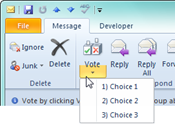
· Look for the voting buttons at the top of this e-mail

· Select the set of answers that you think is correct

· Wait until noon (or later, depending where you are) and all will be revealed!

Choose the correct sentence from each group:

A) You know better than to medal in other people’s business.

B) You know better than to metal in other people’s business.

C) You know better than to mettle in other people’s business.

D) You know better than to meddle in other people’s business.

A) Having life insurance gives us piece of mind.

B) Having life insurance gives us peace of mind.

A) Before hanging the wallpaper, check to see if the walls are plumb.

B) Before hanging the wallpaper, check to see if the walls are plum.

A) Would you like to have a sneak peak at the restaurant before it opens?

B) Would you like to have a sneak peek at the restaurant before it opens?

C) Would you like to have a sneak pique at the restaurant before it opens?

NOTICE: This electronic mail message and any files transmitted with it are intended
exclusively for the individual or entity to which it is addressed. The message,
together with any attachment, may contain confidential and/or privileged information.
Any unauthorized review, use, printing, saving, copying, disclosure or distribution
is strictly prohibited. If you have received this message in error, please
immediately advise the sender by reply email and delete all copies.

Posted by: Jack Henry | September 19, 2012

Editor’s Corner: Talk Like a Pirate Day

The pirate speaks,"Good mornin’ everyone! Today be Talk Like a Pirate Day, so I be writin’ t’ Editor’s Corner in t’ English-to-Pirate translator. Instead o’ writin’ about Latin terms, words with French roots, or tryin’ t’ get you t’ use t’ correct punctuation, I encourage you t’ pick up a few words from t’ Pirate Dictionary and have some fun! Enjoy your day, you scurvy dogs!"

Yer Cap’n,

Mary Flint

Assorted terms from the Pirate Glossary (site below):

· Arr! – An exclamation.

· Avast! – A command meaning stop or desist.

· blow the man down – To kill someone.

· dance the hempen jig – To hang.

· grog blossom – A redness on the nose or face of persons who drink ardent spirits to excess.

· hang the jib – To pout or frown.

· hempen halter – The hangman’s noose.

· Scupper that! – An expression of anger or derision meaning "Throw that overboard!"

· Show a leg! – A phrase used to wake up a sleeping pirate.

· Squiffy – Somewhat intoxicated; tipsy.

· swing the lead – The lead was a weight at the bottom of a line that gave sailors a way to measure depth when near land. To Swing the Lead was considered a simple job, and thus came to represent one who is avoiding work or taking the easy work over the hard. In today’s terms, one who swings the lead is a slacker.

· take a caulk – To take a nap. On the deck of a ship, between planks, was a thick caulk of black tar and rope to keep water from between decks. This term came about either because sailors who slept on deck ended up with black lines across their backs or simply because sailors laying down on deck were as horizontal as the caulk of the deck itself.

Sites used:

· Pirate name generator (http://gangstaname.com/names/pirate/generate)

· English-to-Pirate Translator (http://talklikeapirate.com/translator.html)

· Pirate Glossary (http://www.pirateglossary.com/A_Pirates_Glossary_of_Terms.html)

NOTICE: This electronic mail message and any files transmitted with it are intended
exclusively for the individual or entity to which it is addressed. The message,
together with any attachment, may contain confidential and/or privileged information.
Any unauthorized review, use, printing, saving, copying, disclosure or distribution
is strictly prohibited. If you have received this message in error, please
immediately advise the sender by reply email and delete all copies.

Posted by: Jack Henry | September 18, 2012

Editor’s Corner: Far over the Misty Mountains cold…

I was reading about the new Hobbit movie this morning, and this article on the spelling of dwarfs (versus dwarves) landed serendipitously in my mailbox. Fascinating!

From The Grammarist:

Dwarfs is the standard plural of the noun dwarf. This has been so for centuries. Dwarves is a variant popularized (though not invented) by English author J.R.R. Tolkien in his fantasy fiction works, including The Hobbit and The Lord of the Rings. The Tolkien spelling is appropriate when referring to little people in fantasy worlds. Dwarfs is better everywhere else.

Dwarf also works as a verb meaning to cause to appear small in size. In this sense, dwarf is inflected dwarfs, not dwarves,in the singular present tense.

There is controversy over whether dwarf is ever an appropriate term for real-life people, but we won’t go into the nomenclature issues here.

For examples, see http://grammarist.com/usage/dwarfs-dwarves/.

NOTICE: This electronic mail message and any files transmitted with it are intended
exclusively for the individual or entity to which it is addressed. The message,
together with any attachment, may contain confidential and/or privileged information.
Any unauthorized review, use, printing, saving, copying, disclosure or distribution
is strictly prohibited. If you have received this message in error, please
immediately advise the sender by reply email and delete all copies.

Posted by: Jack Henry | September 17, 2012

Editor’s Corner: What’s a Double Negative?

Today’s brief article on double negatives is by Mignon Fogarty, otherwise known as Grammar Girl (www.quickanddirtytips.com).

"Can’t hardly" is an example of a double negative—something writing experts say you should avoid—and it also doesn’t make much sense. Often double negatives mean the opposite of what you are trying to say.

Occasionally, double negatives are useful when you want to place emphasis on something bad. I recently read a sentence in the New Scientist that referred to less unhealthy cigarettes. "Less unhealthy" is a double negative—"healthier" would be the positive descriptor—but "less unhealthy" keeps the emphasis on cigarettes’ dangers.

Other examples of double negatives (and poor word choices) include:

· could care less

· ain’t got no

· don’t need no

· don’t have nothing

· Can’t get no…satisfaction! (KC- Sorry Rolling Stones and DEVO.)

Happy Monday!

NOTICE: This electronic mail message and any files transmitted with it are intended
exclusively for the individual or entity to which it is addressed. The message,
together with any attachment, may contain confidential and/or privileged information.
Any unauthorized review, use, printing, saving, copying, disclosure or distribution
is strictly prohibited. If you have received this message in error, please
immediately advise the sender by reply email and delete all copies.

Posted by: Jack Henry | September 13, 2012

Editor’s Corner: National Punctuation Day Contest

I don’t have a quiz for you today; instead I have a contest with actual prizes. (Thank you for bringing this to my attention, Ms. Gredvig!) This is an annual contest for National Punctuation Day, and here are the basic rules:

What: The ninth annual National Punctuation Day® is the September 24 holiday that reminds America that a semicolon is not a surgical procedure.

This year, the challenge revolves around the topic of the 2012 presidential election.

Challenge: Vote for your favorite Presidential Punctuation Mark in one, highly punctuated paragraph!

Rules:

· Write one paragraph with a maximum of three sentences

· Purpose of paragraph is to explain which punctuation mark should be “presidential,” and why

· Paragraph must include all of the following 13 punctuation marks:

o apostrophe o hyphen
o brackets o parentheses
o colon o period
o comma o question mark
o dash o quotation mark
o ellipsis o semicolon
o exclamation point

· You may use a punctuation mark more than once, and there is no word limit

· Multiple entries are permitted

In short, persuade us that your favorite punctuation mark should be the official punctuation mark of the President of the United States.

Contest entries must be received by September 30 to be considered for prizes. The winner(s) will receive a box of punctuation goodies, including a National Punctuation Day® T-shirt.

Send entries, including name, address and phone number, to National Punctuation Day® headquarters at Jeff.

If you want to visit the official site and get more information on the different punctuation marks you can find it here: http://www.nationalpunctuationday.com/

« Newer Posts - Older Posts »

Categories