Posted by: Jack Henry | May 28, 2014

Editor’s Corner: Dear John

Good morning, all. I was looking through one of my books by Grammar Girl (aka Mignon Fogarty) and I saw this interesting tidbit on salutations. From Grammar Girl’s Quick and Dirty Tips for Better Writing, p. 139, there is a reminder on the correct punctuation of a standard letter greeting.

Dear John, (correct)

Hi, John (correct)

Hi John, (common usage but not technically correct)

I think most of us are aware of those, but the part that really captured my interest was the section on other salutations.

The plural of Mister (Mr.) is Messieurs (Messrs.). It is common to use abbreviations when writing a letter, so if you were writing to multiple men, this is the correct way to format your salutation: Dear Messrs. Affleck and Pitt.

The plural of Mrs. is Mmes. (short for Mesdames), and the plural of Miss is Misses. The plural of Ms., which originated in the 1950s, is less clear. Various sources report that the plural of Ms. can be Mses., Mss., or Mmes.

In American English, a period is required after the abbreviations; in British English, no punctuation is required after the abbreviations.

Of course, this makes me wonder what you call a mix of these. For example, if I’m a Ms. and my husband is a Mr., what would we be together? Those of you who know us might say that the appropriate solution is: Dear Mess. Church and Pennisi. I think you might be right!

Kara Church

Technical Editor, Advisory

619-542-6773 | Ext: 766773

www.symitar.com

NOTICE: This electronic mail message and any files transmitted with it are intended
exclusively for the individual or entity to which it is addressed. The message,
together with any attachment, may contain confidential and/or privileged information.
Any unauthorized review, use, printing, saving, copying, disclosure or distribution
is strictly prohibited. If you have received this message in error, please
immediately advise the sender by reply email and delete all copies.
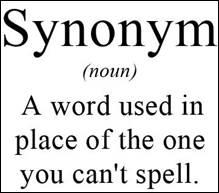

A few weeks ago, I introduced you to the great resources available on the JHA Editing Services page (see here for more information). Today, I’d like to remind you of the great editing services we offer to the whole company, including a new link for submissions to Symitar editors. Here’s how it goes:

1. You write a document that customers and clients are going to see (for example, an implementation guide, a proposal, a procedural checklist, a PowerPoint slide show).

2. You review your document to make sure it contains all of the information your audience requires.

3. You run spell-check and give it your final once-over.

4. Go to JHA Editing Services: https://teamsites.jackhenry.com/sites/jhaeditingservices/SitePages/Home.aspx

5. From the JHA Editing Services home page, click Submit for Editing.

6. The Submit for Editing page appears.

· To submit something to the JHA editors, click Add document and follow the prompts to upload your document.

· To submit something to Symitar editors, click the here link. Instructions for submitting your documents via Outlook appear. Follow the instructions according to the type of document you are submitting.

7. The editors from both groups will work diligently to return your documents to you.

Note: If you are interested in the standards we adhere to, go to the Consult Style Resources link.

Kara Church

Technical Editor, Advisory

619-542-6773 | Ext: 766773

www.symitar.com

NOTICE: This electronic mail message and any files transmitted with it are intended
exclusively for the individual or entity to which it is addressed. The message,
together with any attachment, may contain confidential and/or privileged information.
Any unauthorized review, use, printing, saving, copying, disclosure or distribution
is strictly prohibited. If you have received this message in error, please
immediately advise the sender by reply email and delete all copies.

Posted by: Jack Henry | May 23, 2014

Editor’s Corner: Should

Happy Friday and a joyous three-day weekend to you!

Several of the Editor’s Corner topics over the last couple of years have included misheard phrases and misheard song lyrics, often with hilarious results. I wouldn’t call today’s topic hilarious, but it is based on mishearing. It is actually a peeve of several of your JHA co-workers, so be careful when you are saying or writing should have or should’ve.

Correct: John should have given her the smaller ring; the larger diamond looked obscene on her tiny finger.

Correct: I should’ve known better than to put Mentos® into that bottle of Diet Coke®.

Incorrect: She should of been more careful when feeding the zoo’s notorious spitting camel.

That’s it! That is the lesson. Don’t use of. Of is a preposition and has nothing to do with the present perfect verb should have.

Kara Church

Technical Editor, Advisory

619-542-6773 | Ext: 766773

www.symitar.com

NOTICE: This electronic mail message and any files transmitted with it are intended
exclusively for the individual or entity to which it is addressed. The message,
together with any attachment, may contain confidential and/or privileged information.
Any unauthorized review, use, printing, saving, copying, disclosure or distribution
is strictly prohibited. If you have received this message in error, please
immediately advise the sender by reply email and delete all copies.

Posted by: Jack Henry | May 22, 2014

Editor’s Corner: Social Media Vocabulary – S

Wow! TheBuilding Brand Character list of social media terms that begin with “S” is long!

· Scrape
Copying content from a site, often facilitated by automated bots.

· Search Engine
A program which searches a document or group of documents for relevant matches of a user’s keyword phrase and returns a list of the most relevant matches. Internet search engines such as Google and Yahoo search the entire Internet for relevant matches.

· SEM
Short for search engine marketing, SEM is often used to describe acts associated with researching, submitting and positioning a Web site within search engines to achieve maximum exposure of your Web site. SEM includes things such as search engine optimization, paid listings and other search-engine related services and functions that will increase exposure and traffic to your Web site.

· SEO
Short for search engine optimization, the process of increasing the number of visitors to a Web site by achieving high rank in the search results of a search engine. The higher a Web site ranks in the results of a search, the greater the chance that users will visit the site. It is common practice for Internet users to not click past the first few pages of search results, therefore high rank in SERPs is essential for obtaining traffic for a site. SEO helps to ensure that a site is accessible to a search engine and improves the chances that the site will be indexed and favorably ranked by the search engine.

· SERP
Search Engine Results Page

· Sentiment
A level of assessment that determines whether the tone of an article, blog post, tweet, or other content is positive, neutral, or negative.

· Share
Sharing is synonymous with posting or publishing. You can publish text, links, photos, videos, and events on Facebook using the share box at the top of your profile. After entering your text, you have the option to upload a photo, video, or insert a link.

· Share Button/Bar
A feature that people can add to their website or an email that will allow the content to be easily shared on a variety of social media sites.

· Site Map
A page or structured group of pages which link to every user accessible page on a website, and hopefully improve site usability by clarifying the data structure of the site for the users.

· Skype
A free program that allows for text, audio, and video chats between users. Additionally, users can purchase plans to receive phone calls through their Skype account.

· Snapchat
A social media app that allows users to snap a photo or video, add a caption and send it to their friends. After a certain amount of time, the photo disappears from their phone.

· Social Bookmark
A form of social media where users’ bookmarks are aggregated for public access.

· Social Media
Various online technologies used by people to share information and perspectives. Blogs, wikis, forums, social bookmarking, and user reviews and rating sites (digg, reddit) are all examples of social media.

· Spammer
A person who uses spam to pursue a goal.

· Splash Page
Often animated, graphics pages without significant textual content. Splash pages are intended to look flashy to humans, but without attention to search engine optimization, may look like dead ends to search engine spiders, which can only navigate through text links. Poorly executed splash pages may be bad for search engine optimization and often a pain for users.

· Static Page: A web page without dynamic content or variables such as session IDs in the URL. Static pages are good for search engine optimization work in that they are friendly to search engine spiders.

NOTICE: This electronic mail message and any files transmitted with it are intended
exclusively for the individual or entity to which it is addressed. The message,
together with any attachment, may contain confidential and/or privileged information.
Any unauthorized review, use, printing, saving, copying, disclosure or distribution
is strictly prohibited. If you have received this message in error, please
immediately advise the sender by reply email and delete all copies.

Posted by: Jack Henry | May 21, 2014

Editor’s Corner: Different From or Different Than?

Over the past year or so, I’ve received several emails asking me if the term “different than” is incorrect. Apparently, many of you were taught that you should always use “different from” in your writing and speech. I guess I missed that class or it wasn’t my teacher’s pet peeve. Here is what I’ve found on the topic and I’d like to share it with all of you inquiring minds.

Different From vs. Different Than

Indeed, the standard, most common phrase is different from. The advice of many grammarians is to avoid different than like the plague. (Okay, they might not be quite so adamant about it.) There also seems to be a continental divide as far as this topic goes. While different from is preferred in both America and Great Britain, Americans also use different than, and Brits use different to. (See Oxford Dictionaries for more information.)

Here are a few examples of the two in action:

· Her performance during the final game was different from any of the regular games; she was quick, aggressive, and made every basket.

· His hair was different from his father’s in two ways: it was lighter and curlier.

· It is no different for Frenchmen than it is for Belgians. (Using different…from makes this phrase awkward: It is no different for Frenchmen from the way it is for Belgians.)

So, your safest bet is to use different from. Here is a little tidbit on the topic from Grammar Girl’s Quick and Dirty Tips for Better Writing, by Mignon Fogarty:

Different from is preferred to different than. I remember this by remembering that different has two f’s and only one t, so the best choice between than and from is the one that starts with an f.

Squiggly knew he was different from the other snails.

Kara Church

Technical Editor, Advisory

619-542-6773 | Ext: 766773

www.symitar.com

NOTICE: This electronic mail message and any files transmitted with it are intended
exclusively for the individual or entity to which it is addressed. The message,
together with any attachment, may contain confidential and/or privileged information.
Any unauthorized review, use, printing, saving, copying, disclosure or distribution
is strictly prohibited. If you have received this message in error, please
immediately advise the sender by reply email and delete all copies.

Posted by: Jack Henry | May 20, 2014

Editor’s Corner: Social Media Vocabulary – R

Good morning! I see light at the end of the social media tunnel! I’m sure there must be a few words with “Q” out there, but according toBuilding Brand Character’s list, they didn’t deserve the attention. Let’s pick up where we left off, with the letter “R”:

· Reciprocal Link
(link exchange, link partner) Two sites which link to each other. Search engines usually don’t see these as high value links, because of the reciprocal and potentially incestuous nature.

· Reddit
A social news site built upon a community of users who share and comment on stories.

· Redirect
Any of several methods used to change the address of a landing page such as when a site is moved to a new domain, or in the case of a doorway.

· Regional Long Tail
(RLT) A multi-word keyword term that contains a city or region name. Especially useful for the service industry. [KC – Not to be confused with New England’s long-tailed weasel.]

· Retweet
When someone on Twitter sees your message and decides to re-share it with his or her followers. A retweet button allows them to quickly resend the message with attribution to the original sharer’s name.

· robots.txt
A file in the root directory of a website use to restrict and control the behavior of search engine spiders.

· ROI
(Return on Investment) One use of analytics software is to analyze and quantify return on investment, and thus cost/benefit of different schemes.

· RSS Feed
(Really Simple Syndication) A family of web feed formats used to publish frequently updated content such as blogs and videos in a standardized format. Content publishers can syndicate a feed, which allows users to subscribe to the content and read it when they please, and from a location other than the website.

· RSS Reader
Allows users to aggregate articles from multiple websites into one place using RSS feeds. The purpose of these aggregators is to allow for a faster and more efficient consumption of information.

Kara Church

Technical Editor, Advisory

Posted by: Jack Henry | May 16, 2014

Editor’s Corner: Amount and Number

The same day I sent out the email about less and fewer, I was in a meeting and heard someone say amount when they should’ve said number. I wrote it down for a future discussion topic, drew a few doodles, and realized that both sets of words cause confusion because of the same thing: the difference between count nouns and non-count (mass) nouns. Today we’ll have a quick look at number and amount, along with a few examples of each.

Number

This should be fairly easy to remember—number is used with count nouns. For example, paperclips, teeth, sombreros, and puppies are count nouns.

· A number of boys were at the bonfire; all of them dressed as Eddie Munster. (You can count boys so you use the word number.)

· We saw a flock of seagulls at the beach. Most of them were light grey, a number of them were white, and one was light brown. (It may be tough, but you can count seagulls—just don’t look up with your mouth open.)

Amount

Use amount for non-count nouns. For example, whiskey, anger, and sand are non-count nouns.

· You could see a small amount of blue sky peeking through the black clouds of smoke from the fires. (Since you cannot count “sky,” use the word amount.)

· The rescue crew was generous; they provided an ample amount of water for each family. (As I mentioned the other day, you can count gallons of water, or cups of milk, but in this case water is a non-count noun and requires that the word amount be used as the quantifier.)

Amount can also be a little tricky. Sometimes it is acceptable to use amount to refer to plural count nouns considered as an aggregate, usually encompassing large numbers of something. For example:

· I consider any amount of our tax dollars spent on this project to be a waste. (You can count dollars, but in this case we’re considering everyone’s tax dollars altogether and using the word amount is okay.)

I wish you all a good weekend. Stay cool!

Disclaimer: Spelling and grammar below not approved for human use.

Kara Church

Technical Editor, Advisory

Posted by: Jack Henry | May 15, 2014

Editor’s Corner: Social Media Vocabulary – O & P

We’re more than half-way through the alphabet with our social media vocabulary. Today is a two-for-one deal; you get the letters “O” and “P” from Building Brand Character.

· Organic Link
Organic links are those that are published only because the webmaster considers them to add value for users. [KC – They are grown without pesticides and because of this, they may not be as attractive as the shiny, waxed non-organic links, but they taste much better.]

· Organic Search Results
The search engine results that are not sponsored, or paid for in any way.

· PageRank
(PR) A value between 0 and 1 assigned by the Google algorithm, which quantifies link popularity and trust among other (proprietary) factors.

· Permalink
An address or URL of a particular post within a blog or website. [KC – Not to be confused with permafrost, a thick layer of soil that remains frozen all year.]

· Podcast
A non-streamed webcast and series of digital media files, either audio or video, that are released episodically and often downloaded through an RSS feed.

· PPA
(Pay Per Action) Very similar to Pay-Per-Click except publishers only get paid when clicks result in conversions.

· PPC
(Pay-Per-Click) a contextual advertisement scheme where advertisers pay ad agencies (such as Google) whenever a user clicks their ad.

Kara Church

Technical Editor, Advisory

619-542-6773 | Ext: 766773

www.symitar.com

NOTICE: This electronic mail message and any files transmitted with it are intended
exclusively for the individual or entity to which it is addressed. The message,
together with any attachment, may contain confidential and/or privileged information.
Any unauthorized review, use, printing, saving, copying, disclosure or distribution
is strictly prohibited. If you have received this message in error, please
immediately advise the sender by reply email and delete all copies.

Posted by: Jack Henry | May 14, 2014

Editor’s Corner: Fewer and Less

Hello, good morning, and howdy-do to you!

Today is going to be a flash-back Wednesday, to cover something I’ve discussed before: the misuse of the words fewer and less. I’m not sure why it irks me so much—maybe because it is so prevalent in the media and our everyday life. Here are a few reminders for you if you are confused by this dynamic duo.

Fewer

Fewer is used with count nouns. Count nouns are, well, things you can count. For example, dogs, butterflies, beach balls, waves, and trains are count nouns.

· I have 10 packages of Peeps®. I’m going to go into the line for “12 Items or Fewer.” (Yes! Fewer! You can count the number of grocery items you have. Since items are countable, we should use the word fewer.)

· Fewer than 65 people showed up to the Measlepalooza vaccination event. (People can be counted, so we use the word fewer.)

Less

Less is used with non-count (or “mass”) nouns. Non-count nouns are—yes, you’ve got it—things you can’t count. For example, wood, oxygen, water, sunshine, and happiness are non-count nouns.

· Around 1:00 p.m., there is less shade on this side of the building. (Shade is not something you can count; therefore, we use the word less to quantify it.)

· After Jim performed six cannon balls, there was less water in the pool. (While you can measure water in cups or liters, water itself is not countable and is used with the word less. The same applies to milk and other liquids. You can have a glass of milk, but once you spill it, there is less milk in your glass than you started with. Glass is a countable noun; milk is a non-count noun.)

Exceptions

God bless America! Of course there are exceptions to the rule; this is English. These exceptions include phrases about time, money, and distance.

· It will take you less than ten minutes to get to my house.

· We paid less than $10 for a mule ride to the bottom of the valley.

· “Less than two miles until we reach Rabbit Ridge,” said Mr. Pendlebottom.

You will be fairly safe if you keep with the general rule of using fewer with things you can count, and less with things you can’t count. Memorize the time, space, and money exceptions, and you’ll be golden.

The best punishment ever!

Kara Church

Technical Editor, Advisory

Posted by: Jack Henry | May 13, 2014

Editor’s Corner: Great Resources for JHA Writers

This Editor’s Corner is specifically for my dear co-workers (and maybe some of you smart alecks who are not so dear). J

I have something for all of you who write material for Jack Henry & Associates. The Springfield group has put together a delightful page here, with links to several documents that will help you throughout your day. (An alternate path is to go to JHA Today à Departments à Documentation à JHA Editing Services SharePoint à Consult Style Resources.)

The links include:

· Trademark List – A list of JHA products and services and the correct way to capitalize, spell, and trademark items.

· Corporate Standards – A comprehensive guide to the standards we use to provide the look of one company.

· JHA Style Guide for Technical Communication and Training – Grammar, punctuation, terminology, and wording standards for technical publications, documentation, and training throughout the company. For those of you out there who have asked me for a company writing resource, this is it. It will help with basic guidelines, phrasing, and keep you up-to-date with company standards.

· Corporate Templates – JHA Banking, ProfitStars, Symitar, and JHA Corporate Word templates designed with the current branding standards.

Take the time to browse these guides. When you submit something for editing to any of the editing groups throughout JHA, we use these standards to correct your documents. The closer your submissions follow the standards in these guides, the faster you will get them back with a gold star from your editors!

Kara Church

Technical Editor, Advisory

619-542-6773 | Ext: 766773

www.symitar.com

NOTICE: This electronic mail message and any files transmitted with it are intended
exclusively for the individual or entity to which it is addressed. The message,
together with any attachment, may contain confidential and/or privileged information.
Any unauthorized review, use, printing, saving, copying, disclosure or distribution
is strictly prohibited. If you have received this message in error, please
immediately advise the sender by reply email and delete all copies.

« Newer Posts - Older Posts »

Categories