Posted by: Jack Henry | June 27, 2014

Editor’s Corner: Soccer or Football?

Here is a question you may have heard lately: Why do Americans call it soccer when the rest of the world calls it football? Well, thanks to one of our thoughtful co-workers, Ms. Beauvillia, and an article from Tony Manfred in Business Insider, here is an explanation. Happy Friday!

While calling the world’s most popular sport "soccer" is typically depicted as a symbol of American ignorance, the reason we don’t call it "football" like the rest of the world is Britain’s fault.

The word "soccer" is a British invention that British people stopped using only about 30 years ago, according to a new paper by University of Michigan professor Stefan Szymanski.

The word "soccer" comes from the use of the term "association football" in Britain and goes back 200 years.

In the early 1800s, a bunch of British universities took "football" — a medieval game — and started playing their own versions of it, all under different rules. To standardize things across the country, these games were categorized under different organizations with different names.

One variant of the game you played with your hands became "rugby football." Another variant came to be known as "association football" after the Football Association formed to promote the game in 1863, 15 years after the rules were made at Cambridge.

"Rugby football" became "rugger" for short. "Association football" became "soccer."

After these two sports spread across the Atlantic, Americans invented their own variant of the game that they simply called "football" in the early 1900s.

"Association football" became "soccer" in America, and what was called "gridiron" in Britain became simply "football" in America.

The interesting thing here is that Brits still used "soccer" regularly for a huge chunk of the 20th century. Between 1960 and 1980, "soccer" and "football" were "almost interchangeable" in Britain, Szymanski found.

Then everything changed (via Szymanski):

"Since 1980 the usage of the word ‘soccer’ has declined in British publications, and where it is used, it usually refers to an American context. This decline seems to be a reaction against the increased usage in the US which seems to be associated with the highpoint of the NASL around 1980."

British people stopped saying "soccer" because of its American connotations.

So, no, it’s not wrong to call it "soccer" if you’re American.

Kara Church

Technical Editor, Advisory

619-542-6773 | Ext: 766773

www.symitar.com

NOTICE: This electronic mail message and any files transmitted with it are intended
exclusively for the individual or entity to which it is addressed. The message,
together with any attachment, may contain confidential and/or privileged information.
Any unauthorized review, use, printing, saving, copying, disclosure or distribution
is strictly prohibited. If you have received this message in error, please
immediately advise the sender by reply email and delete all copies.

Posted by: Jack Henry | June 26, 2014

Editor’s Corner: Measurements in text

Happy Thursday, my friends! We’re a few steps closer to the weekend and I have another tip for you: when a measurement is used as an adjective, use a hyphen. For example:

· You cannot send a 10-megabyte file through email. (10-megabyte is an adjective modifying the noun file.)

· If the file is 20 megabytes or larger, you should not send it through email. (In this case, megabyte is a noun and 20 is an adjective.)

· The recipe calls for a 5-quart saucepan. (5-quart is an adjective modifying the noun saucepan.)

· The recipe calls for 5 quarts of rum. (In this case, quart is a noun and 5 is an adjective.)

· Mrs. Crabapple asked each of us for a 7-page essay on our favorite activities of the summer. (7-page is an adjective modifying the noun essay.)

· Mrs. Crabapple had to read 7 pages of malarkey from each student on what they did over the summer. (In this case, page is a noun and 7 is an adjective.)

Kara Church

Technical Editor, Advisory

Posted by: Jack Henry | June 25, 2014

Editor’s Corner: Funnies from the original verbivore

Today I have a fun little break for you from one of our local celebrities, Richard Lederer. The following article is from Saturday, June 21 in the San Diego Union Tribune:

Because language is naturally playful, we human beings love to make jokes about words. Here, in order of length, are a dozen of my favorite verbal tour de farces:

• Bad spellers of the world, untie! [KC – I’ve seen this also as “Dyslexics of the world, untie!”]

• Every time you make a typo, the errorists win.

• The only place where success comes before work is in the dictionary.

• Have you heard about the cat who ate some cheese, breathed into a mouse hole and waited with baited breath?

• Have you heard about the dyslexic, agnostic insomniac? He stayed up all night tossing and turning, wondering if there was a dog.

• The AP style guide is now accepting over in place of more than. A number of grammar purists have riposted, “More than my dead body!”

• I am fluent in French, Russian, Italian, thousand island, vinaigrette, ranch, gorgonzola, balsamic, green goddess and honey mustard. I also speak Esperanto like a native.

• My girlfriend texted me: “Your adorable.” I replied: “No, YOU’RE adorable.” Now she’s crazy about me — and I haven’t the heart to tell her that I was just pointing out her typo.

• Those who strive to impugn the reputation of the former governor of Alaska and Republican candidate for vice president are out to HARASS SARAH. That’s not just a palindrome. It’s a Palin drome!

• Saint Peter hears a knocking at the gates of Heaven and calls out, “Who’s there?”

“It is I,” a voice responds.

“Good,” says Saint Peter. “That must be another English teacher.”

• My wife was in labor with our first child. Things were going pretty well when suddenly she began shouting, “Can’t! Don’t! Won’t! Shouldn’t! Wouldn’t! Couldn’t!”

“Doctor, what’s wrong with my wife?” I cried.

“It’s perfectly normal,” he assured me. “She’s having contractions.”

• A linguistics professor was lecturing to his class one day. “In English,” he proclaimed, “a double negative forms a positive. In some languages though, such as Russian and Spanish, a double negative is still a negative.”

“However,” he pointed out, “there is no language in which a double positive can form a negative.”

A voice from the back of the room piped up, “Yeah, right.”

NOTICE: This electronic mail message and any files transmitted with it are intended
exclusively for the individual or entity to which it is addressed. The message,
together with any attachment, may contain confidential and/or privileged information.
Any unauthorized review, use, printing, saving, copying, disclosure or distribution
is strictly prohibited. If you have received this message in error, please
immediately advise the sender by reply email and delete all copies.

Posted by: Jack Henry | June 24, 2014

Editor’s Corner: Hyphens and -ly adverbs

Good morning, all. I hope this email finds you happy and healthy this Tuesday. Today I have a handy dandy rule for you that should help you with those pesky hyphenated words.

Rule: Do not hyphenate compound adjectives when the first word is an adverb that ends in –ly.

Examples:

· Incorrect: Johnny’s performance was unprofessional and his sorely-lacking technique made his dance routine difficult to watch.

· Correct: Johnny’s performance was unprofessional and his sorely lacking technique made his dance routine difficult to watch.

· Incorrect: The newly-formed tar bubble came up through the sidewalk at La Brea.

· Correct: The newly formed tar bubble came up through the sidewalk at La Brea.

· Incorrect: Sybil had a lovely, richly-furnished apartment on the East Side.

· Correct: Sybil had a lovely, richly furnished apartment on the East Side.

Father, son, and Lolly—get your adverbs here (click picture):

Kara Church

Technical Editor, Advisory

Posted by: Jack Henry | June 24, 2014

Nifty Nuggets: Eliminate “technicalese”

I came across an article on technical writing that said to avoid using "technicalese." Technicalese is writing that sounds like it was written by a robot rather than by a human.

This article mentioned some tips to help you avoid sounding like a robot. These tips can also be applied to business writing.

· Eliminate jargon: only use a technical term if it is appropriate for the audience and another word doesn’t fit the situation.

o Original: You cannot file maintain this field.

o Revision: You cannot perform file maintenance on this field.

· Write simply: avoid unnecessary words, sentences, and paragraphs. Make text as concise and straightforward as possible. For example:

o Original: As you answer questions and provide feedback, we will use your input to continue improving how our documentation answers your questions.

o Revision: We will use your feedback to continue to improve our documentation.

· Use active voice as much as possible: active voice makes your writing more direct and easier to understand. For example:

o Original: The specified amount rather than the standard payment amount is taken.

o Revision: Episys collects the specified amount rather than the standard payment amount.

Thank you,

Jackie Solano

Technical Writer, Episys Technical Publications

Symitar®

8985 Balboa Avenue

San Diego, California 92123

Direct Line: 619-542-6711

NOTICE: This electronic mail message and any files transmitted with it are intended
exclusively for the individual or entity to which it is addressed. The message,
together with any attachment, may contain confidential and/or privileged information.
Any unauthorized review, use, printing, saving, copying, disclosure or distribution
is strictly prohibited. If you have received this message in error, please
immediately advise the sender by reply email and delete all copies.

Posted by: Jack Henry | June 23, 2014

Editor’s Corner: Clichés

One of the projects I’m currently working on revolves around an editing tool that will help us provide cleaner, more consistent documentation across the company. As I come across different rules that this magic software uses while reviewing documents, I plan on sharing those rules with all of you, since they apply to good business writing in general. Today’s topic is avoiding clichés. First, what is a cliché?

According to our friends at Merriam-Webster, a cliché is:

1: a phrase or expression that has been used so often that it is no longer original or interesting

2: something that is so commonly used in books, stories, etc., that it is no longer effective

3: a trite phrase or expression; also, the idea expressed by it

Wikipedia provides this information:

The word cliché is drawn from the French language. In printing, a cliché was a printing plate cast from movable type. This is also called a stereotype. When letters were set one at a time, it made sense to cast a phrase used repeatedly, as a single slug of metal. Cliché came to mean such a ready-made phrase.

Examples of clichés from Your Dictionary:

  • Time will tell
  • As old as the hills
  • Fit as a fiddle
  • A diamond in the rough
  • All is fair in love and war
  • Every cloud has a silver lining
  • Time heals all wounds
  • What goes around comes around
  • Read between the lines
  • Laughter is the best medicine
  • We’re not laughing at you were laughing with you

Okay! Now that you know what to look for, my advice is to remove clichés from your emails, documentation, and other writing. Well done.

Kara Church

Technical Editor, Advisory

619-542-6773 | Ext: 766773

www.symitar.com

NOTICE: This electronic mail message and any files transmitted with it are intended
exclusively for the individual or entity to which it is addressed. The message,
together with any attachment, may contain confidential and/or privileged information.
Any unauthorized review, use, printing, saving, copying, disclosure or distribution
is strictly prohibited. If you have received this message in error, please
immediately advise the sender by reply email and delete all copies.

Posted by: Jack Henry | June 19, 2014

Nifty Nuggets: Affect vs. Effect

The words affect and effect confuse many people. Typically, we use affect as a verb, and effect as a noun. (A verb describes an action or state of being. A noun is person, place, or thing.)

Affect (used as a verb) means “to influence”

Effect (used as a noun) means “a result”

· Eating a banana split before bedtime affected my sleep and gave me insomnia last night.

· Eating a banana split before bedtime had a disastrous effect on my stomach last night.

Thank you,

Jackie Solano

Technical Writer, Episys Technical Publications

Symitar®

8985 Balboa Avenue

San Diego, California 92123

Direct Line: 619-542-6711

NOTICE: This electronic mail message and any files transmitted with it are intended
exclusively for the individual or entity to which it is addressed. The message,
together with any attachment, may contain confidential and/or privileged information.
Any unauthorized review, use, printing, saving, copying, disclosure or distribution
is strictly prohibited. If you have received this message in error, please
immediately advise the sender by reply email and delete all copies.

Posted by: Jack Henry | June 18, 2014

Editor’s Corner: Capitals and Capitols

Just the other day, someone asked me if a capital idea was spelled “capital” or “capitol.” Here is a tidbit on that topic from The Grammar Devotional, by Mignon Fogarty:

A Capital Idea: Capital Versus Capitol

When the noun capitol ends with an ol, it’s referring to buildings—state capitol buildings or the Capitol building in Washington, D.C. You can remember that the rotunda of the D.C. Capitol building is round like the letter o.

Capital refers to (among other things) uppercase letters, wealth, or a city that is the seat of government for its region or is important in some way. Don’t get confused by the fact that capital with an al is used for a capital city and capitol with an ol is used for a capitol building. Just remember the o is round like a building’s rotunda.

U.S. Capitol Rotunda (Located below the Capitol Dome)

U.S. Capitol Dome

Kara Church

Technical Editor, Advisory

Posted by: Jack Henry | June 17, 2014

Editor’s Corner: She’s Got Steve Buscemi Eyes

Since many of you seemed to enjoy the Game of Thrones archery and English lesson last week, I’d like to drag you along into another world I like to visit—that of the Boardwalk Empire. This show is set in the 1920s (it actually starts with the 18th Amendment going into effect) and the results of Prohibition. Not only do they do a great job with the sets, the clothes, and history, but the language is very interesting. (No, not the four-letter words; I’m familiar enough with those.) Here are a couple terms of note for you to consider.

From Merriam-Webster:

red cent

1: cent 1b; specifically: a large copper U.S. cent of the series coined 1793–1857

2: a trivial amount: penny, whit

Example: I wouldn’t pay one red cent for that watered-down whiskey!

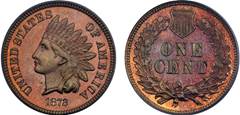
Some sources say that the phrase comes from the colors of the pennies themselves, which contained a different mix of copper and nickel and turned redder as they were handled by more people. Others say that the term came from the “Indian Head penny” that was issued from 1864 into the early 20th century; the “red” part of the cent came from the slang term for Native Americans, “redskin.”

“Indian Head” Penny

From Wikipedia:

bloviation, bloviating
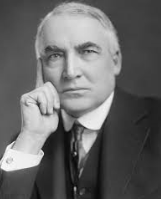
A style of empty, pompous political speech particularly associated with Ohio due to the term’s popularization by United States President Warren G. Harding, who described it as "the art of speaking for as long as the occasion warrants, and saying nothing." The verb "to bloviate" is the act of creating bloviation. In terms of its etymology, according to one source, the word is a "compound of blow, in its sense of ‘to boast’ (also in another typical Americanism, blowhard), with a mock-Latin ending to give it the self-important stature that is implicit in its meaning."

Warren G. Harding

Kara Church

Technical Editor, Advisory

Posted by: Jack Henry | June 17, 2014

Nifty Nuggets: Display/Appear

Incorrect usage of the word display is still lingering around Symitar Editing. Please refer to these standards when determining when to use display vs. appear.

Guideline Example
The word display requires a direct object. A direct object is usually a noun, pronoun, or phrase that receives the action of the verb. The direct object answers the question “Displays what?”

Use the word appears if there is not a direct object.

Incorrect: When an error occurs, a message displays.

Correct: The program displays a message when an error occurs.

· The direct object in the sentence above is message.

Correct. When an error occurs, a message appears.

Thank you,

Jackie Solano

Technical Writer, Episys Technical Publications

Symitar®

8985 Balboa Avenue

San Diego, California 92123

Direct Line: 619-542-6711

NOTICE: This electronic mail message and any files transmitted with it are intended
exclusively for the individual or entity to which it is addressed. The message,
together with any attachment, may contain confidential and/or privileged information.
Any unauthorized review, use, printing, saving, copying, disclosure or distribution
is strictly prohibited. If you have received this message in error, please
immediately advise the sender by reply email and delete all copies.

« Newer Posts - Older Posts »

Categories