Posted by: Jack Henry | June 16, 2014

Editor’s Corner: Social Media Terms (the end of the list)

Good afternoon, folks. I’m going to finish up the social media vocabulary today, since I know there are many of you out there who are instantly put to sleep by these newer additions to our language. The last few terms and definitions from The Concept Company are:

· Wall
This is a term for your Facebook profile page and the updates it contains. People can write updates on your wall that are viewable by all your friends.

· Web Analytics
The measurement, analysis and reporting of Web data and trends. Web analytics can be used for many purposes, including search engine optimization, market segmentation and targeting, understanding usage patterns, etc.

· Webcast
A live or pre-recorded broadcast of an audio or video presentation, delivered via the Web.

· Webconference
Use of the web to conduct a live meeting or presentation. In a web conference, each participant sits at his or her own computer and is connected to other participants via the Internet. [KC – Examples: WebEx, GoToMeeting]

· Webinar
A web-based seminar, where the presentation, lecture, or workshop is transmitted over the Internet instead of in person.

· Widget
Similar to an app, a widget is a small block of content that one provider can offer to another, for use on another blog or website. Widgets have a specific purpose such as showing weather forecasts, stock quotes, or news updates and are constantly updated by the creator of the widget, not someone who hosts it on his site.

· Wi-fi
Stands for wireless fidelity, a simple system allowing enabled devices to connect to the Internet within short range of any access point without cables or adaptors. A more powerful wireless technology, WiMAX, is not yet deployed as widely as wi-fi. [KC – Pronounce why-fie, with long “I” sounds. Not pronounced “whiffy,” as in “You have whiffy pits—you need a shower.” Not pronounced “wifey,” as in “When Sgt. Tangle said, ‘What a cute little wifey you got there,’ Sgt. Bickle’s wife turned around and socked
Sgt. Tangle in the jaw.”]

· Wiki
A type of user-generated and -edited website where multiple people can write and manage the content. A great example of this concept is Wikipedia, an online encyclopedia.

· Wikipedia
A free, collaborative encyclopedia project that anyone can edit; one of the most notable examples of a wiki.

· WordPress
A popular open source blog publishing application.

· Xing
A global social network for business professionals that offers personal profiles, groups, discussion forums, event coordination, and other common social community features. The audience for Xing is similar to that of LinkedIn.

· Yelp
An online directory that lets customers review local businesses, including restaurants, dentists, mechanics, and more. The site is free to join for users and business owners.

· YouTube
A video sharing site owned by Google. Users can freely upload their own video content to the site (you must have the rights to the content), as long as it is less than 10 minutes in length and the file is less than 100MB is size. YouTube makes it easy for people to embed videos on their own site or blogs, which helps with viral marketing efforts. Google results include YouTube videos as well.

Kara Church

Technical Editor, Advisory

619-542-6773 | Ext: 766773

www.symitar.com

NOTICE: This electronic mail message and any files transmitted with it are intended
exclusively for the individual or entity to which it is addressed. The message,
together with any attachment, may contain confidential and/or privileged information.
Any unauthorized review, use, printing, saving, copying, disclosure or distribution
is strictly prohibited. If you have received this message in error, please
immediately advise the sender by reply email and delete all copies.


Posted by: Jack Henry | June 13, 2014

Editor’s Corner: Social Media Terms – V

Only a few more social media terms left! Today we’ll visit the vivacious letter “V,” with terms from The Concept Company. (Sorry, Mom!)

· Video Sharing
A type of social network whereby users can upload, manage, and share video media publicly or with their networks, and comment on the videos of others. The most notable example of a video sharing site is YouTube.

· Vlog
A video blog or Vblog that contains videos instead of text entries. Some people call it video podcasting, vodcasting, or vlogging.

· Viral
When a piece of content on the Internet is shared organically, without prodding or encouragement from the business, organization, or person who created it, it is said to have “gone viral.” This means it has been shared on social networks, posted and reposted, tweeted and retweeted multiple times.

· Virtual Event
A live event, such as a trade show or job fair, which takes place on the Web, often in a virtual environment designed to emulate a face-to-face event of the same kind.

And another gem from The “Blog” of “Unnecessary” Quotation Marks, though I’d also file this under “Shops I Never Want to Visit.”

Kara Church

Technical Editor, Advisory

Posted by: Jack Henry | June 13, 2014

Nifty Nuggets: Unclear References

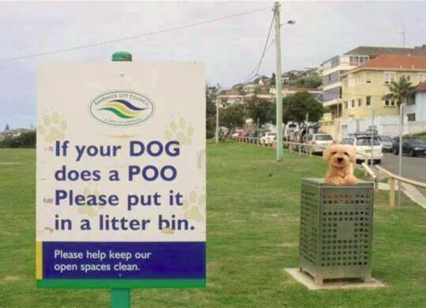
Avoid using unclear references whenever you use a pronoun (you, they, it, etc.) or an article (this, that, etc.) to make sure the reference is clear. In general, use specific descriptions instead of pronouns or articles unless the reference is absolutely clear. Some people make the mistake of using unclear references to avoid repetition; however, no puppy should ever have to suffer.

Thank you,

Jackie Solano

Technical Writer, Episys Technical Publications

Symitar®

8985 Balboa Avenue

San Diego, California 92123

Direct Line: 619-542-6711

Posted by: Jack Henry | June 11, 2014

Editor’s Corner: Game of Thrones

As I was watching one of my guilty pleasures Sunday (Game of Thrones), I actually learned some new terms that I thought I’d share with you. As the Sworn Brothers of the Night’s Watch prepared their arrows for the attack of the Wildings, you hear the commands “Nock! Draw! Loose!”

I found it very interesting that archery has its own version of ready-aim-fire, but not one of the words is the same. Here (with some added punctuation from me) are the definitions, from Wikipedia’s Glossary of Archery Terms:

· nock: The act of setting an arrow in a bow

· draw: The act of pulling an arrow against a bow string in readiness for shooting

· loose: The act of shooting an arrow from a bow (a.k.a. “release”)

And along that same note, for those of you with the last name of Archer or Bowman, you can guess what at least one of your former ancestors did. But if your last name is Fletcher, did you know that one of the people in your family was someone who made arrows?

Interesting stuff!

Kara Church

Technical Editor, Advisory

619-542-6773 | Ext: 766773

www.symitar.com

NOTICE: This electronic mail message and any files transmitted with it are intended
exclusively for the individual or entity to which it is addressed. The message,
together with any attachment, may contain confidential and/or privileged information.
Any unauthorized review, use, printing, saving, copying, disclosure or distribution
is strictly prohibited. If you have received this message in error, please
immediately advise the sender by reply email and delete all copies.
Posted by: Jack Henry | June 11, 2014

Nifty Nuggets: Even More Capitalization

Here are the last of the capitalization guidelines from the JHA Style Guide for Technical Communication and Training.

Guideline Example
Treat hyphens as spaces when capitalizing titles. Incorrect:

User-defined Codes

End-of-year

Correct:

User-Defined Codes

End-of-Year

Do not use all caps unless you are describing a system output message that contains all caps. GO DIRECTLY TO JAIL. DO NOT PASS GO. DO NOT COLLECT $200.
Capitalize product names as shown in the JHA Trademark List, no matter where they appear in a sentence. A product name that starts with a lowercase letter is always lowercase even if it is the first word in a sentence. iPay receives an EFT notification from the Bill Pay server and performs an ACH transfer of funds from the Episys GL clearing account to complete the electronic transfer to the payee.

Thank you,

Jackie Solano

Technical Writer, Episys Technical Publications

Symitar®

8985 Balboa Avenue

San Diego, California 92123

Direct Line: 619-542-6711

NOTICE: This electronic mail message and any files transmitted with it are intended
exclusively for the individual or entity to which it is addressed. The message,
together with any attachment, may contain confidential and/or privileged information.
Any unauthorized review, use, printing, saving, copying, disclosure or distribution
is strictly prohibited. If you have received this message in error, please
immediately advise the sender by reply email and delete all copies.

Posted by: Jack Henry | June 10, 2014

Editor’s Corner: A different kind of degree

After yesterday’s Editor’s Corner on academic degrees, I received a question on some different types of degree (Celsius and Fahrenheit). Wouldn’t you know, there are rules on capitalizing the different terms of measurement that are derived from proper names. The standard rule from the Chicago Manual of Style is to lowercase the full name of the unit of measure (if it is based on a person’s name), but to use an uppercase letter to abbreviate the measurement.

Of course there is an exception to that exceptional rule: when a term follows the word “degree” it is capitalized. For example, “It was a hot day in Athens—the thermometer reached 42 degrees Celsius.”

I’ve compiled a table below based on information from Wikipedia and the Chicago Manual of Style. It includes different measurements named after people, what the units measure, and a little information about what those folks did for a living. Enjoy!

Full Term Abbrev. Measures Named After…
ampere A electricity André-Marie Ampère

(1775–1836)

French mathematician and physicist, considered the father of electrodynamics

angstrom Å length

(one ten-billionth of a meter)

Anders Jonas Ångström

(1814–1874)

Swedish physicist

degree Baumé Bé or °Bé density of liquids Antoine Baumé

(1728-1804)

French pharmacist

degree Celsius °C temperature Anders Celsius

(1701–1744)

Swedish astronomer

curie Ci radioactivity Marie Curie

(1867 – 4 July 1934)

Polish and naturalized-French physicist and chemist

Pierre Curie

(1859 –1906)

French physicist

dalton Da atomic mass John Dalton

(1766 –1844)

English chemist, meteorologist and physicist

faraday F electrical charge Michael Faraday

(1791 –1867)

English scientist who contributed to the fields of electromagnetism and electrochemistry

degree Fahrenheit °F temperature Daniel Gabriel Fahrenheit

(1686–1736)

German physicist, engineer, and glass blower

hertz Hz frequency (cycles per second) Heinrich Rudolf Hertz

(1857 –1894)

German physicist

joule J energy James Prescott Joule

(1818–1889)

English physicist

kelvin (no degree symbol used) K temperature William Thomson, 1st Baron Kelvin

(1824–1907)

Belfast-born engineer and physicist

newton N force Sir Isaac Newton

1642 –1727

English physicist and mathematician

pascal Pa force per square unit of area Blaise Pascal

(1623 –1662)

French mathematician, physicist, inventor, writer, and Christian philosopher

degree Réaumur °R temperature René Antoine Ferchault de Réaumur

(1683 to 1757)

French scientist

siemens S electricity Ernst Werner von Siemens

(1816 –1892)

German inventor and industrialist.

tesla T strength of magnetic fields Nikola Tesla

(1856 –1943)

Serbian-American inventor, electrical engineer, mechanical engineer, and futurist

volt V electricity Alessandro Volta

(1745–1827)

Italian physicist

watt W rate of energy conversion or transfer James Watt

(1736–1819)

Scottish engineer

weber Wb magnetic flux Wilhelm Eduard Weber

(1804–1891)

German physicist

Kara Church

Technical Editor, Advisory

619-542-6773 | Ext: 766773

www.symitar.com

NOTICE: This electronic mail message and any files transmitted with it are intended
exclusively for the individual or entity to which it is addressed. The message,
together with any attachment, may contain confidential and/or privileged information.
Any unauthorized review, use, printing, saving, copying, disclosure or distribution
is strictly prohibited. If you have received this message in error, please
immediately advise the sender by reply email and delete all copies.

Posted by: Jack Henry | June 9, 2014

Editor’s Corner: Academic Degrees

What do poppies and questions about graduation have in common? They both seem to pop up in late May or June!

Not much of a riddle, but I do get tons of questions this time of year about the proper grammar for discussing graduation and the appropriate way to punctuate different types of degrees.

Donna covered the graduation question a couple months ago here: https://episystechpubs.com/2014/06/09/pet-peeves-graduation/

As far as degree types, here are some general rules:

· Use lowercase letters for the degree unless you are writing the formal name for a particular degree:

o I think she has a master’s degree of some kind.

o Jane has a Master of Educational Technology Degree from San Diego State University.

Note: Universities and other institutions often capitalize academic degrees, but when speaking of degrees in general prose, it is most appropriate to lowercase them.

· The Chicago Manual of Style recommends omitting the periods between abbreviations. For example:

o BA = bachelor of arts

o BFA = bachelor of fine arts

o DDS = doctor of dental surgery

o JD = juris doctor (doctor of law)

o MBA = master of business administration

o MD = medicinae doctor (doctor of medicine)

o Etc.

· Don’t let the apostrophe throw you off. Here are the correct versions of some of the most common degrees:

o associate degree

o bachelor’s degree

o doctoral degree

o master’s degree

Kara Church

Technical Editor, Advisory

619-542-6773 | Ext: 766773

www.symitar.com

NOTICE: This electronic mail message and any files transmitted with it are intended
exclusively for the individual or entity to which it is addressed. The message,
together with any attachment, may contain confidential and/or privileged information.
Any unauthorized review, use, printing, saving, copying, disclosure or distribution
is strictly prohibited. If you have received this message in error, please
immediately advise the sender by reply email and delete all copies.

Posted by: Jack Henry | June 9, 2014

Pet Peeves: Graduation

Pet peeves, everyone has them.

Grammatical pet peeves, persnickety people with too much time on their hands have them.

Untrue! Unfair! I do not have too much time on my hands—and neither (I’m sure) do the readers who asked me to cover today’s topic: the phrase “graduated high school.”

Incorrect sentence: My son graduated high school in 2009.

What’s wrong with that sentence, you ask? It’s missing its preposition: from. (A preposition is a word that relates a noun or pronoun to other words.)

Correct sentence: My son graduated from high school in 2009.

Without the trusty preposition, from, it’s the high school that is actually graduating—and my son is the all-powerful being that made it happen. I think he’s pretty awesome, but come on!

According to the Quick & Dirty Tips website, more than half of us use this incorrect phrase. That’s kind of disheartening.

Of course, that number does not reflect subscribers of the Editor’s Corner, since we are nearly perfect in every way. J

When I searched the term “nearly perfect in every way” expecting to find something about Mary Poppins, I found this picture of Macy (a pet, but not a pet peeve), who was rescued days before a scheduled euthanasia.

Macy graduated from doggy prison and now she has a family who loves her. Happy Monday!

Donna Bradley Burcher | Technical Editor | Symitar®

8985 Balboa Ave. | San Diego, CA 92123 | Ph. 619.278.0432 | Ext: 765432

Posted by: Jack Henry | June 6, 2014

Editors Corner: Transitions

Good morning and happy Friday!

Transitions, if written well, connect your paragraphs into logically coherent information.

Whether they are single words, quick phrases, or full sentences, transitions also help readers understand how the information works together.

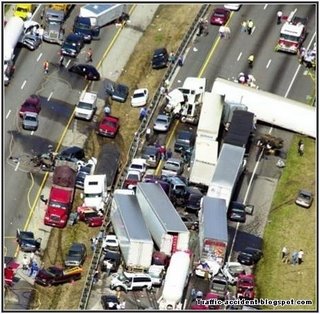
Documentation without transitions resembles a traffic collision because it doesn’t flow . Think of transitions as a way to merge your information. Transitions will give your writing clarity and make it much more effective to the reader.

Writing effective transitions isn’t as difficult as it may sound. You just need to highlight the connections between corresponding paragraphs.

Here’s an example:

I loved reading Roald Dahl books as a child. Charlie and the Chocolate Factory was the first book I read and I was fascinated with the characters. Dahl’s stories kept me entertained for hours. He had a gift for storytelling.

Because Dahl’s books brought pure delight to my childhood, I decided to buy my children his books. We read his books together every night before bedtime.

When you read your document, look at each paragraph to make sure it connects to the beginning of the next paragraph. If there is no connection, you may need to improve the transition or reorganize the paragraphs.

Have a great weekend!

Thank you,

Jackie Solano

Technical Writer, Episys Technical Publications

Symitar®

8985 Balboa Avenue

San Diego, California 92123

Direct Line: 619-542-6711

Posted by: Jack Henry | June 5, 2014

Editor’s Corner: Gender Neutrality in Terms

About a year ago, I sent out a list of gender-neutral job titles (Editor’s Corner – July 19, 2013). While researching a question from one of you about non-neutral titles, I ended up at the same resource I used before. Today I’m going to give you another taste of the gender neutral version of some titles and terms. I have to say that the neutral terms take some of the pizzazz out of the original term; but when you want to be safe from offending someone, you should consider the terms on this list. Here are a few terms I selected for you from Writing Help Central. I can’t imagine the folks in our Human Resources battle with these titles and terms too often.

Instead of this… Use this… Kara’s Comments
brotherly love charity, good will Welcome to Philadelphia—the City of Charity and Good Will!
frog man diver I can’t say I’ve ever heard people refer to divers as frog men, but as far as “job titles” go, frog man (or frog woman) sounds much cooler to me than diver.
henchman partner in crime This is one of those where “King Geoffrey’s henchmen kidnapped Lady Guinevere from the stagecoach” sounds much more menacing than “King Geoffrey’s partners in crime…”
gunman shooter, killer, assassin I just want to note that this guy’s web site (Shaun Fawcett’s Writing Help Central) lists about five different gender specific “job titles” for a hit man, followed by a hardy assortment of gender neutral terms.
jack-of-all-trades handyperson Suddenly the saying “I’m a jack-of-all-trades, master of none” loses its oomph in “translation”: “I’m a handyperson at everything, expert at nothing.”
letterman achiever, award winning athlete The young men and women on the high school swim team could not wait to get their award-winning athletes’ jackets.
man of action go-getter, human dynamo As someone who has referred to myself as a “woman of action,” I can’t imagine ever saying, “Yes folks, I’m a real human dynamo." Barf.
meter maid parking enforcement officer And suddenly, The Beatles’ song is much less charming:

Lovely Rita parking enforcement officer
May I inquire discreetly (Lovely Rita)
When are you free to take some tea with me?
(Lovely Rita, parking enforcement officer, ah)

yes-man avid follower, supporter I don’t think “avid follower” or “supporter” really captures the gist of this word being used as a synonym for “brown-noser.” J

Kara Church

Technical Editor, Advisory

619-542-6773 | Ext: 766773

www.symitar.com

NOTICE: This electronic mail message and any files transmitted with it are intended
exclusively for the individual or entity to which it is addressed. The message,
together with any attachment, may contain confidential and/or privileged information.
Any unauthorized review, use, printing, saving, copying, disclosure or distribution
is strictly prohibited. If you have received this message in error, please
immediately advise the sender by reply email and delete all copies.

« Newer Posts - Older Posts »

Categories