Posted by: Jack Henry | July 11, 2014

Editor’s Corner: Big kids and little ids

Good morning! Today, while playing mailbox roulette (a game where I close my eyes and scroll through a hundred topics for the Editor’s Corner and go with whichever one I land on), I came across this topic: ID versus id. One of our JHA technical writers would like me to stress the difference between the two, especially when hard coding fields and values in software:

· ID is an abbreviation for identification or identity. In our business, this is the one you are looking for.

· id (or Id, at the beginning of a sentence) is a term from psychology, specifically from Dr. Sigmund Freud, which means the “part of a person’s unconscious mind that relates to basic needs and desires.” (Merriam-Webster)

Unless you want to drive financial institution employees into psychotherapy, you’ll probably want to prompt them for their user ID rather than their ids!

Enjoy your weekend.

Kara Church

Technical Editor, Advisory

619-542-6773 | Ext: 766773

www.symitar.com

NOTICE: This electronic mail message and any files transmitted with it are intended
exclusively for the individual or entity to which it is addressed. The message,
together with any attachment, may contain confidential and/or privileged information.
Any unauthorized review, use, printing, saving, copying, disclosure or distribution
is strictly prohibited. If you have received this message in error, please
immediately advise the sender by reply email and delete all copies.

Posted by: Jack Henry | July 10, 2014

Editor’s Corner: Q&A from CMOS

Next time you think one of us JHA editors is being snarky, try looking at some of the responses to questions in the Chicago Manual of Style Q&A column. Here is a real gem from this month. I guess it is better than actually having someone throw the book at your head! Maybe they have the heat turned up in the editors’ cave?

Q. How do you determine if it is “In the 1970s bad things happened” or “In the 1970s, bad things happened”? Comma or no comma? Why?

A. You can determine it by consulting a style manual like CMOS. You can go to the table of contents and look for the chapter on punctuation (chapter 6), then scan down the list of topics until you find a section on commas. Within that section you can look for the paragraph that addresses your issue: 6.36, “Commas with introductory adverbial phrases.” There you can read that “an introductory adverbial phrase is often set off by a comma but need not be unless misreading is likely. Shorter adverbial phrases are less likely to merit a comma than longer ones.” You can decide that your phrase does not need to be set off by a comma. Why? Because misreading without the comma is unlikely.

Kara Church

Technical Editor, Advisory

619-542-6773 | Ext: 766773

www.symitar.com

NOTICE: This electronic mail message and any files transmitted with it are intended
exclusively for the individual or entity to which it is addressed. The message,
together with any attachment, may contain confidential and/or privileged information.
Any unauthorized review, use, printing, saving, copying, disclosure or distribution
is strictly prohibited. If you have received this message in error, please
immediately advise the sender by reply email and delete all copies.

Posted by: Jack Henry | July 10, 2014

Nifty Nuggets: Keyboard Terms

Please refer to these guidelines when writing about keyboard terms. The guidelines in black font are from the JHA Style Guide for Technical Communication and Training and the one in blue font is a Symitar standard.

Guideline Example
Use the word press to describe pressing a key on a keyboard.

Do not use the words hit, strike, or punch.

Press Enter.
Only use the words the and key with the key name at first mention if necessary for clarity. Press the Delete key. After you press Delete, click Submit.
Use the plus sign between keys to show a key combination. Press Ctrl+Shift.
Use the word type to describe what the user is typing on the keyboard.

Do not use the word enter.

At the PowerOn specfile prompt, type RB.INSURANCE.FROM.TABLES, and then press Enter.

Thank you,

Jackie Solano

Technical Writer, Episys Technical Publications

Symitar®

8985 Balboa Avenue

San Diego, California 92123

Direct Line: 619-542-6711

NOTICE: This electronic mail message and any files transmitted with it are intended
exclusively for the individual or entity to which it is addressed. The message,
together with any attachment, may contain confidential and/or privileged information.
Any unauthorized review, use, printing, saving, copying, disclosure or distribution
is strictly prohibited. If you have received this message in error, please
immediately advise the sender by reply email and delete all copies.

Posted by: Jack Henry | July 9, 2014

Editor’s Corner: “In Regard to” Your Pet Peeve

After sending out a recent Editor’s Corner about one of my pet peeves, a few of you sent me your own personal pet peeves and asked me to expound on them.

Thanks to an email from Ivonne, today I’ll address in regard to vs. in regards to (singular vs. plural).

Ivonne knew, but you may wonder, which is correct?

Lots of people get this one wrong. The correct usage is in regard to (singular). For instance, you would say, “This email is in regard to your question about correct English usage.”

But better yet, consider finding a less antiquated and wordy way to say what you mean. You can often use about in place of in regard to. Or, to be more direct, you can completely rewrite a sentence. Check out this progression of revisions:

Wordy start:In regard to your homeowner’s insurance, it was cancelled before the flood occurred.

Still too wordy: About your homeowner’s insurance, it was cancelled before the flood occurred.

Concise revision: Your homeowner’s insurance was canceled before the flood occurred.

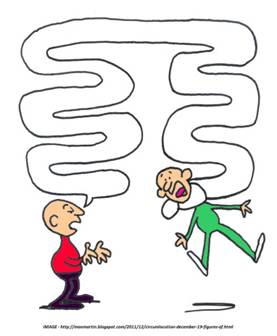
How wordiness affects your editor:

For more information on this topic, read this article from Quick and Dirty Tips.

Donna Bradley Burcher | Technical Editor | Symitar®

8985 Balboa Ave. | San Diego, CA 92123 | Ph. 619.278.0432 | Ext: 765432

Dear Editrix,

Can you cover the difference between ability and capability? I often see these used in technical documentation. For example:

· Our users have the ability to process transactions.

· Our users have the capability to process transactions.

Thanks!

Ready, Willing, and Able in a San Antonio Stable

Dear RWASAS,

You have raised an interesting question and I have several things to say about those examples.

1) They are overly wordy.

2) They are very typical in the technical documentation world.

3) I think there are more appropriate ways to communicate the message.

First, here are some definitions from Merriam-Webster:

· ability (noun)

1: the quality or state of being able: physical, mental, or legal power to perform: competence in doing: skill

2: natural talent or acquired proficiency especially in a particular work or activity: aptitude

· capability (noun)

1: the quality or state of being capable physically, intellectually, morally, or legally: capacity, ability

Now, let’s look back at the examples:

· Our users have the ability to process transactions.

· Our users have the capability to process transactions.

What are we telling the reader? We are telling them, as users of our product, they have the skill and aptitude (ability) to use the product. How would we know? Better to focus on the product. (See bullets below.)

The same goes for capability. Are we telling the reader that people using our products are physically or mentally able to use our products? Again, I don’t think that is the message.

Try these on for size:

· Users can process transactions with Product X. (too passive)

· Use Product X to process transactions. (direct, to the point) Yay!

Sometimes it is best to focus on the main point of the sentence and rewrite it to get your idea across.

Sincerely,

Editrix

NOTICE: This electronic mail message and any files transmitted with it are intended
exclusively for the individual or entity to which it is addressed. The message,
together with any attachment, may contain confidential and/or privileged information.
Any unauthorized review, use, printing, saving, copying, disclosure or distribution
is strictly prohibited. If you have received this message in error, please
immediately advise the sender by reply email and delete all copies.
Posted by: Jack Henry | July 7, 2014

Editor’s Corner: Alum+

We’re past graduation season, but just the other day someone was telling me how annoying it is when bumper stickers misuse the terms that follow. Here is a brief lesson on alumnus, alumna, and alumni—but not aluminum or aluminium. From The Grammar Devotional, by Mignon Fogarty:

· A female graduate is an alumna, and a group of them are alumnae.

· A male graduate is an alumnus, and a group of them are alumni.

· If a graduation party includes both male and female graduates, they are collectively called alumni.

· In casual settings, people sometimes dodge the gender specificity and use the more generic terms alum and alums.

I hope you enjoyed your Fourth of July holiday!

Kara Church

Technical Editor, Advisory

Posted by: Jack Henry | July 7, 2014

Nifty Nuggets: Mouse Terms

Use these guidelines from the JHA Style Guide for Technical Communication and Training when describing mouse terms.

Guideline Example
Use Click, not Click on.

Hyphenate double-click and right-click.

Click Ok.

Right-click the Checks icon and click Properties.

Thank you,

Jackie Solano

Technical Writer, Episys Technical Publications

Symitar®

8985 Balboa Avenue

San Diego, California 92123

Direct Line: 619-542-6711

Posted by: Jack Henry | July 3, 2014

Editor’s Corner: The legends of “copper”

I just purchased a book that I hope will educate and entertain all of us on occasion. It’s called What in the Word, by Charles Harrington Elster. As I was paging through it yesterday, I found something I thought might be of interest.

Question: How did police officers come to be called cops?

Answer: The two stories you hear or read the most, that cop is short for copper—a reference to the big brass buttons on the uniforms of London bobbies—or that it’s an acronym for constabulary of police or some such thing, are both unfounded. (Acronymic etymologies, in particular, are always suspect.)

The true source of cop meaning a police officer appears to be the verb to cop, which in northern England was used to mean “to capture, catch, lay hold of, ‘nab,’” says the Oxford English Dictionary, whose earliest citation for this sense is from 1704. This verb cop probably goes back in turn to the Latin capere, which meant to catch, seize, take possession by force. By the mid-nineteenth century, says the QPB Encyclopedia of Word and Phrase Origins, the verb was “adopted as a name for a policeman, who of course, caught or captured crooks.” The old-fashioned variant copper has nothing to do with the metal or with buttons. It simply tacks the agent suffix –er onto the verb to form a noun meaning “one who cops.”

All that said, have a good holiday, be safe, and avoid any run-ins with the coppers!

NOTICE: This electronic mail message and any files transmitted with it are intended
exclusively for the individual or entity to which it is addressed. The message,
together with any attachment, may contain confidential and/or privileged information.
Any unauthorized review, use, printing, saving, copying, disclosure or distribution
is strictly prohibited. If you have received this message in error, please
immediately advise the sender by reply email and delete all copies.

Posted by: Jack Henry | July 2, 2014

Editor’s Corner: Under the Boardwalk

Hello all and happy holiday week!

Today I have some more vocabulary from Boardwalk Empire. You are probably familiar with the first two terms, Ponzi scheme and haymaker, and I bet you’ve heard an abbreviated version of the third word, vigorish. For a little flavor from 1910s and 1920s Atlantic City, here are the definitions and details for these three terms, from Merriam-Webster:

· Pon·zi scheme

An investment swindle in which some early investors are paid off with the money put up by later ones in order to encourage more and bigger risks

Origin of PONZI SCHEME[+]

after Charles A. Ponzi American (Italian-born) swindler

First Known Use: 1920

· haymaker
[KC – In this case, the reference was “a haymaker to the head.”]

1a : a worker who cuts and cures hay b : a machine for curing hay

2a : a powerful blow with the fist often resulting in a knockout b : an action or statement that is a stunning setback

· vig·or·ish plural -es

[KC – Fans of mafia flicks, police dramas, and the “crime and punishment” genre will recognize this as
“the vig.”]

1: a charge taken (as by a bookie or gambling house) on bets; also : the degree of such a charge <a vigorish of 5 percent>

2: interest paid to a moneylender

Origin of VIGORISH[+]

probably from Yiddish, from Russian vyigrysh winnings, profit

First Known Use: 1912 (sense 1)

Kara Church

Technical Editor, Advisory

619-542-6773 | Ext: 766773

www.symitar.com

NOTICE: This electronic mail message and any files transmitted with it are intended
exclusively for the individual or entity to which it is addressed. The message,
together with any attachment, may contain confidential and/or privileged information.
Any unauthorized review, use, printing, saving, copying, disclosure or distribution
is strictly prohibited. If you have received this message in error, please
immediately advise the sender by reply email and delete all copies.

Posted by: Jack Henry | June 27, 2014

Nifty Nuggets: File Names

When including file names in your writing, please use these guidelines from the JHA Style Guide for Technical Communication and Training.

Guideline Example
When using a file name extension as a word, precede the extension with a period. Use an article (a, an, or the) as if the period is not pronounced.

Use lowercase letters unless the file name extension appears in a heading.

Copy an .ini file into the folder.

Open a .doc file.

Do not use the .pdf extension as a word. Always use PDF, the generic term for a .pdf file. Convert the document to a PDF before you send it to the customer.

Thank you,

Jackie Solano

Technical Writer, Episys Technical Publications

Symitar®

8985 Balboa Avenue

San Diego, California 92123

Direct Line: 619-542-6711

NOTICE: This electronic mail message and any files transmitted with it are intended
exclusively for the individual or entity to which it is addressed. The message,
together with any attachment, may contain confidential and/or privileged information.
Any unauthorized review, use, printing, saving, copying, disclosure or distribution
is strictly prohibited. If you have received this message in error, please
immediately advise the sender by reply email and delete all copies.

« Newer Posts - Older Posts »

Categories