Posted by: Jack Henry | July 13, 2015

Editor’s Corner: Writing Tip #7

Here we are, back to the ten tips. Just as a reminder they are from the article “10 Top Writing Tips and the Psychology Behind Them,” by Josh Bernoff. In case you want to read the whole article at once, or see his other topics, I’m providing the link again. And remember, this is the link with the swearing in it, so if you don’t like the language of sailors, pirates, and angry editors, don’t visit it—just wait for me to dole out the tips over a couple of days. The not-so-safe-for-work link is here.

And by the way, I love this rule. It will help you avoid the passive voice, it supports the imperative voice, and it leads to stronger writing. It’s a great tip for writing clear instructions.

§ Tip #7: Use “I,” “we,” and “you.”

Why it matters. Taken together, these pronouns create a relationship between the writer (“I”), his [KC – Or her] organization (“we”), and the reader (“you.”)

Why you don’t use these pronouns. It’s scary to talk directly to reader. It sounds informal.

How to fix it. Imagine the reader. Then rewrite using the word “you.” For example, rewrite the Fenway Park rule “No bag or item larger than 16″x16″x8″ will be permitted inside the Park,” as “Security staff won’t let you in the park if your bag is too big.”

Kara Church

Technical Editor, Advisory

619-542-6773 | Ext: 766773

Symitar Documentation Services

NOTICE: This electronic mail message and any files transmitted with it are intended
exclusively for the individual or entity to which it is addressed. The message,
together with any attachment, may contain confidential and/or privileged information.
Any unauthorized review, use, printing, saving, copying, disclosure or distribution
is strictly prohibited. If you have received this message in error, please
immediately advise the sender by reply email and delete all copies.
Posted by: Jack Henry | July 10, 2015

Editor’s Corner: Belated 4th of July Post

Before I get started, I want to remind you that the Tom Swifties contest is almost at an end. I will extend it until Tuesday, July 14, 2015. I’ve already received some really fantastic entries from you clever folks!

Need a refresher about what Tom Swifties are? Check them out here:

· https://episystechpubs.com/2015/06/05/editors-corner-tom-swifties/

· https://episystechpubs.com/2015/06/12/editors-corner-more-tom-swifties/

And now, from the creator of the original Tom Swifties contest, I have an article from Richard Lederer. It’s a bit lengthy, but it’s entertaining.

Ron F., thank you for this submission and the weekly articles you leave on my desk.

From the San Diego Union-Tribune’s July 4, 2015 edition: “American history according to student bloopers.”

On this, our nation’s birthday, I hope you’ll enjoy this fractured chronicle of American history composed entirely of certified, genuine, authentic, unretouched student fabrications. Read carefully, and you will learn a lot.

Christopher Columbus discovered America while cursing about the Atlantic Ocean on the Nina, the Pinta Colada and the Santa Fe. Columbus knelt, thanked God and put the American flag in the ground.

Later, Jamestown was discovered by King James the One. The Pilgrims crossed the ocean in hardships. The men wore pants that only came a little ways past their knees, and the girls wore funny bonnets. The winter of 1620 was a hard one for the settlers. Many people died, and many babies were born. Captain John Smith was responsible for all this.

One of the causes of the Revolutionary War was the English put tacks in their tea. When General Burgundy surrendered to Sara’s Toga, the colonists won the war and no longer had to pay for taxis.

America was founded by four fathers. Delegates from the original 13 states formed the Contented Congress. Thomas Jefferson, a Virgin, and Benjamin Franklin were two singers of the Decoration of Independence, which says that all men are cremated equal and are well endowed by their creator.

George Washington led the United States to what it is today, while Ben and Dick Arnold were terrible traitors. Washington crossed the Delaware River, married Martha Custis and in due time became the Father of Our Country.

Soon the Constitution of the United States was adopted to secure domestic hostility. Under the Constitution, the people have the right to bare arms.

The two greatest marshals of the Old West were Wyatt Burp and Wild Bill Hiccup. General George Custer extinguished himself at the Battle of the Little Big Horn.

Abraham Lincoln became America’s greatest Precedent. Lincoln’s mother died in infancy, and he was born in a log cabin which he built with his very own hands. Abraham Lincoln wrote the Gettysburg Address while traveling from Washington to Gettysburg on the back of an envelope.

On the night of April 14, 1865, Lincoln went to the theater and got shot in his seat. The believed assinator was John Wilkes Booth, a supposingly insane actor. This ruined Booth’s career.

The 19th century was a time of a great many thoughts and inventions. People stopped reproducing by hand and started reproducing by machine. The invention of the steamboat by Robert Fulton caused a network of rivers to spring up. Samuel Morse invented a code of telepathy. Eli Whitney invented the spinning gin. Thomas Edison invented the pornograph and the indecent lamp.

The First World War was caused by the assignation of the Arch-Duck by an anahist. World War I made the people so sad that it brought on the Great Depression. Then the New Deal tried to make sure that the stock market will never happen again.

Charles Limburger was the first man to ever cross the Atlantic alone. He wanted to go by regular airlines, but he couldn’t afford to buy a ticket. When he got to Paris, all the French people shouted, “Bonzai!”

World War II happened when Adolph Hitler and the Knotsies tried to conquer Europe. Hitler always liked to call himself Der Furor, but his real name was Messer Smith. Franklin Roosevelt won a landslide and went over there and put a stop to Hitler, who committed suicide in his bunk. World War II ended on VD Day.

Martin Luther had a dream. He went to Washington and recited his Sermon on the Monument. Later, he nailed 96 Protestants in the Watergate Scandal, which ushered in a new error in the annals of human history.

Kara Church

Technical Editor, Advisory

619-542-6773 | Ext: 766773

Symitar Documentation Services

NOTICE: This electronic mail message and any files transmitted with it are intended
exclusively for the individual or entity to which it is addressed. The message,
together with any attachment, may contain confidential and/or privileged information.
Any unauthorized review, use, printing, saving, copying, disclosure or distribution
is strictly prohibited. If you have received this message in error, please
immediately advise the sender by reply email and delete all copies.
Posted by: Jack Henry | July 9, 2015

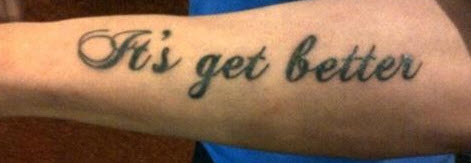
Editor’s Corner: Get it, girl!

Hello, folks. Let’s take a break from the top ten tips for a moment to talk about the word get. It’s a tiny word, but it packs a punch when you consider the different ways you can use it. From the article “The Indispensable ‘Get’,” by Maeve Maddox (inDaily Writing Tips):

I’ve been amusing myself lately by eavesdropping on people, listening for the use of the word get. I’ve concluded that get is as necessary to English speakers as the verb to be.

The most common synonyms for the verb get are receive, obtain, and buy:

· I get the daily paper. (receive)

· Next month I will get my first raise in salary. (obtain)

· He got a 45” television set at the auction. (bought)

In his sonnet “The World is Too Much With Us” Wordsworth uses get in the sense of “to accumulate wealth”:

The world is too much with us; late and soon,
Getting and spending, we lay waste our powers;

The verb get has so many additional meanings that I wonder how ESL learners sort them all out. [KC – That makes two of us!]

For example, used with the preposition on, get can have at least four different meanings:

· How are you getting on with your studies? (managing, progressing)

· Sallie gets on with her mother-in-law. (has a good relationship)

· At 93, Mr. Biggs is really getting on. (becoming older)

· Stop obsessing about the past and get on with your life. (continue)

· [KC – She missed, “You
get on my nerves, with all that talk about your pet guinea pig.” (irritate)]

Here are a few more uses of get:

· Don’t get so nervous when you have an interview. (become)

· How do you get to Carnegie Hall? (reach, arrive at)

· I can’t get used to your new hairdo. (become accustomed to)

· So he mispronounced your name; get over it. (forget it, let it go).

· Now that everyone is in town, let’s get together for dinner. (meet)

· I know that losing your best friend is difficult, but you’ll get through it. (survive, overcome)

· I want my neighbor to get rid of his vicious dog. (dispose of)

· She’s trapped in a dead-end job and wants to get out. (escape)

· We hope to get away this weekend. (travel, go somewhere else)

· I’ve tried and tried to master algebra, but I just don’t get it. (understand)

Then there are the imperatives with get:

· Get busy! Get a move on! (Hurry up.)

· Get lost! (Stop bothering me and go away!)

And these two, which have different meanings according to the context:

· Get out!

· Get out of here!

These expressions can mean “go away, leave my presence,” as in “Get out! I never want to see you again,” or “Get out of here! The dam is about to burst.” Or they can be slang expressions of disbelief: “You pay only $600 a month for an apartment in Manhattan? Get out of here!” [KC-I think this might be more of a “Get outta here!”
J]

Listen for get in your own speech for a day. You may be surprised by how often you use it.

Kara Church

Technical Editor, Advisory

Symitar Documentation Services

Posted by: Jack Henry | July 8, 2015

Editor’s Corner: Tips 6 and 9 – Citing

Today’s two writing tips are both about citing—no, not Bigfoot or Loch Ness Monster sightings, but citing numbers and examples. These are still from the list of ten top tips from the article “10 Top Writing Tips and the Psychology Behind Them,” by Josh Bernoff.

Tip # 6 Cite numbers effectively.

Why it matters. Used properly, statistics can back up your point.

Why you use numbers the wrong way. You think a number—any number—adds credibility. But they’re so easy to misuse.

How to fix it. When citing a statistic, include the context (compared to what?). And statistics shorn of sources are meaningless; “It is estimated that” might as well say “I made this number up.” Here’s a proper way to use a statistic: “Forrester Research estimates that by 2017, 2.4 billion people will own smartphones, or around one third of the world’s population.”

Tip # 9 Cite examples.

Why it matters.Text without examples is dull and not credible. Text with examples comes alive.

Why you lack examples. Examples come from research, which is work. They make you pause and think as you’re writing, which slows you down.

How to fix it. For a piece of any length, plan to spend half the writing time doing research first. If you can’t get an actual example, use a hypothetical. If possible, cite a person who did something, not just a company.

Kara Church

Technical Editor, Advisory

619-542-6773 | Ext: 766773

Symitar Documentation Services

NOTICE: This electronic mail message and any files transmitted with it are intended
exclusively for the individual or entity to which it is addressed. The message,
together with any attachment, may contain confidential and/or privileged information.
Any unauthorized review, use, printing, saving, copying, disclosure or distribution
is strictly prohibited. If you have received this message in error, please
immediately advise the sender by reply email and delete all copies.

Posted by: Jack Henry | July 7, 2015

Editor’s Corner: Tip #5 – Replace Jargon with Clarity

I’m not going to rant about jargon today, but I am going to publish the fifth tip from “10 Top Writing Tips and the Psychology Behind Them,” by Josh Bernoff.

Tip #5: Replace jargon with clarity.

Why it matters. Jargon makes your reader feel stupid. Unless they’re an insider, they can’t figure out your meaning.

Why you use jargon. You think jargon makes you sound sophisticated. Or you’re hiding the fact that you don’t actually understand what you’re saying.

How to fix it. Imagine you’re talking to your mom (unless your mom is an expert in your subject; if so, imagine you’re talking to your high school history teacher). Explain what you mean in plain English. If using a technical term would actually make things clearer or shorter, define it first. [KC – Emphasis mine.] For example, this SAP press release includes the sentence “As the digital transformation revolution reaches maturity, companies have the opportunity to shift business models within their industry disruptively to create new sources of defensible competitive advantage.” Rewrite as “New technology creates new ways to do business.”

Previous articles on jargon:

· https://episystechpubs.com/2014/07/18/editors-corner-some-information-and-opinions-on-jargon/

· https://episystechpubs.com/2014/11/10/nifty-nuggets-jargon-and-terminology/

Kara Church

Technical Editor, Advisory

619-542-6773 | Ext: 766773

Symitar Documentation Services

NOTICE: This electronic mail message and any files transmitted with it are intended
exclusively for the individual or entity to which it is addressed. The message,
together with any attachment, may contain confidential and/or privileged information.
Any unauthorized review, use, printing, saving, copying, disclosure or distribution
is strictly prohibited. If you have received this message in error, please
immediately advise the sender by reply email and delete all copies.

Posted by: Jack Henry | July 6, 2015

Editor’s Corner: Antecedents

Last week we discussed pronouns. Remember, a pronoun is a word that is used to take the place of a noun you’ve already mentioned. Now let’s talk about antecedents. The noun that a pronoun refers to is called an antecedent. Another way to think of it: an antecedent clarifies what the pronoun refers to.

Example:

President Lincoln delivered his Gettysburg Address in 1863.

In this sentence, the pronoun his refers to President Lincoln. President Lincoln is the antecedent for the pronoun his.

The following examples would be correct if there were a clear antecedent instead of the pronoun.

· If you put this sheet in your notebook, you can refer to it. (What is the antecedent for it, the sheet or your notebook?)

· Although the batch job was running for too long and caused GOODNIGHT processing to freeze, it was terminated. (What is the antecedent of it, the batch job or GOODNIGHT processing?)

Also, be careful when you start sentences with a pronoun (specifically this, that, these, those, or it), especially if the previous sentence contains multiple nouns.

Example:

In this enhancement, we added new fields to the Loan record, new batch prompts to the Loan File Maintenance Processing batch program, and a new Loan Transfers report in Print Control. This will allow you to track loan transfers. (What is the antecedent of this, the enhancement, the new fields, the new batch prompts, or the new report?)

Remember to refer clearly to a specific noun. Don’t be vague; it just confuses the reader.

Jackie Solano | Technical Editor | Symitar®

8985 Balboa Ave. | San Diego, CA 92123 | Ph. 619.542.6711 | Extension: 766711

Symitar Documentation Services

NOTICE: This electronic mail message and any files transmitted with it are intended
exclusively for the individual or entity to which it is addressed. The message,
together with any attachment, may contain confidential and/or privileged information.
Any unauthorized review, use, printing, saving, copying, disclosure or distribution
is strictly prohibited. If you have received this message in error, please
immediately advise the sender by reply email and delete all copies.

Posted by: Jack Henry | July 2, 2015

Editor’s Corner: Pre-Weekend Mondegreens

It’s a long weekend ahead, and here are some misheard song lyrics (a.k.a. mondegreens) from Hold Me Closer, Tony Danza, by Charles Grosvenor Jr.

I hope you have a safe Fourth of July!

Song Title Artist/Group Actual Lyrics Mondegreen
Falling Away from Me Korn Beating me down, down, into the ground Beating a clown, clown, into the ground
Every Ghetto Every City Lauren Hill Unaware of what we didn’t have Underwear is what we didn’t have
Bad Girl Madonna Bad girl, drunk by six Bad girl jumping sticks
Don’t Tell Me Madonna Like a calf down on its knees Eric Clapton on his knees
Shake It Off Mariah Carey Just like the Calgon commercial Just like the catfood commercial
The Dope Show Marilyn Manson We’re all stars now in the dope show We’re all stars now in the dog show
Family Affair Mary J. Blige So just dance for me Soldiers dance for me
Enter Sandman Metallica It’s just the beast under your bed It’s Judas Priest under your bed
For Whom the Bell Tolls Metallica Make his fight on the hill Naked fight on the hill
Sad But True Metallica Sad but true Sacred troll
Smokin’ in the Boys Room Mötley Crüe Put me to work in the school bookstore Could be the Wookie ‘n the school bookstore
Wild Side Mötley Crüe Liars and the martyrs Lions alma maters

Kara Church

Technical Editor, Advisory

619-542-6773 | Ext: 766773

Symitar Documentation Services

NOTICE: This electronic mail message and any files transmitted with it are intended
exclusively for the individual or entity to which it is addressed. The message,
together with any attachment, may contain confidential and/or privileged information.
Any unauthorized review, use, printing, saving, copying, disclosure or distribution
is strictly prohibited. If you have received this message in error, please
immediately advise the sender by reply email and delete all copies.

Posted by: Jack Henry | July 1, 2015

Editor’s Corner: Eliminate Weasel Words

Today we have the fourth tip from “10 Top Writing Tips and the Psychology Behind Them,” by Josh Bernoff. (Website link available from last Thursday’s post.)

Tip 4: Eliminate weasel words.

Why it matters. Words like “generally” and “most” make your writing sound weak and equivocal.

Why you use weasel words. You’re afraid of making a bold statement; these words give you an out. When you don’t say anything, you can’t be wrong.

How to fix it. Delete the weasel words, then read the resulting statement. If it’s too bold, write the strongest, clearest statement you can to take its place. (If no bold statement applies, you have nothing to say, so delete the sentence.) For example, this Wall Street Journal native ad piece includes the sentence “Most companies with traditional business models probably have a few radical developers on staff.” Rewrite as “Every company has a radical developer or two.”

Here are some more examples of weasel words from The Write at Home Blog:

  • A growing body of evidence…
  • Studies show/indicate/reveal…
  • It is commonly known/understood/believed…
  • As everyone/everybody knows…
  • Experience shows/indicates/proves…
  • Evidence indicates…
  • Critics claim…
  • It stands to reason…
  • People say…
  • It has been claimed/said…
  • Reason dictates…
  • It is generally understood…
  • Popular wisdom has it…
  • It has been mentioned…
  • Commonsense indicates/insists/proves…
  • Some argue…
  • Up to 50%… (everything from 0-50% is “up to 50%”)
  • More than 50%… (everything from 51-100% is “more than 50%”)
  • A vast majority…
  • A recent study at a leading university…
  • It is known that…

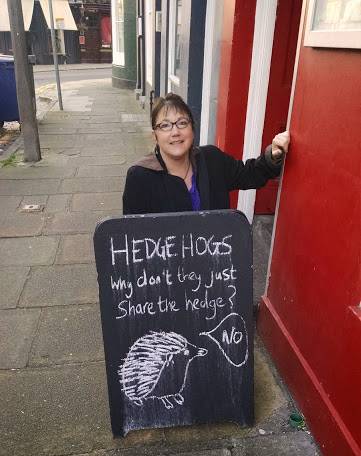
It’s no weasel, but it’s me with a Scottish hedgehog!

Kara Church

Technical Editor, Advisory

Symitar Documentation Services

Today’s article is a continuation from Thursday’s article “10 Top Writing Tips and the Psychology Behind Them,” by Josh Bernoff. (Website link available from last Thursday’s post.)

This particular tip deserves its own day, since it is one of the biggest problems we see in the writing submitted to our group.

Tip #3: Rewrite passive voice.

Why it matters. Passive voice sentences conceal who is acting and create uneasiness.

Why you write passive. Your writing teachers have trained you to write this way. Also, if you are insecure about what you’re saying, you hide it behind passive wording.

How to fix it. Figure out who the actor in the sentence is and make it the subject. For example, this Fortune article says that “New ingredients are steadily being added to the job-matching mix.” Rewrite as “Startup companies keep adding new job-matching techniques.”

Here are some more examples and suggested rewrites:

· PASSIVE: Account records can be created using the New Account function.

· ACTIVE: Use the New Account function to create account records.

· PASSIVE: A generic specfile that can be customized is provided by Symitar.

· ACTIVE: Symitar provides a generic file that is customizable.

· PASSIVE: Two NSF exception reports are created by the ACH posting process.

· ACTIVE: The ACH posting process creates two exception reports.

For other articles on the passive voice:

· https://episystechpubs.com/2014/07/15/nifty-nuggets-passive-zombies/

· https://episystechpubs.com/2015/03/11/editors-corner-avoid-the-passive/

Kara Church

Technical Editor, Advisory

Symitar Documentation Services

Posted by: Jack Henry | June 29, 2015

Editor’s Corner: Unclear Pronouns

Sometimes when writers use a pronoun (you, it, that, they, this, etc.) to refer to a noun, the noun becomes vague for any of these reasons:

· The noun is far from the pronoun

Example: Last year’s client conference, where I met our president, was one of the best that I have ever been to. The sessions were informative and the gluten-free food was delicious. He is originally from Texas, but he moved to San Diego two years ago. [JS – A sentence separates the noun from the pronoun.]

· The noun is among other nouns, making it hard to figure out which noun the pronoun refers to

Example: Donna told Kara that Jackie suspected that she ate all the donuts. [JS – Who suspects whom of eating the donuts?]

· The noun is not stated clearly

Example: In the instructions, they said to take the system offline. [JS – It is not clear who “they” refers to.]

When you use pronouns, make sure the reference is clear.

Thank you,

Jackie Solano | Technical Editor | Symitar®

8985 Balboa Ave. | San Diego, CA 92123 | Ph. 619.542.6711 | Extension: 766711

Symitar Documentation Services

« Newer Posts - Older Posts »

Categories