Posted by: Jack Henry | June 26, 2015

Editor’s Corner: Contest Time!

It’s summertime and the living is easy (well, that’s what the song says anyway). It seems to me that it might be a good time for another Editor’s Corner contest. The prize is a copy of Richard Lederer’s book, Get Thee to a Punnery. (Like most of my prizes, I bought this book from a used bookseller, but it is in perfect shape.)

To enter the contest, send me Tom Swifties you’ve made up. You can enter as many times as you’d like. If you don’t remember what Tom Swifties are, here the articles on them:

· https://episystechpubs.com/2015/06/05/editors-corner-tom-swifties/

· https://episystechpubs.com/2015/06/12/editors-corner-more-tom-swifties/

And here’s my sad attempt at one:

“I’m afraid to tear this Band-Aid off,” said Tom adhesively.

I’ll even get you started by giving you a list of 4000 words ending in “ly.” http://www.morewords.com/ends-with/ly/ (Remember, Tom Swifties use adverbs ending in “ly”; nouns, like “doily” or “dolly” don’t count!)

And now, the details:

Who: You!

What: Send in your Tom Swifties. Each one counts as an entry. I will draw a random winner from the submissions and will post the entries in the Editor’s Corner after the contest ends.

Where: Email them to kchurch.

When: From now until the end of the day on July 10, 2015.

Why: Because it’s fun!

Note: If you aren’t sure what Editor’s Corner is, it is a daily email and blog that the Symitar editing group sends out to people throughout JHA. We also have clients, friends, and relatives signed up around the world.

What are Editor’s Corner subscribers getting every day? They get bits of wisdom on JHA styles and standards, vocabulary, frequently confused terms, writing tips, and almost anything you can think of related to the English language. Oh, and we try to keep it fun! To sign up, just send an email to me (kchurch), and I’ll add you to the list.

Kara Church

Technical Editor, Advisory

619-542-6773 | Ext: 766773

Symitar Documentation Services

NOTICE: This electronic mail message and any files transmitted with it are intended
exclusively for the individual or entity to which it is addressed. The message,
together with any attachment, may contain confidential and/or privileged information.
Any unauthorized review, use, printing, saving, copying, disclosure or distribution
is strictly prohibited. If you have received this message in error, please
immediately advise the sender by reply email and delete all copies.

Posted by: Jack Henry | June 25, 2015

Editor’s Corner: Writing Tips

I have a bit of a dilemma. I have an article that has some great content that I’d like to share with you—especially those of you who write and edit technical documentation or non-fiction documentation. The problem isn’t the article, it is citing the article. It’s from a blog that contains the long form of the term B.S. I guess I will give you the content, but be forewarned that if you click the link, you will be face to face with an expletive. If you are offended by swearing, just wait for my installments here.

Okay, with that caveat, I give you the first two tips of the 10 Top Writing Tips and the Psychology Behind Them, by Josh Bernoff.

There are plenty of folks happy to tell you how to write better, just as any doctor will tell you to “eat right and exercise.” But changing your writing (or eating) habits only happens when you understand why you do what you do. I can help you with that.

1: Write shorter.

Why it matters. Readers are impatient and will give up on your blog post, email, or document before you’ve made your point. Every extra word makes readers antsy.

Why you write long. It’s far easier to type than to edit. So people just keep adding things.

How to fix it.Edit. Delete your “warming up” text and start with the main point. Cull extraneous detail and repetition. Work as if each word you eventually publish or send will cost you $10. I’ve often had writers who were outraged that I had redlined two-thirds of what they wrote . . . only to read the shortened doc and respond “that’s so much more powerful.”

2: Shorten your sentences.

Why it matters. Long sentences make readers work too hard to figure out your meaning.

Why your sentences are too long. New ideas keep occurring to you as you write each sentence. And you think long sentences make you sound sophisticated.

How to fix it. Break sentences down into bite-size ideas. Then delete what you don’t need. Think Hemingway, not Dickens.

Kara Church

Technical Editor, Advisory

619-542-6773 | Ext: 766773

Symitar Documentation Services

NOTICE: This electronic mail message and any files transmitted with it are intended
exclusively for the individual or entity to which it is addressed. The message,
together with any attachment, may contain confidential and/or privileged information.
Any unauthorized review, use, printing, saving, copying, disclosure or distribution
is strictly prohibited. If you have received this message in error, please
immediately advise the sender by reply email and delete all copies.
Posted by: Jack Henry | June 24, 2015

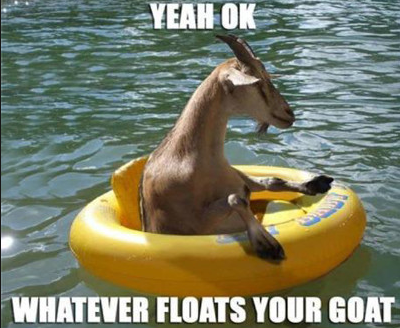
Editor’s Corner: Got Goats?

As promised, an article on the idiom “gets my goat,” from wiseGEEK.

When people say that something "really gets my goat,” they mean that they are extremely irritated. A wide variety of things could contribute to irritation, ranging from someone else’s actions to a series of events, but, despite the turn of phrase, goats are not usually involved. Like many colorful idioms in the English language, the origins of “get my goat” are murky, difficult to pin down, and actually rather fascinating.

Basic Meaning

If a person says, "that really gets my goat," he or she is simply expressing that an occurrence or object has caused annoyance. The "that" in the statement might not even refer to an actual thing, but rather to a situation. It is also common for a person to direct the phrase at someone else as "you really get my goat," to indicate that the object of the comment is annoying the speaker.

Early Usage and Possible Origins

The first recorded uses of the phrase crop up around the early 1900s, and seem to suggest that this idiom is American in origin. This time period was, in fact, a great era for colorful slang terms in America, reflecting the rapid expansion of settlement in the US and the commingling of people from a wide variety of social, class, and ethnic backgrounds. A number of slang terms from this era are undoubtedly corruptions of slang from other languages, or misunderstandings of English words. Some people have suggested that “gets my goat” may be related to “goad,” as in “to irritate.”

Possible Roots in French

This fairly mundane explanation has been eclipsed by a number of other interpretations of the slang term. Some people have suggested that the term is a translation from the French prendre la chèvre, “to take the goat,” an idiom from Old French which references taking someone’s form of income. For low-income French peasants, the theft or a goat would be a catastrophe, as the animals provided milk and meat for their owners. However, this may be a backformation, which is a connection made after the fact, rather than an explanation of "gets my goat."

Connections to Horse Racing

One of the most interesting explanations behind “gets my goat" involves racing horses. As early as the 1700s, goats were used as companion animals to help settle race horses, keeping the notoriously skittish animals relaxed. Taking a horse’s pet goat away would have agitated and upset the animal, potentially influencing the outcome of a race.

The practice of providing race horses with companion animals is still widespread, with horses bonding with ponies, chickens, dogs, and a variety of other animals in addition to goats. Many horses do indeed become deeply attached to their companions, exhibiting considerable stress when these animals are removed. Someone taking away a companion animal could negatively impact a horse’s performance, and such incidents may have inspired the idiom “gets my goat” among observers.

Kara Church

Technical Editor, Advisory

Symitar Documentation Services

Posted by: Jack Henry | June 23, 2015

Editor’s Corner: Prior to Before

Here’s one that “gets my goat” (more on that phrase tomorrow): the use of prior to instead of before. Before is a perfectly fine word to describe a time in the past, something that has happened already, or maybe something that should happen ahead of something else. For example:

Stir the first five ingredients before you add the egg.

Before you start arguing about using prior to instead of before, I have three things for you…and no, they aren’t three wishes. The first is a section from The Grammar Devotional, by Mignon Fogarty (Grammar Girl); the second is an entry from Bryson’s Dictionary of Troublesome Words: A Writer’s Guide to Getting It Right, by Bill Bryson; the third is a statement from me on behalf of the Symitar editors.

Overcome Your Past: Prior to Versus Before

(Mignon Fogarty)

Prior’s primary use is as an adjective…

I’m sorry; I have a prior engagement.

Prior to is an acceptable idiom, but when you are tempted to use it, in the interest of simplicity, ask yourself if before would work just as well.

Prior to becoming an award-winning clown, Bob was an accountant. (acceptable)

Before becoming an award-winning clown, Bob was an accountant. (better)

Squiggly left the party prior to the raid. (acceptable)

Squiggly left the party before the raid. (better)

Before, prior to

(Entry from Bryson’s Dictionary of Troublesome Words)

There is no difference between these two except length and a certain inescapable affectedness on the part of prior to. To paraphrase Bernstein, if you would use posterior to instead of after, then by all means use prior to instead of before.

Use “Before”

Kara, on behalf of the Symitar Editors

We read millions of words each year. In most of the documentation, letters, email, installation instructions, and other submissions, before is more appropriate than prior to. To put it bluntly, prior to can sound pompous. To be even more blunt, people often misuse it when they intend to say previous. To avoid the double-whammy of sounding pompous and being incorrect, stick with before.

Kara Church

Technical Editor, Advisory

Symitar Documentation Services

Posted by: Jack Henry | June 22, 2015

Editor’s Corner: Objective and Subjective Pronouns

Good morning, my friends.

A few people have asked me about this, and I’ve heard a lot of people get this wrong, so it seems like a good time to discuss which of the following sentences is correct:

· I am older than her.

· I am older than she.

Commonly, in casual speech, we hear “I am older than her.” However, if that’s the sentence you guessed is correct, you don’t get a trophy this time. The correct answer is “I am older than she.” But why?

She is correct because in the sentences above, a copular verb (that is, the verb is) has been left off the end of the sentence. (For you hard-core grammarians, a copular verb is a special kind of verb used to join an adjective or noun compliment to a subject.) The complete sentence would be “I am older than she is.”

You can see how “I am older than her is” just doesn’t work.

It’s perfectly acceptable to leave off the copular verb, as we do in English all the time, but you still need to get the pronoun right. So, to make sure that you choose the right pronoun, all you have to do is imagine the copular verb at the end:

· James is shorter than her she (is).

· At the end of the day, you are more energetic that me I (am).

· Sometimes, we are louder than them they (are).

It is my opinion that this rule will change in the not too far-off future, since so few people get it right anymore. And I’m not saying that’s a bad thing. Language evolves or it dies. English is evolving more quickly than ever, it seems. For now, though, this rule is still on the books, so if you want to impress people with your speech or writing, it’s a good rule to know.

And in celebration of my wedding anniversary, a couple jokes for you:

“I am” is the shortest sentence in the English Language. “I do” is the longest.

People say my husband and I are fastidious couple. I’m fast and he’s hideous.

Donna Bradley Burcher | Senior Technical Editor | Symitar®

8985 Balboa Ave. | San Diego, CA 92123 | Ph. 619.278.0432 | Extension: 765432

Symitar Technical Publications Writing and Editing Requests

NOTICE: This electronic mail message and any files transmitted with it are intended
exclusively for the individual or entity to which it is addressed. The message,
together with any attachment, may contain confidential and/or privileged information.
Any unauthorized review, use, printing, saving, copying, disclosure or distribution
is strictly prohibited. If you have received this message in error, please
immediately advise the sender by reply email and delete all copies.
Posted by: Jack Henry | June 19, 2015

Editor’s Corner: Be the Biscuit

I hope you have a very happy weekend! Here are some misheard song lyrics (a.k.a. mondegreens) from Hold Me Closer, Tony Danza, by Charles Grosvenor Jr.

Song Title Artist/Group Actual Lyrics Mondegreen
Hollaback Girl Gwen Stefani I ain’t no hollaback girl I ain’t no Harley bat girl
Get out the Map Indigo Girls We’ll leave the figuring to those we pass on our way out of town We’ll give the finger to those we pass on our way out of town
Hammer and a Nail Indigo Girls From a chin in a hand and a thoughtful pose From a chin in a hand and a potted rose
Jenny from the Block Jennifer Lopez I’m still, I’m still

Jenny from the block

Amstel, Amstel

Jenny from the block

Love Don’t Cost a Thing Jennifer Lopez Think I wanna drive your Benz? Think I wanna dry Depends?
A Public Affair Jessica Simpson All the cameras, come out, for a public affair All the camels, come out, for a bit of a pear
No Such Thing John Mayer I’m gonna bust out the double doors I’m gonna bust out the devil dogs
Neon John Mayer She’s always buzzing just like neon, neon She’s always buzzing just like Eeyore, Eeyore
Like I Love You Justin Timberlake Just be limber, baby Justin Timber, baby
Somewhere Only We Know Keane Somewhere only we know Somewhere a weevil
Miss Independent Kelly Clarkson No longer need to be defensive No longer need to be the biscuit
Mr. Brightside The Killers I’m Mr. Brightside I missed the price sign
Somebody Told Me The Killers Heaven ain’t close in a place like this You’ll never need clothes in a place like this

Kara Church

Technical Editor, Advisory

619-542-6773 | Ext: 766773

Symitar Documentation Services

NOTICE: This electronic mail message and any files transmitted with it are intended
exclusively for the individual or entity to which it is addressed. The message,
together with any attachment, may contain confidential and/or privileged information.
Any unauthorized review, use, printing, saving, copying, disclosure or distribution
is strictly prohibited. If you have received this message in error, please
immediately advise the sender by reply email and delete all copies.

Posted by: Jack Henry | June 18, 2015

Editor’s Corner: Emojis

Good morning!

I found this article on the Daily Writing Tips website and thought you might find it interesting, too. I’ve edited pieces of it to shorten it and make it safer for work. The full article is here.

Emoji

Ancient Egyptians had hieroglyphics. Modern Man has emojis.

Since the 1980s, symbols to express emotions have proliferated in cyberspace.

At first they were made with what was available on the keyboard, like the smiley face made with a colon, a hyphen, and a parenthesis. Now, thanks to Unicode, they appear as true pictures: faces, hands, heads, cupcakes, robots…[KC – And some gross things that we won’t talk about here at work.]

These symbols acquired a name in 1990: emoticon, a portmanteau word made by combining emotion and icon.

In 1997 or so, the Japanese word for pictographemoji—went international as a term for emoticons produced with Unicode.

Note: The similarity of emoji to emoticon is coincidental. The Japanese word was coined in 1928, perhaps on the model of English pictograph: Japanese e = picture; moji = letter or character.

So far, more than 700 emojis are available, with more on the way.

Vyvyan Evans, a professor of linguistics at Bangor University (Wales), refers to the use of emojis as a language called Emoji:

Emoji is the fastest growing form of language ever based on its incredible adoption rate and speed of evolution. As a visual language, emoji has already eclipsed hieroglyphics, its ancient Egyptian precursor, which took centuries to develop.

According to a Table Talk Mobile survey of 2,000 Britons, ages 18-65, “more than eight in 10 Brits are now using emoji to communicate regularly.” Users in the 18 to 25-year-old age bracket said they found it easier to put their feelings across in emoji icons than in text. Of the over forties, 54% said they were confused by what the symbols meant.

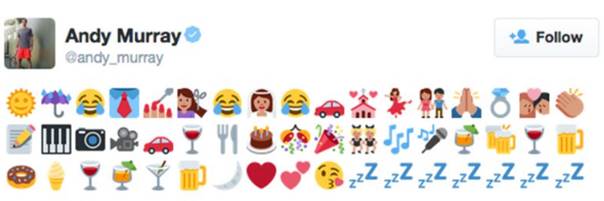
Tennis player Andy Murray tweeted about his wedding in emoji. [KC – Try your hand at deciphering the post. For the translation, click
here and scroll down.]

Note: There is disagreement as to the plural of emoji. Some speakers prefer to use the same form for both: one emoji/two emoji. Others think that emoji should follow the English rule and add s to form the plural: one emoji/two emojis. The AP Stylebook has ruled in favor of emojis.

Kara Church

Technical Editor, Advisory

Symitar Documentation Services

Posted by: Jack Henry | June 17, 2015

Editor’s Corner: Past and Passed

Dear Editrix,

Sometimes I’m not sure if I should use the word past or passed. They sound the same. Does it really matter which one I use?

Sincerely,

Baffled in Buffalo

Dear Baffled,

Though past and passed sound the same and are similar in meaning, they are not interchangeable. Here’s the breakdown:

Passed is the past participle of the verb to pass.

· John passed the bakery every day on his way to work. (John went by the bakery.)

· Shirley’s mother passed last year. (In this case, passed is a euphemism for died.)

Pass can also be a noun.

· Bill completed the pass to Heather and she scored a touchdown.

The word past can be used as several different parts of speech, but not as a verb.

Past as:

· An adjective (modifying a noun): It’s probably best to ask April for help. She’s been in charge of all the past picnics for Joe’s Chicken Shack.

· An adverb (modifying a verb): I thought Uncle Bob would stop by after the game, but he just drove past.

· A preposition (directional): It’s no fun playing tennis with Butch. He always hits the ball past the net, out of the court, and into the canyon.

Yours,

Editrix

Kara Church

Technical Editor, Advisory

Symitar Documentation Services

Posted by: Jack Henry | June 16, 2015

Editor’s Corner: Inaugural vs. Annual

Today’s article is dedicated to those of us who get peevish when we hear someone use the term first annual. Take a second or two to think about it: if it is the First Toadstool Licking Contest of Jefferson County, that means this contest didn’t exist until this year. Annual means that something occurs once a year; therefore, if this contest is just occurring for the first time, it cannot yet be a yearly event. Of course, if you have so much fun at the event that you want it to become a yearly thing, then you can have a Second (or Third or Fourth) Annual Toadstool Licking Contest. It can go on as long as you’d like on an annual basis (unless the toadstools are poisonous).

If you haven’t had an event yet, but you plan on creating one that goes on each year—there’s a word for that. It’s not the first annual, it is the inaugural event. According to Merriam-Webster, one of the definitions of inaugural is “happening as the first one in a series of similar events.” So, next time you’re ready to start some kind of annual event, show us grammar geeks and language lovers that you know what you are talking about and enjoy your Inaugural Calzone Contest or your Inaugural Ventriloquist Convention and enjoy annual events after that.

Kara Church

Technical Editor, Advisory

619-542-6773 | Ext: 766773

Symitar Documentation Services

NOTICE: This electronic mail message and any files transmitted with it are intended
exclusively for the individual or entity to which it is addressed. The message,
together with any attachment, may contain confidential and/or privileged information.
Any unauthorized review, use, printing, saving, copying, disclosure or distribution
is strictly prohibited. If you have received this message in error, please
immediately advise the sender by reply email and delete all copies.

Posted by: Jack Henry | June 15, 2015

Editor’s Corner: It’s a Superlative Day!

Good morning, all!

I’ve had my breakfast, so let’s jump right in to a riveting discussion about comparatives and superlatives.

In English, we form comparatives (adjectives that compare two things) in a few different ways depending on things like the number of syllables the adjective has and what letter the adjective ends with.

We form superlatives (adjectives that express the highest degree) using criteria that is similar, but just different enough to be tricky. The table below lays out the rules pretty simply and should reassure you that, instinctively, you know what you’re doing.

Basic form Comparative (rule) Superlative (rule)
One syllable tall taller(add –er) the tallest(add the and –est)
One syllable (ends in vowel) nice nicer(add –r) the nicest(add the and –st)
One syllable
(consonant-vowel-consonant)
wet wetter(double the consonant and add –er) the wettest(double the consonant; add the and –est)
Two syllables (ends in –y) crazy Crazier (delete –y and add –ier) the craziest(delete –y; add the and –iest)
Two syllables peaceful more peaceful(add more) the most peaceful(add most)
More than two syllables beautiful more beautiful(add more) the most beautiful(add the and most)

Just when you think you’ve got it figured out, I have to remind you about the exceptions, or what we fondly call “irregular words.”

Basic form Comparative Superlative
good better the best
bad worse the worst
little less the least

For native English speakers, most of this is instinctive because you’ve heard it all your life. English language learners often have a hard time, though, because English includes so many exceptions and irregularities.

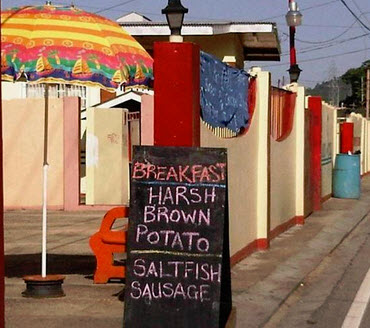
And speaking of irregular things, I know where I’m going on my next vacation:

I hope your Monday is as good as a Friday.

Donna Bradley Burcher | Technical Editor, Senior | Symitar®

8985 Balboa Ave. | San Diego, CA 92123 | Ph. 619.278.0432 | Ext: 765432

Symitar Technical Publications Writing and Editing Requests

« Newer Posts - Older Posts »

Categories