Posted by: Jack Henry | July 30, 2015

Editor’s Corner: Punctuation

Some of you may be familiar with the story about an Ohio woman using a punctuation error to get herself out of a parking ticket. Andrea Cammelleri received a citation for violating a parking time limit ordinance by leaving her pickup truck parked in the same spot for longer than 24 hours.

According to West Jefferson Codified Ordinances 351.16(a):

“It shall be unlawful for any person * * * to park * * * upon any

street * * * in the Village, any motor vehicle camper, trailer, farm

implement and/or non-motorized vehicle for a continued period of

twenty-four hours * * *.”

Initially Cammelleri was found guilty of violating the parking ordinance. She filed an appeal and argued that the ordinance did not apply to her because her pickup truck not fit the description of “motor vehicle camper” (note the missing comma between “motor vehicle” and “camper”). A judge sided with her and dismissed the parking citation because the ordinance was ambiguous.

So folks, remember to avoid ambiguity in your writing and never underestimate the power of a comma.

If you are interested in reading more, here is the court document, which references the comma rule in The Chicago Manual of Style.

http://www.supremecourt.ohio.gov/rod/docs/pdf/12/2015/2015-Ohio-2463.pdf

Jackie Solano | Technical Editor | Symitar®

8985 Balboa Ave. | San Diego, CA 92123 | Ph. 619.542.6711 | Extension: 766711

Symitar Documentation Services

NOTICE: This electronic mail message and any files transmitted with it are intended
exclusively for the individual or entity to which it is addressed. The message,
together with any attachment, may contain confidential and/or privileged information.
Any unauthorized review, use, printing, saving, copying, disclosure or distribution
is strictly prohibited. If you have received this message in error, please
immediately advise the sender by reply email and delete all copies.
Posted by: Jack Henry | July 29, 2015

Editor’s Corner: The Long-Awaited Em Dash

Good morning, folks!

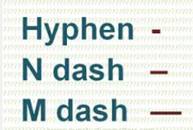
So far this week, we’ve discussed hyphens and en dashes; and today we’ll talk about the oh-so-exciting em dash. Put on your seat belt!

Em dashes (—) have several uses, none of which are common in technical writing. Although we don’t often use them, here are the rules for when to use an em dash (just like the en dash that we discussed yesterday, be forewarned that there are no spaces before or after the dash).

· Use an em dash like you would a colon: to set off an amplifying or explanatory element.

Example: They created the best electronic documentation around—Episys eDocs.

· Use an em dash like you would use parentheses; however, em dashes enclose information that should be the focal point of the sentence, not an aside.

Example: We provide custom solutions—Enhanced Loan Application™ (ELA) and Refi Analyzer™—for our clients.

Like en dashes, you can find em dashes (when you are using Microsoft® products) by clicking the Insert tab from the main menu bar, then click Symbol,and then scroll to find the symbol you want.

Alternately, with Num Lock enabled, you can use the shortcut combination CTRL + Alt + Minus to create and em dash. (You can usually find the minus sign and Num Lock on the keypad.) And, as I mentioned yesterday, there are other ways, but these two ways are sufficient since we document in word processing software.

Enjoy your day!

Donna Bradley Burcher | Senior Technical Editor | Symitar®

8985 Balboa Ave. | San Diego, CA 92123 | Ph. 619.278.0432 | Ext: 765432

Symitar Technical Publications Writing and Editing Requests

Posted by: Jack Henry | July 24, 2015

Editor’s Corner: Friday Swifties

Happy Friday! Today I have more contest entries from our fabulously entertaining and intelligent co-workers! It is a privilege to work with such a great bunch of smart, industrious, fun people!

· “I voted for President Reagan,” said Tom electronically.
Scott Whitham

· “My wife is not pregnant,” said Tom unexpectedly.
Scott Whitham

· “Pass me part of that,” said Tom handsomely.
Scott Whitham

· “I have a new job as a federal pickle inspector,” said Tom diligently.
Scott Whitham

· “I don’t like to eat my mashed potatoes plain,” said Tom gravely.
Scott Whitham

· “I have these nice charts to use for my presentation,” said Tom graphically.
Scott Whitham

· “I broke my arm,” said Tom humorously.
Scott Whitham

· “Lamb chops and new potatoes are my favorite meal,” said Tom sheepishly.
Scott Whitham

· “I planted some new bushes around my patio,” said Tom hedgingly.
Scott Whitham

· “Boy, my head sure itches,” Tom said lousily.
Amy Wallace

· “I found the vampire and I handled him,” Tom said painstakingly.
Amy Wallace

· “I require less help that anyone else,” Jack said needlessly.
Alice Woodward

· “What do you mean, you don’t like white bread?” Tom asked wonderingly.
Barbara Fraire

· “Same sex marriage is legal in all fifty states!” Tom exclaimed gaily.
Barbara Fraire

· “The movie scared me,” said Tom fearfully.
Cathy Taylor

· “I didn’t sleep well,” said Tom tiredly.
Cathy Taylor

· “I look good in my tux”, said Tom formally.
Cathy Taylor

· “O, to win that unlimited supply of paper!” Tom exclaimed dreamily.
Cray Allred

· “Kara, these things are addictive! STOP ME, PLEASE!” said Christy ceaselessly.
Christy Armistead

· “What is the first day of the work week?” asked Tom mundanely. Christy Armistead

· “That’s twice you’ve fibbed to me!” said Tom paralyzingly.
Christy Armistead

· “The views from our house on the edge of the cliff are fantastic, but with all this rain our back yard seems to be disappearing,” said Tom erosionally.
David Foss

· "Underwear is fun to wear," said Tom briefly.
Emily Gershbein

· "I do not believe in Tarot readings," said Tom unfortunately.
Emily Gershbein

· "Lemon meringue pie is my favorite," said Tom zestfully.
Emily Gershbein

· "The baby’s kicking more than usual," she said expectantly.
Mary Fleenor

· “Meditation is my new passion!” she said transcendently.
Mary Fleenor

· “You cannot possibly disagree with me,” he said inarguably.
Mary Fleenor

· “The view from the top of the stairs is much better,” she said condescendingly.
Mary Fleenor

And a couple of Taylor Swifties from Dave Small:

· "Come on, let’s get a move on here," said Taylor swiftly.
Dave Small

· "I’m so cold, my teeth are chattering," said Taylor shakingly.
Dave Small

Kara Church

Technical Editor, Advisory

619-542-6773 | Ext: 766773

Symitar Documentation Services

NOTICE: This electronic mail message and any files transmitted with it are intended
exclusively for the individual or entity to which it is addressed. The message,
together with any attachment, may contain confidential and/or privileged information.
Any unauthorized review, use, printing, saving, copying, disclosure or distribution
is strictly prohibited. If you have received this message in error, please
immediately advise the sender by reply email and delete all copies.
Posted by: Jack Henry | July 23, 2015

Editor’s Corner: Tom Swifties Contest Results, continued

Today and tomorrow, I would like to present you with more Tom Swifties from your talented co-workers. For those of you who somehow missed it, Tom Swifties are puns “in which the adverb at the end of the sentence takes off punningly from the quotation, as in ‘I dropped my toothpaste, said Tom crestfallen.’”

Today’s batch is brought to you by two people: Dan Green and Ben Smith. Our buddy Dan gets an honorable mention for sending us editors the perfect “Swiftie” of our own.

Ben gets an honorable mention for sticking with programming and JHA products as his theme. For those of us not so programmatically inclined, Ben has included helpful hints with his Swifties.

Thanks, guys!

From Dan:

· “They threw me out of the Navy two days after I enlisted,” said Tom fleetingly.

· “Let’s set a wedding date,” Tom suggested engagingly.

· “I’m the most wanted escaped criminal in the U.S.,” said Tom with consternation.

· “The heron has flown away again,” said Tom with regret.

· “I skinned a banana and it was rotten,” said Tom unappealingly.

· “Om, om, om, om,” said Tom enchantingly.

· “All the halibut is mine!” shouted Tom selfishly.

· “Bah! I’ve eaten enough grass,” said Tom sheepishly.

· Just for editors: “I hate grammar and I don’t care what you think,” said Tom irregardlessly.

From Ben: Programmer Tom Swifties

· The Associate Class got that method from its Person Base-Class," said Tom inheritably.

Hint: inheritance

· "The Associate Class is a Person Class, but a Person Class isn’t necessarily an Associate Class," said Tom abstractly.

Hint: abstraction

· "I believe iPhone Apps are written in a certain derivation of the C-Language," said Tom objectively.

Hint: The language iPhone apps are written in can be named with language above and the adverb!

· “I’ll show you how to create an object in C#," said Tom classily.

Hint: How do you create an object in C#?

· “The string is the culmination of all the characters between the quotation marks," said Tom literally.

Hint: Google ‘string literally c#’.

· "To start with, the Prism framework helps create a ‘decoupled’ architecture," said Tom modularly.

Hint: Prism registers code in these.

· "We will need a flexible and cost-effective check imaging platform that deploys competitively distinct n-tier architecture to provide operational flexibility," said Tom foresightedly.

Hint: It’s a JHA check-imaging product pun!

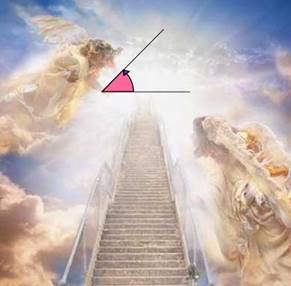
· "I won’t sit-up straight at a right-angle; I prefer my chair laid back," said Tom obtusely.

Hint: His waist is the Vertex!

· "If you subtract the greater number from the lesser, you will not get a positive number," said Tom negatively.

Hint: What do you get?

Kara Church

Technical Editor, Advisory

619-542-6773 | Ext: 766773

Symitar Documentation Services

NOTICE: This electronic mail message and any files transmitted with it are intended
exclusively for the individual or entity to which it is addressed. The message,
together with any attachment, may contain confidential and/or privileged information.
Any unauthorized review, use, printing, saving, copying, disclosure or distribution
is strictly prohibited. If you have received this message in error, please
immediately advise the sender by reply email and delete all copies.
Today I have part two of the “Top 10 Most Unforgivable Twitter Spelling Mistakes,” by Matt Stopera. As a reminder, I have chopped the article up to remove the profanity, while maintaining the examples and lesson of the day. The text in black is from the article and I have not changed it to correct any spelling, grammar, or punctuation errors. The text in blue, as usual, is mine.

Angel (not angle)

· I got a sky full of angles watching over me. ❤

· I miss my angles up in heaven. Thanks for watching out over me.

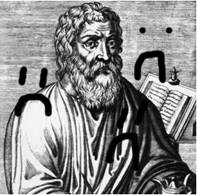
Hypocrites (not Hippocrates)

· I hate Hippocrates with a passion.

· I hate Hippocrates but I might just be one of the biggest ones
[KC – What did poor Hippocrates ever do to you? He was the “Father of Western Medicine.”]

College (not collage)

· I Can’t Wait For Collage.
[KC – Maybe you should wait until you know how to capitalize a sentence and spell the name of the place.]

· I can’t wait for the collage life either
[KC – It’s fantastic! (See photo below.)]

· S

Posted by: Jack Henry | July 21, 2015

Editor’s Corner: Top Twitter Mistakes

My husband sent me this article from BuzzFeed and I laughed so much that I wanted to share it with you. Because of too many naughty words and Twitter handles, I have copied some of the phrases and photos from the article. I hope that I have sanitized it enough to provide you a valuable lesson without offending anyone.

This is part one of the “Top 10 Most Unforgivable Twitter Spelling Mistakes,” by Matt Stopera. Text in blue is mine; text in black is from Twitter and contains more errors than you can shake a stick at.

Granted (not granite)

· Never take life for granite…it comes & it goes.!
[KC – Apparently so do spelling, grammar, punctuation, trite remarks, and the Karma Chameleon.]

· don’t take life for granite #YOLO, so im living life with hella mistakes!!
[KC – No kidding!]

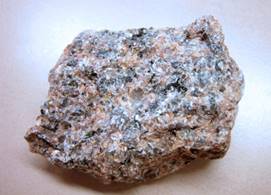
Nice piece of granite! Don’t take it for granted.

Genius (not genious)

· Im a genious in math yo
[KC – Thank goodness you didn’t say “writing” yo.]

· Whoooohoooo im a genious!!
[KC – Well, you started the sentence with a capital letter and spelled “a” correctly!]

· This company is just starting and the expansion will be rapid people thing im a genious how far ahead i have thought with this company
[KC – Oh, please, tell me where you work so I never buy stock in your company!]

Manners (not manors)

· I hate people that have no manors

· Some people have no manors at all, like who the f— raised you?
[KC – My mom and dad raised me. What about you? Salty Pete the peg-legged sailor?]

· #YouKnowWhatAnnoysMe when people don’t have table manors!!!!!!!!!!
[KC – #YouKnowWhatMakesMeSad When people don’t start sentences with a capital letter, use the wrong word in a rant, and end the non-sentence with ten exclamation
points.]

What lovely manors you have!

Vicariously (not bi-curiously)

· I don’t have any drama, so I must live bicuriously through yours ❤

· I wanna live bicuriously through them…is that a word?
[KC – Why yes, Virginia, it is a word. I just don’t think it is the word you are looking for.]

Kara Church

Technical Editor, Advisory

Symitar Documentation Services

Posted by: Jack Henry | July 17, 2015

Editor’s Corner: Church Key

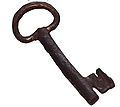
The other night I was opening a crisp adult beverage (Stone Ruination IPA) and I found myself looking for a church key (bottle opener). “I wonder why they call it a church key,” I pondered. It looks absolutely nothing like this Church’s key. To satisfy my own curiosity and share the answer with you, I have a short article from Wikipedia. Happy weekend!

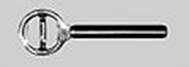
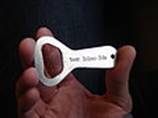
The term in the beverage-opening sense is apparently not an old one; Merriam-Webster finds written attestation only since the 1950s. Several etymological themes exist. The main one is that the ends of some bottle openers resemble the heads of large keys such as have traditionally been used to lock and unlock church doors. The other is that jocularity helped propel the popular spread of the name, with the joke being that opening a beer is an activity that usually has little to do with pious or ecclesiastical circumstances—historical connections between monasteries and brewing notwithstanding.

Key to a church:

Various “figurative” church keys (bottle openers):

Kara Church’s key:

Kara Church

Technical Editor, Advisory

619-542-6773 | Ext: 766773

Symitar Documentation Services

NOTICE: This electronic mail message and any files transmitted with it are intended
exclusively for the individual or entity to which it is addressed. The message,
together with any attachment, may contain confidential and/or privileged information.
Any unauthorized review, use, printing, saving, copying, disclosure or distribution
is strictly prohibited. If you have received this message in error, please
immediately advise the sender by reply email and delete all copies.
Posted by: Jack Henry | July 15, 2015

Editor’s Corner: Tom Swifties Contest Results

Wow! What a clever bunch you are! I received over 200 entries to the Tom Swifties contest, enough to entertain everyone for several days. The person with the most submissions is Scott Whitham in Monett. The random winner (also with quite a few submissions) is Eric Nielsen, in San Diego. You will each receive a lightly used copy of Richard Lederer’s book, Get Thee to a Punnery.

As a reminder:

Tom Swifties are based on the adventures of Tom Swift, over 100 books in which the characters have a strong propensity towards adverbs. Tom Swifties are described by Richard Lederer as puns “in which the adverb at the end of the sentence takes off punningly from the quotation, as in ‘I dropped my toothpaste, said Tom crestfallen.’”

Now, for the first batch of Swifties (in no particular order). Some of these puns are tricky and may include a clue.

Well done, everyone!

· "I don’t think I can carry this heavy club," Tom said weakly.
Laura Reece

· "I’m stuck on you," he said adhesively.
Mary Fleenor

· "Tennessee," Tom stated.
Laura Reece

· "Thanks for letting me hang out with you," the mistletoe said parasitically to the tree.
Mary Fleenor

· "This dessert is just too sweet," she said cloyingly.
Mary Fleenor

· “A pox upon thee!” said the witch accursedly.
Eric Nielsen

· “I can’t find the board games,” said Tom cluelessly.
James Folkerts

· “I don’t know what your angle is,” said Tom obtusely.
Samantha Armistead

· “I have a fear of snowmen,” said Tom abominably.
Samantha Armistead

· “I just love these maple flavored pancakes,” said Tom surreptitiously.
Scott Whitham

· “I only drink one brand of vodka,” said Tom absolutely.
Samantha Armistead

· “I put a refill cartridge in this ink pen,” said Tom remarkably.
Scott Whitham

· “I see one, two, three red birds in the backyard,” said Tom, cardinally.
Robert Trescott

· “I will take every one of your fly-fishing flies,” said the fisherman alluringly.
Eric Nielsen

· “I’m sitting at the command line,” she said promptly.
James Hall

· “I’m trying to count all the sparkly things on the rock star’s jumpsuit, said Tom, sequentially.”
Robert Trescott

· “Mondays are for the dogs,” he muttered doggedly.
Jeremy Anderson

· “No riding your horse after dark,” said Tom nightmarishly.
Samantha Armistead

· “Plunging into the darkness can be exhilarating,” said Tom murkily.
Laura Elden

· “Should the person who made a typo on the Editor’s Corner: Tom Swifties page be sent to prison?” I asked plasmatically.
Linda Richardson

· “That wasp doesn’t like me just because I swatted at it” Tom said begrudgingly.
Eric Nielsen

· “The ship left and came right back in to dock,” said Tom reportedly.
Scott Whitham

· “Why would I want to read another book by Harper Lee!?” the high school student groaned mockingly.
James Hall

Kara Church

Technical Editor, Advisory

619-542-6773 | Ext: 766773

Symitar Documentation Services

NOTICE: This electronic mail message and any files transmitted with it are intended
exclusively for the individual or entity to which it is addressed. The message,
together with any attachment, may contain confidential and/or privileged information.
Any unauthorized review, use, printing, saving, copying, disclosure or distribution
is strictly prohibited. If you have received this message in error, please
immediately advise the sender by reply email and delete all copies.
Posted by: Jack Henry | July 15, 2015

Editor’s Corner: Cardinal, Ordinal, and Nominal Numbers

Today’s topic is numbers—or names for numbers. The three we’re looking at are cardinal, ordinal, and nominal numbers.

Cardinal numbers are what most of us are used to when we talk about numbers. Cardinal numbers are whole numbers, used for counting how many of something you have, such as one, two, three, four, etc. Cardinal numbers do not include fractions or decimal points. For example:

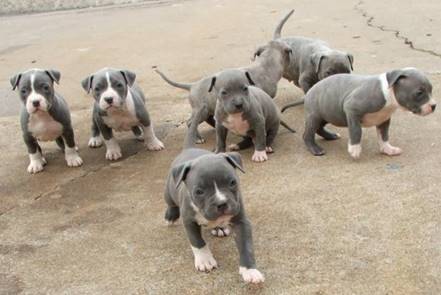
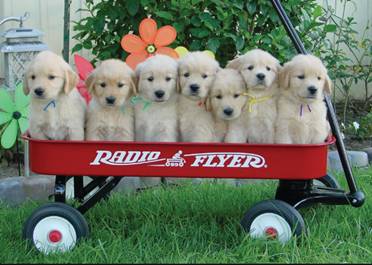
There were seven puppies in Sylvie’s first litter.

A helpful hint: cardinal and count both begin with the letter C.

The next ones in the lineup are ordinal numbers. Ordinal numbers tell you what position or order something is in, such as first, second, third (or 1st, 2nd, 3rd). For example:

Blinky, the runt, is the second dog from the left.

A helpful hint: ordinal numbers give you the order things are in.

Lastly, we have nominal numbers. Now this seems kind of odd, but nominal is from the Latin word for name. A nominal number is used as a name or identifier. It is not for counting or for telling you the position something is in. It can be a single number or group of numbers, but the value of the numbers is irrelevant. For example:

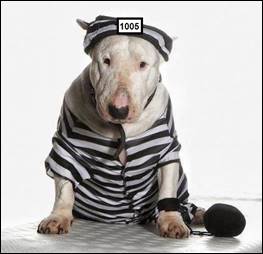
  • Inmate 1005

  • ZIP Code (92123)
  • Model number 146
  • Social Security Number (999-99-9999)
  • Telephone number (619) 542-6700
  • Employee ID number (123456)
  • Etc.

A helpful hint: nominal and name both begin with the letter N.

Kara Church

Technical Editor, Advisory

Symitar Documentation Services

Posted by: Jack Henry | July 14, 2015

Editor’s Corner: Final Tips

The final writing tips I have for you from the article “10 Top Writing Tips and the Psychology Behind Them,” by Josh Bernoff focus on structure. This may seem very basic, but you’d be surprised how many people forget where they started and where they’re going with their writing.

We work with a lot of very smart people who weren’t necessarily raised to be writers. When you combine that with complex thoughts and ideas, you sometimes get thousands of words poured out of someone’s brain and dashed onto a page. Outlines are a great way to keep things under control. Here are two other considerations:

Tip #8 Move key insights up.

Why it matters. You only have a few sentences to get the reader’s attention. If you boldly state your key point at or near the top, they’ll stick around to see if you can prove it.

Why your insights are buried.We were all taught to write deductively: first this, then that, then this, therefore conclusion. Also, you’re afraid of scaring people away with a bold opening statement. [KC – I don’t know. I like starting my documents off with “I am Superman!”]

How to fix it. Force yourself to start with a bold statement. If you just can’t get in this habit, write whatever you need to warm up to stating your thesis, then delete the warmup. Once you’ve finished the piece and realize what you really meant to say, rewrite the bold statement. Each time you rewrite, rewrite the opener.

Tip #10 Give us some signposts.

Why it matters. If you’re writing anything longer than a page, people want to know what they’re in for.

Why you lack signposts. You’re afraid of sounding pedantic. Worse yet, if your writing isn’t well organized, then you can’t explain the structure.

How to fix it.After you’ve stated your main thesis, write this: “Here’s how I’ll explain this.” Then include a few short sentences or a numbered list. It’s that easy!

Note: Signposts can take several forms. In a list of Frequently Asked Questions, you can tell where a question starts and where an answer starts by looking for the Q. and A. signposts. Pairing each question and answer together also serves as a spatial signpost.

You can also use heading styles or certain words as signposts. A Heading 1 (the largest heading) may always mean you are at the top of a new section, idea, or topic. The words “Before You Start” might indicate that is where you go for the prerequisites to a task. A numbered list is often a signpost indicating a task or procedure. An icon with an exclamation point may indicate caution or some sort of warning.

Kara Church

Technical Editor, Advisory

Symitar Documentation Services

« Newer Posts - Older Posts »

Categories