Posted by: Jack Henry | March 16, 2018

Editor’s Corner: Segue vs. Segway

My recent trip to Mexico gave me a homonym couplet that I thought I’d share with you: segue and Segway.

From Merriam-Webster:

segue [KC – This is pronounced seg-way, not seg-you.]

imperative verb

1: perform the music that follows at once

2: perform the music that follows like that which has preceded

noun

1: a transition from one musical number or sound effect to another

2: a transition from one activity, topic, scene, or part to another as or as if part of a natural progression

From Kara Church:

Segway

proper noun

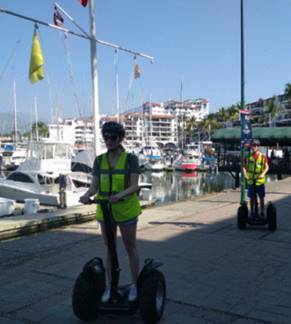
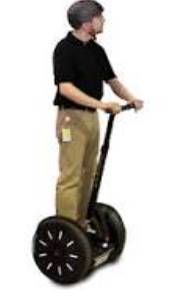
A motorized vehicle with two wheels, purported to be “the miracle of the future” back at the turn of the 21st century. Everyone was supposed to have one, yet almost 20 years later, most people haven’t ever ridden one of these nerd mobiles.

The Segway can be a fun way to get around, although some of us are better at balancing and avoiding danger zones than others. After flying off Segways during two separate vacations and landing on my head, I can’t say I’m a big fan.

Regular Segway

Niece and nephew on “off-road” Segways

Kara Church

Technical Editor, Advisory

Symitar Documentation Services

Posted by: Jack Henry | March 15, 2018

Editor’s Corner: The History of English Spelling

I recently read some articles about the history of English spelling (I’ve provided a list of the articles below, in case you’re interested). I’ve condensed the information for you here, but it’s still a little lengthy. So, be forewarned—this post is a little longer and denser than usual. I hope you find it as interesting as I did.

Not surprisingly, before printed publications, people who knew how to write spelled words according to how the words sounded. So, words were spelled differently depending on a person’s accent and depending on where a person lived. Printing in the 15th century added to spelling irregularity because many of the printers were not native English speakers, and they included a lot of misspelled words in their publications. And along with the accidental misspellings, printers also often lengthened words because they were paid according to the number of lines they printed. For example, they changed frend to friend, hed to head, and shal to shall, etc. These spelling changes led to confusion and to many of our irregularly spelled words.

By the end of the 16th century, a lot of people were calling for more controlled spelling. The first person to write a book of “correct” spelling was an English headmaster named Richard Mulcaster, who is often regarded as the founder of English language lexicography. The name of his book is The First Part of the Elementarie. It was written in 1582 and contained only about 8,000 words. He was not interested in reforming spelling, he merely wanted to standardize it.

Quite a bit later, in 1755, English writer Samuel Johnson created a dictionary that had a huge influence on the English-speaking world. When deciding how to spell a word in his dictionary, he chose the most common spelling—a decision that contributed to the English language’s wide variation in spelling rules.

Surprisingly, since Johnson’s dictionary, there have been only minor changes in how we spell words, but the changes have been many (for example, the omission of the letter k in words like panick and frantick).

Here in the United States, some of our forefathers were interested in spelling reform, but the biggest influence in the United States was Noah Webster who created the American standard of English we use today. He published his first dictionary (the precursor of the Merriam-Webster dictionary) in 1806.

Minor differences remain in the way people from the United States and people from the United Kingdom spell some words (color/colour, center/centre, check/cheque, specialize/specialise), but the differences are relatively few and don’t lead to confusion.

All this information helps to explain why spelling can be so difficult for so many of us. However, spell check and our easy access to online dictionaries pretty much negates any excuses for misspellings these days. And I’m here to tell you, people are a lot less forgiving than they were in the 16th century.

Someone posted this message on a neighborhood website:
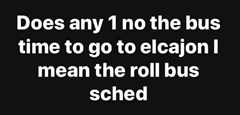
And the writer got this response: “Please take an English class when you get there.”

Articles

A Brief History of English Spelling

The Standardization of American English

A Brief History of English Spelling Reform

Donna Bradley Burcher | Senior Technical Editor | Symitar®

8985 Balboa Ave. | San Diego, CA 92123 | Ph. 619.278.0432 | Ext: 765432
Posted by: Jack Henry | March 14, 2018

Editor’s Corner: New Words in Merriam-Webster

Merriam-Webster recently added 850 new words to the dictionary. Here are a few of them.

wordie: a lover of words

demonym: a word (such as Nevadan or Sooner) used to denote a person who inhabits or is native to a particular place

Wanderwort: a word borrowed from one language to another across a broad geographical area often as a result of trade or adoption of newly introduced items or cultural places

Silver Alert: a widely publicized bulletin that alerts the public when an elderly person or a person with a cognitive disability goes missing

Case-sensitive: requiring correct input of uppercase and lowercase letters

chiweenie: a dog that is a cross between a Chihuahua and a dachshund

cryptocurrency: any form of currency that only exists digitally, that usually has no central issuing or regulating authority but instead uses a decentralized system to record transactions and manage the issuance of new units, and that relies on cryptography to prevent counterfeiting the fraudulent transactions

blockchain: a digital database containing information (such as records of financial transactions) that can be simultaneously used and shared within a large decentralized, publicly accessible network;

also : technology used to create such a database

life hack: a usually simple and clever tip or technique for accomplishing some familiar task more easily and efficiently

hate-watch: to watch and take pleasure in laughing or criticizing (a disliked television show, movie, etc.)

subtweet: a usually mocking or critical tweet that alludes to another Twitter user without including a link to the user’s account and often without directly mentioning the user’s name

dumpster fire: an utterly calamitous or mismanaged situation or occurrence

mansplain: to explain something to a woman in a condescending way that assumes she has no knowledge about the topic

The word bandwidth now includes this definition:

the emotional or mental capacity necessary to do or consider something

The word unicorn now includes this definition:

business : a start-up that is valued at one billion dollars or more

Jackie Solano | Technical Editor | Symitar®

8985 Balboa Ave. | San Diego, CA 92123 | Ph. 619.542.6711 | Extension: 766711

Symitar Documentation Services

NOTICE: This electronic mail message and any files transmitted with it are intended
exclusively for the individual or entity to which it is addressed. The message,
together with any attachment, may contain confidential and/or privileged information.
Any unauthorized review, use, printing, saving, copying, disclosure or distribution
is strictly prohibited. If you have received this message in error, please
immediately advise the sender by reply email and delete all copies.

Posted by: Jack Henry | March 13, 2018

Editor’s Corner: Don’t Use Too Many Screenshots

Screenshots can keep readers focused while performing a complicated task, but too many screenshots can become a distraction. Unnecessary screenshots also make documentation harder to maintain.

Some writers feel obligated to include a screenshot with every step. They think, “Someone might find this screenshot useful, so I might as well throw it in.”

It’s better to take the opposite approach. Ask yourself, “Will the reader be able to follow this step without a screenshot?” If the answer is yes, leave the screenshot out.

Consider the following step:

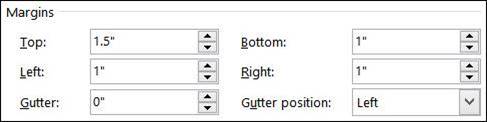
Example: In the Margins section, set the Top field to 1.5".

This step is well-written and easy to understand. The screenshot creates clutter and adds no new information.

Screenshots Make Documentation Harder to Maintain

Superficial changes to the user interface rarely affect written instructions, but they can cause screenshots to become outdated.

For example, new fields may be added, existing fields may be rearranged, or icons may be changed. Unless you are vigilant about updating screenshots, readers might stop to wonder why their screens don’t look like the example.

The JHA Style Guide says, “Limit the use of screenshots and images in article text. Only use them when necessary for clarification. Do not overuse screenshots or use them to convey a concept that is already fully explained by the article text.”

Ben Ritter | Technical Editor | Symitar®
8985 Balboa Avenue | San Diego, CA 92123
619-682-3391 | or ext. 763391 | www.Symitar.com

Symitar Documentation Services

NOTICE: This electronic mail message and any files transmitted with it are intended
exclusively for the individual or entity to which it is addressed. The message,
together with any attachment, may contain confidential and/or privileged information.
Any unauthorized review, use, printing, saving, copying, disclosure or distribution
is strictly prohibited. If you have received this message in error, please
immediately advise the sender by reply email and delete all copies.

Posted by: Jack Henry | March 12, 2018

Editor’s Corner: Daylight Saving Time

Happy Monday! Some of you may be feeling the effects of daylight saving time. In case you’re wondering, the official spelling is daylight saving time, not daylight savings time with an “s.” However, daylight savings time has become commonly accepted, and you may see it on some calendars and in some dictionaries. The words are not capitalized and the use of a hyphen between daylight and saving depends on which style guide you follow.

If your circadian rhythm is out of whack, here are some tips on how to get your groove back.

  • Plan to get seven to eight hours of sleep. Stick with this schedule so that it becomes a routine.
  • Evaluate your bedroom and ensure it is a relaxing space. Create a relaxing bedtime ritual (take a bath, read a book, or listen to music).
  • Don’t eat before you go to bed because it stimulates your digestive system. Caffeine, alcohol, and smoking can also interrupt sleep.
  • Check your mattress. If it is seven years old, it is probably time for a new one. Also check your pillows; they lose their firmness.
  • Exercise can help you sleep better. End workouts two hours before you go to bed. Expose yourself to bright light throughout the day so that your body knows it is time to be on and alert. Taking short naps can help your body adjust to the time change.

Jackie Solano | Technical Editor | Symitar®

8985 Balboa Ave. | San Diego, CA 92123 | Ph. 619.542.6711 | Extension: 766711

Symitar Documentation Services

NOTICE: This electronic mail message and any files transmitted with it are intended
exclusively for the individual or entity to which it is addressed. The message,
together with any attachment, may contain confidential and/or privileged information.
Any unauthorized review, use, printing, saving, copying, disclosure or distribution
is strictly prohibited. If you have received this message in error, please
immediately advise the sender by reply email and delete all copies.

Posted by: Jack Henry | March 9, 2018

Editor’s Corner: Interjections for the Weekend

Happy Friday!

In celebration of the upcoming weekend (which I have a feeling is going to be fabulous), I’m going to talk about interjections: sounds, words, and short phrases that convey surprise, disappointment, excitement (any emotion or feeling, really). There are two kinds of interjections: primary and secondary.

Primary interjections are sounds rather than words. We use them to describe many feelings.

  • aargh (frustration)
  • brr (cold)
  • eww (disgust)
  • grr (anger)
  • ooh (amazement)
  • phew (relief)
  • woo-hoo (excitement)

Secondary interjections are words or short phrases:

  • good grief
  • oh my goodness
  • shoot
  • dang it
  • what the heck

Because they usually convey strong emotions, most (but not all) interjections are followed an exclamation point.

  • Woo-hoo! You won the race!
  • Eww! Don’t be gross!
  • Dang it! I spilled my beer!

You use them all the time. And if you didn’t already, now you know what they’re called. Yahoo!

Donna Bradley Burcher | Senior Technical Editor | Symitar®

8985 Balboa Ave. | San Diego, CA 92123 | Ph. 619.278.0432 | Extension: 765432

Symitar Documentation Services

NOTICE: This electronic mail message and any files transmitted with it are intended
exclusively for the individual or entity to which it is addressed. The message,
together with any attachment, may contain confidential and/or privileged information.
Any unauthorized review, use, printing, saving, copying, disclosure or distribution
is strictly prohibited. If you have received this message in error, please
immediately advise the sender by reply email and delete all copies.

Posted by: Jack Henry | March 8, 2018

Editor’s Corner: How to Express Laughter in Writing

Obviously, knowing how to express laughter in writing is not relevant to the technical or business writing we do every day, but I read an interesting article on the spelling and nuances of different exclamations of laughter, and wanted to share the mirth with you.

We use different words (syllables, really) to imply different kinds of laughter, from amusement to obnoxious delight. I hadn’t really thought much about laughter in its written form, so this article gave me something to ponder, and it put a smile on my face. I hope you enjoy it too.

The following list comes from a Daily Writing Tips article, but I’ve shortened the descriptions.

  • Ha is the basic expression of laughter. It can also express derision, especially when followed by an exclamation point.
  • Ha-ha (also written as ha ha and haha,but the hyphenation is preferred) implies greater amusement. Too much reduplication (ha-ha-ha and so forth) can imply derangement, however.
  • Heh (or heh-heh) suggests pointedly mild amusement or a suggestion of mischievous or smirking, sniggering, or lascivious amusement (context is helpful).
  • He-he-he implies mischief.
  • Tee-hee-hee also implies mischief, though the implication is that the laughter is high pitched, and the humor is juvenile.
  • Bwah-hah-hah (also written as mwah-hah-hah) is imitative of a comic book villain’s triumphant eruption of malicious laughter when overcoming the hero and is generally used facetiously to imply that one’s evil machinations have borne fruit.
  • Ho-ho-ho expresses Christmas cheer.
  • Hoo-hoo implies obnoxious delight, for example, being found to be right about something or having caught someone in a lie or transgression.
  • Yuk-yuk-yuk suggests impish delight.
  • Yuks suggests sarcasm or, at best, a comment on how something is not really that amusing.
  • LOL, as you know, is internet-speak for “laugh out loud.” It is sometimes uttered in conjunction with derisive eye-rolling, but it is rarely used as an expression in dialog.

“The human race has one really effective weapon, and that is laughter.” —Mark Twain

“Laughter is an instant vacation.” —Milton Berle

Donna Bradley Burcher | Senior Technical Editor | Symitar®

8985 Balboa Ave. | San Diego, CA 92123 | Ph. 619.278.0432 | Extension: 765432

Symitar Documentation Services

NOTICE: This electronic mail message and any files transmitted with it are intended
exclusively for the individual or entity to which it is addressed. The message,
together with any attachment, may contain confidential and/or privileged information.
Any unauthorized review, use, printing, saving, copying, disclosure or distribution
is strictly prohibited. If you have received this message in error, please
immediately advise the sender by reply email and delete all copies.

Posted by: Jack Henry | March 7, 2018

Editor’s Corner: Eateries

At the end of this week, I’ll be taking a small voyage to Mexico, to visit my parents, my brother, and his family, who are all down there avoiding the Seattle weather. Hopefully, my five days there will fill me full of questions about Spanish, that might lead to interesting discussions in English. I know my dreams have already started coming in half English and half Spanish. At a very minimum, I might get some good stories about mistranslations while I’m there.

In the meantime, as I start imagining dinner at one of my favorite restaurants down there, how about some excerpts from Daily Writing Tips, “60 Words for Types of Restaurants.” I’ll give you a few, but you can see them all here.

  1. bistro (French, “proprietor of a tavern”): a small, informal restaurant, bar, or nightclub
  2. brasserie (French, “brewery”): an informal restaurant, often one serving French food
  3. buffet (French, “counter”): a self-serve restaurant; also, in British English, a small informal restaurant at a railway station
  4. cabaret (French; ultimately from Latin camera, “chamber”): a restaurant that serves liquor and features live entertainment; also, the entertainment at such an establishment
  5. cafeteria (American Spanish, “coffeehouse”): see luncheonette; also, an informal, self-serve restaurant
  6. delicatessen (German, “delicacy”): an establishment where already-prepared food is sold and sometimes served; often abbreviated to deli
  7. food truck: a truck or van that serves prepackaged food or food cooked in the vehicle
  8. greasy spoon (American slang, from the notion of a place with unclean eating utensils)
  9. hash house: an inexpensive restaurant
  10. hashery: see “hash house”
  11. inn: see tavern; also, sometimes one offering lodging
  12. pizzeria (Italian, “place where pizza is served,” from pizza, “bite”): a restaurant where pizzas and other Italian dishes are served
  13. pub (short for “public house”): see tavern
  14. rathskeller (obsolete German, “council cellar,” from its origins as an establishment in the cellar of a town hall): a restaurant or tavern, usually one located in a basement
  15. roadhouse: an establishment outside city limits that may serve food as well as liquor and features live or recorded music
  16. soda fountain: an establishment or area within a store for serving beverages, ice cream, and sometimes food
  17. taqueria (Spanish, “place where tacos are served”): an informal restaurant serving Mexican food
  18. tavern: an establishment where liquor and sometimes food are served
  19. teahouse: a restaurant where tea and refreshments are served
  20. trattoria (Italian, “establishment of a restaurateur,” from a word for “treat”): a small restaurant, usually one serving Italian food

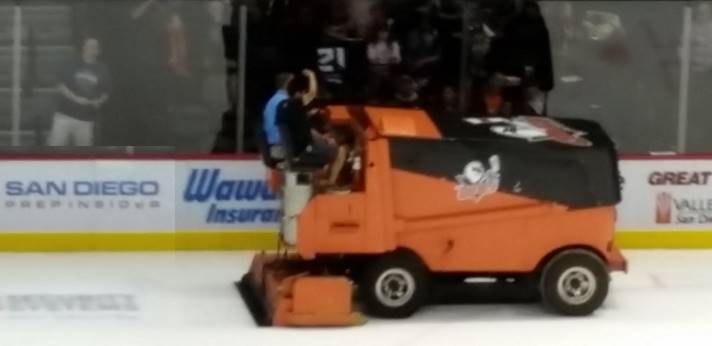
I was looking for a picture from past trips. This is not one of them. I do like hockey, however, so please enjoy our Zamboni.

San Diego Gulls Hockey

Kara Church

Technical Editor, Advisory

619-542-6773 | Ext: 766773

Symitar Documentation Services

NOTICE: This electronic mail message and any files transmitted with it are intended
exclusively for the individual or entity to which it is addressed. The message,
together with any attachment, may contain confidential and/or privileged information.
Any unauthorized review, use, printing, saving, copying, disclosure or distribution
is strictly prohibited. If you have received this message in error, please
immediately advise the sender by reply email and delete all copies.

Posted by: Jack Henry | March 6, 2018

Editor’s Corner: Church Bulletins, Part 4

Today I have some more church bulletin items from Did You Read That? by Derric Johnson. Enjoy!

  1. Next Sunday is the family hayride and bonfire at the Fowlers. Bring your own hot dogs and guns. Friends are welcome. Everyone come for a fun time.
  2. The “Over 60s Choir” will be disbanded for the summer with the thanks of the entire church.
  3. Evening Massage at 6:00 p.m.
  4. Wednesday the Ladies Liturgy will meet. Mrs. Jones will sing “Put Me in My Little Bed” accompanied by the Pastor.
  5. There will be a potluck supper with prayer and medication to follow.
  6. The associate Pastor unveiled the Church’s new Tithing Campaign slogan last Sunday: “I UPPED MY PLEDGE…UP YOURS.”
  7. Please join us as we show our support for Amy and Alan Cowles in preparing for the girth of their first child.
  8. Attend and you will hear an excellent speaker and heave a healthy lunch.
  9. The church will host an evening of fine dining, superb entertainment, and gracious hostility.
  10. Beginning November 5, Pastor Hodges will lead a six-part series on the book of Genesis. Were Adam and Eve really naked in the Garden? Come and see for yourself.
  11. As the maintenance of the churchyard is becoming increasingly costly, it would be appreciated if those who are willing would clip the grass around their own graves.
  12. Tonight the youth choir will be singing, “Joshua Fit the Battle of Geritol.”
  13. The topic of discussion for our PROSPECTIVE PARENTS SEMINAR is “Should your little boy be circus sized?”
  14. Remember the Children’s Ministry Fund Raiser…Our kids make great snacks.
  15. THE WEDNESDAY NIGHT DINNER SPECIAL: Turkey – $3.75, Beef – $3.50, Chicken – $3.25, Children – $2.50.
  16. Sermon: Samson’s Head in Delilah’s Lap
    Invitation Hymn: Leave It There

Kara Church

Technical Editor, Advisory

619-542-6773 | Ext: 766773

Symitar Documentation Services

NOTICE: This electronic mail message and any files transmitted with it are intended
exclusively for the individual or entity to which it is addressed. The message,
together with any attachment, may contain confidential and/or privileged information.
Any unauthorized review, use, printing, saving, copying, disclosure or distribution
is strictly prohibited. If you have received this message in error, please
immediately advise the sender by reply email and delete all copies.

Posted by: Jack Henry | March 5, 2018

Editor’s Corner: Writing Clear Steps

Writing clear instructions is a useful skill for everyone. Even if you are not a technical writer, you may need to document a procedure before handing off a job responsibility, or a client or coworker may ask you how to perform a task.

Instructions are mostly lists of numbered steps. If you can write clear steps, you are well on your way to writing clear instructions.

Rule #1: Avoid “Should”

Original step: The AutoRecover field should be set to Yes.

The problem with the word should is that it’s ambiguous. As written, this step could reasonably mean any of the following things:

  • The AutoRecover field is probably already set to Yes.
  • It would be nice if the AutoRecover field were set to Yes, but it’s not required.
  • The AutoRecover field needs to be set to Yes.

Rule #2: Use the Active Voice

First revision: The AutoRecover field needs to be set to Yes.

This is an improvement. At least we know that this step is mandatory. But there’s still the question of who needs to perform this action.

Two messy roommates might agree that the dishes need to be washed or the living room needs to be vacuumed, but without reaching an agreement about who will do what, there probably won’t be any action.

It’s the same situation here. Using the passive voice causes confusion about whether the reader needs to perform the action or wait for someone else to do it.

Second revision: Set the AutoRecover field to Yes.

This is a well-written step with an imperative verb. It is clear what action the user needs to take.

Ben Ritter | Technical Editor | Symitar®
8985 Balboa Avenue | San Diego, CA 92123
619-682-3391 | or ext. 763391 | www.Symitar.com

Symitar Documentation Services

NOTICE: This electronic mail message and any files transmitted with it are intended
exclusively for the individual or entity to which it is addressed. The message,
together with any attachment, may contain confidential and/or privileged information.
Any unauthorized review, use, printing, saving, copying, disclosure or distribution
is strictly prohibited. If you have received this message in error, please
immediately advise the sender by reply email and delete all copies.

« Newer Posts - Older Posts »

Categories