Posted by: Jack Henry | May 3, 2018

Editor’s Corner: Similes

“A simile walks into a bar, as parched as a desert.”

Today I’m snagging another topic from the list of jokes I sent the other day. Our discussion today revolves around similes…no, not smiles, but similes.

A simile is a figure of speech comparing two unlike things. You will often see similes used with the words “like” or “as,” as you probably learned in school. For example, “Her eyes were like the ocean—stormy and gray.” Or, “He was as strong as an ox.”

Here are some examples of bad similes from a contest in the Washington Post:

  • He was as tall as a six-foot-three-inch tree. (Jack Bross, Chevy Chase)
  • The politician was gone but unnoticed, like the period after the Dr. on a Dr Pepper can. (Wayne Goode, Madison, Ala.)
  • He spoke with the wisdom that can only come from experience, like a guy who went blind because he looked at a solar eclipse without one of those boxes with a pinhole in it and now goes around the country speaking at high schools about the dangers of looking at a solar eclipse without one of those boxes with a pinhole in it. (Joseph Romm, Washington)
  • She caught your eye like one of those pointy hook latches that used to dangle from screen doors and would fly up whenever you banged the door open. (Rich Murphy, Fairfax Station)
  • She was clever all right, like a woman who is listed in the Guinness Book of World Records as having the world’s highest IQ and whose last name just happens to be "Savant." Yeah, maybe too clever by half. (Joseph Romm, Washington)
  • The little boat gently drifted across the pond exactly the way a bowling ball wouldn’t. (Russell Beland, Springfield)
  • From the attic came an unearthly howl. The whole scene had an eerie, surreal quality, like when you’re on vacation in another city and "Jeopardy!" comes on at 7 p.m. instead of 7:30. (Roy Ashley, Washington)
  • Her hair glistened in the rain like nose hair after a sneeze. (Chuck Smith, Woodbridge)
  • Her vocabulary was as bad as, like, whatever. (Jennifer Hart, Arlington)

Kara Church

Technical Editor, Advisory

619-542-6773 | Ext: 766773

Symitar Documentation Services

NOTICE: This electronic mail message and any files transmitted with it are intended
exclusively for the individual or entity to which it is addressed. The message,
together with any attachment, may contain confidential and/or privileged information.
Any unauthorized review, use, printing, saving, copying, disclosure or distribution
is strictly prohibited. If you have received this message in error, please
immediately advise the sender by reply email and delete all copies.

Posted by: Jack Henry | May 2, 2018

Editor’s Corner: Irony

“A hyphenated word and a non-hyphenated word walk into a bar and the bartender nearly chokes on the irony.”

What is irony? According to Google, the brief answer is that it is “the expression of one’s meaning by using language that normally signifies the opposite, typically for humorous or emphatic effect.”

But there are actually three types of irony: verbal, situational, and dramatic. Here is a brief definition for each type, along with some examples, from Flocabulary:

Verbal irony occurs when a speaker’s intention is the opposite of what he or she is saying. For example, a character stepping out into a hurricane and saying, “What nice weather we’re having!”

Situational irony occurs when the actual result of a situation is totally different from what you’d expect the result to be. Sitcoms often use situational irony. For example, a family spends a lot of time and money planning an elaborate surprise birthday party for their mother to show her how much they care. But it turns out, her birthday is next month, and none of them knew the correct date. She ends up fuming that no one cares enough to remember her birthday.

Dramatic irony occurs when the audience knows a key piece of information that a character in a play, movie or novel does not. This is the type of irony that makes us yell, “DON’T GO IN THERE!” during a scary movie. Dramatic irony is huge in Shakespeare’s tragedies, most famously in Othello and Romeo and Juliet….

Why Writers Use It: Irony inverts our expectations. It can create the unexpected twist at the end of a joke or a story that gets us laughing—or crying. Verbal irony tends to be funny; situational irony can be funny or tragic; and dramatic irony is often tragic.

Back to the initial joke, the irony is that the word “hyphenated” has no hyphen, while the word “non-hyphenated” does have a hyphen.

Kara Church

Technical Editor, Advisory

Symitar Documentation Services

Posted by: Jack Henry | May 1, 2018

Editor’s Corner: A Herd of Nerds Walks into a Bar…

Over the years, we’ve covered a lot of topics such as passive voice, Oxford (serial) commas, and avoiding clichés. Of course, there are still so many things to review. Rather than review all the grammatical terms that you’ll see in these jokes today, I’ll cover most of them in the weeks to come.

Thanks to those of you who shared this list with me!

  • A bar was walked into by the passive voice.
  • An oxymoron walked into a bar, and the silence was deafening.
  • Two quotation marks walked into a “bar.”
  • A malapropism walks into a bar, looking for all intensive purposes like a wolf in cheap clothing, muttering epitaphs and casting dispersions on his magnificent other, who takes him for granite.
  • A non-sequitur walks into a bar. In a strong wind, even turkeys can fly.
  • Papyrus and Comic Sans walk into a bar. The bartender says, "Get out — we don’t serve your type."
  • A mixed metaphor walks into a bar, seeing the handwriting on the wall but hoping to nip it in the bud.
  • A synonym strolls into a tavern.
  • At the end of the day, a cliché walks into a bar — fresh as a daisy, cute as a button, and sharp as a tack.
  • A run-on sentence walks into a bar it starts flirting. With a cute little sentence fragment.
  • A misplaced modifier walks into a bar owned by a man with a glass eye named Ralph.
  • The past, present, and future walked into a bar. It was tense.
  • A dyslexic walks into a bra.
  • An Oxford comma walks into a bar, where it spends the evening watching the television getting drunk and smoking cigars.
  • A simile walks into a bar, as parched as a desert.
  • A hyphenated word and a non-hyphenated word walk into a bar and the bartender nearly chokes on the irony.

For the full list of “Bar Jokes for English Majors,” see the bluebird of bitterness website.

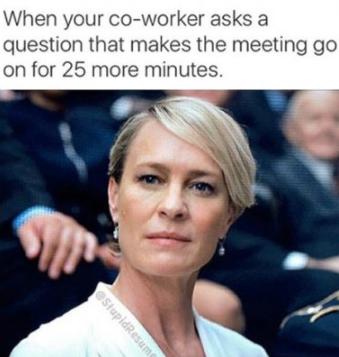
“Your jokes do not amuse me.”

Kara Church

Technical Editor, Advisory

Symitar Documentation Services

Posted by: Jack Henry | April 30, 2018

Editor’s Corner: Schoolhouse Rock

Last week, Bob Dorough, the music director of Schoolhouse Rock, passed away. Dorough was a pianist, singer, and composer.

I listened to a Fresh Air podcast and learned that the idea of Schoolhouse Rock came from an advertising executive (David McCall) who was looking for a way to teach his son to memorize multiplication through music. Dorough was introduced to McCall. McCall told Dorough that his son couldn’t memorize multiplication, but he could memorize song lyrics. Dorough created a demo called Three Is a Magic Number, and the rest is history.

In memory of Bob Dorough, I’m sharing some of the Schoolhouse Rock grammar lessons. Clear your throats and start singing away!

Lolly, Lolly, Lolly, Get Your Adverbs Here

Conjunction Junction

A Noun Is a Person, Place, or Thing

Verb: That’s What’s Happening!

Interjections!

Unpack Your Adjectives

Busy Prepositions

Rufus Xavier Sarsaparilla

Jackie Solano | Technical Editor | Symitar®

8985 Balboa Ave. | San Diego, CA 92123 | Ph. 619.542.6711 | Extension: 766711

Symitar Documentation Services

NOTICE: This electronic mail message and any files transmitted with it are intended
exclusively for the individual or entity to which it is addressed. The message,
together with any attachment, may contain confidential and/or privileged information.
Any unauthorized review, use, printing, saving, copying, disclosure or distribution
is strictly prohibited. If you have received this message in error, please
immediately advise the sender by reply email and delete all copies.

Posted by: Jack Henry | April 27, 2018

Editor’s Corner: Things

Toastmasters of the world, avert your eyes! I’m about to talk about something dreaded in your world: words that we use when we can’t think of the name for something, like stuff, or thingy, or doodad. Specifically, one of our readers was wondering about thingamajigs and thingamabobs.

Here’s what I found. First, I discovered that there are alternate spellings:

  • thingamajig
  • thingumajig
  • thingamabob
  • thingumabob
  • thingumbob

The second thing I found was that they all have the same meaning: “something which is hard to classify or whose name is not known.” Merriam-Webster didn’t go much further than that. In fact, all it had as far as an etymology was “irregular, from thingum.” So I looked up thingum and it defined it as “thingumbob.” Thanks for nothing!

Moving on to my more reliable site for etymologies, I went to the Online Etymology Dictionary. Suddenly, I felt like someone was teasing me. Here is the thingamajig etymology:

also thingumajig, 1824, see thing. Compare in similar sense kickumbob (1620s), thingum (1670s), thingumbob (1751), thingummy (1796), jigamaree (1824).

And under thingamabob, the etymology dictionary has the following definitions, including some tasteless ones I’ve omitted:

dingbat (n.)

1838, American English, some kind of alcoholic drink, of unknown origin. One of that class of words (such as dingus, doohickey, gadget, gizmo, thingumabob) which are conjured up to supply names for items whose proper names are unknown or not recollected. Used at various periods for "money," "a muffin," "a woman who is neither your sister nor your mother," and "a foolish person in authority." Popularized in sense of "foolish person" by U.S. TV show "All in the Family" (1971-79), though this usage dates from 1905. In typography, by 1912 as a printer’s term for ornament used in headline or with illustrations.

I guess with all of those possible meanings, maybe Toastmasters should cast aspersions on us when we don’t use a precise, correct term!

Kara Church

Technical Editor, Advisory

619-542-6773 | Ext: 766773

Symitar Documentation Services

NOTICE: This electronic mail message and any files transmitted with it are intended
exclusively for the individual or entity to which it is addressed. The message,
together with any attachment, may contain confidential and/or privileged information.
Any unauthorized review, use, printing, saving, copying, disclosure or distribution
is strictly prohibited. If you have received this message in error, please
immediately advise the sender by reply email and delete all copies.

Posted by: Jack Henry | April 26, 2018

Editor’s Corner: Changing English Language

The Symitar editors receive a lot of comments and a few complaints about ever-changing English rules and about our own evolving JHA and Symitar standards. Some people get frustrated when the rules change. Some people think our editorial changes are too finicky. And on the other hand, many people think English rules are getting too lax. For example, few people use whom these days, and many people don’t know how to use apostrophes, or they think they’re completely unnecessary. Infinitives are being split willy-nilly. Untold sentences end in prepositions. Where will it end?

The answer is, it won’t. The English language, like all living languages around the world, is always evolving. We don’t speak like Shakespeare did in the 16th and 17th centuries. We don’t speak like Jane Austen did in the 19th century. In fact, we don’t even speak like our parents (you should be thankful I don’t speak like my dad, that cotton-pickin’, yellow-bellied sapsucker!).

I recently read some interesting articles on the changing English language (they are listed below, if you’re interested), and was intrigued by this statement: “…every time a child uses it, the language reproduces itself” (Erard). And every reproduction is a little different than the “original.” The article goes on to say that “…key factors in biological evolution—like natural selection and genetic drift—have parallels in how languages change over time.”

Words and phrases that are used more often by more people survive. Rules change according to how people actually use language. And sometimes rules and pronunciations change a little more randomly. “Every single speaker on Earth will have their own specific linguistic variants…This variation is sometimes driven by selection, but at other times, we like to choose our own options from the linguistic buffet available to us” (Erard).

Can we fight the changes? Absolutely. But we won’t always win. You may want to hear and see people using whom correctly, but if most people are not interested in correct usage, the actual usage will prevail and the rule will change. Remember Shakespeare, and consider again how much has changed since he was writing.

As editors, it is our job to know and enforce basic grammar rules and all of JHA’s standards and styles—even though they are always evolving. We also strive to produce documentation that is consistent no matter which employee wrote it. It’s a job we all love. We don’t always agree with changes that occur, but we’re busier than a one-legged cat in a sandbox trying to enforce them. And we do it all without pitchin’ a hissy fit (usually).

Articles:

https://www.linguisticsociety.org/content/english-changing

http://www.sciencemag.org/news/2017/11/how-english-language-has-evolved-living-creature

Donna Bradley Burcher | Senior Technical Editor | Symitar®

8985 Balboa Ave. | San Diego, CA 92123 | Ph. 619.278.0432 | Extension: 765432

Symitar Documentation Services

NOTICE: This electronic mail message and any files transmitted with it are intended
exclusively for the individual or entity to which it is addressed. The message,
together with any attachment, may contain confidential and/or privileged information.
Any unauthorized review, use, printing, saving, copying, disclosure or distribution
is strictly prohibited. If you have received this message in error, please
immediately advise the sender by reply email and delete all copies.

Posted by: Jack Henry | April 25, 2018

Editor’s Corner: Use to/Used to

Hello readers!

One of our dear clients sent this lesson about use to/used to to me some time ago. I have to admit, it’s a little tricky. The article assures you it is easy, but I think maybe this is one of those things (like lay and lie) that is easy for some and not for others. Maybe after reading it two more times, it will be burnt into my brain. Until then, this is from 5-Minute English. When you’re done reading the article, check out the quiz on the website! Thank you, Renée!

Use to/Used to

There is a little confusion on how to use the words use to and used to. One reason for the confusion is that it is sometimes used as a verb, and sometimes used as an adjective. The other reason is because it seems like the tense changes. It’s really quite simple when you look at it.

Used as an adjective. Use to be + used to. This means to be accustomed to. For example: I can study with the TV on. I am used to it. It means I am accustomed, adjusted, or don’t mind having the TV play while I’m studying.

Or another example: Tim had a hard time living in Tokyo. He wasn’t used to so many people. Tim didn’t have experience being with big crowds of people before.

Used as a verb. Use to + verb is a regular verb and means something that happened but doesn’t happen anymore. It uses -ed to show past tense. But since it always means something that happened in the past, it should always use past tense. For example: I used to go to school in Paris. (I went to school there before, but now I don’t.) Or, When Joshua was a child, he used to climb trees. (Now he doesn’t climb trees.)

Remember, we always use this word when talking about the past. So when do you use use to without the d at the end? When the base form of the verb is used. Look at these examples:

  • She didn’t use to swim before noon. (Now she does swim before noon.)
  • Did your father use to ride a horse?

In these cases, the past tense is shown with the did and didn’t.

Okay. Time to check your expertise! QUIZ

Kara Church

Technical Editor, Advisory

619-542-6773 | Ext: 766773

Symitar Documentation Services

NOTICE: This electronic mail message and any files transmitted with it are intended
exclusively for the individual or entity to which it is addressed. The message,
together with any attachment, may contain confidential and/or privileged information.
Any unauthorized review, use, printing, saving, copying, disclosure or distribution
is strictly prohibited. If you have received this message in error, please
immediately advise the sender by reply email and delete all copies.

Posted by: Jack Henry | April 24, 2018

Editor’s Corner: Gimlet

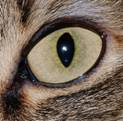
Good morning, folks! Today I have something brief but interesting that I found while perusing The Grammarist. The topics of discussion today are gimlet eyes and gimlet cocktails. Yes, it’s a bit early in the day for cocktails, but as they say, “It’s 5:00 p.m. somewhere!”

To have a gimlet eye or to cast a gimlet eye means to stare at someone or something in a piercing manner, or to stare in an extremely watchful manner. The term gimlet eye is derived from the gimlet, a small piercing or boring tool first used in the mid-1300s. The term gimlet eye came into use in the mid-1700s. The adjective form is gimlet-eyed. Note that the adjective is hyphenated, while the noun form, gimlet eye, is not hyphenated.

A gimlet cocktail is composed of gin and lime juice, with some variations. This concoction was invented in the latter 1800s by the British Naval Surgeon Rear-Admiral Sir Thomas Desmond Gimlette, as a method to combat scurvy. [KC – I bet he traveled with a lot of happy sailors, though this might also be the reason behind early explorers finding their ways to the wrong continents.]

“Leave me in the car again and you get worse than a gimlet eye.”

Kara Church

Technical Editor, Advisory

Symitar Documentation Services
Posted by: Jack Henry | April 23, 2018

Editor’s Corner: Incompatible Jargon

The advantage of jargon is that it simplifies communication between people with a shared body of knowledge. For example, instead of telling another editor to “capitalize nouns, pronouns, verbs, adjectives, and adverbs,” I can say, “Use title case.”

The disadvantage of jargon is that it can be incomprehensible to people outside of your group. In the worst-case scenario, a jargon term means one thing to one group of people and something completely different to another group.

Different Definitions of Combo Box

In my post about combo boxes, I defined combo box as a user interface element that allows users to select a value from a list or enter another value that isn’t listed. My definition was similar to the definition in the Microsoft® Manual of Style: “a box in which the user can select an item from a list or type a value directly in the box.”

The Microsoft Manual of Style describes how to document the Windows® interface for users. But in a different context (documenting the .NET framework for programmers), Microsoft suggests that not all combo boxes allow the user to type a value directly in the box: “The DropDownStyle property specifies whether the text portion can be edited.”

Oracle® similarly refers to “uneditable combo boxes” in their Java™ documentation. I would not be surprised if various other groups of programmers had other definitions of combo box.

Avoid Jargon If You Can; Define It If You Can’t

To different people, knowledgeable in their respective fields, combo box has a different meaning. As I wrote in my original post, it is not worth using a potentially confusing term when it’s not necessary.

If you must use jargon (or any possibly unfamiliar term), define it the first time you mention it. That’s the only way you can be sure you and the reader are speaking the same language.

Ben Ritter | Technical Editor | Symitar®
8985 Balboa Avenue | San Diego, CA 92123
619-682-3391 | or ext. 763391 | www.Symitar.com

Symitar Documentation Services

NOTICE: This electronic mail message and any files transmitted with it are intended
exclusively for the individual or entity to which it is addressed. The message,
together with any attachment, may contain confidential and/or privileged information.
Any unauthorized review, use, printing, saving, copying, disclosure or distribution
is strictly prohibited. If you have received this message in error, please
immediately advise the sender by reply email and delete all copies.

Posted by: Jack Henry | April 20, 2018

Editor’s Corner: Worsted Words and Tulle Terms

It’s been a while since I’ve traveled anywhere (okay, about a month), but I already feel that itch to get back on the road. Since I don’t have any trips planned until later this year, I thought we could go for a voyage through language. The following terms for apparel materials are derived from place names. The list is from Daily Writing Tips.

  1. angora: a type of wool from Angora rabbits, which originated near Ankara (previously Angora), Turkey
  2. Bedford cord: a corduroy-like fabric, named after Bedford, England, or New Bedford, Massachusetts
  3. calico: a type of cloth originally from Calicut, India
  4. cambric: a type of cloth originally from Cambrai, France
  5. cashmere: a type of wool and a woolen fabric from Kashmir goats, which come from the Kashmir region of India
  6. chino cloth: a cloth originating in China (the name is Spanish for “Chinese”)
  7. Cordovan leather: a type of shoe leather first produced in Cordoba, Spain
  8. damask: a type of fabric named after Damascus, Syria
  9. denim: a type of fabric originally called serge de Nîmes, or “serge of Nîmes,” after Nîmes, a town in France
  10. dungaree: a type of denim cloth originating in Dongrī, India; pants or overalls made from this fabric are called dungarees
  11. duffel: a cloth first made in Duffel, Belgium
  12. Harris tweed: a type of handwoven tweed cloth originating on the island of Lewis and Harris and adjacent islands in Scotland (the name of the cloth type tweed is coincidental with the name of the river Tweed)
  13. Holland (or Holland cloth): a type of linen originally made in various parts of Europe, including the province of Holland in the Netherlands
  14. jaconet: a fabric originally from Puri, India (the word is derived from the name of the city’s Jagannath Temple)
  15. jean: a type of fabric originating in Genoa, Italy
  16. jersey: a type of knit fabric originating on the island of Jersey, next to France (but a dependency of the United Kingdom)
  17. Mackinaw cloth: a woolen cloth used for thick, warm jackets (called Mackinaws or Macs) originally favored by lumberjacks and then hunters and fishermen in the Mackinac (or Mackinaw) region of Michigan
  18. madras: a lightweight cloth originally from Madras, India (now called Chennai)
  19. muslin: a lightweight fabric originally from Mosul, Iraq
  20. Morocco leather: a type of leather originally from Moroccan goats
  21. nankeen: a type of fabric originating in Nanjing, China (previously called Nanking or Nankin); also refers to pants made of this material, as well as the pale buff or yellow color of the fabric, a type of porcelain originating in the city, and a type of lace (often called nankins) and part of the name of numerous animals and plants featuring this color
  22. osnaburg: a coarse cloth originally made in Osnabrück, Germany
  23. suede: a type of leather made from the underside of animal skins, originally referenced in the French phrase gants de Suède (“gloves from Sweden”); similar-looking fabrics are referred to as “sueded silk” and so on
  24. tulle: a type of fabric originating in Tulle, France
  25. worsted: a type of wool whose name is derived from that of Worstead, one of the villages from which it originated; also, the name of a type of yarn and a category of yarn weight

Kara Church

Technical Editor, Advisory

619-542-6773 | Ext: 766773

Symitar Documentation Services

NOTICE: This electronic mail message and any files transmitted with it are intended
exclusively for the individual or entity to which it is addressed. The message,
together with any attachment, may contain confidential and/or privileged information.
Any unauthorized review, use, printing, saving, copying, disclosure or distribution
is strictly prohibited. If you have received this message in error, please
immediately advise the sender by reply email and delete all copies.

« Newer Posts - Older Posts »

Categories