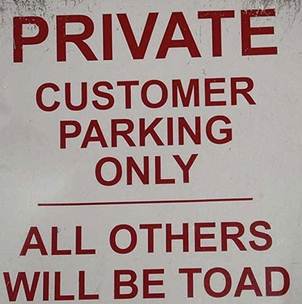
As we approach the end of the year, lists of the best and the worst of 2012 abound.

From dailywritingtips.com, here are the words of the year according to several of the major dictionary companies (edited for brevity).

· Merriam-Webster’s 2012 Word of the Year is a toss-up between capitalism and socialism, reflecting the controversy and debates about universal health care and discussion about the comparative government systems in the United States and in much of Europe.

The definitions according to M-W:

o capitalism: an economic system characterized by private or corporation ownership of capital goods, by investments that are determined by private decision rather than by state control, and by prices, production, and the distribution of goods that are determined mainly in a free market

o socialism: any of various theories or social and political movements advocating or aiming at collective or governmental ownership and administration of the means of production and control of the distribution of goods

· Dictionary.com’s choice is bluster, which means “loud, swaggering, often empty boasts, threats, or other comments”—an appropriate term, considering the unusually contentious political climate in the United States over the last year.

· The selection by editors at Oxford University Press’s UK headquarters is omnishambles, which denotes a thoroughly mismanaged situation notable for a chain of errors.

And from www.theatlanticwire.com, we have an excerpt on typos and typo corrections. I thought this one was particularly amusing:

A couple of corrections from the New York Times this year were particularly special, not due to typos but for the unique and beautiful quality of the corrections themselves. Take this one from back in January of 2012:

An earlier version of this article incorrectly described imagery from The Shining. The gentleman seen with the weird guy in the bear suit is wearing a tuxedo, but not a top hat.

For more of these, here is the link: http://www.theatlanticwire.com/entertainment/2012/12/best-typos-mistakes-corrections-2012/59828/

Kara Church

Senior Technical Editor

619-542-6773 | Ext: 766773

www.symitar.com

NOTICE: This electronic mail message and any files transmitted with it are intended
exclusively for the individual or entity to which it is addressed. The message,
together with any attachment, may contain confidential and/or privileged information.
Any unauthorized review, use, printing, saving, copying, disclosure or distribution
is strictly prohibited. If you have received this message in error, please
immediately advise the sender by reply email and delete all copies.

Posted by: Jack Henry | December 21, 2012

Editor’s Corner: Pangrams

Happy Friday!

I was looking for something fun and I stumbled on this word and several articles about it. I was in word nerd heaven! I’ve tried to whittle it down, but if you are at all interested, there is more information out there. The definition is from http://en.wikipedia.org/wiki/Pangram, where they also have pangrams in different languages. The other examples and information are from http://www.fun-with-words.com/pang_visitor.html. Enjoy!

Definition

A pangram (Greek: παν γράμμα, pan gramma, "every letter") or holoalphabetic sentence for a given alphabet is a sentence using every letter of the alphabet at least once. Pangrams have been used to display typefaces, test equipment, and develop skills in handwriting, calligraphy, and keyboarding.

Brief History

Almost half a millennium ago, a printer scrambled a galley of type to produce the first pangram for a specimen book. The text was in Latin, so only 23 letters were required (Latin does not use J, V or W; however V is now used to represent the consonantal U, and sometimes J to represent consonantal I). [KC – Many of you may recognize the example below from templates and font research.]

Lorem ipsum dolor sit amet, consectetur adipiscing elit,
diam nonnumy eiusmod tempor incidunt ut labore et dolo…

This means There is no one who loves pain itself, who seeks after it, and wants to have it, simply because it is pain…

Examples

A perfect pangram is one where each letter is used only once, such as these gems:

· The quick brown fox jumps over a lazy dog.

· Pack my box with five dozen liquor jugs.

· How quickly daft jumping zebras vex.

And here are several that use each letter (though some are repeated. The total number of letters is in parentheses after the pangram.

· The five boxing wizards jump quickly. (31)

· Sympathizing would fix Quaker objectives. (36)

· Jim just quit and packed extra bags for Liz Owen. (39)

· A large fawn jumped quickly over white zinc boxes. (41)

· Harry, jogging quickly, axed Zen monks with beef vapor. (44)

· Five or six big jet planes zoomed quickly by the tower. (44)

· My grandfather picks up quartz and valuable onyx jewels. (47)

· Jack amazed a few girls by dropping the antique onyx vase! (47)

· Fred specialized in the job of making very quaint wax toys. (48)

Have a fantastic weekend (and vacation if you’re taking days off for the holidays)!

Kara Church

Senior Technical Editor

619-542-6773 | Ext: 766773

www.symitar.com

NOTICE: This electronic mail message and any files transmitted with it are intended
exclusively for the individual or entity to which it is addressed. The message,
together with any attachment, may contain confidential and/or privileged information.
Any unauthorized review, use, printing, saving, copying, disclosure or distribution
is strictly prohibited. If you have received this message in error, please
immediately advise the sender by reply email and delete all copies.

Posted by: Jack Henry | December 20, 2012

Editor’s Corner: Quiz the Season Answers

As promised, here are today’s answers:

1. Rudolph the Red Nosed Reindeer
2. Silent Night
3. O’ Little Town of Bethlehem
4. Carol Brady (Florence Henderson)
5. Deck the Halls
6. Joy to the World
7. Good King Wenceslas (or some say Jolly Old St. Nicholas)
8. We Three Kings
9. Carol Burnett
10. Come All Ye Faithful
11. O Holy Night
12. I’m Dreaming of a White Christmas
13. Carol Peterson
14. The Twelve Days of Christmas
15. It Came Upon a Midnight Clear
16. Frosty the Snowman
17. Carole King (nee Klein)
18. Silver Bells
19. Walking in a Winter Wonderland
20. Up on the Rooftop/Housetop

NOTICE: This electronic mail message and any files transmitted with it are intended
exclusively for the individual or entity to which it is addressed. The message,
together with any attachment, may contain confidential and/or privileged information.
Any unauthorized review, use, printing, saving, copying, disclosure or distribution
is strictly prohibited. If you have received this message in error, please
immediately advise the sender by reply email and delete all copies.

Posted by: Jack Henry | December 20, 2012

Editor’s Corner: Quiz the Season

It’s quiz day! I have something a little different today, courtesy of Ann Puddister, Tiffany Haynes, and “the Google.”

I have changed the name of the quiz from Name That Christmas Carol, to Name That Carol. If you choose to participate, you will see that I am not declaring war on Christmas, but there are other reasons behind the title change—primarily mischief.

The instructions are to figure out the names of the “carols” without searching the Internet. Here are twenty, and I will send you the answers sometime around noon, Pacific Time. Enjoy!

Name That Carol

1. Quadruped with crimson proboscis

2. 5 p.m. to 6 a.m. without noise

3. Miniscule hamlet in the Far East

4. Fictional maternal figure on 60s and 70s TV series, with a triad of male children and a triad of female children

5. Adorn the vestibule

6. Exuberance directed to the planet

7. Ancient benevolent despot

8. Monarchial trio

9. Red-headed American actress, singer, and variety show funny lady

10. Assemble, everyone who believes

11. Hallowed post meridian

12. Fantasies of a colorless December 25th

13. Female leader in Episys upper management, Capricorn, Billy Idol fan, and sailor

14. A dozen 24-hour Yule periods

15. Befell during the transparent bewitching hour

16. Homo sapiens of crystallized vapor

17. American singer, songwriter, and pianist with fantastically successful album in 1971 (album name synonymous to “embroidered wall-hanging”)

18. Shiny grey metallic tintinnabulums

19. Perambulating through a December solstice fantasy

20. Aloft on the acme of the abode

NOTICE: This electronic mail message and any files transmitted with it are intended
exclusively for the individual or entity to which it is addressed. The message,
together with any attachment, may contain confidential and/or privileged information.
Any unauthorized review, use, printing, saving, copying, disclosure or distribution
is strictly prohibited. If you have received this message in error, please
immediately advise the sender by reply email and delete all copies.

Posted by: Jack Henry | December 19, 2012

Editor’s Corner: Medical Terms with New Meanings, Part II

Although it’s a little belated, this is the follow-up from Monday’s e-mail on names of medical conditions that have taken on new meaning in our language. The newer meaning is first, followed by the medical definitions in parentheses.

The original article is from DailyWritingTips.com.

1. Nerve: boldness, strength, or a sensitive issue (tissue that connects components of an organism’s nervous system, or sinews or tendons)

2. Oral: spoken (pertaining to the mouth, or to personality traits or a stage of psychological development)

3. Paralysis: incapacity or powerlessness (loss of ability to sense and move part or all of the body)

4. Plethora: abundance, excess (an excess of blood)

5. Postmortem: an analysis or discussion of an event after it has occurred (an autopsy)

6. Prognosis: forecast (chances for recovery from disease)

7. Sanguine: bloodthirsty, or optimistic (pertaining to blood, or having a ruddy complexion)

8. Schizophrenia: antagonistic or contrary attitudes or qualities (a psychiatric disorder marked by delusion of perception and thought)

9. Surgical: marked by precision (pertaining to medical operations)

10. Umbilical: used in references to excessive emotional attachment (pertaining to the navel or the center of the abdomen)

Kara

NOTICE: This electronic mail message and any files transmitted with it are intended
exclusively for the individual or entity to which it is addressed. The message,
together with any attachment, may contain confidential and/or privileged information.
Any unauthorized review, use, printing, saving, copying, disclosure or distribution
is strictly prohibited. If you have received this message in error, please
immediately advise the sender by reply email and delete all copies.

Posted by: Jack Henry | December 17, 2012

Editor’s Corner: A morbid hallucination

Here are some great vocabulary words for Monday meetings! See how many you can use when called in to talk with your peers or your boss! For example, “Mr. Dithers, you used to happily flesh out your project plans to the minutest detail; today you have a dyspeptic attitude, your plan is anemic, and unless you diagnose and articulate the problem you will find yourself being transferred to the division of the company that has suffered from unstoppable hemorrhaging since layoffs began.”

Most of these words describe medical conditions or phenomena, but have acquired new connotations. In some cases, the medical meaning followed the original meaning. The list includes the terms and newer meanings, as well as the initial definition. (From DailyWritingTips.com, “Figurative and Alternate Meanings for 20 Medical Terms🙂 The first ten, for your reading pleasure:

1. Anemic: lacking in some quality, such as energy, interest, quantity, or substance (blood deficiency, resulting in a lack of vitality)

2. Artery: a communication or transportation channel, especially a major one (vessels that carry blood from the heart throughout the body)

3. Articulation: the action, manner, or state of being joined, or expressing or uttering sounds or words; also, an obstruction (a joint or juncture in an animal)

4. Cataracts: waterfalls or steep rapids, or torrents (a clouding of the eye that obstructs light) — this word, from the Latin term for a portcullis, a gate that is lowered from above, likely acquired the medical connotation later, from the resemblance of the clouding to a sheet of water

5. Diagnosis: an analysis or investigation, or its conclusion (using signs and symptoms to identify a disease, or the identification itself)

6. Dyspeptic: disgruntled (suffering from indigestion)

7. Hallucination: delusion (false perception caused by drugs or a nervous system disorder, or the object so perceived)

8. Hemorrhage: a significant loss or release (a heavy flow of blood)

9. Nasal: a vocal quality suggestion obstruction in the nose (pertaining to the nose)

10. Morbid: melancholy or gruesome, or related to death (pertaining to or affected by or causing disease)

NOTICE: This electronic mail message and any files transmitted with it are intended
exclusively for the individual or entity to which it is addressed. The message,
together with any attachment, may contain confidential and/or privileged information.
Any unauthorized review, use, printing, saving, copying, disclosure or distribution
is strictly prohibited. If you have received this message in error, please
immediately advise the sender by reply email and delete all copies.

Posted by: Jack Henry | December 12, 2012

Editor’s Corner: Assure, Ensure, and Insure

Good morning! I apologize to anyone who got an accidental Tweet today; unfortunately, it contained nothing of value.

Today we return to the peeves from last week. I’ve covered this one before, but it is still one of the most frequently requested topics. These definitions (and the tips) are from Grammar Girl. I’ve edited the article down quite a bit, so if you want to read the entire piece, it’s at: http://grammar.quickanddirtytips.com/assure-ensure-insure.aspx.

· Assureis something you do to a person, a group of people, or an animal to remove doubt or anxiety. You can remember that assure can only be used with things that are alive (and both assure and alive start with a). Only things that are alive can feel doubt or anxiety, so only they can be assured.

· Ensureis something you do to guarantee an event or condition. You can remember that guarantee has those two e‘s on the end to help you remember that to ensure (with an e) is to guarantee something.

· Insurecan be done to a person, place, or thing, but it’s reserved for limiting financial liability, most commonly by obtaining an insurance policy. You can remember that we take out insurance to protect our income if we become unemployed, disabled, or injured in an accident. Both insure and income begin with in.

Kara Church

Senior Technical Editor

Posted by: Jack Henry | December 11, 2012

Editor’s Corner: Two winter holiday considerations

Both of these holiday tidbits are from Grammar Girl at www.quickanddirtytips.com.

· "Hanukkah" or "Chanukah"?

Hanukkah begins soon, and you may be wondering why you see it spelled different ways. There are many acceptable spellings for the Jewish holiday also known as the Festival of Lights; the name of the celebration is translated from Hebrew and there are multiple credible ways to make the translation. (It’s actually a transliteration rather than a straight translation because Hebrew and English use different alphabets.) Some acceptable spellings include Hanukkah, Chanukah, Hanukah, and Hannukah.

A word like this is a great example of why organizations need a style guide. The best way to deal with the variations is to pick a spelling and use it consistently.

· "Xmas" or "Christmas"?

Retailers have long been accused of secularizing Christmas by using "Xmas" in signs and advertisements; therefore, I suspect many of you will be surprised to learn that "Xmas" has a religious origin.

In Greek, the letter "chi" is written as an X, and chi is the first letter of the Greek word for "Christ." Greeks sometimes abbreviated "Christ" as "X." For example, they abbreviated "Christ savior" as "XP." ("P" is the symbol for the Greek letter "rho," which is the first letter of the word "savior" in Greek.) The Oxford English Dictionary shows the first known English use of "Xmas" in 1551.

As for appropriateness, "Xmas" may have a religious origin and fit better on signs, but many people—both those who use "Xmas" and those who complain about its use—are unaware of the religious origin. If you choose to use "Xmas," you should know that some people will be infuriated.

NOTICE: This electronic mail message and any files transmitted with it are intended
exclusively for the individual or entity to which it is addressed. The message,
together with any attachment, may contain confidential and/or privileged information.
Any unauthorized review, use, printing, saving, copying, disclosure or distribution
is strictly prohibited. If you have received this message in error, please
immediately advise the sender by reply email and delete all copies.

Posted by: Jack Henry | December 10, 2012

Editor’s Corner: Colors, Part II

Good <yawn> morning! Following up on Friday’s article from DailyWritingTips.com (“Idioms Referring to Colors of the Rainbow”), here are a few idioms using the other three colors of the rainbow: green, blue, and violet.

Green

The phrases “green-eyed monster,” an epithet for jealousy, and “green with envy” are perhaps based on the idea that one’s complexion turns a sickly hue when feeling these emotions; similarly, to say that someone looks green (or is green around the gills) means that they appear to be sick.

But green also has positive connotations: To give someone the green light, based on the universal traffic-signal color to indicate “Go,” is to approve a proposal. If you have a green thumb (or, in British English, green fingers), you are adept in gardening—probably because successful gardeners are apparent from the green pigmentation that rubs off from healthy plants to their hands as they handle the vegetation.

Because US paper currency is green, in American English, the color is associated with money and wealth.

Blue

Because it is the color of the sky, blue is associated with idioms such as “out of the blue,” “like a bolt from the blue,” and “out of a clear blue sky” that refer to a person, thing, or idea that arrives as if from nowhere. (“Into the wild blue yonder,” meanwhile, refers to a venture into unknown territory.)

“Blue collar” connotes people who work at a trade or as laborers, because such workers at one time commonly wore durable shirts made of blue cotton (as opposed to “white collar,” referring to dress shirts worn by professionals and office workers, and “pink collar,” a later, now frowned-on, reference to women in clerical positions, so labeled because men rarely wore pink.)

Two idioms generally negative in sense include blue-blooded, meaning “aristocratic,” probably because during the era in which the term was coined, nobility tended not to spend time in the sun and their veins showed blue under their pale skin, and “blue-eyed boy,” referring to a favored protégé; this phrase likely stems from the fact that fair-skinned and fair-haired people, who at one time had a social advantage over their swarthier counterparts, are likely to have blue eyes.

Other negative idioms include the use of blue to refer to a sad or bleak mood, as well as “black and blue,” meaning “bruised,” from the color of bruised skin, and “blue in the face,” referring to someone trying (in vain) to persuade another until, from lack of breath, they attain this state.

Purple or Violet

Purple, also called violet, like its color-spectrum counterpart yellow, has little representation in idiomatic language. Purple prose is that which is overwrought or overly complicated, and a shrinking violet is a shy person, though the usage is usually employed in such phrases as “not a shrinking violet” to refer to someone who is anything but shy.

The color purple, because materials for dying fabric in that color were rare and therefore expensive, was reserved for royalty or the wealthy in western cultures and still has an association with nobility. This association resulted in another idiom, “born to the purple,” meaning “someone born to royalty during their reign” and, by extension, referring to children of prominent people.

NOTICE: This electronic mail message and any files transmitted with it are intended
exclusively for the individual or entity to which it is addressed. The message,
together with any attachment, may contain confidential and/or privileged information.
Any unauthorized review, use, printing, saving, copying, disclosure or distribution
is strictly prohibited. If you have received this message in error, please
immediately advise the sender by reply email and delete all copies.

Posted by: Jack Henry | December 7, 2012

Editor’s Corner: White Elephants and Rainbows

Today my fellow word nerds were debating the meaning of “white elephant” gifts and parties. Based on the discussion, I thought it would be fun to look at some other phrases revolving around color. Here are the first three colors from an article in DailyWritingTips.com, “Idioms Referring to Colors of the Rainbow.”

Red

Because of the association of the color red with danger and deficits, most idioms that include the word red—for example, “in the red” (meaning “in debt”), “red tape” (referring to bureaucratic complications), and “seeing red” (being so angry that one’s vision is blurred)—have negative associations.

However, they overshadow a few positive ones: “paint the town red” (enjoying oneself dining and drinking), “red-letter day” (an occasion for celebration), and “red-carpet treatment” or “roll out the red carpet” (referring to paying special attention to someone, based on the color of carpeting usually seen at the entrance to a gala event for celebrities or VIPs).

A red herring is a deliberate diversion, a red-eye flight is a late-night airplane trip (from the bloodshot eyes of tired passengers), and to have a red face or to go beet red is to be embarrassed.

Orange

Among the colors of the rainbow, orange is curiously absent from idiomatic usage. Although it is a bright, cheerful color often found in nature, the only common expression that uses the word orange employs the plural form referring to the fruit of that name—“apples and oranges,” meaning “unrelated subjects or issues,” to emphasize irrelevance.

Yellow

The few idioms incorporating the word yellow have negative connotations. To have a yellow belly or a yellow streak down one’s back (the reason for the choice of locations is obscure) is to be a coward, and yellow journalism, based on an early comic strip character named the Yellow Kid, is that which is sensational and/or biased.

P.S. From Merriam-Webster:

white elephant

noun

1 : an albinic Indian elephant of which more or less of the usual dark pigment is absent from the skin giving it a pale color and which is rare and sometimes venerated in India, Ceylon, Siam, and Burma
2 a : a property requiring much care and expense and yielding little profit b : an object (as a gadget or trinket) that is no longer esteemed by its owner though not without value to others <conducted a white elephant sale to help the church>

Kara Church

Senior Technical Editor

« Newer Posts - Older Posts »

Categories