Posted by: Jack Henry | December 6, 2012

Editor’s Corner: -able, -ible, and kibble

Today’s topic isn’t a peeve, it’s a helpful hint for people (like me) who mix up the suffixes –able and –ible when playing the spelling guessing game. If you are heartbroken that it isn’t a Thursday quiz—cheer up! At the bottom I’ve included a link from the same site, where you can take two quizzes, if you desire.

From the Purdue OWL (http://owl.english.purdue.edu/):

Rule 1

If the root is not a complete word, add -ible.

aud + ible = audible

Examples:

  • visible
  • horrible
  • terrible
  • possible
  • edible
  • eligible
  • incredible
  • permissible

Rule 2

If the root is a complete word, add -able.

accept + able = acceptable

Examples:

  • fashionable
  • laughable
  • suitable
  • dependable
  • comfortable

Rule 3

If the root is a complete word ending in -e, drop the final -e and add -able.

excuse – e+ able = excusable

Examples:

  • advisable
  • desirable
  • valuable
  • debatable

Some Exceptions

  • contemptible
  • digestible
  • flexible
  • responsible
  • irritable
  • inevitable

If you’re dying for a quiz to check how knowledgeable you are, click here: http://owl.english.purdue.edu/exercises/4/21/

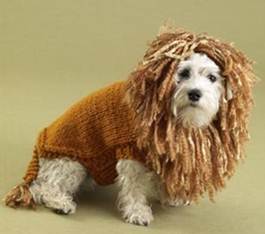
And the kibble:

(Photo from: http://www.care2.com/news/member/374694206/1097853)

NOTICE: This electronic mail message and any files transmitted with it are intended
exclusively for the individual or entity to which it is addressed. The message,
together with any attachment, may contain confidential and/or privileged information.
Any unauthorized review, use, printing, saving, copying, disclosure or distribution
is strictly prohibited. If you have received this message in error, please
immediately advise the sender by reply email and delete all copies.

Posted by: Jack Henry | December 5, 2012

Editor’s Corner: Flesh and Flush

Dear Editrix,

When I want to indicate that a plan or idea requires more detail, which of the following should I use?

· “That idea requires some fleshing out.”

· “That idea requires some flushing out.”

Sincerely,

Finn from Flushing, NY

******************************

Dear Finn,

Let’s have a look at these two “f” words.

According to Merriam-Webster (http://tinyurl.com/ay9am54):

· Think of fleshing out a skeleton. To flesh out something is to give it substance, or to make it fuller or more nearly complete.

· To flush out something is to cause it to leave a hiding place, e.g., "The birds were flushed out of the tree." It can also be used figuratively, as in "flush out the truth."

So, if you are talking about an idea, concept, or plan that requires additional information and substance, you would use “flesh out.” If you are talking about scaring a covey of quail out of the brush (or driving the Ty-D-bowl man out of his hidey-hole), you would use “flush out.”

(Photos from http://tinyurl.com/ceywp72)

Kara Church

Senior Technical Editor

Posted by: Jack Henry | December 4, 2012

Editor’s Corner: Rein, reign, or range?

This week and next week I’m going to go through some of the questions and pet peeves you’ve brought up over the last few months. Today the question is: Is the phrase free rein, free reign, or free range?

From Daily Writing Tips:

The expression to give free rein to is figurative. It means to give a person freedom to act on his own authority. It derives from an equestrian term:

free rein – a rein held loosely to allow a horse free motion; the freedom that this gives a horse. (OED)

The word reign derives from a Latin word for kingship. To reign means to exercise the power of a king. The sense of this “reign” has become conflated with the expression “to give free rein to.” The confusion has become so complete that it’s beyond correction.

So, the original spelling of the phrase is “to give free rein to,” but more people use the spelling of “reign” and associate it with the power of the king, rather than a happy-go-lucky trotting horse. The last phrase, however, does not relate to either of these, unless you’re talking about the king’s farm animals.

“Free range” is used to refer to livestock and poultry that are allowed to roam around, graze, and forage for their own food, rather than being stuck in a barn and eating whatever is thrown on the ground or piled in the trough.

[Photo from
http://en.wikipedia.org/wiki/Babe_(film)]

Kara Church

Senior Technical Editor

Posted by: Jack Henry | November 29, 2012

Editor’s Corner: The Sign of Fire

1. My mom and I learned to cook at the Seattle School of Overcooking. Rather than risk salmonella or trichinosis, we tend to go for high heat and crispy food. Last night, with both of us in the kitchen, it was a two (smoke) alarm dinner, so I thought this was a very fitting article from Grammar Girl (www.quickanddirtytips.com):

2.

The Verb: “Burned” Versus “Burnt”

“Burned” and “burnt” are both acceptable past-tense forms of the verb “burn,” but which one you use depends on where you live because the verb “burned" is the most common form in the United States, and the verb "burnt" is the most common form in Britain.

· Mom burned the muffins.

· Mum burnt the crumpets.

The Adjective: “Burned” Versus “Burnt”

When you’re using the words as adjectives, then "burnt" is also used in the United States, although "burned" is still an option.

· My favorite dessert is burnt cream. [KC – This is a dessert? Mom, I think we’d excel at this!]

· What happened to my burnt umber crayon? [KC – I tried to melt it and make a candle.]

· My husband looked at the burnt turkey and suggested we order pizza. [KC – No, he looked at the burnt salmon, ate it, and liked it.]

That’s the story: “Burned” and “burnt” are both OK. If you’re in the United States, you’ll sound more natural if you stick with “burned” as the verb and save “burnt” to use as an adjective.

Sorry no quiz today folks—just a little too busy!

Kara Church

Senior Technical Editor

619-542-6773 | Ext: 766773

www.symitar.com

NOTICE: This electronic mail message and any files transmitted with it are intended
exclusively for the individual or entity to which it is addressed. The message,
together with any attachment, may contain confidential and/or privileged information.
Any unauthorized review, use, printing, saving, copying, disclosure or distribution
is strictly prohibited. If you have received this message in error, please
immediately advise the sender by reply email and delete all copies.

Posted by: Jack Henry | November 27, 2012

Editor’s Corner: Sticks and Stones

Names of ethnic groups have inspired nonliteral associations, many of them derogatory designations for the “other.” Here are several terms based on such names, from DailyWritingTips.com.

Bohemian: This word for one who adopts an unconventional lifestyle derives from the name of a historic region of Europe that now constitutes much of the present-day Czech Republic. Because many of the Romani people (see gypsy, below) had lived for a time in this area before settling in France, they were called Bohemians. In turn, this designation was attached to artists and writers who, because of poverty (voluntary or otherwise), often lived in city neighborhoods where the “original” Bohemians had concentrated.

Goth: This designation for a modern subculture distinguished by somber attire and demeanor and a fascination with death and the supernatural has its roots in gothic literature and horror imagery inspired by German expressionism. Gothic literature, in turn, derives its name from the standard setting of stories in this genre: castles or monasteries of the Gothic architectural style.

This style, meanwhile, takes its name from a pejorative use of Gothic to mean “barbaric”; the Goths were a loose confederation of tribes from Scandinavia responsible for the conquest of Rome and other centers of civilization in the early Middle Ages.

Gypsy: The Romani, members of a far-flung ethnic group originally from the Indian subcontinent, were long believed to have come from Egypt, and their informal name, now sometimes considered pejorative, derived from Egyptian. The term has also been used to refer to people with nontraditional, nomadic lifestyles and is employed loosely in such terms as “gypsy dancer.” The truncation gyp, meaning “cheat,” in both noun and verb form, results from an association of the Romani with fraud and thievery.

Philistine: Influenced by biblical references to a people of the Near East, called the Philistines, these people were the archenemies of the Israelites (the land they had lived in was later called Palestine). The term came to be used to refer to uncivilized people; later by extension, a philistine was a person lacking refined artistic or cultural tastes and values.

Vandal: This Germanic tribe, originating in Scandinavia, came to be associated with looting and pillaging because, after migrating throughout Europe and settling in North Africa, the Vandals conquered Rome in the early Middle Ages. However, recent historians have argued that the Vandals did not destroy the late Roman civilization but rather adopted the culture. Nevertheless, the word still refers to someone who damages property.

Kara Church

Senior Technical Editor

NOTICE: This electronic mail message and any files transmitted with it are intended
exclusively for the individual or entity to which it is addressed. The message,
together with any attachment, may contain confidential and/or privileged information.
Any unauthorized review, use, printing, saving, copying, disclosure or distribution
is strictly prohibited. If you have received this message in error, please
immediately advise the sender by reply email and delete all copies.

Posted by: Jack Henry | November 26, 2012

Editor’s Corner: Flock of Seagulls

As we went for coffee this morning, my curious co-worker, Kathryn, told me that there is a name for words that refer to a group of something, like a “gaggle of geese.” They are generally referred to as collective nouns, but more specifically, she was talking about “terms of venery.” (Thanks, Kat!)

A brief history from Wikipedia (even briefer with some editing):

The tradition of using "terms of venery" or "nouns of assembly” stems from an English hunting tradition of the Late Middle Ages. The fashion of a consciously developed hunting language came to England from France. It is marked by an extensive proliferation of specialist vocabulary, applying different names to the same feature in different animals.

The following list was compiled by English Club (http://www.englishclub.com/vocabulary/animal-terms.htm) and not only includes the terms of venery, but the terms for male, female, and young specimens of the animal. These are common animals. For a broader list of terms of venery, see http://en.wikipedia.org/wiki/List_of_collective_nouns.

Animal Male Female Young Collective term
(terms of venery)
ant winged male, aner queen, worker antling a colony of ants, an army of ants
bat male female pup a cloud of bats, a colony of bats
bear boar sow cub a sleuth of bears, a sloth of bears
bee drone queen, worker larva, schadon, fry (plural noun) a hive of bees, a swarm of bees
bird cock hen nestling, fledgling a flock of birds, a flight of birds (in the air)
buffalo bull cow calf a herd of buffalo
cat tom queen kitten a clutter of cats
chicken rooster hen chick a brood of chickens, a flock of chickens
cow bull cow calf a herd of cattle
dog dog bitch puppy, pup a pack of dogs
dolphin bull cow pup a school of dolphins
duck drake duck duckling a raft of ducks
elephant bull cow calf a herd of elephants
fish male female fry (plural noun) a school of fish
fox dog, reynard vixen cub a troop of foxes, an earth of foxes
frog male female tadpole, froglet an army of frogs, a colony of frogs
goose gander goose gosling a flock of geese, a gaggle of geese
goat billy (domestic) nanny kid a flock of goats, a herd of goats
horse stallion, colt (young) mare, filly (young) foal a herd of horses, a team of horses (in harness), a string of horses (for racing)
kangaroo buck doe joey a mob of kangaroos, a troop of kangaroos
lion lion lioness cub a pride of lions
monkey male female infant a troop of monkeys
owl male female owlet a parliament of owls
ox bull, steer (castrated) cow calf a herd of oxen, a drove of oxen (when driven in a group), a team of oxen (in harness)
penguin male female chick a colony of penguins
person man woman baby, infant a crowd of people
pig boar sow suckling, piglet a herd of pigs, a flock of pigs
rabbit buck roe bunny, bunny rabbit a colony of rabbits, a nest of rabbits, a warren of rabbits (strictly, where they live)
sheep ram ewe lamb a flock of sheep
tiger tiger tigress cub, whelp a streak of tigers
whale bull cow calf a school of whales, a shoal of whales, a pod of whales (smaller groups)
wolf dog bitch cub a pack of wolves, a herd of wolves
zebra stallion mare foal a cohort of zebra, a herd of zebra

Kara Church

Senior Technical Editor

Posted by: Jack Henry | November 21, 2012

Editor’s Corner: Toward, backward, and forward

Back by popular demand! Today we have a refresher on forward/forwards, toward/towards, and backward/backwards. The most common question is: Which one of each pair is correct?

The easy answer is that in the U.S. we leave off the “s”; in Britain they include the “s.” So, I like to walk toward the duck pond, while Nigel prefers walking towards the umbrella stand. Again, both are correct. When one of these words is used as an adjective, however, the “s” must be removed. For example, “the backward child,” “forward momentum,” etc.

As a side note, I personally don’t think the general rule of American English versus British English is very consistent. When I was trying to think of an example, I realized I would say I walked “backwards” not “backward.” I think part of it just depends on what sounds right to your ear.

Now, go forth and enjoy the holiday!

Hopefully your dinner looks nothing like this:

Kara Church

Senior Technical Editor

Posted by: Jack Henry | November 19, 2012

Editor’s Corner: Excuse you!

To get us in the mood for the upcoming holiday, the Daily Writing Tips newsletter has shared some “bodily function” words with us today. Ah yes, gurgling stomachs, chowing down on turkey, cheek-pinching from Aunt Mary, and traveling with sick people—we’ve got you covered! I slimmed down the list a little so it’s only moderately disgusting. 🙂

borborygmus: rumbling (“What I thought was the rumbling of a truck was only a bout of borborygmus in my stomach.”)

eructation: belching (“The smokestacks engaged in endless eructation.”)

ingurgitation: guzzling (“We gazed in disbelief at the rampant ingurgitation occurring among the frat boys arrayed around the keg.”)

osculation: kissing (“The odious osculation that takes place between politics and big business will never cease.”)

peristalsis: swallowing (“They accepted the lies with peristaltic enthusiasm — hook, line, and sinker.”)

sternutation: sneezing (“His incessant explosions of sternutation were unsettling.”)

tussis: coughing (“John produced gratuitous tussis to signal his extreme skepticism.”)

For the full list of functions see: http://www.dailywritingtips.com/10-words-for-bodily-functions-and-actions/

Kara Church

Senior Technical Editor

Posted by: Jack Henry | November 16, 2012

Editor’s Corner: Little Star

One of my pet peeves is when I’m reading and there’s an asterisk that indicates there’s more information below, and the information never shows up. The following information is a combination of two Grammar Girl articles, and some of my own edits. Have a great weekend!

The word comes from a Greek word meaning “little star.” In the past, asterisks were used to show the omission of a letter or a passage in time, but that role has largely been taken over by the ellipsis (…).

How to Use an Asterisk

When you use the asterisk as a footnote symbol, it shows that you are planning to comment on something at the bottom of the page. You’ve made a promise, so you’d better keep it. The first rule for using asterisks is if you use one, make sure the reference starts at the bottom of the same page.

Unfortunately often, advertisements will have an asterisk that doesn’t refer to anything on the page. It leaves you wondering what the restrictions are. If the ad reads Zombie Repellant, 20% off,* and the asterisk refers to nothing, you wonder whether the discount only applies on certain days or for certain people. Does the discount apply if the zombie apocalypse has already begun? Are zombies themselves excluded from the offer?

Using an Asterisk as a Footnote Symbol

So, do asterisks differ from other footnote symbols, like numbers or letters? Yes. The Chicago Manual of Style says to use asterisks if you have just a handful of references on which you’re planning to comment. You can also use asterisks when you need to avoid using numbers or letters for indicating footnotes.

The Associated Press Stylebook (AP) says not to use the asterisk in journalism writing because the symbol may not be seen by AP computers or received by newspapers.

[KC – And Editrix says you should avoid using the asterisk if possible, especially in online documentation where the “bottom of the page” may mean scrolling through
dozens of screens. Very few of our document types require footnotes.]

The Grawlix

The asterisk used to be used to omit letters, and there’s at least one place where that practice survives: asterisks can replace letters in swear words you want to sanitize. For example, you could leave the first letter but use asterisks to replace the missing letters, leaving the reader to figure out what the word is, for example: b***h***. You could also use a grawlix, which is the term cartoonist Mort Walker gave to the string of characters (@#*&!) that appear in comic books when someone swears. [KC – For curious minds, I changed Grammar Girl’s swearword to “butthead,” since hers was a little saltier.
Hopefully you will not have the opportunity to use the grawlix in business writing!]

Summary

To summarize, the asterisk is a little star symbol which can be used to indicate a footnote or be used to edit swear words in informal text. A footnote should begin on the bottom of the same page on which the asterisk or other footnote symbol appears. Unlike superscript numbers or letters, the asterisk can be used alone when you need only a handful of footnotes in an article or story.

If you can’t get enough of this symbol, see the following Grammar Girl articles:

http://grammar.quickanddirtytips.com/asterisk.aspx

http://grammar.quickanddirtytips.com/how-to-use-an-asterisk.aspx

Kara Church

Senior Technical Editor

Posted by: Jack Henry | November 15, 2012

Editor’s Corner: “Then” and “Than”

Good morning! I’ve had several requests to cover than and then. Grammar Girl has provided the briefest of articles on that exact topic, so here you go!

From Daily Writing Tips (http://grammar.quickanddirtytips.com/then-versus-than.aspx):

Do you confuse "then" and "than"? Don’t worry; you’re not alone. I get this question all the time.

"Then" has an element of time. For example, it can mean "next" or "at that time."

o We ate and then we went to the movies.

o Movies were a lot cheaper back then.

"Than" conveys a comparison.

o DVDs are more expensive than videocassettes.

o Aardvark is taller than Squiggly.

Quick and Dirty Tip: Both "than" and "comparison" have the letter "a" in them, and "then" and "time" both have the letter "e."

And just for fun:

Kara Church

Senior Technical Editor

« Newer Posts - Older Posts »

Categories