Posted by: Jack Henry | June 13, 2013

Editor’s Corner: Acronyms, antonyms, and aptronyms

I know we’ve covered homonyms and acronyms and perhaps some other “nym” words, but there are so many more out there to discover! The suffix –nym is from the Greek word for name or word (onoma). Here is a repeat and a couple of new ones for you.

· acronym: a word formed from the initial letter or letters of each of the successive parts or major parts of a compound term

From Greek akros (beginning, tip, peak, summit)

Examples:

o light amplification by stimulated emission of radiation (laser)

o National Aeronautics and Space Administration (NASA)

o radio detecting and ranging (radar)

o self-contained underwater breathing apparatus (scuba)

o sound navigation and ranging (sonar)

· antonym: a word of opposite meaning

From Greek anti (in opposition of)

Examples:

(The following words pairs are antonyms of each other.)

o hot, cold

o dark, light

o good, bad

· aptronym (also aptonym or charactonym): the name of a person aptly suited to their character or profession

From apt (suitable) + nym, several sources credited with coining the term.

Examples:

o Sara Blizzard, meteorologist

  • Russell Brain, neurologist
  • Margaret Court, tennis player
  • Bob Flowerdew, gardener
  • Kara Church [KC – more of an antonym than an aptronym :-)]

Kara Church

Senior Technical Editor

NOTICE: This electronic mail message and any files transmitted with it are intended
exclusively for the individual or entity to which it is addressed. The message,
together with any attachment, may contain confidential and/or privileged information.
Any unauthorized review, use, printing, saving, copying, disclosure or distribution
is strictly prohibited. If you have received this message in error, please
immediately advise the sender by reply email and delete all copies.
Posted by: Jack Henry | May 28, 2013

Editor’s Corner: More on editing to improve usage

I hope everyone is feeling relaxed and rested after the three-day weekend. Here is the remainder of the article on self-editing that I sent last week from DailyWritingTips.

· Select the strongest nouns and verbs before you select adjectives and adverbs.
Words that modify nouns and verbs can enhance clarity of thought and vividness of imagery, but if they upstage the words they’re supposed to support, strengthen the actor and action words. When you do so, an adjective or adverb may no longer be necessary.

· Seek opportunities to use repetition for rhetorical effect while, at the same time, you watch for careless redundancy.
Take care that you don’t repeat yourself unless you do so to emphasize your point. [KC – In technical writing, you may explain a difficult topic at a technical level and then restate the information in plain language. Just make sure not to keep repeating the
same thing over and over using same words. I think that’s the equivalent of repeating the same thing to someone (louder each time) who doesn’t speak your language. No matter how many times you say it or how loud you yell it—the recipient is not going to get
it until you use language they understand.]

· Read your draft aloud to help you refine grammar and usage. If something doesn’t sound right to you, it probably doesn’t read right to your audience, either.
Recitation of your writing is time consuming, but that’s how you find the awkward wording or phrasing you didn’t stumble over in your silent review. [KC –This is often something we do as editors when we stumble on something that doesn’t make sense. You may think we are talking to ourselves, but we’re actually reading submissions
out loud to double-check their clarity. No comments from the peanut gallery!]

· Ask someone else to read your writing and critique it.
People you [ask] to read your draft need not offer solutions to problems of grammar, usage, organization, and logic; they can simply highlight problematic words, phrases, sentences, and passages, and offer more detail if necessary while leaving the problem solving to you. [KC – This point refers to personal writing and critiques. As editors here at Jack Henry, it is part of our job to correct grammar, usage, and problem sentences.
We may also offer advice on the structure and logic of a submission since we have experience in instructional design, presenting, teaching, and writing various types of articles. It’s our job to help you communicate as clearly and efficiently as possible!]

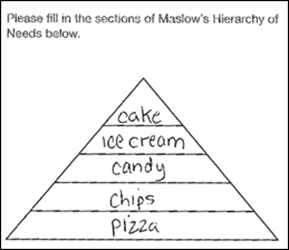
When Model-Netics goes wrong…

From F in Exams, by Richard Benson

Kara Church

Senior Technical Editor

Posted by: Jack Henry | May 23, 2013

Editor’s Corner: Editing to Improve Usage

It’s been a bit of a holiday dry spell, but we’re quickly approaching a three-day weekend! Before you relax too much, here are the first three tips from a list of seven. The article is from a February post on DailyWritingTips.com, called “7 Tips for Editing to Improve Usage.”

How do you make sure you’re writing right? Crafting prose is mostly a matter of using the right words for the job. Here are some steps to help you achieve that goal.

1. Look up the definition of an unfamiliar word and be sure you understand the meaning before you use it.

It’s easy to deploy a word you’ve just read or heard, mistakenly believing you understand its definition or its connotation, only to confuse or accidentally mislead your readers. Always double-check a term you’ve never used before. (Consider doing the same with words you’ve used before and think you know.)

2. Search a thesaurus or a synonym finder for the precise meaning, taking care to notice the different connotations of similar words.

Flag stock words and phrases, and thumb or click through a print or online resource to select a more exact or accurate synonym. But be alert to seemingly similar words with distinct senses.

3. Keep your writing clear and coherent, and avoid pretentious or overly formal language.

Write to communicate, not to impress. Say what you mean, and mean what you say. Don’t dumb down, but don’t let your writing get in the way of your message. There’s a fine line between elegance and pomposity.

Kara Church

Senior Technical Editor

619-542-6773 | Ext: 766773

www.symitar.com

NOTICE: This electronic mail message and any files transmitted with it are intended
exclusively for the individual or entity to which it is addressed. The message,
together with any attachment, may contain confidential and/or privileged information.
Any unauthorized review, use, printing, saving, copying, disclosure or distribution
is strictly prohibited. If you have received this message in error, please
immediately advise the sender by reply email and delete all copies.

Posted by: Jack Henry | May 22, 2013

Editor’s Corner: Revisiting awhile for a while

Yesterday I had a request to bring this topic back for a refresher: When should we use “a while” and when should we use “awhile.”

The original article was written by Ali Hale, for DailyWritingTips.com.

A while is a noun meaning “a length of time.”

  • “I slept for a while.”
    (compare with “I slept for a bit” and “I slept for three hours”)
  • I was away from my desk for a while.”

(compare with “I was away from my desk for two minutes”)

Awhile is an adverb, meaning “for a time,” or literally, “for a while.”

  • “I slept awhile before dinner.”
    (compare with “I slept deeply before dinner”)

As you can see, the words can be used almost interchangeably in some cases – but a while needs to be accompanied by a preposition, such as “for” (“I slept for a while”) or “ago” (“I left work a while ago”). Awhile always means “for a while.”

My kind of answer to a math question:

From F in Exams, by Richard Benson

NOTICE: This electronic mail message and any files transmitted with it are intended
exclusively for the individual or entity to which it is addressed. The message,
together with any attachment, may contain confidential and/or privileged information.
Any unauthorized review, use, printing, saving, copying, disclosure or distribution
is strictly prohibited. If you have received this message in error, please
immediately advise the sender by reply email and delete all copies.
Posted by: Jack Henry | May 21, 2013

Editor’s Corner: R is for Rascal

Hello, everyone! Let’s have a look at the “R” words from the “Spelling, Vocabulary, and Confusing Words” article on grammarbook.com.

rain water that falls in drops from the sky
reign rule, administration
rein bit, harness
Posted by: Jack Henry | May 20, 2013

Editor’s Corner: More Regional Differences

So, last night as my hubby, the dogs, and I settled in to watch some mad men and bad popes on TV, an ambulance raced by our house at full volume and full speed. “Don’t worry,” I said. “It wasn’t a fire truck, it was an aid car.” Ray asked, “A what? An “A” car?” He was already laughing at me when I responded, “No, an AID car. Like ‘first aid.’” And he laughed and laughed. “Is that one of those Seattle things like “license tabs”?

I went to work immediately to find the answer, and I was quite surprised. It seems that “aid car” is a solely Washingtonian term. Well, as long as they come when called, I guess it doesn’t matter too much what you call the vehicle.

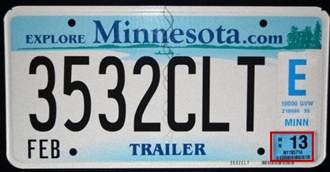
As for “tabs,” it seems Washington has some company in referring to the validation stickers on your license plate as “tabs.” I found references to tabs for Missouri, Michigan, and Minnesota.

I guess there’s no moral to this story. It’s kind of like our discussion of pill bugs (or rolly-pollies)…I find it fascinating that we share a language, but have regional words and phrases that our compatriots don’t understand.

Kara Church

Senior Technical Editor

Posted by: Jack Henry | May 17, 2013

Editor’s Corner: My little pony

Just a few minutes ago, I was asked a very interesting question: Where did the phrase “raring (or rarin’) to go” come from? I was stumped. Is raring even a verb? What does it mean? Here are some of the things I found out, using The American Heritage® Dictionary of Idioms and the Merriam-Webster dictionary.

Definition: full of enthusiasm or eagerness <ready and raring to go>; impatient.

Origin: Raring is an alternate form of the word rearing. In this case, the idiom is related to a horse “rearing up” on its hind legs when it is afraid or excited and is ready to run off.

Examples:

· He’s been raring to go to summer camp since the last day of school.

· Keesha and Mitchell have been raring to get to work on their science project.

· Our pony, Jebediah, whinnied and stood on his hind legs, raring to go for a long ride.

http://tinyurl.com/cnc82u8

Kara Church

Senior Technical Editor

Posted by: Jack Henry | May 16, 2013

Editor’s Corner: Good vs. Well

Last week, I received a question about when to use good versus well. To really understand the answer, I’m afraid we have to get into the grammar of it. Grammar Girl does a great job of explaining it at quickanddirtytips.com, though there’s nothing very quick about it. I’ve cut the article down here and there and reformatted it to make it a bit simpler.

It’s such a simple little question: How are you?

“I’m good” is what you’re likely to hear in general conversation, but there are grammar nitpickers out there who will chide you if you say it. The wonderful news is that those nitpickers are wrong: it’s perfectly acceptable to say, “I’m good,” and you shouldn’t have to shamefully submit to teasing remarks such as the time-honored and leering, “How good are you?”

The nitpickers will tell you that "well" is an adverb (and therefore modifies verbs) and that "good" is an adjective (and therefore modifies nouns), but the situation isn’t that simple.

The key is to understand how linking verbs differ from action verbs.

· Action verbs – They’re easy; they describe actions (e.g., run, jump, swim). To describe an action verb, use an adverb like well. For example:

o He runs well.

o She jumps well.

o They swim well.

Well is an adverb that relates to all of those action verbs.

Note: Do not use adjectives with action verbs. For example, “They swim good” is incorrect. The proper sentence is "He swam well," because swam is an action verb and it needs an adverb to describe it.

· Linking verbs – Less about actions and more about connecting other words together. The verb to be is the quintessential linking verb. The word is is a form of the verb to be, and if I say, "He is shy," the main purpose of is is to link the word he with the word shy. Other linking verbs include:

o seem

o appear

o look

o become

o feel

o smell

o taste

o etc. (There are at least 60 in English.)

One complication is that some verbs—such as the sensing verbs—can be both linking verbs and action verbs. A trick that will help you figure out if you’re dealing with a linking verb is to see if you can replace the verb with a form of to be; if so, then it’s probably a linking verb.

For example, you can deduce that feel is a linking verb in the sentence "He feels bad" because if you replace feels with the word is, the sentence still makes sense: "He is bad." On the other hand, if you have a sentence such as "He feels badly," and you replace feels with is, it doesn’t make sense anymore: You get "He is badly." So in that case you know that "feel" is functioning as an action verb.

It’s standard to use adjectives—such as "good"—after linking verbs. When you do it, they are called predicate adjectives, and they refer to the noun before the linking verb.

Aside from the linking-verb-action-verb trickiness, another reason people get confused about this topic is that well can be both an adverb and a predicate adjective. As I said earlier, in the sentence "He swam well," well is an adverb that describes how he swam. But when you say, “I am well,” you’re using well as a predicate adjective. That’s fine, but most sources say well is reserved to mean healthy when it’s used in this way. So if you are recovering from a long illness and someone is inquiring about your health, it’s appropriate to say, “I am well,” but if you’re just describing yourself on a generally good day and nobody’s asking specifically about your health, a more appropriate response is, “I am good.”

NOTICE: This electronic mail message and any files transmitted with it are intended
exclusively for the individual or entity to which it is addressed. The message,
together with any attachment, may contain confidential and/or privileged information.
Any unauthorized review, use, printing, saving, copying, disclosure or distribution
is strictly prohibited. If you have received this message in error, please
immediately advise the sender by reply email and delete all copies.

Posted by: Jack Henry | May 15, 2013

Editor’s Corner: Fresh from Mt. Tahoma (Mt. Rainier)

Good morning, folks! I want to give a big “thank you” to Donna for her contributions to the Editor’s Corner and to y’all for being so welcoming to her.

Since I spent my long weekend in the Pacific Northwest, I figured I had two choices of topics:

· First, I could discuss the words my eight-year-old nephew wrote on my hands using ink only viewable under black light. I think you are probably already familiar with those words, and we try to avoid bathroom talk at work. Let’s just say I won’t be going to any bars until the ink wears off; I don’t want to offend the bouncers.

· Second, I thought maybe I would look up some of the words we’ve added to English from the different indigenous peoples of America. I know we’ve borrowed a lot of names (Klickitat, Kopachuck, Puyallup) but I didn’t realize how many words we’ve adopted. This is a partial list of words from Algonquian and related languages. For other languages and additional words see:

http://en.wikipedia.org/wiki/List_of_English_words_from_indigenous_languages_of_the_Americas

Caribou

From qalipu, "snow-shoveler”.

Chipmunk

Originally chitmunk, "red squirrel".

Eskimo

From aiachkimeou (modern ayassimēw), meaning "snowshoe-netter".

Hickory

From pocohiquara, "milky drink made with hickory nuts".

Hominy

From uskatahomen/usketchaumun, literally "that which is treated", in this case "that which is ground/beaten".

Moose

From mo·swa (Proto-Algonquian)

Opossum

From apasum/opussumz/aposoum, "white dog-like animal”, “white dog".

Pecan

From pakani, "nut".

Persimmon

From pessemins/pushemins, "fruit, berry".

Pone

From poan/appoans, "something roasted".

Raccoon

From arahkun/aroughcun.

Squash (fruit)

From askútasquash.

Succotash

From msíckquatash, "boiled whole kernels of corn".

http://www.nps.gov/mora/photosmultimedia/photogallery.htm

Kara Church

Senior Technical Editor

Posted by: Jack Henry | May 8, 2013

Editor’s Corner: Business Writing Resources

I was looking for a resource today to help a co-worker with some writing improvement tips. I thought I’d check out the trusty Purdue Online Writing Lab (OWL) because it has a lot of great lessons in it. The OWL did not let me down!

The link below has information on improving writing, understanding the purpose of different documents, and structuring documents appropriately.

Note: I’m not trying to override current practices, so if you already have a template for your documentation, keep using it as intended. This is simply a resource to help those who would like more information about these topics.

General writing topics include:

· Effective workplace writing

· Audience analysis

· Parallel structure

· Tone

· Design procedures

Document types include:

· White papers

· Technical reports

· Abstracts

· Proposals

· Memos

· Business letters

http://owl.english.purdue.edu/owl/section/4/16/

When you have a minute, check it out!

Kara Church

Senior Technical Editor

« Newer Posts - Older Posts »

Categories