Posted by: Jack Henry | June 27, 2013

Editor’s Corner: V is for Valyrian

Good morning, guys and dolls! It seems like an accomplishment to be near the end of the list of Spelling, Vocabulary, and Confusing Words.

Here is one of the last groups of homonyms:

vain excessively concerned about one’s appearance
vane a blade moved by wind as in weather vane
vein blood vessel
vary to change or alter
very extremely
verses lines of poetry
versus as compared to another choice; against
vial small container for holding liquids
vile repulsive, depraved
vice bad habit; immoral practice
vise device used to hold an object firmly

From F in Exams, by Richard Benson

Kara Church
Senior Technical Editor

Posted by: Jack Henry | June 26, 2013

Editor’s Corner: Caconyms and Cryptonyms

Today we have a couple more of those “nym” words. Who knew there were so many words for other words?

  • caconym: (Greek) kakos bad + (Greek) nym name, word
  • cryptonym: (Greek) kryptos hidden + nym name, word

caconym
noun
a : a taxonomic name that is objectionable for linguistic reasons
b : a misnomer
c : a bad word

First Known Use: 1887

Example: The ballerina changed her stage name to “Eva”; at birth, her parents saddled her with the caconym “Millicent Hurdygurdy Applebottom.”

cryptonym
noun
a : a secret name
b : a code name for a place, activity, or person

First Known Use: 1876

Example: The plan to illegally extract the overbred dogs from the puppy mill was given the cryptonym Operation Yapper.

Kara Church
Senior Technical Editor
619-542-6773 | Ext: 766773
www.symitar.com

0

NOTICE: This electronic mail message and any files transmitted with it are intended
exclusively for the individual or entity to which it is addressed. The message,
together with any attachment, may contain confidential and/or privileged information.
Any unauthorized review, use, printing, saving, copying, disclosure or distribution
is strictly prohibited. If you have received this message in error, please
immediately advise the sender by reply email and delete all copies.

Posted by: Jack Henry | June 24, 2013

Editor’s Corner: Backronyms

Good morning, hello, and welcome to a new week. Today we have a more recently coined term (1980s) from the “nym” family: backronym. It’s recent enough that my search of Merriam-Webster did not turn up anything, so I collected the following information from a Wikipedia article. (For the full text see Wikipedia.)

Backronym(also bacronym) a phrase specially constructed so that an acronym fits an existing word. Backronyms may be invented with serious or humorous intent, or may be a type of false or folk etymology. Backronyms can be constructed for educational purposes, too, such as forming mnemonics.

Combination of “backward” + “acronym”

Examples:

  • The United States Department of Justice assigns to their Amber Alert program the meaning "America’s Missing: Broadcast Emergency Response." The term originally referred to Amber Hagerman, a 9-year-old abducted and murdered in Texas in 1996.
  • An example of an educational mnemonic is the backronym APGAR, the score used to assess the health of newborn babies. The rating system was devised by and named after Virginia Apgar, but ten years after the initial publication, the bacronym APGAR was coined in the US as a mnemonic learning aid: Appearance, Pulse, Grimace, Activity, and Respiration.
  • The name of the restaurant chain Arby’s is a play on "RB" referring to "roast beef" as well as the company’s founders, the Raffel brothers.
  • The official title of the USA PATRIOT Act, a 2001 Act of the U.S. Congress, is "Uniting and Strengthening America by Providing Appropriate Tools Required to Intercept and Obstruct Terrorism (USA PATRIOT) Act of 2001".

My personal backronym recipe:

1 small meeting room
4-10 word lovers
2 cups boredom
¾ cup frustration
1 tablespoon lofty ideas
2 dashes smart aleck (or to taste)

Mix and bake for 1-3 hours. Makes 1 soufflé of creative backronyms that will have you in tears of laughter. Enjoy!

Kara

NOTICE: This electronic mail message and any files transmitted with it are intended
exclusively for the individual or entity to which it is addressed. The message,
together with any attachment, may contain confidential and/or privileged information.
Any unauthorized review, use, printing, saving, copying, disclosure or distribution
is strictly prohibited. If you have received this message in error, please
immediately advise the sender by reply email and delete all copies.

Posted by: Jack Henry | June 21, 2013

Editor’s Corner: 10 More Words with Flair

I know some of you used the terms from yesterday’s list of words meaning “that certain something.” I particularly enjoyed an e-mail from someone who was “departing work with gusto.” As far as gumption, am I the only person who hears that word and immediately pictures some dirty old miner without teeth saying “He’s got gumption”? No? Okay. Here is the second half of yesterday’s list from DailyWritingTips.com.
[The Other 10] Words for That Certain Something

  • Je ne sais quoi: a quality not easily described or expressed (a French phrase that means literally “I know not what”)
  • Knack: intuitive capacity or knowledge (originally meant “trick”; perhaps from the onomatopoeic word akin to knock)
  • Mettle: vigor, stamina (from an alternate spelling of metal)
  • Moxie: energy, enthusiasm, courage (from the brand name of a soft drink; early on, such beverages were often touted, long before the advent of energy drinks, as providing pep)
  • Panache: flamboyance; originally, a decorative plume of feathers on a helmet (from the Latin term pinnaculum, meaning “small wing,” by way of Italian and French)
  • Pizzazz: glamour, vitality (unknown etymology)
  • Savoir faire: self-assuredness, talent for knowing how to conduct oneself (from the French term savoir-faire, meaning “knowing how to do,” from the Latin words sapere, meaning “know,” and facere, meaning “do”)
  • Savoir vivre: knowledge of appropriate behavior (from the French word savoir-vivre, “knowing how to live,” from the Latin terms sapere, meaning “know,” and vivre, meaning “live”)
  • Spunk: courage, pluck (from the Gaelic word spong, meaning “tinder,” ultimately derived from the Latin term spongia, from which sponge is also derived)
  • Verve: vivacity, energy, enthusiasm (ultimately from the Latin term verbum, meaning “word,” because of the early sense of “flair for speaking or writing”)


Gabby Hayes Had Gumption

Kara Church
Senior Technical Editor

Good afternoon! Today’s fare includes a turkey sandwich and half of an article from DailyWritingTips.com. I’ll send the other ten tomorrow, after you’ve tried to use each of the words below in conversation.

20 Words for That Certain Something

Some people have it, and some people don’t. But what, exactly, is it? Here’s a list of words describing a special quality that sets certain people apart from others, and their meanings:

· Brio: vivaciousness (Italian, “fire, life,” perhaps from the word for vigor from a form of French)

· Charisma: charm or personal magnetism (from the Greek word meaning “favor”)

· Chutzpah: admirable or excessive self-confidence; this word and ginger are the only ones on this list that have both positive and negative connotations (from Hebrew by way of Yiddish; several other spellings are used, but this one is the most common)

· Duende: charm (from Spanish dialect, meaning “ghost”)

· Élan: enthusiasm (from the French word eslan, meaning “rush,” with the same Latin root from which lance is derived) [KC – I do not recommend rushing into a lance.]

· Esprit: vivacious wit (French, from the Latin term spiritus, “spirit”)

· Flair: style, or talent or tendency (from the French word meaning “odor” or “scent,” ultimately from Latin flagrare, an alteration of fragrare, from which fragrance is derived) [KC – Looking at the etymology, I’m suddenly thinking it’s not such a compliment.]

· Ginger: spirit, or temper (from the Latin term zingiberis, for the root used as a spice and a medicine, derived from the Sanskrit word srngaveram)

· Gumption: initiative (from a Scottish word meaning “shrewdness,” perhaps from a Germanic term meaning “attention”)

· Gusto: enthusiasm (the Italian word for “taste,” from the Latin term gustus)

From F in Exams, by Richard Benson

Kara Church

Senior Technical Editor

Posted by: Jack Henry | June 19, 2013

Editor’s Corner: The Portmanteau

Portmanteaux (or Portmanteaus)
If you took French in school, you probably learned this word in the “travel vocabulary” part of class, but most English classes cover this word, too. Here’s how Merriam-Webster describes a portmanteau:

1: a large suitcase
2: a word or morpheme whose form and meaning are derived from a blending of two or more distinct forms (as smog from smoke and fog)

Middle French portemanteau, from porter to carry + manteau mantle [KC – “something that covers, enfolds, or envelops] from Latin mantellum

Now for just a few examples from Wikipedia:

General disclaimer: Please send all grumbles, grievances, and protests regarding these terms to Wikipedia; compliments, commendations, and acclamations can go to kchurch@sjackhenry.com. 🙂

  • mizzle, from mist and drizzle
  • snark, from snide and remark
  • tofurkey, from tofu and turkey
  • bit, from binary and digit
  • emoticon, from emotion and icon
  • codec, from coder and decoder
  • modem, from modulator and demodulator
  • pixel, from picture and element
  • spork, a spoon and a fork
  • Brangus, from Brahman and Angus breeds of cattle (progeny of)
  • Puggle, Pug and Beagle (progeny of)
  • Benelux, from Belgium, the Netherlands, and Luxembourg
  • Tanzania, from Tanganyika and Zanzibar
  • Texarkana, from Texas, Arkansas, and Louisiana

NOTICE: This electronic mail message and any files transmitted with it are intended
exclusively for the individual or entity to which it is addressed. The message,
together with any attachment, may contain confidential and/or privileged information.
Any unauthorized review, use, printing, saving, copying, disclosure or distribution
is strictly prohibited. If you have received this message in error, please
immediately advise the sender by reply email and delete all copies.

Posted by: Jack Henry | June 18, 2013

Editor’s Corner: Sabbath and sabbatical

I was reading a tidbit in the book SuperFreakonomics about laws with good intentions that end up hurting those they are designed to help. The example was a law recorded in the Bible which …required creditors to forgive all debts every sabbatical, or seventh year. I stopped here because the word sabbatical caught my attention. I always thought that a sabbatical was a break that teachers or other professionals took to write a book, travel, or heal from a mental breakdown. Then I wondered if it was related to the word Sabbath or if they were both related to the word seven.

The answer is that yes, a sabbatical is a break and it is related to the word Sabbath. They are connected to seven but not by their etymologies. Here are the details for those with inquiring minds.

sabbatical (noun): sabbatical year; leave

sabbatical year (noun): a year of rest for the land observed every seventh year in ancient Judea by allowing the fields and vineyards to lie without tilling, sowing, pruning, or reaping from autumn to autumn in accordance with a Levitical commandment. [KC The law mentioned in SuperFreakonomics was that on the seventh year debts were forgiven. The problem? Creditors stopped lending money during years five and six, driving the borrowers out of business and into starvation.]

sabbatical leave (noun): a leave with full or half pay granted (every seventh year) to one holding an administrative or professional position (as college professor) for rest, travel, or research

Sabbath (noun): the day of rest and solemn assembly observed as sacred to God by Jews and some Christian churches on the seventh day of the week from sunset Friday until sunset Saturday

Etymology: Middle English sabath, sabat, from Old French sabat, sabbat & Old English sabat, from Latin sabbatum, from Greek sabbaton, from Hebrew shabbth, from shbath to rest

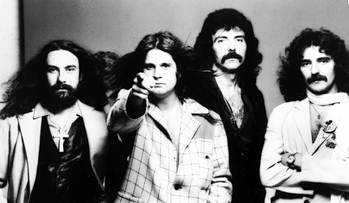
Black Sabbath

Kara Church

Senior Technical Editor

Posted by: Jack Henry | June 17, 2013

Editor’s Corner: Figures of Speech – Dysphemism

Good morning!

Today’s topic is based on the article “Take Care with Dysphemisms” by Mark Nichol.

Dysphemism is the use of a derogatory word or phrase instead of an inoffensive one.

Some examples are:

Snail mail for postal mail

Cancer stick in reference to a cigarette

Worm food or kicked the bucket for death

Pig for policemen

Quack for doctor

Shrink for psychiatrist

Old man for your father or husband

Old lady for your wife

Old bat for an elderly woman

Jalopy or beater for an unreliable car

Eat like a pig for a person who eats quickly or a lot

Dead tree edition for the paper version of a publication that can be found online

http://www.dailywritingtips.com/take-care-with-dysphemisms/

Thank you,

Jackie Solano

Technical Writer, Episys Technical Publications

Symitar®

8985 Balboa Avenue

San Diego, California 92123

Direct Line: 619-542-6711

NOTICE: This electronic mail message and any files transmitted with it are intended
exclusively for the individual or entity to which it is addressed. The message,
together with any attachment, may contain confidential and/or privileged information.
Any unauthorized review, use, printing, saving, copying, disclosure or distribution
is strictly prohibited. If you have received this message in error, please
immediately advise the sender by reply email and delete all copies.
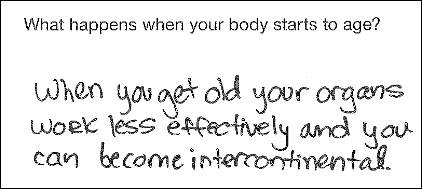
Posted by: Jack Henry | June 14, 2013

Editor’s Corner: Allonyms, ananyms, and anonyms

A very joyous Friday to you! On Monday, I have a treat for you from the third person in our editing group: Jackie Solano. Jackie provides our Technical Publications department with weekly “Nifty Nuggets” from our department’s handbook. She now desires a wider audience, so look for her first Editor’s Corner next week!

As for today, with some help from my friends at Wikipedia and Merriam-Webster, I have another three “nym” words for you: allonym, ananym, and anonym.

· allonym: a work published under the name of a person other than the author

From Greek allos (other) + nym (name or word)

Example (From Wordsmith.org):

An example of a work written under an allonym is The Federalist, also known as The Federalist Papers. This collection of 85 essays about the U.S. Constitution was written by Alexander Hamilton, John Jay, and James Madison in 1787-1788. They chose to write under the name Publius in honor of a Roman official for his role in setting up the Roman republic."

· ananym: a pseudonym consisting of the real name written backwards

Latin, from Greek ana– (up, back, again) + –nym

Examples:

· Oprah Winfrey (media company “Harpo Productions”)

· Amos Heilicher (owner of Soma Records)

· Beatles (Seltaeb merchandising company)

· anonym: a false name, a pseudonym

French anonyme, from Greek anōnumos (without name)

Examples:

· Mark Twain is the anonym of Samuel L. Clemens

· Lewis Carroll is the anonym of Charles Dodgson

· The Brontë sisters each used anonyms to avoid the prejudice against female writers at the time:

o Anne Brontë – Acton Bell

o Charlotte Brontë – Currer Bell

o Emily Brontë – Ellis Bell

NOTICE: This electronic mail message and any files transmitted with it are intended
exclusively for the individual or entity to which it is addressed. The message,
together with any attachment, may contain confidential and/or privileged information.
Any unauthorized review, use, printing, saving, copying, disclosure or distribution
is strictly prohibited. If you have received this message in error, please
immediately advise the sender by reply email and delete all copies.
Posted by: Jack Henry | June 13, 2013

Editor’s Corner: Acronyms, antonyms, and aptronyms

I know we’ve covered homonyms and acronyms and perhaps some other “nym” words, but there are so many more out there to discover! The suffix –nym is from the Greek word for name or word (onoma). Here is a repeat and a couple of new ones for you.

· acronym: a word formed from the initial letter or letters of each of the successive parts or major parts of a compound term

From Greek akros (beginning, tip, peak, summit)

Examples:

o light amplification by stimulated emission of radiation (laser)

o National Aeronautics and Space Administration (NASA)

o radio detecting and ranging (radar)

o self-contained underwater breathing apparatus (scuba)

o sound navigation and ranging (sonar)

· antonym: a word of opposite meaning

From Greek anti (in opposition of)

Examples:

(The following words pairs are antonyms of each other.)

o hot, cold

o dark, light

o good, bad

· aptronym (also aptonym or charactonym): the name of a person aptly suited to their character or profession

From apt (suitable) + nym, several sources credited with coining the term.

Examples:

o Sara Blizzard, meteorologist

  • Russell Brain, neurologist
  • Margaret Court, tennis player
  • Bob Flowerdew, gardener
  • Kara Church [KC – more of an antonym than an aptronym :-)]

Kara Church

Senior Technical Editor

NOTICE: This electronic mail message and any files transmitted with it are intended
exclusively for the individual or entity to which it is addressed. The message,
together with any attachment, may contain confidential and/or privileged information.
Any unauthorized review, use, printing, saving, copying, disclosure or distribution
is strictly prohibited. If you have received this message in error, please
immediately advise the sender by reply email and delete all copies.

« Newer Posts - Older Posts »

Categories