Posted by: Jack Henry | December 31, 2014

Editor’s Corner: The Twelfth Day of English

To finish off the Editor’s Corner seasonal Twelve Days of English, I have another set of holiday music mondegreens from Deck the Halls with Buddy Holly, and Other Misheard Song Lyrics, by Gavin Edwards.

If you are interested in winning this lightly used book, send me an email with the words BUDDY HOLLY in the subject line by January 6. I’ll announce the winner and send you the book shortly thereafter!

Happy New Year!

Song Title Mondegreen Actual Lyrics
Rudolph the Red-Nosed Reindeer Olive, the other reindeer All of the other reindeer
Deck the Halls Deck the halls with buns of Holland

Deck the halls with bows of folly

Deck the halls with Buddy Holly

Deck the halls with boughs of holly
Silent Night Sleep in heavenly peas Sleep in heavenly peace
We Three Kings We three kings of porridge and tar We three kings of Orient are
The Twelve Days of Christmas On the first day of Christmas,

My tulip gave to me

On the first day of Christmas,

My true love gave to me

Winter Wonderland In the meadow we can build a snowman,

Then pretend that he is sparse and brown

In the meadow we can build a snowman,

And pretend that he is Parson Brown

Silent Night Radiate meat from your holy place Radiant beams from thy holy face
Santa Claus Is Coming to Town He’s making a list,

Chicken and rice

He’s making a list,

Checking it twice

O Holy Night Long-legged worm Long lay the world
White Christmas May your days be merry in brine May your days be merry and bright
The Twelve Days of Christmas Ten lawyers leaving Ten lords a-leaping
Do You Hear What I Hear? He will bring us windows and limes He will bring us goodness and light

NOTICE: This electronic mail message and any files transmitted with it are intended
exclusively for the individual or entity to which it is addressed. The message,
together with any attachment, may contain confidential and/or privileged information.
Any unauthorized review, use, printing, saving, copying, disclosure or distribution
is strictly prohibited. If you have received this message in error, please
immediately advise the sender by reply email and delete all copies.


Posted by: Jack Henry | December 30, 2014

Editor’s Corner: Eleventh Day of English

On the eleventh day of English

My true love gave to me

This article from Business Wee-eek.

Just kidding. It’s from Business Insider and it is called The 11 Most Common Grammatical Mistakes and How to Avoid Them. These items may seem familiar to you—probably because we’ve covered them before. In fact, you have two options today. You can click the link (above) to read the article, or you can go back and read the associated Editor’s Corner articles. I’ve listed the headings for the common grammatical mistakes here, along with our blog links.

1. "Fewer" vs. "Less"

https://episystechpubs.com/2014/05/14/editors-corner-fewer-and-less/

2. "It’s vs. "Its"

https://episystechpubs.com/2013/11/25/editors-corner-its-vs-its/

3. Dangling Modifiers

https://episystechpubs.com/2013/04/16/editors-corner-rule-5-avoid-dangling-modifiers/

4. "Who" vs. "Whom"

https://episystechpubs.com/2012/08/02/editors-corner-who-whom-the-who/

5. Me, Myself, and I

https://episystechpubs.com/2012/08/15/editors-corner-me-myself-and-i/

6. "Lie" vs. "Lay"

https://episystechpubs.com/2013/03/15/editors-corner-lie-versus-lay/

7. Irregular Verbs

KC – We’ve had several articles on this topic, but haven’t made any generalizations about irregular verbs.

8. "Nor" vs. "Or"

https://episystechpubs.com/2014/08/19/editors-corner-eitheror-neithernor-use-these-examples-instead/

9. "Then" vs. "Than"

https://episystechpubs.com/2012/11/15/editors-corner-then-and-than/

10. Ending Sentences with Prepositions

KC – Business Insider says “…don’t do it — usually.” We say, sometimes it sounds better—never say never. I can’t find our blog articles on the topic, but here’s a good response to rants on the topic, from our local grammarian and verbivore, Richard Lederer:

http://www.utsandiego.com/news/2014/jan/18/tp-readers-decry-the-use-of-terminal-prepositions/?#article-copy

11. Subject (and Possessive Pronoun) and Verb Agreement

KC – Again, we handle verbs on a more individual basis and edit subject/verb issues when we find them. Perhaps this is an article for the future.

Kara Church

Technical Editor, Advisory

Posted by: Jack Henry | December 29, 2014

Editor’s Corner: The Tenth Day of English

On the tenth day of English

My true love gave to me

A cool list of vocabulary.

Much of English is from Greek, Latin, and Germanic languages. This list from

Vocabulary.comincludes ten fairly common words we use, which are rooted in less common languages.

1. BUCCANEER

someone who robs at sea or plunders the land from the sea without having a commission from any sovereign nation

The direct ancestor of buccaneer is French for "user of a boucan"—boucan being a type of grill. But the grill itself and the word boucan both have their source in the indigenous peoples of Brazil, where the word in Tupi is rendered mukem.

2. LAGNIAPPE

a small gift (especially one given by a merchant to a customer who makes a purchase)

From New Orleans Creole, the origins of lagniappe are slightly murky. One popular theory has it deriving from Spanish la ñapa (one of the few words in Spanish to begin with ñ) which means "the gift." La ñapa comes from yapa, a word from Quechua, a native language family of the Andes mountains.

3. MAVEN

someone who is dazzlingly skilled in any field

This word comes from Yiddish meyvn, which means "one who understands." It was a favorite of the late William Safire, a self-styled language maven.

4. BUNGALOW

a small house with a single story

The word entered English from Gujarati, spoken in India. The Gujarati word bangalo in turn comes from a Hindi word meaning "Bengalese, in the style of Bengal."

5. MAIZE

tall annual cereal grass bearing kernels on large ears: widely cultivated in America in many varieties

The indigenous word for "corn" entered English from Cuban Spanish maiz. Spanish got it from Arawakan, the language of the indigenous people of the Caribbean, where the form is mahiz.

6. HUBBUB

loud confused noise from many sources

The word was originally whobub, either from Gaelic ub! which was an expression of contempt, or an Old Irish battle cry, abu.

7. SLOGAN

a favorite saying of a sect or political group

This is another word from Gaelic and is also related to battle cries. Slogan comes from sluagh-ghairm, literally "army-cry."

8. COMMANDEER

take arbitrarily or by force

The South African language of Afrikaans, an offshoot of Dutch, gave rise to this word. It comes from kommandeeren, Afrikaans for "to command."

9. ZENITH

the point above the observer that is directly opposite the nadir on the imaginary sphere against which celestial bodies appear to be projected

This word is originally from Arabic samt ar-ras, which means "the way over the head." The "m" in samt was misread as an "ni," so it became sanit when it was borrowed into Latin, eventually resulting in zenith.

10. SCHLEP

pull along heavily, like a heavy load against a resistance

This word is from Yiddish, where a schlepper is not just a dragger but a scrounger or loser, less worthy of pity than a nebbish. The nebbish has misfortune thrust upon him, whereas the schlepper has a hand in his bad luck. The verb schlep is first attested in English in James Joyce’s Ulysses in 1922.

Jackie Solano | Technical Editor | Symitar®

8985 Balboa Ave. | San Diego, CA 92123 | Ph. 619.542.6711 | Extension: 766711

NOTICE: This electronic mail message and any files transmitted with it are intended
exclusively for the individual or entity to which it is addressed. The message,
together with any attachment, may contain confidential and/or privileged information.
Any unauthorized review, use, printing, saving, copying, disclosure or distribution
is strictly prohibited. If you have received this message in error, please
immediately advise the sender by reply email and delete all copies.

Posted by: Jack Henry | December 26, 2014

Editor’s Corner: The Ninth Day of English

I hope you enjoyed the holiday! Just like English, our schedule is a little irregular. Here we continue with the ninth day of our “song,” on the 26th day of December.

On the ninth day of English

My true love gave to me

An article already written

For me.

The following nine words and their etymologies come from an article in Mental Floss about origins of English words that are related to animals. They aren’t partridges or turtle doves, but I think you’ll find these word histories interesting. Note: I have edited the list down to nine, but the original article contained sixteen words.

1. ARCTIC

The Arctic takes its name from the Greek word for “bear,” arktos. Oddly, the bear in question isn’t a polar bear but the Great Bear, or Ursa Major, the constellation that maintains a prominent year-round position in the northern sky. As a result, the adjective arctic originally referred to the celestial rather than the geographical North Pole when it first appeared in English more than 700 years ago. It wasn’t until the mid-1500s that it first came to be used of the northernmost regions of the Earth.

2. CANOPY

In Ancient Greece, a kanopeion—from konops, the Greek word for “mosquito”—was a chair or couch fitted with a mosquito net over it. As time went by, the name came to apply only to the net rather than the chair, which ultimately gave us the word canopy in the early 14th century. The French canapé is derived from the same root, and refers to the fact that a canapé’s filling sits on top of the pastry in the same way that a person sits on a couch.

3. CANTALOUPE

Cantaloupe melons take their name from Cantalupo, an ancient papal estate on the outskirts of Rome where the first European cantaloupes were grown in the early Middle Ages. In turn, Cantalupo took its name from the Latin words cantare, meaning “to sing” (as in chant and incantation), and lupus, meaning “wolf,” and probably originally referred to a place where wolves could often be heard howling or be seen gathering together.

4. DANDELION

Dandelion is a corruption of the French dent-de-lion, meaning “lion’s tooth,” a reference to the flowers’ jagged or “toothed” leaves.

5. EXOCET

An exocet is a type of marine missile first developed by the French Navy in the late 1960s. Its name is the French word for a flying fish.

6. FORMICATION

Formication is the medical name for a creeping, tingling sensation felt on the skin, similar to pins and needles, which takes its name from the Latin word for “ant,” formica; it literally describes a sensation similar to insects crawling over the skin. As a symptom, formication is associated with a whole range of conditions, from anxiety and general emotional distress to shingles, neuralgia, alcohol withdrawal, Parkinson’s disease, and even mercury poisoning.

7. HENCHMAN

The “hench”of henchman came from hengest, an Old English word for a horse. The term originally referred to a knight or servant who would accompany a nobleman on horseback on long journeys.

8. PEDIGREE

Although today it is used more generally to mean “lineage” or “heritage,” a pedigree was originally a genealogical diagram, like a family tree, showing relatives and their relations connected to one another by lines drawn from one generation to the next. It was these flat, broad, hooked lines that originally gave the pedigree its name, as scholars in Medieval France thought that they resembled a pied-de-grue—or a stork’s foot.

9. SNIPER

Dating back to the early 19th century, a sniper was originally someone who literally shot snipe. The birds have long been considered one of the hardest types of game to shoot due both to their speed in flight and their nervous disposition, making it necessary to shoot at them from a distance rather than risk disturbing them by moving closer.

Kara Church

Technical Editor, Advisory

619-542-6773 | Ext: 766773

www.symitar.com

NOTICE: This electronic mail message and any files transmitted with it are intended
exclusively for the individual or entity to which it is addressed. The message,
together with any attachment, may contain confidential and/or privileged information.
Any unauthorized review, use, printing, saving, copying, disclosure or distribution
is strictly prohibited. If you have received this message in error, please
immediately advise the sender by reply email and delete all copies.
Posted by: Jack Henry | December 24, 2014

Editor’s Corner: Eighth Day of English

On the eighth day of English

My true love gave to me

A lovely little table of the

Eight parts of spee-ee-ee-eech.

Here is a table of the eight parts of speech including what they are, what they do, and some examples.

Part of Speech Function or "Job" Example Words Example Sentences
verb action or state (to) be, have, do, run, lift, argue, see, speak, flee, fall, sleep · Joanna is a fabulous cook.

· I like to sing in the shower while I scrub my feet.

noun person, place, or thing Common nouns: sheep, river, grass, pencil, hummingbird

Proper nouns: Billy, Colorado, Eiffel Tower

· Those are my dogs.

· Sherry lives in a gigantic house outside of Dallas.

· My cousin plays the piano.

adjective describes a noun Some, good, big, blue, fascinating, terrible, filthy · He brought vanilla pudding to the festive gathering.

· I love big, furry, friendly dogs!

adverb describes a verb, adjective, or adverb quickly, silently, well, badly, very, really · Mavis tip-toed silently through the woods. She was carefully tracking the elusive Bigfoot!
pronoun replaces a noun I, you, he, she, some · Sir Dugan is a generous man. He gave each of his visitors a gold coin.

· She sells seashells by the seashore.

preposition links a noun to another word to, at, in, on, over, above, under · Over the hills and through the woods, to Grandmother’s house we go.
conjunction joins clauses or sentences or words and, but, or, nor, yet · John and Pedro are renting horses to ride up to the summit.

· Darla hates cabbage but she love lettuce.

interjection short exclamation, sometimes inserted into a sentence Oh!, Ouch!, Hi! · Hi! How are you?

· Wait! Don’t go in there because I haven’t wrapped your presents yet.

· Ouch! Why did you put a tack on my chair?

And articles, which we discussed on the Third Day of English, are considered by some to be the ninth part of speech. We’re going for the traditional eight here, however.

Kara Church

Technical Editor, Advisory

Posted by: Jack Henry | December 23, 2014

Editor’s Corner: The Seventh Day of English

On the seventh day of English

My true love gave to me

Seven definitions for the days of the week

And a ticket to sail the Black Sea.

Normally I would edit this down quite a bit, but as a student of English, a former student of French and Spanish, and a relative of Greeks and Italians, this information really floats my boat. (Note: I have not changed the punctuation to align it with our American standards.) This is from todayifoundout.com:

While different societies start the week on different days—usually Sunday or Monday—I’ll start with Monday, which was named for the moon. It could be translated as “Moon’s day”. This homage to the moon can be seen in several other languages as well. In Latin, it’s “dies lunae”, or “day of the moon”. In ancient Greek, “hemera selenes”, which means the same thing. In more modern languages, Monday is “lunes” in Spanish and “lundi” in French, both of which come from the root word for moon—”luna” and “lune” in each respective language.

Tuesday is the first to be named after a god. It was named for Tiu, or Twia, a lesser-known god of war and the sky from the English/Germanic pantheon. He is also associated with the Norse god Tyr, who was a defender god in Viking mythology. However, Tuesday does not translate the same in other languages. In Latin, it’s “dies Martis” or “Day of Mars” and in ancient Greek it’s “hemera Areos” or “day of Ares”. Both Mars and Ares were gods of war like Tyr and they lent their names to day of the week translations for other modern languages. Tuesday is “martes” in Spanish and “mardi” in French, both named for the Roman god Mars.

Wednesday can be translated as “Woden’s day”. Woden, associated with the Norse god Odin, was the chief god and leader of the wild hunt in Anglo-Saxon mythology. Directly translated, “woden” means “violently insane headship”, and does not put one in mind of the best of gods. Unlike the other days of the week, the gods named in the Latin and Greek days of the week – Mercury and Hermes — are not associated with violent leadership, but with travel, commerce, and theft. Both are messenger gods. It is for Mercury that Spanish and French decided to name Wednesday—”miercoles” and “mercredi” respectively.

Thursday is one of the easiest days to translate, meaning “Thor’s day”. Named for the Norse god of thunder and lightning. Thursday is also associated with Jupiter in Latin (“dies Jovis”) and Zeus in Greek (“hemera Dios”). All three gods are known for their storm-creating abilities, but while the English language took Thor as its god for Thursday, Spanish and French adopted Jupiter instead, naming Thursday “jueves” and “jeudi” which have roots in Jupiter.

Friday is associated with Freya, the Norse goddess of love, marriage, and fertility. The Latin, “dies Veneris”, and the Greek, “hemeres Aphrodite”, call upon the goddesses Venus and Aphrodite instead. The latter two goddesses are also patrons of love and beauty, and all three goddesses are called upon in womanly matters like fertility and childbirth. Following the trend of the other days, Spanish and French adopted Venus for Friday rather than Freya, naming their days “viernes” and “vendredi”.

Saturday in English derives from “Saturn’s day” which was taken from the Latin, “dies Saturni”. Saturn was a Roman god and, over different periods of time, associated with wealth, plenty, and time. The day in Spanish and French (“sabado” and “samedi” respectively) was named simply as it is the Jewish Sabbath- “sabado” deriving from the Latin “sabbatum”, meaning “Sabbath”, and “samedi” deriving from the Old French “samedi”, which in turn comes from the Latin “dies Sabbati”, meaning “Day of the Sabbath”.

Sunday is “Sun’s day”, translated in both Latin (“dies solis”) and Greek (“hemera helio”) as “day of the sun”. Interestingly, in Spanish and French (“domingo” and “dimanche”) it is more closely translated as “Lord’s day” or “Sabbath day”, pointing to more the Christian/Jewish God.

Kara Church

Technical Editor, Advisory

619-542-6773 | Ext: 766773

www.symitar.com

NOTICE: This electronic mail message and any files transmitted with it are intended
exclusively for the individual or entity to which it is addressed. The message,
together with any attachment, may contain confidential and/or privileged information.
Any unauthorized review, use, printing, saving, copying, disclosure or distribution
is strictly prohibited. If you have received this message in error, please
immediately advise the sender by reply email and delete all copies.

Posted by: Jack Henry | December 22, 2014

Editor’s Corner: Sixth Day of English

On the sixth day of English

My true love gave to me

Six basic tenses

And a circus made up of fleas

You can regard this as a tale of English future, where we will cover these tenses and more in the year 2015. For now it is just a simple preview from my friends at the Purdue OWL.

Strictly speaking, in English, only two tenses are marked in the verb alone, present (as in "he sings") and past (as in "he sang"). Other English language tenses, as many as thirty of them, are marked by other words called auxiliaries. Understanding the six basic tenses allows one to re-create much of the reality of time in their writing.

Simple Present: They walk

Present Perfect: They have walked

Simple Past: They walked

Past Perfect: They had walked

Future: They will walk

Future Perfect: They will have walked

Problems in sequencing tenses usually occur with the perfect tenses, all of which are formed by adding an auxiliary or auxiliaries to the past participle, the third principal part.

ring, rang, rung

walk, walked, walked

The most common auxiliaries are forms of "be," "can," "do," "may," "must," "ought," "shall," "will," "has," "have," "had.”

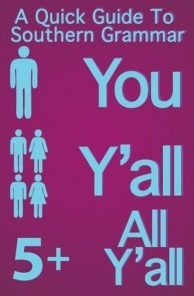
That’s enough to absorb for now. Until next time, here’s to the South for coming up with a plural version of the second person.

Kara Church

Technical Editor, Advisory

Posted by: Jack Henry | December 19, 2014

Editor’s Corner: Fifth Day of English

On the fifth day of English

My true love gave to me

Five uses for the infinitive form of verbs…

And I said, “True love, not only does that not rhyme, but I think you’re supposed to give me five golden rings or something that isn’t going to put me into a coma before the weekend gets started.”

So, instead I have been given the gift of a new website to explore and I’m sharing five words that have been added to the Oxford English Dictionary in 2014. (Thanks, Jane!)

· handsy (adjective)

informal

Tending to touch other people, typically in a way that is inappropriate or unwanted: another participant is getting a bit handsy

· al desko (adverb & adjective)

humorous

While working at one’s desk in an office (with reference to the consumption of food or meals): [as adverb]: limpsandwicheseaten al desko [as adjective]: an al-desko lunch

· keyboard warrior (noun)

informal

A person who makes abusive or aggressive posts on the Internet, typically one who conceals their true identity:she seems a down-to-earth person who does not deserve to be vilified by keyboard warriors

· lolcat (noun)

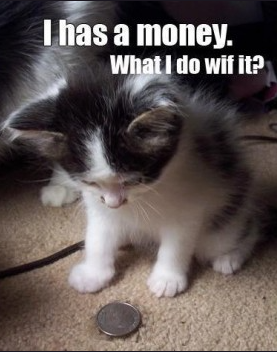
(On the Internet) a photograph of a cat accompanied by a humorous caption written typically in a misspelled and grammatically incorrect version of English: whether it’s flicking through Facebook, giggling at lolcats, or snooping on shopping sites, there’s always something to pull your attention away from work

· Canadian tuxedo (noun)

North American humorous

A denim jacket worn with a pair of jeans:if you can weardenim to the office, then you can wear a Canadian tuxedo

More example sentences

· We’ve put together eight denim-on-denim looks that are a bit of a departure from the traditional Canadian tuxedo.

· The way to make your denim-on-denim a little more elevated than the average Canadian tuxedo is with cooler accessories.

Photos from http://www.lolcats.com/

Kara Church

Technical Editor, Advisory

Posted by: Jack Henry | December 18, 2014

Editor’s Corner: Fourth Day of English

On the fourth day of English

My true love gave to me

Four verbs containing “ure”

(But we’ll start with the most confusing three.)

Assure, ensure, and insure often confuse folks because they share the general meaning “to make sure.” While they share a similar meaning, I would argue that their use depends on context. Let’s have a look.

· assure – convince; remove doubt. Often used to assuage anxiety in another individual.

Example: Dino assured me that he would be there for the presentation.

· ensure – guarantee; make certain; make safe. Focused around guaranteeing a specific condition or event.

Example: To ensure the health of the convalescent home residents, the staff ordered one case of Ensure® per person.

· insure – to protect against financial loss; to provide insurance.

Example: I have insured my home for damage caused by a plague of fire ants, flooding caused by the rise of Atlantis, and the return of Godzilla.

And for the fourth related “ure” word:

· secure – to take possession of; to stabilize; to make safe.

Example: The guards secured the castle by closing the gates, raising the bridge, and filling the moat with crocodiles.

For an entire article on this topic, see Grammar Girl’s Quick and Dirty Tips.

Kara Church

Technical Editor, Advisory

Posted by: Jack Henry | December 17, 2014

Editor’s Corner: The Third Day of English

On the third day of English

My true love gave to me

The articles “a,” “an,” and “the.”

There are three articles in English, but only two types: definite and indefinite.

· Definite Article: The
Use the word the to signal that you are talking about a particular noun or nouns.

Examples:

o The quiche that Joe brought was as light and as fluffy as his chef’s hat. (In this case, we are talking about a specific quiche, the quiche that Joe brought.)

o Jane Marie says she always goes to the teller with the dark hair and blue eyes because he’s handsome and he smiles at her. (Jane Marie doesn’t know the name of her dreamy teller, but she is still talking about a specific guy—the one who smiles at her.)

· Indefinite Articles: A and An
Use the words a or an to indicate that the noun you are talking about is not specific.

Examples:

o Sandy asked us to bring a dessert to the party. (In this case, the noun is dessert, but we don’t know what specific type of dessert. We could bring a cake, a pie, or even figgy pudding!)

o After falling down the stairs, Richard screamed, “I need a medic!” (Richard isn’t asking for a particular medic, he just needs some help—stat!)

Example of definite and indefinite articles together:

o I found an egg in the Christmas tree and realized Grandpa had mixed up his holidays again. Ten minutes later, Grandma was worriedly rushing around the house, asking if I’d seen the egg.

“Which egg, Grandma?” I asked. Then I told her, “There’s one in the tree.”

“You know,” she said on the verge of tears, “the Fabergé egg.”

Note: Whether you use a or an before a noun depends on the sound the noun begins with.

From the Purdue OWL:

· a + singular noun beginning with a consonant: a boy; a car; a bike; a zoo; a dog

· an + singular noun beginning with a vowel: an elephant; an egg; an apple; an idiot; an orphan

· a + singular noun beginning with a consonant sound: a user (sounds like ‘yoo-zer,’ i.e. begins with a consonant ‘y’ sound, so ‘a’ is used);a university; a unicycle

· an + nouns starting with silent "h": an hour

· a + nouns starting with a pronounced "h": a horse

· In some cases where "h" is pronounced, such as "historical," you can use an. However, a is more commonly used and preferred.

Kara Church

Technical Editor, Advisory

« Newer Posts - Older Posts »

Categories