Posted by: Jack Henry | May 13, 2015

Editor’s Corner: May versus Might

May versus Might

For those of you who requested information on when to use may versus might, I’m being lazy today and letting the Oxford Dictionaries explain it and provide examples.

May and might are both ways of expressing possibility. Is there a difference between the way in which they should be used?

Some people insist that you should use may (present tense) when talking about a current situation and might (past tense) when talking about an event that happened in the past. For example:

· I may go home early if I’m tired. (present tense)

· He might have visited Italy before settling in Nuremberg. (past tense)

In practice, this distinction is rarely made today and the two words are generally interchangeable:

· I might go home early if I’m tired.

· He may have visited Italy before settling in Nuremberg.

But there is a distinction between may have and might have in certain contexts. If the truth of a situation is still not known at the time of speaking or writing, either of the two is acceptable:

· By the time you read this, he may have made his decision.

· I think that comment might have offended some people.

If the event or situation referred to did not in fact occur, it’s better to use might have:

The draw against Italy might have been a turning point, but it didn’t turn out like that.

When homonyms hurt: Facebook Fail.

Posted by: Jack Henry | May 12, 2015

Editor’s Corner: Shall versus Will

Shall versus Will

Yesterday we started the week with can versus may. Today, I have a tidbit for you on the verbs shall and will. This article is from the Oxford Dictionaries website, which is why they’ve spelled behavior differently.

Shall or Will?

The traditional rule in standard British English is that shall is used with first person pronouns (i.e., I and we) to form the future tense, while will is used with second and third person forms (i.e., you, he, she, it, they). For example:

I shall be late.

They will not have enough food.

However, when it comes to expressing a strong determination to do something, the roles are reversed: will is used with the first person, and shall with the second and third. For example:

I will not tolerate such behaviour.

You shall go to the ball!

In practice, though, the two words are used more or less interchangeably, and this is now an acceptable part of standard British and US English.

As far as questions go, the primary use of shall is with the first person (I, we), to make or ask for suggestions. For example:

· Shall we go to a movie today?

· Shall I wear a fake moustache to the fair?

· What shall we do if it rains?

· When shall we leave for the hockey game?

In the U.S., the word should is used more often than shall, especially in the last two examples.

Kara Church

Technical Editor, Advisory

619-542-6773 | Ext: 766773

Symitar Documentation Services

NOTICE: This electronic mail message and any files transmitted with it are intended
exclusively for the individual or entity to which it is addressed. The message,
together with any attachment, may contain confidential and/or privileged information.
Any unauthorized review, use, printing, saving, copying, disclosure or distribution
is strictly prohibited. If you have received this message in error, please
immediately advise the sender by reply email and delete all copies.

Posted by: Jack Henry | May 11, 2015

Editor’s Corner: Can versus May

A good Monday to you all!

Last week someone asked me to explain the difference between can versus may. After some research, I’m surprised to say that more and more sources say that they can be used interchangeably with regards to permission.

But I hear the grade school teacher in my brain and smart aleck kids responding to the question, “Can I use the restroom?” with “I don’t know. Can you?” Here is the traditional differentiation between the two.

Can is generally translated as “to be able,” thus the hazing you get when you are intending to mean “Do I have permission to use the restroom?” and the listeners are translating that as “Am I able to use the restroom?” Can is considered less formal or polite, too.

May has been used traditionally to mean “to be permitted” or to indicate the possibility of something. It is considered the polite way to ask for permission.

Here are some examples and additional information from the Blue Book of Grammar and Punctuation:

Example: He can hold his breath for 30 seconds.

Meaning: He is able to hold his breath for 30 seconds.

Example: He may hold his breath for 30 seconds.

Meaning #1: It is possible that he will hold his breath.

Meaning #2: He has permission to hold his breath. (This meaning is unlikely.)

Example: May/Can I go to the mall tonight?

In spoken English, a request for permission is generally answered with can, cannot, or can’t, rather than with may or may not, even if the question was formed using may. (Although mayn’t is a word, it looks and sounds strange even to native speakers.)

Kara Church

Technical Editor, Advisory

619-542-6773 | Ext: 766773

Symitar Documentation Services

NOTICE: This electronic mail message and any files transmitted with it are intended
exclusively for the individual or entity to which it is addressed. The message,
together with any attachment, may contain confidential and/or privileged information.
Any unauthorized review, use, printing, saving, copying, disclosure or distribution
is strictly prohibited. If you have received this message in error, please
immediately advise the sender by reply email and delete all copies.

Posted by: Jack Henry | May 8, 2015

Editor’s Corner: Bird in Disguise

It’s a rainy Friday here in San Diego, so we definitely need a little pre-weekend pick-me-up with some mondegreens. Today’s misheard song lyrics are from Hold Me Closer, Tony Danza, by Charles Grosvenor Jr.

Song Title Artist/Group Actual Lyrics Mondegreen
Where It’s At Beck I got two turntables and a microphone I got two tin cans and a microphone

I got Toontown tables and a microphone

Me, Myself, and I Beyoncé I’m dealing with your three kids in my home I’m dealing with the crickets in my home
Hey Mama The Black Eyed Peas Cutie, cutie Cooty, cooty
All the Small Things Blink 182 All the small things, true care, truth brings All the small things, Drew Carey sings
Bad Medicine Bon Jovi Bad medicine is what I need Sam Kinison is what I need
Livin’ on a Prayer Bon Jovi Take my hand, we’ll make it, I swear Take my pants, we’ll make it, I swear
Brilliant Disguise Bruce Springsteen Is that you baby, or just a brilliant disguise Is that you baby, or just a bird in disguise
1, 2 Step Ciara This beat is automatic, supersonic, hypnotic, funky fresh This beat is hydroponic, supersonic, smelling fresh
Oh Ciara Oh, round here we riding slow Oh, round here they fry ‘em slow
Trouble Coldplay And they spun a web for me And they spammed the Web for me
Yellow Coldplay Look at the stars Lou Cat, the Scar
Euro-Trash Girl Cracker Euro-trash girl You’re a trash girl
Higher Creed To a place where blind men see To a place where linemen sing
My Sacrifice Creed My sacrifice My sack of rice

Kara Church

Technical Editor, Advisory

619-542-6773 | Ext: 766773

Symitar Documentation Services

NOTICE: This electronic mail message and any files transmitted with it are intended
exclusively for the individual or entity to which it is addressed. The message,
together with any attachment, may contain confidential and/or privileged information.
Any unauthorized review, use, printing, saving, copying, disclosure or distribution
is strictly prohibited. If you have received this message in error, please
immediately advise the sender by reply email and delete all copies.

Posted by: Jack Henry | May 7, 2015

Editor’s Corner: Stuff ‘n’ Thangs

Here is the last five of the “15 Words You Need to Eliminate from Your Vocabulary to Sound Smarter,” by Jennie Haskamp. As many of you have noted, some of these apply more to creative writing than business writing. Still, they’re worth a look even if you aren’t writing the next Moby Dick or Great Gatsby.

· Just

It’s a filler word and it makes your sentence weaker, not stronger. Unless you’re using it as a synonym for equitable, fair, even-handed, or impartial, don’t use it at all.

· Maybe

This makes you sound uninformed, unsure of the facts you’re presenting. Regardless of the topic, do the legwork, be sure, write an informed piece. The only thing you communicate when you include this word is uncertainty.

· Stuff

This word is casual, generic even. It serves as a placeholder for something better. If the details of the stuff aren’t important enough to be included in the piece? Don’t reference it at all. If you tell your reader to take your course because they’ll learn a lot of stuff? They’re likely to tell you to stuff it.

· Things

See: Stuff.

[KC – I guess the store in my neighborhood that calls itself “Stuff ‘n’ Thangs” may as well just give up.]

· Irregardless

This doesn’t mean what you think it means, Jefe. It means regardless. It is literally (see what I did there?) defined as: regardless. Don’t use it. Save yourself the embarrassment.

And just for fun…

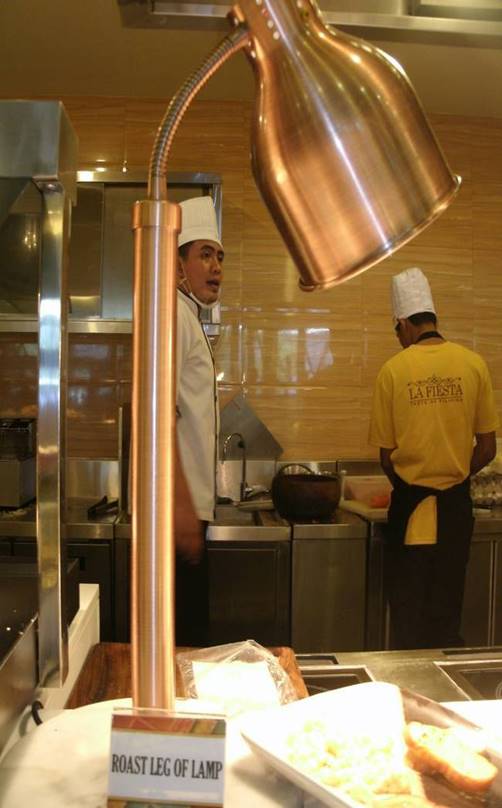
There’s a slight metallic taste to this dish…

Thank you, Phil, for making my day yesterday with these photos!

Kara Church

Technical Editor, Advisory

Symitar Documentation Services

Posted by: Jack Henry | May 6, 2015

Editor’s Corner: Really Amazing

I hope you all enjoyed a fiesta of Mexican food yesterday. Today we continue with the article “15 Words You Need to Eliminate From Your Vocabulary to Sound Smarter,” by Jennie Haskamp.

· Really

Unless you’re a Valley Girl, visiting from 1985, there’s no need to use really to modify an adjective. Or a verb. Or an adverb. Pick a different word to make your point. And never repeat really, or very for that matter. That’s really, really bad writing.

· Amazing

The word means “causing great surprise or sudden wonder.” It’s synonymous with wonderful, incredible, startling, marvelous, astonishing, astounding, remarkable, miraculous, surprising, mind-blowing, and staggering. You get the point, right? It’s everywhere. It’s in corporate slogans. It dominated the Academy Awards acceptance speeches. It’s all over social media. It’s discussed in pre-game shows and post-game shows.

Newsflash: If everything is amazing, nothing is.

[KC – I’m beginning to think we can generalize some of these rules to “don’t overuse certain adjectives.” I’m sure I’d be chastised for
too many shouts of “Awesome!”]

· Always

Absolutes lock the writer into a position, sound conceited and close-minded, and often open the door to criticism regarding inaccuracies. Always is rarely true. Unless you’re giving written commands or instruction, find another word.

· Never

See: Always.

· Literally

Literally means literal. Actually happening as stated. Without exaggeration. More often than not, when the term is used, the writer means figuratively. Whatever is happening is being described metaphorically. No one actually “waits on pins and needles.” How uncomfortable would that be?

[KC – As I mentioned in my 60-Minute University presentation, when you say something was so funny you “literally peed your pants,” you’ll
be called The Lone Ranger for more than one reason.]

Kara Church

Technical Editor, Advisory

Symitar Documentation Services

Hello and feliz Cinco de Mayo!

Grab a quesadilla or pollo asado burrito and dig in to the first of several tips from the article “15 Words You Need to Eliminate From Your Vocabulary to Sound Smarter,” by Jennie Haskamp. These tips are directed more toward creative writing, but the information is helpful for writing in general. To avoid confusion, I have made some edits to remove material that doesn’t agree with the JHA Style Guide.

· That

Don’t use that when you refer to people. “I have several friends that live in the neighborhood.” No. No, you don’t. You have friends who. Not friends that.

· Went

I went to school. Or the store, or to church, or to a conference, to Vegas, wherever it is you’re inclined to go. Instead of went, consider drove, skated, walked, ran, flew. There are any number of ways to move from here to there. Pick one. Don’t be lazy and miss the chance to add to your story.

· Honestly

People use honestly to add emphasis. The problem is, the minute you tell your reader this particular statement is honest, you’ve implied the rest of your words were not.

· Absolutely

Adding this word to most sentences is redundant. Something is either necessary, or it isn’t. Absolutely necessary doesn’t make it more necessary. If you recommend an essential course to your new employees, it’s essential. Coincidentally, the definition of essential is “absolutely necessary.” Chicken or egg, eh?

· Very

Accurate adjectives don’t need qualifiers. If you need to qualify it? Replace it.

Very is intended to magnify a verb, an adjective, or another adverb. What it does is makes your statement less specific. If you’re very happy? Be ecstatic. If you’re very sad, perhaps you’re melancholy or depressed. Woebegone, even. Very sad is a lazy way of making your point. Another pitfall of using very as a modifier? It’s subjective. Very cold and very tall mean different things to different people. Be specific. She’s 6’3" and it’s 13 degrees below freezing? These make your story better while also ensuring the reader understands the point you’re making.

Kara Church

Technical Editor, Advisory

619-542-6773 | Ext: 766773

Symitar Documentation Services

NOTICE: This electronic mail message and any files transmitted with it are intended
exclusively for the individual or entity to which it is addressed. The message,
together with any attachment, may contain confidential and/or privileged information.
Any unauthorized review, use, printing, saving, copying, disclosure or distribution
is strictly prohibited. If you have received this message in error, please
immediately advise the sender by reply email and delete all copies.

Posted by: Jack Henry | May 1, 2015

Editor’s Corner: Domunym or Demonym?

Someone asked me yesterday about how those “in the know” decide what to call us city-dwellers (such as Seattleites or San Diegans). I can’t find any specific rule about how these names developed, but I did write an article about them a couple of years ago and referred to them as demonyms. (Click the link to read why.)

Rod L. Evans, Ph.D. refers to them as domunyms in his book Tyrannosaurus Lex: The Marvelous Book of Palindromes, Anagrams, & Other Delightful & Outrageous Wordplay (pp.195-197). Here is a selection from his book:

Domunym/Demonym Location
Aberdonians Aberdeen, Scotland;
Aberdeen, South Dakota;

Aberdeen, Washington

Accidentals Accident, Maryland
Arkansas Citians Arkansas City, Arkansas
Atlantic Cityites Atlantic City, New Jersey
Beirutis Beirut, Lebanon
Canatabrigians (or Cantabridgians) Cambridge, England;

Cambridge, Massachusetts

Cestrians Chester or Cheshire, England
Corpus Christians Corpus Christi, Texas
Darbians (or Darbyites) Derbyshire, England
Fort Waynites Fort Wayne, Indiana
Fort Worthians (or Fort Worthers) Fort Worth, Texas
Dismalites Great Dismal Swamp, Virginia and North Carolina
Greensburghers Greensboro, North Carolina
Hamburgers Hamburg, Germany
Manxmen, Manxwomen Island of Man
Liverpudlans Liverpudlian Liverpool, England
Chunkers Mauch Chunk, Pennsylvania
Hatters Medicine Hat, Alberta
Delhites New Delhi, India
Punxyites Punxsutawny, Pennsylvania
Rochesterians Rochester, New York
Rocky Mounters Rocky Mount, North Carolina
Cruzans Saint Croix, Virgin Islands
Tangerines Tangier, Morocco

Kara Church

Technical Editor, Advisory

619-542-6773 | Ext: 766773

Symitar Documentation Services

NOTICE: This electronic mail message and any files transmitted with it are intended
exclusively for the individual or entity to which it is addressed. The message,
together with any attachment, may contain confidential and/or privileged information.
Any unauthorized review, use, printing, saving, copying, disclosure or distribution
is strictly prohibited. If you have received this message in error, please
immediately advise the sender by reply email and delete all copies.

Posted by: Jack Henry | April 30, 2015

Editor’s Corner: Bumbershoots and Bandicoots

Dearest readers,

Yesterday I told you a little bit about my Washington vacation, and one of you Washingtonians asked me about the meaning and origin of the word bumbershoot.

As the Eskimos have many words for snow, Seattleites have several words for umbrella. According to Merriam-Webster, bumbershoot originated around 1896 from “bumber- (alteration of umbr- in umbrella) + -shoot (alteration of -chute in parachute).” It is also the name of the festival at the Seattle Center, usually around Labor Day (Bumbershoot 2015).

While looking up bumbershoot, I also noticed that Merriam-Webster provided words that rhyme with it, including bandicoot. A bandicoot is a large rat-like animal from Australia or Asia.

Eastern Barred Bandicoot

Kara Church

Technical Editor, Advisory

Symitar Documentation Services

Posted by: Jack Henry | April 29, 2015

Editor’s Corner: Spit

Hello folks!

I just returned from a brief visit to the Pacific Northwest to spend some time with my family. As I pondered topics for today, I thought I’d find an answer to a question I had while up there. My mom, brother, and I spent one of our days doing a 10-mile hike on the beach to the Dungeness Spit.

Here is my question: Why is such a pretty place named after saliva or something you put a goat on during Orthodox Easter?

According to Merriam-Webster, a spit is “a small point of land commonly consisting of sand or gravel deposited by waves and currents and running into a body of water.” Okay, but that isn’t enough for me. What is the background of the word?

Hopping to the Online Etymology Dictionary, I found that the land mass and the roasting stake share the same etymology:

spit (noun): "sharp-pointed rod for roasting meat," late Old English spitu "a spit," from Proto-Germanic *spituz (cognates: Middle Dutch and Dutch spit, Swedish spett (which perhaps is from Low German), Old High German spiz, German Spieß "roasting spit," German spitz "pointed"), from PIE *spei- "sharp point" (see spike). This is also the source of the word meaning "sandy point" (1670s).

Here is the Dungeness Spit. With the Olympic mountain range behind us and the little town of Sequim nearby, it isn’t terribly pointy, but it sure is pretty.

Kara Church

Technical Editor, Advisory

619-542-6773 | Ext: 766773

Symitar Documentation Services

NOTICE: This electronic mail message and any files transmitted with it are intended
exclusively for the individual or entity to which it is addressed. The message,
together with any attachment, may contain confidential and/or privileged information.
Any unauthorized review, use, printing, saving, copying, disclosure or distribution
is strictly prohibited. If you have received this message in error, please
immediately advise the sender by reply email and delete all copies.

« Newer Posts - Older Posts »

Categories