Posted by: Jack Henry | December 10, 2015

Editor’s Corner: Hash House a Go Go

Dear Editrix,

Here’s a sentence that made me consider the word hash: Let’s have a meeting to quickly hash this out. I right-clicked to check Microsoft® Word’s thesaurus for a synonym for the verb hash, and got these answers: confuse, muddle, mess, botch, hodgepodge, and jumble. This seems to indicate that hashing means to make something worse. Isn’t this odd?

Sincerely,

Curious

Dear Curious,

What an interesting finding! I am also curious, so I looked into the different definitions and the etymology. There is a lot of information, so I’m going to concentrate on hash as a verb and noun, but not the word hash as the shortened form of the drug hashish.

Hash (noun)

From Dictionary.com:

1. a dish of diced or chopped meat and often vegetables, as of leftover corned beef or veal and potatoes, sautéed in a frying pan or of meat, potatoes, and carrots cooked together in gravy.

2. a mess, jumble, or muddle:
a hash of unorganized facts and figures.

3. a reworking of old and familiar material:
This essay is a hash of several earlier and better works.

4. Computers. Garbage. [KC – This is pretty vague for a dictionary definition.]

5. Radio and Television Slang. Electrical noise on a radio or snow in a television picture caused by interfering outside sources that generate sparking.

From Merriam-Webster:

1a: chopped food; specifically: a dish usually consisting of leftover meat chopped into small pieces, mixed with potatoes, and browned by baking or frying

1b slang: a meal especially in a cafeteria or at a lunch counter: Food

2: a restatement of something that is already known

3: mixture, jumble, hodgepodge: such as

a: a confused muddle

b: an undesired signal or combination of signals in a radio, radar, or television receiver due to set noise, radio noise, interference, or other cause

c: a medley of miscellaneous steps and figures in square dancing

4 chiefly Scottish: a careless or stupid person of slovenly speech or habits: worthless fellow

5: pound sign (#)

Hash (verb, verb phrases, and idioms)

From Dictionary.com:

1. to chop into small pieces; make into hash; mince.

2. to muddle or mess up:
We thought we knew our parts, but when the play began we hashed the whole thing.

3. to discuss or review (something) thoroughly (often followed by out):
They hashed out every aspect of the issue.

4. hash over, to bring up again for consideration; discuss, especially in review:
At the class reunion they hashed over their college days.

5. make a hash of, to spoil or botch:
The new writer made a hash of his first assignment.

Hash (etymology of verb)

From Online Etymology Dictionary:

1650s, “to hack, chop into small pieces,” from French hacher “chop up” (14c.), from Old French hache “ax” (see hatchet). Hash browns (1926) is short for hashed browned potatoes (1886), with the –ed omitted, as in mash potatoes. The hash marks on a football field were so called by 1954, from their similarity to hash marks, armed forces slang for “service stripes on the sleeve of a military uniform” (1909), which supposedly were called that because they mark the number of years one has had free food (that is, hash) from the Army; but perhaps there is a connection with the noun form of hatch.

I hope this helps!

Sincerely,

Editrix

Kara Church

Technical Editor, Advisory

619-542-6773 | Ext: 766773

Symitar Documentation Services

NOTICE: This electronic mail message and any files transmitted with it are intended
exclusively for the individual or entity to which it is addressed. The message,
together with any attachment, may contain confidential and/or privileged information.
Any unauthorized review, use, printing, saving, copying, disclosure or distribution
is strictly prohibited. If you have received this message in error, please
immediately advise the sender by reply email and delete all copies.

Posted by: Jack Henry | December 9, 2015

Editor’s Corner: Dandelions, Dentists, and Winners!

I was so inspired by the season, that rather than just give away one book, Hold Me Closer, Tony Danza, I found two more books to give away to those of you who entered Friday’s contest. Here are my random winners and the books you’ll receive:

· Elizabeth Law is our grand prize winner of Hold Me Closer, Tony Danza

· Ron Fauset wins I Judge You When You Use Poor Grammar [KC – And Ron, you know that’s the truth!
J]

· Amy Wallace wins Signspotting: Absurd & Amusing Signs from Around the World

I hope you find the books enjoyable!

Today I have a couplet of words for you from Words of a Feather: A Humorous Puzzlement of Etymological Pairs, by Murray Suid. Our words for this Wednesday are dandelion and dentist.

Dandelion and Dentist

When they were growing up, future dentists—like most kids—probably puffed the seeds of the dandelion plant and made a wish or did some other folk incantation. That playful activity gives us a tiny hint about the etymological link between these two words.

The origin of dentist is fairly straightforward. The word comes to English via the French dent, “tooth,” which came from the Latin dens, “tooth.” You can glimpse variations of the Latin root in words such as denture and orthodontist.

Indentation is a metaphorical extension; originally it referred to notches cut into paired copies of a contract; matching up the tooth-like cuts showed that each copy was authentic. Later, the word was applied to the typographic notches indicating the start of paragraphs—for example, the indentation of the word indentation beginning the paragraph you are reading right now.

The same sort of metaphorical thinking led to naming the familiar dandelion weed. But there is a twist. The English word is a borrowing of the French dent-de-lion, literally “tooth of the lion” or “lion’s tooth.” To some folk botanist, the leaves of this ubiquitous plant resembled the sharp teeth of the king of beasts.

As often happens when one language borrows a word from another language, the borrowers can’t say the word as it’s pronounced in the original language. Instead, they assimilate the foreign sounds to familiar sounds. So the elements dent-de, which in French sound something like “dawn –day” (pardon my French) came out sounding more like “dandy.”

Kara Church

Technical Editor, Advisory

619-542-6773 | Ext: 766773

Symitar Documentation Services

NOTICE: This electronic mail message and any files transmitted with it are intended
exclusively for the individual or entity to which it is addressed. The message,
together with any attachment, may contain confidential and/or privileged information.
Any unauthorized review, use, printing, saving, copying, disclosure or distribution
is strictly prohibited. If you have received this message in error, please
immediately advise the sender by reply email and delete all copies.

Posted by: Jack Henry | December 8, 2015

Editor’s Corner: Yiddish and Face with Tears of Joy (Part 2)

Today I welcome you to the other half of my list of Yiddish words you should know, compiled from a larger list at Daily Writing Tips. Enjoy the selection here or see the website for the full forty.

oy vey
Exclamation of dismay, grief, or exasperation. The phrase “oy vey iz mir” means “Oh, woe is me.” “Oy gevalt!” is like oy vey, but expresses fear, shock or amazement. When you realize you’re about to be hit by a car, this expression would be appropriate.

shlep
To drag, traditionally something you don’t really need; to carry unwillingly. When people “shlep around,” they are dragging themselves, perhaps slouchingly. On vacation, when I’m the one who ends up carrying the heavy suitcase I begged my wife to leave at home, I shlep it.

shlemiel
A clumsy, inept person, similar to a klutz (also a Yiddish word). The kind of person who always spills his soup.

schlock
Cheap, shoddy, or inferior, as in, “I don’t know why I bought this schlocky souvenir.”

shlimazel
Someone with constant bad luck. When the shlemiel spills his soup, he probably spills it on the shlimazel. Fans of the TV sitcom “Laverne and Shirley” remember these two words from the Yiddish-American hopscotch chant that opened each show. [KC
– Apparently, the full words to the beginning of the show were
Schlemiel, schlimazel, hasenpfeffer incorporated.
Hasenpfeffer, for those of you non-Bugs Bunny fans, is rabbit stew. What a weird opening to a show!]

shmaltzy
Excessively sentimental, gushing, flattering, over-the-top, corny. This word describes some of Hollywood’s most famous films. From shmaltz, which means chicken fat or grease.

shmooze
Chat, make small talk, converse about nothing in particular. But at Hollywood parties, guests often schmooze with people they want to impress.

spiel
A long, involved sales pitch, as in, “I had to listen to his whole spiel before I found out what he really wanted.” From the German word for play.

shtick
Something you’re known for doing, an entertainer’s routine, an actor’s bit, stage business; a gimmick often done to draw attention to yourself.

tchatchke
Or tshatshke. Knick-knack, little toy, collectible or giftware. It also appears in sentences such as, “My brother divorced his wife for some little tchatchke.” You can figure that one out.

A special “thank you” to Kristina and Bryan Bird for sending me the gift of the 2015 Word of the Year: Face with Tears of Joy.

Kara Church

Technical Editor, Advisory

Symitar Documentation Services

Posted by: Jack Henry | December 7, 2015

Editor’s Corner: Some Yiddish for Hanukkah

Happy Hanukkah!

I’m pretty sure I shared some of these words with those of you who were with me since the early Editor’s Corner days. My apologies if there is repetition here. I stumbled on this revised version of 40 Yiddish words we should know (from Daily Writing Tips) and I thought it was a good time to look at the expanded list. Here are a few for you today, along with a note on pronunciation.

As in Hebrew, the ch or kh in Yiddish is a “voiceless fricative,” with a pronunciation between h and k. If you don’t know how to make that sound, pronounce it like an h.

1. bubbe
Or bobe. It means Grandmother, and bobeshi is the more affectionate form. Bubele is a similarly affectionate word, though it isn’t in Yiddish dictionaries.

2. chutzpah
Or khutspe. Nerve, extreme arrogance, brazen presumption. In English, chutzpah often connotes courage or confidence, but among Yiddish speakers, it is not a compliment.

3. glitch
Or glitsh. Literally “slip,” “skate,” or “nosedive,” which was the origin of the common American usage as “a minor problem or error.”

4. klutz
Or better yet, klots. Literally means “a block of wood,” so it’s often used for a dense, clumsy or awkward person. See schlemiel. [KC – We will see schlemiel tomorrow.]

5. kosher
Something that’s acceptable to Orthodox Jews, especially food. Other Jews may also “eat kosher” on some level but are not required to. Food that Orthodox Jews don’t eat – pork, shellfish, etc. – is called traif. An observant Jew might add, “Both pork and shellfish are doubtlessly very tasty. I simply am restricted from eating it.” In English, when you hear something that seems suspicious or shady, you might say, “That doesn’t sound kosher.”

6. kvetsh
In popular English, kvetch means “complain, whine or fret,” but in Yiddish, kvetsh literally means “to press or squeeze,” like a wrong-sized shoe. Reminds you of certain chronic complainers, doesn’t it? But it’s also used on Yiddish web pages for “click”.

7. maven
Pronounced meyven. An expert, often used sarcastically.

8. Mazel Tov
Or mazltof. Literally “good luck,” (well, literally, “good constellation”) but it’s a congratulation for what just happened, not a hopeful wish for what might happen in the future. When someone gets married or has a child or graduates from college, this is what you say to them. It can also be used sarcastically to mean “it’s about time,” as in “It’s about time you finished school and stopped sponging off your parents.”

9. mentsh [KC – I have only ever seen it spelled “mensch,” unless you are talking about Menchie, the frozen yogurt mascot.]
An honorable, decent person, an authentic person, a person who helps you when you need help. Can be a man, woman or child.

10. nosh
Or nash. To nibble; a light snack, but you won’t be light if you don’t stop noshing. Can also describe plagiarism, though not always in a bad sense; you know, picking up little pieces for yourself. [KC – Can’t say I’ve ever heard anybody use plagiarism in a good sense!]

Kara Church

Technical Editor, Advisory

619-542-6773 | Ext: 766773

Symitar Documentation Services

NOTICE: This electronic mail message and any files transmitted with it are intended
exclusively for the individual or entity to which it is addressed. The message,
together with any attachment, may contain confidential and/or privileged information.
Any unauthorized review, use, printing, saving, copying, disclosure or distribution
is strictly prohibited. If you have received this message in error, please
immediately advise the sender by reply email and delete all copies.
Posted by: Jack Henry | December 4, 2015

Editor’s Corner: Time to let go of Tony Danza

Guess what guys and dolls? This is the last selection of misheard song lyrics (a.k.a. mondegreens) I have for you from Hold Me Closer, Tony Danza, by Charles Grosvenor Jr. The book actually has quite a few more entries and other items, but they don’t all pass the Human Resources political correctness test.

I don’t have a particular contest in mind to entice you with, but it is almost the season of giving—whether you celebrate Festivus, Christmas, Kwanza, Hanukkah, the Winter Solstice, or something else—so I would like to give this lightly used copy of the book away to one of you.

If you are a JHA employee or a credit union client, just send me an email and I’ll put you in the random drawing to win!

Song Title Artist/Group Actual Lyrics Mondegreen
Hips Don’t Lie Shakira She makes a man want to speak Spanish She makes a man want to see spandex
My Favorite Mistake Sheryl Crow I woke up and called this morning I woke up in goth this morning
Anthem for the Year 2000 Silverchair We’ll take your fascism away We’ll take your fashions on the way
1979 The Smashing Pumpkins Shakedown, 1979 Shaft died, 1979
Wannabe Spice Girls Make it last forever Naked lasts forever
Goodbye Spice Girls Before the pain turns into fear Before the painters interfere
It’s Been Awhile Staind I’ve stretched myself beyond my means I scratch myself behind my knee
Meet Virginia Train Meet Virginia, I can’t wait to, meet Virginia Beef or chicken, I can’t wait to have, beef or chicken
Mysterious Ways U2 She moves in mysterious ways Shampoo in mysterious ways
Sunday Bloody Sunday U2 Sunday, bloody Sunday Someday, buddy, someday
Seven Nation Army The White Stripes I’m gonna fight ‘em off I’m gonna find a moth
Sharp Dressed Man ZZ Top Every girl’s crazy ‘bout a sharp dressed man Never go crazy for a short fat man

Kara Church

Technical Editor, Advisory

619-542-6773 | Ext: 766773

Symitar Documentation Services

NOTICE: This electronic mail message and any files transmitted with it are intended
exclusively for the individual or entity to which it is addressed. The message,
together with any attachment, may contain confidential and/or privileged information.
Any unauthorized review, use, printing, saving, copying, disclosure or distribution
is strictly prohibited. If you have received this message in error, please
immediately advise the sender by reply email and delete all copies.

Posted by: Jack Henry | December 3, 2015

Editor’s Corner: Recipient Nouns

Yesterday was an exciting day with agent nouns, and today I am excited to report another type of noun that is new to me: recipient nouns. What, pray tell, are these? Are they people, places, and things that are about to get some lovely gifts for the wintertime? No, not exactly.

Recipient nouns are easy to spot because they end with the suffix –ee. In the past, you would generally see these nouns in the law, to indicate “the passive party in a legal transaction.” For example:

· The payee is the person who has the right to be paid.

· The parolee is the person who has received parole from prison.

· The trustee is the person who will receive the money from the trust.

The suffix –ee has since gone from legal to more general use:

· The employee is the person who has received the job.

· The evacuee is the person who has been evacuated from a certain area.

· The honoree is receiving special recognition for her accomplishments.

A couple of notes on recipient nouns:

· From Grammarist: “When creating recipient nouns, keep in mind that a recipient is one to whom something is given or one for whom something is done. So, for example, the relatively new word attendee, indicating one who attends, is questionable because one does not receive attendance. The word technically should be attender (but, of course, it’s not).”

· If you are ever assigned to work with our group of writing mentors, don’t be upset if we accidentally forget to call you mentees and call you manatees instead. (Manatees are pretty cute, anyway.)

Kara Church

Technical Editor, Advisory

Symitar Documentation Services

Posted by: Jack Henry | December 2, 2015

Editor’s Corner: Agent Nouns

Secret Agent Nouns
Secret Agent Nouns
They’ve given you a number and taken away your name

Okay, so the song was really about a Secret Agent Man, but I just found out about something called “agent nouns” and I couldn’t stop myself from telling you about them.

Agent nouns are nouns derived from verbs. Specifically, they are nouns that describe the person performing a particular action. For example, an actor (noun) is one who acts (verb); a teacher (noun) is one who teaches (verb).

Agent nouns sometimes end with –or and other times with –er. Here is a little secret: only Latin-based words end in –or, such as:

· actor (from agere, to do or act)

· director (from dirigere, to guide)

· governor (from gubernare, to govern)

· inventor (from invenire, to discover)

Other agent nouns use the verb and the suffix –er, for example:

· To walk, walker

· To writer, writer

· To work, worker

· To sing, singer

I’m pretty sure you can work this into scintillating conversation at a holiday party!

Kara Church

Technical Editor, Advisory

619-542-6773 | Ext: 766773

Symitar Documentation Services

NOTICE: This electronic mail message and any files transmitted with it are intended
exclusively for the individual or entity to which it is addressed. The message,
together with any attachment, may contain confidential and/or privileged information.
Any unauthorized review, use, printing, saving, copying, disclosure or distribution
is strictly prohibited. If you have received this message in error, please
immediately advise the sender by reply email and delete all copies.

Posted by: Jack Henry | December 1, 2015

Editor’s Corner: Gulp! It’s gladiators and gladioluses!

It is the first of December and I have the perfect way to celebrate this month full of holiday and cheer. Let’s talk about fighters and flowers! Today I have another pair of etymologies for you from Words of a Feather: A Humorous Puzzlement of Etymological Pairs, by Murray Suid.

Gladiator and Gladiolus

The action begins in ancient Roman arenas where gladiators fought each other and wild animals, often to the death. Gladiator, “swordsman,” comes from gladius, a short-bladed sword. Some historians say that in the first century, Emperor Titus Flavius Domitanus originated the idea of having female gladiators, known as gladiatrices. While apparently popular among the masses, intellectuals decried this practice, which was banned about a century after it started. Frustrated sports fans had to wait nearly two millennia to see women duking it out, as in the movie Million Dollar Baby.

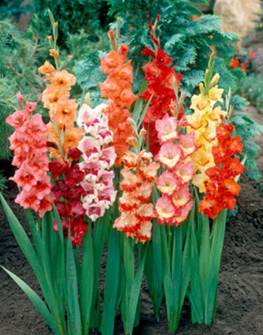
Emperor Constantine I banned gladiator combat in 325. And although public contests occasionally took place for nearly another century, the future of gladius—the little sword—shifted to a less bloody venue, the flower garden. Enter gladiolus, a member of the iris family. The name is diminutive of gladius, for the plant’s sword-shaped leaves.

Coming in an amazing range of colors, gladioluses deservedly earned the nickname glads, although now we know that the word has absolutely no etymological connection to the adjective glad, even if the flowers make you feel that way.

Gladiators

Gladioluses

Kara Church

Technical Editor, Advisory

Symitar Documentation Services

Posted by: Jack Henry | November 30, 2015

Editor’s Corner: Pesky Proper Nouns

Good morning. I hope you enjoyed your weekend.

We’ve discussed today’s topic before, but judging by the questions we get and by the documents we edit, it needs to be repeated. The topic is “capitalization of nouns.”

Here are the questions I was recently asked, along with my answers.

Question: How do you know when to capitalize a word in English?

Answer: Capitalize all proper nouns, but not common nouns. If in doubt, check the dictionary.

Proper nouns Common nouns
November month
Symitar company
Thanksgiving holiday

Here at Symitar, we capitalize the names of fields, parameters, and privileges when we are talking about the specific field, parameter, or privilege. For instance, we would say, “Add a date in the Due Date field.” However, we would not capitalize “due date” if we were not specifically talking about the field. For example, “The funds will transfer on the due date.” Now, back to the questions.

Question: What’s a noun?

Answer: Nouns give us the names of people, places, things, or ideas.

Question: Should I capitalize important words?

Answer: No. It’s not technically against the law, but it should be a punishable offense. In English, we only capitalize proper nouns.

Question: What’s a proper noun?

Silly answer: It’s a noun with a very good upbringing and some family money.

Real answer: A proper noun names a specific person (Donna), place (San Diego), thing (Big Ben), or idea (Truth, as Plato discussed it).

Question: What’s a common noun?

Answer: A common noun is the everyday name of a person (woman), place (home), thing (book), or idea (justice).

Question: Should I capitalize words for emphasis?

Answer: I feel like I answered this question before when you asked about “important words.” The answer is still no. You should only capitalize proper nouns.

Question: What’s a proper noun again?

Answer: For the love of Pete!

Donna Bradley Burcher | Senior Technical Editor | Symitar®

8985 Balboa Ave. | San Diego, CA 92123 | Ph. 619.278.0432 | Extension: 765432

Symitar Technical Publications Writing and Editing Requests

NOTICE: This electronic mail message and any files transmitted with it are intended
exclusively for the individual or entity to which it is addressed. The message,
together with any attachment, may contain confidential and/or privileged information.
Any unauthorized review, use, printing, saving, copying, disclosure or distribution
is strictly prohibited. If you have received this message in error, please
immediately advise the sender by reply email and delete all copies.

Posted by: Jack Henry | November 27, 2015

Editor’s Corner: Stuff that Dressing

It’s a very quiet day in the office today. So for those of you who did come in, I offer you a little chat about that wonderful high-carbohydrate side dish that you stuff in your turkey or cook on the side. What do you call the stuff?

Well, what you call it and what ingredients you use depend on where you come from. And how you cook it matters too.

According to a story I heard on the radio just before Thanksgiving, some people say that if you stuff this mixture in the turkey, it’s called stuffing. If you cook it in a separate pan, it’s called dressing. I’m not one of those people.

What you call it may also depend on what part of the country (or world) you live in. According to this story, generally, if you come from south of the Mason-Dixon Line, you probably call it dressing. People from north of the Mason-Dixon Line likely call it stuffing. And apparently a lot of people in the Midwest call it dressing too, but not my cousins from Southern Illinois who spent the day at my house yesterday. I can also tell you that most people I know in Southern California call it stuffing, but most of us are transplants, so you can’t put much stock in what we call it.

It also turns out that in Northern Pennsylvania, some people (mainly the Amish and Pennsylvania Dutch) call it filling and make it with mashed potatoes and rye bread.

And that leads us into a short discussion about the ingredients, because it turns out people are very attached to the stuffing/dressing/filling recipes they grew up with. Do you add oysters, walnuts, sausage, giblets, or raisins? Do you make it from scratch or from a box? Whatever you do, it seems like most of us don’t want anyone messing with the recipe we grew up with. Who knew that so much controversy surrounds this simple side dish?

If you want to read the article or listen to the story, click here.

Oh, it’s Black Friday, and I’m not at the mall, or Walmart, or any other retail shop. That’s what I’m thankful for.

Donna Bradley Burcher | Senior Technical Editor | Symitar®

8985 Balboa Ave. | San Diego, CA 92123 | Ph. 619.278.0432 | Extension: 765432

Symitar Technical Publications Writing and Editing Requests

NOTICE: This electronic mail message and any files transmitted with it are intended
exclusively for the individual or entity to which it is addressed. The message,
together with any attachment, may contain confidential and/or privileged information.
Any unauthorized review, use, printing, saving, copying, disclosure or distribution
is strictly prohibited. If you have received this message in error, please
immediately advise the sender by reply email and delete all copies.

« Newer Posts - Older Posts »

Categories