Posted by: Jack Henry | February 7, 2017

Editor’s Corner: No Bones

Today I have an idiom for you from our contest: “no bones about it.” Essentially, it means something is stated clearly, without any room for doubt. I have an extended explanation of this phrase from our friends at The Phrase Finder. (I’ve added double quotation marks, but I have not changed the spelling in the article below.)

The actual source of this phrase is close to home and hearth. In 15th century England, if someone wanted to express their dissatisfaction with something, they didn’t “make bones about it,” they used the original form of the phrase and “found bones in it.” This is a reference to the unwelcome discovery of bones in soup—bones = bad, no bones = good. If you found “no bones” in your meal you were able to swallow it without any difficulty or objection.

The earliest citation of the phrase in print comes from the Paston Letters, which include a collection of texts from 1459 relating to a dispute between Paston and the family of the Norfolk soldier Sir John Fastolf (Fastolf was, incidentally, the source of the character Sir John Falstaff in Shakespeare’s Henry IV). In the Paston Letters, the context of which is that the litigants are finally accepting a verdict with no objection, Paston includes the line:

"And fond that tyme no bonys in the matere." [and found that time no bones in the matter]

“Making bones” is usually expressed in the negative. There are rare occurrences of people being described as “making bones” about this or that, and an early example comes from Richard Simpson’s The School of Shakspere, 1878:

"Elizabeth was thus making huge bones of sending some £7000 over for the general purposes of the government in Ireland."

Kara Church

Technical Editor, Advisory

619-542-6773 | Ext: 766773

Symitar Documentation Services

NOTICE: This electronic mail message and any files transmitted with it are intended
exclusively for the individual or entity to which it is addressed. The message,
together with any attachment, may contain confidential and/or privileged information.
Any unauthorized review, use, printing, saving, copying, disclosure or distribution
is strictly prohibited. If you have received this message in error, please
immediately advise the sender by reply email and delete all copies.

Posted by: Jack Henry | February 6, 2017

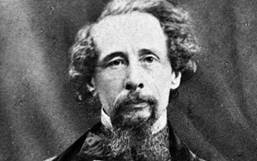
Editor’s Corner: Words Coined by Charles Dickens

Good morning. Are you ready for some information about word creation this morning? I’m not waiting for you to say no.

I think we’re all aware that while writing his plays and sonnets, William Shakespeare was responsible for creating many new English words. Well, he’s not the only writer to do so. Writers are notorious for creating words to fill a gap, to help flesh out their characters and dialog, or meet the needs of their rhyme or meter.

Here are a few words and phrases that were coined by another famous writer, novelist Charles Dickens. We don’t use all of them anymore, but more than half of them are still used frequently because they evoke such strong imagery. Not bad, Mr. Dickens!

The list is not complete and it is compiled from two sources: Dialywritingtips.com and Theweek.com.

· Abuzz: Characterizing excessive gossip or activity

· Butterfingers: Refers to clumsiness (originally hyphenated)

· Creeps (the): A feeling of fear or revulsion

· Devil-may-care: Meaning reckless, careless, or jovial and rakish in manner

· Doormat: Alludes to someone figuratively being walked all over

· Flummox: Alludes to being bewildered or perplexed

· Gonoph: Slang for a pickpocket or thief

· Gorm: A vulgar substitute for (God) damn

· Lummy: Slang for “knowing; cute” or “first-rate”

· Red tapeworm: A person who adheres excessively to official rules and formalities [dbb – This one is new to me, and I know it’s disgusting, but it is clever!]

· Sawbones: Slang for a surgeon or doctor

Charles Dickens

Donna Bradley Burcher | Senior Technical Editor | Symitar®

8985 Balboa Ave. | San Diego, CA 92123 | Ph. 619.278.0432 | Extension: 765432

Symitar Technical Publications Writing and Editing Requests

NOTICE: This electronic mail message and any files transmitted with it are intended
exclusively for the individual or entity to which it is addressed. The message,
together with any attachment, may contain confidential and/or privileged information.
Any unauthorized review, use, printing, saving, copying, disclosure or distribution
is strictly prohibited. If you have received this message in error, please
immediately advise the sender by reply email and delete all copies.

Posted by: Jack Henry | February 2, 2017

Editor’s Corner: Keep Noun Strings Short

Kara has written about avoiding noun strings before, but I’m mentioning it again because it is a common problem in technical writing. Stringing nouns together can make your writing unclear and confuse readers.

Also, the JHA Style Guide for Technical Communication and Training(Plain English Standards) has a standard for noun strings:

Guideline Example
Break up noun clusters that have more than three nouns. Not this: The Work with Warehouse Selection Company ID field.

But this: The Company ID field on the Work with Warehouse Selection option.

You can avoid noun strings by including prepositions and articles or by changing some of the nouns to adjectives or verbs.

Here are some more examples:

Original:

Use the input message destination transaction code as shown in the example.

Revision:

Use the transaction code for the destination of an input message as shown in the example.

Original:

Please schedule a meeting to discuss employee compensation level evaluation procedures.

Revision:

Please schedule a meeting to discuss procedures for evaluating the compensation level of employees.

Jackie Solano | Technical Editor | Symitar®

8985 Balboa Ave. | San Diego, CA 92123 | Ph. 619.542.6711 | Extension: 766711

Symitar Documentation Services

NOTICE: This electronic mail message and any files transmitted with it are intended
exclusively for the individual or entity to which it is addressed. The message,
together with any attachment, may contain confidential and/or privileged information.
Any unauthorized review, use, printing, saving, copying, disclosure or distribution
is strictly prohibited. If you have received this message in error, please
immediately advise the sender by reply email and delete all copies.

Posted by: Jack Henry | February 1, 2017

Editor’s Corner: A few more words from Spanish to English

Today I’ve collected the last few words I’m going to share with you from the article “143 English Words That Are Actually Spanish.” If you would like to see the entire list, feel free to click the link. Today’s categories are:

· Geography and weather

· War and conflict

· Transportation

Geography and Weather

  • arroyo – stream
  • breeze – from brisa (cold northeast wind)
  • caldera – cauldron
  • canyoncañón (pipe, tube, or gorge)
  • mesa – table
  • playa – beach
  • sierra – mountain range
  • temblor – from temblar (to shake)
  • tornado – from tronada (thunderstorm), from tornar (to turn)

War and Conflict

  • armada – armed, from Real Armada Española (“Royal Spanish Navy”)
  • bandolierbandolera
  • conquistador – conqueror
  • flotilla – diminutive of flota (fleet)
  • guerrilla – small war
  • renegade – from renegado (turncoat, traitor)
  • vigilante – watchman

Transportation

  • cargocargar (to load)
  • embarcadero – boat dock
  • embargoembargar (to seize, to impound)
  • galleongaleón, a large sailing ship with three or more masts
  • stevedore – from estibador (ship loader), literally, "one who stuffs"

Kara Church

Technical Editor, Advisory

619-542-6773 | Ext: 766773

Symitar Documentation Services

NOTICE: This electronic mail message and any files transmitted with it are intended
exclusively for the individual or entity to which it is addressed. The message,
together with any attachment, may contain confidential and/or privileged information.
Any unauthorized review, use, printing, saving, copying, disclosure or distribution
is strictly prohibited. If you have received this message in error, please
immediately advise the sender by reply email and delete all copies.

Posted by: Jack Henry | January 31, 2017

Editor’s Corner: Spanish to English – Cowboys!

Today I have a little bit more for you from Babbel.com. This portion of our lesson on English words we adopted from Spanish is all about our home on the range, where the deer and the antelope play.

Nothing’s more American than a cowboy, right? Well actually, the first people to herd cattle on horseback in North America were the vaqueros who introduced the ancient Spanish equestrian tradition to the Southwest. Their name is derived from vaca, the Spanish word for cow.

· buckaroo – anglicization of vaquero

· corral – pen, yard

· chapschaparreras: leg protectors for riding through chaparral

· desperadodesesperado (“desperate”)

· hackamore (a kind of horse bridle) – jáquima (halter)

· lariatla reata (strap, rein, or rope)

· lassolazo (tie)

· quirt (a short horseman’s whip) – cuarta: quarter

· ranchrancho (a very small rural community)

· rodeo – from rodear (to go around)

· stampede – from estampida a sudden panicked rush of a number of horses, cattle, or other animals)

· ten-gallon hat – from Spanish tan galán (so gallant), or possibly galón (braid)

Chaparral

Kara Church

Technical Editor, Advisory

Symitar Documentation Services

Posted by: Jack Henry | January 30, 2017

Editor’s Corner: Suffixes -able and -ible

Good morning. I am so excited about this post. I learned a new spelling rule; and I can’t believe I didn’t know this before!

I was typing out the word permissible and I couldn’t remember if the suffix should be –able or –ible. I often have trouble with words in this category, so I did some internet searching and found this simple rule that seems so obvious now.

First, a caveat—as with all English spelling rules, there are exceptions, but this rule takes much of the guesswork away.

For the most part, when the root word is a whole word, you can use –able.

· enjoy + able = enjoyable

· depend + able = dependable

And when the root word ends with an e, you can usually drop the e and add –able.

· value + able = valuable

· erase + able = erasable

Note: I noticed quite a few exceptions for words that end in e. I’m afraid we’ll just have to memorize them. Here are some examples:

· reverse + ible = reversible

· force + ible = forcible

When the root word is not a whole word, you will usually add –ible.

· elig + ible = eligible

· cred + ible = credible

Here’s a quick quiz I found on the Learn English website. Just determine which suffix to add using the rules above. I’ve supplied the answers after my signature. The quiz is for your own edification. You don’t need to send me your answers or your score. Good luck!

1. Predict___

2. Ed___

3. Poss___

4. Compat___

5. Comfort___

6. Desir___

7. Ador___

8. Access___

Is it weird that this rule makes me so happy?

Donna Bradley Burcher | Senior Technical Editor | Symitar®

8985 Balboa Ave. | San Diego, CA 92123 | Ph. 619.278.0432 | Extension: 765432

Symitar Technical Publications Writing and Editing Requests

Answers:

1. Predictable

2. Edible

3. Possible

4. Compatible

5. Comfortable

6. Desirable

7. Adorable

8. Accessible

NOTICE: This electronic mail message and any files transmitted with it are intended
exclusively for the individual or entity to which it is addressed. The message,
together with any attachment, may contain confidential and/or privileged information.
Any unauthorized review, use, printing, saving, copying, disclosure or distribution
is strictly prohibited. If you have received this message in error, please
immediately advise the sender by reply email and delete all copies.

Posted by: Jack Henry | January 27, 2017

Editor’s Corner: Spanish to English

¡Hola, mis amigos!

I have just returned from a short trip south of the border, where I searched for wild iguanas, watched frigatebirds soar over the ocean, and enjoyed the company of friends and family. In honor of my visit to Mexico, I thought it might be nice to look at some of the words we have adopted into English from the Spanish language. I found a great website called Babbel, and today’s topic is about which of our state names are actually Spanish words:

· Arizona – From Spanish Arizonac, itself an adoption of the word alĭ ṣonak, meaning “little spring,” from the local O’odham language. [KC – From Wikipedia:
O’odham (or Papago-Pima) is a Uto-Aztecan language of southern Arizona and northern Sonora, Mexico.] Alternate etymology may be the Basque haritz ona (“good oak”).

· California – A mythical island from the 1510 Spanish novel Las sergas de Esplandián by Garci Rodríguez de Montalvo.

· Colorado – Red-colored (referring to the color of the Colorado river).

· Florida – Flowery.

· Montana – From montaña (mountain).

· Nevada – Snowy.

· New Mexico – Nuevo México.

· Texas – The Spanish adopted the word tejas from the language of the indigenous Cado people. It means “friends” or “allies.”

· Utah – Derived from the name of the indigenous Ute people, via Spanish yuta.

Kara Church

Technical Editor, Advisory

619-542-6773 | Ext: 766773

Symitar Documentation Services

NOTICE: This electronic mail message and any files transmitted with it are intended
exclusively for the individual or entity to which it is addressed. The message,
together with any attachment, may contain confidential and/or privileged information.
Any unauthorized review, use, printing, saving, copying, disclosure or distribution
is strictly prohibited. If you have received this message in error, please
immediately advise the sender by reply email and delete all copies.

Posted by: Jack Henry | January 26, 2017

Editor’s Corner: Type or Press?

Two weeks ago, I explained when to use the verb type and when to use enter. To review:

· If you’re telling the reader exactly what to type, use the word type (for example, “type San Diego”).

· If you’re describing what kind of information to enter, use the word enter (for example, “enter the name of your city”).

In today’s post, I will discuss the verb press (as in, “Press Y to continue”).

If you want to write as clearly as possible, it is important to differentiate between typing and pressing keys on a keyboard.

Typing refers to entering text (in a document or a field, for example). But you can use your keyboard for more than just entering text. For example, you can press Ctrl+S to save a file or press Backspace to delete an errant character.

We can add a third item to our list above:

· If you’re telling the reader what keys to press, use the word press (for example, “press Shift”).

Verb Choice Is Important

Sometimes, the difference between type and press seems minor (“type 1” and “press 1” mean essentially the same thing). But for other keys and key combinations, poor word choice can confuse readers.

For example, imagine that you want a reader to press the F1 key to open the help menu. If you say, “type F1,” some readers will type the letter F and the number 1, and then wonder where the help menu is.

Just as the word type signals (consciously or otherwise) that the reader should enter text exactly as written, the word press signals that the reader should press keys exactly as they are listed.

Stay Tuned

A standard Windows® keyboard has 104 keys: some with letters, some with numbers, some with symbols, and some with words.

In my next two posts, I will discuss the different types of keys and how to refer to each, so that you can confidently and unambiguously tell your readers what keys to press.

Ben Ritter | Technical Editor | Symitar®
8985 Balboa Avenue | San Diego, CA 92123
619-682-3391 | or ext. 763391 | www.Symitar.com

Symitar Documentation Services

NOTICE: This electronic mail message and any files transmitted with it are intended
exclusively for the individual or entity to which it is addressed. The message,
together with any attachment, may contain confidential and/or privileged information.
Any unauthorized review, use, printing, saving, copying, disclosure or distribution
is strictly prohibited. If you have received this message in error, please
immediately advise the sender by reply email and delete all copies.

Posted by: Jack Henry | January 24, 2017

Editor’s Corner: Time of Day and Time Zones

Here are the guidelines for the time of day and time zones from the JHA Style Guide for Technical Communication and Training.

Guideline Example
For time of day, use hours and minutes (8:00, not 8).

Use a.m. and p.m. (lowercase, with periods).

Use two-letter abbreviations for time zones, or spell out the time zone using capital letters. Do not indicate Standard or Daylight time.

§ ET—Eastern Time

§ CT—Central Time

§ MT—Mountain Time

§ PT—Pacific Time

Correct:

§ 8:00 a.m.

§ 5:30 p.m. ET

§ 3:45 p.m. Central Time

Incorrect:

§ 8 AM

§ 5:30 p.m. EST

§ 3:45 P.M. Central Standard Time

If you are using 24-hour time, always include a colon in the time notation. Note the time zone if necessary.

For 24-hour time, use noon and midnight when possible to avoid confusion. If it is not possible to use noon and midnight, use 12:00 to indicate noon and use 00:00 (in most cases) to indicate midnight. See exceptions for ranges below.

Use 0:00 to indicate midnight in a range of time that begins at midnight. Use 24:00 to indicate midnight in a range of time that ends at midnight.

Correct:

§ The shift runs from 18:00 to 24:00 PT.

§ The shift runs from 00:00 to 06:00.

§ Lunch will be served at noon.

§ The new law will take effect at 00.00.

Incorrect:

§ The shift runs from 1800 to 2400 PT.

§ The shift runs from 18:00 to 00:00.

§ The new law will take effect at 24:00.

Jackie Solano | Technical Editor | Symitar®

8985 Balboa Ave. | San Diego, CA 92123 | Ph. 619.542.6711 | Extension: 766711

Symitar Documentation Services

NOTICE: This electronic mail message and any files transmitted with it are intended
exclusively for the individual or entity to which it is addressed. The message,
together with any attachment, may contain confidential and/or privileged information.
Any unauthorized review, use, printing, saving, copying, disclosure or distribution
is strictly prohibited. If you have received this message in error, please
immediately advise the sender by reply email and delete all copies.
Posted by: Jack Henry | January 23, 2017

Editor’s Corner: –strophe

The words apostrophe and catastrophe share the suffix -strophe, but they don’t seem similar at all in terms of meaning—or do they?

According to the DailyWritingTips website, both words “share an element derived from the Greek verb strephein, which means turn.” Now, I’m pretty familiar with both these words, and I didn’t immediately see how either of them have anything to do with turning, do you? This is where it gets interesting.

The DailyWritingTips article explains that apostrophe means turn from. As you know, an apostrophe indicates that one or more letters have been omitted—or turned away from—a word. (Apostrophes are also used for possessives, but that usage came later in the development of the English language. The original usage was only to indicate missing letters.)

Catastrophe, on the other hand, means overturning—as in a devastating reversal of fortune. An individual’s happy-go-lucky life can suddenly be overturned by a catastrophe.

And then there’s the word trophy, which isn’t related at all, but we all want one.

Donna Bradley Burcher | Senior Technical Editor | Symitar®

8985 Balboa Ave. | San Diego, CA 92123 | Ph. 619.278.0432 | Ext: 765432

« Newer Posts - Older Posts »

Categories