It is the first of December and I have the perfect way to celebrate this month full of holiday and cheer. Let’s talk about fighters and flowers! Today I have another pair of etymologies for you from Words of a Feather: A Humorous Puzzlement of Etymological Pairs, by Murray Suid.
Gladiator and Gladiolus
The action begins in ancient Roman arenas where gladiators fought each other and wild animals, often to the death. Gladiator, “swordsman,” comes from gladius, a short-bladed sword. Some historians say that in the first century, Emperor Titus Flavius Domitanus originated the idea of having female gladiators, known as gladiatrices. While apparently popular among the masses, intellectuals decried this practice, which was banned about a century after it started. Frustrated sports fans had to wait nearly two millennia to see women duking it out, as in the movie Million Dollar Baby.
Emperor Constantine I banned gladiator combat in 325. And although public contests occasionally took place for nearly another century, the future of gladius—the little sword—shifted to a less bloody venue, the flower garden. Enter gladiolus, a member of the iris family. The name is diminutive of gladius, for the plant’s sword-shaped leaves.
Coming in an amazing range of colors, gladioluses deservedly earned the nickname glads, although now we know that the word has absolutely no etymological connection to the adjective glad, even if the flowers make you feel that way.

Gladiators
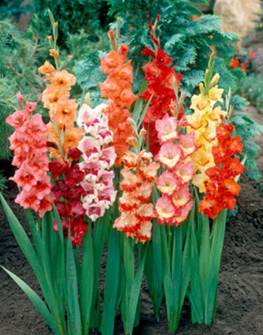
Gladioluses
Kara Church
Technical Editor, Advisory
 Editor's Corner
Now that is some cool historyâ¦.thanks for sharing that. That was something I never knew before.
Thomas Scaff
Software Engineer
Core Director Tellerâ¢
3725 East Battlefield
Springfield, MO 65809
(417)888-4900 ext 728407
tom_sc@jackhenry.com
[https://jhatoday.jackhenry.com/OurMission/PublishingImages/jhalogot.gif]
“Do the right thing, do whatever it takes, and have fun doing it.”
By: Tom Scaff on December 1, 2015
at 7:06 am