Posted by: Jack Henry | May 10, 2018

Editor’s Corner: Oxford Comma

An Oxford comma walks into a bar, where it spends the evening watching the television getting drunk and smoking cigars.

Well, you’ve certainly heard from me about the Oxford comma (aka the serial comma). One of the first articles I wrote was about six years ago, “No Comma Drama.” A couple of years after that, I continued to fight, this time in “Comma Drama.”

For those of you coming to the Editor’s Corner more recently, the rule we use here is to “use commas to separate three or more words, phrases, or clauses written in a series.”

Here are the two options, using the joke above:

  • An Oxford comma walks into a bar, where it spends the evening watching the television, getting drunk and smoking cigars. (Only one comma in the list; not in agreement with the JHA Style Guide.)
  • An Oxford comma walks into a bar, where it spends the evening watching the television, getting drunk, and smoking cigars. (Our preferred way of doing things according to the JHA Style Guide.)

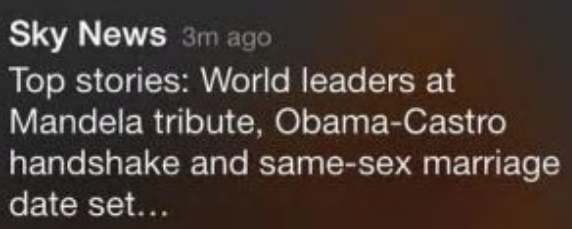
And here is a new example (to me) of why you should definitely use the extra comma:
Kara Church

Technical Editor, Advisory

Symitar Documentation Services

Posted by: Jack Henry | May 9, 2018

Editor’s Corner: Mixed Metaphors

“A mixed metaphor walks into a bar, seeing the handwriting on the wall but hoping to nip it in the bud.”

First, what is a metaphor? According to our friends at Merriam-Webster, a metaphor is:

1: a figure of speech in which a word or phrase denoting one kind of object or action is used in place of another to suggest a likeness or analogy between them (as in the ship plows the seas or in a volley of oaths) : an implied comparison (as in a marble brow) in contrast to the explicit comparison of the simile (as in a brow white as marble); broadly : figurative language

2: an object, activity, or idea that is used as a symbol of something else

A mixed metaphor is two or more inconsistent metaphors joined together, just as in the joke above. Here are some additional examples of mixed metaphors:

  • Leaving a sour taste in the client’s eye…
  • That’s awfully thin gruel for the right wing to hang their hats on.
  • I don’t think we should wait until the other shoe drops. History has already shown what is likely to happen. The ball has been down this court before and I can see already the light at the end of the tunnel.
  • I conclude that the city’s proposal to skim the frosting, pocket the cake, and avoid paying the fair, reasonable, and affordable value of the meal is a hound that will not hunt.
  • You’ve taken a rare orchid and shut her away in a dark outhouse. You haven’t nourished her or paid her enough attention. Is it any wonder that her roots are struggling to survive? Daisy is a trapped bird whose wings have been broken, she is a Fabergé egg that you have boiled for four minutes and eaten for your breakfast.
  • I knew enough to realize that the alligators were in the swamp and that it was time to circle the wagons.
  • Wake up and smell the coffee on the wall.
  • Back to the grinding board.
  • I don’t like it. When you open that Pandora’s box, you will find it full of Trojan horses.
  • He came out of it smelling like a bandit.

Kara Church

Technical Editor, Advisory

Symitar Documentation Services

Posted by: Jack Henry | May 8, 2018

Editor’s Corner: Cliches

“At the end of the day, a cliché walks into a bar—fresh as a daisy, cute as a button, and sharp as a tack.”

We’ve all heard and used clichés before, but here is the Merriam-Webster description of a cliché:

1a: a trite or stereotyped phrase or expression

b: a hackneyed theme, characterization, plot, or situation in fiction or drama: an overworked idea or its expression in music or one of the other arts

Here are some selected clichés from A to (almost) Z:

  • as the crow flies
  • big fish in a small pond
  • crack of dawn
  • dog and pony show
  • every fiber of my being
  • follow your heart
  • go with the flow
  • hold your horses
  • if the shoe fits
  • jockey for position
  • keep your fingers crossed
  • last but not least
  • movers and shakers
  • no stone unturned
  • out of pocket
  • pot calling the kettle black
  • quiet as a dormouse
  • raining cats and dogs
  • sharp as a tack
  • think outside of the box
  • under the gun
  • vested interest
  • went belly up
  • you are what you eat

For the full list of 681 clichés to avoid in your writing, see the Be a Better Writer website.

Kara Church

Technical Editor, Advisory

619-542-6773 | Ext: 766773

Symitar Documentation Services

NOTICE: This electronic mail message and any files transmitted with it are intended
exclusively for the individual or entity to which it is addressed. The message,
together with any attachment, may contain confidential and/or privileged information.
Any unauthorized review, use, printing, saving, copying, disclosure or distribution
is strictly prohibited. If you have received this message in error, please
immediately advise the sender by reply email and delete all copies.

Posted by: Jack Henry | May 8, 2018

Editor’s Corner: Cliches

“At the end of the day, a cliché walks into a bar—fresh as a daisy, cute as a button, and sharp as a tack.”

We’ve all heard and used clichés before, but here is the Merriam-Webster description of a cliché:

1a: a trite or stereotyped phrase or expression

b: a hackneyed theme, characterization, plot, or situation in fiction or drama: an overworked idea or its expression in music or one of the other arts

Here are some selected clichés from A to (almost) Z:

  • as the crow flies
  • big fish in a small pond
  • crack of dawn
  • dog and pony show
  • every fiber of my being
  • follow your heart
  • go with the flow
  • hold your horses
  • if the shoe fits
  • jockey for position
  • keep your fingers crossed
  • last but not least
  • movers and shakers
  • no stone unturned
  • out of pocket
  • pot calling the kettle black
  • quiet as a dormouse
  • raining cats and dogs
  • sharp as a tack
  • think outside of the box
  • under the gun
  • vested interest
  • went belly up
  • you are what you eat

For the full list of 681 clichés to avoid in your writing, see the Be a Better Writer website.

Kara Church

Technical Editor, Advisory

619-542-6773 | Ext: 766773

Symitar Documentation Services

NOTICE: This electronic mail message and any files transmitted with it are intended
exclusively for the individual or entity to which it is addressed. The message,
together with any attachment, may contain confidential and/or privileged information.
Any unauthorized review, use, printing, saving, copying, disclosure or distribution
is strictly prohibited. If you have received this message in error, please
immediately advise the sender by reply email and delete all copies.

Posted by: Jack Henry | May 7, 2018

Editor’s Corner: Misplaced Modifiers

“A misplaced modifier walks into a bar owned by a man with a glass eye named Ralph.”

Hmm…what’s wrong with this sentence? Well, according to the way it’s worded, the bar owner has a glass eye, and the eye’s name is Ralph. Instead, the man is named Ralph, and he has a glass eye. This is definitely a misplaced modifier.

Let’s have a look at what misplaced modifiers are and how to fix them.

Modifiers can be adjectives or adverbs that change or add detail to other words or phrases, for example: pretty, hopeful, fast, happy, very, much, many. It’s important to remember that modifiers should be placed close to the words they are modifying.

Adjectives in English usually come before the word they are modifying:

  • The handsome man
  • The furry dog
  • The red hydrant

Adverbs can go before or after the word they are modifying.

  • The very handsome man
  • The dog ran quickly
  • The only hydrant on the street

When you use modifying phrases, they should be near the thing they are modifying so that you don’t end up with a crazy misplaced modifier.

Here are a few examples of misplaced modifiers with some suggestions to correct them:

Misplaced: She served franks and beans to the guests on paper plates.

Corrected: She served the guests franks and beans on paper plates.

Misplaced: The church was reported robbed by Sister Maria last week.

Corrected: Last week, Sister Maria reported that the church was robbed.

Misplaced: Bob saw a goat and a llama on the way to the store.

Corrected: On the way to the store, Bob saw a goat and a llama.

Misplaced: Jane bought a turtle for her brother named Pickles.

Corrected: Jane bought a turtle named Pickles for her brother.

Kara Church

Technical Editor, Advisory

Symitar Documentation Services

Posted by: Jack Henry | May 4, 2018

Editor’s Corner: The English Jokes Continue…

“A dyslexic walks into a bra.”

Okay, most of us are familiar with the term dyslexia or dyslexic. Sometimes it is described as a condition where you mix letters up or have a hard time reading. Officially it is “a general term for disorders that involve difficulty in learning to read or interpret words, letters, and other symbols, but that do not affect general intelligence.”

It’s not nice to joke about learning disabilities; in fact, I almost left this one off the list of jokes. But the 15-year-old boy in me thought that the idea of “walking into a bra” was pretty funny, so there you have it.

The Online Etymology Dictionary provides the following information:

dyslexia (n.)

1885, from German dyslexie (1883), from Greek dys- "bad, abnormal, difficult" (see dys-) + lexis "word," from legein "speak" (from PIE root *leg- (1) "to collect, gather," with derivatives meaning "to speak (to ‘pick out words’)") + abstract noun ending -ia. Dyslexic (n.) is first recorded 1961; dyslectic (adj.) from 1964.

Kara Church

Technical Editor, Advisory

619-542-6773 | Ext: 766773

Symitar Documentation Services

NOTICE: This electronic mail message and any files transmitted with it are intended
exclusively for the individual or entity to which it is addressed. The message,
together with any attachment, may contain confidential and/or privileged information.
Any unauthorized review, use, printing, saving, copying, disclosure or distribution
is strictly prohibited. If you have received this message in error, please
immediately advise the sender by reply email and delete all copies.

Posted by: Jack Henry | May 3, 2018

Editor’s Corner: Similes

“A simile walks into a bar, as parched as a desert.”

Today I’m snagging another topic from the list of jokes I sent the other day. Our discussion today revolves around similes…no, not smiles, but similes.

A simile is a figure of speech comparing two unlike things. You will often see similes used with the words “like” or “as,” as you probably learned in school. For example, “Her eyes were like the ocean—stormy and gray.” Or, “He was as strong as an ox.”

Here are some examples of bad similes from a contest in the Washington Post:

  • He was as tall as a six-foot-three-inch tree. (Jack Bross, Chevy Chase)
  • The politician was gone but unnoticed, like the period after the Dr. on a Dr Pepper can. (Wayne Goode, Madison, Ala.)
  • He spoke with the wisdom that can only come from experience, like a guy who went blind because he looked at a solar eclipse without one of those boxes with a pinhole in it and now goes around the country speaking at high schools about the dangers of looking at a solar eclipse without one of those boxes with a pinhole in it. (Joseph Romm, Washington)
  • She caught your eye like one of those pointy hook latches that used to dangle from screen doors and would fly up whenever you banged the door open. (Rich Murphy, Fairfax Station)
  • She was clever all right, like a woman who is listed in the Guinness Book of World Records as having the world’s highest IQ and whose last name just happens to be "Savant." Yeah, maybe too clever by half. (Joseph Romm, Washington)
  • The little boat gently drifted across the pond exactly the way a bowling ball wouldn’t. (Russell Beland, Springfield)
  • From the attic came an unearthly howl. The whole scene had an eerie, surreal quality, like when you’re on vacation in another city and "Jeopardy!" comes on at 7 p.m. instead of 7:30. (Roy Ashley, Washington)
  • Her hair glistened in the rain like nose hair after a sneeze. (Chuck Smith, Woodbridge)
  • Her vocabulary was as bad as, like, whatever. (Jennifer Hart, Arlington)

Kara Church

Technical Editor, Advisory

619-542-6773 | Ext: 766773

Symitar Documentation Services

NOTICE: This electronic mail message and any files transmitted with it are intended
exclusively for the individual or entity to which it is addressed. The message,
together with any attachment, may contain confidential and/or privileged information.
Any unauthorized review, use, printing, saving, copying, disclosure or distribution
is strictly prohibited. If you have received this message in error, please
immediately advise the sender by reply email and delete all copies.

Posted by: Jack Henry | May 2, 2018

Editor’s Corner: Irony

“A hyphenated word and a non-hyphenated word walk into a bar and the bartender nearly chokes on the irony.”

What is irony? According to Google, the brief answer is that it is “the expression of one’s meaning by using language that normally signifies the opposite, typically for humorous or emphatic effect.”

But there are actually three types of irony: verbal, situational, and dramatic. Here is a brief definition for each type, along with some examples, from Flocabulary:

Verbal irony occurs when a speaker’s intention is the opposite of what he or she is saying. For example, a character stepping out into a hurricane and saying, “What nice weather we’re having!”

Situational irony occurs when the actual result of a situation is totally different from what you’d expect the result to be. Sitcoms often use situational irony. For example, a family spends a lot of time and money planning an elaborate surprise birthday party for their mother to show her how much they care. But it turns out, her birthday is next month, and none of them knew the correct date. She ends up fuming that no one cares enough to remember her birthday.

Dramatic irony occurs when the audience knows a key piece of information that a character in a play, movie or novel does not. This is the type of irony that makes us yell, “DON’T GO IN THERE!” during a scary movie. Dramatic irony is huge in Shakespeare’s tragedies, most famously in Othello and Romeo and Juliet….

Why Writers Use It: Irony inverts our expectations. It can create the unexpected twist at the end of a joke or a story that gets us laughing—or crying. Verbal irony tends to be funny; situational irony can be funny or tragic; and dramatic irony is often tragic.

Back to the initial joke, the irony is that the word “hyphenated” has no hyphen, while the word “non-hyphenated” does have a hyphen.

Kara Church

Technical Editor, Advisory

Symitar Documentation Services

Posted by: Jack Henry | May 1, 2018

Editor’s Corner: A Herd of Nerds Walks into a Bar…

Over the years, we’ve covered a lot of topics such as passive voice, Oxford (serial) commas, and avoiding clichés. Of course, there are still so many things to review. Rather than review all the grammatical terms that you’ll see in these jokes today, I’ll cover most of them in the weeks to come.

Thanks to those of you who shared this list with me!

  • A bar was walked into by the passive voice.
  • An oxymoron walked into a bar, and the silence was deafening.
  • Two quotation marks walked into a “bar.”
  • A malapropism walks into a bar, looking for all intensive purposes like a wolf in cheap clothing, muttering epitaphs and casting dispersions on his magnificent other, who takes him for granite.
  • A non-sequitur walks into a bar. In a strong wind, even turkeys can fly.
  • Papyrus and Comic Sans walk into a bar. The bartender says, "Get out — we don’t serve your type."
  • A mixed metaphor walks into a bar, seeing the handwriting on the wall but hoping to nip it in the bud.
  • A synonym strolls into a tavern.
  • At the end of the day, a cliché walks into a bar — fresh as a daisy, cute as a button, and sharp as a tack.
  • A run-on sentence walks into a bar it starts flirting. With a cute little sentence fragment.
  • A misplaced modifier walks into a bar owned by a man with a glass eye named Ralph.
  • The past, present, and future walked into a bar. It was tense.
  • A dyslexic walks into a bra.
  • An Oxford comma walks into a bar, where it spends the evening watching the television getting drunk and smoking cigars.
  • A simile walks into a bar, as parched as a desert.
  • A hyphenated word and a non-hyphenated word walk into a bar and the bartender nearly chokes on the irony.

For the full list of “Bar Jokes for English Majors,” see the bluebird of bitterness website.

“Your jokes do not amuse me.”

Kara Church

Technical Editor, Advisory

Symitar Documentation Services

Posted by: Jack Henry | April 30, 2018

Editor’s Corner: Schoolhouse Rock

Last week, Bob Dorough, the music director of Schoolhouse Rock, passed away. Dorough was a pianist, singer, and composer.

I listened to a Fresh Air podcast and learned that the idea of Schoolhouse Rock came from an advertising executive (David McCall) who was looking for a way to teach his son to memorize multiplication through music. Dorough was introduced to McCall. McCall told Dorough that his son couldn’t memorize multiplication, but he could memorize song lyrics. Dorough created a demo called Three Is a Magic Number, and the rest is history.

In memory of Bob Dorough, I’m sharing some of the Schoolhouse Rock grammar lessons. Clear your throats and start singing away!

Lolly, Lolly, Lolly, Get Your Adverbs Here

Conjunction Junction

A Noun Is a Person, Place, or Thing

Verb: That’s What’s Happening!

Interjections!

Unpack Your Adjectives

Busy Prepositions

Rufus Xavier Sarsaparilla

Jackie Solano | Technical Editor | Symitar®

8985 Balboa Ave. | San Diego, CA 92123 | Ph. 619.542.6711 | Extension: 766711

Symitar Documentation Services

NOTICE: This electronic mail message and any files transmitted with it are intended
exclusively for the individual or entity to which it is addressed. The message,
together with any attachment, may contain confidential and/or privileged information.
Any unauthorized review, use, printing, saving, copying, disclosure or distribution
is strictly prohibited. If you have received this message in error, please
immediately advise the sender by reply email and delete all copies.

« Newer Posts - Older Posts »

Categories