Posted by: Jack Henry | August 10, 2018

Editor’s Corner: Tongue Twisters

I received an interesting article the other day about tongue twisters. My dad used to tell us some whoppers when we were kids. I can’t remember which one it was, but there was one that would make us swear if we messed up; of course, that was our favorite. This Mental Floss article from our coworker Paul F. includes many of the standards and two that were completely new to me. The whole article is here: Mental Floss. The two tongue twisters I picked out, “Betty Botter” and “Two Tooters” (plus a little history) are below. Enjoy!

BETTY BOTTER

Betty Botter bought some butter;
"But," said she, "this butter’s bitter!
If I put it in my batter
It will make my batter bitter.
But a bit o’ better butter
Will but make my batter better."
Then she bought a bit o’ butter
Better than the bitter butter,
Made her bitter batter better.
So ’twas better Betty Botter
Bought a bit o’ better butter.

TWO TOOTERS

A tutor who tooted the flute
Tried to teach two young tooters to toot.
Said the two to the tutor,
"Is it harder to toot, or
To tutor two tooters to toot?"

Both these classic twisters can be traced to poet and novelist Carolyn Wells’s writings in the late 1890s. Betty Botter would go on to be included in Mother Goose’s nursery rhymes and both verses can be found in several variations. While we don’t know who or what exactly sparked the characters of Betty or the tutor, we do know Wells was pretty prolific in terms of her writing. Her 1902 book A Nonsense Anthology—another volume of silly linguistic gymnastics—would be her most famous, but she was also behind more than 100 other books, including mysteries and children’s stories. As if her written contributions to the American language weren’t enough, Wells was also known for donating her epic collection of Walt Whitman manuscripts and first editions to the Library of Congress.

Kara Church

Technical Editor, Advisory

Symitar Documentation Services
Posted by: Jack Henry | August 9, 2018

Editor’s Corner: Kiting

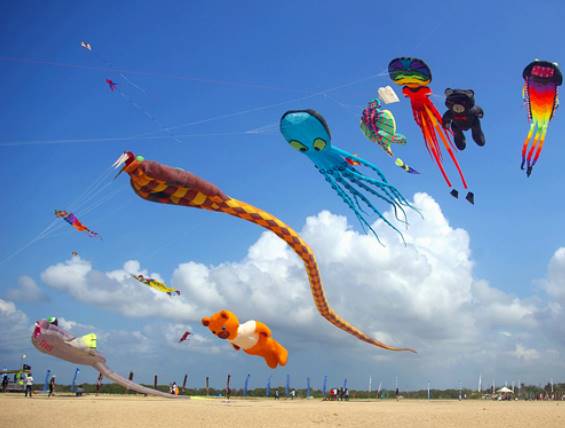
When I think of kites, I usually think of Gasworks Park in Seattle or Seaport Village here in San Diego. I might even be reminded of the song from Mary Poppins—another happy thought associated with flying a kite. I think most of us see kites as a joyful thing, but this brings me to the question of the day:

Dear Editrix,

What do kites and kiting have to do with fraudulent checks?

Sincerely,

Up in the Atmosphere

Dear Up,

I think you’ll see from this article in Wikipedia, that the financial world has applied the fun and playful imagery of floating and kiting to the world of check fraud.

Check kiting … is a form of check fraud, involving taking advantage of the float to make use of non-existent funds in a checking or other bank account. In this way, instead of being used as a negotiable instrument, checks are misused as a form of unauthorized credit.

Kiting is commonly defined as intentionally writing a check for a value greater than the account balance from an account in one bank, then writing a check from another account in another bank, also with non-sufficient funds, with the second check serving to cover the non-existent funds from the first account.

The purpose of check kiting is to falsely inflate the balance of a checking account in order to allow written checks to clear that would otherwise bounce. If the account is not planned to be replenished, then the fraud is colloquially known as paper hanging. If writing a check with insufficient funds is done with the expectation they will be covered by payday—in effect a payday loan—it is called playing the float.

I think I’d stick with playing the piano and floating silk or Mylar kites, rather than kiting paper checks. J

Kara Church

Technical Editor, Advisory

Symitar Documentation Services
Posted by: Jack Henry | August 8, 2018

Editor’s Corner: Snickelways

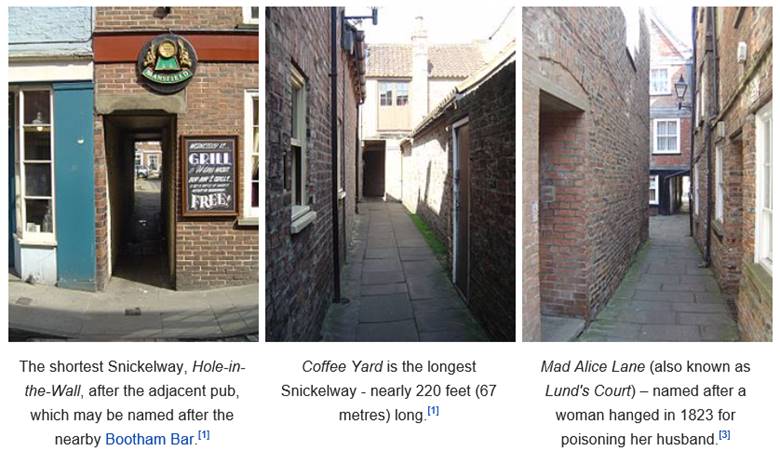
Just when I thought I was through with Nestle® Toll House® Cookies and different names for roadways, one of you provided me with a word I’d never heard of before: snickelway. Imagine my excitement when I looked it up and found it directly connected to one of my favorite vacation discoveries, York, England. Here are some details and photos about snickelways and the lovely town of York, from Wikipedia.

The Snickelways of York, often misspelt snickleways, are a collection of small streets and footpaths in the city of York, England. The word snickelway was coined by local author Mark W. Jones in 1983 in his book A Walk Around the Snickelways of York, and is a portmanteau of the words snicket, meaning a passageway between walls or fences, ginnel, a narrow passageway between or through buildings, and alleyway, a narrow street or lane. Although the word is a neologism, it quickly became part of the local vocabulary, and has even been used in official council documents, for example when giving notice of temporary footpath closures.

The snickelways themselves are usually small paths or lanes between buildings, not wide enough for a vehicle to pass down, and usually public rights of way. Jones provides the following definition for them:

A snickelway is a narrow place to walk along, leading from somewhere to somewhere else, usually in a town or city, especially in the city of York.

York has many such paths, mostly mediaeval, though there are some modern paths as well. They have names like any other city street, often quirky names such as Mad Alice Lane, Nether Hornpot Lane, and even Finkle Street (formerly Mucky Peg Lane).

In 1983 Jones devised a walk taking in 50 snickelways within the city walls. His book, A Walk around the Snickelways of York, soon became a local bestseller. It was unusual in being completely hand-written rather than using printed text, with hand-drawn illustrations, a technique which Jones explicitly acknowledged as inspired by the Pictorial Guides of Alfred Wainwright. At least nine editions of the book have been published, each revision incorporating necessary changes, such as the closure of snickelways which were not public rights of way or the opening of new paths.

Ready to plan a trip to York? Here are some other great sites to see (York), though I did NOT enjoy the ride at the Jorvik Viking Center, which was enhanced with what I’ll call “smell-o-vision.” They gave you a “tour” of an old Viking town and provided a whiff of everything…and I mean everything that’s part of daily life. Not cool!

Kara Church

Technical Editor, Advisory

Symitar Documentation Services
Posted by: Jack Henry | August 7, 2018

Editor’s Corner: Telltales

When I was young, I lived near Lake Washington in Seattle. One summer, there was a special deal on sailing lessons and half of the neighborhood kids signed up, along with some of the more affluent kids from other neighborhoods. It was not my favorite experience—my personal claim to fame was that I was the only one who made a turn so fast the boom knocked one of my friends off the boat. We were the only ones who got to practice “man overboard,” though I mostly just screamed, “I’m so sorry, Megan!”

One of you recently went sailing and sent me a great email about your voyage. Not only did you learn a lot more than I did about sailing, you learned some sailing English that might be interesting to everyone!

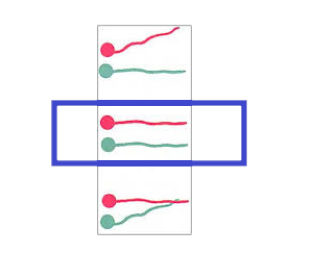
As the report goes, the captain told our coworker to “look at the telltales to make sure you are pointing the boat into the wind in the most efficient manner.” The telltales are the little streamers sewn into the sails. The goal, according to my friend, is to have both streamers, or telltales, flying parallel to each other. Here are some graphics he sent to show me. He explained, “When the telltales are horizontal and parallel, you are hitting the wind just right and will attain the best speed for the boat.”

And according to Merriam-Webster, a telltale is “one who officiously gives information of the private concerns of others: one who tells what should be withheld.”

Kara Church

Technical Editor, Advisory

Symitar Documentation Services
Posted by: Jack Henry | August 6, 2018

Editor’s Corner: Redundancy Quiz

The editors try to provide you with helpful tips to improve your writing. Here’s a redundancy quiz from Daily Writing Tips. Let’s see if you have learned how to cut the clutter from your writing.

Jackie Solano | Technical Editor | Symitar®

8985 Balboa Ave. | San Diego, CA 92123 | Ph. 619.542.6711 | Extension: 766711

Symitar Documentation Services

NOTICE: This electronic mail message and any files transmitted with it are intended
exclusively for the individual or entity to which it is addressed. The message,
together with any attachment, may contain confidential and/or privileged information.
Any unauthorized review, use, printing, saving, copying, disclosure or distribution
is strictly prohibited. If you have received this message in error, please
immediately advise the sender by reply email and delete all copies.

Posted by: Jack Henry | August 3, 2018

Editor’s Corner: On the Road Again

Wow. I started off yesterday’s article going in one direction—road-related words. Just the mere mention of something remotely connected to chocolate (toll road, toll house, chocolate chips) and I was thrown off course!

I think I have realigned my compass and I am prepared to share the other half of my road trip with you. Here are 20 different names for roads and streets; for the full list of 45 terms, see Daily Writing Tips.

  1. alley: a narrow street, especially one providing access to the rear of buildings or lots between blocks
  2. arterial: a through street or highway
  3. beltway: a highway passing around an urban area
  4. boulevard: a wide road, often divided and/or landscaped
  5. bypass: a road passing around a town
  6. causeway: a highway, especially one raised across water or wet ground
  7. close: a road closed at one end
  8. corniche: a coastal road, especially alongside a cliff face
  9. court: a road closed at one end, especially with a circular end
  10. drag: slang pertaining to a road often traveled on as a leisurely pastime (or, as “main drag,” slang referring to the principal road, or one of the principal roads, in a city or town)
  11. expressway: a high-speed divided highway with partially or fully controlled access
  12. freeway: an expressway with fully controlled access
  13. highway: a main road
  14. interstate: an expressway that traverses more than one state
  15. parkway: a landscaped road
  16. place: a short street
  17. shunpike: a side road used to avoid a main road or a toll road
  18. superhighway: an expressway for high-speed traffic
  19. thoroughfare: a main road, or a road that intersects with more than one other road
  20. turnpike: a main road, especially one on which tolls are or were collected

Kara Church

Technical Editor, Advisory

Symitar Documentation Services
Posted by: Jack Henry | August 2, 2018

Editor’s Corner: Rambling to the Toll House

Dear readers,

Years ago, we went over different terms for freeways, highways, and roads. Since then, I received a few new things on these topics from different sources. I thought you might be interested in these tidbits. First, from our coworker Andi:

“Toll roads, especially near the East Coast, are often called turnpikes; the term turnpike originated from pikes, which were long sticks that blocked passage until the fare was paid and the pike turned at a toll house (or toll booth in current terminology).”

Hmm. Now I’m thinking of Nestle® TOLL HOUSE® chocolate chip cookies. What’s up with tolls and chocolate chips? Let’s figure that out, and then tomorrow I will provide you with part two of my trip “on the road again.”

From Wikipedia:

The Toll House Inn of Whitman, Massachusetts, was established in 1930 by Kenneth and Ruth Graves Wakefield. Toll House chocolate chip cookies are named after the inn.

Contrary to its name and the sign, which still stands despite the building burning down in 1984, the place was never a toll house and it was built in 1817, not 1709. The "toll house" and the "1709" was a marketing strategy.

Ruth Wakefield cooked all the food served and soon gained local fame for her desserts. In 1936, while adapting her butter drop dough cookie recipe, she became the inventor of the first chocolate chip cookie using a bar of semi-sweet chocolate made by Nestlé. The new dessert soon became very popular. Wakefield contacted Nestlé and they struck a deal: The company would print her recipe on the cover of all their semi-sweet chocolate bars, and she would get a lifetime supply of chocolate. Nestlé began marketing chocolate chips to be used especially for cookies.Wakefield wrote a cookbook, Toll House Tried and True Recipes, that went through 39 printings starting in 1940.

Wakefield died in 1977, and the Toll House Inn burned down from a fire that started in the kitchen on New Year’s Eve 1984.The inn was not rebuilt. The site, at 362 Bedford Street, is marked with a historical marker…. Although there are many manufacturers of chocolate chips today, Nestlé still publishes the recipe on the back of each package of Toll House Morsels.

Kara Church

Technical Editor, Advisory

Symitar Documentation Services
Posted by: Jack Henry | August 1, 2018

Editor’s Corner: Old Norse, Part II

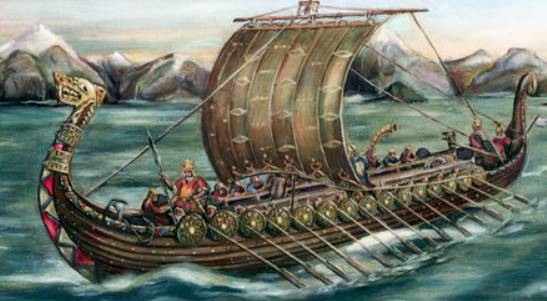
Yesterday, we had a little bit of history about the Vikings and Old Norse words that we use in English. Today I have the remainder of the article for you (minus most of the writer’s extra comments) from Daily Writing Tips:

Old Norse Words That Meant Something Slightly Different

English word, with original Old Norse meaning

  • anger – trouble, affliction, which can make a person angry
  • bait – snack, food eaten at work. Now means food used to catch fish, wild animals, and susceptible people.
  • bask – similar to the Old Norse word meaning “to bathe”
  • berserk – either from bear-shirt (frenzied warriors wearing a bearskin shirt) or bare-shirt (frenzied warriors wearing no shirt)
  • blunder – to shut one’s eyes; to stumble about blindly
  • bulk – partition; cargo, as in the nautical term bulkhead
  • crawl – to claw
  • gang – any group of men, as in modern Danish, not necessarily dangerous
  • gawk – to heed, as in paying too much attention
  • gift – dowry, a kind of wedding gift. In modern Danish, gift means wedding.
  • haggle – to chop
  • hap, happy – chance, good luck, fate
  • lake – to play
  • litmus – from the Old Norse words litr (dye) and mosi (moss), used as a chemical test for acidity and alkalinity
  • muck – cow dung. An English dairy farmer may say he needs to muck out, or clean, his barn.
  • muggy – drizzle, mist. Today it means severely humid.
  • rive – to scratch, plow, tear. A poet might write about his heart being riven in two.
  • scathe – to hurt, injure. Only the opposite word, unscathed, is common.
  • seem – to conform
  • skill – distinction
  • sleuth – trail
  • snub – to curse
  • sprint – to jump up, one of the keys to winning in a sprint
  • stain – to paint
  • stammer – to hinder; to dam up, as in a flow of words
  • steak – to fry
  • thrift – prosperity. If you have thrift, perhaps prosperity will follow.
  • thwart – across, which has kept a similar meaning for sailors
  • window – “wind-eye” or in Old Norse, vindauga

Norse Alphabet

Kara Church

Technical Editor, Advisory

Symitar Documentation Services

Posted by: Jack Henry | July 31, 2018

Editor’s Corner: Old Norse

The other day, I answered a question about the different terms we use for meat when it’s still a full animal (cow) and when it’s something cut up and you’re asking for it at the grocery store (beef). Serendipitously, I received this article today about Old Norse, the Viking contribution to English during the same time period as the Normans I mentioned. I hope you will bear with me today. I will give you a little more history, and then tomorrow I will share the words that are a result of that history. From Daily Writing Tips:

…The language of the Vikings, Old Norse, has influenced the development of English more than any other language besides French and Latin. The Swedes, Norwegians, Icelanders, and Danes all spoke Old Norse in those days, usually called the “Danish tongue.” In the 11th century, Old Norse was the most widely spoken European language, ranging west with Leif Erickson’s colony of Vinland in modern-day Canada, east with the Viking settlers on the Volga River in modern-day Russia, and south with warriors battling in modern-day Spain, Italy, and North Africa.

Four centuries after the Anglo-Saxons began emigrating from northern Europe, Danish Vikings began raiding Britain and had begun settling down by the year 876, plowing the land. The 14 shires dominated by Danish law in northern and eastern England were called the Danelaw. In 1016, King Canute the Great became ruler of all England, even before he became king of his native Denmark. Danish kings ruled England almost until William the Conqueror sailed from Normandy, France, and became the first Norman king of England in 1066. When he did, more Norse words entered English…

Today Old Norse words are most common in the Yorkshire dialect, but the Danelaw included the East Midlands, York, Essex, Cambridge, Suffolk, Norfolk, Northampton, Huntingdon, Bedford, Hertford, Middlesex, and Buckingham.

Old Norse Words Used in Modern English

When it comes to English words for which we are indebted to Old Norse, let’s start with they, their, and them. It’s true. If it weren’t for the Vikings, we might still be using the Old English words hîe, heora, and him instead. Or maybe not—when him and them mean the same thing in a language, you know it’s time for a change.

In fact, English received many really, really common words from Old Norse, such as give, take, get, and both. And sale, cake, egg, husband, fellow, sister, root, rag, loose, raise, rugged, odd, plough, freckle, call, flat, hale, ugly, and lake.

Many English words that begin with sk or sc came from Old Norse, such as skin, sky, score, scant, scrub, scathe, and skill.

Old Norse words that feature two-letter blends and a high consonant-to-vowel ratio just sound Viking to me, especially if you pronounce both letters as the Vikings originally did: knife, snare, snub, wrong, bread, dwell, bask, dream, steak, stammer, and especially thwart.

Tomorrow, more words from Old Norse.

Kara Church

Technical Editor, Advisory

Symitar Documentation Services

Posted by: Jack Henry | July 30, 2018

Editor’s Corner: Organization

Paragraphs organize your writing. Each paragraph represents a specific topic. And each paragraph must have a topic sentence that describes the main point of the paragraph. The rest of the sentences in the paragraph should support the main point.

When you are writing paragraphs, watch out for sneaky sentences that don’t support your topic. If you are introducing a new topic, create another paragraph with its own topic sentence.

To make sure information flows from paragraph to paragraph, include transitions to tie your information together. Transitions include single words, phrases, or full sentences. Transitions help readers understand how the information works together.

Documentation that contains multiple topics in the same paragraph or lacks transitions is difficult to understand. If you don’t organize the information in your documentation, it won’t be useful to readers and you won’t accomplish your writing goals.

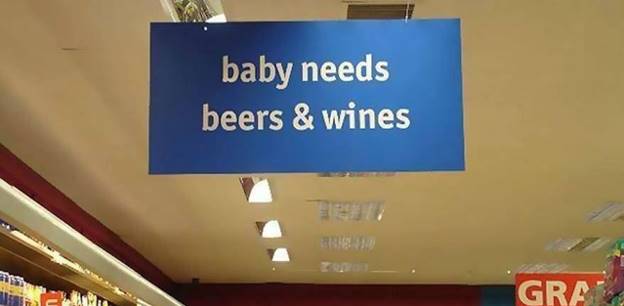
We all receive information all day long, and a lot of it is not very well organized. Sometimes the way things are organized is just baffling—like the aisles in this store.

Jackie Solano | Technical Editor | Symitar®

8985 Balboa Ave. | San Diego, CA 92123 | Ph. 619.542.6711 | Extension: 766711

Symitar Documentation Services

« Newer Posts - Older Posts »

Categories