Posted by: Jack Henry | January 31, 2019

Editor’s Corner: Leftover Comma Rules

Good morning, and welcome to the final edition of the award-winning comma series (yes, a couple appreciative emails does constitute an award, in my estimation).

Today, I’m going to share four simple comma rules that will help you polish your punctuation. These are the rules I’ll discuss:

  • Commas with salutations
  • Commas to set off phrases that express contrast
  • Commas with quotations
  • Commas for dates, addresses, place names, and long numbers

OK. You have the rules, now let’s look at some examples.

Commas with Salutations

Place a comma between your greeting and the recipient’s name (and add a period at the end):

  • Hello, Dolly.
  • Greetings, space aliens.

This rule does not apply when you use the word “Dear” in your salutation. For more rules on punctuation in salutations, read this previous Editor’s Corner article.

Commas to Set Off Phrases that Express Contrast

This easy rule creates a pause that is helpful for readers. Place a comma between contrasting elements:

  • When choosing a mate, you might want to look for substance, not style.
  • The song needed fewer vocals, more cowbell.
  • I was hoping you’d shower me with adoration because you wanted to, not because I asked youto.

Commas with Quotations

This rule, which you’re probably already familiar with, is equally short and sweet. Use commas to separate a direct quotation from the clause that contains the subject and verb:

  • After throwing her cup of coffee at Bart, Jean yelled, “You made me do that!”
  • Next time he eats off your plate, say, “I’ve felt feverish all day.” [dbb – The subject (you) is implied in this example.]

Commas for Dates, Addresses, Place Names, and Long Numbers

You’re probably also familiar with this rule, but reminders are a good thing, right? The examples are in the same order as the heading for this section (dates, addresses, places, and finally, long numbers):

  • On January 2, 2020, we will once again be celebrating Run It up the Flagpole and See Who Salutes Day. Mark your calendars.
  • She was hesitant to tell us that she lives at 212 Appaloosa Road, Embarrass, MN. 55732.
    [dbb – Do not add a comma between the state and ZIP Code.]
  • She was equally hesitant to mention that the population of Embarrass, Minnesota, is 1,226.
    [dbb – Add a comma after the state if it’s placed in the middle of the sentence.]
  • The original Mary Poppins movie grossed $31,000,000 domestically, which when adjusted for inflation is about $268,300,000 today.

This email hereby ends my series on comma rules. If you ever want to review them, you can visit our blog and type comma in the Search field. Now, go punctuate with precision.

Donna Bradley Burcher | Senior Technical Editor | Symitar®

8985 Balboa Ave. | San Diego, CA 92123 | Ph. 619.278.0432 | Extension: 765432

Symitar Documentation Services

About Editor’s Corner

Editor’s Corner keeps your communication skills sharp by providing information on grammar, punctuation, JHA style, and all things English. As editors, we spend our days reading, researching, and revising other people’s writing. We love to spend a few extra minutes to share what we learn with you and keep it fun while we’re doing it.

Did someone forward this email to you? Click here to subscribe.

Don’t want to get Editor’s Corner anymore? Click here to unsubscribe.

Do you have a question or an idea for Editor’s Corner? Send your suggestions or feedback to Kara, <a href="mailto:DBurcher, Jackie, or <a href="mailto:BRitter.

NOTICE: This electronic mail message and any files transmitted with it are intended
exclusively for the individual or entity to which it is addressed. The message,
together with any attachment, may contain confidential and/or privileged information.
Any unauthorized review, use, printing, saving, copying, disclosure or distribution
is strictly prohibited. If you have received this message in error, please
immediately advise the sender by reply email and delete all copies.

Posted by: Jack Henry | January 29, 2019

Editor’s Corner: Bumblebee and Prime

A couple of weeks ago, my husband wanted to see a movie and said, “Let’s go see Bumblebee!” I had no idea what I was getting into, but I like the movies, so I went along. Well, as many of you probably know, Bumblebee is the latest Transformers movie: Transformers, as in the 1980s robots that turn into cars or planes or trucks, and then back into robots. I wanted to hate this movie, but I didn’t. The ‘80s soundtrack and references to The Breakfast Club won me over. I laughed, I cried, and I thoroughly enjoyed it. What a sucker!

What does that have to do with today’s Editor’s Corner? One of the characters in Transformers world is named Optimus Prime, and I just so happen to have a list of words from Daily Writing Tips that are related to the word “prime.” Here is a selection of those words. For the full list see “Primes and Princes” here.

This post lists and defines words deriving from the adjective primus, meaning “first” or “finest.”

  • premier: first, or earliest; as a noun, a synonym for “prime minister”
  • premiere: most commonly, a first performance or broadcast of a performing-arts production or the first day of an exhibition (and, rarely, the leading actress in a production); as a verb, pertains to appearing for the first time in a starring role, or the first performance of a performing-arts production
  • prima donna: the first female singer in an opera or a concert; by extension, based on the stereotypical arrogance of such performers, a person who is difficult to work with
  • prima facie: apparent or self-evident (or, in legal usage, legally sufficient to establish a case or a fact); on first appearance
  • primacy: the state of being first, or the office of a high-ranking priest called a primate
  • primary: first in order of development or time, or importance or value, or basic, direct, or firsthand; also, relating to something initial or preparatory, or pertaining to a first division, or relating to a preliminary election, as well as derived from ores or not derivable from other phenomena (such as colors); as a noun, something first, dominant, or most proximate
  • primate: any of various species, including humans, apes, monkeys, and related animals; also, the highest-ranking priest in a given area
  • prime: as a noun, the first hour of the day, the best or most active period or stage, the earliest stage, the best or leading individual or part, the first part of the day, a symbol resembling an apostrophe used for various designations (including units of length, angular measure, or time), or a truncation of “prime number” or “prime rate”; as an adjective, best or first, or original (also various mathematical senses); as a verb, apply, load, prepare, stimulate, or supply
  • primer: a short introductory piece of writing, such as an informative article or a reading-instruction book; also, a device used to ignite explosives, a molecule necessary for formation of another molecule, or an initial coating, such as for painting a surface
  • primeval: ancient, basic, or first created, formed, or existing
  • primigravida: one that or who is pregnant for the first time
  • primo: the first or leading part in an ensemble; as an adverb, in the first place; as an adjective, slang synonym for excellent
  • primus: in the Scottish Episcopal Church, the leading bishop; also, the first word of the Latin phrase primus inter pares, meaning “first among equals”

Kara Church

Technical Editor, Advisory

Symitar Documentation Services

Posted by: Jack Henry | January 24, 2019

Editor’s Corner: Commas Between Items in a Series

More comma rules? Yes. Commas are hard. (I think the wise sage Barbie said that.)

The rule I’m sharing today is one you’re probably familiar with, but it also comes with a little controversy. Oh, the drama of the comma!

What you need to know about this rule is that you place a comma after items in a series and also after each adjective in a series of adjectives. Here’s an example of each:

  • Before you adopt a dog, make sure you have enough time, patience, and energy.
  • The couple wanted a calm, loving, well-trained older dog.

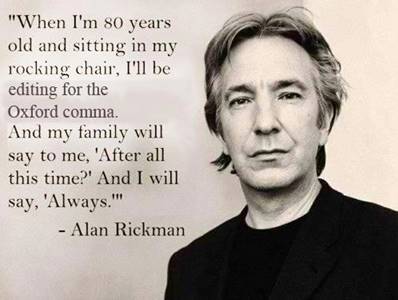
That’s easy enough; so, what’s the drama? Maybe you’ve guessed: it’s the Oxford (or serial) comma (dun, dun, duuun!). OMG, you say. It sounds so ominous. Well, it’s just a comma but, oh, the arguments that have ensued. The Oxford comma is the comma that comes before the final item in the series (and before the word and). Some style guides say you should always use it (like our primary resource, the Chicago Manual of Style) and some say it’s not always necessary (like the Associated Press Stylebook). However, be forewarned, omitting this comma can cause confusion:

  • I love my parents, Daffy Duck and Katherine Hepburn.

Do you see the problem? My dad definitely sees the problem. He is nothing like Daffy Duck (although he has been likened many times to Yosemite Sam).

In case you’re wondering which camp we fall into here at JHA, we follow the Chicago Manual of Style. We add that precious little comma at the end of the series. We are Oxford compliant. We are serial comma conformers. Join us, won’t you?

Donna Bradley Burcher | Senior Technical Editor | Symitar®

8985 Balboa Ave. | San Diego, CA 92123 | Ph. 619.278.0432 | Extension: 765432

Symitar Documentation Services

About Editor’s Corner

Editor’s Corner keeps your communication skills sharp by providing information on grammar, punctuation, JHA style, and all things English. As editors, we spend our days reading, researching, and revising other people’s writing. We love to spend a few extra minutes to share what we learn with you and keep it fun while we’re doing it.

Did someone forward this email to you? Click here to subscribe.

Don’t want to get Editor’s Corner anymore? Click here to unsubscribe.

Do you have a question or an idea for Editor’s Corner? Send your suggestions or feedback to Kara, <a href="mailto:DBurcher, Jackie, or <a href="mailto:BRitter.

NOTICE: This electronic mail message and any files transmitted with it are intended
exclusively for the individual or entity to which it is addressed. The message,
together with any attachment, may contain confidential and/or privileged information.
Any unauthorized review, use, printing, saving, copying, disclosure or distribution
is strictly prohibited. If you have received this message in error, please
immediately advise the sender by reply email and delete all copies.

Posted by: Jack Henry | January 22, 2019

Editor’s Corner: Home on the Range

Today’s topic isn’t about the deer and the antelope playing. Nope, it’s about a different kind of range: ranges of numbers. You might think it’s an easy topic, but we see all kinds of punctuation and spacing in the documents we edit, and we’re always making corrections. Let’s have a look at the following range types and how you should write them:

· Numbers

· Time

· Currency

Numbers

The correct treatment of a range numbers expressed in numerals is one number followed by an en dash (–) and another number, with no spaces between the numbers and dash. (Note: For a lesson on the different types of dashes, see this edition of Editor’s Corner.) Here are a few examples:

· Bob told me to bring 10–12 doughnuts to his house.

· I have a collection of 500–550 rubber bands.

As you can see, there are no spaces before or after the dash, and it is an en dash, not a hyphen. If you want a shortcut for creating the en dash, press Alt+0150 on your keyboard.

Time

Here’s an interesting tidbit. If you are expressing a range and you use the word “from” before it, you should use the word “to” rather than a dash between the values. For example:

  • My office hours are from 6:30 a.m. to3:00 p.m.

If you’re trying to save space and you want to use the en dash, then simply leave the words from and to out (again, there are no spaces before or after the en dash):

  • My office hours are 6:30 a.m.–3:00 p.m.

Currency

When you are writing about currency, it is usually safest to spell out the amounts you are talking about. What do I mean by that? Well, if you write that something costs from $10–$50 thousand, that technically means $10.00 to $50,000.00. In cases like this, you should spell out the amounts on both sides of the en dash:

  • He deposited $10 thousand–$20 thousand every year.
  • She paid $10 thousand–$1 million dollars to her ex-husband, but she wouldn’t get more detailed than that.

Or, you can spell it out using the words from and to.

  • The house cost from $10 million to $12 million.

Confused? I hope not! Just don’t be surprised if you send something to the editors and we take away your spaces and hyphens and replace them with an en dash and a smile. J

Kara Church

Technical Editor, Advisory

Symitar Documentation Services

Posted by: Jack Henry | January 17, 2019

Editor’s Corner: Capitalizing Email Subject Lines

A few people have asked me whether to capitalize email subject lines. Although the question is straightforward, it’s a tough one to answer.

Donna and Kara wrote previously about email etiquette and email subject lines, but they didn’t address this particular point. I wasn’t able to find a relevant rule in any of our style guides, and an informal survey of my inbox found a 50/50 split.

While I can’t answer this question as definitively as I’d like to, I can provide some suggestions.

Three Rules for Writing Email Subject Lines

Here are three rules you should always follow when writing email subject lines:

  1. Capitalize the first word.
    Incorrect: delicious pancake recipe
  1. Capitalize proper nouns.
    Incorrect: Surprise party for ernesto on saturday
  1. Don’t capitalize every letter.
    Incorrect: BALLROOM DANCING LESSONS

Tip: Kara’s post has some suggestions for writing attention-grabbing subject lines.

As long as you follow those three rules, you can choose between sentence-style capitalization and headline-style capitalization.

Option 1: Sentence-Style Capitalization

Capitalize the subject line as if it were a sentence. In other words, don’t capitalize any words except the first word and proper nouns.

Examples:

  • Funny kitten video
  • Don’t forget our Wednesday meeting
  • Wherefore art thou Romeo?

You can use sentence-style capitalization even if the subject line is not a complete sentence. Some people say that sentence-style capitalization seems more conversational, so you might decide to use it for casual emails and avoid it in a formal context.

Option 2: Headline-Style Capitalization

Capitalize major words (such as nouns, pronouns, verbs, adjectives, and adverbs), in addition to proper nouns and the first word of the subject line. Lowercase minor words (such as articles, prepositions, and conjunctions). Capitalize the last word of the subject line, regardless of what part of speech it is.

Examples:

  • Dogs Wearing Sunglasses
  • Turn the Music Off
  • What Light through Yonder Window Breaks?

You can use headline-style capitalization even if the subject line is a complete sentence. Some people say that headline-style capitalization looks strange for longer subject lines, so length is another factor you can consider.

About Editor’s Corner

Editor’s Corner keeps your communication skills sharp by providing information on grammar, punctuation, JHA style, and all things English. As editors, we spend our days reading, researching, and revising other people’s writing. We love to spend a few extra minutes to share what we learn with you and keep it fun while we’re doing it.

Did someone forward this email to you? Click here to subscribe.

Don’t want to get Editor’s Corner anymore? Click here to unsubscribe.

Do you have a question or an idea for Editor’s Corner? Send your suggestions or feedback to Kara, <a href="mailto:DBurcher, Jackie, or <a href="mailto:BRitter.

Ben Ritter | Technical Editor | Symitar®
8985 Balboa Avenue | San Diego, CA 92123
619-682-3391 | or ext. 763391 | www.Symitar.com

Symitar Documentation Services

NOTICE: This electronic mail message and any files transmitted with it are intended
exclusively for the individual or entity to which it is addressed. The message,
together with any attachment, may contain confidential and/or privileged information.
Any unauthorized review, use, printing, saving, copying, disclosure or distribution
is strictly prohibited. If you have received this message in error, please
immediately advise the sender by reply email and delete all copies.

Posted by: Jack Henry | January 15, 2019

Editor’s Corner: Richard Lederer on Vincent

Good morning, all.

It has been a dark and gloomy week in San Diego, reminding me of my youth in Seattle. It’s very busy at work, so I am going to share excerpts from Richard Lederer’s column rather than write my own today. It’s about Vincent van Gogh, and he had a rough life. My goal is to bring a little bit of sunshine (or sunflowers) to your day, so I’m going to share some excerpts with you. If you’d like to read the entire article, you can find it here: Verbivore

…for more than a century those who lived after him have learned to see the world through the eyes of Vincent van Gogh, who, living alone and unattended, speaks to us across time and powerfully influences the course of modern art.

The last lines of Samuel Taylor Coleridge’s poem “Kubla Khan” paints a portrait that could be Vincent van Gogh:

And all should cry, Beware! Beware!

His flashing eyes, his floating hair!

Weave a circle round him thrice,

And close your eyes with holy dread,

For he on honey-dew hath fed,

And drunk the milk of Paradise.

Born on March 30, 1853. van Gogh, between 1872 and 1890, wrote hundreds of letters to his younger brother, Theo, his only constant ally and support during a lifetime of struggle. This exchange between two affectionate brothers reveals Vincent as a keen intellectual fully connected to 19th-century thought.

“Mysteries remain, and sorrow or melancholy, but that eternal negative is balanced by the positive work which is thus achieved after all. If life were as simple, and things as little complicated by a goody-goody’s story or the hackneyed sermon of the average clergyman, it wouldn’t be so very difficult to make one’s way. But it isn’t, and things are infinitely more complicated, and right and wrong do not exist separately, any more than black and white do in nature.”

Van Gogh was an avid reader, and the authentic literary style of his letters reflects his love of books. In his letters the artist exhibits a remarkable ability to paint with words and to marshal words to talk about his painting:

· I dream of painting and then I paint my dream.

· Paintings have a life of their own that derives from the painter’s soul.

· Painting is a faith and it imposes the duty to disregard public opinion.

· I am always doing what I can’t do yet in order to learn how to do it.

· A good picture is equivalent to a good deed.

· There is nothing more truly artistic than to love others.

· Art is life seeking itself. It is our intractable expression of love for the beauties, ideas and epiphanies we regularly find.

· When I have a terrible need for religion, I go out and paint the stars.

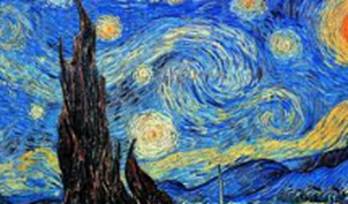
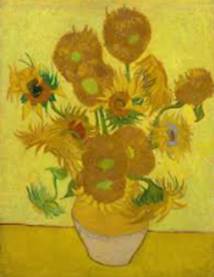
And of course, I can’t do these paintings justice because you can’t see the individual brush strokes or the texture, but here are some of the paintings from the article, and one I saw in Amsterdam at the Van Gogh Museum (Almond Blossom).

Starry Night

Sunflowers

Almond Blossom

Kara Church

Technical Editor, Advisory

Symitar Documentation Services

Posted by: Jack Henry | January 10, 2019

Editor’s Corner: Commas with Nonessential Elements

Good morning, and welcome to another installation of the Comma series. I’d like to say, “brought to you by popular demand,” but that might be a bit of a stretch, so I’ll say, “brought to you by a modicum of interest.” Hey, I’ll take what I can get. Please keep reading.

This week, I’m sharing information about commas with nonessential elements. These commas are placed next to the clause in a sentence that is not essential to the meaning of the sentence. Here are a few examples of sentences with the nonessential clauses and commas highlighted:

  • The company, which is headquartered in Missouri, has an impeccable reputation.
  • The dog, wagging its tail, ran toward the woman.
  • Tatyana, who immigrated from Russia, decided to become a U.S. citizen.
  • She sings for the band, which plays every Friday night.

Nonessential information can be removed without changing the meaning of the sentence, as shown in these revisions of the previous examples:

  • The company has an impeccable reputation.
  • The dog ran toward the woman.
  • Tatyana decided to become a U.S. citizen.
  • She sings for the band.

Sometimes information can be essential or nonessential depending on context. If, using the first example, it’s important to note that the company is headquartered in Missouri, you would need to revise the sentence to make that clear:

  • The company is headquartered in Missouri and has an impeccable reputation.

If you wanted to emphasize that the dog was happy to see the woman, you would revise that sentence—maybe like this:

  • The dog was wagging its tail as it ran toward the woman.

The same is true for the remaining examples. As the writer, you decide whether information is essential or nonessential and punctuate accordingly, remembering that nonessential elements are set off with a comma or between two commas.

The editor, who loves writing these articles, is now signing off.

Donna Bradley Burcher | Senior Technical Editor | Symitar®

8985 Balboa Ave. | San Diego, CA 92123 | Ph. 619.278.0432 | Extension: 765432

Symitar Documentation Services

NOTICE: This electronic mail message and any files transmitted with it are intended
exclusively for the individual or entity to which it is addressed. The message,
together with any attachment, may contain confidential and/or privileged information.
Any unauthorized review, use, printing, saving, copying, disclosure or distribution
is strictly prohibited. If you have received this message in error, please
immediately advise the sender by reply email and delete all copies.
Posted by: Jack Henry | January 8, 2019

Editor’s Corner: Asterisks

Today I’d like to talk to you about asterisks. I know we’ve discussed them before, but I continue to see them misused so it seems like time for a refresher.

What’s an asterisk? It’s a little star (*) on your keyboard. Truly, that’s what it looks like, and that’s what it means. From the Online Etymology Dictionary:

asterisk (n.)

"figure used in printing and writing to indicate footnote, omission, etc., or to distinguish words or phrases as conjectural," late 14c., asterich, asterisc, from Late Latin asteriscus, from Greek asteriskos "little star," diminutive of aster "star"

Asterisks are generally used for two things: to introduce a footnote, or to represent characters that have been removed.

First, let’s talk about footnotes. If you’re writing something that doesn’t require pages and pages of footnotes, you can probably get away with using an asterisk. The asterisk in this case goes after the sentence for which you are creating a footnote. Then, a second asterisk goes at the bottom of the page before the footnote reference.

For example, on the left is an excerpt from an article. The phrase ending “…the Spenserian stanza” is followed by an asterisk, and at the bottom of the page the asterisk appears again, noting the source of the article.

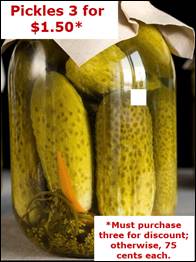
You might also see asterisks in advertisements, signaling that more information is coming elsewhere on the page. For example, this advertisement has an asterisk after the initial price. This asterisk indicates that there is more information to follow…down near the bottom of the ad.

The mistake I see most often is that when people use an asterisk, they do not follow with the footnote or additional information. The asterisk says, “Hey, look at me!” and then when you look down at the bottom of the page, there is nothing there. That causes a lot of frustration and confusion to your readers. So, if you use an asterisk like this, make sure that you follow it up with another asterisk at the bottom that contains the follow-up information or footnote.

Note: The other thing about using an asterisk rather than numbers is that the text can get clunky. If you need more than one footnote, the asterisk is followed by the dagger (†), double dagger (‡), section mark (§), parallels (), and number sign (#); when you run out of those, you start doubling those characters, so then you would have ** , ††, ‡‡, etc. The bottom of your document will start looking like cave paintings. Most word processing software makes numbered footnotes easy—so I’d opt for the footnotes.

The second common use of the asterisk is to represent missing characters. Here at JHA, we might see the asterisks representing password characters. Out in the big, bad world, asterisks are often used in place of letters to represent swear words.

For more information on asterisks and links to other articles, see the Editor’s Corner from several years ago titled Little Star.

Kara Church

Technical Editor, Advisory

Symitar Documentation Services

Posted by: Jack Henry | January 3, 2019

Editor’s Corner: “In Process” or “In Progress”?

In the interest of starting the new year with a clean slate, over the next few weeks, I’m going to be tackling some difficult reader questions that I’ve been putting off answering.

This first question comes from Brandon, who wrote, “I always thought [in process and
in progress] meant the same thing. Then, the more I thought about it, I figured in process may be used to describe something not yet started, or in the beginning stages and thought. Whereas in progress denotes something underway or progressing and in action.”

My initial thought was that in progress is the correct term and that people who say in process are confusing it with the similar phrase in the process of.

The following sentences are both correct. The main difference is that the first emphasizes the action (renovation) and the second emphasizes the person doing the action (my brother).

  • The renovation is in progress.
  • My brother is in the process of renovating.

But what about the sentence, “The renovation is in process”? It sounds strange to me, and a quick Google search confirms that the phrase in progress is about seven times as common as in process.

However, according to Merriam-Webster, this use of in process is correct. (They give the example, “the job is not yet finished but is still in process.”) And if it’s good enough for Merriam-Webster, it’s good enough for me.

As for the question of whether in process and in progress mean the same thing, my answer is basically yes. Merriam-Webster’s Collegiate Dictionary says they’re synonyms, and the Unabridged Dictionary gives definitions that are strikingly similar:

  • process: a progressive forward movement from one point to another on the way to completion
  • progress: an advance or movement to an objective or toward a goal

I did find several sources online that do differentiate between in progress and in process. For example, Investopedia says, “Some people differentiate between work in progress and work in process based on the duration of the production cycle.”

However, as with all jargon, if you’re writing for a general audience, be aware that the reader might interpret the terms differently or might not observe a distinction at all.

Avoid possible confusion by writing sentences that aren’t open to interpretation. Instead of writing, “We have two projects in process and one project in progress,” write something like, “We have two projects with a target completion date of January 5, 2019, and one project with a target completion date of late 2021.”

Thanks for the great question, Brandon, and happy new year to all of our readers.

About Editor’s Corner

Editor’s Corner keeps your communication skills sharp by providing information on grammar, punctuation, JHA style, and all things English. As editors, we spend our days reading, researching, and revising other people’s writing. We love to spend a few extra minutes to share what we learn with you and keep it fun while we’re doing it.

Did someone forward this email to you? Click here to subscribe.

Don’t want to get Editor’s Corner anymore? Click here to unsubscribe.

Do you have a question or an idea for Editor’s Corner? Send your suggestions or feedback to Kara, <a href="mailto:DBurcher, Jackie, or <a href="mailto:BRitter.

Ben Ritter | Technical Editor | Symitar®
8985 Balboa Avenue | San Diego, CA 92123
619-682-3391 | or ext. 763391 | www.Symitar.com

Symitar Documentation Services

NOTICE: This electronic mail message and any files transmitted with it are intended
exclusively for the individual or entity to which it is addressed. The message,
together with any attachment, may contain confidential and/or privileged information.
Any unauthorized review, use, printing, saving, copying, disclosure or distribution
is strictly prohibited. If you have received this message in error, please
immediately advise the sender by reply email and delete all copies.
Posted by: Jack Henry | December 31, 2018

Editor’s Corner: ‘Twas the night before New Year’s…

Hello and a Happy New Year’s Eve Day to you!

Looking for a fabulous way to start off 2019? Daily Writing Tips has provided us with a list of 41 synonyms for good that are certain to make things interesting. Click here to see the full list of words. I have a few of my favorite here for you to start with.

I hope 2019 is your most exquisite, dazzling, five-star year ever!

  1. breathtaking – amazing, surprising, astonishing, enough to make you gasp with pleasure, and almost enough to make you forget to breathe.
  2. dazzling – amazing, splendid, brilliant, shining so bright that it’s hard to see it.
  3. delightful – causing joy, delight, or pleasure, producing positive emotion, with the same Latin root as “delectable.”
  4. deluxe – high quality, related to luxury, from the Latin for “excess.”
  5. exceptional – uncommon, rare, and better for being so.
  6. exquisite – exceptionally fine or rare, with the sense of extreme
  7. favorable – helpful, encouraging, positive, convenient, such as getting hoped-for results.
  8. first-rate – exceptionally good, in the highest class. Describing a British naval vessel with more than 100 guns.
  9. formidable – causing awe, respect, wonder, or even fear, perhaps because it’s so large or strong.
  10. gilt-edged – high quality, from the practice of putting a thin layer of gold on the edges of a book.
  11. gratifying – pleasing, satisfying, making someone content.
  12. incredible – amazing, beyond belief, almost too good to be true.
  13. magnificent – splendid, elegant, noble. From the Latin word for “great deeds.”
  14. prime – first, as in first quality.
  15. satisfying – sufficient, pleasing, more than adequate.
  16. shipshape – well-organized, fully prepared, meticulous, tidy. Before you embark on an ocean voyage, you want your ship to be in shape.
  17. sterling – of high, verifiable value, as in sterling silver, which is 92.5% pure silver. Originally referring to British coins, which had a star or a starling on them in the Middle Ages.
  18. striking – impressive, memorable, calling to mind the striking of a coin.
  19. top-notch – belonging to the highest level, possibly from some 19th century game that used notches to keep score.
  20. welcome – anticipated, a pleasure to see, received with gladness, as in “welcome news.” From the Old English for “a wished-for guest.”

Kara Church

Technical Editor, Advisory

Symitar Documentation Services

« Newer Posts - Older Posts »

Categories