Posted by: Jack Henry | January 14, 2021

Editor’s Corner: Fancy Colors, Part 2

Hello, little chickadees! Today is part two of the color article from Merriam-Webster. Let’s just jump right into things!

Cattleya

Color: Medium purple

About the Word: This color comes from a kind of orchid named for William Cattley, a patron of botany whose enthusiasm for orchids helped fuel a British craze for the flowers in the 1700s. The most common form of one of Cattley’s original orchids (the cattleya labiata) highlights the color cattleya.

Full Definition: a moderate purple that is redder and paler than heliotrope, bluer and paler than average amethyst, and paler and slightly bluer than manganese violet

[KC – I had to look up heliotrope and manganese violet. You’re welcome!]

Heliotrope

Manganese Violet

Smalt

Color: Medium blue

About the Word: The color name comes from the blue glass of the same name. Smalt is created by fusing together—melting—potassium carbonate, silica, and cobalt oxide; the word’s Germanic ancestor means "to melt."

Full Definition: a moderate blue that is redder and duller than average copen, redder and deeper than azurite blue, Dresden blue, or pompadour, and greener and deeper than luster blue

Damask

Color: Grayish red

About the Word: It may or may not have originated in Damascus, but the name of the damask rose—a flower that traveled to Europe during the Middle Ages—honors that Syrian city. The hue of the blossom lives on as a color name.

Full Definition: a grayish red that is bluer than bois de rose, bluer, lighter, and stronger than blush rose, and bluer and deeper than Pompeian red or appleblossom

Jasper

Color: Blackish green

About the Word: The color name jasper comes from the name of the opaque quartz stone called jasper. The ancient Hebrew word from which jasper comes may have meant something like "glittering" or "polish."

Full Definition: a blackish green that is bluer than cannon

Bittersweet

Color: Deep reddish orange

About the Word: The oval berries of the European bittersweet plant taste first sweetish, and then bitter. But it was the American plant called "false bittersweet," with its orangey-colored fruits, that inspired the color name bittersweet.

Full Definition: a deep orange that is deeper than bittersweet orange; a dark to deep reddish orange

That’s it, everyone! You are now officially able to decipher paint colors at Home Depot®!

Kara Church

Pronouns: she/her/hers

Technical Editor, Advisory

Editor’s Corner Archives: https://episystechpubs.com/

Posted by: Jack Henry | January 12, 2021

Editor’s Corner: Fancy Colors

Oh, my. I stumbled on a fantastic article from Merriam-Webster. Over the next couple of days, let me share a few of my favorite things: English, history, art, colors, raindrops on roses, and whiskers on kittens! I apologize in advance if you are colorblind, or if it seems like some of the descriptions of color from M-W seem like they are colorblind.

Vermilion

Color: Vivid reddish orange

About the Word: Spanish painter Francisco de Goya y Lucientes (who painted in the late 1700s and early 1800s) was so fond of this vibrant color that vermilion also became known as goya.

The word vermilion traces to the Late Latin vermiculus, meaning "kermes." Kermes are the dried bodies of insects (of the genus Kermes) used to produce this ancient red dye.

Full Definition: a strong red that is deeper than geranium, yellower and deeper than geranium red, and bluer and deeper than average cherry red

Verdigris Green

Color: Yellowish green

About the Word: Verdigris came into English in the 14th century from the Anglo-French vert de Grece, literally, "green of Greece." Ancient Greeks manufactured this pigment by hanging copper plates over hot vinegar in a sealed container.

When copper naturally oxidizes, a verdigris green film forms on its surface—as it has, for example, on the Statue of Liberty.

Full Definition: a moderate yellowish green that is greener, lighter, and stronger than tarragon or average almond green and paler and slightly greener than malachite green

Titian

Color: Brownish orange

About the Word: In the paintings of the great sixteenth-century Italian artist Tiziano Vecellio, called Titian, women often have distinctively brownish-orange hair. Such depictions (including "Madonna and Child," shown here) inspired the color name titian.

Full Definition: a brownish orange that is less strong, slightly yellower and lighter than spice, slightly yellower and lighter than prairie brown or Windsor tan, and slightly redder and darker than amber brown or gold pheasant [KC – I call foul! I’m watching
The Crown right now, and not a single Windsor is tan!]

Bisque

Color: Light grayish brown

About the Word: Bisque is probably a shortened and altered form of biscuit (meaning "earthenware or porcelain after the first firing and before glazing"), which comes in turn from the Anglo-French (pain) besquit, "twice-cooked bread." One example of twice-cooked bread, a teething biscuit, can indeed be the color of such earthenware.

Full Definition: a light grayish brown especially used in textiles

Puce

[KC – I had no idea that puce was this color! When we were kids, we’d use it as part of an insult, and we all thought it was greenish or something ugly—probably because it sounded like
“pew” or “puke.”]

Color: Dark red

About the Word: Puce entered English from French, where puce translates as "flea." The relationship between the flea and the color is complicated…but almost certainly one connection is the flea’s hunger for blood.

Full Definition: a dark red that is yellower and less strong than cranberry, paler and slightly yellower than average garnet, bluer, less strong, and slightly lighter than pomegranate, and bluer and paler than average wine

I’ll go over the remainder of the list next time. Until then, I hope your world is now brighter and more colorful!

Kara Church

Pronouns: she/her/hers

Technical Editor, Advisory

Editor’s Corner Archives: https://episystechpubs.com/

Posted by: Jack Henry | January 7, 2021

Editor’s Corner: Won’t You Come With?

This is my first email of 2021, so happy New Year to you all! I wish us all good things this year.

Our friend, Tammy R., recently wrote to ask me about a phrase she’s been hearing lately in the TV shows she watches. Tammy said, “There’s a new way these shows are saying sentences and questions about going with someone. They end the phrases with the word ‘with.’ For instance, one says, ‘I’m going to the store. The other responds, ‘I’ll go with.’ I’ve noticed it on everything from Hallmark™ movies to Yellowstone, to The Crown, to Blue Bloods…It’s everywhere.”

Like Tammy, I’ve heard “come with” and “go with,” but the phrases are not new to me. Still, I’ve never thought about why some people use the phrases or where they (the phrases and the people) come from, so I did a little research. I figured it might be regional, and I was right! I read an article from Yale University (specifically from the Yale Grammatical Diversity Project) and found that this is common terminology used in the Upper Midwest, particularly in Minnesota and Wisconsin.

The article said that only certain verbs can be used in this phrasing:

  • come with
  • go with
  • bring with
  • take with
  • ride with (less common)
  • carry with (less common)

And they provided this map that shows the “acceptability” of the “come with” construction. People were asked to “judge” the phrase on a scale from 1 to 5 (with 1 being unacceptable and 5 being fully acceptable). This map shows where people find it most acceptable (dark green) and least acceptable (white):

The words “acceptability” and “judge” seem like loaded, disapproving words to talk about a common phrase, don’t they? But I guess it shouldn’t surprise me. Many of us have language pet peeves that we get pretty uptight about. In fact, the goal of the grammatical diversity project was to “…collect data in the form of acceptability judgments in order to determine which kinds of sentences can be generated by individual speakers’ mental grammars and which cannot.” (Click here if you want to read the project description.)

But judgement and acceptability aside, where did the “come with/go with” construction come from? The article said that many Germanic languages, including the Scandinavian languages, have similar constructions, so it makes sense that people in Minnesota and Wisconsin would use the terminology since so many people there come are of Norwegian, Swedish, and German heritage.

So, there you go Tammy! Thanks for asking the question. And a hearty shout out to my Wisconsinite friend (you know who you are JBG). I’ve never been to your neck of the woods, but I’d love to visit. Next time you go, can I come with?

Donna Bradley Burcher | Senior Technical Editor | Symitar®

8985 Balboa Ave. | San Diego, CA 92123 | Ph. 619.278.0432 | Ext: 765432

Pronouns she/her/hers

About Editor’s Corner

Editor’s Corner keeps your communication skills sharp by providing information on grammar, punctuation, JHA style, and all things English. As editors, we spend our days reading, researching, and revising other people’s writing. We love to spend a few extra minutes to share what we learn with you and keep it fun while we’re doing it.

Did someone forward this email to you? Click here to subscribe.

Don’t want to get Editor’s Corner anymore? Click here to unsubscribe.

Do you have a question or an idea for Editor’s Corner? Send your suggestions or feedback to Kara and <a href="mailto:DBurcher.

NOTICE: This electronic mail message and any files transmitted with it are intended
exclusively for the individual or entity to which it is addressed. The message,
together with any attachment, may contain confidential and/or privileged information.
Any unauthorized review, use, printing, saving, copying, disclosure or distribution
is strictly prohibited. If you have received this message in error, please
immediately advise the sender by reply email and delete all copies.

Posted by: Jack Henry | January 5, 2021

Editor’s Corner: Start Your New Year with a Smile

Good morning folks, and happy new year! I was hoping to do something fun with words today, so I paged through the book He Smokes Like a Fish and Other Malaphors, by David Hatfield, to see if there was something light I could share with you. Just to remind you, a malaphor is an unintentional blend of sayings or idioms, such as “I have it on the tip of my hand,” which mixes “on the tip of my tongue,” with “tip my hand.”

The author explains where each one comes from, but I decided not to include that because I want this to be entertaining rather than a lesson on clichés or an explanation of idioms you already know.

Here are the malaphors I enjoyed most from his book.

  • Let’s roll up our elbows and get to work
  • You wash my back; I’ll wash yours
  • Rule with an iron thumb
  • He deals out of both ends of his mouth
  • This is a perfect example of the frying pan calling the kettle black
  • Hit the ground flying
  • He was born with a silver foot in his mouth
  • Till the cows come home from Capistrano
  • Off on a sour foot
  • I’ll chew his brain a little bit down the road
  • They’re just a bunch of bean pushers
  • It’s music to my eyes
  • You have a long road to climb
  • She should face the piper
  • He’s just an old stick in the poke
  • I’m as happy as a clam in clover
  • He’s three sheets in the bag
  • Let’s float a carrot
  • The last book I read was a real page burner
  • That’s the way the cookie bounces
  • That’s a real ball of worms
  • There’s no time to waste like the present
  • I don’t want to toot my own hat
  • Better safe than never

Have a great day!

Kara Church

Pronouns: she/her/hers

Technical Editor, Advisory

619-542-6773 | Ext: 766773

Editing: Symitar Documentation Services

Editor’s Corner Archives: https://episystechpubs.com/

NOTICE: This electronic mail message and any files transmitted with it are intended
exclusively for the individual or entity to which it is addressed. The message,
together with any attachment, may contain confidential and/or privileged information.
Any unauthorized review, use, printing, saving, copying, disclosure or distribution
is strictly prohibited. If you have received this message in error, please
immediately advise the sender by reply email and delete all copies.

Posted by: Jack Henry | December 29, 2020

Editor’s Corner: Words of the Year (Bye-bye 2020)

Well good morning, my fellow word lovers!

The coming new year reminded me to check in with Merriam-Webster to look at 2020’s words of the year. I read the article and I have to say that I am so tired of hearing about “the virus.” I will tell you the top 11 words, but I’m just going to skip over a bunch of them.

But the virus isn’t the only thing affecting what we’ve looked up over the last 365 days, oh no. We were curious about politics, murders, deaths, and did I say politics? Well, for that reason, I’m not excited about some of the other non-virus words.

What does that leave us with then? It doesn’t leave us with much. Here are the words, along with some of the descriptions. If you want more, check out the link above. What a year!

  • pandemic (word of the year)
  • defund
  • coronavirus
  • mamba
  • kraken
  • quarantine
  • antebellum
  • schadenfreude
  • asymptomatic
  • irregardless
  • icon
  • malarkey

Let’s start with defund, since the issue that made people curious is still front and center in the U.S. (And here is my pitch for the JHA BIG Mosaic. Check it out!)

Protests in response to the killing of Black people by police officers punctuated the year, and a word from those protests rose in lookups beginning in June: defund. The word was key in the many conversations about how to address police violence, as activists called for the defunding of police forces, and others tried to understand what that in practicality would mean.

We define defund as “to withdraw funding from.” The word is a recent addition to English, in use only since the middle of the 20th century.

I remember this next word from some African stories and fairy tales I read in college. But this word’s prominence was not due to a resurrection of fairy tales.

In January, the world lost one of basketball’s greats: Kobe Bryant, along with nine other people including one of Bryant’s daughters, died in a helicopter crash. As news of the crash spread, dictionary users searched for a word strongly associated with the player: mamba. “Black Mamba,” he was called—a nickname the player had chosen for himself more than a decade before.

Mamba refers to “any of several chiefly arboreal venomous green or black elapid snakes of sub-Saharan Africa,” and comes from the Zulu word imamba. The black mamba in particular is very fast, and very deadly.

Finally, some good news! They released the Kraken and introduced hockey in Seattle!

On July 23rd, Seattle’s brand-new National Hockey League franchise chose “Kraken” as its team name, hurling the word kraken into top lookup territory.

A kraken is a mythical Scandinavian sea monster; the word, which comes from Norwegian dialect, has been used in English since the middle of the 18th century. Krakens have featured in various contexts more familiar to English speakers than Scandinavian folklore, including various iterations of krakens in Marvel comics and a memorable monster in “Clash of the Titans.”

:

And this may be good news to some of you…

When all was said and done in 2020, the word irregardless had earned a spot in the Words of the Year pantheon—mostly just by having the temerity to be a word. While some will deem the word’s presence in this list as further evidence of how truly odious the year was, we in the dictionary business know that the word qualified for inclusion here because people care about language, and that’s worth celebrating.

The next word is icon, which has so many meanings.

Among those lost in a year of many painful losses were two individuals whose life’s work persisted long after they’d earned a restful retirement. As writers sought to eulogize first Representative John Lewis in July, and then Supreme Court Justice Ruth Bader Ginsburg in September, they called upon the word icon to do so. The word saw significant increases in lookups in both instances…

A person who is identified as an icon is successful and admired, and frequently also representative of some ideal. Like many human icons, the word’s beginning was a modest one: in earliest use it referred simply to an image. Eventually, it referred specifically to an image of religious value, an icon being a sacred image, often one painted on a small wooden panel and used by Eastern Christians in their prayer and worship.

Lastly, we have malarkey. I have always liked this word. Apparently so does Joe Biden, but I said I’d avoid politics.

…the word’s true origins are not clear. It resembles an Irish last name (sometimes spelled Mullarkey), but could also have come from Irish slang or even a similar-sounding Greek word. [KC – Okay, I know exactly what Greek word they are talking about and it is definitely used a lot, but it is not a nice word. Now that I think
about it though, it does—like malarkey—mean nonsense or drivel or “bull.”] …We trace its earliest use back to the 1920s.

The informal and even euphemistic nature of malarkey may account for some of the visits to the dictionary’s pages, which likely aim to answer the very basic question: “is that word in the dictionary?”

There you have it! I wish all of you the best 2021, from the top of my head and the bottom of my heart!

Kara Church

Pronouns: she/her/hers

Technical Editor, Advisory

Editor’s Corner Archives: https://episystechpubs.com/

Posted by: Jack Henry | December 22, 2020

Editor’s Corner: Words I Wish We Had in English

Holiday greetings!

A while back, I came across this Dictionary.com posting about words that we should have in English. The idea intrigued me—don’t we already have enough words (and synonyms)? It turns out that these wonderful words beautifully capture some emotions that are often hard to articulate. I am only sharing 10 of the words from the article (and their derivations). I have shortened the explanations for brevity’s sake.

voorpret: (Dutch)That intense feeling of joy and excitement you feel just before something fun is about to start, like packing for a dream vacation.

myötähäpeä: (Finnish) The feeling of “co-embarrassment” or “secondhand embarrassment” you feel when someone you’re with says or does something embarrassing.

retrouvailles: (French) The feeling you get when you reunite with someone after a long separation. The Norwegians call this “gjensynsglede.”

torschlusspanik: (German) The feeling of last-minute panic you feel when you realize you are about to lose an opportunity or opportunities; time is running out.

iktsuarpok: (Inuit) The act of waiting for someone to arrive or to contact you and checking over and over again to see if they have.

forelsket: (Norwegian/Danish) The euphoric feeling you have when you’re just starting to fall in love.

razljubit: (Russian) The sentimental feeling you have for someone you once loved but no longer do.

toska: (Russian) The longing for something never lost, and a pain or melancholy feeling because you have nothing to long for. This word is almost impossible to describe in English but Vladimir Nabakov describes it as “…a sensation of great spiritual anguish, often without any specific cause…a longing with nothing to long for, a sick pining, a vague restlessness, mental throes, yearning.”

kikig: (Filipino)The feeling of butterflies and happiness you get from being around love (or the idea of love).

mamihlapinatapai: (Yaghan) A wordless meaningful look between two people who want the other to initiate something they both desire but neither wants to start. This word holds the Guinness world record for “most succinct word.”

And one of my favorites (to be overcome with emotion):

Have a lovely day!

Donna Bradley Burcher | Senior Technical Editor | Symitar®

8985 Balboa Ave. | San Diego, CA 92123 | Ph. 619.278.0432 | Ext: 765432

Pronouns she/her/hers

About Editor’s Corner

Editor’s Corner keeps your communication skills sharp by providing information on grammar, punctuation, JHA style, and all things English. As editors, we spend our days reading, researching, and revising other people’s writing. We love to spend a few extra minutes to share what we learn with you and keep it fun while we’re doing it.

Did someone forward this email to you? Click here to subscribe.

Don’t want to get Editor’s Corner anymore? Click here to unsubscribe.

Do you have a question or an idea for Editor’s Corner? Send your suggestions or feedback to Kara and <a href="mailto:DBurcher.

NOTICE: This electronic mail message and any files transmitted with it are intended
exclusively for the individual or entity to which it is addressed. The message,
together with any attachment, may contain confidential and/or privileged information.
Any unauthorized review, use, printing, saving, copying, disclosure or distribution
is strictly prohibited. If you have received this message in error, please
immediately advise the sender by reply email and delete all copies.

Posted by: Jack Henry | December 17, 2020

Editor’s Corner: We Three Kings

It’s December and to some folks that means Christmastime. I know, not everyone celebrates Christmas, but I’m going to keep this focused on our language instead of the holiday. Rather than “The 12 Days of (Christmas) Grammar” I used to subject you to, this year I’m looking at “We Three Kings” as a musical inspiration. And I can’t even take credit for this; most of the material is borrowed from an article in Daily Writing Tips. Here is a little background on the words used to tell (or sing) the “wise men’s” story.

A ubiquitous symbol of the Christmas season is the image of the Magi, the “wise men from the east” mentioned in Matthew 2.

Matthew doesn’t say how many magi made the journey, but because they brought three gifts—gold, frankincense, and myrrh—tradition has settled on three.

Whereas Matthew calls them merely “wise men,” they have come to be called “kings” and “magi.”

Magi is the plural of magus, a word associated with the ancient Persian priestly cast that included mathematicians and astronomers. Although nowadays most folks probably have warm feelings for the three magi of the Christmas story, early Christians tended to associate the word magus with illicit magic. One of the villains in the Book of Acts is a Samaritan convert named Simon Magus, i.e., Simon the Magician. In time, magus in English came to be attached to various non-Christian priests. For example, nineteenth-century writers referred to Druid priests as magi.

The magi’s three gifts have acquired various symbolic interpretations.

Gold, a word inherited from Germanic, symbolizes earthly wealth and glory, a suitable gift for a king because it is the most precious of metals. On the spiritual plane, gold represents the sum of human perfection.

The word frankincense derives from Latin incensum, “that which is set on fire,” and Medieval Latin francus, “free.” In reference to an object, frank denotes quality or value. Frankincense, “an aromatic gum resin, yielded by trees of the genus Boswellia,” is not cheap today. In the first century, both frankincense and myrrh were probably worth more than their weight in the third gift. [KC – Mmmm. I like the smell of frankincense. I think it is the Catholic upbringing and all that incense they’d swing around
at church—sorry, the incense that Father Canole “… burned in a perforated container suspended from chains…called a censer.” But the granola girl in me has recently tried some Frankincense laundry detergent from the people that make
Zum soap. It is definitely not for the faint of heart or people
that didn’t have hippie parents.]

Both frankincense and myrrh are used in worship. The smoke and scent represent prayer rising to a deity. In the context of the Nativity story, frankincense symbolizes divinity, whereas myrrh, from a Semitic root meaning “bitter,” foreshadows suffering and sorrow. Frankincense is said to have a pleasant woody, lemony scent, whereas myrrh is said to have a less pleasant, medicinal odor. I don’t think I’ve ever had the opportunity to sniff either.

There you are! A quick tour of the words we hear in the song of the Magi. For the full article you can check Daily Writing Tips.

Kara Church

Pronouns: she/her/hers

Technical Editor, Advisory

Editor’s Corner Archives: https://episystechpubs.com/

Posted by: Jack Henry | December 15, 2020

Editor’s Corner: Contest Results, Second Edition

Hello! Today is part two of the malaphor contest results. Shawn, Mary, Brandi, and Keith, I thank you all and appreciate your submissions. Keith, you are one of our lucky winners, and your copy of He Smokes Like a Fish and Other Malaphors should already be on its way to you.

And before you get started, another warning: there are some PG-13 items in here.

Shawn Shepard

  • There’s no use crying over water under the bridge.
  • It’s time to fish or get off the pot.
  • A stitch in time gathers no moss.
  • One man’s trash is in the eye of the beholder.
  • Fortune favors more than you can shake a stick at.
  • Don’t make a mountain out of a hill of beans.
  • Up the creek with a fish out of water.
  • If you can’t stand the storm in the teacup, get out of the kitchen.
  • Let bygones go jump in the lake.
  • There’s more than one way to nip it in the bud.
  • Straighten up and go with the flow.

Brandi Binion

  • All that glitters is having cake and eating it too.
  • You can lead a horse to water, but every dog has its day.
  • An apple a day keeps the horse from drinking water.
  • Monkey see, monkey heard it through the grapevine.
  • Absence leads two to tango.
  • Absence costs an arm and a leg.
  • Absence makes the heart measure twice but cut once.
  • Give a man a fish and he will eat for a day; give a man a rod and he will get the milk for free.

Mary Fleenor

  • Let sleeping dogs lie like a dog.
  • Flat as a fiddle.
  • He’s a pig in a blanket.
  • Money makes the world go rogue.
  • Slow as molasses.
  • Better half of one and six dozen of another.
  • Jumping the shark tank.
  • Spiking a cabin fever.
  • She pulled the blanket of snow over her head.
  • Pull the wool over your eyes on the prize.
  • Flogging a gift horse in the mouth.
  • Swept under the rug rats.
  • Squeaky wheels of justice get the grease.
  • Profits fell through the roof last year.
  • He’s got cold feet to the fire.
  • Three sheets to the wind tunnel.
  • Sea of lovesick.
  • Steaming hot cup of Joe Boxer.
  • A rose by any other name would stink after three days.
  • You are what you eat like a pig.

Keith Slayton

  • There is no sense crying when the tough get going.
  • Biting off more than a dead horse.
  • Don’t judge a book by the skin of your teeth.
  • He made his bed before they hatched.
  • Caught between a rock and a cold shoulder.
  • Kill two birds with a nail on the head.
  • Letting the cat out of the horse’s mouth.
  • That costs more than you can chew.
  • Fit as a blue moon.
  • You can’t make an omelet without breaking a second wind.
  • You can lead a horse to water, but you can’t steal his thunder.
  • Cool as a couch potato.
  • Comparing apples to cold turkey.
  • Don’t count your chickens when pigs fly.
  • Every cloud has spilt milk.
  • Elvis has left the two stools.
  • Possession is nine tenths; and that is a friend indeed.
  • The early bird is worth two in the bush.
  • Wound up like a woman scorned!
  • No pain, when you’re having fun.
  • Your guess is the benefit of the doubt.
  • Wrap your head around the drawing board.

Thank you again for your participation!

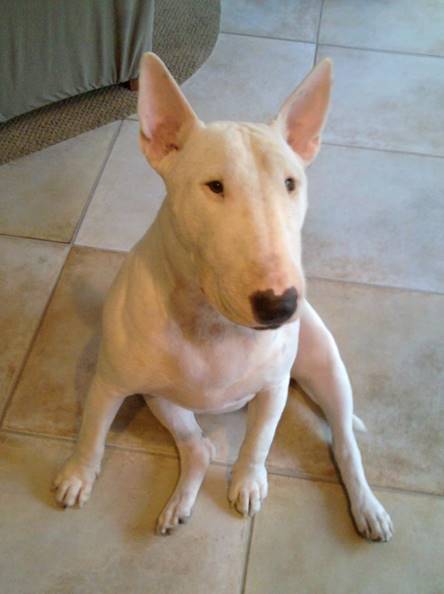
Ace Slayton “enjoying” his dad’s copy of the prize book.

Kara Church

Pronouns: she/her/hers

Technical Editor, Advisory

Editor’s Corner Archives: https://episystechpubs.com/

Posted by: Jack Henry | December 10, 2020

Editor’s Corner: More Malaphors and Contest Results

Good morning, everyone!

A big thank you to everyone who sent in a submission (or a bunch of them) for the malaphor contest. Just to jog your memory, a malaphor is a mix of aphorisms, idioms, or clichés. I received tons of submissions. Some might not really qualify as malaphors, some have been borrowed from elsewhere, and some are from families who seem to have a talent for mixing their phrases unknowingly. I did ask for G-rated, but there are a few in here that might get into PG-13. Consider yourselves warned!

And the winners? Keith Slayton sent in the most submissions and made the 15-year-old schoolboy in my head laugh out loud. I will share most of his with you in the next email. And our random winner is Rebecca Nellis, who submitted “The road to hell wasn’t paved in a day,” which seems like a pretty good description of this past year.

Today, in no particular order, is the first batch. Enjoy!

Ted Tarris

  • Half a dozen of one and that’s a whole other bowl of worms.
  • Fool me once, shame on you. Fool me twice, won’t get fooled again.
  • He’s a couple beers short of an early bird.

Ron Harman

  • Once in a blue moon, you may need to tell ‘em to put it where the sun don’t shine.
  • If all your friends jumped off a cliff, would you hold your horses?
  • My ears are burning the candle at both ends.
  • He was three sheets to the wind beneath my wings.
  • I’m up the creek without a pot to pee in.

Nathan Allen

  • Don’t count all the eggs in one basket.
  • Don’t make a mountain out of a hill of beans.
  • As busy as a one-legged bee.
  • The truth is as plain as the nose you cut off to spite your face.
  • Let sleeping dogs lie or you’ll wake up with fleas.

Jason Matheney

  • Jumping through some hurdles.
  • Whole nother ballgame to tackle.
  • I ain’t gonna spill milk over it.
  • Preaching to the crowd.

Laura Reece

  • Killing two birds in one bush.

Dan Green

  • Don’t kill the goose that lays all your eggs in one basket.
  • It’s no use beating a gift horse midstream.
  • Walk softly, but carry a big bull by the horns.
  • Don’t put the cart before the beaten, dead gift horse that you can’t make drink and looked in the mouth and changed midstream.

Rebecca Nellis

Dave Foss

  • That’s water over the bridge.

Debbie Seufert

  • A bird in hand is worth its weight in gold.

Robert Ellison

  • It ain’t rocket surgery.

Javier Romero

  • If the pie fits, shoot it.

George Cameron

  • Has the cat got your nose?
  • A bird in the head hurts (from the Dick Van Dyke show)

From classic TV/movies:

  • I’ll run it up the flag pole and see if it makes a splash.
  • You’re burning the candle at both ends—and in the middle too!

Brent Jones

  • Don’t count your chickens until the cows come home.
  • Never look a gift horse in the eye.
  • Cuts like a knife through sliced bread.
  • All that glitters isn’t money in the bank.
  • Every cloud has a silver rainbow.
  • When life gives you lemons, look on the bright side.

Riley Hughes

  • If the ducks align…

Mari Kreft

  • He’s all hat and no cattle.
  • He’s as funny as a rubber gut.

Yonesy Núñez

  • A bird in hand is worth more than two eggs in a basket.

Mary Schneider

  • He is a few fruit loops short of the top of the elevator.
  • He is a few fruit loops short of a plate of spaghetti.

Brandi Binion

  • All that glitters is having cake and eating it too.

And two of you included me in your email malaphor battle. Rather than include the whole string of combatant barbs to each other, I am just including the resulting malaphors from Ron, and a now-retired Symitarian, Michael Timmerman. You might be able to tell by his malaphors that Ron is missing the treats we used to bring in to share with each other.

Ron Fauset

  • Take me out to the ballgame to eat cake.
  • It’s raining cats and let them eat cake.
  • Don’t bite the hand that lets them eat cake.
  • Bend over backwards to let them eat cake.
  • You can lead a horse to water and let them eat cake.
  • A fool and his money lets them eat cake.
  • A stitch in time to let them eat cake.
  • Don’t look a gift horse in the mouth when they’re eating cake.
  • Nothing’s certain in life but letting them eat cake.
  • Add insult to let them eat cake.
  • That’s the best thing since letting them eat cake.
  • Burn the midnight oil to let them eat cake.
  • Cost an arm and let them eat cake.

Michael Timmerman

  • That’s putting the cake before the dead horse.
  • You can’t swing a piece of cake around here without hitting a bullseye!
  • I can’t swing a dead horse around here without hitting a malaphor!
  • Fine! You can have my malaphor when you can pry it from my cold, dead horse!

Kara Church

Pronouns: she/her/hers

Technical Editor, Advisory

Editor’s Corner Archives: https://episystechpubs.com/

Posted by: Jack Henry | December 8, 2020

Editor’s Corner: More Pronoun Information

Hi, folks.

Recently, I wrote about the pronouns I and me. And I asked whether it is correct to say, “It is me” or “It is I.” (Hint: the correct phrase is “It is I.”)

I have a little more information about pesky pronouns. Today, I’m offering you some comparisons, and your mission, should you choose to accept it, is to pick the correct sentence from the pairs listed here:

  • She sings better than me.
  • She sings better than I.
  • I am taller than she.
  • I am taller than her.

If you chose mefor the first pair and herfor the second, you’re in good company. But just as I mentioned last time with the phrase “It is I,” they sound right because of many years of incorrect usage by many people. Here are the correct sentences:

  • She sings better than I.
  • I am taller than she.

And here is the reasoning: what we really mean to say is, “She sings better than I sing” and “I am taller than she is.” If you want a trick to help you remember which pronoun to use, all you have to do is repeat the verb:

  • She sings better than I sing.
  • I am taller than she is.

And just one more comment about pronouns. We have mentioned this before, but it bears repeating—at JHA, we advocate and encourage the use of they as a gender-neutral singular pronoun. For example, we would write, “If the client experiences any problem, they should open a case” (rather than “he or she should open a case”). Using they as a singular pronoun, even in professional writing, is also endorsed by Merriam-Webster, the APA, the Oxford English Dictionary, and many other well-regarded resources because it is respectful and inclusive of all people, and it helps writers avoid making assumptions about gender.

Now go enjoy your day!

Donna Bradley Burcher | Senior Technical Editor | Symitar®

8985 Balboa Ave. | San Diego, CA 92123 | Ph. 619.278.0432 | Ext: 765432

Pronouns she/her/hers

About Editor’s Corner

Editor’s Corner keeps your communication skills sharp by providing information on grammar, punctuation, JHA style, and all things English. As editors, we spend our days reading, researching, and revising other people’s writing. We love to spend a few extra minutes to share what we learn with you and keep it fun while we’re doing it.

Did someone forward this email to you? Click here to subscribe.

Don’t want to get Editor’s Corner anymore? Click here to unsubscribe.

Do you have a question or an idea for Editor’s Corner? Send your suggestions or feedback to Kara and <a href="mailto:DBurcher.

NOTICE: This electronic mail message and any files transmitted with it are intended
exclusively for the individual or entity to which it is addressed. The message,
together with any attachment, may contain confidential and/or privileged information.
Any unauthorized review, use, printing, saving, copying, disclosure or distribution
is strictly prohibited. If you have received this message in error, please
immediately advise the sender by reply email and delete all copies.

« Newer Posts - Older Posts »

Categories