Posted by: Jack Henry | May 23, 2012

Editor’s Corner: Flesh or Flush?

Your requests tell me it’s time for some frequently confused words and phrases. These definitions are from Common Errors in English Usage, by Paul Brians. (Also available online at: http://www.wsu.edu/~brians/errors/)

FLESH OUT/FLUSH OUT

To “flesh out” an idea is to give it substance, as a sculptor adds clay flesh to a skeletal armature. To “flush out” a criminal is to drive him or her out into the open. The latter term is derived from bird-hunting, in which one flushes out a covey of quail. If you are trying to develop something further, use “flesh”; but if you are trying to reveal something hitherto concealed, use “flush.”

FORMALLY/FORMERLY

These two are often mixed up in speech. If you are doing something in a formal manner, you are behaving formally; but if you previously behaved differently, you did so formerly.

PERSPECTIVE/PROSPECTIVE

“Perspective” has to do with sight, as in painting, and is usually a noun. “Prospective” generally has to do with the future… (“What are your prospects, young man?”) and is usually an adjective. [KC – At work we are speaking of “prospective clients,” not “perspective clients,” Unless, of course, you are talking about on-site visitors here to teach you the best way to use charcoal pencils to draw
a barn off in the distance. J]

Kara Church | Senior Technical Editor

Symitar, A Jack Henry Company

8985 Balboa Ave. | San Diego, CA 92123

Today’s tidbit is from Mignon Fogarty, also known as Grammar Girl (at quickanddirtytips.com).

Is It OK to Abbreviate "Barbecue" as "BBQ"?

Is that party you’re planning a barbecue, barbeque, bar-b-que, bar-b-q, or BBQ?

The most accepted spelling of the word is "barbecue" because it most closely resembles the word from which it’s derived—"barbacòa." The shorter forms, such as "bar-b-q," are just abbreviations that play on the sounds from the syllables "be" (b) and "cue" (q).

Most sources say the Spanish adopted the word "barbacòa" from local populations they encountered in the Caribbean who used the word to describe the wooden frameworks they used to cook meat.

Kara Church | Senior Technical Editor

Symitar, A Jack Henry Company

8985 Balboa Ave. | San Diego, CA 92123

Posted by: Jack Henry | May 21, 2012

Editor’s Corner: A Bit of Its and It’s

Today’s item is a special request from San Diego. The question is: Are Utz really better than nuts? Wait—that’s Mad Men. The actual question is: How do I know whether to use “its” or “it’s”?

its

Its is the possessive form of the pronoun it.

Examples:

The dog lost its collar.

The tasty vegetarian “meatloaf” gets its great flavor from a secret ingredient: ground beef.

Hint:

Singular pronouns his, hers, and its all end with “s,” but none of them require an apostrophe.

It’s

It’sis a contraction for it is or it has.

Example:

It’s been sunny all day today; I hope it’s sunny tomorrow.

(It has been sunny all day today; I hope it is sunny tomorrow.)

Hint:

Read the questionable text. If you can replace it’s with it isor it has and it still makes sense, use the apostrophe. If the replacement terms don’t work, you’re probably looking at the possessive pronoun and the apostrophe should be removed.

Kara Church | Senior Technical Editor

Symitar, A Jack Henry Company

8985 Balboa Ave. | San Diego, CA 92123

Posted by: Jack Henry | May 18, 2012

Editor’s Corner: Hither and Thither

Happy Friday! Today we have the second helping of words from “30 Archaic Adjectives and Adverbs” by Mark Nichol (DailyWritingTips.com).

· Hither (adj., adv.): to this place (“Come hither when you are able”)

· Hitherto: see heretofore [KC – heretofore: up to this time]

· Lief (adj., adv.): beloved (“You are my lief friend”); willing (“I would as lief be beside you now”)

· Mayhap (adv.): perhaps (“Mayhap we shall see them tomorrow”)

· Meet (adv.): appropriate (“It is meet that you do so”)

· Nary (adj.): not any or not one (“Nary a sign have I seen of him”)

· Natheless (adv.): nevertheless (“Though it is dangerous, natheless will I go)

· Needs (adv.): necessarily (“I must needs be heard so that all shall know”)

· Nigh (adj., adv.; prep.): near, nearly, direct (“Those who pursue are nigh upon us”)

· Peradventure (adj., adv., prep.): see mayhap (also n.: a doubt or chance)

Kara Church | Senior Technical Editor

Symitar, A Jack Henry Company

8985 Balboa Ave. | San Diego, CA 92123

Posted by: Jack Henry | May 17, 2012

Thursday’s Answers (Parallelism)

The number of responses per answer:

AAA – 49

BBB – 3

ABA – 4

BAB – 1

AAB – 14

BAA – 4

And total responses: 65

The correct sentences are in bold, with the parallel items italicized.

Select the sentence that illustrates the use of proper parallel construction.

In French class, Pete learned to read poems critically and to appreciate good prose.
In French class, Pete learned to read poems critically and he appreciated good prose.

She wanted three things from the university: to join a sorority, to make good friends, and to learn how to party like a rock star.
She wanted three things from the university: to join a sorority, to make good friends, and learn how to party like a rock star.

Mr. Hadubi rewarded his students for working hard on the final project and going beyond the call of duty.
Mr. Hadubi rewarded his students for their hard work on the final project and going beyond the call of duty.

For more information on parallelism, check out this link:
http://grammar.ccc.commnet.edu/grammar/parallelism.htm

Kara Church | Senior Technical Editor

Symitar, A Jack Henry Company

8985 Balboa Ave. | San Diego, CA 92123

Posted by: Jack Henry | May 17, 2012

Editor’s Corner: Thursday’s Quiz – Parallelism

Today’s quiz is on parallelism. Here is a very brief definition, from a textbook used at the University of Washington some time ago (faculty.washington.edu/davidgs/ParallelConstruc.pdf):

Parallel construction, also called parallelism, shows that two or more ideas are equally important by stating them in grammatically parallel form: noun lined up with noun, verb with verb, phrase with phrase. Parallelism can lend clarity, elegance, and symmetry to what you say:

I came;

I saw;

I conquered.

–Julius Caesar

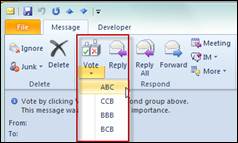
Select the sentence from each pair that illustrates the use of proper parallel construction. Use the voting buttons (in MS Outlook) to respond with your answer before noon today. I will send the correct answers and a tally of all responses sometime after that.

1. (A) In French class, Pete learned to read poems critically and to appreciate good prose.
(B) In French class, Pete learned to read poems critically and he appreciated good prose.

2. (A) She wanted three things from the university: to join a sorority, to make good friends, and to learn how to party like a rock star.
(B) She wanted three things from the university: to join a sorority, to make good friends, and learn how to party like a rock star.

3. (A) Mr. Hadubi rewarded his students for working hard on the final project and going beyond the call of duty.
(B) Mr. Hadubi rewarded his students for their hard work on the final project and going beyond the call of duty.

Kara Church | Senior Technical Editor

Symitar, A Jack Henry Company

8985 Balboa Ave. | San Diego, CA 92123

Posted by: Jack Henry | May 16, 2012

Editor’s Corner: Archaic Adverbs & Adjectives

Today we have a third of the words from “30 Archaic Adjectives and Adverbs” by Mark Nichol (DailyWritingTips.com). Try a few of these on for size in Balboa Park the next time the Society for Creative Anachronism is practicing—you’ll gain friends for life or be chased out of the park by a madman in chain mail—either way, an exciting Saturday. [KC]

From Mark Nichol:

The words below are obsolete, archaic, or old-fashioned, and though those in the latter category can still be found in modern writing, use all with caution. Sparing use keeps these words alive and adds a whimsical or quaint note, but too frequent recourse to such antiquities will have you sounding like a Renaissance Faire refugee. (Most are adjectives or adverbs or both; some can function as other parts of speech as well, as indicated.)

1. Anon (adv.): soon, or later (“They will arrive anon”; “I will reveal more anon”)

2. Aright (adv.): correctly (“Did I hear aright?”)

3. Athwart (adj., prep.): across (“The locked chest lay athwart the planks”)

4. Belike (adv.): probably (“Belike we are more similar than you think”)

5. Enow (adj., adv.): enough (“If I had loved enow, I would be a happier man”)

6. Fain (adj., adv.): willing, compelled, inclined, pleased (“Fain am I to hear you sing”)

7. Forsooth (adv.): indeed (“Forsooth, I do believe you envy him”)

8. Forthwith (adv.): immediately (“Carry this message forthwith”)

9. Froward (adj.): contrary, adverse (“His horse was forward [sic], and threw him when he set his spurs”) [KC – Example should also be “froward.”]

10. Heretofore (adv.): up to this time (“Heretofore, I had not believed it possible”)

Kara Church | Senior Technical Editor

Symitar, A Jack Henry Company

8985 Balboa Ave. | San Diego, CA 92123

Posted by: Jack Henry | May 15, 2012

Editor’s Corner: Neuter Your Nouns

Today’s blurb is about gender-specific pronouns. This can be tough when writing because people try to avoid it and end up using “their” as a pronoun to describe one person, even though “their” is plural. For example, “The driver forgot to use their signal.” You may be avoiding “his” or “hers,” but you’re committing a grammar crime to do it. The following information is from the Purdue OWL (http://owl.english.purdue.edu/owl/resource/560/14/), though it borrows heavily from the American Psychological Association (APA) style guide.

To avoid using gender-specific terms or generic terms (“he,” “his,” “men”) for both sexes:

APA does not recommend replacing "he" with "he or she," "she or he," "he/she," "(s)he," "s/he," or alternating between "he" and "she" because these substitutions are awkward and can distract the reader from the point you are trying to make. The pronouns "he" or "she" inevitably cause the reader to think of only that gender, which may not be what you intend. [KC – Our goal for eDocs is to avoid any of these substitutions, too, by following the advice below.]

To avoid the bias of using gendered pronouns:

· Rephrase the sentence

· Use plural nouns or plural pronouns – this way you can use "they" or "their"

· Replace the pronoun with an article – instead of "his," use "the"

· Drop the pronoun – many sentences sound fine if you just omit the troublesome "his" from the sentence

· Replace the pronoun with a noun such as "person," "individual," "child," "researcher," etc.

· [KC – Use active voice and second person when appropriate. Such as, “Your credit union may require that
you verify this with the administrator.”]

Kara Church | Senior Technical Editor

Symitar, A Jack Henry Company

8985 Balboa Ave. | San Diego, CA 92123

Posted by: Jack Henry | May 14, 2012

Editor’s Corner: Grand Master Dash

Some of you who’ve sent things to editing may have noticed that we can be picky about dashes. Why? Well, partly because we are picky, but also because different dashes have different uses and meanings. Today we’ll have a look at the en dash and when, how, and where to use it.

The en dash symbol is used primarily as a connector for numbers. It is approximately the same width as the letter n (depending on the font), and is a little bit longer than a hyphen. When you use the en dash, you should not add space on either side of it.

Note: To insert an en dash in Word or other Microsoft software, go to Insert > Symbol and click the Special Characters tab; or, use the Ctrl+Num (minus sign) keyboard shortcut.

The remainder of the information is from the Chicago Manual of Style (chapter 6, section 78):

En dash as “to”

The principal use of the en dash is to connect numbers and, less often, words. With continuing numbers—such as dates, times, and page numbers—it signifies up to and including (or through). [KC – Note: The dashes in the previous sentence are em dashes, something different.] For the sake of parallel construction, the word to, never the en dash, should be used if the word from precedes the first element in such a pair; similarly, and, never the en dash, should be used if between precedes the first element.

· The years 1993–2000 were heady ones for the computer literate.

· For documentation and indexing, see chapters 14–16.

· Join us on Thursday, 11:30 a.m.–4:00 p.m., to celebrate the New Year.

· I have blocked out December 2009–March 2010 to complete my manuscript.

but

· She was in college from 1998 to 2002 (not from 1998–2002).

In other contexts, such as with scores and directions, the en dash signifies, more simply, to.

· The London–Paris train leaves at two o’clock.

· On November 20, 1966, Green Bay defeated Chicago, 13–6.

· The legislature voted 101–13 to adopt the resolution.

Kara Church | Senior Technical Editor

Symitar, A Jack Henry Company

8985 Balboa Ave. | San Diego, CA 92123

Posted by: Jack Henry | May 11, 2012

Editor’s Corner: 3 misconceptions about common sayings

Today we have three commonly misheard sayings and some pictures! This is from an article by J. Frater, called 10 Misconceptions About Common Sayings, found here: listverse.com/2009/03/23/10-misconceptions-about-common-sayings.

Note: Australian article, follows British punctuation rules.

Free Reign (Free Rein)

Common Saying: To give someone free reign

This is a spelling error that leads to a misunderstanding – though the meanings remain the same fundamentally. Many people presume this phrase to mean that a person given free reign, has the “royal” power to do anything they want. In fact, the correct phrase is “free rein” and it comes from the days before cars when horses were used as our main mode of transport. When navigating a steep or winding path, one would relax the reins so that the horse could pick the safest path as he was more likely to do a better job than the rider.

Scot Free

Common Saying: To get off scot free

Many people think that this saying refers to Scottish people being tight with money – hence something being free, but in fact the word “scot” is an old Norse word which means “payment” – specifically a payment made to a landlord or sheriff. So this phrase – while meaning what most people think it means, has no connection to the Scottish people – it just means to get off without having to pay.

Wreck Havoc (Wreak Havoc)

Common Saying: To wreck havoc

Havoc means chaos – and to wreck something is to put it into a state of chaos. So why would you make chaos out of chaos? You wouldn’t. What you might do is wreak havoc though – because “to wreak” means “to cause to happen”. The two words are pronounced differently – wreck sounds like “rek” while “wreak” sounds like “reek”. It is a small – but common, error.

Kara Church | Senior Technical Editor

Symitar, A Jack Henry Company

8985 Balboa Ave. | San Diego, CA 92123

« Newer Posts - Older Posts »

Categories