Posted by: Jack Henry | June 25, 2012

Editor’s Corner: Style Guides

Good morning, everyone!

Today I’d like to direct you to the online version of the Editor’s Corner. More specifically, this page: https://episystechpubs.wordpress.com/style-guides/. Since I’m often referring to the different style guides we use throughout the company, I thought I’d take a minute to tell you a little bit about this important tool that editors and writers here use on a daily basis. It also includes a bit of information on JHA’s own Brand Identity Standards—a companywide set of guidelines that promotes the “one company” maxim, and looks darn spiffy, too!

Additionally, I’ve added a tab with the resources I use and quote in the daily e-mail and posts. You can find that here: https://episystechpubs.wordpress.com/editors-corner-references-and-resources/.

NOTICE: This electronic mail message and any files transmitted with it are intended
exclusively for the individual or entity to which it is addressed. The message,
together with any attachment, may contain confidential and/or privileged information.
Any unauthorized review, use, printing, saving, copying, disclosure or distribution
is strictly prohibited. If you have received this message in error, please
immediately advise the sender by reply email and delete all copies.
Posted by: Jack Henry | June 22, 2012

Editor’s Corner: I palindrome I

Today’s topic is the palindrome. A palindrome is a word, phrase, sentence, or number that reads the same backwards and forwards (with some allowance for punctuation and spacing).

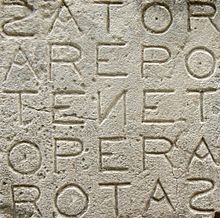
According to Wikipedia (http://en.wikipedia.org/wiki/Palindrome), the first palindrome is dated back to 79 AD:

This palindrome, called the Sator Square, consists of an entire sentence written in Latin: "Sator Arepo Tenet Opera Rotas" ("The sower Arepo holds works wheels"). It is remarkable for the fact that the first letters of each word form the first word, the second letters form the second word, and so forth. Hence, it can be arranged into a word square that reads in four different ways: horizontally or vertically from either top left to bottom right or bottom right to top left.

Sator Square

And now, from Fun with Words (http://www.fun-with-words.com/palindromes.html) I have some more recent palindromes (in English):

· Murder for a jar of red rum

· Never odd or even

· Too bad – I hid a boot

· No trace; not one carton

· Go hang a salami; I’m a lasagna hog!

· Doc Note: I dissent. A fast never prevents a fatness. I diet on cod.

· Anne, I vote more cars race Rome to Vienna.

· Campus Motto: Bottoms up, Mac

· Go deliver a dare, vile dog!

· Madam, in Eden I’m Adam.

· Dennis sinned.

Posted by: Jack Henry | June 21, 2012

Editor’s Corner: Jumble Answers

Here are the answers to the jumble today. I’m sorry some of you found it simple and boring, but difficult and exciting would take too much time out of your workday. 🙂

· independence

· barbeque

· July

· America

· fireworks

Here is a gold star for those of you who had the correct answers:

Kara Church | Senior Technical Editor

Symitar, A Jack Henry Company

8985 Balboa Ave. | San Diego, CA 92123

Posted by: Jack Henry | June 21, 2012

Editor’s Corner: A Yankee Doodle Dandy Declaration

Good morning, and as John Cleese might say—“And now for something completely different!” Today, in place of a quiz, I have a word jumble for you. Unscramble each of the words below and you will find they have a common theme. I’ll send the answers out today around noon. Have fun!

1. DNEEIEPNNCDE

2. AUEBBEQR

3. LJUY

4. EIRMACA

5. EFRIOWKRS

Kara Church | Senior Technical Editor

Symitar, A Jack Henry Company

8985 Balboa Ave. | San Diego, CA 92123

Posted by: Jack Henry | June 20, 2012

Editor’s Corner: Second Half of the Numbers and Numerals

So many eager folks yesterday, begging for “ordinal numbers” and the like! Here is the other half of the article “10 Types of Numerical Terms,” by Mark Nichol, from DailyWritingTips.com:

Ordinal Numbers

Ordinal numbers — first, second, third, and so on — represent sequential order. Second is anomalous in that it alone comes from Latin rather than Old English; it supplanted the ambiguous English word other (still used in this sense in the phrase “every other”). There was never a twoth — or a [sic] onth, for that matter; that latter vacancy was filled by a form of fore, while third and so on are derived from the cardinal numbers.)

This is a good place to remind writers to deactivate the function on their computer that, by default, creates superscript ordinal indicators (miniature renditions of st, nd, rd, and th perched on the right shoulders of numerals). The perverse persistence of this Victorian affectation in state-of-the-art word-processing programs is a puzzler — and an annoyance to editors, who have to convert such aberrant symbols into baseline indicators before production. [KC – While I do not get annoyed by this “perversity,” it
is something many editors change, including those of us in the San Diego shop.]

Partitive Numbers

Partitive numbers — half, thirds, fourths, and so on — represent fractions. Half, which is from Old English, originally meant merely “part.” (Behalf, meaning “on the part of,” retains this imprecise meaning.) The others are just variations on Old English terms for the associated numbers.

Ranking Numerals

Ranking numerals – primary, secondary, tertiary, and so on (this class shares quaternary and higher values with the composite-numbers category) — represent degrees of importance or relevance. These terms are ultimately Latin in origin.

Reproductive Numbers

Reproductive numbers — single, double, triple, and so on, plus the generic multiple — represent replication. Single and double are from Latin by way of French; the higher values are all directly from Latin.

Miscellaneous Terms

Deuce, from the similarly pronounced precursor to French deux, is an old-fashioned synonym for two that persists in sports and gambling references. The mild oath “What the deuce,” a euphemism for “What the devil?” probably comes from association with deuce as a low score and therefore the outcome of bad luck.

Trinity, from Latin through French, and triad, directly from Latin, both mean “a group or set of three.” Triplicate, meaning “threefold,” is from Latin; -fold is from the Old English cognate of -plus, which is where we got the element -ple and its extension -plicate. Treble is the French form of triple; both come from the Latin triplus. Trice, used in the phrase “in a trice,” meaning “quickly,” is unrelated to thrice (“three times”); it’s of nautical origin, from a Middle English word borrowed from a Dutch term meaning “pull, hoist.”

NOTICE: This electronic mail message and any files transmitted with it are intended
exclusively for the individual or entity to which it is addressed. The message,
together with any attachment, may contain confidential and/or privileged information.
Any unauthorized review, use, printing, saving, copying, disclosure or distribution
is strictly prohibited. If you have received this message in error, please
immediately advise the sender by reply email and delete all copies.

Posted by: Jack Henry | June 19, 2012

Editor’s Corner: Cardinals, Collectives, and Composites

Today’s tidbits are from an article on numerical terms on DailyWritingTips.com.

Note to Symitar/Episys readers: According to most style guides, Mr. Nichol uses the em dash incorrectly. If you follow The Chicago Manual of Style, there should not be any space on either side of the dash.

*********

(From “10 Types of Numerical Terms,” by Mark Nichol)

How many categories of numerals are there, and what are their functions? No, you haven’t stumbled onto DailyMathTips.com by mistake; this post helps sort out the ways you can refer to numbers and under which circumstances, with nary a digit or operational sign in sight. Ready? One, two, three . . .

Cardinal Numbers

Cardinal numbers — one, two, three, or the numeric equivalents, and so on — represent simple quantity (though, as shown in the previous paragraph, they can also be employed in a countdown — or, in that case, a countup). The names of English numerals are all derived from Old English, as are the suffixes -teen, which derives from a form of ten and means “ten more than,” and -ty, which means “ten.” Hundred and thousand are also derived from old English, but million and other terms for orders of magnitude come from Latin by way of French.

Collective Numerals

Collective numerals represent sets. There are various subcategories — kinship terms such as twin and triplet, and musical terms like duo and trio – and, well, singletons, like that word, pair, dozen, and so on. Language origin varies among these assorted words.

Composite Numbers

Composite numbers — unary, binary, ternary, and so on — represent composition (what something is composed of). Binary is the only one of these Latin-derived terms commonly used, though quaternary was applied to a geological age.

Distributive Numerals

Distributive numerals represent alternating patterns. In some languages (like Latin, which has singuli and bini, for example, to mean “one by one” or “two by two” respectively), these numerals are represented by a single term, are usually described in English in phrases such as “each day,” “every other week,” and “every third month.” However, English also has one-word examples such as centennial and its multiplied variants, descended from Latin terms.

Multiplicative Numbers

Multiplicative numbers — once, twice, thrice — represent repetition. The ancestors of these words are variations on the Old English words for one, two, and three. Among the categories listed in this post, the multiplicative group is the only one that does not represent any value higher than three. (The reason for this lack is unknown, though perhaps it’s because it’s rarely necessary to describe an attempt or action beyond several previous efforts.)

Kara Church | Senior Technical Editor

Symitar, A Jack Henry Company

8985 Balboa Ave. | San Diego, CA 92123

Posted by: Jack Henry | June 15, 2012

Editor’s Corner: A spoonful of sugar…

Let’s start the weekend early with something fun! Today we’ll look at Spoonerisms. Spoonerisms are words or phrases where certain sounds get mixed up—when you’re talking faster than you think, or perhaps have had too much to drink. My dad’s second favorite is “I’d rather have a bottle in front of me than a frontal lobotomy.” His number one favorite is not fit for print. 🙂

The Spoonerism was named after Reverend William Archibald Spooner, a man who apparently mixed his words often. A brief history of the reverend and more details on Spoonerisms can be found on The Wordplay Web Site (http://www.fun-with-words.com/spoon_history.html). The list below contains an edited list of Spoonerisms from the same web site.

Enjoy!

From Reverend Spooner himself…

Spoonerism Actual Phrase
fighting a liar lighting a fire
you hissed my mystery lecture you missed my history lecture
cattle ships and bruisers battle ships and cruisers
nosey little cook cozy little nook
a blushing crow a crushing blow
we’ll have the hags flung out we’ll have the flags hung out
you’ve tasted two worms you’ve wasted two terms
our shoving leopard our loving shepherd
a half-warmed fish a half-formed wish

…and from others…

Spoonerism Actual Phrase
lack of pies pack of lies
I’m a damp stealer I’m a stamp dealer
mad bunny bad money
lead of spite speed of light
I hit my bunny phone I hit my funny bone
flutter by butterfly
it crawls through the fax it falls through the cracks
my zips are lipped my lips are zipped
Would you like a nasal hut? Would you like a hazel nut?
belly jeans jelly beans

Kara Church | Senior Technical Editor

Symitar, A Jack Henry Company

8985 Balboa Ave. | San Diego, CA 92123

Posted by: Jack Henry | June 14, 2012

Editor’s Corner: Irregular Verbs Answer Time!

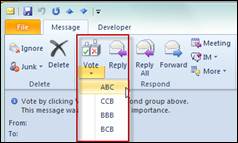
Folks, I’m sorry I forgot the voting buttons on my e-mail earlier.

Today’s response totals are:

ABC – 0

CCB – 50

BBB – 4

BCB – 53

CCC – 5

Total number of responders: 112

Looks like the first question threw a lot of people for a loop. At the bottom I’ve included a “lay/lie” chart; I think it is better than the one from last week.

1) In the early morning, before they get him up, he lies in his crib and sings. [I lie, you lie, he lies]

2) At midnight, the boy crept downstairs as quietly as he could.

3) As Allie and Timmy sit together, she reads American Psycho, which she had brought for him.

Review of Lie and Lay(from http://www.auntruthgrammar.com/)

Lie

Tense Form Examples
Present Lie I think I will lie down for a while.
Past Lay Yesterday, I lay in bed until noon.
Past Participle Lain She has lain on the couch all afternoon.
Present Participle Lying Mildred is lying in bed.

Lay

Tense Form Examples
Present Lay I think I will lay the book on the table.
Past Laid Yesterday, I laid the book on the table.
Past Participle Laid She has laid the book on the table.
Present Participle Laying Mildred is laying the book on the table.

Kara Church | Senior Technical Editor

Symitar, A Jack Henry Company

8985 Balboa Ave. | San Diego, CA 92123

Posted by: Jack Henry | June 14, 2012

Editor’s Corner: Thursday’s Quiz – Irregular Verbs

It’s time for Thursday’s quiz! Today were going to concentrate on irregular verbs. To those of you new to the quiz, here’s how it goes if you subscribe to Editor’s Corner:

· I send an e-mail with a few questions.

· You jot down your answers.

· You click the response that corresponds to your answers by using the voting buttons (Outlook only).

· I send the correct answers (and a count of how many people selected each answer) around noon.

It’s all for fun, and if you want or need to look something up, I encourage it. Sometimes research is the best way to learn.

1) In the early morning, before they get him up, he _____ in his crib and sings.

a. laid

b. lies

c. lays

2) At midnight, the boy ____ downstairs as quietly as he could.

a. creep

b. creeped

c. crept

3) As Allie and Timmy sit together, she reads American Psycho, which she had _____ for him.

a. brang

b. brought

c. brung

Kara Church | Senior Technical Editor

Symitar, A Jack Henry Company

8985 Balboa Ave. | San Diego, CA 92123

Posted by: Jack Henry | June 13, 2012

Editor’s Corner: No comma drama

Some know it as the “Oxford comma,” others call it the “Harvard comma,” but outside of these universities we little people call it the “serial comma.” This tiny speck has led to much debate among writers, editors, and other word nerds around the world.

For those of you who don’t know what I’m talking about, it is the comma that precedes the word “and” in a series. In the following example, it is the comma after “singing” and before “and.”

John likes fishing, singing, and bowling.

Most style guides, including The Chicago Manual of Style, recommend the use of the serial comma because it prevents ambiguity; however, The Associated Press Stylebook, the style guide used by many newspapers, magazines, and our Marketing department, is an exception. The AP Stylebook essentially tells writers not to use the serial comma, unless “an integral element of the series requires a conjunction” or “before the concluding conjunction in a complex series of phrases.” I say, make it easy—use the serial comma. As Bryan A. Garner says in his book Garner’s Modern American Usage, “Whether to include the serial comma has sparked many arguments. But it’s easily answered in favor of inclusion because omitting the final comma may cause ambiguities, whereas including it never will.”

Not sold on making that extra keystroke? Below is an example from The Chicago Manual of Style that demonstrates what can happen without the serial comma. I rest my case.

“Among those interviewed were his two ex-wives, Kris Kristofferson and Robert Duvall.”

Kara Church | Senior Technical Editor

Symitar, A Jack Henry Company

8985 Balboa Ave. | San Diego, CA 92123

« Newer Posts - Older Posts »

Categories