Posted by: Jack Henry | November 25, 2013

Editor’s Corner: It’s vs. its

Good morning or afternoon. It’s Monday and oh what a Monday it is!

Today’s topic is rated as the number one grammar error by The Blue Book of Grammar and many of you put it in your top ten peeves. The words it’s and its are frequently confused, but they don’t have to be. Here are the simple rules from The Blue Book of Grammar and Punctuation:

Rule 1: When you mean it is or it has, use an apostrophe.
(KC – Sound it out using the two words instead of the contraction. Does it make sense? If it is or it has makes sense in the context, you should use the apostrophe.)

Rule 2: When you are using its as a possessive, don’t use the apostrophe.
(KC – Not sure if it is possessive? Try reading the word as two words [it is or
it has, depending on the verb]. If it doesn’t make sense sounded out as two words, it is possessive. Don’t use the apostrophe.)

Examples:

You should return that book to its/it’s owner.

· You should return that book to its owner. (Sweet bells ring and an angel gets its wings. Yes, its wings—possessive.)

· You should return that book to it’s (it is) owner. (A gong should be ringing in your head saying NOOOOOOOOOOOOOOOO!)

Its/it’s been ten days since I last had hot cider.

· Its been ten days since I last had hot cider. (Hmmm. The spell checker doesn’t like it. Does it sound possessive? Not sure? Try reading it as two words to figure out if it is a contraction.)

· It’s (it has) been ten days since I last had hot cider. (Ah. “It has been” sounds nice; use an apostrophe because it is a contraction!)

She said that its/it’s her Hello Kitty decoder ring.

· She said that its her Hello Kitty decoder ring. (Uh oh. She says it is hers, so could this be possessive? Try reading it as two words. Which way does it sound right?)

· She said that it’s (it is) her Hello Kitty decoder ring. (This makes sense and it needs an apostrophe because it’s a contraction!)

Still confused? Go to your favorite browser and type “it’s vs. its” and you will find a host of grammarians willing to explain it in other ways that might work better for youT.

NOTICE: This electronic mail message and any files transmitted with it are intended
exclusively for the individual or entity to which it is addressed. The message,
together with any attachment, may contain confidential and/or privileged information.
Any unauthorized review, use, printing, saving, copying, disclosure or distribution
is strictly prohibited. If you have received this message in error, please
immediately advise the sender by reply email and delete all copies.


Posted by: Jack Henry | November 22, 2013

Editor’s Corner: Puns for Friday

My apologies to those of you I offended yesterday when I mixed up “addition” and “multiplication” and made an incorrect statement about math.

Since it is Friday, I’m taking a suggestion from one of our readers (thank you, Mr. Fauset) and writing an email on puns. What exactly is a pun? According to Merriam-Webster, a pun is “the usually humorous use of a word in such a way as to suggest two or more of its meanings or the meaning of another word similar in sound.” As we are a department full of punsters, I would like to note the phrase “usually humorous.” As many of you know, punning around can often lead to some real groaners.

For your viewing pleasure (or pain), here are some different sources for puns:

· From a t-shirt catalog and various sites on the Internet

o 7 days without a pun makes one weak.

o Dishonest golfers don’t play the fairway.

o A hungry clock goes back four seconds.

o A tardy cannibal gets the cold shoulder.

o A backward poet writes inverse.

o Never play cards in the Serengeti. There are too many cheetahs.

o A nosy pepper gets jalapeno business.

o Mathematicians wear glasses because they improve division.

o Tis better to have loved a short person than never to have loved a tall.

o When I talk about computers, I make my motherboard.

o Ancient orators tended to Babylon.

o Fairy tales tend to dragon.

· Visual puns from Buzzfeed

· Your Dictionary puns

Happy Friday!

Kara Church

Senior Technical Editor

619-542-6773 | Ext: 766773

www.symitar.com

NOTICE: This electronic mail message and any files transmitted with it are intended
exclusively for the individual or entity to which it is addressed. The message,
together with any attachment, may contain confidential and/or privileged information.
Any unauthorized review, use, printing, saving, copying, disclosure or distribution
is strictly prohibited. If you have received this message in error, please
immediately advise the sender by reply email and delete all copies.

Posted by: Jack Henry | November 21, 2013

Editor’s Corner: Can’t get no satisfaction.

When does a negative plus a negative equal a positive? Both in math and in English! Using double negatives in English, however, is considered poor form and it leads to people saying one thing when they mean another. For example, “I don’t know nothing” not only sounds bad, but “I don’t” (negative) plus “know nothing” (negative) actually means that you do know something.

A double negative occurs when you use two negative words to express a single negative idea. In English, there are four ways to express negation:

1) Adding the negative adverb “not” to a sentence or clause:
He is not experienced.
She isn’t afraid.

2) Using a “negative” word:
I saw nothing through the fog.
Nobody does it better.
There was nowhere to sit after it rained.
Neither of the cats liked the taste of quail.

3) Converting an affirmative word by adding a negative prefix (such as dis-, un-, non-, in-, etc.):

Affirmative Negative
agreeable disagreeable
cooperative uncooperative
appropriate inappropriate
compliant non-compliant

4) Using one of the following adverbs which can also behave as a negative word:

· hardly

· barely

· scarcely

· seldom

· rarely

Danger, danger, Will Robinson! Combining two items from the different categories above is the equation for a double negative, so don’t do it.

Examples of common double negatives and alternative sentences to use instead:

Incorrect: I didn’t see nothing. (double negative = I did see something.)

Correct: I didn’t see anything. (single negative = I did not see anything.)

Correct: I saw nothing. (single negative = I did not see anything.)

Incorrect: She couldn’t hardly wait for her birthday.

Correct: She could hardly wait for her birthday.

Incorrect: He never talked down to nobody.

Correct: He never talked down to anybody.

Incorrect: We don’t need no stinking badges.

Correct: We don’t need any stinking badges.

Incorrect: I did not bring neither a brush nor a comb.

Correct: I did not bring either a brush or a comb.

Thanks to Oxford Dictionaries for assistances with the concepts and examples today.

Kara Church

Senior Technical Editor

619-542-6773 | Ext: 766773

www.symitar.com

NOTICE: This electronic mail message and any files transmitted with it are intended
exclusively for the individual or entity to which it is addressed. The message,
together with any attachment, may contain confidential and/or privileged information.
Any unauthorized review, use, printing, saving, copying, disclosure or distribution
is strictly prohibited. If you have received this message in error, please
immediately advise the sender by reply email and delete all copies.

Posted by: Jack Henry | November 20, 2013

Editor’s Corner: Butterflies

Good morning! Today I’m going to let you in on a little pondering I’ve been doing.

During vacation, one of our stops was the Monarch Grove Sanctuary near Monterrey, California. The Monarch butterflies “winter” in Pacific Grove where the milkweed and climate is to their liking. A young woman was there with her son, singing him a lullaby about butterflies in French. A few days later, we went to dinner and I noticed the menu included farfalla pasta, which we translate as “bowtie” pasta, but it actually means “butterfly” pasta in Italian.

Monarch Butterflies

So this got me thinking about the words for “butterfly” in other languages. Butterfly, farfalla, papillon—why are they so different? Anyway, I found a web page where someone else was curious about the different words for butterflies. Here is my best translation and editing of the additional information from that page and from Merriam-Webster:

· English: butterfly from Middle English butterflie, from Old English buterflēoge, from butere butter + flēoge fly. Perhaps from the belief that butterflies (or witches in the shape of butterflies) stole milk and butter.

· Italian: farfalla

· French: papillon from Latin papilio

· Catalan: papallona (also from Latin papilio)

· Spanish (Castillian): mariposa from Mari (short for Maria, or “mari” [wife]) + the verb posar (pose)

· German: Schmetterling from a high-Saxon dialect and the Czech word for “cream.” This relates to the propensity of butterflies to flutter around milk pails or butter churns. German and English folklore are similar, that witches transformed into butterflies to steal milk products.

· Modern Greek: πεταλούδα (petalouda) meaning petal or leaf, reflecting the shape of butterfly wings.

Kara Church

Senior Technical Editor

Posted by: Jack Henry | November 19, 2013

Editor’s Corner: There, there, little ones.

My thanks and appreciation to Donna for taking over so I could enjoy a week of fun and relaxation. The California Coast was warm and inviting.

One of the stops we made was inland a bit, to a Danish-American village called Solvang. In Solvang, I noticed something I hadn’t seen since our last voyage much farther away (Belgium and the Netherlands). It seems there’s a new bank in town! Indeed, it is based in the Netherlands, and I would like to go on record as saying this place needs a new marketing department. Here is its logo, which is bad enough (silhouette of a single, faceless man in a dark leotard) but come on! Is this the name of a bank, or is it a command?

Yep. I thought it was a joke when I saw it in Holland. “Honey, I’m going out to Rob-o-bank. Do you need anything?” Yikes.

So, before I left, I asked you all to send me your questions, concerns, and peeves relating to the English language. Here is the number one peeve from your fellow Jack Henryans:

Please cover the difference between there, their, and they’re!

Your wish is my command.

There, their, and they’re are homonyms, which are words that sound alike but are spelled differently and have different definitions. My guess is that most people know the difference, but when you take dictation from the voice in your head you hear one sound (rhymes with “air”) and type whichever spelling comes most naturally (probably there). This just means you should double-check your meaning when you re-read what you wrote.

In case you don’t know the difference between these three words, here you go:

· there – in that place (not here); at that point in a process
Please put your purse on the shelf up there so my dog can’t reach it.

· their – belonging to certain people, animals, or things
Parents all think their kids are “the best.”

· they’re – contraction of “they are”
I talked to the painters; they’re coming by after the job on Fir Street.

Befuddled by these and other homonyms? See the previous Editor’s Corner editions from January and February.

Kara Church

Senior Technical Editor

Posted by: Jack Henry | November 8, 2013

Editor’s Corner: Nuts

Good morning and happy Friday, everyone.

My apologies for an inconsistent week of Editor’s Corner! I’ve been preparing for next month’s JHAdvisor, a break next week, and an actual break in my finger. It is difficult coming up with wonderful witty musings when you can hit the “w” without pressing a “2” instead. 🙂

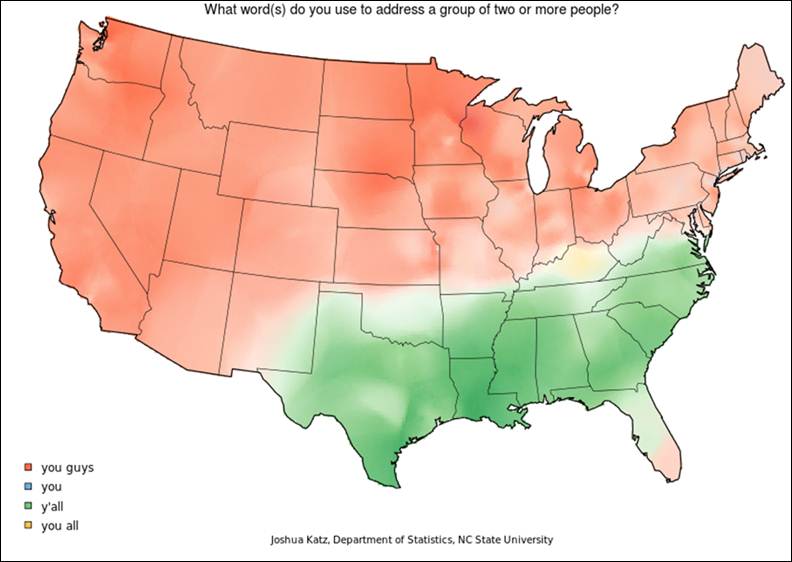
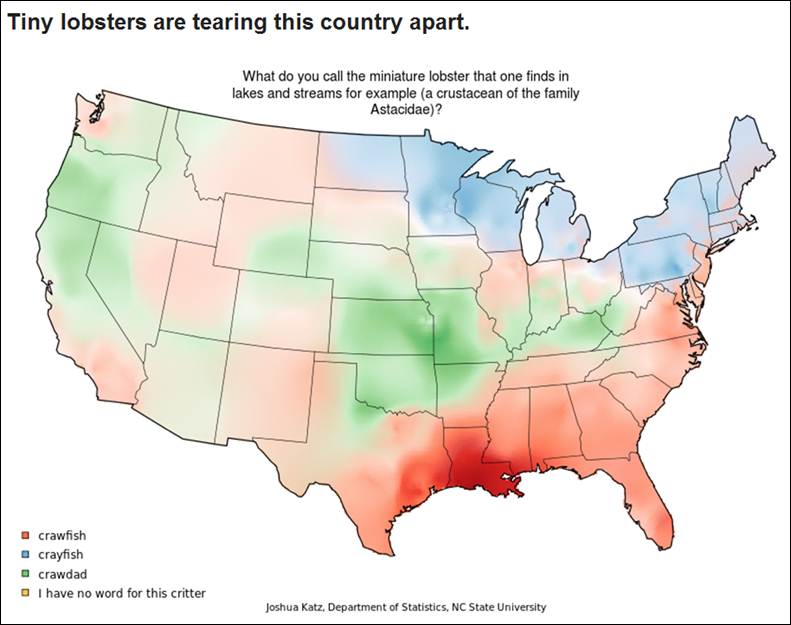
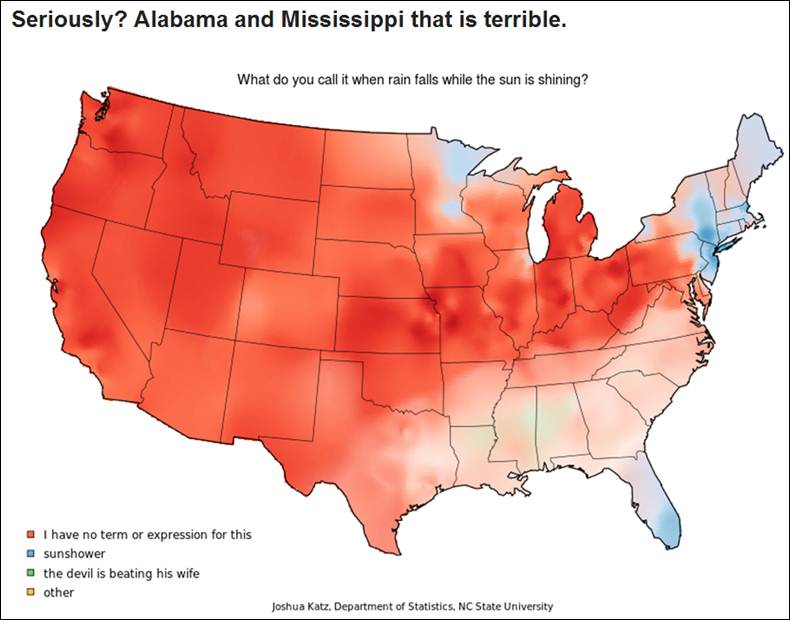
The other day I was listening to a story on the radio about a walnut heist ($400,000 worth) in the San Joaquin Valley. What struck me wasn’t so much the story, but it was the way one of the farmers was talking about nuts. Yes, I’ve heard the different pronunciations of “pecan” before, but this guy was talking about almonds. I pronounce it “ALL-munds,” but he was saying “AL-munds” (like “Al Bundy”). Well, in my search for regional pronunciations I found a great series of maps that review pop, pecans, crawdads, and all sorts of interesting things by region.

I’m including a few in this email, but if you are fascinated by this information you’ll want to check out all 22 of the maps here. Meanwhile, have a good week, be nice to my dear Donna Bradley Burcher who is stepping in, and “see” you soon!

Kara Church

Senior Technical Editor

Posted by: Jack Henry | November 6, 2013

Editor’s Corner: Veterans’ Day

Good morning!

Before I start on today’s item, I’d like to ask you for some input. I have sent out several hundred e-mails on different topics over the years, but with new readers and new venues for Editor’s Corner, I’d like to know what burning questions or grammar issues are at the top of your lists. Please send me your top peeves, the language issues that plague you, and the questions you are too embarrassed to ask in public—about English, grammar, spelling, keyboard symbols, word origins, etc. If your burning questions are not related to these topics, you can still ask me, but you may be better off seeing a doctor instead.

I will do my best to research your questions and provide explanations and answers over the next months. Send your emails directly to me at kchurch. Thank you!

In honor of the upcoming holiday, I have an explanation of Veterans’ Day punctuation from Grammar Girl.

Monday, November 11, is Veterans Day in the United States. Although the government officially calls it Veterans Day, the name is sometimes written as "Veterans’ Day" (which is also a grammatically acceptable choice), or "Veteran’s Day" (which isn’t correct). What’s the difference?

Veterans Day

Posted by: Jack Henry | November 5, 2013

Editor’s Corner: Time Zones, revisited

Good morning, everyone!

I thought grammar lovers and word nerds could get crazy about their peeves; little did I know that there is a huge group of haters out there who want to throat-punch people for saying “daylight savings time.” Dang, people! I love your enthusiasm, but who knew a little phrase would incite such a riot?

The other day I sent out the Chicago Manual of Style’s recommendations for time zones and abbreviations, but I think this excerpt from the JHA Branding Standards is more appropriate and better stated:

The following abbreviations and capitalizations are used for time zones at JHA:

CT for Central Time; ET for Eastern Time; and PT for Pacific Time. It is not necessary to indicate Standard or Daylight time in the time zone abbreviation. You may also use Central, Eastern, Mountain, and Pacific (note capitalization) in cases where using the abbreviation might be confusing in context.

For more on JHA’s companywide standards, go to JHA Today → Marketing → Marketing Library → JHA Corporate Standards.

Kara Church

Senior Technical Editor

619-542-6773 | Ext: 766773

www.symitar.com

NOTICE: This electronic mail message and any files transmitted with it are intended
exclusively for the individual or entity to which it is addressed. The message,
together with any attachment, may contain confidential and/or privileged information.
Any unauthorized review, use, printing, saving, copying, disclosure or distribution
is strictly prohibited. If you have received this message in error, please
immediately advise the sender by reply email and delete all copies.
To Mr. Keith Slayton, my favorite pen pal: thank you for suggesting today’s topic.

Wishing you a solemn All Saints’ Day and a soothing Dia de los Muertos! (For more on the http://en.wikipedia.org/wiki/Hallowmas touched on yesterday, or the Dia de los Muertos, click the respective links.)

As we revel in these holidays and the upcoming weekend, there’s one more thing to celebrate: the time change! Woo-hoo to an “extra” hour of sleep! Don’t forget to turn your clock back an hour on Saturday night or Sunday morning. And here’s a writing-related reminder that goes with that. When you need to indicate time zones, follow the hours and minutes with the correct abbreviation (a.m. or p.m.) and the time zone after those in parentheses. For example: Meet me in the N Satellite security area of Sea-Tac at 12:30 p.m. (PST). The zones listed in the Chicago Manual of Style include:

GMT Greenwich mean time
EST eastern standard time
EDT eastern daylight time
CST central standard time
CDT central daylight time
MST mountain standard time
MDT mountain daylight time
PST Pacific standard time
PDT Pacific daylight time

Note: If you can’t remember whether it is standard or daylight time, you can always cheat and use the two-letter abbreviation, such as (CT) for Central Time.

Kara Church

Senior Technical Editor

619-542-6773 | Ext: 766773

www.symitar.com

NOTICE: This electronic mail message and any files transmitted with it are intended
exclusively for the individual or entity to which it is addressed. The message,
together with any attachment, may contain confidential and/or privileged information.
Any unauthorized review, use, printing, saving, copying, disclosure or distribution
is strictly prohibited. If you have received this message in error, please
immediately advise the sender by reply email and delete all copies.

Posted by: Jack Henry | October 31, 2013

Editor’s Corner: Happy Halloween!

Happy Halloween!

So, how did we get from “Happy All Hallows Evening” to “Happy All Hallows’ Even” to “Happy Hallowe’en” to “Happy Halloween”? And what the heck is a “hallow” anyway? Here is a brief recounting of the terms, from Grammar Girl:

One early spelling of "Halloween" was "all hallows’ even," in which "even" meant "evening." The "all" and "s" got dropped, "hallows’ " and "even" became a closed compound, and the apostrophe took the place of the "v," giving us "Hallowe’en"—just one of many transitional spellings along the way to "Halloween."

As far as “hallow,” well, the verb “hallow” means to honor as holy. The noun “hallow” is an archaic term for a saint or holy person. So Halloween is really “All Saints Evening.” Now, suddenly, doesn’t the fact that Halloween is followed by All Saints’ Day make a lot more sense? I think it is interesting that All Saint’s Day, a solemn holiday on which to revere known and unknown saintly people, has taken a definite back seat to an evening of free candy and parties. Sounds vaguely familiar, kind of like Mardi Gras and Lent.

In any case, to bring this around to a punctuation-related point, what about the old-timey spelling of “Hallowe’en”? As Grammar Girl says, the apostrophe is taking the place of a letter that was removed, just as it does in other contractions. Here is the official rule on contractions as stated in the Chicago Manual of Style:

In contractions, an apostrophe normally replaces omitted letters. Some contractions, such as won’t or ain’t, are formed irregularly. Colloquialisms such as gonna or wanna take no apostrophe (there being no obvious place for one). Webster’s lists many common contractions, along with alternative spellings and, where appropriate, plurals.

Note that an apostrophe—the equivalent of a right single quotation mark (’ not ‘)—is always used to form a contraction. For example:

· singin’

· gov’t

· ’tis (not ‘tis)

· rock ’n’ roll

Kara Church

Senior Technical Editor

« Newer Posts - Older Posts »

Categories