Posted by: Jack Henry | October 30, 2013

Editor’s Corner: Simile and personification

The last two categories of figurative language that I have for you are personification and simile. If you’ve sent things through the Symitar editing queue, you’ve probably seen requests to “stop personifying the system.” Personification is the act of attributing human characteristics to inanimate objects. In creative writing, it is perfectly fine to say things like “the blue screen of death looked back at me mockingly,” but in technical writing, this doesn’t cut it.

Some other examples of objects and ideas personified (from Your Dictionary):

  • The stars danced playfully in the moonlit sky.
  • The first rays of morning tiptoed through the meadow.
  • The thunder grumbled like an old man.

The other category is the simile. A simile is the comparison of one thing to another, often involving the words “like” or “as.” The following bad similes are attributed to several sources. I am using the Washington Post as a reference for many of them:

· From the attic came an unearthly howl. The whole scene had an eerie, surreal quality, like when you’re on vacation in another city and "Jeopardy!" comes on at 7 p.m. instead of 7:30. (Roy Ashley, Washington)

· Her vocabulary was as bad as, like, whatever. (Jennifer Hart, Arlington)

· John and Mary had never met. They were like two hummingbirds who had also never met. (Russell Beland, Springfield)

These are also of questionable heritage, but they made me laugh:

· Her face was a perfect oval, like a circle that had its two sides gently compressed by a Thigh Master.

· She grew on him like she was a colony of E. Coli, and he was room-temperature Canadian beef.

· She had a deep, throaty, genuine laugh, like that sound a dog makes just before it throws up.

· He was as lame as a duck. Not the metaphorical lame duck, either, but a real duck that was actually lame, maybe from stepping on a land mine or something.

· The ballerina rose gracefully en pointe and extended one slender leg behind her, like a dog at a fire hydrant.

Kara Church

Senior Technical Editor

619-542-6773 | Ext: 766773

www.symitar.com

NOTICE: This electronic mail message and any files transmitted with it are intended
exclusively for the individual or entity to which it is addressed. The message,
together with any attachment, may contain confidential and/or privileged information.
Any unauthorized review, use, printing, saving, copying, disclosure or distribution
is strictly prohibited. If you have received this message in error, please
immediately advise the sender by reply email and delete all copies.


Posted by: Jack Henry | October 29, 2013

Editor’s Corner: Metaphor and Imagery

Good morning everyone! I have a special treat for you today. The two types of figurative speech we’re going to look at are imagery and metaphor. The imagery is a treat because I have some samples from the Bulwer-Lytton Fiction Contest, better known in the Internet world as “The Bad Writing Contest.”

First, a couple definitions from the grammar section of About.com:

  • metaphor: A trope or figure of speech in which an implied comparison is made between two unlike things that actually have something in common. For example: “Humor is the shock absorber of life; it helps us take the blows." (Peggy Noonan, What I Saw at the Revolution, 1990)

· imagery: Vivid descriptive language that appeals to one or more of the senses (sight, hearing, touch, smell, and taste).

The following examples of bad writing and imagery are from past years ofThe Bulwer-Lytton Fiction Contest.

Warning: If you have delicate sensibilities or are easily offended by bad writing, you may want to skip this part.

The corpse exuded the irresistible aroma of a piquant, ancho chili glaze enticingly enhanced with a hint of fresh cilantro as it lay before him, coyly garnished by a garland of variegated radicchio and caramelized onions, and impishly drizzled with glistening rivulets of vintage balsamic vinegar and roasted garlic oil; yes, as he surveyed the body of the slain food critic slumped on the floor of the cozy, but nearly empty, bistro, a quick inventory of his sense told corpulent Inspector Moreau that this was, in all likelihood, an inside job.—Bob Perry, Milton, MA

She strutted into my office wearing a dress that clung to her like Saran Wrap to a sloppily butchered pork knuckle, bone and sinew jutting and lurching asymmetrically beneath its folds, the tightness exaggerating the granularity of the suet and causing what little palatable meat there was to sweat, its transparency the thief of imagination. —Chris Wieloch, Brookfield, WI

For the first month of Ricardo and Felicity’s affair, they greeted one another at every stolen rendezvous with a kiss—a lengthy, ravenous kiss, Ricardo lapping and sucking at Felicity’s mouth as if she were a giant cage-mounted water bottle and he were the world’s thirstiest gerbil.—Molly Ringle, Seattle, WA

Kara Church

Senior Technical Editor

619-542-6773 | Ext: 766773

www.symitar.com

NOTICE: This electronic mail message and any files transmitted with it are intended
exclusively for the individual or entity to which it is addressed. The message,
together with any attachment, may contain confidential and/or privileged information.
Any unauthorized review, use, printing, saving, copying, disclosure or distribution
is strictly prohibited. If you have received this message in error, please
immediately advise the sender by reply email and delete all copies.

Posted by: Jack Henry | October 28, 2013

Editor’s Corner: Alliteration and Hyperbole

If you remember, oh so long ago, on Friday I started the conversation about literally vs. figuratively. (See https://episystechpubs.com/ for previous posts, and please excuse WordPress for its wacky formatting of my email.) We covered “literal,” and now we’re going to have a look at the seven categories of figurative language:

· alliteration

· hyperbole

· imagery

· metaphor

· onomatopoeia

· personification

· simile

I mentioned onomatopoeia, Edgar Allen Poe, and “The Bells” last Wednesday, so let’s move on to alliteration and hyperbole today! The following definitions are from Merriam-Webster:

· alliteration: the repetition of usually initial consonant sounds in two or more neighboring words or syllables (as wild and woolly, threatening throngs) —called also head rhyme, initial rhyme

· hyperbole: extravagant exaggeration (as “mile-high ice-cream cones”)

Figurative language can be used to add rhythm, structure, beauty, and interest to our language, which is why you find it in creative writing, poetry, and speech, rather than technical information. (Boy, that sounds kind of bad—it adds “beauty and interest to language…which is why we don’t use it for our documentation”—but you know we focus on facts and getting information across quickly. Here are a few more examples of each.

Alliteration from A to Z, examples from Your Dictionary:

  • Allyson’s aunt ate apples and acorns around August.
  • Barbara’s beagle barked and bayed, becoming bothersome for Billy.
  • Charles’s cat clawed his couch, creating chaos.
  • Donna’s dog dove deep in the dam, drinking dirty water as he dove.
  • Ellen’s eagle eats eggs, enjoying each episode of eating.

Common hyperbole, also from Your Dictionary:

  • I am so hungry I could eat a horse.
  • I had a ton of homework.
  • He is as skinny as a toothpick.
  • That joke is so old, the last time I heard it I was riding on a dinosaur.
  • You could have knocked me over with a feather.
  • Yo’ mamma’s so…. [KC – Out of respect to mothers everywhere, we’ll leave it at that.]

Kara Church

Senior Technical Editor

619-542-6773 | Ext: 766773

www.symitar.com

NOTICE: This electronic mail message and any files transmitted with it are intended
exclusively for the individual or entity to which it is addressed. The message,
together with any attachment, may contain confidential and/or privileged information.
Any unauthorized review, use, printing, saving, copying, disclosure or distribution
is strictly prohibited. If you have received this message in error, please
immediately advise the sender by reply email and delete all copies.

· In 2011, the Oxford English Dictionary (OED) added to the definition of the word literally. The new sense of the word is used “for emphasis” and for things that “aren’t actually true,” which is in complete opposition to its original meaning. Today, this is still a scandal amongst grammarians, language bloggers, and others who can’t stand this new definition. People who use the alternate definition now point to the third or fourth sense of the word, as written in their favorite dictionary, and say: “See! I’m right! The dictionary says that when I say ‘It was so funny, I literally tinkled in my pants,’ that doesn’t mean I really did.” Oy vey.

I would like to provide you with information on the literal and the figurative, so you can make an informed choice on the matter. Let me just say beforehand, if you choose to live by the definition of literally as described above, there are a lot of people out there who are going to wrinkle their noses and hand you a box of Depends.

Literally, as defined by our house dictionary, Merriam-Webster (formatting theirs):

·

1: in a literal sense or manner : actually <took the remark literally> <was literally insane>

2: in effect : virtually <will literally turn the world upside down to combat cruelty or injustice — Norman Cousins>

synonyms: exactly, precisely, actually, really, truly

Since some people take sense 2 to be the opposite of sense 1, it has been frequently criticized as a misuse. Instead, the use is pure hyperbole intended to gain emphasis, but it often appears in contexts where no additional emphasis is necessary. [KC – This is a diplomatic note from M-W to those out there who would like to torture the people at the OED responsible for accepting the second sense of the word into our language.]

Examples of LITERALLY

1. Many words can be used both literally and figuratively.

2. He took her comments literally.

3. He’s a sailor who knows his ropes, literally and figuratively.

4. The term “Mardi Gras” literally means “Fat Tuesday” in French.

5. The story he told was basically true, even if it wasn’t literally true.

6. … make the whole scene literally glow with the fires of his imagination. —Alfred Kazin, Harper’s, December 1968

Next week: The seven categories of figurative language.

·

Kara Church

Senior Technical Editor

619-542-6773 | Ext: 766773

www.symitar.com

NOTICE: This electronic mail message and any files transmitted with it are intended
exclusively for the individual or entity to which it is addressed. The message,
together with any attachment, may contain confidential and/or privileged information.
Any unauthorized review, use, printing, saving, copying, disclosure or distribution
is strictly prohibited. If you have received this message in error, please
immediately advise the sender by reply email and delete all copies.

Posted by: Jack Henry | October 24, 2013

Editor’s Corner: Insidious, Invidious, and Perfidious

Yesterday, one of my co-workers read that “perfidious” was the word of the day and he seemed so tickled by it (and its definition) that he inserted it into as many conversations as possible. Today, while I was rifling through my “to do” list for Editor’s Corner, I stumbled serendipitously on this article (unedited text at DailyWritingTips). Charles Roof, for all you do, this one’s for you!

“Insidious” vs. “Invidious”

What’s the difference between insidious and invidious, and what about perfidious and pernicious, for that matter? None of the four words is synonymous with any of the others, though your connotation radar may correctly sense that they all have unpleasant associations.

Insidious, which derives from the Latin word for “ambush,” means “treacherous” or “seductive,” with an additional connotation of “subtle,” in the sense of a gradual, cumulative effect. (This, unlike the other meanings, is neutral, but the word is rarely used except in a negative sense.) For example, in medical terminology, an insidious disease is one that remains hidden until it is well established.

Invidious, meanwhile, which stems from the Latin word for envy, refers to feelings of animosity, discontent, or resentment; or, to obnoxious or even harmful behavior. [KC – From Merriam-Webster, “unpleasant and likely to cause bad feelings in other people,” though my mom would tell you that “nobody can make you feel bad—only
you can make you feel bad.” The eight-year-old in me says, “Thanks, Mom!”]

Perfidious means “treacherous” or “disloyal” (the second syllable of this word is cognate with fid- in fidelity); the noun form is perfidy. Pernicious, meanwhile, means deadly. Pernicious anemia is a particularly serious form of blood-cell depletion that might as well be called insidious anemia because of its slow onset.

On that note, go forth and enjoy your day!

Kara Church

Senior Technical Editor

619-542-6773 | Ext: 766773

www.symitar.com

NOTICE: This electronic mail message and any files transmitted with it are intended
exclusively for the individual or entity to which it is addressed. The message,
together with any attachment, may contain confidential and/or privileged information.
Any unauthorized review, use, printing, saving, copying, disclosure or distribution
is strictly prohibited. If you have received this message in error, please
immediately advise the sender by reply email and delete all copies.
Posted by: Jack Henry | October 23, 2013

Editor’s Corner: Mr. Buser, Mr. Poe, and Onomatopoeia

It’s been a rough couple of days in editing world, so let’s take a little break and look at something fun: onomatopoeia. Onomatopoeia is the creation of words that imitate sound, for example, “buzz” or “murmur.” I will never forget my 10th grade teacher, Mr. Buser (rhymes with “abuser”), trying to teach our class about onomatopoeia. He read the poem “The Bells,” by Edgar Allen Poe, in the most animated fashion. Normally, Mr. Buser was monotone, but when he got to the “tintinnabulation of the bells, bells, BELLS” he started to spit. It was not pleasant for those of us near the front. Here is a snippet of the poem, and it is chock full of onomatopoetic words:

Hear the sledges with the bells-

Silver bells!

What a world of merriment their melody foretells!

How they tinkle, tinkle, tinkle,

In the icy air of night!

While the stars that oversprinkle

All the heavens, seem to twinkle

With a crystalline delight;

Keeping time, time, time,

In a sort of Runic rhyme,

To the tintinnabulation that so musically wells

From the bells, bells, bells, bells,

Bells, bells, bells-

From the jingling and the tinkling of the bells.

To read the full poem, click here. (Read it out loud with feeling and I’ll give you extra points!) For those of you who like playing with words and language, here is a sizzling, sparkling site, where you can woo-hoo and whoop with joy for all of the onomatopoeia you can eat: The Onomatopoeia List.

Kara Church

Senior Technical Editor

619-542-6773 | Ext: 766773

www.symitar.com

NOTICE: This electronic mail message and any files transmitted with it are intended
exclusively for the individual or entity to which it is addressed. The message,
together with any attachment, may contain confidential and/or privileged information.
Any unauthorized review, use, printing, saving, copying, disclosure or distribution
is strictly prohibited. If you have received this message in error, please
immediately advise the sender by reply email and delete all copies.

Posted by: Jack Henry | October 22, 2013

Editor’s Corner: The elusive ellipsis

Good morning everyone and welcome to the new subscribers!

Let’s get right into today’s topic, the ellipsis (plural: ellipses). This piece of punctuation (…) is often misunderstood and misused. The primary purpose of the ellipsis is to indicate missing content. Occasionally it is also used to indicate a pause (though you might be better served with an em-dash). Since most of what we do is business writing, you should not see ellipses in our content. We don’t want to give the impression that material is missing or that we can’t complete a thought.

Here are a couple of examples of the appropriate use of ellipses from DailyWritingTips (and embellished a bit by me and Mrs. Wiggles).

1. To indicate a pause.

Example: And the Cutest Dog Award goes to . . . Mrs. Wiggles!

Note: A space precedes and follows the ellipsis.

2. To indicate an omitted sentence between two complete sentences.
Example
: I have been there. . . .It’s not worth the price of admission.
Notes: The period immediately after “I have been there” indicates this is a complete sentence. The ellipsis before the second sentence “It’s not worth the price of admission” indicates a sentence has been omitted.

More on ellipses tomorrow!

Kara Church

Senior Technical Editor

Posted by: Jack Henry | October 18, 2013

Editor’s Corner: Have I finished beating a dead stallion?

As promised, I have a few more tidbits on the possessive forms of words. Before I get to that, though, I want to answer a question that a good friend of the Editor’s Corner asked. We will call him “Mr. D” to protect his reputation and privacy. Mr. D wanted to know why the newspaper and other media don’t tend to refer to the Chargers’ wide receiver or the Chiefs’ scoreboard (using the apostrophe to indicate possession). My first thought was that maybe it’s a difference between the AP Stylebook and the Chicago Manual of Style. My second thought is that like “girls’ basketball” and “girls basketball,” the sports teams are being used attributively.

I looked through the AP Stylebook and I’m here to report that I couldn’t find any special rule about teams and apostrophes, so I think the team names are not intended to indicate ownership. (Can you ever really own a quarterback?) What the AP Stylebook does include, however, is:

· The correct way to report archery scores

· How to spell athlete’s foot

· Which team to report first in basketball scores (visiting team)

· That bobsledding is scored in minutes, seconds, and tenths of a second

· How boxing defines a kidney punch

· The differences between a colt, gelding, horse, and stallion

· Etc.

From the Chicago Manual of Style:

Possessive of most nouns

The possessive of most singular nouns is formed by adding an apostrophe and an s. The possessive of plural nouns (except for a few irregular plurals, like children, that do not end in s) is formed by adding an apostrophe only.

the horse’s mouth

a bass’s stripes

puppies’ paws

children’s literature

a herd of sheep’s mysterious disappearance

Possessive of nouns plural in form, singular in meaning

When the singular form of a noun ending in s is the same as the plural (i.e., the plural is uninflected), the possessives of both are formed by the addition of an apostrophe only. If ambiguity threatens, use of to avoid the possessive.

politics’ true meaning

economics’ forerunners

this species’ first record (or, better, the first record of this species)

Kara Church

Senior Technical Editor

619-542-6773 | Ext: 766773

www.symitar.com

NOTICE: This electronic mail message and any files transmitted with it are intended
exclusively for the individual or entity to which it is addressed. The message,
together with any attachment, may contain confidential and/or privileged information.
Any unauthorized review, use, printing, saving, copying, disclosure or distribution
is strictly prohibited. If you have received this message in error, please
immediately advise the sender by reply email and delete all copies.

Posted by: Jack Henry | October 17, 2013

Editor’s Corner: Possessives Answer Time

Thanks to those of you who voted today! And the winner of the best tattoo is….

Okay. No tattoos. The answer I was looking for was ABB. This was a bit tricky, however, because it depends on whether you interpreted “girls” in the third set of sentences as a “team made up of girls” (attributive) or “girls” as in a “team for the girls” (possessive). Since the exercise was on possessives, ABB is the most correct, but ABA is correct in other circumstances. Here are the totals:

AAA (10)

ABA (39)

ABC (10)

ABB (22)

BBB (33)

BAA (10)

Congratulations to the 22 people who got everything right, despite the sneakiness of our language. And here are the answers from the writers of the quiz (from DailyWritingTips). Tomorrow I’ll send some additional information from the Chicago Manual of Style on forming possessive nouns; I know, you probably can’t wait!

1A: I helped paint the Smiths’ house.

1B: I helped paint the Smith’s house.

I helped paint the Smiths’ house.
The house is occupied by the Smiths, not the Smith, so the name must be treated as a plural possessive.

2A: My brother made a cake for our mom’s and dad’s anniversary celebration.

2B: My brother made a cake for our mom and dad’s anniversary celebration.

My brother made a cake for our mom and dad’s anniversary celebration.
When a pair of nouns is considered a single entity or group, only the second noun should be in the possessive form. (However, when two closely linked nouns are nevertheless clearly associated with distinct referents, both nouns should be in the possessive form, as in "I researched my aunt’s and uncle’s family backgrounds.")

3A: Darla made it onto the girls volleyball team.

3B: Darla made it onto the girls’ volleyball team.

3C: Darla made it onto the girl’s volleyball team.

Darla made it onto the girls’ volleyball team.
When a word can take either a possessive form (in this case, girls’, as in "for girls") or an attributive form (here, girls, as in "of girls"), the possessive form is usually more appropriate.

Kara Church

Senior Technical Editor

619-542-6773 | Ext: 766773

www.symitar.com

NOTICE: This electronic mail message and any files transmitted with it are intended
exclusively for the individual or entity to which it is addressed. The message,
together with any attachment, may contain confidential and/or privileged information.
Any unauthorized review, use, printing, saving, copying, disclosure or distribution
is strictly prohibited. If you have received this message in error, please
immediately advise the sender by reply email and delete all copies.

Posted by: Jack Henry | October 17, 2013

Editor’s Corner: Thursday Quiz on Possessives

You know what we haven’t done in a long time? A Thursday quiz!

For those of you who are new to the Editor’s Corner, here’s how it works:

1. I provide you with several sentences focused on a particular topic. Today’s topic is possessives.

2. You read through the sentences and pick the one that is correct.

3. Jot down your answers on a piece of paper.

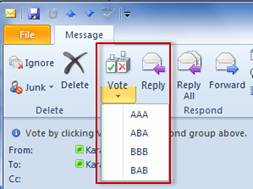
4. Use the voting buttons at the top of this email (if you are using Outlook) to click the answer that matches yours.

5. I’ll send out the correct answers and explanations sometime after noon Pacific Time.

I don’t publish names and there aren’t any prizes—unless you count your growing knowledge as a prize. Isn’t that better than a cheap stuffed circus monkey anyway? Here are today’s sentences:

Set 1

A: I helped paint the Smiths’ house.

B: I helped paint the Smith’s house.

Set 2

A: My brother made a cake for our mom’s and dad’s anniversary celebration.

B: My brother made a cake for our mom and dad’s anniversary celebration.

Set 3

A: Darla made it onto the girls volleyball team.

B: Darla made it onto the girls’ volleyball team.

C: Darla made it onto the girl’s volleyball team.

NOTICE: This electronic mail message and any files transmitted with it are intended
exclusively for the individual or entity to which it is addressed. The message,
together with any attachment, may contain confidential and/or privileged information.
Any unauthorized review, use, printing, saving, copying, disclosure or distribution
is strictly prohibited. If you have received this message in error, please
immediately advise the sender by reply email and delete all copies.
« Newer Posts - Older Posts »

Categories