Posted by: Jack Henry | June 1, 2015

Editor’s Corner: More Idioms!

Good morning!

A couple of weeks ago I shared a list of common English idioms with you, and in return, I asked you to share your favorite idioms, English or otherwise, with me. Thanks to everyone who submitted—and thanks for providing the translations for the non-English idioms. (I did not investigate these translations to make sure the submitters got them right. If you can’t trust an Editor’s Corner reader, who the heck can you trust?) Here are all the idioms I received that are fit to print. J

Idiom in English Translation Language of Origin Explanation
Costs an eye of the face Cuesta un ojo de la cara Spanish Very expensive
Even monkeys may fall from trees 원숭이도 나무에서 떨어진다 Korean Even experts make mistakes
Finer than a frog hair split four ways English/USA, southern states Outstanding!
I should cocoa English/UK I should think so (often sarcastic)
Knee-high to a grasshopper English/USA, southern states Most often used to refer to size or growth: “You were just knee-high to a grasshopper.”
Long in the tooth English Old; used up; past its prime
Madder than a wet hen English/USA, southern states Very angry
Nip in the bud English Prevent a small problem from getting worse
Oh, my giddy aunt! English/UK An exclamation of surprise
Pull your socks up English/UK Improve your behavior or work; get on with it
Push the envelope English To expand the definition, categorization, dimensions, or perimeters of something
Rat road Jalan tikus Indonesian Short cut
Take the mickey English/UK Tease
With bells on English Dressed up; ready to go; eager
Worth its weight in gold English Highly valued; extremely useful
You can’t make a silk purse out of a sow’s ear English/USA, southern states You can dress it up, but you can’t improve the quality (often used to describe a person)
You can’t taste your own spit De gustibus non est disputandum Latin In matters of taste, there can be no dispute

Donna Bradley Burcher | Technical Editor, Senior | Symitar®

8985 Balboa Ave. | San Diego, CA 92123 | Ph. 619.278.0432 | Ext: 765432

Symitar Technical Publications Writing and Editing Requests

Posted by: Jack Henry | May 29, 2015

Editor’s Corner: Puns for Friday

Since many of you enjoyed the puns last week, I thought I’d send some more to you. The first collection is from Tyrannosaurus Lex: The Marvelous Book of Palindromes, Anagrams, & Other Delightful & Outrageous Wordplay, by Rod L. Evans, Ph.D. The second set is from one of our co-workers. Thanks, Rich!

From Tyrannosaurus:

· If you don’t pay your exorcise, you get repossessed.

· A bicycle can’t stand alone; it is two tired.

· Police were called to a daycare where a three-year-old was resisting a rest.

· A chicken crossing the road: poultry in motion.

· A boiled egg is hard to beat.

· The guy who fell into an upholstery machine was fully recovered.

· Show me a piano falling down a mineshaft, and I’ll show you A-flat miner.

And from Richard:

· A tied piece of cord with a worn end walks into a bar. The bar tender says “We don’t serve cords in this bar and you’re a cord aren’t you?” To which the cord replies, “I’m a frayed knot.”

· I like my pasta the way I like my Italian literature: All Dante.

· Two fish swim into a concrete wall. One turns to the other and says “dam.”

· I have to stop talking to my friends about mitosis since it is such a divisive topic.

· One atom says to the other, “I think I lost an electron.” The other asks, “Are you sure?” To which the other replies, “I’m positive!”

· Why doesn’t Karl Marx drink Earl Grey? Because all proper tea is theft.

· You hear about the band that calls themselves 1023MB? Probably not since they haven’t had any gigs yet.

Kara Church

Technical Editor, Advisory

Symitar Documentation Services

Posted by: Jack Henry | May 28, 2015

Editor’s Corner: Violent Words

We often recommend that our writers choose a less violent way to express what is happening when we run a program or process. For example:

Violent word… Less emotional alternative…
abort stop
terminate complete, finish
execute begin
hung unresponsive

And this brings me to an article from Daily Writing Tips, by Maeve Maddox, called “Homicide, Murder, and Manslaughter.” I dedicate this to my fellow Law and Order fans.

If you don’t read the article, at least read the disclaimer at the end, and remember not to get legal advice from English majors. J

… I used to think homicide was the same as murder. I now know that the words are not synonymous.

Homicide is the killing of a human being by another human being. The word derives from the Latin compound homicida, which combines homo (man) with the verb caedere (to kill).

Depending upon circumstances, a homicide may or may not be considered murder.

The variety of state and national laws makes it difficult to attach specific definitions to words that represent the different kinds of homicide. What follows is a general treatment of these terms.

Murder: the deliberate and unlawful killing of a human being.

In British law, no degrees of guilt are recognized in murder. US law distinguishes between “first degree” and “second degree” murder. What constitutes these degrees, however, differs from state to state.

Note: Murder is a word of Germanic origin. In antiquity, when raiding and blood feuds were common, the word murder denoted a killing done in secret, as opposed to homicides done in the open with no attempt at concealment.

First Degree Murder: a murder that, because of the circumstances surrounding it, deserves either capital or severe punishment.

Any premeditated killing that involves planning is first degree murder.

Second Degree Murder: a malicious killing that was not premeditated.

This kind of murder is not planned, but results from an angry confrontation or from depraved indifference to human life. One example is that of the neighbor who goes next door merely to complain about a barking dog but finishes by killing the dog’s owner. Another example would be that of a manufacturer who discovers that a product can cause death, but fails to recall it.

Felony Murder Doctrine: Any death that occurs during or results from the commission of a felony is first degree murder, and all participants in the felony can be charged with and found guilty of first degree murder, even if only one of them actually did the killing.

Manslaughter: Etymologically, manslaughter is the English version of homicide. It derives from an Old English compound that combines man with the OE verb slaeht (act of killing). The Modern English verb slay is related.

Unlike homicide, which refers in general to the act of one person killing another, manslaughter refers to unpremeditated killing.

Voluntary Manslaughter: the act of killing in the heat of passion. The usual example of this is the man or woman who finds a spouse in bed with another partner.

Note: The difference between voluntary manslaughter and second degree murder hinges upon provocation. With first degree murder, the killer came with the intention to kill. With second degree murder, the killer decided on the spot. Either way, the killing is seen as malicious. The legal encyclopedia at Nolo explains that the charge of voluntary manslaughter is “a concession to human weakness.” The killing may have been intentional, but the provocation was such that could produce a similar emotional reaction in “any reasonable person.”

Involuntary Manslaughter: the act of killing someone unintentionally while engaged in a non-felony. For example, killing someone while driving recklessly is involuntary manslaughter. A burglar who, in surprise at being interrupted, fatally pushes someone down the stairs would probably be charged with involuntary manslaughter—as long as he hasn’t brought a gun to the burglary.

I repeat: These descriptions are very general. Anyone in need of precise definitions must consult a lawyer and local statutes.

Kara Church

Technical Editor, Advisory

619-542-6773 | Ext: 766773

Symitar Documentation Services

NOTICE: This electronic mail message and any files transmitted with it are intended
exclusively for the individual or entity to which it is addressed. The message,
together with any attachment, may contain confidential and/or privileged information.
Any unauthorized review, use, printing, saving, copying, disclosure or distribution
is strictly prohibited. If you have received this message in error, please
immediately advise the sender by reply email and delete all copies.
Posted by: Jack Henry | May 27, 2015

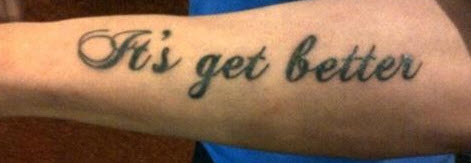
Editor’s Corner: Not only…but also.

We’ve talked about parallel structure in lists and phrases before, but today I’m going to discuss a particular phrase that seems to cause trouble for a lot of people. The problem children are phrases containing “not only…but also.” This is a formal rule as far as grammar goes, so it might sound a bit odd when used properly.

When you are using “not only…but also,” remember that your sentence has to be balanced. Each adjective, noun, verb, clause, etc. after “not only” must have a parallel adjective, noun, verb, etc. on the other side of “but also.” Here’s what I’m talking about:

Adjective:

· Your mom is not only funny, but also kind.

· He’s not only tall, but also handsome.

Noun:

· He not only likes hot dogs but also hamburgers.

· The Seattle Center not only has the Space Needle but also the EMP Museum.

Verb phrase:

· Not only is Caesar training dogs this summer, but he’s also training cats this autumn.

· Not only is Dandy riding his bike through Paris, but also he’s playing his flute in Rome.

Now you are not only smart, but also knowledgeable. If you have more questions, have a look at some of the examples from the expert here at Grammarly.com and the Cambridge Dictionary Online.

For a couple of articles on parallelism, see:

· https://episystechpubs.com/2014/07/24/nifty-nuggets-parallelism/

· https://episystechpubs.com/2012/07/24/editors-corner-parallel-construction/

Kara Church

Technical Editor, Advisory

619-542-6773 | Ext: 766773

Symitar Documentation Services

NOTICE: This electronic mail message and any files transmitted with it are intended
exclusively for the individual or entity to which it is addressed. The message,
together with any attachment, may contain confidential and/or privileged information.
Any unauthorized review, use, printing, saving, copying, disclosure or distribution
is strictly prohibited. If you have received this message in error, please
immediately advise the sender by reply email and delete all copies.
Posted by: Jack Henry | May 26, 2015

Editor’s Corner: Sudden Impact

Hi folks,

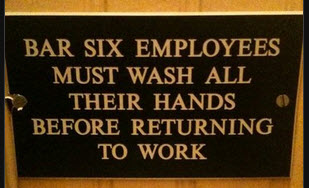
No matter how many times I mention this peeve and beat this poor dead horse, I continue to see these words misused in documentation, marketing materials, conference materials, and staff presentations. First, impactful? It’s not a real word. Don’t use it. Please. Pretty please? Look at what you do to me. Each time I see it I die a little inside and I can only write in sentence fragments.

Second, rather than rant on about impact, I’m leaving it to someone else. I think I may be in love with this woman! From Sherry’s Grammar List:

Impact Does Not Mean to Affect

A sports reporter talking about how Randy Moss’ latest legal trouble will affect the Patriots said that people are asking, How is this going to impact the team? Then, he said, Yes, it will impact the team.

This grammar error is becoming more popular than pointed ears at a Star Trek convention. I know that this is going to come as a surprise to many people, especially those in the media (since they’re the ones who seem to love to use it the most), but impact is not a verb that is synonymous with the verbs affect or influence.

Although impact can be used as a verb, it means to strike forcefully or to fix firmly as if by packing or wedging. [KC: Note the use of “impacted” in the fields of dentistry and proctology. See? You just don’t want to go there!] So, the meteor impacted Earth means that the meteor struck Earth forcefully. It does not mean that the meteor influenced or affected Earth.

I’m not sure why people have started to use this so much, but it seems that the people who use it think that it sounds more important and more dramatic than, for example, in this case, How is this going to affect the team. In reality, all it sounds is ridiculous. If you mean affect or influence, then how about using the words affect or influence?

Power in speech comes from choosing the appropriate words, which already exist in our vocabulary, not from changing the meanings of words.

Sherry

Kara Church

Technical Editor, Advisory

619-542-6773 | Ext: 766773

Symitar Documentation Services

NOTICE: This electronic mail message and any files transmitted with it are intended
exclusively for the individual or entity to which it is addressed. The message,
together with any attachment, may contain confidential and/or privileged information.
Any unauthorized review, use, printing, saving, copying, disclosure or distribution
is strictly prohibited. If you have received this message in error, please
immediately advise the sender by reply email and delete all copies.
Posted by: Jack Henry | May 22, 2015

Editor’s Corner: You’ve got the breadstick on you

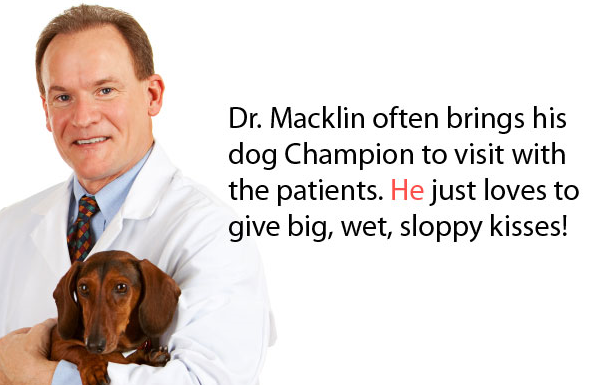
Happy Friday! I hope you all have a fabulous three-day weekend. To start you off right, here are some misheard song lyrics (a.k.a. mondegreens) from Hold Me Closer, Tony Danza, by Charles Grosvenor Jr.

Song Title Artist/Group Actual Lyrics Mondegreen
Strangelove Depeche Mode Strange highs and strange lows Strange eyes and strange nose
Wide Open Spaces Dixie Chicks As her folks drive away, her dad yells, “Check the oil!” As her folks drive away, her dad yells, Chucky Boil!”
Saturday Night’s Alright for Fighting Elton John I may sink a little drink and shout out, “She’s with me!” I may sink a little drink and shout out, “She’s a man!”
Tiny Dancer Elton John Hold me closer, tiny dancer. Hold me closer, Tony Danza.
Superman Eminem Rot in pieces?

Aww that’s great.

Rotten peaches?

Aww that’s great.

Sugar, We’re Going Down Fall Out Boy I’m watching you two from the closet I’m watching YouTube from the closet
Ready or Not The Fugees I’ll be Nina Simone I’ll be needing some more
Friends in Low Places Garth Brooks I’m not big on social graces I’m not big on sausage gravy
Papa Loved Mama Garth Brooks Papa’s in the pen Papa’s in Depends
Keep Away Godsmack Do like I told you,

stay away from me

Dude, I got your chew, stay away from me
The Anthem Good Charlotte Another loser anthem I’ll never use a rat comb
Girls and Boys Good Charlotte Girls don’t like boys,

Girls like cars and money

Girls don’t like boys,

Girls like cows and bunnies

We Believe Good Charlotte Let forgiveness wash away the pain Let the Guinness wash away the pain
Dare Gorillaz You’ve got to press it on you You’ve got the breadstick on you

Kara Church

Technical Editor, Advisory

619-542-6773 | Ext: 766773

Symitar Documentation Services

NOTICE: This electronic mail message and any files transmitted with it are intended
exclusively for the individual or entity to which it is addressed. The message,
together with any attachment, may contain confidential and/or privileged information.
Any unauthorized review, use, printing, saving, copying, disclosure or distribution
is strictly prohibited. If you have received this message in error, please
immediately advise the sender by reply email and delete all copies.

Posted by: Jack Henry | May 21, 2015

Editor’s Corner: Tick, tock, tacit

Today’s question was asked (and answered) by one of our credit union readers at Ent FCU. Thanks for joining in on the word fun and search for knowledge!

Dear Editrix,

Is there a word used for knowledge gained through experience (vs. book knowledge)? One of our employees recalls learning this word in the past, but can’t think of it.

From R.T. at Ent

Immediately following this email was another from R.T., which said:

Tacit knowledge!”

Indeed, she and her co-worker were right. I looked up tacit, and then wondered if it was related to tactile. I was thinking of “knowledge through experience” and “hands-on learning,” which is why I thought tactile could be related. I was wrong—the two words aren’t related. Here is the definition of tacit from Merriam-Webster, and the etymologies of both words from the Online Etymology Dictionary:

Definition of tacit:

1: expressed or carried on without words or speech <the blush was a tacit answer—Bram Stoker>

2: implied or indicated (as by an act or by silence) but not actually expressed <tacit consent> <tacit admission of guilt>

Etymology of tacit:

c. 1600, "silent, unspoken," from French tacite and directly from Latin tacitus "that is passed over in silence, done without words, assumed as a matter of course, silent," past participle of tacere "be silent, not speak."

Etymology of tactile:

1610s, "perceptible to touch," from French tactile (16c.) and directly from Latin tactilis "tangible, that may be touched," from tactus, past participle of tangere "to touch" (see tangent [adj.]). Meaning "of or pertaining to the sense of touch" is attested from 1650s.

This will date me, but this talk about tactile has a jingle stuck in my head from an old Bell Telephone commercial. Remember, back in the day when they advertised home phones and you could finally go to a Phone Center Store and buy a phone in some crazy color like red or yellow? Yes, the ‘70s were exciting times. Reach out, reach out and touch someone.

Kara Church

Technical Editor, Advisory

619-542-6773 | Ext: 766773

Symitar Documentation Services

NOTICE: This electronic mail message and any files transmitted with it are intended
exclusively for the individual or entity to which it is addressed. The message,
together with any attachment, may contain confidential and/or privileged information.
Any unauthorized review, use, printing, saving, copying, disclosure or distribution
is strictly prohibited. If you have received this message in error, please
immediately advise the sender by reply email and delete all copies.

Posted by: Jack Henry | May 20, 2015

Editor’s Corner: Fun with Puns

How about a Wednesday pick-me-up? Today I bring you a list of Puns for Educated Minds. Uncertain about what a pun is? A pun is a play on words, or according to Merriam-Webster, it is “a humorous way of using a word or phrase so that more than one meaning is suggested.” Thanks to Debbie S. for sending this in!

Note: I’ve edited this list to remove extra spaces and misplaced hyphens. Additionally, I removed puns that some might find objectionable.

· I thought I saw an eye doctor on an Alaskan island, but it turned out to be an optical Aleutian.

· She was only a whisky-maker, but he loved her still.

· A rubber-band pistol was confiscated from an algebra class, because it was a weapon of math disruption.

· A dog gave birth to puppies near the road and was cited for littering.

· Two silk worms had a race. They ended up in a tie.

· A hole has been found in the nudist-camp wall. The police are looking into it.

· Two hats were hanging on a hat rack in the hallway. One hat said to the other, “You stay here; I’ll go on a head.”

· I wondered why the baseball kept getting bigger. Then it hit me.

· A backward poet writes inverse.

· In a democracy, it’s your vote that counts. In feudalism, it’s your count that votes.

· A vulture carrying two dead raccoons boards an airplane. The flight attendant looks at him and says, “I’m sorry, only one carrion allowed per passenger.”

· Two hydrogen atoms meet. One says, “I’ve lost my electron.” The other says, “Are you sure?” The first replies, “Yes, I’m positive.”

· Did you hear about the Buddhist who refused Novocain during a root canal? His goal: transcend dental medication.

· There was the person who sent ten puns to friends, with the hope that at least one of the puns would make them laugh. No pun in ten did.

Kara Church

Technical Editor, Advisory

619-542-6773 | Ext: 766773

Symitar Documentation Services

NOTICE: This electronic mail message and any files transmitted with it are intended
exclusively for the individual or entity to which it is addressed. The message,
together with any attachment, may contain confidential and/or privileged information.
Any unauthorized review, use, printing, saving, copying, disclosure or distribution
is strictly prohibited. If you have received this message in error, please
immediately advise the sender by reply email and delete all copies.

Posted by: Jack Henry | May 19, 2015

Editor’s Corner: RSVP

As we approach Memorial Day and the ensuing picnic, graduation, and wedding season, several of you have asked me to do an article on the term RSVP. Those of you who have been around my brother and me can vouch that I am no Miss Manners or Emily Post. Still, I’ll tackle this since it is slightly related to language and writing.

RSVP stands for the French phrase “Répondez s’il vous plaît.” This can be directly translated as “Respond, if you please” or “Dude, please let me know if you’re coming to my party so I can buy enough beer.”

Now that you know what it is supposed to mean, let’s look a little deeper into the social understanding of an RSVP. According to Emily Post, author of the book Etiquette, you should reply promptly to an invitation with an RSVP. This means within a few days—and here’s the clincher—you respond whether or not you are attending. If you can’t make it to see your cousin Beavis graduate from college, send a note to him saying you “Decline with regrets,” or something to that effect. If you won’t be attending your mother’s croquet party, write her, email her, or give her a call. And, if you will be attending your older brother’s wedding, don’t assume his bride-to-be will put you on the list automatically. If you aren’t polite enough to respond to big brother and his fiancée while they try to organize a party for 600 of their closest friends, you deserve to be left outside eating leftovers with the wedding singer. Besides, most couples address and stamp the RSVP envelope. All you have to do is fill it out and put it in the mail.

Next time you are lucky enough to be invited to someone’s event, be kind and respond, s’il vous plaît. It’s the polite thing to do.

Kara Church

Technical Editor, Advisory

619-542-6773 | Ext: 766773

Symitar Documentation Services

NOTICE: This electronic mail message and any files transmitted with it are intended
exclusively for the individual or entity to which it is addressed. The message,
together with any attachment, may contain confidential and/or privileged information.
Any unauthorized review, use, printing, saving, copying, disclosure or distribution
is strictly prohibited. If you have received this message in error, please
immediately advise the sender by reply email and delete all copies.

Posted by: Jack Henry | May 18, 2015

Editor’s Corner: A pile of a while

I am going through different questions and requests from readers and here is one I promised to discuss a while ago. I hope it sheds some light on when to use awhile versus a while. The dictionary definitions (in black) are from our buddies at Merriam-Webster.

while (noun): a period of time especially when short and marked by the occurrence of an action or a condition

Helpful hint: When there is a preposition, use a while (for a while; in a while).

Examples:

· I sat in the garden for a while. (I sat in the garden for a short time.)

· Don drove his Cadillac for a while and then opted for a more fuel-efficient car. (Don drove his Cadillac for a short time.)

· She left a while ago, before we served dessert. (She left a short time ago.)

awhile (adverb): for a short time

Helpful hint: Awhile is used when there is not a preposition. It is an adverb which modifies a verb.

Examples:

· We can wait awhile for Susan. (Awhile modifies the verb wait.)

· After running the marathon, I’ll need to rest awhile. (Awhile modifies the verb rest.)

Extra Helpful Hint: If you aren’t sure whether to use awhile or a while, try substituting another adverb in the sentence (something like quickly, hurriedly, slowly, angrily, etc.). If the adverb works, you should use awhile. If it doesn’t sound right, use a while.

· She said she would meet for quickly. (Yuck, this definitely doesn’t work. Use a while here.)

She said she would meet for a while.

· She said she would meet quickly. (Okay. Not sure why she’s in such a rush, but it is grammatically sound. In this case you would use awhile.)

She said she would meet awhile.

For a previous article on this topic, see this issue of the Editor’s Corner.

Kara Church

Technical Editor, Advisory

619-542-6773 | Ext: 766773

Symitar Documentation Services

NOTICE: This electronic mail message and any files transmitted with it are intended
exclusively for the individual or entity to which it is addressed. The message,
together with any attachment, may contain confidential and/or privileged information.
Any unauthorized review, use, printing, saving, copying, disclosure or distribution
is strictly prohibited. If you have received this message in error, please
immediately advise the sender by reply email and delete all copies.

« Newer Posts - Older Posts »

Categories