Posted by: Jack Henry | January 20, 2017

Editor’s Corner: A Belated Happy New Year

Happy Friday, everyone!

I know I’m a little late with this information, but I was on vacation in England on New Year’s Eve, and it was a fantastic experience. Since then, I’ve been thinking about the song we sing at midnight every New Year’s Eve: “Auld Lang Syne.” It is a beautiful song, but do you know exactly what those words mean? Do you know what language it is? The information below comes from Wikipedia:

Auld Lang Syne is a Scots poem written by Robert Burns in 1788 and set to the tune of a traditional folk song. It is well known in many countries, especially in the English-speaking world, its traditional use being to bid farewell to the old year at the stroke of midnight. By extension, it is also sung at funerals, graduations and as a farewell or ending to other occasions. The international Boy Scout youth movement, in many countries, uses it as a close to jamborees and other functions.

The song’s Scots title may be translated into English literally as "old long since," or more idiomatically, "long long ago," "days gone by," or "old times." Consequently, "For auld lang syne," as it appears in the first line of the chorus, might be loosely translated as "for (the sake of) old times."

Robert Burns is the national poet of Scotland. In fact, in Scotland, January 25 is Burns Night. It’s an annual celebration of the renowned poet. I was surprised to learn that the tune we sing today is not the tune that Robert Burns wrote. To read an interesting article about Robert Burns, his internationally beloved song, and his other poems and songs, click this link.

Auld Lang Syne

Should auld acquaintance be forgot,
And never brought to mind?
Should auld acquaintance be forgot,
And auld lang syne!

For auld lang syne, my jo,
For auld lang syne,
We’ll tak a cup o’ kindness yet,
For auld lang syne.

And surely ye’ll be your pint stowp!
And surely I’ll be mine!
And we’ll take a cup o’ kindness yet,
For auld lang syne.

We twa hae run about the braes,
And pou’d the gowan fine;
But we’ve wander’d mony a weary fitt,
Sin’ auld lang syne.

We twa hae paidl’d in the burn,
Frae morning sun till dine;
But seas between us braid hae roar’d
Sin’ auld lang syne.

And there’s a hand, my trusty fiere!
And gie’s a hand o’ thine!
And we’ll tak a right gude-willie-waught,
For auld lang syne.

For auld lang syne, my jo,
For auld lang syne,
We’ll tak a cup o’ kindness yet,
For auld lang syne.

Donna Bradley Burcher | Senior Technical Editor | Symitar®

8985 Balboa Ave. | San Diego, CA 92123 | Ph. 619.278.0432 | Extension: 765432

Symitar Technical Publications Writing and Editing Requests

NOTICE: This electronic mail message and any files transmitted with it are intended
exclusively for the individual or entity to which it is addressed. The message,
together with any attachment, may contain confidential and/or privileged information.
Any unauthorized review, use, printing, saving, copying, disclosure or distribution
is strictly prohibited. If you have received this message in error, please
immediately advise the sender by reply email and delete all copies.
Posted by: Jack Henry | January 19, 2017

Editor’s Corner: How to Write About Check Boxes

A check box is one of the simplest user interface elements, but there are some rules that you should observe when writing about check boxes.

The following rules are consistent across the Symitar Style Guide, the Microsoft® Manual of Style, and The IBM Style Guide.

What Is a Check Box?

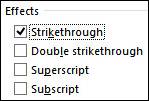
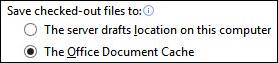
Check boxes are square boxes that allow users to select one or more options from a set.

Do not confuse check boxes with option buttons (also known as radio buttons), which are round buttons that allow the user to select one option at a time.

How to Describe a Check Box

Refer to a check box as “the <label> check box” (for example, “the Strikethrough check box”).

Always include the phrase check box. Do not refer to a check box by its label alone, and do not shorten check box to box.

What Verb to Use

To describe the action of adding a check mark to a check box, use the verb select. Do not use turn on, mark, or check.

Example: Select the Strikethrough check box.

To describe the action of removing a check mark from a check box, use the verb clear. Do not use turn off, unmark, uncheck, or deselect.

Example: Clear the Double Strikethrough check box.

Ben Ritter | Technical Editor | Symitar®
8985 Balboa Avenue | San Diego, CA 92123
619-682-3391 | or ext. 763391 | www.Symitar.com

Symitar Documentation Services

NOTICE: This electronic mail message and any files transmitted with it are intended
exclusively for the individual or entity to which it is addressed. The message,
together with any attachment, may contain confidential and/or privileged information.
Any unauthorized review, use, printing, saving, copying, disclosure or distribution
is strictly prohibited. If you have received this message in error, please
immediately advise the sender by reply email and delete all copies.

Posted by: Jack Henry | January 18, 2017

Editor’s Corner: Kitty Meow Meow

As I mentioned at the end of our idiom contest, there are tons of idioms about animals. One of the most popular idioms, which I was unfamiliar with, is “as nervous as a long-tailed cat in a roomful of rocking chairs.” At least six people sent that one in. Here are a few other ones for you about kitties.

Idiom Meaning and Notes
Pick of the litter The best of a group of things. Alluding to a litter of dogs or cats. Previously “pick of the market,” “pick of the parish,” “pick of the basket.”
Fight like cats and dogs Argue violently all of the time
Let the cat out of the bag Reveal a secret by accident
Curiosity killed the cat. Being nosy about other people’s activities could get you into trouble.
It’s raining cats and dogs. Raining heavily
As nervous as a long-tailed cat in a roomful of rocking chairs Extremely nervous
Nervous as a cat on a hot tin roof Really anxious
Looking like the cat that swallowed the canary Very pleased with oneself or what one has done/accomplished
More than one way to skin a cat More than one way to accomplish something
Cat’s meow Something really special/good
Higher than a cat’s back Very tall; very high

Kara Church

Technical Editor, Advisory

Symitar Documentation Services

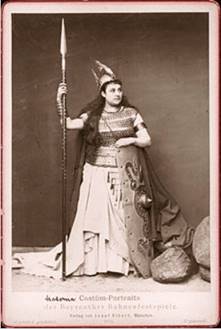
Today’s idiom (or colloquialism or proverb) is “It ain’t over till the fat lady sings.” Rather than my own simple definition of this phrase, I thought I’d give you Wikipedia’s version, complete with a photo of an “ample” lady, post-song.

From Wikipedia:

It ain’t over till (or until) the fat lady sings is a colloquialism and has been classified as a proverb. It means that one should not presume to know the outcome of an event which is still in progress. More specifically, the phrase is used when a situation is (or appears to be) nearing its conclusion. It cautions against assuming that the current state of an event is irreversible and clearly determines how or when the event will end. The phrase is most commonly used in association with organized competitions, particularly sports.

The phrase is generally understood to be referencing the stereotypically overweight sopranos of the opera. The imagery of Richard Wagner’s opera cycle Der Ring des Nibelungen and its last part, Götterdämmerung, is typically the one used in depictions accompanying reference to the phrase. The "fat lady" is the Valkyrie Brünnhilde, who is traditionally presented as a very buxom lady with horned helmet, spear and round shield (although Amalie Materna played Brünnhilde during Wagner’s lifetime (1876) with a winged helmet). Her aria lasts almost twenty minutes and leads directly to the end of the whole Ring Cycle. As Götterdämmerung is about the end of the world (or at least the world of the Norse gods), in a very significant way "it is [all] over when the fat lady sings."

Amalie Materna as the Valkyrie Brünnhilde (1876)

Kara Church

Technical Editor, Advisory

Symitar Documentation Services

Posted by: Jack Henry | January 13, 2017

Editor’s Corner: Type or Enter?

When I’m editing a document, one of the most common questions I get is, “On page 1, you changed the word type to enter. On page 2, you changed the word enter to type. Which is correct?”

It may seem like I’m flipping a coin (or adding some variety to spice up your writing), but the Symitar Style Guide actually has a rule about when to use type and when to use enter.

If you’re telling the reader exactly what to type, use the word type.

Example: In the City field, type San Diego.

If you’re describing what kind of information to enter, use the word enter.

Example: In the City field, enter the name of your city.

You’ve probably heard a joke similar to the following:

Speaker A: Say your name.

Speaker B: Your name.

This is (allegedly) funny when it happens in a movie, but it’s frustrating to come across such ambiguities in technical writing. Most people in this situation would say (for example) “John” or “Jane,” but there is room for misunderstanding.

We try to help readers in two ways. In addition to using different verbs, we use bold text to indicate that the reader should type something exactly as shown (like San Diego in the previous example).

Ben Ritter | Technical Editor | Symitar®
8985 Balboa Avenue | San Diego, CA 92123
619-682-3391 | or ext. 763391 | www.Symitar.com

Symitar Documentation Services

NOTICE: This electronic mail message and any files transmitted with it are intended
exclusively for the individual or entity to which it is addressed. The message,
together with any attachment, may contain confidential and/or privileged information.
Any unauthorized review, use, printing, saving, copying, disclosure or distribution
is strictly prohibited. If you have received this message in error, please
immediately advise the sender by reply email and delete all copies.

Posted by: Jack Henry | January 12, 2017

Editor’s Corner: File Names and File Name Extensions

JHA folks, if you are including file names and file name extensions in your writing, please use these guidelines from the JHA Style Guide for Technical Communication and Training.

Guideline Example
When using a file name extension as a word, precede the extension with a period. Use an article as if the period is not pronounced. Use lowercase letters unless the file name extension appears in a heading.
  • Copy an .int file into the folder.
  • Open a .doc file.
  • Extract the .zip file.
Use .zip file only to refer to a specific file that has a .zip extension. If the file’s extension is unknown or unimportant, use compressed file or archive.

Do not use .ZIP file, ZIP file, Zip file, zip file, or zipped file.

Do not use zip or unzip as verbs. Use compress or extract instead.

  • You can download a compressed file from the JHA Downloads site.
  • Save the md5sums-1.2.zip file, and extract it from the same directory.
  • Windows® can compress multiple files into a single .zip file. To create .rar files or .7z files, use a file archiver.
Do not use the .pdf extension as a word. Always use PDF, the generic term for a .pdf file. Convert the document to a PDF before you send it to the customer.

Jackie Solano | Technical Editor | Symitar®

8985 Balboa Ave. | San Diego, CA 92123 | Ph. 619.542.6711 | Extension: 766711

Symitar Documentation Services

NOTICE: This electronic mail message and any files transmitted with it are intended
exclusively for the individual or entity to which it is addressed. The message,
together with any attachment, may contain confidential and/or privileged information.
Any unauthorized review, use, printing, saving, copying, disclosure or distribution
is strictly prohibited. If you have received this message in error, please
immediately advise the sender by reply email and delete all copies.

Posted by: Jack Henry | January 11, 2017

Editor’s Corner: Break a Leg!

Good morning! Before I get started on today’s idiomatic phrase, let’s have a quick look at the differences between idioms, colloquialisms, and proverbs. The definitions, according to Google, are:

· Idiom: a group of words established by usage as having a meaning not deducible from those of the individual words (e.g., rain cats and dogs, see the light).

· Colloquialism: a word or phrase that is not formal or literary, typically one used in ordinary or familiar conversation (e.g., wanna (want to), y’all (you all), look blue (look sad).

· Proverb: a short pithy saying in general use, stating a general truth or piece of advice (e.g., “Early to bed and early to rise, makes a man healthy, wealthy and wise”).

As you can see, there are some similarities and they might overlap now and then.

Today I have an idiom from our JHA collection that seems contradictory because of how it sounds and what it actually means. That is the idiom “break a leg” to mean “good luck,” usually when someone is about to go onstage.

From the Phrase Finder:

Theatrical types are well known for their belief in superstitions, or at least for their willingness to make a show of pretending to believe in them. The term “break a leg” appears to come from the belief that one ought not to utter the words “good luck” to an actor. By wishing someone bad luck, it is supposed that the opposite will occur. Other superstitions are that it is bad luck to whistle in a theatre, to say the final line of a play during dress rehearsal, or to say the name of “the Scottish Play” [KC – Macbeth, Macbeth, Macbeth!] in a theatre’s green room.

Kara Church

Technical Editor, Advisory

619-542-6773 | Ext: 766773

Symitar Documentation Services

NOTICE: This electronic mail message and any files transmitted with it are intended
exclusively for the individual or entity to which it is addressed. The message,
together with any attachment, may contain confidential and/or privileged information.
Any unauthorized review, use, printing, saving, copying, disclosure or distribution
is strictly prohibited. If you have received this message in error, please
immediately advise the sender by reply email and delete all copies.
Posted by: Jack Henry | January 10, 2017

Editor’s Corner: Hornswoggle

A couple of weeks ago, someone mentioned a word that they had to look up after hearing it in one of their favorite shows. This word is hornswoggle. Hornswoggle is a word from the 1820s, and it means “to cheat someone.” The origin of this word is unknown, so I don’t have an etymology for you. However, I do have a bunch of different synonyms for the word (from Merriam-Webster).

· bamboozle · have
· beguile · hoax
· bluff · hoodwink
· buffalo · deceive
· burn · juggle
· catch · misguide
· con · misinform
· cozen · mislead
· delude · snooker
· dupe · snow
· fake out · spoof
· fool · string along
· gaff · sucker
· gammon · take in
· gull · trick

Kara Church

Technical Editor, Advisory

619-542-6773 | Ext: 766773

Symitar Documentation Services

NOTICE: This electronic mail message and any files transmitted with it are intended
exclusively for the individual or entity to which it is addressed. The message,
together with any attachment, may contain confidential and/or privileged information.
Any unauthorized review, use, printing, saving, copying, disclosure or distribution
is strictly prohibited. If you have received this message in error, please
immediately advise the sender by reply email and delete all copies.

Posted by: Jack Henry | January 8, 2017

Editor’s Corner: Thee, Thou, and Ye

Earlier last month I received an interesting email from Tom H. about the words thee, thou, and ye, meaning you. Most of us remember learning these words from Shakespeare class, hearing biblical quotations, or perhaps our last experience at a Renaissance fair. But Tom wanted to point out that while thee and thou are pronouns for a single you, ye actually refers to the plural pronoun you, something like “y’all.”

This is very interesting. Today, when we learn other languages that still have a separate word for you (singular) and you (plural), we are told that English uses you for both cases. (Unless you are in a part of the U.S. that has not given up on y’ouns or y’all or all y’all.) Perhaps we should bring back ye?

For more information on thee, thou, and ye, here’s what Merriam-Webster has to say:

thou

archaic

: the one that is being addressed — used as a nominative pronoun of the second person singular especially in biblical, ecclesiastical, solemn, or poetic language

First Known Use: before 12th century

thee: THOU
archaic
: used especially in biblical, ecclesiastical, solemn, or poetical language, and to some extent in the speech of Friends especially among themselves, in contexts where the objective case form of an inflected pronoun is the one to be expected especially as indirect object of a verb

ye: YOU

: used from the earliest times to the late 13th century only as a plural pronoun of the second person in the nominative case including direct address and still surviving archaically and in many dialects in this use alongside of other more recently originated uses

Kara Church

Technical Editor, Advisory

619-542-6773 | Ext: 766773

Symitar Documentation Services

NOTICE: This electronic mail message and any files transmitted with it are intended
exclusively for the individual or entity to which it is addressed. The message,
together with any attachment, may contain confidential and/or privileged information.
Any unauthorized review, use, printing, saving, copying, disclosure or distribution
is strictly prohibited. If you have received this message in error, please
immediately advise the sender by reply email and delete all copies.

Posted by: Jack Henry | January 6, 2017

Editor’s Corner: Fire and brimstone

Hello and a very happy Friday to you all.

Today I’d like to talk about something I found when my buddy Morris asked me about the word tarnation during the idiom contest. His phrase was “Where in tarnation have you been?” We were both wondering where or what exactly tarnation might be. Is it a nation of tar? Is it some place bad? Usually, it seems to be used with a little bit of frustration behind it.

I found a very interesting article from Appalachian History that I’d love to share with you and Morris. Enjoy!

“What in tarnation?” is one of a wide variety of euphemistic expressions of surprise, bewilderment or anger that arose in 18th and 19th century America. Perhaps due to our Puritan legacy, Americans were, during this period, especially creative in devising oaths that allowed us to express strong emotions while still skirting blasphemy.

Such inventions as “heck,” “drat,” “darn,” “gosh,” “jiminy,” “gee-whiz” and “goldarn” were all devised to disguise exclamations that would have been considered shocking in polite society. “Sam Hill,” for example, is simply an early 19th century euphemism for “hell” (and while there have been many people named Sam Hill throughout history, the expression does not come from the name of any particular Sam Hill).

“Tarnation,” which dates back to the late 18th century, is an interesting example of this generation of euphemisms because it’s actually two euphemisms rolled into one word. The root of “tarnation” is “darnation,” a euphemistic modification of the word “damnation,” which at that time was considered unfit for polite conversation. “Darnation” became “tarnation” by being associated in popular speech with “tarnal,” an aphetic, or clipped, form of “eternal.”

It may seem odd that “eternal” would ever have been considered a curse word, but to speak of “the Eternal” at that time was often to invoke a religious context (God, Heaven, etc.), and thus to label something or someone “eternal” in a disparaging sense (“You eternal villain!”) was considered a mild oath. Shakespeare, for example, used “eternal” in this way in at least two of his plays.

So at some point someone, probably in a moment of exasperation, mixed “darnation” with “tarnal,” and we ended up with “tarnation.”

Kara Church

Technical Editor, Advisory

619-542-6773 | Ext: 766773

Symitar Documentation Services

NOTICE: This electronic mail message and any files transmitted with it are intended
exclusively for the individual or entity to which it is addressed. The message,
together with any attachment, may contain confidential and/or privileged information.
Any unauthorized review, use, printing, saving, copying, disclosure or distribution
is strictly prohibited. If you have received this message in error, please
immediately advise the sender by reply email and delete all copies.

« Newer Posts - Older Posts »

Categories