Posted by: Jack Henry | April 5, 2017

Editor’s Corner: Blue Murder

Yesterday, we discussed how Americans say bloody murder to mean in a loud, violent manner. (For example: I took a bite of Dominic’s dessert and he screamed bloody murder because he hates sharing.)

It appears that while we talk about bloody murder, other English speakers refer to blue murder, but it has the same meaning. I have cut this article down for our purposes, but the full article is at World Wide Words (complete with British spelling and punctuation).

Blue murder

This idiom is largely restricted to Commonwealth countries. Americans prefer to cry bloody murder, which is more expressive and easier to understand. Either way, it means to make a noisy and extravagant protest.

As long as the bite does not come in the form of double-digit inflation, it’s all sweetness. Cross that mark, and they’re all screaming blue murder. The middle-class loves a free lunch, subsidised healthcare and education.

The Hindustan Times, 6 Aug. 2011.

Using colours as metaphors for emotion is probably as old as human language, though they’re deeply determined by culture. In English we have phrases such as white with rage, green with jealousy, see red, yellow streak and tickled pink. The emotional associations of blue are more varied than those of most colours. It has among others indicated constancy (true blue), strained with effort or emotion (blue in the face), indecent or obscene (blue movie) and fear or depression (as in blue funk, which in the UK means to be in a state of fear but in the US to be depressed)….

Bloody murder in its semi-literal sense is much older: it goes back at least to the sixteenth century:

There’s not a hollow cave or lurking-place,
No vast obscurity or misty vale,
Where bloody murder or detested rape
Can couch for fear but I will find them out.

Titus Andronicus, by William Shakespeare, c1591.

This sense was still the usual one in Britain in the period in which blue murder appeared and remained so afterwards. The figurative meaning of bloody murder is peculiarly American and began to appear in the 1860s, usually in the form yell bloody murder. There seems to be no direct link between the two phrases. In particular, blue murder doesn’t appear to be a euphemism for bloody murder….

However, most shouts of blue murder have been about more trivial matters and the expression has become a disapproving comment that points up the disparity between the amount of noise and the petty nature of the protest: “anyone would think you were being murdered, the noise you were making”.

Kara Church

Technical Editor, Advisory

619-542-6773 | Ext: 766773

Symitar Documentation Services

NOTICE: This electronic mail message and any files transmitted with it are intended
exclusively for the individual or entity to which it is addressed. The message,
together with any attachment, may contain confidential and/or privileged information.
Any unauthorized review, use, printing, saving, copying, disclosure or distribution
is strictly prohibited. If you have received this message in error, please
immediately advise the sender by reply email and delete all copies.


Posted by: Jack Henry | April 4, 2017

Editor’s Corner: Bloody Murder

The other day during a speech in Toastmasters, I was telling a story from my childhood and I talked about my brother screaming “bloody murder.” Shawn, my manager, and the man assigned to be grammarian for the meeting, brought up my use of that term and wondered where it came from. He also mentioned how “bloody” was not an acceptable word at the dinner table, if you were eating with his British relatives.

I thought I’d look into it, since I wasn’t sure if the use of bloody was as a swear word or if it was being used as something you might see with a messy murder. Here is what I found.

Our faithful Merriam-Webster defines bloody murder as I was using it:

1: in a loud and violent manner (ran off, screaming bloody murder)

2: in vehement protest (screaming bloody murder over the pay cut)

They also provide the date 1833 as the first use.

Moving on to the American Heritage Dictionary, we get a little more information:

scream bloody murder

Angrily protest as loudly as possible, as in When Jimmy took her teddy bear, Lauren screamed bloody murder, or Residents are screaming bloody murder about the increase in property taxes. The scream here may be either literal (as in the first example) or figurative, which is also true of invoking murder as though one were in danger of being killed. Versions of this term, such as cry murder, date from the 1400s.

Because the word bloody is a swear word in other English-speaking countries, I continued my research and I found another article titled “Blue Murder.” We will continue with that tomorrow, so I don’t take too much of your time today.

Kara Church

Technical Editor, Advisory

619-542-6773 | Ext: 766773

Symitar Documentation Services

NOTICE: This electronic mail message and any files transmitted with it are intended
exclusively for the individual or entity to which it is addressed. The message,
together with any attachment, may contain confidential and/or privileged information.
Any unauthorized review, use, printing, saving, copying, disclosure or distribution
is strictly prohibited. If you have received this message in error, please
immediately advise the sender by reply email and delete all copies.
Posted by: Jack Henry | April 3, 2017

Editor’s Corner: Can I or May I?

Good Monday morning, esteemed readers.

I know many of you will remember being chastised when you incorrectly asked your mean old Aunt Ola (or whatever her name was), “Can I have another cookie?” She probably was too stingy to give you another cookie, but she took pleasure in rubbing your nose in your grammatical mistake. She always said something like, “I’m sure you are able to eat many more cookies, Donna, but you may not have another one today.”

As you have probably guessed, the correctly worded question is “May I have another cookie?”—and I have unresolved issues with Aunt Ola.

It is interesting to note that, at least in professional writing, we often make the opposite mistake. We often use the verb may when we should use can.

For example, I often see sentences like this one: “You may run the programs in any order.” This sentence is incorrect, because rather than giving our clients permission, we mean to tell them that they are able to run the programs in whatever order they choose. My theory is that we think may sounds more polite.

To get it right, all you have to remember is you should use can when asking for or indicating the ability to do something:

· Can your brother keep a secret?

· Fido can beat Spot on the agility course.

You should use the word may, on the other hand, when you want to ask or give permission:

· May I have another cookie, you old coot?

· You may borrow my car while yours is in the shop.

Donna Bradley Burcher | Senior Technical Editor | Symitar®

8985 Balboa Ave. | San Diego, CA 92123 | Ph. 619.278.0432 | Extension: 765432

Symitar Technical Publications Writing and Editing Requests

NOTICE: This electronic mail message and any files transmitted with it are intended
exclusively for the individual or entity to which it is addressed. The message,
together with any attachment, may contain confidential and/or privileged information.
Any unauthorized review, use, printing, saving, copying, disclosure or distribution
is strictly prohibited. If you have received this message in error, please
immediately advise the sender by reply email and delete all copies.
Posted by: Jack Henry | March 31, 2017

Editor’s Corner: Vocabulary Quiz

Good morning lads and lasses! In honor of our elementary school days, I have a Friday vocabulary quiz for you. I found this quiz on the Daily Writing Tips website. There’s no prize for getting them all right, but I thought you might enjoy it anyway. Have a lovely weekend!

In each sentence, choose the correct word from the pair of similar terms. (If both words possibly can be correct, choose the more plausible one.)

1. He was __________ about whether the change was a good idea.

a) ambivalent

b) ambiguous

2. Her score on the test was __________.

a) exceptionable

b) exceptional

3. His __________companion became even more obnoxious as the night wore on.

a) arrant

b) errant

4. I asked them to __________ my latest short story.

a) criticize

b) critique

5. She delivered the __________ at her father’s memorial service.
a) elegy

b) eulogy

Solutions

1. He was ambivalent about whether the change was a good idea.

Ambivalent means contradictory or unsure. Ambiguous, on the other hand, involves something that can be understood in two or more possible ways.

2. Her score on the test was exceptional.

Exceptional is the right word in this context. Exceptionable means being likely to cause objection.

3. His arrant companion became even more obnoxious as the night wore on.

Arrant means without moderation, while errant means traveling or given to traveling.

4. I asked them to critique my latest short story.

Critique means to evaluate both the merits and demerits, while criticize usually means to find faults on something.

5. She delivered the eulogy at her father’s memorial service.

Eulogy is a commendatory oration or writing, while elegy refers to a poem or song.

Donna Bradley Burcher | Senior Technical Editor | Symitar®

8985 Balboa Ave. | San Diego, CA 92123 | Ph. 619.278.0432 | Extension: 765432

Symitar Technical Publications Writing and Editing Requests

NOTICE: This electronic mail message and any files transmitted with it are intended
exclusively for the individual or entity to which it is addressed. The message,
together with any attachment, may contain confidential and/or privileged information.
Any unauthorized review, use, printing, saving, copying, disclosure or distribution
is strictly prohibited. If you have received this message in error, please
immediately advise the sender by reply email and delete all copies.

Posted by: Jack Henry | March 30, 2017

Editor’s Corner: Internet and Email

Were you aware that the 17th edition of the Chicago Manual of Style includes new rules about the words internet and email? Internet now starts with a lowercase letter, and email does not have a hyphen.

Congratulations! You Editor’s Corner subscribers are ahead of the curve and are already following these rules. The Chicago Manual of Style has finally caught up with us!

Here are the standards from the JHA Style Guide for Technical Communication and Training.

Internet

Guideline Example
Do not capitalize internet when it is used as an adjective or as a common noun. Capitalize Internet when it is used as part of a proper noun, but do not capitalize the internet. Correct:

· Sign in to your internet banking account.

· The default internet browser is Internet Explorer®.

· Access the internet to perform research.

Incorrect:

· Sign in to your Internet banking account.

· The default Internet browser is Internet Explorer®.

· Access the Internet to perform research.

Email

Guideline Example
It is not necessary to hyphenate email. Correct: Check your email account regularly.

Jackie Solano | Technical Editor | Symitar®

8985 Balboa Ave. | San Diego, CA 92123 | Ph. 619.542.6711 | Extension: 766711

Symitar Documentation Services

NOTICE: This electronic mail message and any files transmitted with it are intended
exclusively for the individual or entity to which it is addressed. The message,
together with any attachment, may contain confidential and/or privileged information.
Any unauthorized review, use, printing, saving, copying, disclosure or distribution
is strictly prohibited. If you have received this message in error, please
immediately advise the sender by reply email and delete all copies.

Posted by: Jack Henry | March 29, 2017

Editor’s Corner: How to Write About Buttons

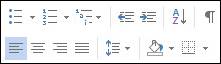
A button is a rectangular object that, when clicked, carries out a command. A button may be labeled with text, an icon, or both. Here are some images of buttons:

In general, if a button has a text label, refer to the button only by its label (without the word button). For example, “click OK” or “click Paste.”

If a button has no text label, you can include an image of the icon before the button name, if necessary for clarity (for example, “click Decrease Indent”). Do not include images for buttons with a text label.

Unless you are writing for novice computer users, it is not necessary to include images for commonly used buttons like Save or Close, even though they do not have text labels.

In fact, when writing for intermediate users, you might not need to mention these buttons at all. Most readers can understand instructions like, “Save the document to your desktop” or, “Close the Options dialog box” without further explanation.

Ben Ritter | Technical Editor | Symitar®
8985 Balboa Avenue | San Diego, CA 92123
619-682-3391 | or ext. 763391 | www.Symitar.com

Symitar Documentation Services

NOTICE: This electronic mail message and any files transmitted with it are intended
exclusively for the individual or entity to which it is addressed. The message,
together with any attachment, may contain confidential and/or privileged information.
Any unauthorized review, use, printing, saving, copying, disclosure or distribution
is strictly prohibited. If you have received this message in error, please
immediately advise the sender by reply email and delete all copies.

Posted by: Jack Henry | March 28, 2017

Editor’s Corner: Spelling

Good morning, folks! My dear, dachshund-loving friend Ron left the following article on my desk. I couldn’t resist sharing it with you, because it’s written by Richard Lederer, our local verbivore, and it’s about spelling and banks. It has something for everyone here at JHA! I’ve cut a few things out, but if you’d like to read it in its entirety, you can see it here.

This Thursday, the Union-Tribune will hold its annual countywide spelling bee. On the model of the collectively busy bee, we call these events spelling bees. In 19th-century America a bee indicated a community effort in which neighbors pitched in, often to help out a family. Examples include chopping bee, husking bee, logging bee, quilting bee, house- or barn-raising bee, sewing bee, spinning bee and, ultimately, spelling bee.

A man, wanting to rob a downtown Corpus Christi Bank of America, walked into the branch and wrote, “This iz a stikkup. Put all your muny in this bag.” While standing in line, waiting to give his note to the teller, he began to worry that someone had seen him write the note and might call the police before he could reach the teller window. So he left Bank of America and crossed the street to Wells Fargo.

After waiting a few minutes in line, he handed his note to the Wells Fargo teller. She read it and surmised from his spelling errors that he was not the sharpest knife in the drawer. She told the would-be robber that she could not accept his stick-up note because it was written on a Bank of America deposit slip and that he would either have to fill out a Wells Fargo deposit slip or go back to the Bank of America.

Looking somewhat defeated, the man said, “Okay,” left the bank and headed back across the street. The Wells Fargo teller then called the police, who arrested the man a few minutes later as he was waiting in line back at the Bank of America.

Another bank robber in Bumpis, Tennessee, handed a teller the following note: “This is a rubbery. I have an oozy traned on your but. Dump the munny in a sack, this one. No die pakkets or other triks or I will tare you a new naval. No kwarters with red stuff on them, too.” The teller started laughing, and the man fled the bank in embarrassment and with no booty.

In both instances, we note the relationship between bad spelling and incompetent commission of a felony. Educationist Dr. Creon V. B. Smyk says such notes are, lamentably, the rule. “Right across the board, we see poor pre-writing skills, problems with omissions, tense, agreement, spelling and clarity,” he laments.

Here’s more evidence that a spell of bad English has afflicted our great nation:

· If a tree falls in the dessert, does it make a sound?

· In Pittsburgh they manufacture iron and steal.

· East Texas Cable Company: Please bare with us while we are working to improve service.

· On Thanksgiving morning we could smell the foul cooking.

· Vestal virgins were pure and chased.

· Marital Arts Studio

· You are invited to Sally Curtis’s retirement party. No gifts, just the honor of your presents.

Jack and Schnitzel help Ron collect newspaper articles and badgers to share with all of us!

Kara Church

Technical Editor, Advisory

Symitar Documentation Services

Posted by: Jack Henry | March 27, 2017

Editor’s Corner: Semicolon Revisited

Greetings! While on vacation recently, believe it or not, I had a lively conversation with my cousin and his girlfriend about semicolons. Stop laughing.

Anyway, the conversation reminded me that it’s been a while since we discussed this misunderstood yet lovely piece of punctuation.

While we don’t use semicolons often in technical writing, we do use them sometimes, so it’s good to know the rules. Here are the three simple rules you need to know:

Rule 1 (This is the main rule, so pay attention!): A semicolon combines two main clauses (also known as independent clauses or complete sentences). We use a semicolon (rather than a period) to show that there is a close relationship between two sentences.

For this rule, it might help to think of a semicolon as a weak period—but don’t capitalize the second clause.

Example: The mail carrier drove right past my mailbox today; he must still be angry about the Rover incident.

Important: Do not use semicolons with conjunctions (and, but, or, nor, for, so, and yet).

Incorrect example: The mail carrier drove right past my mailbox today; so he must still be angry about the Rover incident.

Rule 2: Use a semicolon between main clauses joined by however, for example, etc.

Example: The mail carrier drove right past my mailbox today; however, he waved as he passed, so I think he’ll be back someday.

Rule 3: Use a semicolon between a series of items that contain commas. For this rule, it might help to think of a semicolon as a super comma.

Example: The mail carrier delivers mail to San Diego, CA; Poway, CA; and Escondido, CA.

Rover Burcher

(Rover wants you to know that the supposed incident with the mail carrier is merely a figment of my imagination.)

Donna Bradley Burcher | Senior Technical Editor | Symitar®

8985 Balboa Ave. | San Diego, CA 92123 | Ph. 619.278.0432 | Ext: 765432

Posted by: Jack Henry | March 24, 2017

Editor’s Corner: Rank

Dear Editrix,

I was just wondering if there was a relationship between rank (as in rank and file) and rank (as in a nasty smell)?

Sniffer in San Diego

Dear Sniffer,

It sounds like you might’ve had a rough night with a smelly soldier! I hope that is not the case and this is just your inventive curiosity.

I checked out both Meriam-Webster and my favorite Online Etymology Dictionary for different definitions of rank. Neither of them defined rank as a stinky smell, though the latter of the two came pretty darn close. I know a visit to the Paris sewers brought the word rank to my lips!

Here are the different items I found:

rank (noun)

early 14c., "row, line series;" c. 1400, a row of an army, from Old French renc, ranc "row, line" (Modern French rang), from Frankish *hring or some other Germanic source (compare Old High German hring "circle, ring"), from Proto-Germanic *hringaz "circle, ring, something curved" (see ring (n.1)).

Meaning "a social division, class of persons" is from early 15c. Meaning "high station in society" is from early 15c. Meaning "a relative position" is from c. 1600.

rank (adjective)

Old English ranc "proud, overbearing, showy," from Proto-Germanic *rankaz (source also of Danish rank "right, upright," German rank "slender," Old Norse rakkr "straight, erect"), perhaps from PIE *reg- "to stretch, straighten" (see right (adj.)). In reference to plant growth, "vigorous, luxuriant, abundant, copious" it is recorded from c. 1300.

Sense evolved in Middle English to "large and coarse" (c. 1300), then, via notion of "excessive and unpleasant," to "corrupt, loathsome, foul" (mid-14c.), perhaps from influence of Middle French rance "rancid." In 17c. also "lewd, lustful."

Much used 16c. as a pejorative intensive (as in rank folly). This is possibly the source of the verb meaning "to reveal another’s guilt" (1929, underworld slang), and that of "to harass, abuse," 1934, African-American vernacular, though this also may be from the role of the activity in establishing social hierarchy (from rank (n.)).

rank (verb)

1570s, "arrange in lines;" 1590s, "put in order, classify; assign a rank to," from rank (n.). Related: Ranked; ranking.

Kara Church

Technical Editor, Advisory

619-542-6773 | Ext: 766773

Symitar Documentation Services

NOTICE: This electronic mail message and any files transmitted with it are intended
exclusively for the individual or entity to which it is addressed. The message,
together with any attachment, may contain confidential and/or privileged information.
Any unauthorized review, use, printing, saving, copying, disclosure or distribution
is strictly prohibited. If you have received this message in error, please
immediately advise the sender by reply email and delete all copies.

Posted by: Jack Henry | March 23, 2017

Editor’s Corner: How to Describe Keys, Part 4

Function Keys

The function keys are labeled F1 through F12. Describe these keys with an uppercase letter F and a number, with no space in between (for example, “Press F1”). You may say the and key on first mention if it helps with clarity (for example, “Press the F1 key”).

Arrow Keys

The arrow keys move the cursor. Collectively, they are called “the arrow keys” (lowercase), but individually, they are called the Left Arrow key, the Right Arrow key, the Up Arrow key, and the Down Arrow key.

When referring to the arrow keys, always say the and key (for example, “Press the Right Arrow key”), unless you are referring to them in combination with another key (for example, “Press Shift+Right Arrow”).

Command Key and Windows Logo Key

The ⌘ Command key appears only on Apple® keyboards. It works similarly to the Ctrl key on a Windows® keyboard. You don’t need to say the and key, but you should use an image of the key whenever possible (for example, “Press ⌘ Command+C”).

The Windows logo key appears only on Windows keyboards. It opens the Start menu and is used in various keyboard shortcuts (for example, press Windows logo key+L to lock your desktop). When referring to the Windows logo key, Windows is capitalized, but logo and key are not.

…and the Rest

There are 15 other keys we have not discussed, but they follow the same general rules that apply to modifier keys. Capitalize the first letter of each word, and abbreviate as shown:

· Backspace

· Caps Lock

· Delete

· End

· Enter

· Esc

· Home

· Insert

· Num Lock

· Page Down

· Page Up

· Pause (or Break)

· Print Screen

· Scroll Lock

· the Tab key

Tip: To avoid confusion with tabs on a ribbon, on a webpage, or in a dialog box, always say “the Tab key,” except when you are referring to the Tab key in combination with another key (for example, “Press Alt+Tab”).

Ben Ritter | Technical Editor | Symitar®
8985 Balboa Avenue | San Diego, CA 92123
619-682-3391 | or ext. 763391 | www.Symitar.com

Symitar Documentation Services

NOTICE: This electronic mail message and any files transmitted with it are intended
exclusively for the individual or entity to which it is addressed. The message,
together with any attachment, may contain confidential and/or privileged information.
Any unauthorized review, use, printing, saving, copying, disclosure or distribution
is strictly prohibited. If you have received this message in error, please
immediately advise the sender by reply email and delete all copies.

« Newer Posts - Older Posts »

Categories