Posted by: Jack Henry | December 12, 2017

Editor’s Corner: The Seventh Day of English (2017)

On the seventh day of English

My true love sent to me

Seven bits of grammar

That you might find tricky.

Yes, I know most of you have seen these before, but they still stay at the top of the most often made errors in grammar. Many of you have sent in samples of signs you’ve seen with these errors, some of you complain that you receive emails with these mistakes, and I know that sometimes I even type the wrong word when I’m writing too fast. These are the top seven grammar errors, definitions of what they are, and examples of them being used correctly.

1) There/Their/They’re

· “There” means “in or at a place/point.”

Please put the suitcase there on the bed.

· “Their” is possessive.

John and Kat love all of the same things. Their favorite movie is Superman.

· “They’re” is a contraction of “they are.”

Bob and Dan said they’d be coming to the party. Do you know when they’re supposed to arrive?

2) Its/It’s

· “Its” is possessive.

A good dog knows its place is at the bottom of the bed, not on the pillows.

· “It’s” is a contraction of “it is.”

It’s a fact: today is the festival of the Balloon Man.

3) Your/You’re

· “Your” is possessive.

Please take your shoes off and leave them by the door.

· “You’re” is a contraction of “you are.”

Sandro saw his daughter’s Halloween costume and said, “You’re the most adorable little munchkin I’ve ever seen.”

4) Two/To/Too

· “Two” is a number.

He’s got a ticket to ride, but she’s got two tickets to paradise.

· “To” denotes an action.

I think I will wait until it is warmer to go swimming.

· “Too” means “also.”

Are you bringing a dessert to the holiday party, too?

5) Apostrophes

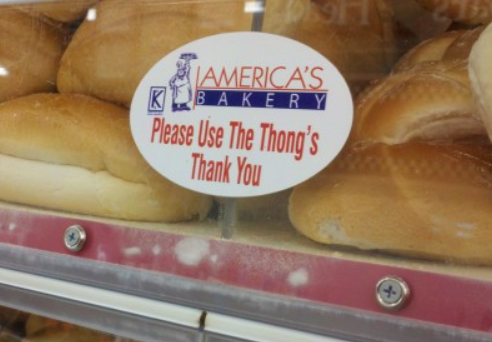
· The boy’s dog. The girl’s guitar. Sarah’s pencil. The Three Girls’ Bakery. (possessive)

That over there is Cecil’s “new” ’67 Chevy.

· The boys are going out. Girls just want to have fun. (plural)

We have three peach trees growing in our back yard.

6) Who’s/Whose

· “Who’s” is a contraction of “who is” or “who has.”

Who’s going to the fire circle tonight?

· “Whose” is possessive.

Does anybody know whose winged shoes these are in the doorway?

7) Could have/Would have/Should have

“Seeing ‘could of’ written down is one of the more shiver-inducing grammar mistakes around. Why is this happening? What does it mean?

What they’re trying to say is ‘could’ve’ which is a contraction of ‘could have.’ This is never interchangeable with ‘could of’ which doesn’t mean anything, ever.” [KC – My apologies, I
don’t remember which website I got this quote from.]

Why did you bring two games when you could’ve brought four?
Kara Church

Technical Editor, Advisory

Symitar Documentation Services

Posted by: Jack Henry | December 11, 2017

Editor’s Corner: The Sixth Day of English (2017)

On the sixth day of English

My true love sang to me

Some funny tunes that turned

To mondegreens.

It’s been some time since we’ve talked about mondegreens, also known as misheard song lyrics. Today I visited a website named after a mondegreen for some Jimi Hendrix lyrics. The words in the actual song are “Excuse me, while I kiss the sky.” The mondegreen is “Excuse me, while I kiss this guy.”

Here are six mondegreens from Kiss This Guy:

Song Title Artist/Group Actual Lyrics Mondegreen
You Can’t Quit Me Baby Queens of the Stone Age You’re solid gold

I’ll see you in hell

You smell like goat
I’ll see you in hell
Jeremy Pearl Jam At home, drawing pictures

Of mountaintops

With him on top

At home, drawing pictures

Of mounds of tots

With ham on top

I’m Every Woman Chaka Khan I’m every woman I’m Terry Wogan
Dancing Queen Abba See that girl, watch that scene, diggin’ the dancing queen See that girl, watch her scream, kicking the dancing queen
Take My Breath Away Berlin Haunted by the notion somewhere there’s a love in flames In all that body lotion, somewhere there’s a loving flame
Like a Virgin Madonna Like a virgin

Touched for the very first time

Like a virgin

Touched for the thirty-first time

And for those of you who prefer rap:

Kara Church

Technical Editor, Advisory

Symitar Documentation Services

Posted by: Jack Henry | December 8, 2017

Editor’s Corner: The Fifth Day of English (2017)

On the fifth day of English

You sent me different peeves.

Five good examples of what

Drives you cra-a-zy.

A few weeks ago, I got up on my soapbox and preached about not using the word “utilize” when “use” would work just fine. Several of you wrote back to mention some of your peeves, and I have to agree with you. In fact, I’d just run into some new jargon that was making me choke on my oatmeal, and one of you wrote to me about it. So let’s get into it! What’s on your peeve list? Below are some quotes and comments from your coworkers, along with my responses. Peeve away!

consume
“Instead of saying, ‘programs can use this service’ for some reason the buzz phrase is ‘programs can consume this service.’ Drives me nuts.”

[KC] This is the word that make me choke! I saw it in an article online and thought it was a typo! Consume this service? Are you using it to do something or are you eating it? Smoking it? I don’t know, but I don’t like this use of the word. If someone thinks it is a typo, you probably should use vocabulary that is more straightforward.

preplan

“How silly is that? Can’t you just say ‘plan’?”

[KC] Exactly, mon ami! Why do we need to plan before making a plan? Go with Nike® and Just Do It!™

at this time

“I catch myself rolling my eyes every time I hear that one.”

[KC] This is one of those page-filling phrases that could be much shorter and more specific. Are you trying to meet a 500-word minimum for an article, or are you letting people know something? Does at this time mean now? Today? 10:00 a.m.? Cut this phrase out of your life. It’s non-specific and wishy-washy, and several of your co-workers may be rolling their eyes.

moot vs. mute

[KC] Mute means unable to speak, or to muffle or quiet sound, such as muting your phone so people can’t hear your dogs barking. Moot means subject to debate or dispute; arguable, unsettled, unresolved. The phrase is “moot point.”

absolutely

“May we have an e-mail about absolutely, and why we shouldn’t use it so often?”

[KC] “Yes” is a fine response when someone asks a question. Here is an entire

CNN article on the overuse of the word absolutely in its many forms.

Kara Church

Technical Editor, Advisory

619-542-6773 | Ext: 766773

Symitar Documentation Services

NOTICE: This electronic mail message and any files transmitted with it are intended
exclusively for the individual or entity to which it is addressed. The message,
together with any attachment, may contain confidential and/or privileged information.
Any unauthorized review, use, printing, saving, copying, disclosure or distribution
is strictly prohibited. If you have received this message in error, please
immediately advise the sender by reply email and delete all copies.

Posted by: Jack Henry | December 7, 2017

Editor’s Corner: The Fourth Day of English (2017)

On the fourth day of English

My love gave me something good:

Four words that might not mean

What you think they should.

From Your Dictionary:

Bemused

If you think this word means the same thing as a word it rhymes with, you’re absolutely right. Unfortunately, most people choose the wrong rhyme. "Bemused" doesn’t mean "amused," though it’s often used that way by mistake. It actually means "confused." If you have a bemused expression on your face right now, it’s because this new information is blowing your mind—not because you think it’s hilarious.

Electrocute

Ever accidentally stick your finger in an electrical outlet and get electrocuted? If that were true, you’d be dead and buried. "Electrocute" means to kill someone with an electric shock (think "execute" to help you remember). If you get a nasty shock from a malfunctioning appliance, you may be a little shocked, but you haven’t been electrocuted.

Factoid

"Factoid" is a relatively new word in English. It was coined by author Norman Mailer in 1973, and he meant it to refer to tidbits of information that everyone thinks are true, but actually aren’t. According to this original use, "factoids" aren’t facts at all, but rather fake news that people believe just because they’ve seen it written somewhere—tabloids in the ’70s, Twitter today. The irony is that today people use factoid to mean a fun trivia fact—pretty much the opposite of what Mailer intended.

Lied

If you think "lied" has two meanings, you’re in for a surprise. This is the past tense of only one word, not two, so you could be using it correctly only half the time. If you lied to your mother yesterday, you’re not a good person, but you used the word correctly. "Lied" means to have told an untruth in the past. It is not the past tense of "to lie down"—that would be "lay." Lots of people get these conjugations confused, but you should say "I lay down after work yesterday because I was so tired."

Kara Church

Technical Editor, Advisory

619-542-6773 | Ext: 766773

Symitar Documentation Services

NOTICE: This electronic mail message and any files transmitted with it are intended
exclusively for the individual or entity to which it is addressed. The message,
together with any attachment, may contain confidential and/or privileged information.
Any unauthorized review, use, printing, saving, copying, disclosure or distribution
is strictly prohibited. If you have received this message in error, please
immediately advise the sender by reply email and delete all copies.

Posted by: Jack Henry | December 6, 2017

Editor’s Corner: Third Day of English (2017)

On the third day of English

Richard Lederer gave to me

Tricky grammar tidbits

Times the number three.

Oh yeah, we’re only on day three, people! My rhyming skills don’t get any better with time!

Here are some questions that come up often in grammar world. These are from Richard Lederer’s fans, and answered by the King Verbivore himself.

DEAR RICHARD LEDERER: Please explain the difference between the words historic and historical. –Dennis Cormier, Point Loma

Historic refers to events, places and artifacts of great significance, as in “President Reagan’s nomination of Sandra Day O’Connor to the Supreme Court was an event of historic importance.”

Historical refers to history, as a subject, as in “the San Diego Historical Society” or to a particular period of history, as in “Artifacts from the Revolutionary War are of historical significance.”

Use the article a before both historic and historical. An before these adjectives sounds stuffy and a tad weird. You wouldn’t say, “An history book,” would you?

DEAR RICHARD LEDERER: In a recent Union-Tribune Health section appeared this sentence: “CDC says one in three Americans aren’t getting enough sleep.” Should it not be “one in three Americans is not getting enough sleep?” One American is not and two Americans are. –Marie-Louise Nixon, La Mesa

Your analysis is spot on, O Conan the Grammarian. In the service of subject-verb agreement, the verb should be singular in order to connect with the singular subject one. Reversing the halves of the sentence reveals the grammar: “[Of] three Americans, one is not getting enough sleep.”

DEAR RICHARD LEDERER: A sentence in one of your recent columns begins “A bevy of readers have asked me. . .” The grammar confused me. I expected a singular verb agreement with the collective noun bevy. Please explain your use of the plural verb have? –Claire Crilly, San Diego

When a group noun is modified by a prepositional phrase that includes a plural noun object, the verb is usually plural. Which would you say or write: “A group of students is attending the dean’s symposium” or “A group of students are attending the dean’s symposium”?

Most U.S. Standard English speakers and writers would choose the second version. Same with my sentence.

Kara Church

Technical Editor, Advisory

619-542-6773 | Ext: 766773

Symitar Documentation Services

NOTICE: This electronic mail message and any files transmitted with it are intended
exclusively for the individual or entity to which it is addressed. The message,
together with any attachment, may contain confidential and/or privileged information.
Any unauthorized review, use, printing, saving, copying, disclosure or distribution
is strictly prohibited. If you have received this message in error, please
immediately advise the sender by reply email and delete all copies.

Posted by: Jack Henry | December 5, 2017

Editor’s Corner: Second Day of English (2017)

On the second day of English

My true love gave me this:

Two survey results

And a mistletoe kiss!

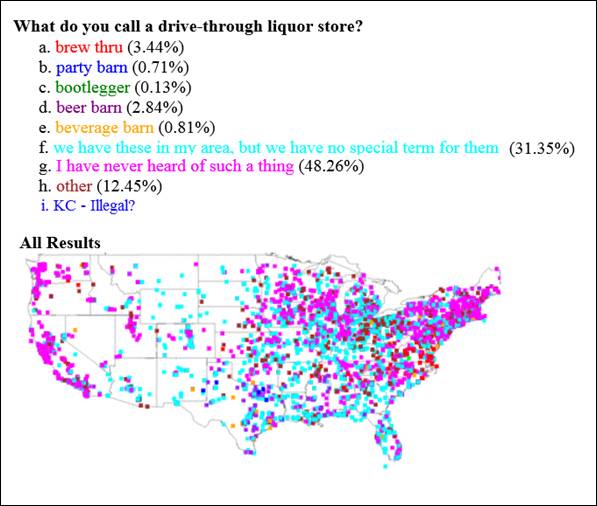
If you’ve been reading the Editor’s Corner for a few years, you already know that I have a thing for these maps of different dialects and terms we use across the United States. It’s little words like the words in the following images that often give away where somebody is from, even when they don’t sound like they have a particular accent. Jackie still will not forgive me for saying “aid car” instead of “ambulance.” My husband pretends he doesn’t know what a “license tab” is when I renew my vehicle registration and put the sticker on the license plate.

Here are two dialect maps that I found interesting and funny, but there are several more here (Dialect Survey Results) if you are interested.

Kara Church

Technical Editor, Advisory

Symitar Documentation Services

Posted by: Jack Henry | December 4, 2017

Editor’s Corner: First Day of English (2017)

It’s another December and guess what that means? The 12 Days of English! Yes, it’s that time of year where I torture you with horrible rhymes! Each day, however, I will follow those rhymes with tidbits on our language—not partridges in pear trees, drummers drumming, or ladies dancing. Well, there may be a few dancing ladies if you’re lucky. Enjoy!

On the first day of English

My true love gave to me

The definition of a minute

In New York City.

Have you ever been to New York City? Well, if you have, you’ve probably noticed the big crowds, heard the passionate and vocal people, and experienced the New York minute. I remember going to a deli and trying to order a sandwich and feeling trampled by the customers and the sandwich makers. Everyone was in such a rush! The yelling back and forth, the people trying to pull the order from my lips—I felt like I was moving in slow motion as the world around me was cruising twice as fast. It was certainly not a relaxing lunch in the park!

Here is a definition of the New York minute, from The Grammarist:

In a New York minute means right away, immediately, quickly and without hesitation. As you may suppose, in a New York minute is an American idiom, but it did not originate in New York City. Rather, the expression in a New York minute is a reflection of how people in other parts of the United States view New York. Compared to many areas of the country, New York City life is extremely fast paced. The term in a New York minute was first recorded in the mid-twentieth century in Piney Woods, Texas, though exactly where in the Southern United States this phrase originated is unknown. Johnny Carson, a popular American entertainer of the 1980s described a New York minute as “the time it takes for the light in front of you to turn green and the guy behind you to honk his horn.” These observations of life in New York City are for the most part good-natured, and perhaps even carry a note of admiration.

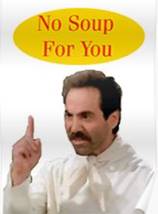
Have your order ready!

(Click here for a taste of

New York.)

Kara Church

Technical Editor, Advisory

Symitar Documentation Services

Posted by: Jack Henry | December 1, 2017

Editor’s Corner: Tenterhooks

During Thanksgiving, I received a text from my brother. It included a photo of my niece and nephew in front of the Catholic grade school my brother and I went to, along with the question: “What are tenterhooks?” Hmm…interesting combination. I thought maybe the kids were in trouble with my brother and that he was about to tell them they were on tenterhooks, but I’m still not sure.

Being the diligent word-nerd that I am, I found an answer and some photos, and a couple of discussions of the term on tenterhooks (not “tenderhooks”). Get ready for more than you ever expected to know about non-camping tenters!

From Wikipedia:

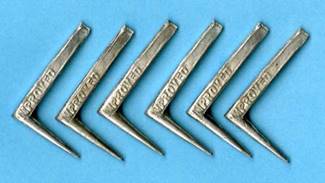
Tenterhooks are hooks in a device called a tenter. Tenters were originally large wooden frames which were used as far back as the 14th century in the process of making woolen cloth. After a piece of cloth was woven, it still contained oil from the fleece and some dirt. A craftsman called a fuller (also called a tucker or wa[u]lker) cleaned the woolen cloth in a fulling mill, and then had to dry it carefully or the woolen fabric would shrink. To prevent this shrinkage, the fuller would place the wet cloth on a tenter, and leave it to dry outdoors. The lengths of wet cloth were stretched on the tenter (from Latin tendere, meaning ‘to stretch’) using tenterhooks (hooked nails driven through the wood) all around the perimeter of the frame to which the cloth’s edges (selvedges) were fixed, so that as it dried the cloth would retain its shape and size. In some manufacturing areas, entire tenter-fields, larger open spaces full of tenters, were once common.

By the mid-18th century, the phrase "on tenterhooks" came to mean being in a state of tension, uneasiness, anxiety, or suspense, i.e., figuratively stretched like the cloth on the tenter.

Cloth on a tenter.

Tenterhooks

Kara Church

Technical Editor, Advisory

Symitar Documentation Services

Posted by: Jack Henry | November 30, 2017

Editor’s Corner: Passive and Active Voice

It’s been a while since we talked about passive voice and active voice. For those of you who are new to the topic, I’ll start with an explanation.

Typically, in English, we use active voice, which means that a sentence has a subject performing an action on an object:

· Jenny wrote the specfile.
(Jenny is the subject, wrote is the action, and the specfile is the object.)

· Jenny mentored Tom.
(Jenny is the subject, mentored is the action, and Tom is the object.)

When a sentence is written in passive voice, the object becomes the subject:

· The specfile was written by Jenny.

· Tom was mentored by Jenny.

Passive sentences are not incorrect; however, as you can see, they are not as clear and concise as active sentences. And passive sentences can actually create confusion, particularly when a passive sentence omits the person or thing performing the action:

· A specfile should be written to create the list.

Who should write the specfile? Should someone at Symitar write it? Should someone at the client site write it? Whose responsibility is it? Maybe it doesn’t matter, but if it does, this sentence should specify who performs the action.

And that brings us to the viable reasons for using passive voice. While active voice is preferred because it is usually clearer, occasionally passive voice is the better choice.

You should create passive sentences when you do not know who is going to perform the action (as in the example about writing a specfile) or when you do not know who is responsible as in the following example:

· My car was sideswiped in the parking lot.

You should create passive sentences when you do not want to take or assign blame, as in these examples:

· Mistakes were made.

· The account was frozen.

What often happens is that people use passive voice rather than active voice because they think it sounds more professional. However, writing experts agree that we should use active voice whenever possible because it’s more reader-friendly.

For more information on this topic, see this previous Editor’s Corner post: Avoid the Passive.

Donna Bradley Burcher | Senior Technical Editor | Symitar®

8985 Balboa Ave. | San Diego, CA 92123 | Ph. 619.278.0432 | Extension: 765432

Symitar Technical Publications Writing and Editing Requests

NOTICE: This electronic mail message and any files transmitted with it are intended
exclusively for the individual or entity to which it is addressed. The message,
together with any attachment, may contain confidential and/or privileged information.
Any unauthorized review, use, printing, saving, copying, disclosure or distribution
is strictly prohibited. If you have received this message in error, please
immediately advise the sender by reply email and delete all copies.

Posted by: Jack Henry | November 29, 2017

Editor’s Corner: Two Bits

Someone asked me about the term “two bits” a few months ago, when I wrote about getting your “two cents’ worth” of something. Thanks a lot, buddy. For several weeks now I’ve had this cheer running through my brain:

Two bits, four bits,

Six bits, a dollar

Yay for the All-Stars,

Stand up and holler!

Yes, that was my fifth and sixth grade basketball team—the All-Stars. And then there was “Shave and a haircut, two bits!” from one of the Saturday morning cartoons we watched. So what, exactly, are two bits? Here’s a fascinating article about the United States version of two bits, its history, and more. From Wikipedia:

In the United States, the bit is equal to one eighth of a dollar or 121⁄2 cents. In the U.S., the "bit" as a designation for money dates from the colonial period, when the most common unit of currency used was the Spanish dollar, also known as "piece of eight", which was worth 8 Spanish silver reales. One eighth of a dollar or one silver real was one "bit".

[KC – The next three paragraphs were edited for the sake of space. Please see the link above for the entire article, including information on other countries’ “bits,” too.]

With the adoption of the decimal U.S. currency in 1794, there was no longer a U.S. coin worth  1⁄8 of a dollar but "two bits" remained in the language with the meaning of one quarter dollar, "four bits" half dollar, etc. Because there was no one-bit coin, a dime (10¢) was sometimes called a short bit and 15¢ a long bit.

In addition, Spanish coinage, like other foreign coins, continued to be widely used and allowed as legal tender by Chapter XXII of the Act of April 10, 1806 until the Coinage Act of 1857 discontinued the practice.

"Two bits" or "two bit" continues in general use as a colloquial expression, as in the song catchphrase "Shave and a Haircut, two bits." As an adjective, "two-bit" describes something cheap or unworthy.

The New York Stock Exchange continued to list stock prices in eighths of a dollar until June 24, 1997, at which time it started listing in sixteenths. It did not fully implement decimal listing until January 29, 2001.

Kara Church

Technical Editor, Advisory

619-542-6773 | Ext: 766773

Symitar Documentation Services

NOTICE: This electronic mail message and any files transmitted with it are intended
exclusively for the individual or entity to which it is addressed. The message,
together with any attachment, may contain confidential and/or privileged information.
Any unauthorized review, use, printing, saving, copying, disclosure or distribution
is strictly prohibited. If you have received this message in error, please
immediately advise the sender by reply email and delete all copies.

« Newer Posts - Older Posts »

Categories