Posted by: Jack Henry | December 5, 2017

Editor’s Corner: Second Day of English (2017)

On the second day of English

My true love gave me this:

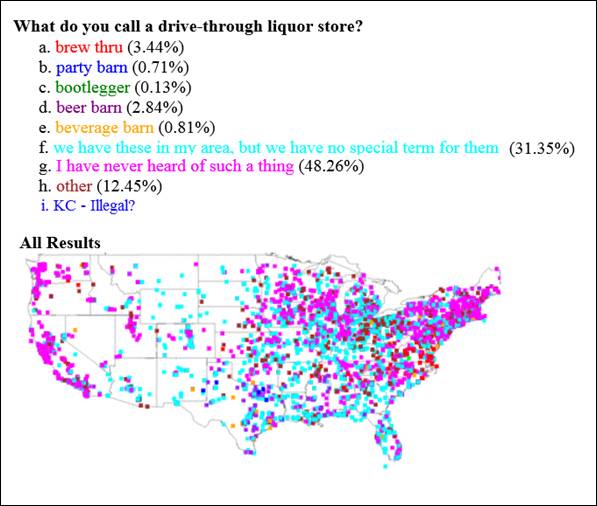
Two survey results

And a mistletoe kiss!

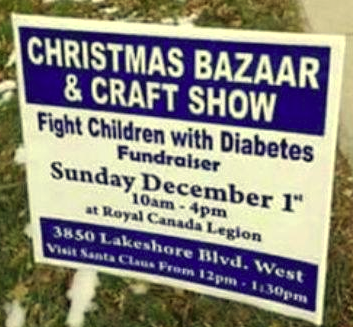
If you’ve been reading the Editor’s Corner for a few years, you already know that I have a thing for these maps of different dialects and terms we use across the United States. It’s little words like the words in the following images that often give away where somebody is from, even when they don’t sound like they have a particular accent. Jackie still will not forgive me for saying “aid car” instead of “ambulance.” My husband pretends he doesn’t know what a “license tab” is when I renew my vehicle registration and put the sticker on the license plate.

Here are two dialect maps that I found interesting and funny, but there are several more here (Dialect Survey Results) if you are interested.

Kara Church

Technical Editor, Advisory

Symitar Documentation Services

Posted by: Jack Henry | December 4, 2017

Editor’s Corner: First Day of English (2017)

It’s another December and guess what that means? The 12 Days of English! Yes, it’s that time of year where I torture you with horrible rhymes! Each day, however, I will follow those rhymes with tidbits on our language—not partridges in pear trees, drummers drumming, or ladies dancing. Well, there may be a few dancing ladies if you’re lucky. Enjoy!

On the first day of English

My true love gave to me

The definition of a minute

In New York City.

Have you ever been to New York City? Well, if you have, you’ve probably noticed the big crowds, heard the passionate and vocal people, and experienced the New York minute. I remember going to a deli and trying to order a sandwich and feeling trampled by the customers and the sandwich makers. Everyone was in such a rush! The yelling back and forth, the people trying to pull the order from my lips—I felt like I was moving in slow motion as the world around me was cruising twice as fast. It was certainly not a relaxing lunch in the park!

Here is a definition of the New York minute, from The Grammarist:

In a New York minute means right away, immediately, quickly and without hesitation. As you may suppose, in a New York minute is an American idiom, but it did not originate in New York City. Rather, the expression in a New York minute is a reflection of how people in other parts of the United States view New York. Compared to many areas of the country, New York City life is extremely fast paced. The term in a New York minute was first recorded in the mid-twentieth century in Piney Woods, Texas, though exactly where in the Southern United States this phrase originated is unknown. Johnny Carson, a popular American entertainer of the 1980s described a New York minute as “the time it takes for the light in front of you to turn green and the guy behind you to honk his horn.” These observations of life in New York City are for the most part good-natured, and perhaps even carry a note of admiration.

Have your order ready!

(Click here for a taste of

New York.)

Kara Church

Technical Editor, Advisory

Symitar Documentation Services

Posted by: Jack Henry | December 1, 2017

Editor’s Corner: Tenterhooks

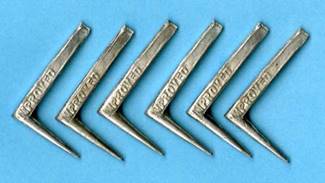
During Thanksgiving, I received a text from my brother. It included a photo of my niece and nephew in front of the Catholic grade school my brother and I went to, along with the question: “What are tenterhooks?” Hmm…interesting combination. I thought maybe the kids were in trouble with my brother and that he was about to tell them they were on tenterhooks, but I’m still not sure.

Being the diligent word-nerd that I am, I found an answer and some photos, and a couple of discussions of the term on tenterhooks (not “tenderhooks”). Get ready for more than you ever expected to know about non-camping tenters!

From Wikipedia:

Tenterhooks are hooks in a device called a tenter. Tenters were originally large wooden frames which were used as far back as the 14th century in the process of making woolen cloth. After a piece of cloth was woven, it still contained oil from the fleece and some dirt. A craftsman called a fuller (also called a tucker or wa[u]lker) cleaned the woolen cloth in a fulling mill, and then had to dry it carefully or the woolen fabric would shrink. To prevent this shrinkage, the fuller would place the wet cloth on a tenter, and leave it to dry outdoors. The lengths of wet cloth were stretched on the tenter (from Latin tendere, meaning ‘to stretch’) using tenterhooks (hooked nails driven through the wood) all around the perimeter of the frame to which the cloth’s edges (selvedges) were fixed, so that as it dried the cloth would retain its shape and size. In some manufacturing areas, entire tenter-fields, larger open spaces full of tenters, were once common.

By the mid-18th century, the phrase "on tenterhooks" came to mean being in a state of tension, uneasiness, anxiety, or suspense, i.e., figuratively stretched like the cloth on the tenter.

Cloth on a tenter.

Tenterhooks

Kara Church

Technical Editor, Advisory

Symitar Documentation Services

Posted by: Jack Henry | November 30, 2017

Editor’s Corner: Passive and Active Voice

It’s been a while since we talked about passive voice and active voice. For those of you who are new to the topic, I’ll start with an explanation.

Typically, in English, we use active voice, which means that a sentence has a subject performing an action on an object:

· Jenny wrote the specfile.
(Jenny is the subject, wrote is the action, and the specfile is the object.)

· Jenny mentored Tom.
(Jenny is the subject, mentored is the action, and Tom is the object.)

When a sentence is written in passive voice, the object becomes the subject:

· The specfile was written by Jenny.

· Tom was mentored by Jenny.

Passive sentences are not incorrect; however, as you can see, they are not as clear and concise as active sentences. And passive sentences can actually create confusion, particularly when a passive sentence omits the person or thing performing the action:

· A specfile should be written to create the list.

Who should write the specfile? Should someone at Symitar write it? Should someone at the client site write it? Whose responsibility is it? Maybe it doesn’t matter, but if it does, this sentence should specify who performs the action.

And that brings us to the viable reasons for using passive voice. While active voice is preferred because it is usually clearer, occasionally passive voice is the better choice.

You should create passive sentences when you do not know who is going to perform the action (as in the example about writing a specfile) or when you do not know who is responsible as in the following example:

· My car was sideswiped in the parking lot.

You should create passive sentences when you do not want to take or assign blame, as in these examples:

· Mistakes were made.

· The account was frozen.

What often happens is that people use passive voice rather than active voice because they think it sounds more professional. However, writing experts agree that we should use active voice whenever possible because it’s more reader-friendly.

For more information on this topic, see this previous Editor’s Corner post: Avoid the Passive.

Donna Bradley Burcher | Senior Technical Editor | Symitar®

8985 Balboa Ave. | San Diego, CA 92123 | Ph. 619.278.0432 | Extension: 765432

Symitar Technical Publications Writing and Editing Requests

NOTICE: This electronic mail message and any files transmitted with it are intended
exclusively for the individual or entity to which it is addressed. The message,
together with any attachment, may contain confidential and/or privileged information.
Any unauthorized review, use, printing, saving, copying, disclosure or distribution
is strictly prohibited. If you have received this message in error, please
immediately advise the sender by reply email and delete all copies.

Posted by: Jack Henry | November 29, 2017

Editor’s Corner: Two Bits

Someone asked me about the term “two bits” a few months ago, when I wrote about getting your “two cents’ worth” of something. Thanks a lot, buddy. For several weeks now I’ve had this cheer running through my brain:

Two bits, four bits,

Six bits, a dollar

Yay for the All-Stars,

Stand up and holler!

Yes, that was my fifth and sixth grade basketball team—the All-Stars. And then there was “Shave and a haircut, two bits!” from one of the Saturday morning cartoons we watched. So what, exactly, are two bits? Here’s a fascinating article about the United States version of two bits, its history, and more. From Wikipedia:

In the United States, the bit is equal to one eighth of a dollar or 121⁄2 cents. In the U.S., the "bit" as a designation for money dates from the colonial period, when the most common unit of currency used was the Spanish dollar, also known as "piece of eight", which was worth 8 Spanish silver reales. One eighth of a dollar or one silver real was one "bit".

[KC – The next three paragraphs were edited for the sake of space. Please see the link above for the entire article, including information on other countries’ “bits,” too.]

With the adoption of the decimal U.S. currency in 1794, there was no longer a U.S. coin worth  1⁄8 of a dollar but "two bits" remained in the language with the meaning of one quarter dollar, "four bits" half dollar, etc. Because there was no one-bit coin, a dime (10¢) was sometimes called a short bit and 15¢ a long bit.

In addition, Spanish coinage, like other foreign coins, continued to be widely used and allowed as legal tender by Chapter XXII of the Act of April 10, 1806 until the Coinage Act of 1857 discontinued the practice.

"Two bits" or "two bit" continues in general use as a colloquial expression, as in the song catchphrase "Shave and a Haircut, two bits." As an adjective, "two-bit" describes something cheap or unworthy.

The New York Stock Exchange continued to list stock prices in eighths of a dollar until June 24, 1997, at which time it started listing in sixteenths. It did not fully implement decimal listing until January 29, 2001.

Kara Church

Technical Editor, Advisory

619-542-6773 | Ext: 766773

Symitar Documentation Services

NOTICE: This electronic mail message and any files transmitted with it are intended
exclusively for the individual or entity to which it is addressed. The message,
together with any attachment, may contain confidential and/or privileged information.
Any unauthorized review, use, printing, saving, copying, disclosure or distribution
is strictly prohibited. If you have received this message in error, please
immediately advise the sender by reply email and delete all copies.

Posted by: Jack Henry | November 28, 2017

Editor’s Corner: Rx

Last weekend I spent a riveting day at a conference for diabetics. On one of the slides, I noticed the abbreviation DX, which I realized referred to “diagnosis,” or in this case, the date of diagnosis. Just days later, one of you sent me a related question, asking about where the “x” in the abbreviation for “prescription” (Rx) comes from. This was more difficult to find information on than I expected, but here is some information from Wikipedia, the Online Etymology Dictionary, and some general research I did.

First, from Wikipedia:

“℞” is a symbol meaning "recipe." It is sometimes transliterated as "Rx" or just "Rx". This symbol originated in medieval manuscripts as an abbreviation of the Late Latin verb recipe, the second person singular imperative form of recipere, "to take", thus: "take thou". Medieval prescriptions invariably began with the command to "take" certain materials and compound them in specified ways.

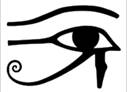
Folk theories about the origin of the symbol “℞” note its similarity to the Eye of Horus, or to the ancient symbol for Zeus or Jupiter, (♃), gods whose protection may have been sought in medical contexts.

The Eye of Horus

And from the Online Etymology Dictionary:

Rx (recipe)

1580s, "medical prescription," from Middle French récipé (15c.), from Latin recipe "take!," second person imperative singular of recipere "to take" (see receive); word written by physicians at the head of prescriptions. Figurative use from 1640s. Meaning "instructions for preparing food" first recorded 1743. The original sense survives only in the pharmacist’s abbreviation Rx.

And then some additional abbreviations I found on the internet and confirmed in Wikipedia:

· BX = biopsy

· DX = diagnosis.

· DDX = differential diagnosis. A variety diagnostic possibilities are being considered to diagnose the type of cancer present in the patient.

· FX = fracture

· HX = history

· PHX = past history

· PX = physical exam, prognosis, or patient

· RX or = prescription, prescription drug, or remedy

· SX = signs and symptoms

· TX = treatment

Kara Church

Technical Editor, Advisory

Symitar Documentation Services

Posted by: Jack Henry | November 27, 2017

Editor’s Corner: Sweet Potato or Yam?

Sweet potatoes have always been one of my favorite Thanksgiving foods. For most of my life, I used the terms sweet potato and yam interchangeably. A few years ago, I was surprised to learn that yams and sweet potatoes are not the same thing, and I’ve never actually eaten a yam.

Sweet Potatoes

The orange root vegetable that you might have enjoyed baked on Thanksgiving is a sweet potato, not a yam. Sweet potatoes are native to the Americas, but about 80 percent of sweet potatoes are now grown in China.

Sweet potatoes are not biologically related to potatoes, but the word potato (from Spanish patata, from Taino batata) originally referred to what we now call a sweet potato.

Yams

Yams have white (not orange) flesh and are much larger than sweet potatoes (often weighing 10 pounds or more). They are described as tasting “starchier” than sweet potatoes.

Yams are a dietary staple throughout West Africa, and about 66 percent of yams are grown in Nigeria. Yams are also eaten in the Philippines, Costa Rica, Vietnam, Indonesia, Japan, India, Nepal, and Fiji (according to Wikipedia), but are not common in the United States.

The word yam comes from Portuguese inhame and Spanish ñame, from a West African word meaning “to eat” (probably the Fulani word nyami).

Why the Confusion?

There are many varieties of sweet potatoes. Some stay firm and dry when you cook them. Others get soft and moist. In the United States, firm sweet potatoes were produced first. When soft sweet potatoes were introduced to the United States, they were called yams to differentiate them.

This misnomer has stuck around, and you can still find soft sweet potatoes sold as yams in many supermarkets (although the U.S. Department of Agriculture requires their labels to also include the term sweet potato).

Ben Ritter | Technical Editor | Symitar®
8985 Balboa Avenue | San Diego, CA 92123
619-682-3391 | or ext. 763391 | www.Symitar.com

Symitar Documentation Services

NOTICE: This electronic mail message and any files transmitted with it are intended
exclusively for the individual or entity to which it is addressed. The message,
together with any attachment, may contain confidential and/or privileged information.
Any unauthorized review, use, printing, saving, copying, disclosure or distribution
is strictly prohibited. If you have received this message in error, please
immediately advise the sender by reply email and delete all copies.
Posted by: Jack Henry | November 24, 2017

Editor’s Corner: A Mouthful from Richard Lederer

It’s the day after Thanksgiving, and I hope you all had a great holiday…or better yet, you may still be on holiday. I’m going to be lazy today as far as the Editor’s Corner goes, and provide you with Richard Lederer’s latest article, Every Day You Say a Mouthful of Food for Thought, since I know many of you enjoy him. This was posted in the San Diego Union Tribune, November 18, 2017. (Thanks for the newspaper, Ron!)

Thanksgiving is a delicious time of year to nibble on a spicy, meaty, juicy honey of a topic that I know you’ll savor and relish. Feast your eyes on the veritable banquet of mushrooming food expressions that grace the table of our English language and season our tongue. As we chew the fat about the food-filled phrases that are packed like sardines and sandwiched into our everyday conversations, I’ll sweeten the pot with some tidbits of food for thought guaranteed to whet your appetite.

I know what’s eating you. I’ve heard through the grapevine that you don’t give a fig because you think I’m nutty as a fruitcake; that you’re fed up with me for biting off more than I can chew; that you want me to drop this subject like a hot potato because I’m a spoiled-rotten weenie; and that you’re giving me the raspberry for asking you to swallow a cheesy, corny, mushy, saccharine, seedy, soupy, sugarcoated, syrupy topic that just isn’t your cup of tea.

Okay, so you’re beet red with anger that I’m feeding you a bunch of baloney, garbage and tripe; that I’ve upset your apple cart by rehashing an old chestnut that’s no more than a tempest in a teapot, just pie in the sky and won’t amount to a hill of beans; that you want to chew me out for putting words in your mouth;and that you’re boiling and stewing because you think I’m an apple polisher who’s out to egg you on.

That’s the way the cookie crumbles. Eat your heart out and stop crying in your beer. I’ll stop mincing words and start cooking with gas, take my idea off the back burner and bring home the bacon without hamming it up. No matter how you slice it, this fruitful, tasteful topic is the icing on the cake and the greatest thing since sliced bread.

Rather than crying over spilt milk and leaping out of the frying pan and into the fire, I’m going to put all my eggs into one basket, take potluck and spill the beans. I’m cool as a cucumber, happy as a clam and confident that this crackerjack, peachy-keen, vintage feast that I’ve cooked up will have you eating out of the palm of my hand.

Just think of the various people we meet every day. Some have taste. Others we take with a grain of salt. Some drive us bananas and crackers. Still others are absolutely out to lunch:

  • the young sprouts and broths of lads who feel their oats and are full of beans;
  • the salty, crusty oldsters who are wrinkled as prunes and live to a ripe old age well beyond their salad days;
  • the peppery smart cookies (no mere eggheads, they) who use their beans and noodles to cut the mustard;
    the half-baked meat heads, the flaky couch potatoes and the pudding-headed vegetables who drive us nuts with their slow-as-molasses peabrains who are always in a pickle, a jam, hot water, the soup, or a fine kettle of fish;
  • the unsavory, crummy, hard-boiled, ham-fisted rotten apples with their cauliflower ears, who can cream us, beat the stuffing out of us, make us into mincemeat and hamburger and knock us ass over teakettle and flatter than a pancake;
  • the mealy-mouthed marshmallows, Milquetoasts, milksops, half-pints, and cream puffs who walk on eggshells and whose knees turn to jelly as they gingerly waffle and fudge on every issue to see which side their bread is buttered on;
  • the carrot-topped, pizza-faced string beans and bean poles who, with their lumpy Adam’s apples, are long drinks of water;
  • the top bananas, big cheeses and big breadwinners who ride the gravy train by making a lot of lettuce and dough and who never work for peanuts or small potatoes;
  • the honeys, tomatoes, dumplings, cheesecakes and sweetie pies with their peaches-and- cream complexions, strawberry blond hair, almond eyes and cherry lips;

Hot dog! I hope you’re pleased as punch that this souped-up topic is a plum, not a lemon, the berries, not the pits. The proof of the pudding is in the eating, and this cream of the crop of palate-pleasing food figures is bound to sell like hotcakes. I’m no glutton for punishment for all the tea in China, but, if I’m wrong, I’ll eat crow and humble pie. I don’t wish to take the words right out of your mouth, but, in a nutshell, it all boils down to the fact that every day we truly eat our words.

NOTICE: This electronic mail message and any files transmitted with it are intended
exclusively for the individual or entity to which it is addressed. The message,
together with any attachment, may contain confidential and/or privileged information.
Any unauthorized review, use, printing, saving, copying, disclosure or distribution
is strictly prohibited. If you have received this message in error, please
immediately advise the sender by reply email and delete all copies.

Posted by: Jack Henry | November 22, 2017

Editor’s Corner: Gravy Train

Oh, how I love Thanksgiving! Eating delicious food, enjoying the company of friends and family, and celebrating the good things in life. I was trying to find something related to Thanksgiving for the Editor’s Corner, but looking at my backlog of topics, I just didn’t run into anything appropriate. Peeves, words ending in -ade, song-related words…none of them seemed quite right.

Here’s where I ended up: gravy train. Nope, it isn’t really about that delicious brown sauce we put on our turkey and mashed potatoes, but it’s all I’ve got.

I hope you all enjoy your holiday!

From the Grammarist:

Gravy train is an idiom with its roots sometime around the turn of the twentieth century. An idiom is a figure of speech that is a word, group of words or phrase that has a figurative meaning that is not easily deduced from its literal definition. We will examine the definition of the term gravy train, where it came from and some examples of its use in sentences.

A gravy train is a job or other source of income that generates abundant money with little effort. One may be said to be riding the gravy train, in such a situation. Gravy train is an American term, dating back to the early 1900s. It is popularly believed to have originally been a railroad term, referring to a train run that paid well with little effort on the part of the crew. However, so far there have been no examples found of its use to mean a literal train. At around the same time of the appearance of the term gravy train, the word gravy came to mean something easy to accomplish or something unexpectedly beneficial. The plural form of gravy train is gravy trains.

· ‘I cut off the gravy train,’ Trump boasted during a meeting with his Cabinet, calling the payments a ‘disgrace’ because they pad the pockets of insurers instead of helping poor people. (The Daily Mail)

· High auto insurance premiums are a “boot on the throat of progress” in Detroit and the medical expenses have become “a gravy train” for business interests entangled in the business of treating injured drivers, Love said. (Crain’s Detroit Business)

· Instead of relying on a gravy train of union and corporate donations—worth over $500,000 in the last elections in 2014—they’ll have to find other ways to get voters’ attention and cash. (The Tri-City News)

Kara Church

Technical Editor, Advisory

619-542-6773 | Ext: 766773

Symitar Documentation Services

NOTICE: This electronic mail message and any files transmitted with it are intended
exclusively for the individual or entity to which it is addressed. The message,
together with any attachment, may contain confidential and/or privileged information.
Any unauthorized review, use, printing, saving, copying, disclosure or distribution
is strictly prohibited. If you have received this message in error, please
immediately advise the sender by reply email and delete all copies.

Posted by: Jack Henry | November 21, 2017

Editor’s Corner: Odd Abbreviations

Dear Editrix,

I know that the Symitar editorial staff regulates the use of our abbreviations in our software and our documentation. And I know that the editors use established abbreviations found in the various style guides that we base our standards on. But what bathtub were abbreviators drinking gin out of when they came up with the following “abbreviations” that are commonly used:

· pound = lb. (There’s no L or B in pound although when you put on too many pounds it might feel like you’re in L.)

· number = no. (They got the N right, but they were O so wrong with the rest.)

· ounce = oz. (Ignore the man behind the curtain.)

Mr. Dachshund in San Diego

Dear Mr. D,

As I responded to you personally, I figured these abbreviations were related to Latin, especially considering the Periodic Table of Elements (such as Na for sodium and Fe for iron) and how many of those abbreviations come from Latin. Here are some really interesting details about all three, especially the information about using no. for number.

From The Week:

Lb is an abbreviation of the Latin word libra. The primary meaning of libra was balance or scales (as in the astrological sign), but it also stood for the ancient Roman unit of measure libra pondo, meaning "a pound by weight." We got the word "pound" in English from the pondo part of the libra pondo but our abbreviation comes from the libra. The libra is also why the symbol for the British pound is £ — an L with a line through it.

"Ounce" is related to the Latin uncia, the name for both the Roman ounce and inch units of measurement. The word came into English from Anglo-Norman French, where it was unce or ounce, but the abbreviation was borrowed from Medieval Italian, where the word was onza.

From Wikipedia: [KC – See the link for unedited material.]

The numero sign or numero symbol, , is a typographic abbreviation of the word number(s) indicating ordinal numeration, especially in names and titles. For example, with the numero sign, the written long-form of the address "Number 22 Acacia Avenue" is shortened to "№ 22 Acacia Avenue", yet both forms are spoken long.

In English, the abbreviation "No." of "numero" is often used in place of the word "number".

Yours truly,

Editrix

Kara Church

Technical Editor, Advisory

Symitar Documentation Services

« Newer Posts - Older Posts »

Categories