Posted by: Jack Henry | August 3, 2018

Editor’s Corner: On the Road Again

Wow. I started off yesterday’s article going in one direction—road-related words. Just the mere mention of something remotely connected to chocolate (toll road, toll house, chocolate chips) and I was thrown off course!

I think I have realigned my compass and I am prepared to share the other half of my road trip with you. Here are 20 different names for roads and streets; for the full list of 45 terms, see Daily Writing Tips.

  1. alley: a narrow street, especially one providing access to the rear of buildings or lots between blocks
  2. arterial: a through street or highway
  3. beltway: a highway passing around an urban area
  4. boulevard: a wide road, often divided and/or landscaped
  5. bypass: a road passing around a town
  6. causeway: a highway, especially one raised across water or wet ground
  7. close: a road closed at one end
  8. corniche: a coastal road, especially alongside a cliff face
  9. court: a road closed at one end, especially with a circular end
  10. drag: slang pertaining to a road often traveled on as a leisurely pastime (or, as “main drag,” slang referring to the principal road, or one of the principal roads, in a city or town)
  11. expressway: a high-speed divided highway with partially or fully controlled access
  12. freeway: an expressway with fully controlled access
  13. highway: a main road
  14. interstate: an expressway that traverses more than one state
  15. parkway: a landscaped road
  16. place: a short street
  17. shunpike: a side road used to avoid a main road or a toll road
  18. superhighway: an expressway for high-speed traffic
  19. thoroughfare: a main road, or a road that intersects with more than one other road
  20. turnpike: a main road, especially one on which tolls are or were collected

Kara Church

Technical Editor, Advisory

Symitar Documentation Services

Posted by: Jack Henry | August 2, 2018

Editor’s Corner: Rambling to the Toll House

Dear readers,

Years ago, we went over different terms for freeways, highways, and roads. Since then, I received a few new things on these topics from different sources. I thought you might be interested in these tidbits. First, from our coworker Andi:

“Toll roads, especially near the East Coast, are often called turnpikes; the term turnpike originated from pikes, which were long sticks that blocked passage until the fare was paid and the pike turned at a toll house (or toll booth in current terminology).”

Hmm. Now I’m thinking of Nestle® TOLL HOUSE® chocolate chip cookies. What’s up with tolls and chocolate chips? Let’s figure that out, and then tomorrow I will provide you with part two of my trip “on the road again.”

From Wikipedia:

The Toll House Inn of Whitman, Massachusetts, was established in 1930 by Kenneth and Ruth Graves Wakefield. Toll House chocolate chip cookies are named after the inn.

Contrary to its name and the sign, which still stands despite the building burning down in 1984, the place was never a toll house and it was built in 1817, not 1709. The "toll house" and the "1709" was a marketing strategy.

Ruth Wakefield cooked all the food served and soon gained local fame for her desserts. In 1936, while adapting her butter drop dough cookie recipe, she became the inventor of the first chocolate chip cookie using a bar of semi-sweet chocolate made by Nestlé. The new dessert soon became very popular. Wakefield contacted Nestlé and they struck a deal: The company would print her recipe on the cover of all their semi-sweet chocolate bars, and she would get a lifetime supply of chocolate. Nestlé began marketing chocolate chips to be used especially for cookies.Wakefield wrote a cookbook, Toll House Tried and True Recipes, that went through 39 printings starting in 1940.

Wakefield died in 1977, and the Toll House Inn burned down from a fire that started in the kitchen on New Year’s Eve 1984.The inn was not rebuilt. The site, at 362 Bedford Street, is marked with a historical marker…. Although there are many manufacturers of chocolate chips today, Nestlé still publishes the recipe on the back of each package of Toll House Morsels.

Kara Church

Technical Editor, Advisory

Symitar Documentation Services

Posted by: Jack Henry | August 1, 2018

Editor’s Corner: Old Norse, Part II

Yesterday, we had a little bit of history about the Vikings and Old Norse words that we use in English. Today I have the remainder of the article for you (minus most of the writer’s extra comments) from Daily Writing Tips:

Old Norse Words That Meant Something Slightly Different

English word, with original Old Norse meaning

  • anger – trouble, affliction, which can make a person angry
  • bait – snack, food eaten at work. Now means food used to catch fish, wild animals, and susceptible people.
  • bask – similar to the Old Norse word meaning “to bathe”
  • berserk – either from bear-shirt (frenzied warriors wearing a bearskin shirt) or bare-shirt (frenzied warriors wearing no shirt)
  • blunder – to shut one’s eyes; to stumble about blindly
  • bulk – partition; cargo, as in the nautical term bulkhead
  • crawl – to claw
  • gang – any group of men, as in modern Danish, not necessarily dangerous
  • gawk – to heed, as in paying too much attention
  • gift – dowry, a kind of wedding gift. In modern Danish, gift means wedding.
  • haggle – to chop
  • hap, happy – chance, good luck, fate
  • lake – to play
  • litmus – from the Old Norse words litr (dye) and mosi (moss), used as a chemical test for acidity and alkalinity
  • muck – cow dung. An English dairy farmer may say he needs to muck out, or clean, his barn.
  • muggy – drizzle, mist. Today it means severely humid.
  • rive – to scratch, plow, tear. A poet might write about his heart being riven in two.
  • scathe – to hurt, injure. Only the opposite word, unscathed, is common.
  • seem – to conform
  • skill – distinction
  • sleuth – trail
  • snub – to curse
  • sprint – to jump up, one of the keys to winning in a sprint
  • stain – to paint
  • stammer – to hinder; to dam up, as in a flow of words
  • steak – to fry
  • thrift – prosperity. If you have thrift, perhaps prosperity will follow.
  • thwart – across, which has kept a similar meaning for sailors
  • window – “wind-eye” or in Old Norse, vindauga

Norse Alphabet

Kara Church

Technical Editor, Advisory

Symitar Documentation Services

Posted by: Jack Henry | July 31, 2018

Editor’s Corner: Old Norse

The other day, I answered a question about the different terms we use for meat when it’s still a full animal (cow) and when it’s something cut up and you’re asking for it at the grocery store (beef). Serendipitously, I received this article today about Old Norse, the Viking contribution to English during the same time period as the Normans I mentioned. I hope you will bear with me today. I will give you a little more history, and then tomorrow I will share the words that are a result of that history. From Daily Writing Tips:

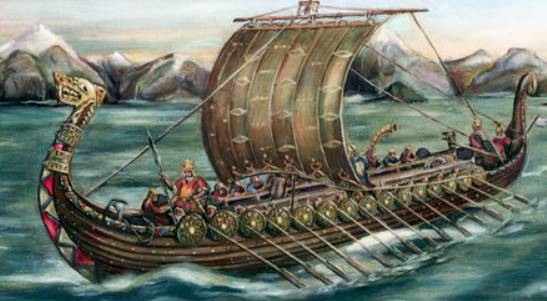
…The language of the Vikings, Old Norse, has influenced the development of English more than any other language besides French and Latin. The Swedes, Norwegians, Icelanders, and Danes all spoke Old Norse in those days, usually called the “Danish tongue.” In the 11th century, Old Norse was the most widely spoken European language, ranging west with Leif Erickson’s colony of Vinland in modern-day Canada, east with the Viking settlers on the Volga River in modern-day Russia, and south with warriors battling in modern-day Spain, Italy, and North Africa.

Four centuries after the Anglo-Saxons began emigrating from northern Europe, Danish Vikings began raiding Britain and had begun settling down by the year 876, plowing the land. The 14 shires dominated by Danish law in northern and eastern England were called the Danelaw. In 1016, King Canute the Great became ruler of all England, even before he became king of his native Denmark. Danish kings ruled England almost until William the Conqueror sailed from Normandy, France, and became the first Norman king of England in 1066. When he did, more Norse words entered English…

Today Old Norse words are most common in the Yorkshire dialect, but the Danelaw included the East Midlands, York, Essex, Cambridge, Suffolk, Norfolk, Northampton, Huntingdon, Bedford, Hertford, Middlesex, and Buckingham.

Old Norse Words Used in Modern English

When it comes to English words for which we are indebted to Old Norse, let’s start with they, their, and them. It’s true. If it weren’t for the Vikings, we might still be using the Old English words hîe, heora, and him instead. Or maybe not—when him and them mean the same thing in a language, you know it’s time for a change.

In fact, English received many really, really common words from Old Norse, such as give, take, get, and both. And sale, cake, egg, husband, fellow, sister, root, rag, loose, raise, rugged, odd, plough, freckle, call, flat, hale, ugly, and lake.

Many English words that begin with sk or sc came from Old Norse, such as skin, sky, score, scant, scrub, scathe, and skill.

Old Norse words that feature two-letter blends and a high consonant-to-vowel ratio just sound Viking to me, especially if you pronounce both letters as the Vikings originally did: knife, snare, snub, wrong, bread, dwell, bask, dream, steak, stammer, and especially thwart.

Tomorrow, more words from Old Norse.

Kara Church

Technical Editor, Advisory

Symitar Documentation Services

Posted by: Jack Henry | July 30, 2018

Editor’s Corner: Organization

Paragraphs organize your writing. Each paragraph represents a specific topic. And each paragraph must have a topic sentence that describes the main point of the paragraph. The rest of the sentences in the paragraph should support the main point.

When you are writing paragraphs, watch out for sneaky sentences that don’t support your topic. If you are introducing a new topic, create another paragraph with its own topic sentence.

To make sure information flows from paragraph to paragraph, include transitions to tie your information together. Transitions include single words, phrases, or full sentences. Transitions help readers understand how the information works together.

Documentation that contains multiple topics in the same paragraph or lacks transitions is difficult to understand. If you don’t organize the information in your documentation, it won’t be useful to readers and you won’t accomplish your writing goals.

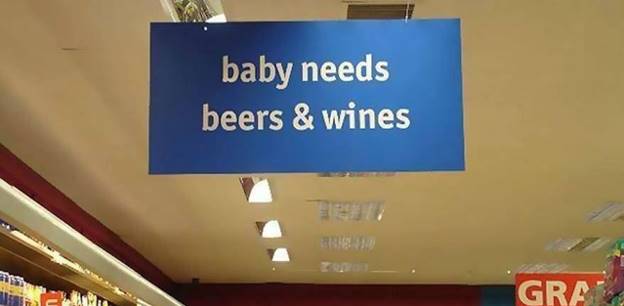
We all receive information all day long, and a lot of it is not very well organized. Sometimes the way things are organized is just baffling—like the aisles in this store.

Jackie Solano | Technical Editor | Symitar®

8985 Balboa Ave. | San Diego, CA 92123 | Ph. 619.542.6711 | Extension: 766711

Symitar Documentation Services

Posted by: Jack Henry | July 27, 2018

Editor’s Corner: Funny Definitions

Hello, my friends. Several of you have shared this list of funny definitions with me. Now, it’s time to share it with everyone else! Happy Friday!

1. ARBITRATOR: A cook that leaves Arby’s to work at McDonalds.

2. AVOIDABLE: What a bullfighter tries to do.

3. BERNADETTE: The act of torching a mortgage.

4. BURGLARIZE: What a crook sees with.

5. CONTROL: A short, ugly inmate.

6. COUNTERFEITERS: Workers who put together kitchen cabinets.

7. ECLIPSE: What an English barber does for a living.

8. EYEDROPPER: A clumsy ophthalmologist.

9. HEROES: What a guy in a boat does.

10. LEFT-BANK: What the robber did when his bag was full of money.

11. MISTY: How golfers create divots.

12. PARADOX: Two physicians.

13. PARASITES: What you see from the top of the Eiffel Tower.

14. PHARMACIST: A helper on the farm.

15. POLARIZE: What penguins see with.

16. PRIMATE: Removing your spouse from in front of the TV.

17. RELIEF: What trees do in the spring.

18. RUBBERNECK: What you do to relax your wife.

19. SELFISH: What the owner of a seafood store does.

20. SUDAFED®: Brought litigation against a government official.

Kara Church

Technical Editor, Advisory

Symitar Documentation Services

Posted by: Jack Henry | July 26, 2018

Editor’s Corner: Writing Lists

Good morning, everyone. Today I’m going discuss how to format lists and what kind of lists work best.

There are three ways to format lists in our writing. We can use an inline list, an unordered (bulleted) list, or an ordered (numbered) list. Unordered and ordered lists are also referred to as vertical lists. I’ll discuss all three ways.

Inline List

An inline list works best for short, simple lists, as shown here:

“Please go to the grocery store and pick up lettuce, cucumbers, tomatoes, and red onions.”

However, when you have a longer or more complex list of items, you should consider formatting them in a vertical list. For these lists, you use bullets or numbers, depending on the type of list you are creating.

For a long or complex list of items, use bullets, as the following example shows (this type of list is referred to as an unordered list).

Unordered List

On the way home, I need you to run several errands:

  • Go to the post office and mail your mother’s birthday gift.
  • Stop by the bank and withdraw $100.
  • Go to the grocery store and pick up salad ingredients.
  • Pick up Rover from the groomers.

Note that each bulleted item starts similarly; they have the same grammatical structure. It’s important when writing any kind of list to make sure that the bulleted items are parallel. For more about parallelism, see this article from the Purdue OWL website.

When writing a series of steps that need to be followed in order (a task), use a numbered list, as the following example shows (this is referred to as an ordered list).

Ordered List

Follow these steps to change the battery in your TV remote control:

1. Turn the remote control over and remove the battery cover.

2. Take out the old batteries.

3. Insert two new AA batteries and close the battery cover.

The important thing to remember is to use an ordered (numbered) list only if you’re providing step-by-step instructions.

It’s also important to remember to enjoy your day. Happy Thursday!

Donna Bradley Burcher | Senior Technical Editor | Symitar®

8985 Balboa Ave. | San Diego, CA 92123 | Ph. 619.278.0432 | Ext: 765432

Posted by: Jack Henry | July 25, 2018

Editor’s Corner: Correction

My apologies. Today’s EC was edited, but the text from the document I used was incorrect. Please see updates in red below. Thank you to the eagle-eyed folks that spotted this!

Oh, Guru of Grammar,

I have always had a problem with le and el, but having spoken French for several years, it has become even more of an issue.

When should I expect a word to end in le or el? Is there a consonant before the el and a vowel before le? Or is there some other defining rule to help hapless spellers?

Label/ladle: How would I know how to spell either without just memorizing it?

Thank you,

M

Dear M,

Wow. I feel elevated. Guru of Grammar? It must be the yoga and meditation classes I have been going to!

I thought you were going to have me in a bind with this question, but some kind soul out there actually came up with a rule for these words. I hope you find this helpful! (The full document is here.)

When deciding whether to use -le, -el, or –al at the end of a word, look carefully at the letter that precedes these endings.

Table, local, and towel all sound as if they have the same ending, yet each one has a different spelling for the ending sound. How can you tell which ending to use?

Look at these groups of letters: b d f h k l tand g j p q y

The first group all have lines that go upward; the second group all have lines that point downward. Lines that point up are called ascenders, and lines that point down are called descenders. If a word has an ascender or a descender preceding the /el/ sound, then the -le ending is used most of the time.

table

apple

candle

single

rifle

If the word does NOT have an ascender or a descender preceding the last

/el/ sound, then you use -el or -al.

With these two options, how do you know which one to use? While there

is not a hard and fast rule, some helpful information does exist. The -al ending is used for mostly adjectives, but some nouns. The -elending is the least common ending (so you won’t be using it much), and it is used mostly for nouns and verbs.

usual (adjective)

local (adjective)

tunnel (noun)

camel (noun)

travel (verb)

Kara Church

Technical Editor, Advisory

Symitar Documentation Services
Posted by: Jack Henry | July 25, 2018

Editor’s Corner: -le, -el, and -al

Oh, Guru of Grammar,

I have always had a problem with le and el, but having spoken French for several years, it has become even more of an issue.

When should I expect a word to end in le or el? Is there a consonant before the el and a vowel before le? Or is there some other defining rule to help hapless spellers?

Label/ladle: How would I know how to spell either without just memorizing it?

Thank you,

M

Dear M,

Wow. I feel elevated. Guru of Grammar? It must be the yoga and meditation classes I have been going to!

I thought you were going to have me in a bind with this question, but some kind soul out there actually came up with a rule for these words. I hope you find this helpful! (The full document is here.)

When deciding whether to use -le, -el, or –al at the end of a word, look carefully at the letter that precedes these endings.

Table, local, and towel all sound as if they have the same ending, yet each one has a different spelling for the ending sound. How can you tell which ending to use?

Look at these groups of letters: b d f h k l tand g j p q y

The first group all have lines that go upward; the second group all have lines that point downward. Lines that point up are called ascenders, and lines that point down are called descenders. If a word has an ascender or a descender preceding the /el/ sound, then the -le ending is used most of the time.

table

apple

candle

single

rifle

If the word does NOT have an ascender or a descender preceding the last

/el/ sound, then you use -le or -al.

With these two options, how do you know which one to use? While there

is not a hard and fast rule, some helpful information does exist. The -al ending is used for mostly adjectives, but some nouns. The -le ending is the least common ending (so you won’t be using it much), and it is used mostly for nouns and verbs.

usual (adjective)

local (adjective)

tunnel (noun)

camel (noun)

travel (verb)

Kara Church

Technical Editor, Advisory

Symitar Documentation Services

Posted by: Jack Henry | July 24, 2018

Editor’s Corner: Chyron

Dear Editrix,

Thanks to sloppy newscasting, I learned a new word today: chyron. Did you already know the definition of this word?

Wondering in Wonderland

Dear Wondering,

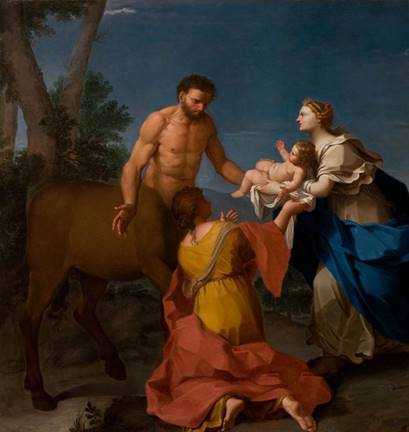
At first, I thought you were talking about Chiron. Sure, I know him. He’s the centaur (half man, half horse) in Greek mythology that was the “wisest and justest” of all the centaurs. He’s my man! (Or horse, depends on the day.)

But then I realized that the spelling was chyron, and that was a word I was unfamiliar with. I looked it up, and found some crazy examples in the news. But first, the definition.

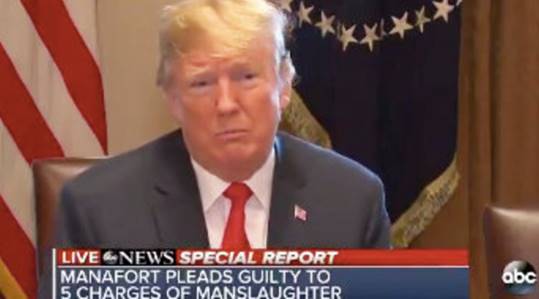
According to Merriam-Webster, a chyron is “an electronically generated caption superimposed on a television or movie screen.” The word is derived from the name of the company (the Chyron Corporation) that makes the devices that generate the captions. I think it’s impossible to watch the news today without seeing a chyron. The one in question the day I learned the word was this:

ABC later apologized for accusing Paul Manafort of manslaughter, rather than the actual crimes he has been accused of (charges of conspiracy and money laundering).

Kara Church

Technical Editor, Advisory

Symitar Documentation Services
« Newer Posts - Older Posts »

Categories