Posted by: Jack Henry | June 24, 2025

Editor’s Corner: Looking into the past

A couple of weeks ago, my significant other sauntered into the bedroom and started whispering sweet nothings in my ear. As he edged closer, he said, “What is the problem with people? Why don’t they know the difference between past and passed?!” Okay, maybe he needs to work on his technique. “Write it down. I’ll deal with it later,” I said, and then put the pillow on my head.

We all have our peeves, and this is one of his. I found a good article about it, but I don’t want to put it all down here, so I’ll do my best to condense the information.

I love this first part from Grammar-Monster.com:

The Really Quick Answer: "Passed" is the past tense of "to pass." For everything else, use "past."

And that’s it!

No, of course I wouldn’t do that to you, but that is the quick answer.

Here is the longer answer. When we’re writing, we “talk” through it in our heads. As we type out what we “hear,” homonyms are easily misspelled when our fingers are busy. (Remember, homonyms are words that sound the same but are spelled differently [they’re, their, there]). If someone said “passed” when they meant “past,” you wouldn’t hear a difference in the pronunciation.

So, let’s look at some examples, and maybe a helpful hint if you are someone who does this. [Note: This is one
of those things that spell check doesn’t always catch.]

The verb pass means to “move, go, proceed, depart, die.” Different forms of the verb are passed, passing, and passes. Here are some examples of passed, the past tense of “to pass”:

  • Bobo passed through the garden, looking for the balloon man.
  • The fairgoers accidentally passed by the best exhibit: pig races.
  • Once the red car passed the finish line, the audience erupted with applause.

There are other uses of “passed,” but we are just going to cover the basics right now. And past is a little trickier, because it can be used as an adjective, preposition, noun, and adverb. Usually it means “a time before the present.” Here are examples of each use:

Past

  • (adjective – ago, elapsed) The past few months, I’ve been feeling particularly energetic.
  • (preposition – after) The train is leaving at half past six.
  • (noun – time before the present) I always try to make sensible decisions now, so that I don’t regret the past.
  • (adverb – go beyond a point nearby) Sylvie was standing in front of the house, but her friend Poppy walked past, without as much as a “hello.”

When in doubt, remember Grammar-Monster’s quick tip from above: "Passed" is the past tense of "to pass." For everything else, use "past."

I hope that helps. For information, see these Editor’s Corner articles from the past:

Kara Church | Technical Editor, Advisory | Knowledge Enablement

Pronouns: she/her | Call via Teams | jackhenry.com

Editor’s Corner Archives: https://episystechpubs.com/
Posted by: Jack Henry | June 17, 2025

Editor’s Corner: More Malaphors

Five or so years ago, I sent out an article on malaphors. I wanted something funny for today, so I dug up another list of malaphors, which are described as “…an informal term for a mixture of two aphorisms, idioms, or clichés (such as "We’ll burn that bridge when we come to it"). Another name for the term is “an idiom blend.” These are from Atkins Bookshelf.

  • A loose tongue spoils the broth.
  • Don’t judge a book before it’s hatched.
  • Every cloud has a silver spoon in its mouth.
  • From now on, I’m watching everything you do with a fine-tuned comb.
  • He is a little green behind the ears.
  • He received a decease and desist order.
  • He was watching me like I was a hawk.
  • He’s a wolf in cheap clothing.
  • He’s burning the midnight oil from both ends.
  • He’s like a duck out of water.
  • I can read him like the back of my book.
  • I have a lot of black sheep in my closet.
  • I hope he gets his curve ball straightened out.
  • I shot the wind out of his saddle.
  • It sticks out like a sore throat.
  • It will be a walk in the cake.
  • It’s all moth-eared.
  • It’s as easy as falling off a piece of cake.
  • It’s like looking for a needle in a hayride.
  • It’s time to grab the bull by the tail and look him in the eye.
  • It’s time to step up to the plate and lay your cards on the table.
  • I wouldn’t be caught dead there with a ten-foot pole.
  • I wouldn’t eat that with a ten-foot pole.
  • I’ll get it by hook or ladder.
  • People are dying like hotcakes.
  • Take a flying hike.
  • That train has left the frying pan.
  • The crutch of the matter.
  • The fan is gonna hit the roof.
  • These hemorrhoids are a real pain in the neck.
  • They’re diabolically opposed.
  • Until the cows come home to roost.
  • Until the pigs freeze over.
  • We could stand here and talk until the cows turn blue.
  • We have to get all our ducks on the same page.
  • You can’t change the spots on an old dog.
  • You can’t teach a leopard new spots.
  • You can’t go in there cold turkey with egg on your face.
  • You could have knocked me over with a fender.

Kara Church | Technical Editor, Advisory | Knowledge Enablement

Pronouns: she/her | Call via Teams | jackhenry.com

Editor’s Corner Archives: https://episystechpubs.com/
Posted by: Jack Henry | June 12, 2025

Editor’s Corner: Is there anybody out there?

Dear Editrix,

I was talking to someone today and got a little confused. When do I used nobody, and when do I use no one? And what about anybody and anyone? Please shed some light on this!

Excellent questions, my dear reader. Let’s start with the easier set of words: nobody and no one. Nobody and no one are singular pronouns, and they mean “not any person.” You can use them both the same way. Here are some examples:

  • Nobody wanted to volunteer for cleanup duty.
  • No one offered to walk Barnaby’s dog, Sasquatch, because Sasquatch is an out-of-control St. Bernard.
  • Nobody knew the secret ingredient to Señor Kiki’s guacamole.

If you hear somebody say, “There’s no body in the casket!” well, that’s not a pronoun, that’s a disaster.

Now for anybody, anyone, and any one. These words represent different parts of speech, so I’ll go through them in two groups.

Anybody and anyone mean “any person.” They are both pronouns, just as nobody and no one are. They are also fairly interchangeable, as you can see in my examples:

  • Pink Floyd asked, “Is there anybody out there?”
  • The power was out when J Fuzz walked into the house and asked, “Is anyone home?” Mr. Kittles meowed, happy to see his dad’s outline in the dark.
  • Do you know anyone who performs alterations? I need my ball gown sewn up.

Now for the standout: any one. Forget about pronouns, these two words together are referred to as an adjectival phrase. You cannot use this in place of anyone or anybody. Any one means “any single member of a group.” For example:

  • Have any one of you ever eaten haggis? How about vegetarian haggis?
  • Would any one of your grandparents like to go to Wonkaville with you?

And if that’s not enough, five years ago I put this together, with some similar topics: Everyone.

(It’s June gloom in San Diego, so I’m adding some summer here.)

Kara Church | Technical Editor, Advisory | Knowledge Enablement

Pronouns: she/her | Call via Teams | jackhenry.com

Editor’s Corner Archives: https://episystechpubs.com/

Posted by: Jack Henry | June 12, 2025

Is there anybody out there?

Dear Editrix,

I was talking to someone today and got a little confused. When do I used nobody, and when do I use no one? And what about anybody and anyone? Please shed some light on this!

Excellent questions, my dear reader. Let’s start with the easier set of words: nobody and no one. Nobody and no one are singular pronouns, and they mean “not any person.” You can use them both the same way. Here are some examples:

  • Nobody wanted to volunteer for cleanup duty.
  • No one offered to walk Barnaby’s dog, Sasquatch, because Sasquatch is an out-of-control St. Bernard.
  • Nobody knew the secret ingredient to Señor Kiki’s guacamole.

If you hear somebody say, “There’s no body in the casket!” well, that’s not a pronoun, that’s a disaster.

Now for anybody, anyone, and any one. These words represent different parts of speech, so I’ll go through them in two groups.

Anybody and anyone mean “any person.” They are both pronouns, just as nobody and no one are. They are also fairly interchangeable, as you can see in my examples:

  • Pink Floyd asked, “Is there anybody out there?”
  • The power was out when J Fuzz walked into the house and asked, “Is anyone home?” Mr. Kittles meowed, happy to see his dad’s outline in the dark.
  • Do you know anyone who performs alterations? I need my ball gown sewn up.

Now for the standout: any one. Forget about pronouns, these two words together are referred to as an adjectival phrase. You cannot use this in place of anyone or anybody. Any one means “any single member of a group.” For example:

  • Have any one of you ever eaten haggis? How about vegetarian haggis?
  • Would any one of your grandparents like to go to Wonkaville with you?

And if that’s not enough, five years ago I put this together, with some similar topics: Everyone.

(It’s June gloom in San Diego, so I’m adding some summer here.)

Kara Church | Technical Editor, Advisory | Knowledge Enablement

Pronouns: she/her | Call via Teams | jackhenry.com

Editor’s Corner Archives: https://episystechpubs.com/

Posted by: Jack Henry | June 10, 2025

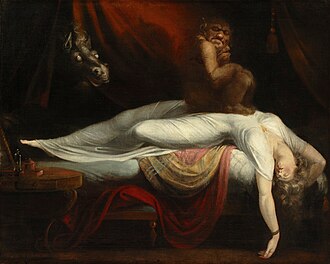
Editor’s Corner: Gargoyles and Nightmares

With all the recent chatter about AI, I was wondering, “What can AI do for me?” I needed ideas and inspiration for Editor’s Corner. I have a couple of questions from readers, which I’ll get to soon, but today I asked AI to provide me with 100 terms with surprising backgrounds and etymologies.

Copilot® choked. I thought I broke it, but about five minutes after I typed my question and said “please,” I got my list. It was not 100 words—it was about 25 words repeated four times. Thanks, AI!

I recognized several of the words from other lists I’d seen. But then I saw “gargoyle,” and it won my heart. Here are a few of the words and their etymologies. As soon as I had my list, I did my due diligence and verified the words at the Online Etymology Dictionary.

Enjoy!

gargoyle (n.)

"grotesque carved waterspout," connected to the gutter of a building to throw down water clear of the wall… "carved mouth of a rain spout, a gargoyle," from Old French gargole, gargoule "throat;" also "carved downspout," in the form of a serpent or some other fanciful shape, also from Medieval Latin gargola, gargulio (see gargle (v.)).

Two gargoyles from Notre Dame.

nightmare (n.)

c. 1300, "an evil female spirit afflicting men (or horses) in their sleep with a feeling of suffocation," "goblin that causes nightmares, incubus." The meaning shifted mid-16c. from the incubus to the suffocating sensation it causes. Sense of "any bad dream" is recorded by 1829; that of "very distressing experience" is from 1831.

[KC – I don’t love that nightmares were originally from evil
females afflicting men, but I do love that these spirits also inflicted
horses. Who on earth decided that? I understand that dogs might have nightmares, but I’ve never seen a horse sleeping, so I cannot confirm or deny that statement.]

alibi (n.)

1743, "a plea of having been elsewhere when an action took place," from Latin alibi (adv.) "elsewhere, somewhere else."

disaster (n.)

"anything that befalls of ruinous or distressing nature; any unfortunate event," especially a sudden or great misfortune, 1590s, from French désastre (1560s), from Italian disastro, literally "ill-starred," from dis-, here merely pejorative, equivalent to English mis- "ill" + astro "star, planet," from Latin astrum, from Greek astron "star".

The sense is astrological, of a calamity blamed on an unfavorable position of a planet, and "star" here is probably meant in the astrological sense of "destiny, fortune, fate." Compare Medieval Latin astrum sinistrum "misfortune," literally "unlucky star," and English ill-starred.

Hmm. Unlucky stars and nightmares. What is on AI’s “mind”? I think I’ll stick with my own ideas and imagination and see what comes my way.

Kara Church | Technical Editor, Advisory | Knowledge Enablement

Pronouns: she/her | Call via Teams | jackhenry.com

Editor’s Corner Archives: https://episystechpubs.com/
Posted by: Jack Henry | June 5, 2025

Editor’s Corner: Summer is right around the corner…

It’s almost summer, people!

I knew it was going to be an exciting season when I looked out the window the other day and saw three hummingbirds, a woodpecker, and a giant tortoise! At first, I thought the tortoise was Franklin, from down the street, but Franklin is bigger.

I later found out that our visitor is named Ulysses, and he’s looking for love in all the wrong places, as he goes through puberty. I also quickly read up on what they like to eat, and gave him some dandelion greens, carrots, kale, and a piece of chocolate. No! I’m kidding about that, but he chowed down on the salad makings and I led him back to his house after all the neighbors came to see him.

This has nothing to do with words, definitions, lessons, or grammar, though. But looking at the photo of the “mother-in-law” plant he knocked over and trampled, I am reminded of some plants that say “summer” to me. Here are a few of them and their etymologies for you! (Thanks to Merriam-Webster, though the flower photos are from searching the internet.)

Tulip

The name of the cup-shaped tulip comes from the Turkish word tülbent which means "turban." The flower got its name from the resemblance of its overlapping petals to the folds of fabric in a turban, a headdress worn chiefly in countries of the eastern Mediterranean and southern Asia.

Hydrangea

The hydrangea, a popular flowering shrub, gets its name not from the shape of its flowers or leaves, but from the shape of its seed pods: from Greek hydr- meaning "water" and angeîon meaning "vessel, container," the name refers to the cup-like capsules that hold its seeds.

Dandelion

Though widely considered a pesky weed, the name dandelion has a majestic meaning: it comes from Anglo-French dent de lion which literally means "lion’s tooth" because of its sharply indented leaves. [KC – I happen to know a tortoise who would be glad to help you if you have any problems with these weeds!]

Kara Church | Technical Editor, Advisory | Knowledge Enablement

Pronouns: she/her | Call via Teams | jackhenry.com

Editor’s Corner Archives: https://episystechpubs.com/

Posted by: Jack Henry | June 3, 2025

Editor’s Corner: The Last Quiz Colors

Happy Tuesday, my friends. We’re getting toward the end of the colors I’ve been talking about over the past few weeks, from Merriam-Webster’s color quiz. I’m going to skip teal and tangerine, since teal is common (blue-green) and tangerine is the color of the fruit, which most of us are familiar with. (It looks like a baby orange.)

I’ll start with the definitions from M-W, a little color swatch from the quiz, the etymologies from the Online Etymology Dictionary, and maybe a photo of the color in the real world.

Okay, from my least favorite to most favorite.

puce

A dark red.

Okay, a few things before the etymology. 1) M-W created this quiz and provided the swatches, yet they define this as a dark red? 2) Puce is the ugliest name for a color I’ve heard. I don’t want to remember it, but my friend Jane taught me how to relate the ugly word to a tolerable color: puce is pink. Not according to Merriam-Webster, but I think Jane is right about it being pink, not dark red.

Now the etymology:

"brownish-purple," literally "flea-color," 1787, from French puce "flea-color; flea," from Latin pucilem (nominative pulex) "flea.”

Perhaps so called as the color of the scab or stain that marked a flea-bite; flea-bitten was a color word in English to describe whiter or gray spotted over with dark-reddish spots (by 1620s, often of the skins of horses, dogs, etc.). That it could be generally recognized as a color seems a testimony to our ancestors’ intimacy with vermin.

Great! A color named after a flea bite. Let’s paint a wall that color! Here’s a color card of puce from my internet search:

And another image for the color puce:

claret

1: a red Bordeaux wine

2: a dark purplish red

Okay, no arguments there. Etymology?

mid-15c., "light-colored wine," from Old French (vin) claret "clear (wine), light-colored red wine" (also "sweetened wine," a sense in English from late 14c.), from Latin clarus "clear" (see clear (adj.)). Narrowed English meaning "red wine of Bordeaux" (excluding burgundy) first attested 1700. Used in pugilistic slang for "blood" from c. 1600.

And voilá!

wisteria

: any of a genus (Wisteria) of mostly woody leguminous vines of China, Japan, and the southeastern U.S. [KC – We had them in Seattle and have them down here in San Diego, too. They don’t seem to have many boundaries. They are beautiful and smell so delicious!]

also Wistaria, genus of woody vines, 1819, formed by Thomas Nuttall, English botanist, and named in recognition of American anatomist Caspar Wistar (1761-1818) of Philadelphia + abstract noun ending -ia. The form in -e- apparently is a misprint.

I hope your day smells as good as wisteria does!

Kara Church | Technical Editor, Advisory | Knowledge Enablement

Pronouns: she/her | Call via Teams | jackhenry.com

Editor’s Corner Archives: https://episystechpubs.com/
Hey folks! I hope you’re enjoying the short week. I’m back with a few more colors from the Merriam-Webster color quiz. Today I picked what I call the “calm” or “dull” colors. I think of these as wall colors (though if you saw some of my walls, you would know that I like a lot of color for those, too).

Sepia brings to mind old photography, but more on that later. First the M-W definition, the color swatch from the quiz, and then etymological information from the Online Etymology Dictionary.

greige (pronounced like beige)

1 : being in an unbleached undyed state as taken from a loom—used of textiles

2 : of a color that blends gray and beige : of the color greige

Greige is not in the etymology list. Judging by the Google™ responses, it’s all about paint colors. There was one response that said is from grège, the word for unbleached, raw silk in France. I don’t think I’m a fan.

Now, the next gray is more my style. It is more blue-gray than yellow-gray (or beige-gray or greige).

manatee

: any of a genus (Trichechus of the family Trichechidae) of large, herbivorous, aquatic mammals that inhabit warm coastal and inland waters of the southeastern U.S., West Indies, northern South America, and West Africa and have a rounded body, a small head with a squarish snout, paddle-shaped flippers usually with vestigial nails, and a flattened, rounded tail used for propulsion

Manatee doesn’t even get the label “color” according to the dictionary. The color is named for the creature! I’ve never seen one in the wild, but I haven’t been to the right places. Here is a picture of a mamma manatee and her chubby little trooper, sporting beautiful manatee-gray skin.

And finally, sepia.

sepia

1a: a brown melanin-containing pigment from the ink of cuttlefishes

b: the inky secretion of a cuttlefish

2: a print or photograph of a brown color resembling sepia

3: a brownish-gray to dark olive-brown color

"rich brown pigment," 1815, from Italian seppia "cuttlefish," from Latin sepia "cuttlefish," from Greek sēpia "cuttlefish," a word of uncertain origin.

First, the common cuttlefish:

And second, why did I associate the color sepia with photos? Well, I remembered that was the color used to describe old photos, such as this:

I thought that was just how old photos aged: black and white, or sepia. But there’s more to it than that. As some of you know, silver is a primary component of analog photos, as part of the film.

There were different mixes of silver involved in developing film, and eventually sepia was found to be more stable than silver. Sepia was also more resistant to pollutants, so people started using cuttlefish goo to develop film because the photos lasted longer.

Now we don’t even need to carry a camera…just a phone. Amazing.

Kara Church | Technical Editor, Advisory | Knowledge Enablement

Pronouns: she/her | Call via Teams | jackhenry.com

Editor’s Corner Archives: https://episystechpubs.com/

Posted by: Jack Henry | May 27, 2025

Editor’s Corner: It’s not easy being green.

Good morning, everyone! I hope you had a nice three-day weekend, whether you honored fallen soldiers or honored hot dogs and hamburgers at a barbecue, or both.

Today I’m here to talk about more colors! Not red, blue, or white. Today I have the two funky greens from the Merriam-Webster colorquiz a couple of weeks ago. As with blues and reds, I’m going to provide the definitions from M-W, the color swatch from the quiz, and additional etymological information from the Online Etymology Dictionary.

viridian

a chrome green pigment that is a hydrated oxide of chromium

Shade of green, 1882, from the paint color name (1862), coined from Latin virid-, stem of viridis "green, blooming, vigorous" (see verdure) + -ian.

English earlier had viridity (early 15c.) "greenery, greenishness, verdure;" virid (adj.) "green, blooming" (c. 1600). Viridescent "greenish" is attested from 1788 in mineralogy; viridescence (n.) by 1830 in botany.

I was hoping to find a classic car in viridian green, but the closest I could come to viridian was this lovely bouquet of bird feathers:

And some lovely yarn, which is a little lighter.

The other green mentioned in the quiz was chartreuse, a color that burns my eyes like pepper spray and gasolene. Still, my mom loves it and I love her, so let’s have a look.

chartreuse

: a variable color averaging a brilliant yellow green

: a French liqueur

Esteemed type of liqueur, 1866, from la Grande-Chartreuse, chief monastery of the Carthusian order, which was founded 11c. and named for the massif de la Chartreuse (Medieval Latin Carthusianus) mountain group in the French Alps, where its first monastery was built. The liqueur recipe dates from early 17c.; the original now is marketed as Les Pères Chartreux. The color name (1884) is from the pale apple-green hue of the best type of the liqueur.

Now that’s interesting! The liqueur was first, and the color was named after the drink. Here are the bottles of a couple of versions. The one on the right is stronger (so that’s the one I need to take a swig of, next time my mom come’s home in a chartreuse outfit).

That’s all I have today! Cheers!

Kara Church | Technical Editor, Advisory | Knowledge Enablement

Pronouns: she/her | Call via Teams | jackhenry.com

Editor’s Corner Archives: https://episystechpubs.com/
Posted by: Jack Henry | May 22, 2025

Editor’s Corner: Am I blue?

Hello folks!

Today I am exploring some of the other colors from the Merriam-Webster quiz. This time, I’m going for the blues. I thought I’d start with turquoise, which my mom always calls “turquoise blue,” but when you look at it next to other blues, it looks almost greenish.

Sarah K. sent me a link to an article about this very topic from the Guardian, and she also sent another color test, specifically about greens and blues.

I know that the color tests aren’t really fair if you are colorblind (though one of the best scores was from someone colorblind who guessed the answers based on etymology and smartness). 😊Just like last time, I’m looking at the meaning and origins of the words, from Merriam-Webster and the Online Etymology Dictionary.

turquoise

1: a mineral that is a blue, bluish-green, or greenish-gray hydrous basic phosphate of copper and aluminum, takes a high polish, and is valued as a gem when sky blue

2: a light greenish blue

And the etymology:

opaque greenish-blue precious stone, 1560s, from French, replacing Middle English turkeis, turtogis (late 14c.), from Old French fem. adjective turqueise "Turkish," in pierre turqueise "Turkish stone." So called for being brought to Europe first from Turkestan or via Turkish Ottoman lands.

Okay, that’s enough. I want to see some jewelry! This is a good photo of the variety of colors that turquoise encompasses.

cyan

a greenish-blue color

That’s it? That doesn’t look at all green to me. You may recognize cyan as one of the colors in your printer. That particular color screams printer ink to me. Well, do we have anything more interesting in the etymology department?

"greenish-blue color," 1889, short for cyan blue (1879), from Greek kyanos "dark blue, dark blue enamel, lapis lazuli,"

Well, that gets us even farther away from greenish-blue. Dark blue enamel? Lapis lazuli? I love Lapis, but let me show you how that looks compared to the cyan color block above.

I give the color creators or dictionary definition divas an F on that. Greenish-blue? I think not.

azure

Here’s one with varied definitions from the dictionary:
1a: the blue color of the clear sky

b: the heraldic color blue

2: the unclouded sky

3: archaic : lapis lazuli

Hmm…I think of the sky as much lighter than that, but I suppose it could be that color. Let’s see if the etymology gives us any further information.

"sky-blue color; pigment or paint made of powdered lapis lazuli"

A couple examples for my search of “sky blue images”:

And here are the different colors of the sky according to a color chart, so I guess azure gets a pass:

Am I blue? Nope! Have a great day!

Kara Church | Technical Editor, Advisory | Knowledge Enablement

Pronouns: she/her | Call via Teams | jackhenry.com

Editor’s Corner Archives: https://episystechpubs.com/

« Newer Posts - Older Posts »

Categories