Posted by: Jack Henry | June 23, 2020

Editor’s Corner: Lo and Behold, It’s P’s and Q’s

Today I have two phrases some curious readers have asked about. The first is about the phrase “Mind your p’s and q’s.” The inquirer said that she thought the phrase was from the UK (yes, indeed), and that it referred to minding your pints and quarts of liquor. As the World Wide Words (sorry, this link is now blocked at JHA) says, there are several explanations for the phrase:

In the UK, the phrase means to mind one’s manners or to behave properly. This reflects its historical meaning. However, in the US, according to the Oxford English Dictionary, it can also mean to be alert, to be on one’s toes, to be on top form.

Many explanations have been advanced down the decades to explain this puzzling expression. It is said to be advice to a child learning its letters to be careful not to mix up the handwritten lower-case letters p and q, or similar advice to a printer’s apprentice, for whom the backward-facing metal type letters would be especially confusing. One has to wonder why p and q were singled out, when similar problems occur with b and d. Others have argued that, closely fitting the “mind your manners” sense, it might just have been an abbreviation of mind your pleases and thank-yous, a view advanced in particular by some dictionaries.

We may leave out of account more fanciful suggestions, such that it was an instruction from a French dancing master to be sure to perform the dance figures pieds and queues accurately, that it was an admonishment to seamen not to soil their navy pea-jackets with their tarred queues (their pigtails), or that it was jocular, or perhaps deadly serious, advice to a barman not to confuse the letters p and q on the tally slate, on which the letters stood for the pints and quarts consumed “on tick” [KC – “on credit”] by the patrons, even though men did indeed at one time consume beer by the quart.

To confuse the matter somewhat, we also have examples of a closely similar expression, P and Q or pee and kew. This was seventeenth-century slang and meant “highest quality”….

Investigations by the Oxford English Dictionary in 2007, when revising the entry, turned up early examples of the use of Ps and Qs to mean learning the alphabet. The first is in a poem by Charles Churchill, published in 1763: “On all occasions next the chair / He stands for service of the Mayor, / And to instruct him how to use / His A’s and B’s, and P’s and Q’s.”

With that, the article concludes that learning the alphabet is the origin of the phrase.

The second phrase that someone asked about, is “lo and behold.” This, again, has its origin in the UK. Phrases.org tells us, as you probably know, that it is an explanation to “draw others attention to something…considered startling or important.”

The origin is straightforward:

The word ‘lo’ as used in this phrase is a shortening of ‘look’. So, lo and behold! has the meaning of look! – behold!. Lo in this and its other meaning, which is more akin to O!, has been in use since the first Millennium and appears in the epic poem Beowulf.

Lo and behold, there are your answers! Enjoy your day and continue to mind your P’s and Q’s. (Your letters—not your pints and quarts until you’re done for the day!)

Kara Church

Pronouns: she/her/hers

Technical Editor, Advisory

Editor’s Corner Archives: https://episystechpubs.com/

Oh my!

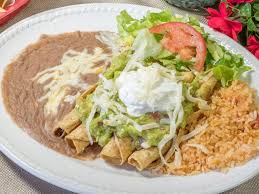
Dear readers, I provided you with an incorrect flauta photo yesterday, and only a brief explanation. I was told I would have to wear a “shame keyboard,” since my fingers produced an Editor’s Corner that was incomplete and incorrect.

What I sent you was a photo of rolled tacos, also called taquitos; these are smaller than flautas, and made with corn tortillas. Taquitos are also more common, eaten by the peeps on the street. Flautas are made with white flour tortillas and are more upscale and served for meals. (Thank you, Javier and Susan, you made me even hungrier!) As mi amigo said, “Rolled tacos are served in the House of Commons; flautas are served in the House of Lords.” I know, we’re not in England, but you get the gist.

Taquitos

Flautas

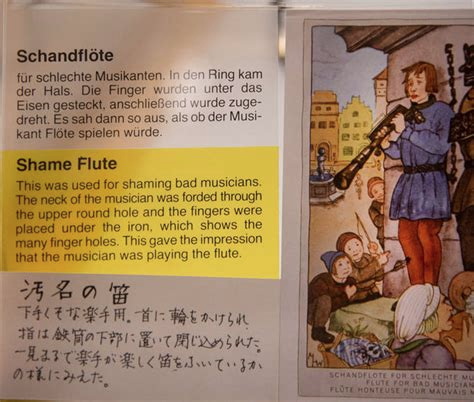
And then there’s the whole Schandeflote (shame flute). I thought it was a necklace indicating you were a bad musician—you know, a little gold flute on a chain. Silly me! We are talking German shame. This “necklace” is a device that buckles your fingers down to your instrument! Here is a picture from our coworker, Lori:

Thank you all for your feedback and the opportunity to learn even more about these words. Stay away from Middle Age German “jewelry” and buen provecho with your flautas!

Kara Church

Pronouns: she/her/ella

Technical Editor, Advisory

619-542-6773 | Ext: 766773

Editing: Symitar Documentation Services

Editor’s Corner Archives: https://episystechpubs.com/

NOTICE: This electronic mail message and any files transmitted with it are intended
exclusively for the individual or entity to which it is addressed. The message,
together with any attachment, may contain confidential and/or privileged information.
Any unauthorized review, use, printing, saving, copying, disclosure or distribution
is strictly prohibited. If you have received this message in error, please
immediately advise the sender by reply email and delete all copies.

Posted by: Jack Henry | June 18, 2020

Editor’s Corner: F Words

Good morning, folks. Today I’d like to talk about some “F” words. I recently read an article about people confusing flaunt and flout. That’s not something I’ve noticed, but okay, we’ll go over the difference between the two. Half joking to myself, I thought “Why didn’t they add the word flauta to the list?” Then I got serious and found out a few things about all of these words—and then some.

Okay, flaunt means to display something, usually to make others envious or sometimes to show defiance. For example, “Jim-Jam flaunted his earnings by driving fancy cars and never wearing the same shoes twice.”

Flout means to disregard something. Merriam-Webster defines flout as “to treat with contempt.” An example might be “Anna knew the rules of the town were to dress warmly and conservatively; she flouted their preferences by wearing only bikinis covered in rhinestones or sequins.” The word flout supposedly comes from the word flute.

A flauta, is a Mexican dish made of a rolled tortilla, filled with meat and cheese, and fried. Flauta is also the Spanish word for flute, which the food resembles.

After reading these definitions, I went back to the Grammar Girl article that started all of this. She didn’t mention flautas, but she did mention flutes and a new term. Let me continue dragging you down this crazy road with me. The following is from Grammar Girl’s article on flout and flaunt (with some edits for space):

The origin of ‘flaunt’

Nobody knows for sure where we got “flaunt”…and I’m always surprised when I come across an unknown origin. How could we just not know? People research this stuff.

There are theories, of course. The one I like is that it comes from a Swedish dialect word “flankt” that means “loosely fluttering.” I like the visual image of fluttering your accomplishments in front of people, but the Oxford English Dictionary says the timing of the word entering English makes that origin unlikely. We really just don’t know.

The origin of ‘flout’

“Flout” is even more fun and weird. Dictionaries say it’s related to the word “flute”—like the instrument, but nobody is really sure why that is either. What would disregarding laws have to do with playing the flute. I triple checked just to be sure I was reading everything right.

One theory is that the sound of playing the flute might sound a bit like jeering or derisive whistling. For example, the Oxford English Dictionary says that the Dutch word “fluiten” means both to play the flute and to mock or deride something or someone.

What is a ‘shame flute’ or ‘Schandeflote’?

Then I came across a tidbit on Wikipedia about bad musicians being forced to wear a “flute of shame,” and I thought someone was just making things up. I mean, really…the flute of shame?

But I found things about it in a bunch of books in Google Books too, and it’s often associated with Germany in the Middle Ages where it was called the “Schandflote.”

“A shame flute dangling from a German musician’s neck mocked his professional abilities.” Apparently, it wasn’t a real flute—it just looked like a flute—and it somehow locked the musician’s fingers in a forced playing position.

The first citation in the OED for “flout” meaning “to jeer or express contempt for something” is from 1551, and from what I can gather, the shame flute was used to mock musicians around the same time.

I’ve never seen anyone make the connection saying the shame flute is the reason the word “flout” comes from the word “flute,” but it seems like a good theory, or at least a fun theory, because we got to learn about the shame flute!

Quick and Dirty Tip

Getting back to the original question, you should still use “flaunt” to talk about showing off and “flout” to talk about disregarding rules, and neither of them are a good thing. Don’t be a flaunter, and don’t be a flouter.

Kara Church

Pronouns: she/her

Technical Editor, Advisory

619-542-6773 | Ext: 766773

Editing: Symitar Documentation Services

Editor’s Corner Archives: https://episystechpubs.com/

NOTICE: This electronic mail message and any files transmitted with it are intended
exclusively for the individual or entity to which it is addressed. The message,
together with any attachment, may contain confidential and/or privileged information.
Any unauthorized review, use, printing, saving, copying, disclosure or distribution
is strictly prohibited. If you have received this message in error, please
immediately advise the sender by reply email and delete all copies.

Posted by: Jack Henry | June 16, 2020

Editor’s Corner: Yak Shaving

Now and then, I receive some interesting articles from the Editor’s Corner audience. The latest one was about two terms from the Engineering business world: yak-shaving and bikeshedding. The mental image of shaving a yak made me laugh and made me curious, so I’ll share that term with you. To learn about bikeshedding, you’ll have to check out the full article at Medium.com.

And remember to always offer your yak a hot towel after a shave!

Yak-Shaving

“Shaving a Yak” means performing a seemingly endless series of small tasks that must be completed before the next step in the project can move forward.

For example, let’s say you want to drive to the store to pick up some groceries, and you notice that your car has a flat tire. So you decide to put some air in the tire, only you remember that you lent your tire pump to your neighbor. So now you have to go to your neighbor’s house and ask them for the tire pump back. Only, there’s a problem: last week your 5-year-old daughter ruined one of the neighbor’s couch cushions, and you promised you’d replace it, so now you feel guilty about asking the neighbor for the tire pump when you haven’t fulfilled your promise. Unfortunately, the couch cushions were stuffed with genuine Tibetan yak fur, so now you end up having to shave a yak…

Although this is a silly story (see the original story here), it is characteristic of the kinds of nested task dependencies often found in a large engineering project. It may seem like you are spending a lot of time working on things that have nothing to do with your overarching goal.

Yak-shaving is a value-neutral term: if the small tasks are really required, then it’s a good thing; but if they are not, then it’s not. In the story given above, it’s not actually necessary to shave the Yak in order to get to the grocery store; what’s really happening is the protagonist is making life difficult for themselves as a strategy for avoiding what they believe to be an emotionally difficult interaction with the neighbor. Similar scenarios happen in software projects fairly often.

Kara Church

Technical Editor, Advisory

Editor’s Corner Archives: https://episystechpubs.com/
Posted by: Jack Henry | June 11, 2020

Editor’s Corner: 32 Beautiful Vocabulary Words

Good morning, word lovers.

BuzzFeed recently shared a list called “32 Of The Most Beautiful Words In The English Language.” As I read through the words, two things came to mind. First, most of them really are words that make you go “ahhh,” in the same way a lovely piece of art does. Or, you know, when you have the first taste of a food or drink you really love? Yeah, like that. If these words don’t make you go “ahhh,” your “ahhh barometer” needs replacing.

And second, there are some beautiful words on this list that are new to me, and I’m hoping that will be the case for you too, because we all need more beauty in our lives. I’m going to give you the whole list, all 32 of them. If that’s too much beauty for you to experience in one day, divide them up over the next few days. Savor the splendor.

1. aquiver (adjective): quivering, trembling

2. mellifluous (adjective): a sound that is sweet and smooth, pleasing to hear

3. ineffable (adjective): too great to be expressed in words

4. hiraeth (noun): a homesickness for a home you can’t return to, or that never was

A Welsh word without direct English translation, and utterly beautiful. Thanks, Wales.

5. nefarious (adjective): wicked, villainous, despicable

6. somnambulist (noun): a person who sleepwalks

7. epoch (noun): a particular period of time in history or a person’s life

8. sonorous (adjective): an imposingly deep and full sound

9. serendipity (noun): the chance occurrence of events in a beneficial way

10. limerence (noun): the state of being infatuated with another person

11. bombinate (verb): to make a humming or buzzing noise

12. ethereal (adjective): extremely delicate, light, not of this world

13. illicit (adjective): not legally permitted

14. petrichor (noun): the pleasant, earthy smell after rain

15. iridescent (adjective): producing a display of rainbowlike colors

16. epiphany (noun): a moment of sudden revelation

17. supine (adjective): lying face upwards

18. luminescence (noun): light products by chemical, electrical, or physiological means

19. solitude (noun): a state of seclusion or isolation

20. aurora (noun): dawn

21. syzygy (noun): an alignment of celestial bodies

22. phosphenes (noun): the light and colors produced by rubbing your eyes

23. oblivion (noun): the state of being unaware of what is happening around you

24. ephemeral (adjective): lasting for a very short time

25. incandescence (noun): light produced by high temperatures

26. denouement (noun): the resolution of a narrative

27. vellichor (noun): the strange wistfulness of used bookshops

28. eloquence (noun): the art of using language in an apt, fluent way

29. defenestration (noun): the act of throwing someone out of a window

30. sonder (noun): the realization that each passerby has a life as vivid and complex as your own

31. effervescence (noun): bubbles in a liquid

32. cromulent (noun): appearing legitimate but actually being spurious

Donna Bradley Burcher | Senior Technical Editor | Symitar®

8985 Balboa Ave. | San Diego, CA 92123 | Ph. 619.278.0432 | Ext: 765432

About Editor’s Corner

Editor’s Corner keeps your communication skills sharp by providing information on grammar, punctuation, JHA style, and all things English. As editors, we spend our days reading, researching, and revising other people’s writing. We love to spend a few extra minutes to share what we learn with you and keep it fun while we’re doing it.

Did someone forward this email to you? Click here to subscribe.

Don’t want to get Editor’s Corner anymore? Click here to unsubscribe.

Do you have a question or an idea for Editor’s Corner? Send your suggestions or feedback to Kara and <a href="mailto:DBurcher.

NOTICE: This electronic mail message and any files transmitted with it are intended
exclusively for the individual or entity to which it is addressed. The message,
together with any attachment, may contain confidential and/or privileged information.
Any unauthorized review, use, printing, saving, copying, disclosure or distribution
is strictly prohibited. If you have received this message in error, please
immediately advise the sender by reply email and delete all copies.

Posted by: Jack Henry | June 9, 2020

Editor’s Corner: Verbiage

Dear Editrix,

I may be a bit too bored, because I’ve been thinking a lot about the use of the word verbiage. Maybe I spent too much time in creative writing workshops, but I always thought that verbiage meant unnecessary words, such as, “You need to cut the verbiage here.” I’ve been noticing many people use it to mean a specific section of text. I would just use “this text” or “these lines” or, maybe if I was feeling hoity-toity, “the phraseology here.” Am I being too persnickety or has this struck you as well?

Andrew

Dear Andrew,

Oh my goodness! Every time I see or hear the word verbiage I think the same thing! We must have had teachers from the same part of the country. I learned that verbiage means wordy or overly verbose. I can hear Mozart (well, the one from the movie Amadeus in 1984) saying, “Too many notes!” So, let us see if you and I remember this correctly.

According to Merriam-Webster (and the synonyms listed below), we are definitely on to something. The first definition is as follows:

verbiage (noun)

1: excessive use of words: superfluity of language in proportion to sense or content: prolixity, verbosity, wordiness

On the side of all the people who use the word to just mean “wording” or “phraseology” in general, here is the second definition:

2: manner of expressing oneself in words: diction, wording

There is also a longer explanation on Grammarly, which includes this:

  • Verbiage is a noun that means a plethora of words—usually unwelcome ones.
  • Verbiage can also be used to refer to someone’s style or manner of speaking.
  • Verbage is a non-standard word, possibly a portmanteau of the words verbiage and garbage. Its meaning is close to the meaning of verbiage and carries a negative connotation.

The word’s etymology, from the Online Etymology Dictionary is as follows: "abundance of words," 1721, from French verbiage "wordiness" (17c.), from Middle French verbier "to chatter," from Old French verbe "word," from Latin verbum "word."

While the Latin verbum doesn’t carry any particular negativity, the French verbiage (wordiness) is something we try to avoid.

So, what does all this mean? I think we should be changing verbiage to wording during editing, and asking those that use it if they mean to refer to their wording as excessive, verbose, and unwelcome. That said, I hear it so often that I think we may be fighting a losing battle.

Kara Church

Technical Editor, Advisory

Symitar Documentation Services

Posted by: Jack Henry | June 4, 2020

Editor’s Corner: Clichés

Dear Editrix,

I just heard a radio commercial refer to the phrase “Get by with a little help from your friends” as a cliché. Isn’t it just quoting a song? Or was this a saying before it became a famous song lyric? If not, how old does the song have to be for it to become a cliché?

Jane

Dear Jane,

This was interesting to investigate, so thank you for the question. According to Wikipedia, a cliché is “an expression, idea, or element of an artistic work that has become overused to the point of losing its original meaning or effect, even to the point of being trite or irritating, especially when at some earlier time it was considered meaningful or novel.”

It is more a matter of overuse that makes a cliché than it is a matter of time, though of course the more time that passes, the more overused a phrase could become. I love this quote I found from a French poet, Gerard de Nerval, about clichés: “The first man who compared a woman to a rose was a poet, the second, an imbecile."

I went on to look more into song lyrics as clichés, and found a funny article on a website called Sonicbids, called “8 Terrible Lyric Clichés You Need to Stop Using in Your Songs (And What to Write Instead).” Here are a few of the items from the article that I hope will entertain you.

If you’re 16 and in your first band, you can be forgiven for coming up with the same metaphors and phrases that have occurred to thousands before you, but if you want to be a real lyricist, you should be aware of these overused lyrical concepts. It’s the only way to avoid them!

"It cuts like a knife"

This is not only a common metaphor for love, it’s a stupid one. Love makes one feel lots of things, but it’s never once made me feel as though I was cut by a knife. Stabbed, perhaps, but not sliced.

Try this instead: If one must use a painful metaphor for love, consider some other sources of pain and/or death (probably skipping drowning – that one’s overused, too): choking, electrocution, burning, gunshots, blunt-force trauma, road rash, or some sort of allergic reaction….

When everything happens "tonight"

Is there a word or syllable missing in your lyric? Just add the word “tonight.” This word haunts the end of millions of phrases, more common than a comma or a period….

Try this instead: The worst thing about this one is the total lack of any sense of time in most lyrics that feature it. It’s always “tonight,” a night that is going on now and will never end…and it would be more effective in future tense.

For example, “You’re my baby tonight”…is a lot less interesting than whatever is going to happen later, creating a sense of tension. “I’m crawling out my window tonight,” or “Meet me at the railroad tracks tonight” are examples.

"Things aren’t always what they seem"

Well, no, they’re not, but this trite vaguery doesn’t actually mean anything,

Try this instead: Maybe this concept of confusion and uncertainty can be expressed more easily through music than lyrics. That’s what psychedelic music is, right? Grab your wah-wah pedal and soak those tracks in delay. [KC – I am not a musician, but I suddenly feel the need for my own wah-wah pedal.]

As for the phrase “I get by with a little help from my friends,” maybe it was wonderful and new when the Beatles first sang it, but too many advertisements and speeches and yearbook signatures turned it into a cliché.

Kara Church

Technical Editor, Advisory

Symitar Documentation Services

Posted by: Jack Henry | June 2, 2020

Editor’s Corner: Kodak Moment

Hello everyone,

I remember saying “Calgon, take me away!” one day in the office and having the person I was talking to stare at me like I was speaking another language. Then I realized, this peer of mine was too young to remember the Calgon commercials. Outside of feeling old, I also wondered what other advertisements or phrases I might utter that the younger folks might not relate to.

When I received this email the other day about the idiom “a Kodak moment,” I thought that it might be one of those things. Here’s a definition of the idiom from The Grammarist:

A Kodak moment is a moment in time that is so precious because of its sentimental value or its beauty, one wishes to preserve it on film. For instance, a baby’s first steps may be considered a Kodak moment. A couple’s first dance at a wedding may be considered a Kodak moment. However, the view of the sweeping vista of the Grand Canyon may also be considered a Kodak moment, or the budding of a beautiful flower.

The expression Kodak moment came from a popular advertising campaign for the American Kodak cameras in the latter half of the twentieth century, produced by Eastman Kodak. Kodak cameras such as the Brownie and Instamatic cameras were reasonably priced and easy to use, so even the most inexperienced or busy people could operate them. Digital photography and phone cameras led to the demise of the once ubiquitous home Kodak camera, and the company filed for bankruptcy protection.

Today, Kodak focuses on business imaging. Note that the word Kodak is capitalized in the idiom Kodak moment, because it is a proper name.

I distinctly remember the last time I heard the phrase “This is a Kodak moment!” I was at the San Diego Zoo®, where they actually had little signs around the zoo in places they thought you might want to snap a picture (or grab your cell phone and click). A crowd was gathered around the Komodo dragon exhibit. Our dear dragon was outside, which was unusual, but that wasn’t what the moment was about. People were yelling, kids were being shuffled away, and folks like me gathered closer to take photos as the dragon moved around the cage—wearing part of his lunch (a dead dear) on top of his head. It was feeding time, and the dragon was wandering about with this awkward deer toupee. When a man shouted, “This is a definite Kodak moment!” I cracked up. So much for it being a precious moment…like a baby’s first step.

I wonder what, in twenty years, the equivalent of this phrase will be, and whether it will make today’s 30-year-olds feel like grandparents.

There he is, your Komodo dragon.”

Kara Church

Technical Editor, Advisory

Symitar Documentation Services

Posted by: Jack Henry | May 28, 2020

Editor’s Corner: How a Word Gets in the Dictionary

Last week, I shared some word lists: a list of new words, a list of old words with new meanings, and a list of fading words. The list of new words may have got you wondering how words get included in the dictionary. Who decides? How do they decide on some words and not others?

This information, along with the lists I shared last time, comes an article called “How does a Word Become a Word?” The article points out that the first English dictionary, called The Elementaire (1582), contained about eight thousand words. In 2020, we English speakers use more than one million words; and interestingly, fewer than half of those are listed in a dictionary. But how do words get into a dictionary?

Well, some lucky (and I’m sure fascinating!) people are paid to spend their days researching English usage and then updating dictionaries based on what they find. There are numerous dictionaries—our dictionary of choice is Merriam-Webster, but there are many others. For a new word to be included in a dictionary, it must meet two specific criteria: it must “be used across a wide area by many people who agree on its meaning,” and it must have “staying power.”

Dictionary writers and editors watch word usage, and if a word meets the two criteria, they consult with colleagues to be as sure as they can that it has permanence, and if they determine that it does, they add it to the dictionary.

Not only are they always adding words, they are also evaluating existing words and removing those that have faded from use. What a job, eh? I’d like, just for a day, to have the power to remove words I don’t like from the English language. Bye bye phlegm. Bye bye impactful.

If you’re interested and you have a strong stomach, you can find quite a few lists online of English words that people hate. Phlegm is on most of the lists as are many other words that have to do with bodily fluids.

But some bodily fluids are music to our ears:

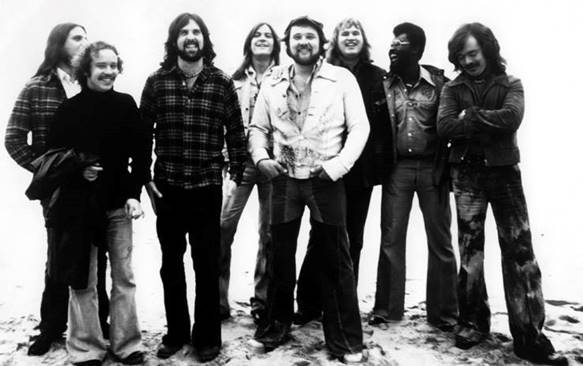
Blood, Sweat & Tears, circa 1969

BTS, released their song “Blood, Sweat, & Tears” in 2016

Donna Bradley Burcher | Senior Technical Editor | Symitar®

8985 Balboa Ave. | San Diego, CA 92123 | Ph. 619.278.0432 | Ext: 765432

About Editor’s Corner

Editor’s Corner keeps your communication skills sharp by providing information on grammar, punctuation, JHA style, and all things English. As editors, we spend our days reading, researching, and revising other people’s writing. We love to spend a few extra minutes to share what we learn with you and keep it fun while we’re doing it.

Did someone forward this email to you? Click here to subscribe.

Don’t want to get Editor’s Corner anymore? Click here to unsubscribe.

Do you have a question or an idea for Editor’s Corner? Send your suggestions or feedback to Kara and <a href="mailto:DBurcher.

NOTICE: This electronic mail message and any files transmitted with it are intended
exclusively for the individual or entity to which it is addressed. The message,
together with any attachment, may contain confidential and/or privileged information.
Any unauthorized review, use, printing, saving, copying, disclosure or distribution
is strictly prohibited. If you have received this message in error, please
immediately advise the sender by reply email and delete all copies.

Posted by: Jack Henry | May 26, 2020

Editor’s Corner: Pounds and Ounces

Dear Editrix,

I was wondering last night (I do my best thinking in the middle of the night!) why the abbreviations for pounds is lbs. and ounces is oz. Maybe you can shed some light on this?

Sincerely,

KS

Dear KS,

What a great question! I found an article on this topic in Mental Floss that provides an explanation for both of those abbreviations. I hope this sheds that needed light on your nighttime thoughts!

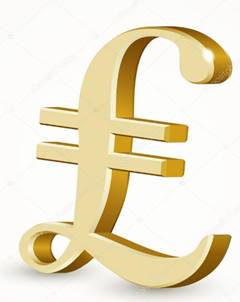
Lb is an abbreviation of the Latin word libra. The primary meaning of libra was balance or scales (as in the astrological sign), but it also stood for the ancient Roman unit of measure libra pondo, meaning “a pound by weight.” We got the word “pound” in English from the pondo part of the libra pondo but our abbreviation comes from the libra. The libra is also why the symbol for the British pound is £—an L with a line through it. The Italian lira also used that symbol (with two lines through it), the word “lira” itself being a shortened version of libra.

“Ounce” is related to the Latin uncia, the name for both the Roman ounce and inch units of measurement. The word came into English from Anglo-Norman French, where it was unce or ounce, but the abbreviation was borrowed from Medieval Italian, where the word was onza. These days the Italian word is oncia, and the area once covered by the Roman Empire has long since switched to the metric system.

Kara Church

Technical Editor, Advisory

Symitar Documentation Services

« Newer Posts - Older Posts »

Categories