Posted by: Jack Henry | June 17, 2021

Editor’s Corner: Into or in to?

Is it into or in to? It’s been a while since we covered this topic, and it’s a tricky one for many. So today, I’ll refresh your memory on the rules and then, if you’re into it, you can take a quiz (courtesy of GrammarBook.com) to test your understanding.

Let’s start with the refresher. Intois a preposition that expresses movement toward something else; it can specify that something is going inside or within something else or becoming something else.

  • She jumped into the deep end of the pool.

Into can also suggest involvement:

  • She’s really into swimming.

In to, on the other hand,is an adverb/preposition combination. These two words sometimes just end up next to each other in a sentence.

  • She jumped in to find the ring that slipped off her finger.

I found this helpful trick at the Writer’s Digest website; and I think it will help you determine whether you want intoor in to:

One trick to help you decipher which word (or word pairing) is correct is to think of it this way: “Into” usually answers the question “where?” while “in to” is generally short for “in order to.” So look at your sentence and replace “into” or “in to” with “where?” If the second half of your sentence answers it, use “into.” If it doesn’t, replace “where” with “in order to.” If that works, use “in to.”

Using that trick and looking back at my first example, I see that intois correct because it answers the question “Where did she jump?” She jumped into the pool.

Looking at my second example, I see that I can easily replace in towith in order toand the sentence makes sense. She jumped in order to find the ring.

Now, I want to give you one final example of a mistake people often make. When you are talking about logging in, the correct form is log in to.

  • You will need to enter your user name and password to log in to the program.

Why? Because log in is a phrasal verb and the word to just happens to follow log in. Yeah, I know. English is a confusing language. It does kind of seem like you’re going into a website, so people get confused. Just remember that you are logging in (not logging into). You would tell a person, “You must log in.” You wouldn’t say, “You must log into.”

So, with those examples and the helpful trick in mind, it’s time to see how you do on the following quiz. After you answer all the questions, scroll down to see the answers. Good luck!

Into vs. In to Quiz

For each of the following, choose the correct sentence.

1. A. Aunt Jean is into collecting shells and found some unusual ones on the beach today.

B. Aunt Jean is in to collecting shells and found some unusual ones on the beach today.

2. A. Grandma really put a lot of time and effort into planning Grandpa’s surprise party.

B. Grandma really put a lot of time and effort in to planning Grandpa’s surprise party.

3. A. Make sure you log into the bank’s website to check your account today.

B. Make sure you log in to the bank’s website to check your account today.

4. A. Mix the dry ingredients into the egg and milk mixture and stir well.

B. Mix the dry ingredients in to the egg and milk mixture and stir well.

5. A. The stray kitten was anxious to come into get warm.

B. The stray kitten was anxious to come in to get warm.

6. A. You must turn all the forms into the human resources department by Friday.

B. You must turn all the forms in to the human resources department by Friday.

7. A. We are well into the month of January and have seen very little snow.

B. We are well in to the month of January and have seen very little snow.

8. A. The fawn disappeared quickly into the forest.

B. The fawn disappeared quickly in to the forest.

9. A. Bruno gave into the wishes of the group and agreed to go fishing.

B. Bruno gave in to the wishes of the group and agreed to go fishing.

10. A. The boys’ “magic egg” turned into a dinosaur after soaking in water.

B. The boys’ “magic egg” turned in to a dinosaur after soaking in water.

Following are the correct answers and the explanations:

1. A. Aunt Jean is into collecting shells and found some unusual ones on the beach today.

Explanation: use into suggesting involvement.

2. A. Grandma really put a lot of time and effort into planning Grandpa’s surprise party.

Explanation: use into suggesting involvement.

3. B. Make sure you log in to the bank’s website to check your account today.

Explanation: the phrasal verb is log in.

4. A. Mix the dry ingredients into the egg and milk mixture and stir well.

Explanation: use into indicating introduction, insert, or inclusion. [dbb – You are putting the dry ingredients inside or within the wet mixture.]

5. B. The stray kitten was anxious to come in to get warm.

Explanation: the phrasal verb is come in.

6. B. You must turn all the forms in to the human resources department by Friday.

Explanation: the phrasal verb is turn in.

7. A. We are well into the month of January and have seen very little snow.

Explanation: use into indicating a point within time or space. [dbb – We are inside or within the month of January.]

8. A. The fawn disappeared quickly into the forest.

Explanation: use into meaning toward or in the direction of. [dbb – The fawn went inside the forest.]

9. B. Bruno gave in to the wishes of the group and agreed to go fishing.

Explanation: the phrasal verb is give in.

10. A. The boys’ “magic egg” turned into a dinosaur after soaking in water.

Explanation: use into indicating the result of a transformation or change. [dbb – The magic egg is becoming (turning into) something else.]

Donna Bradley Burcher | Senior Technical Editor | Symitar®

8985 Balboa Ave. | San Diego, CA 92123 | Ph. 619.278.0432 | Ext: 765432

Pronouns she/her/hers

About Editor’s Corner

Editor’s Corner keeps your communication skills sharp by providing information on grammar, punctuation, JHA style, and all things English. As editors, we spend our days reading, researching, and revising other people’s writing. We love to spend a few extra minutes to share what we learn with you and keep it fun while we’re doing it.

Did someone forward this email to you? Click here to subscribe.

Don’t want to get Editor’s Corner anymore? Click here to unsubscribe.

Do you have a question or an idea for Editor’s Corner? Send your suggestions or feedback to Kara and <a href="mailto:DBurcher.

NOTICE: This electronic mail message and any files transmitted with it are intended
exclusively for the individual or entity to which it is addressed. The message,
together with any attachment, may contain confidential and/or privileged information.
Any unauthorized review, use, printing, saving, copying, disclosure or distribution
is strictly prohibited. If you have received this message in error, please
immediately advise the sender by reply email and delete all copies.


Posted by: Jack Henry | June 15, 2021

Editor’s Corner: Blonds and Brunets

Hello out there! I hope this finds you happy, healthy, and ready to enjoy the summer.

I like preparing for the summer by reading meaty Q&As on the Chicago Manual of Style website. Since we’ve been talking about more inclusive language at work and in the society at large, I thought this was a timely topic.

The question from the writer was about the word blond, and whether we should follow the traditional French and use blond to describe a man with blond hair, and blonde (with an “e”) for a woman with blond hair.

The article’s first advice was to stop referring to a person as their hair color. For example, “Did you hear the joke about the three blondes?” The second advice was to stop using blonde with an “e” to refer to women with golden hair.

While CMOS doesn’t actually have a rule about hair color, the AP Stylebook recommends using gender-neutral language and switching to blond for all flaxen-haired folks. Similarly, AP recommends that we use brunet for brown or dark-haired people, rather than using brunette for women and brunet for men. CMOS agreed with that logic.

One other word I thought of that we spell differently in English, depending on the person’s gender, is fiancé. A male is a fiancé with one “e,” and a female is a fiancée with two “e’s.” I suppose we can follow the logic above and use the simplest spelling for both (fiancé), or you can avoid it altogether by referring to the marrying couple as betrothed.

As you know, English is always changing. In this case, we’re simply neutralizing gendered words from France, and making them our own in a friendly, all-encompassing way.

Kara Church

Pronouns: she/her/hers

Technical Editor, Advisory

Editor’s Corner Archives: https://episystechpubs.com/

Posted by: Jack Henry | June 10, 2021

Editor’s Corner: Clipped Words

Good morning and welcome to a new day. Today’s topic is “clipped words.” I’m talking about words that we shorten to save ourselves the inconvenience of saying or writing extra syllables. For example, we have all gotten used to the clipped word bot as a stand-in for robot. And you’re all too familiar with the clipped word flu, which is short for influenza.

You get the picture.

There are four types of clipped words: final clipping (also known as back clipping), initial clipping (also known as fore clipping), middle clipping (also known as medial clipping or syncope), and complex clipping. I’ll explain each one and provide examples.

  • Final clipping:This is the most common type of clipping. We keep the first part of the word and clip the final part. Examples include ad (advertisement), exam (examination), and gas (gasoline).
  • Initial clipping:As expected, initial clipping clips syllables from the beginning of a word. Some examples are phone (telephone), gator (alligator), bot (robot), and Beth (Elizabeth).
  • Medial clipping: This type of clipped word is less common. It usually occurs when you remove some letters from the middle of a word. You are familiar with the word ma’am, which is a clipped form of madam. This type of clipping is common in poetry where you might see heav’n stand in for heaven or ne’er used in place of never.
  • Complex clipping: This kind of clipping happens with compound words that have two or more components. These words are clipped in lots of different ways. Here are some examples: motel (motor hotel), sitcom (situation comedy), and op art (optical art).

English is full of these kinds of words. And now you know what to call them. After this past year of isolation, I don’t know about you, but I feel like my chitchat skills are a little rusty. Now that I have some quirky information to share, I feel a lot more confident. Oh yes, I plan to take the rest of 2021 by storm!

Donna Bradley Burcher | Senior Technical Editor | Symitar®

8985 Balboa Ave. | San Diego, CA 92123 | Ph. 619.278.0432 | Ext: 765432

Pronouns she/her/hers

About Editor’s Corner

Editor’s Corner keeps your communication skills sharp by providing information on grammar, punctuation, JHA style, and all things English. As editors, we spend our days reading, researching, and revising other people’s writing. We love to spend a few extra minutes to share what we learn with you and keep it fun while we’re doing it.

Did someone forward this email to you? Click here to subscribe.

Don’t want to get Editor’s Corner anymore? Click here to unsubscribe.

Do you have a question or an idea for Editor’s Corner? Send your suggestions or feedback to Kara and <a href="mailto:DBurcher.

NOTICE: This electronic mail message and any files transmitted with it are intended
exclusively for the individual or entity to which it is addressed. The message,
together with any attachment, may contain confidential and/or privileged information.
Any unauthorized review, use, printing, saving, copying, disclosure or distribution
is strictly prohibited. If you have received this message in error, please
immediately advise the sender by reply email and delete all copies.

Posted by: Jack Henry | June 8, 2021

Editor’s Corner: Four Sentence Types

Happy Tuesday to you all.

Today I’m going to share some information about the four sentence types. Yep, there are only four, and even if you don’t remember them from your school days, you may find the information interesting now. So, let’s share some nerd time and delve into a review. These are the four sentence types:

  • Declarative
  • Imperative
  • Interrogative
  • Exclamatory

Declarative sentences make a statement or express an opinion. This kind of sentence ends with a period.

Examples:

· I want to take a long walk after work. (statement)

· The perfect weather for walking is 65 degrees. (opinion)

Imperative sentences give a command or make a request. These sentences usually end with a period, but they can also end with an exclamation point.

Examples:

· “You need to get outside and take a walk right now!” (command)

· “You should take a walk with me.” (request)

Interrogative sentences ask a question. These sentences often begin with who, what, where, when, why, how, or do, and they end with a question mark.

Examples:

· “When do you think you’ll be ready to take that walk?”

· “Do you know if the weather will be good enough to walk later on?”

Exclamatory sentences express emotion, like excitement, surprise, happiness, and anger, and they end with an exclamation point.

Examples:

· “It is much too hot and steamy to walk right now!”

· “I walked over five miles today!”

There it is. All you need to know about sentence types—at least for today. I hope the weather is good enough for you take a walk and get your 10,000 steps in.

Donna Bradley Burcher | Senior Technical Editor | Symitar®

8985 Balboa Ave. | San Diego, CA 92123 | Ph. 619.278.0432 | Ext: 765432

Pronouns she/her/hers

About Editor’s Corner

Editor’s Corner keeps your communication skills sharp by providing information on grammar, punctuation, JHA style, and all things English. As editors, we spend our days reading, researching, and revising other people’s writing. We love to spend a few extra minutes to share what we learn with you and keep it fun while we’re doing it.

Did someone forward this email to you? Click here to subscribe.

Don’t want to get Editor’s Corner anymore? Click here to unsubscribe.

Do you have a question or an idea for Editor’s Corner? Send your suggestions or feedback to Kara and <a href="mailto:DBurcher.

NOTICE: This electronic mail message and any files transmitted with it are intended
exclusively for the individual or entity to which it is addressed. The message,
together with any attachment, may contain confidential and/or privileged information.
Any unauthorized review, use, printing, saving, copying, disclosure or distribution
is strictly prohibited. If you have received this message in error, please
immediately advise the sender by reply email and delete all copies.
Posted by: Jack Henry | June 3, 2021

Editor’s Corner: Enquiring Minds Want to Know

Dear Editrix:

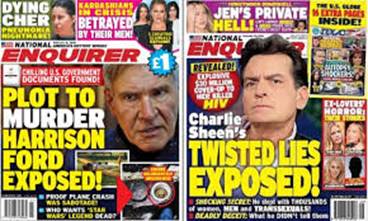
We remember the "Enquiring minds want to know" advertising slogan used in the ’80s by the National Enquirer. What I want to inquire of your mind is what is the difference between “enquire” and “inquire?”

I don’t want to spend money on a supermarket tabloid to find out.

Dear Enquirer,

My first thought on this was that it must be a British English vs. American English thing—I figured they both meant “to ask.” But then I realized, the National Enquirer was published here in the U.S., so I had to do a little more research. The short and simple answer from the Grammarly blog is the following:

· Traditionally, enquire simply meant “ask,” while inquire was used for formal investigations.

· In the UK, the two words are used interchangeably, although inquire is still the more commonly used word for formal or official investigations.

· In the United States, inquire is the strongly preferred spelling in all uses.

I read several other articles and they had similar information. In the U.S., we don’t usually enquire, we simply ask. And even if we were to inquire, we’d do it with an “i”. [Side note: I looked up both spellings in Merriam-Webster and when I entered
enquire, it took me to the definition for inquire and said,
“less commonly enquiry.”]

Keep the inquiries coming!

Kara Church

Pronouns: she/her/hers

Technical Editor, Advisory

Editor’s Corner Archives: https://episystechpubs.com/

Posted by: Jack Henry | June 1, 2021

Editor’s Corner: Vexing Vexillologists

Hello, folks!

I attended a class a few weeks ago that was about flags. It was specifically about the LGBTQ+ flag and its history, but I learned so many interesting things, including some new words, and I’d love to share them with you. The following information is from the class and from Wikipedia:

Vexillology is the study of the history, symbolism, and usage of flags or, by extension, any interest in flags in general. The word is a synthesis of the Latin word vexillum (which refers to a kind of square flag which was carried by Roman cavalry) and the Greek suffix -logia ("study"). The first known usage of the word vexillology was in 1959.

A person who studies flags is a vexillologist, one who designs flags is a vexillographer, and the art of flag-designing is called vexillography. One who is a hobbyist or general admirer of flags is a vexillophile.

Now, you know me, I couldn’t stop there. I like doing research and going where these new words take me. I thought I’d look up the American flag, the Swedish flag, the Greek flag…and then I realized that I don’t get paid to be a vexillologist, so I settled on the United States, Mexico, and the LGBTQ+ flag (in honor of PRIDE month, and upcoming events).

Let’s start with the U.S. flag. Many of us know that the stars represent the 50 states, and the stripes represent the original 13 colonies. But why red, white, and blue? An interesting choice since the British flag we were escaping from is also red, white, and blue. According to PBS.org, “red symbolizes hardiness and valor; white symbolizes purity and innocence; blue represents vigilance, perseverance, and justice.”

The Bandera de México (Mexican flag) is green, white, and red, with the national coat of arms in the middle. The flag has changed a lot over the years, including the meanings of the colors, but they are currently said to be green for hope, white for purity, and red for the blood shed fighting for Mexico’s independence. There are some other interpretations out there too. As for the design in the middle, here is a description from Wikipedia:

The central emblem is the Mexican coat of arms, based on the Aztec symbol for Tenochtitlan (now Mexico City), the center of the Aztec empire. It recalls the legend of an eagle sitting on a prickly pear cactus while devouring a serpent that signaled to the Aztecs where to found their city, Tenochtitlan. A ribbon in the national colors is at the bottom of the coat of arms…the cactus is situated on a rock that rises above a lake.

And before I continue, what’s up with white meaning “purity” in our countries? Does it mean we are founded on the backs of virgins? Does it mean our ancestors used Ivory (nearly 100%) pure soap? It definitely seems like an odd way to describe a country.

And for June, PRIDE month, a little about the LGBTQ+ flags.

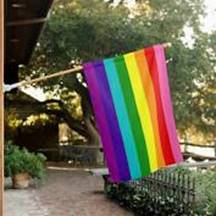
Original design by Gilbert Baker, including pink (sex) and light blue (magic).

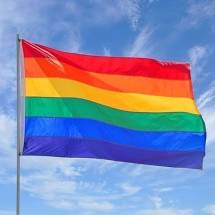
One of the current designs, which has been “traditional” for years. The six colors (as in Gilbert Baker’s flag) represent:

  • Red = life
  • Orange = healing
  • Yellow = sunlight
  • Green = nature
  • Indigo = serenity
  • Violet = spirit

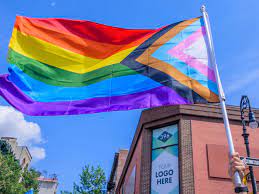
A suggested redesign combining many of the different PRIDE flags, including black and brown for people of color and those lost to AIDS; and pink, blue, and white for transgender folks.

There are many other flags and combinations if you’re interested, including the straight ally flag! Visit here for more information on PRIDE flags and what they mean.

I hope to see a lot of new vexillophiles out there!

Kara Church

Pronouns: she/her/hers

Technical Editor, Advisory

Editor’s Corner Archives: https://episystechpubs.com/

Posted by: Jack Henry | May 27, 2021

Editor’s Corner: Demonstrative Pronouns

Hi there, folks. I was looking for something in an old email and I found an article called, “Demonstrative Pronouns.” I don’t recall learning anything in English class by that name. I was thinking, “Hmm, this sounds interesting. I wonder what these pronouns demonstrate. How to use a Ginsu knife? How to turn a dollar into a million? How to make asparagus that will delight your guests?” Boy was I surprised when I saw that these are demonstrative pronouns: this, that, these, and those.

It was one of those times I realized that this is something you learn growing up speaking a language, but it’s more like absorbing the information than studying lessons. I do not recall learning about demonstrative pronouns until French or Spanish class.

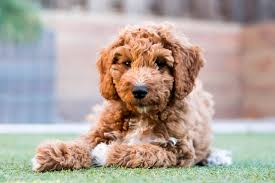
And why am I bringing this up? I mention it because we editors often remind you to make sure you use clear antecedents in your writing. For example, you might be writing about a new and exciting breed of puppy, but instead of saying “Poodle-Doodle” you say, “This is the best one of these you can buy.” You’re referring to a particular noun (Poodle-Doodle), but before you use “this” or “these,” you need to define which noun you are talking about. That noun is the antecedent. You could make the claim much clearer using one of these options:

  • The Poodle-Doodle breed is very popular with dog lovers. This is the best dog you can buy.
  • This Poodle-Doodle is the best dog you can buy.
  • These Poodle-Doodles are the best dogs you can buy.

There are more possibilities, but as you can see, the antecedent (Poodle-Doodle) is a specific noun that occurs before you start using the pronoun.

Near Far
Singular This is a Poodle-Doodle.

That is a Poodle-Doodle.

Plural These are Poodle-Doodles.

Those are Poodle-Doodles.

Here are a few more examples for you:

For this class the instructor said colored pencils are required. We can also bring brushes, paints, and paper, but those aren’t required.

Antecedents: brushes, paints, and paper

Pronoun: those

Amit said he enjoys swimming, but that is not his favorite sport.

Antecedent: swimming

Pronoun: that

Roberto is with me viewing the Spanish painters at the Prado. These are our favorite painters.

Antecedents: painters

Pronoun: these

I am eating some rum raisin gelato; this is mine, so go get your own!

Antecedent: gelato

Pronoun: this

Kara Church

Pronouns: she/her/hers

Technical Editor, Advisory

Editor’s Corner Archives: https://episystechpubs.com/

Posted by: Jack Henry | May 25, 2021

Editor’s Corner: Degrees

If you’re getting a college degree, here’s a bit of information that won’t be on your finals but will still be good to know: how to write about your achievement.

The other day, I was editing some biographies and I had to search the Chicago Manual of Style for information on capitalization. None of the pages I read put it simply. Most of us work so hard for our degrees, we want to shout in all caps from the rooftop and say, “LOOK WHAT I DID! I’m a bachelor of arts!” Or is it, “I have a Master’s Degree?” Or maybe even, “I’m a Doctor of Philosophy, but you can call me Ph.D.”

When do you capitalize letters, when do you add apostrophes, and what are the rules, if any?

Thank goodness for Grammar Girl. Her timing was perfect, and she just published the easy rules, the details, and information on the confusion.

Here is the easy rule: bachelor’s degree is lowercase, singular, and possessive. More from Mignon Fogarty:

Think of it this way:

A bachelor isn’t just a single guy who maybe eats out a lot but is also any person who has earned a specific type of degree from a university or college….

Now think of the degree as the property of the bachelor, with the apostrophe-s indicating possession: It is a bachelor’s degree, the degree of one person with the initial level of achievement at the university.

Now, here it becomes a little confusing. You do capitalize the name when you are talking about the formal name of a specific degree.

  • Donnie has a Bachelor of Science in Mathematics. (Donnie has a bachelor’s degree.)
  • Jayne is a Master of Fine Arts. (Jayne has a master’s degree.)
  • Leticia is a Doctor of Dental Surgery. (Leticia has a doctor’s degree.)

I still have some trouble with this on some level, like a lot of title rules. When you’re trying to be safe, just remember the degree belongs to the person, so they have a bachelor’s degree or an associate’s degree. If you want the full article, see Grammar Girl’s article here!

Kara Church

Pronouns: she/her/hers

Technical Editor, Advisory

Editor’s Corner Archives: https://episystechpubs.com/

Posted by: Jack Henry | May 20, 2021

Editor’s Corner: Tips for Editing Your Own Writing

Today, I’m commiserating with you. I know how hard it is to edit your own writing. It’s much easier to edit for someone else. It’s hard for writers to look at our own writing objectively. We know what we mean to say. We fill in any blanks. In our minds, we add all the missing context. And, unfortunately, we often skip over our own errors.

You can get better at being your own editor, though. Here are three tips that will help you be more objective:

  • Take a break

Put your thoughts onto the page, and then take a break. When you come back to your piece, you’ll be at least a bit more able to be objective. Overnight is the optimal amount of time, but I realize that’s not always possible in our line of work. Even a 10- or 15-minute break gives you added perspective.

  • Use common words, not fancy words

I’ve worked with quite a few people who were determined to use multisyllabic words or uncommon words because they thought it sounded more professional. But if you’re forcing your reader to run for a dictionary to look up a word, and they’re in a hurry, you might lose them. Writers don’t have to use big words or lots of words to sound smart. What we need to do is to write clearly and plainly.

  • Kill your darlings

This odd little gruesome phrase is advice that is often given to writers. It means that you have to be willing to get rid of sentences, paragraphs, or even sections that you really like but that are not adding value to your text. We have to remember not to clutter the message by providing unnecessary information, even if we really like the information or the way we wrote it. If it is not focused on the message, and if it’s not necessary for the reader, you really should delete it.

And here’s one more tip: all of you Symitar employees can submit your work-related writing to Symitar Documentation & Education Services, and we’ll review it and send it back with our suggestions. We offer this valuable, painless service free of charge!

I hope the rest of your day is beautiful.

Donna Bradley Burcher | Senior Technical Editor | Symitar®

8985 Balboa Ave. | San Diego, CA 92123 | Ph. 619.278.0432 | Ext: 765432

Pronouns she/her/hers

About Editor’s Corner

Editor’s Corner keeps your communication skills sharp by providing information on grammar, punctuation, JHA style, and all things English. As editors, we spend our days reading, researching, and revising other people’s writing. We love to spend a few extra minutes to share what we learn with you and keep it fun while we’re doing it.

Did someone forward this email to you? Click here to subscribe.

Don’t want to get Editor’s Corner anymore? Click here to unsubscribe.

Do you have a question or an idea for Editor’s Corner? Send your suggestions or feedback to Kara and <a href="mailto:DBurcher.

NOTICE: This electronic mail message and any files transmitted with it are intended
exclusively for the individual or entity to which it is addressed. The message,
together with any attachment, may contain confidential and/or privileged information.
Any unauthorized review, use, printing, saving, copying, disclosure or distribution
is strictly prohibited. If you have received this message in error, please
immediately advise the sender by reply email and delete all copies.

Posted by: Jack Henry | May 18, 2021

Recall: Editor’s Corner: The Silent L

Kara Church would like to recall the message, “Editor’s Corner: The Silent L”.
NOTICE: This electronic mail message and any files transmitted with it are intended exclusively for the individual or entity to which it is addressed. The message,
together with any attachment, may contain confidential and/or privileged information.
Any unauthorized review, use, printing, saving, copying, disclosure or distribution is strictly prohibited. If you have received this message in error, please immediately advise the sender by reply email and delete all copies.
« Newer Posts - Older Posts »

Categories