Posted by: Jack Henry | November 22, 2022

Editor’s Corner: There, Their, They’re

Good morning, folks!

Many of you have written to me in the last few months to suggests topics you would like me to cover. A lot of the suggestions are things I’ve already written about over the past ten years, but then I remembered: some of you have joined us more recently than that! I thought it would be a good idea to revisit some of these topics—particularly those that cause the most pain. Wait, that sounds horrible. Let’s just call them topics that are beneficial to review. If you have anything in particular you’d like me to cover, feel free to send your ideas to me at kchurch.

Now for today’s subject, the troubling homonyms there, their, and they’re.

Hopefully, this information will help!

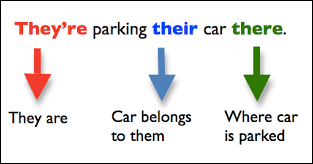
There shows location.

  • He is sitting over there.
  • Stay there and I will come and get you.
  • Is the store close enough that I can walk there and back in an hour?

Their shows ownership. (Possessive form of “they.”)

  • Ask Jane and Wally if you can go to their house.
  • The kids sang their loudest at the recital.
  • Dusty and Rusty wrapped their knees in bubble wrap before starting to re-roof the house.

They’re is a contraction for “they are.”

  • They’re going to the mountains this weekend.
  • When Fritz and Adam are together, they’re always happy.
  • They’re going to get a new dog soon.

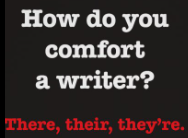
And a joke we editors hear a lot:

I hope you have a lovely day!

Kara Church | Technical Editor, Advisory | Technical Publications

Pronouns: she/her | Call via Teams | jackhenry.com

Editor’s Corner Archives: https://episystechpubs.com/

Posted by: Jack Henry | November 17, 2022

Editor’s Corner: Your Possessives Have a Hierarchy

Good morning, folks. I recently read an article about the ways we form possessive words. It got me thinking much deeper about how we form them and why we do it the way we do.

We’re all very familiar with showing possession by using ’s (for example, Todd’s hat). The other way we show possession is with the word of (for example, the door of my house).

When I was studying English in college, I don’t remember any professor ever discussing these two forms of possession; but instinctively I, like most people who grew up speaking English, have always followed some implicit rules.

What I’ve learned since my college days is that there is a possessive hierarchy that basically works in decreasing order of humanness. The more human something is, the more likely we are to use ’s; and the more inanimate something is, the more likely we are to use the of construction. The interesting thing is, these are not steadfast rules, meaning that you’re not wrong if you break them, but your sentence will sound odd.

Let me give you some examples:

  • Jane’s car is parked in the garage.
  • The car of Jane is parked in the garage.
    Since Jane is human, we typically say and write, “Jane’s car.” The “car of Jane” just doesn’t feel right.
  • The dog’s fur was matted and dirty.
  • The fur of the dog was matted and dirty.

Animals are closer to humans in the hierarchy than inanimate objects, so most often, we’d use ‘s to show possession. I have often heard “hair of the dog” but only as an expression that means to have an alcoholic drink to stave off a hangover.

  • The temperature of the Pacific Ocean is cold, even in summer.
  • The Pacific Ocean’s temperature is cold, even in summer.

The Pacific Ocean is an inanimate object, so “the temperature of” sounds more natural, even though “the Pacific Ocean’s temperature” doesn’t sound too bad to my ears.

  • The door of the house was wide open.
  • The house’s door was wide open

A door is also an inanimate object so we would most likely use the word of. This example doesn’t seem quite so odd, but the first option just sounds right.

The English language is full of intricacies that we usually don’t even think about—until one curious editor starts digging around and asking questions and opening up worm’s cans (or is that cans of worms?).

Enjoy the rest of your day!

Donna Bradley Burcher |Technical Editor, Advisory | jack henry™

8985 Balboa Ave. | San Diego, CA 92123

Pronouns she/her/hers

Symitar Documentation Services

About Editor’s Corner

Editor’s Corner keeps your communication skills sharp by providing information on grammar, punctuation, JHA style, and all things English. As editors, we spend our days reading, researching, and revising other people’s writing. We love to spend a few extra minutes to share what we learn with you and keep it fun while we’re doing it.

Did someone forward this email to you? Click here to subscribe.

Don’t want to get Editor’s Corner anymore? Click here to unsubscribe.

Do you have a question or an idea for Editor’s Corner? Send your suggestions or feedback to Kara and <a href="mailto:DBurcher.

NOTICE: This electronic mail message and any files transmitted with it are intended
exclusively for the individual or entity to which it is addressed. The message,
together with any attachment, may contain confidential and/or privileged information.
Any unauthorized review, use, printing, saving, copying, disclosure or distribution
is strictly prohibited. If you have received this message in error, please
immediately advise the sender by reply email and delete all copies.

Posted by: Jack Henry | November 15, 2022

Editor’s Corner: Mx.

I am so glad to work for a company where equity and inclusion are an important part of the culture. In our documentation, instead of writing “he and she,” “his/hers,” or using some other clunky alternative, we have adopted the terms “they,” “them” and “their” to cover everyone, regardless of gender. We continue to track what is acceptable and preferable to people, and strive to make all of our readers feel “at home.”

I’ve wondered, though, about other businesses and other parts of Jack Henry. What do writers do if they have to send something to clients by mail? What do our clients do when sending statements to their members and customers? It is standard to address people with a title or honorific, such as Mr., Mrs., or Ms. But really, in a world of men, women, and non-binary people named Terry, Tracy, or Carol, how do you address envelopes and emails respectfully without knowing how the recipient identifies themself?

That’s what I’m here to discuss today.

As with pronouns, the safest way to use the appropriate honorific, is to ask, “What is your preferred title?” But you don’t always have the opportunity to ask a person before you address that letter. Just guessing could not only be wrong, but some people might be offended. Let’s have a look at honorifics and the tangled web that has been woven.

Historically, we’ve used Mr. (from master) for all men: bachelors or married. Mrs. and Miss are from mistress; Mrs. is a married woman and Miss is an unmarried woman. But as women fought for and gained independence, they decided they should have a title that did not indicate their marital status.

Which brings us to the next term, Ms. In the 1950s, Ms. became an option for women who didn’t want to identify themselves as “a married female” or “an unmarried female.” Similarly, a couple of decades later, folks realized that gender in the title wasn’t necessary either. Doctor, reverend, and rabbi are genderless titles. Finally, some peeps in the 1970s came up with an altogether genderless honorific: Mx.

Mx., pronounced “miks” or “muhks,” did not really gain traction until the 2000s, according the Dictionary.com article I read. We’re already in the 2020s, and I have yet to see it available as a title when filling out a form. From Dictionary.com:

What does Mx. stand for?

Mx. is a riff on the classic gendered titles Mr. and Ms. It keeps the M and swaps the gendered element of these terms for the gender-neutral X. The letter X has historically been used as a symbol for the unknown or indescribable. In this way, it is perfect for a gender-neutral honorific. Mx. shows respect while leaving the gender unknown or unarticulated.

Perhaps will see an upsurge of Mx. offered as a choice on forms one of these days soon!

Kara Church | Technical Editor, Advisory | Technical Publications

Pronouns: she/her | Call via Teams | jackhenry.com

Editor’s Corner Archives: https://episystechpubs.com/

Posted by: Jack Henry | November 10, 2022

Editor’s Corner: Misspelled Words

Good morning, friends.

The Grammarly blog recently sent out a list of the 10 most commonly misspelled words. I don’t think the words will be too much of a surprise. I’ve seen most of them on lists of often misspelled words before, but I think the reminder of how to spell them will be useful, and even more useful are the tips Grammarly gives to help you remember the correct spelling. So, without further ado…

· Apparent

Misspelled forms: apparant, aparent, apparrent, aparrent

There’s often confusion about whether to use one or two “p” and “r” letters, as well as whether the word ends in “-ent” or “-ant.”

· Believe

Misspelled forms: belive, beleive

The uncertainty of using “-ie” or “-ei” in the word “believe” and other words with the same pairing (“relieve,” “deceive,” etc.) led to the creation of the following mnemonic device: “‘i’ before ‘e’ except after ‘c’ or when sounded as ‘a’ as in ‘neighbor’ and ‘weigh.’”

· Entrepreneur

Misspelled forms: entrepenur, entrepeneur, entreperneur, entreprenur

The French origins of “entrepreneur” make this word a tricky one to spell. It has a variety of misspellings, some of which include dropping or misplacing the “r” in “-pren-”; other common misspellings have issues with the “-eu” at the end of the word.

· License

Misspelled forms: licence, lisence, lisense

Having different letters in a word that produce the same sound can lead to incorrect spellings. In “license” the “c” and “s” are often swapped, or an extra “c” or “s” is used to form the word.

Although “licence” is not considered an incorrect spelling in the rest of the English-speaking world, when writing in American English, you should replace the second “c” with an “s.”

· Privilege

Misspelled forms: priviledge, privelege

The last part of the word “privilege” sounds similar to how you might say “ledge,” but in the correct spelling of “privilege” there’s no “d.” The “i” before “-lege” is also tricky since some might pronounce it similarly to the short “e” sound and incorrectly spell the word as “privelege.”

· Pronunciation

Misspelled form: pronounciation

The spelling of “pronounce” is what leads writers to spell “pronunciation” incorrectly. They use “-noun-” instead of the correct form—“-nun-”—which drops the “o.”

· Separate

Misspelled forms: seperate, seprate

Speaking of pronunciation: How you say the word “separate” could lead you to misspell it. Depending on your pronunciation, you might exchange the first “a” for an “e” or drop the first “a” altogether.

· Tendency

Misspelled form: tendancy

It’s common for writers to erroneously replace the second “e” with an “a.”

· Weird

Misspelled form: wierd

The mnemonic device “i before e . . .” mentioned above makes this word particularly confusing. If you steadfastly follow this device, you’d expect to spell the word using “-ie,” as in “wierd.” But it’s, well, weird.

· Weather

Misspelled forms: wether, waether, whether

The “-ea” in weather can cause a spelling mix-up. Since the “a” is silent, it’s sometimes dropped, or the letters are reversed as “-ae.”

Additionally, “whether” is a real word and not an incorrect spelling in itself, but when used in a climate-related context, it becomes a common misspelling of “weather.”

How to avoid common spelling mistakes:

If you tend to misspell words, below are tips to improve your spelling and finally get it right:

· Remember spelling devices: Mnemonic devices, like “there’s a rat in separate,” can help you land on the right spelling of “separate” every time.

· Sound out the word:Another way to attempt the spelling of a tough word is by sounding it out. It’s effective at helping you hear distinctions in consonants and vowels.

· Check for homophones: Homophones, meaning different words that sound the same, can result in misspelled words. For example, “to,” “too,” and “two.” Pay extra attention to these words to ensure you’re using the right one.

· Break up larger words: Compartmentalizing words into smaller pieces can help you spell them correctly. For example, “independent” can be broken into “in-de-pen-dent” and “maintenance” is “main-ten-ance.”

· Consider your geography: Some words are spelled differently depending on geographic preferences. In Australia and the United Kingdom, it’s not uncommon to see the spelling “judgement,” which keeps the first “e.” The U.S. spelling, however, drops the first “e” to form “judgment.”

· Refer to a reliable dictionary: Ultimately, turning to a trusted dictionary can help you improve your spelling. It also gives you an opportunity to check that you’ve chosen the best word for the message you want to convey. [dbb – This is the best advice of all since we have online dictionaries and Google™ literally right at our fingertips!]

Happy Veterans Day tomorrow. I’d like to say a special thank you to all our veterans, our active military, and our military spouses and families. Thank you all for your sacrifices.

Donna Bradley Burcher |Technical Editor, Advisory | jack henry™

8985 Balboa Ave. | San Diego, CA 92123

Pronouns she/her/hers

Symitar Documentation Services

About Editor’s Corner

Editor’s Corner keeps your communication skills sharp by providing information on grammar, punctuation, JHA style, and all things English. As editors, we spend our days reading, researching, and revising other people’s writing. We love to spend a few extra minutes to share what we learn with you and keep it fun while we’re doing it.

Did someone forward this email to you? Click here to subscribe.

Don’t want to get Editor’s Corner anymore? Click here to unsubscribe.

Do you have a question or an idea for Editor’s Corner? Send your suggestions or feedback to Kara and <a href="mailto:DBurcher.

NOTICE: This electronic mail message and any files transmitted with it are intended
exclusively for the individual or entity to which it is addressed. The message,
together with any attachment, may contain confidential and/or privileged information.
Any unauthorized review, use, printing, saving, copying, disclosure or distribution
is strictly prohibited. If you have received this message in error, please
immediately advise the sender by reply email and delete all copies.
Posted by: Jack Henry | November 8, 2022

Editor’s Corner: Phenomena

Good morning!

Today I’m stretching our rule of providing information about language—not breaking the rule, just stretching it because there is some language learning going on. You see, I recently read about a human phenomenon, and I wondered where the name of the phenomenon came from, so I did a little research, which took me down a curious rabbit hole, and I found the information interesting enough to share.

Have you ever bought a new car (or a used car that is new to you) and then noticed the same kind of car everywhere you go? Obviously, more of that kind of car did not magically appear overnight, you’re just noticing them all now. This phenomenon is called the Baader-Meinhof effect or frequency illusion.

The same thing happens when you learn a new word (you begin to hear it much more often)—this happened to my friend Jane G. and me with the word borborygmus, which describes the rumbling or gurgling noise in your stomach and intestines. The Baader-Meinhof phenomenon also happens when you’re introduced to a song and then you begin noticing it—at the grocery store, or as theme music in your favorite TV show, or at your kid’s recital. According to healthline.com, “When you’re exposed to brand-new information, especially if you find it interesting, your brain takes notice. These details are potentially destined for the permanent file, so they’re going to be front and center for a while.”

Your brain does all kinds of things to help you absorb information (and sometimes it wreaks havoc with your memory). Along with the Baader-Meinhof effect, you might experience something called the Mandela effect, which is basically a faulty memory that you’re convinced is correct. According to livescience.com, “…a 2020 memory study in the journal Psychological Science found that, when asked to recall information, 76% of adults made at least one detectable error…Things that never happened, or events that have become muddled over time, can, in one’s head, become real, and knowledge can become distorted or confused.” It’s called the Mandela effect because although Nelson Mandela was imprisoned in South Africa from 1964 to 1990 for opposing apartheid laws, and then he went on to serve as president of the country, and he didn’t die until 2013, many people have a distinct memory of him dying in prison in the ‘80s. In fact, societies collectively share lots of faulty memories. Remember the children’s book Curious George? Remember George’s long tail? You might think you do, but you don’t. Curious George didn’t have a tail, but since most monkeys do have tails, most people remember him having one.

And speaking of memory, another phenomenon our brains experience is the Rashomon effect, which occurs when people who are involved in an incident give contradictory interpretations or descriptions of the incident. This phenomenon is named for the 1950 movie by Japanese filmmaker Akira Kurosawa, in which various perspectives of the same event are portrayed by various characters—and the perspectives all happen to be self-serving, which is not uncommon with this effect. Neuroscientists say that when we form a memory in the brain, our interpretation is influenced by previous experiences and various internal biases.

I’ve experienced each of these phenomena. I don’t know about you, but my brain plays tricks on me all the time. The other day, I caught it trying to convince me that it would be a good idea to try one of those Onewheel™ skateboards.

I think we’d call that the “Oh, now she’s really gone off the deep edge” phenomenon.

Enjoy your day, and if you do see me on a Onewheel skateboard (which is highly likely now that the idea has taken hold), don’t honk and wave—I’m daring but I’m also incredibly clumsy.

Donna Bradley Burcher |Technical Editor, Advisory | jack henry™

8985 Balboa Ave. | San Diego, CA 92123

Pronouns she/her/hers

Symitar Documentation Services

About Editor’s Corner

Editor’s Corner keeps your communication skills sharp by providing information on grammar, punctuation, JHA style, and all things English. As editors, we spend our days reading, researching, and revising other people’s writing. We love to spend a few extra minutes to share what we learn with you and keep it fun while we’re doing it.

Did someone forward this email to you? Click here to subscribe.

Don’t want to get Editor’s Corner anymore? Click here to unsubscribe.

Do you have a question or an idea for Editor’s Corner? Send your suggestions or feedback to Kara and <a href="mailto:DBurcher.

NOTICE: This electronic mail message and any files transmitted with it are intended
exclusively for the individual or entity to which it is addressed. The message,
together with any attachment, may contain confidential and/or privileged information.
Any unauthorized review, use, printing, saving, copying, disclosure or distribution
is strictly prohibited. If you have received this message in error, please
immediately advise the sender by reply email and delete all copies.

Posted by: Jack Henry | November 3, 2022

Editor’s Corner: Apostrophes Revisited

A big “thank you” to Anil K., who always provides me with challenging grammar questions and who provided me with some great material on apostrophe marks. We’ve covered these things before, but this is one of those topics that confuses a lot of folks, so it’s always a good time for a reminder. Most of the following reminders are from class material he shared with me.

This little punctuation mark may be the most misunderstood and incorrectly used.

Here’s the lowdown: the apostrophe is used to show contractions and to show possession (ownership).

  • Contractions: two words blended into one

Here are some common examples:

  • Do not = Don’t
  • Does not = Doesn’t
  • Is not = Isn’t
  • It is = it’s
  • It has = it’s (Its without the apostrophe indicates ownership)
  • Will not = Won’t
  • Let us = Let’s
  • You are = You’re (Your without the apostrophe indicates ownership)
  • They are = They’re (Their without the apostrophe indicates ownership)
  • Possession or ownership: to whom something belongs (indicated by the ‘s)

    Here are some common examples:

  • The girl’s dog
  • The children’s room
  • The bank’s website
  • Chris’s xylophone (the CMOS has the ‘s even after words ending in “s”)
  • Mandy’s apricot farm

A simple rule for the road: Do not use an apostrophe to make a word plural.

Correct: The coordinators will manage that process.

Incorrect: The coordinator’s will manage that process.

Correct: The FIs are reading the Release Notes.

Incorrect: The FI’s are reading the Release Notes.

Of course, there is one exception to the apostrophe/plural word rule, and that is when it is used for clarity to show the plural of single letters.

  • Mind your p’s and q’s.
  • He got all A’s this term.

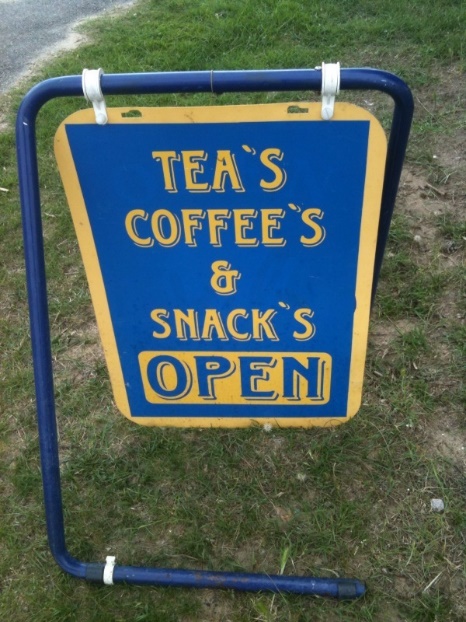
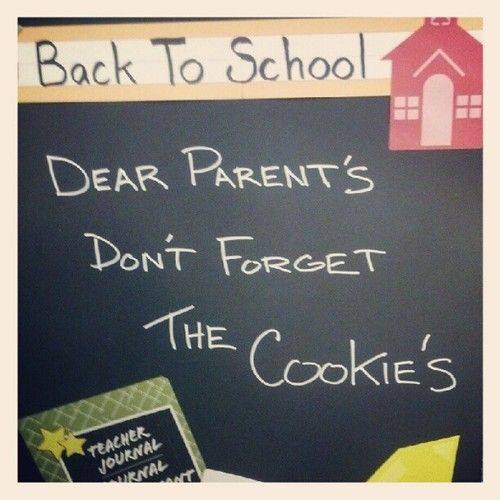
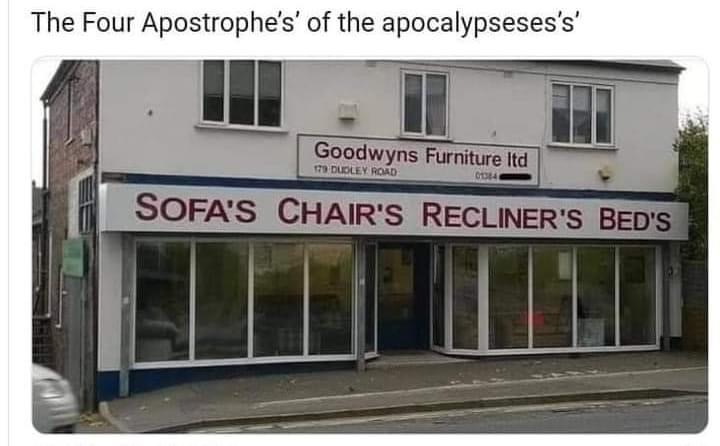
And now, some failed apostrophe use for your viewing pleasure.

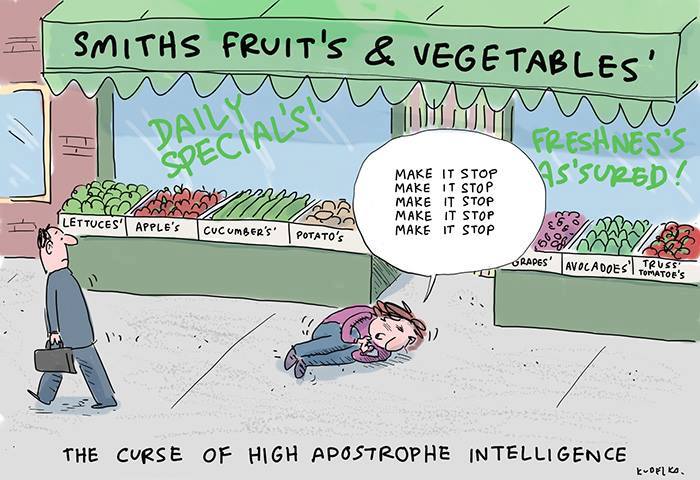
And a comic several of you have sent in before:

Kara Church | Technical Editor, Advisory | Technical Publications

Pronouns: she/her | Call via Teams | jackhenry.com

Editor’s Corner Archives: https://episystechpubs.com/

Posted by: Jack Henry | October 31, 2022

Editor’s Corner: Happy Halloween!

I know, I’m a day early, but I wanted to provide you with these ghastly words before you started trick-or-treating!

Here is a list of spooky words for you from Grammarly.com. If you’re interested in the words as they appear in haunting literature, see the Grammarly website.

· Ghastly

The adjective “ghastly” evokes a horrifying or terrifying sentiment about the noun it’s describing. It’s reminiscent of the word “ghost” as if the subject is taking on a death-like pallor.

· Ghoulish

The word “ghoulish” describes grotesque or perverse characteristics that are frightening to the beholder. It’s also a form of “ghoul,” a word derived from Arabic that means demonic being.

· Macabre

Nothing screams Halloween like the word “macabre,” which was derived from an Old French phrase that alludes to the “dance of death.” Today, macabre acutely describes death in a grisly and gory fashion.

· Phantasm

“Phantasm” conjures a haunting image of an unnatural apparition. Emerging from the supernatural, a phantasm might be seen so faintly, so momentarily, that its beholder questions the reality of the surrounding world.

· Spine-tingling

Alluding to the human anatomy in your writing conjures sensations of fear. The adjective “spine-tingling” can refer to a chilling, heart-thumping type of fright, but can also describe thrilling suspense about an unknown situation.

· Blood-curdling

The word “blood-curdling” arouses terror and fear from the senses. It comes from the medieval idea that an excessive amount of fear can turn the blood cold and therefore curdle it.

· Creaky

Descriptive words for sounds add layers to an already spooky writing project. “Creaky” objects, like wooden floorboards in disrepair or a rusty swing, almost cry out in warning to the reader.

· Howl

The word “howl” evokes a melancholy, pained cry. It’s made by an animal, but attributing a howl to a subject that’s not an animal sets an especially eerie mood.

· Shadowy

Describing a noun as “shadowy” makes it mysterious, dark, and difficult to see. And when it’s hard to discern nearby spooky figures, your imagination races to the creepiest possibilities.

· Lurking

When a subject is “lurking,” it suggests someone who poses a sinister threat and is purposefully biding their time for an opportune moment to attack.

· Crypt

Lead your readers underground with images of a “crypt”—a vault that’s used as a burial area, commonly underneath a church. Crypts elicit an unsettling and foreboding mood that’s perfect for a frightening tale.

· Cackle

The word “cackle” is often described as a witch’s laugh. The sound is harsh, shrill, and menacing. It can be used to evoke a sense of scorn or unpleasantness that’s to come.

· Disquieting

This adjective is used to refer to something that makes someone feel anxious or uneasy. The combination of the prefix “dis-” and the root word “quiet” in and of itself implies the opposite of calm; the word is used in the context of a disturbing or fearful situation, ratcheting up a sense of dread.

Happy Halloween!

Kara Church | Technical Editor, Advisory | Technical Publications

Pronouns: she/her | Call via Teams | jackhenry.com

Editor’s Corner Archives: https://episystechpubs.com/

Posted by: Jack Henry | October 27, 2022

Editor’s Corner: Hallow

I’ve been thinking about Halloween a lot lately. My husband just bought what feels like a 10-pound package of candy corns and candy pumpkins, we watched a show on the three most controversial candies in America (the most loved and simultaneously most hated top three: black licorice, circus peanuts, and candy corn), and of course the neighborhood is decorated with giant skeletons and spiders.

Outside of this, I’ve also been thinking about death, dying, and El Dia de Los Muertos. Why? Well, my YMCA has a great display and history of Dia de Los Muertos, which I love and plan to celebrate. Looking at both holidays, I found some interesting information I’d like to share, but first a definition. I kept reading about “All Hallows Eve” and “All Hallows Day,” and thought, “What the heck is a hallow?” From Merriam-Webster:

hallow (verb)

1: to make holy : set apart for holy or religious use : treat or keep as sacred : consecrate

2: to respect greatly : venerate, revere

hallow (noun, archaic)

1: a saint or holy person.

Okay, now for a little more history on Halloween and the hallowed hallows, from the New York Public Library blog:

All Hallows’ Eve, or Halloween as it is commonly referred, is a global celebration on October 31. It developed from the ancient Celtic ritual of Samhain [KC – Pronounced
saa-wn.], which was, in the simplest terms, a festival celebrating the changing of the seasons from light to dark (summer to winter). This would usually take place around November 1.

Traditionally, a bonfire would be lit, sweets would be prepared, and costumes would be worn to ward off evil spirits as the ancient Celts believed that, at this time of year, the veil separating the worlds of the living and the dead was at its thinnest.

Early Christian officials tried to impose their own holiday to stop their converts from practicing non-Christian festivals. Pope Gregory III deemed November 1, All Saints’ Day, a celebration of Christian martyrs and saints, and November 2 became All Souls Day, a day for remembering the souls of the dead. All Saints’ Day later became known as All Hallows’ Day, and the previous day, October 31, became known as All Hallows’ Eve, then later, Halloween.

Despite the best efforts of the church, people still continued to celebrate Halloween with traditional bonfires, costumes, treats, and a focus on spirits of the dead.

Moving on to Dia de Los Muertos, we have this from Wikipedia.

The Day of the Dead (Spanish: Día de Muertos or Día de los Muertos) is a holiday traditionally celebrated on November 1 and 2, though other days, such as October 31 or November 6, may be included depending on the locality. It largely originated in Mexico, where it is mostly observed, but also in other places, especially by people of Mexican heritage elsewhere.

Although associated with the Western Christian observances [KC – Mentioned in the previous article] it has a much less solemn tone and is portrayed as a holiday of joyful celebration rather than mourning. The multi-day holiday involves family and friends gathering to pay respects and to remember friends and family members who have died. These celebrations can take a humorous tone, as celebrants remember funny events and anecdotes about the departed. [KC – And this is why I find it so delightful and therapeutic. It is a great tradition to emulate and celebrate!]

Traditions connected with the holiday include honoring the deceased using calaveras and aztec marigold flowers, known as cempazúchitl, building home altars called ofrendas with the favorite foods and beverages of the departed, and visiting graves with these items as gifts for the deceased. The celebration is not solely focused on the dead, as it is also common to give gifts to friends such as candy sugar skulls, to share traditional pan de muerto with family and friends, and to write light-hearted and often irreverent verses in the form of mock epitaphs dedicated to living friends and acquaintances, a literary form known as calaveras literarias.

I left the links in the Wikipedia article (above) so you can check out some of the calaveras and interesting things associated with the day.

I’m going to combine both Halloween and Dia de los Muertos and celebrate my dearly departed Harvey, who was the Lion King of Halloweens Past. I’ll make sure to tell grand stories of his shenanigans and have some of his favorite (street) foods on hand: half-eaten pizza, a bag of chicken tenders, and whatever else the neighborhood kids throw over their balcony.

Kara Church | Technical Editor, Advisory | Technical Publications

Pronouns: she/her | Call via Teams | jackhenry.com

Editor’s Corner Archives: https://episystechpubs.com/

Our dear coworker Jane G. sent me a list of words I’d never heard before, and after guessing what they might mean, I looked up what they do mean. I’m going to be nice and provide you with the words and their definitions.

  • lalochezia (noun)

Emotional relief gained by using indecent or vulgar language. [KC – I hate to say this, but occasionally this is better than visiting a therapist!]

  • snollygoster (noun, slang)

A clever, unscrupulous person. [KC – Sounds right out of a Dickens novel.]

  • ultracrepidarian (adjective)

Noting or pertaining to a person who criticizes, judges, or gives advice outside the area of their expertise. [KC – The example the dictionary was not kind to mothers-in-law, so I’m just going keep quiet on this one.]

  • scripturient (adjective)

Having a strong urge to write. [KC – Hmm. Can’t relate.]

  • muliebrity (noun)

Womanly qualities; womanhood. [KC – I saw this and read it as “mulberry.”]

  • thalassophile (noun)

Someone who loves the sea. [KC – I’m
definitely a thalassophile, especially when visiting the word’s home country, Greece!]

  • librocubicularist (noun)

A person who reads in bed. [KC – What
a wonderful word! Thank you for this collection, Jane!]

Now, as a bonus, I also have a German word from Jane. This goes under the category of “German words we should have in English.” If you’re feeling a little feisty with your insults, the word is Backpfeifengesicht. Here is the definition from the German Embassy Blog (in Washington, DC.):

Do you ever look at someone and feel like punching them in the face? Well, Germans have a unique word for that face: a Backpfeifengesicht — a face that’s badly in need of a fist.

This is one of those strange words that’s uniquely German with no English equivalent. The word Backpfeife means “punch/slap” (on the cheek/face) and Gesicht means “face”. The word Backpfeifengesicht therefore means something along the lines of “a face that’s begging to be slapped” – or punched. Or hurt. You get the picture.

Here’s hoping that none of you have a Backpfeifengesicht! (And no, I have no idea how to pronounce it!)

kara church | technical editor, advisory | technical publications

pronouns: she/her | call via teams | jackhenry.com

Editing Requests

NOTICE: This electronic mail message and any files transmitted with it are intended
exclusively for the individual or entity to which it is addressed. The message,
together with any attachment, may contain confidential and/or privileged information.
Any unauthorized review, use, printing, saving, copying, disclosure or distribution
is strictly prohibited. If you have received this message in error, please
immediately advise the sender by reply email and delete all copies.

Posted by: Jack Henry | October 20, 2022

Editor’s Corner: Compound Words

Hello, friends.

Not long ago, I wrote about new words that were recently added to the dictionary. Many of the entries were actually composed of two words (gift economy, side hustle, video doorbell), and Nathan A. asked an interesting question: Is it common for dictionaries to have entries that contain two words?

My write up was about new words not new phrases, right? Yes!

Nathan makes a great point, and it would have been prudent of me to mention in that original article that many of the words being added are what we call compound words.

Compound words come in three varieties: open, hyphenated, and closed. The words Nathan asked about are known as open compound words.

Often, there’s a progression from open to closed, but compound words don’t always end up as closed compounds. And just to add a little confusion, many hyphenated compound words are hyphenated when they precede a noun (because adjectives that precede nouns are typically hyphenated), but they are open when they follow a noun. Here are a couple of sentences to show you what I mean:

  • They offered a long-term solution.
  • The solution they offered was for the long term.

The following table provides just a few examples of all three types of compound words:

Open Compound Words Hyphenated Compound Words Closed Compound Words
chat room follow-up afternoon
high school get-together airplane
ice cream high-tech bookstore
new world long-term goldfish
remote control up-to-date homemade
role play warm-up notebook

Thanks for the question, Nathan!

Kara and I really appreciate the feedback we get from all of you. The questions you ask and the comments you send make writing the Editor’s Corner articles so fun for both of us. Thanks for letting us be part of your day.

Donna Bradley Burcher |Technical Editor, Advisory | jack henry™

8985 Balboa Ave. | San Diego, CA 92123

Pronouns she/her/hers

Symitar Documentation Services

About Editor’s Corner

Editor’s Corner keeps your communication skills sharp by providing information on grammar, punctuation, JHA style, and all things English. As editors, we spend our days reading, researching, and revising other people’s writing. We love to spend a few extra minutes to share what we learn with you and keep it fun while we’re doing it.

Did someone forward this email to you? Click here to subscribe.

Don’t want to get Editor’s Corner anymore? Click here to unsubscribe.

Do you have a question or an idea for Editor’s Corner? Send your suggestions or feedback to Kara and <a href="mailto:DBurcher.

NOTICE: This electronic mail message and any files transmitted with it are intended
exclusively for the individual or entity to which it is addressed. The message,
together with any attachment, may contain confidential and/or privileged information.
Any unauthorized review, use, printing, saving, copying, disclosure or distribution
is strictly prohibited. If you have received this message in error, please
immediately advise the sender by reply email and delete all copies.

« Newer Posts - Older Posts »

Categories