Posted by: Jack Henry | February 14, 2023

Editor’s Corner: Food for Thought

My dear coworker, Ron, sent me a ton of Richard Lederer’s articles for my birthday, along with an adorable dachshund card. This is a “phone it in” day for me, and I am letting Mr. Lederer do all of the heavy lifting. This article was from Thanksgiving, but the terms and stories in here work all year round. I hope you find it interesting and educational. It will certainly help you save money if you throw a dollar in a dish every time one of his puns make you groan.

Click the title to read the full article; I clipped a few paragraphs to save space.

Food for thought: Every day we truly eat our words

Richard Lederer

Both our food and our language are peppered with salt. The ancients knew that salt was essential to a good diet, and centuries before artificial refrigeration, it was the only chemical that could preserve meat. Thus, a portion of the wages paid to Roman soldiers was “salt money,” with which to buy salt, derived from the Latin, sal. This stipend came to be called a salarium, from which we acquire the word salary. A loyal and effective soldier was quite literally worth his salt.

Salt seasons not only the word salary, but also the words salad, salsa, sausage, and salami. You don’t have to take my etymological explanations with a grain of salt. That is, you don’t need to sprinkle salt on my word stories to find them palatable.

If you know where the Big Apple is, why don’t you know where the Minneapolis? — which raises the question “Whence cometh the phrase Big Apple, referring to New York City?”

The first print citation shows up in 1921 in a regular racing column in the New York Morning Telegraph by one John Fitz Gerald, in which he used big apple to refer to the race tracks of New York. By 1924, Fitz Gerald had broadened the phrase to identify the city itself: “The Big Apple, the dream of every lad that ever threw a leg over a thoroughbred. There’s only one Big Apple. That’s New York.” The columnist wrote that he had first heard the phrase from two Black stable hands in New Orleans in 1920, for whom the big apple was their name for the New York racetracks — the big time, “the goal of every aspiring jockey and trainer.”

The cakewalk was originally a 19th-century entertainment invented by African Americans in the antebellum South. It was intended to satirize the stiff ballroom promenades of White plantation owners, who favored the rigidly formal dances of European high society. Cakewalking slaves lampooned these stuffy moves by accentuating their high kicks, bows, and imaginary hat doffings, mixing the cartoonish gestures together with traditional African steps. The most elegant and inventive contestants would receive a piece of cake, a prize that became the dance’s familiar name. Doesn’t that just take the cake?

Another member of the cake and pie family is bread. Companion derives from the Latin com, “together,” and panis, “bread.” You and I are companions who together break the bread of language. Breaking bread was an important ritual of welcome and hospitality. Hence, the word company.

I offer a toast to you, my verbivorous readers: “Here’s champagne to our real friends, and real pain to our sham friends!” Thank you for being real friends of our glorious, uproarious, victorious, courageous, outrageous, contagious, stupendous, tremendous, end-over-endous English language!

Kara Church | Technical Editor, Advisory | Technical Publications

Pronouns: she/her | Call via Teams | jackhenry.com

Editor’s Corner Archives: https://episystechpubs.com/

Posted by: Jack Henry | February 9, 2023

Editor’s Corner: A or An

Good morning!

My friend, Sam D. asked a question about how to use the indefinite articles a and an. Since quite a few people other than Sam have also asked me the same question, I thought I’d revisit the rule.

You may have learned that you use a before a word that starts with a consonant (for example, a dog) and you use an before a word that starts with a vowel (for example, an elephant). That rule is usually true, but it’s incomplete and not always accurate.

In reality, you should choose the article (a or an) based on the sound of the following word. Let’s take words that begin with the letter U, for example. The word unicorn begins with a Y consonant sound: yu-nicorn, so you would say a unicorn. On the other hand, the word umbrella starts with a U vowel sound (um-brella), so you would say an umbrella. Remember, it’s the sound, not the letter, that counts.

Words that begin with the letters eu start with the same Y consonant sound as unicorn, so you would use the article a with them:

  • a eucalyptus tree
  • a European woman
  • a euphemism

And as Sam pointed out, it can be difficult to know which article to use with initialisms and acronyms: for example, you would say an SSN not a SSN because the letter S starts with an ess vowel sound. Here are some similar examples:

  • an FBI agent
  • an MIT graduate
  • an R&D project

The letters F, M, and R all begin with vowel sounds (eff, em, ahr).

  • an FBI agent
  • an MBA degree
  • an RFP (request for proposal)

Confused? I’ve only just begun!

Some words, like historic, can follow either a or an. How do you decide? It actually depends on your accent. When you speak, do you stress the H sound or not? I do, and most Americans do—we say a historic. But many Brits do not. For Brits, the H sound is silent—the same way we pronounce the word herb (like thyme and oregano, not the man’s name). Most Brits say an historic.

If you’re still a little confused (and who could blame you?), I found this online resource that might help: Is It ‘a’ or ‘an’? A List of Special Words.

Then, my British spouse would encourage you to pour yourself an ’ot cup of tea and get on with your day.

Donna Bradley Burcher |Technical Editor, Advisory | jack henry™

8985 Balboa Ave. | San Diego, CA 92123

Pronouns she/her/hers

Symitar Documentation Services

About Editor’s Corner

Editor’s Corner keeps your communication skills sharp by providing information on grammar, punctuation, JHA style, and all things English. As editors, we spend our days reading, researching, and revising other people’s writing. We love to spend a few extra minutes to share what we learn with you and keep it fun while we’re doing it.

Did someone forward this email to you? Click here to subscribe.

Don’t want to get Editor’s Corner anymore? Click here to unsubscribe.

Do you have a question or an idea for Editor’s Corner? Send your suggestions or feedback to Kara and <a href="mailto:DBurcher.

NOTICE: This electronic mail message and any files transmitted with it are intended
exclusively for the individual or entity to which it is addressed. The message,
together with any attachment, may contain confidential and/or privileged information.
Any unauthorized review, use, printing, saving, copying, disclosure or distribution
is strictly prohibited. If you have received this message in error, please
immediately advise the sender by reply email and delete all copies.

Posted by: Jack Henry | February 7, 2023

Editor’s Corner: Whistle Pigs

How dare me? I was a little frazzled last week, and though I mentioned a “Happy Groundhog Day” to you, I did not give the celebration the attention that it really deserves.

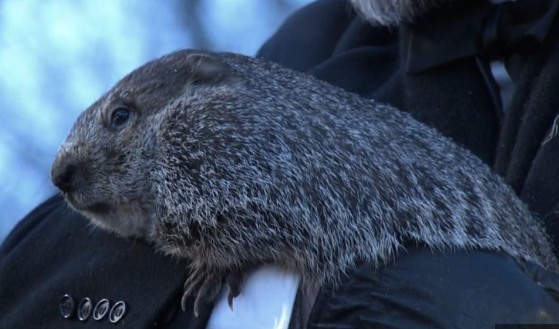
Groundhog Day occurs every year on February 2, where people wait for the official groundhog, Punxsutawney Phil, to come out of his hole and “forecast” the weather conditions for the next six weeks. This prediction is made at Gobbler’s Knob in Punxsutawney, Pennsylvania. During the celebration, if Phil comes out and sees his shadow (meaning the sun is out), we are in for six more weeks of winter. On the other hand, if Phil does not see his shadow when he emerges (it’s cloudy or rainy), then we will have an early spring. Spoiler alert: this year Phil saw his shadow, so keep your warm blankets ready!

Here are a few things you may not know about Groundhog Day:

  • This prediction of the weather using animals comes from ancient Europeans, who did not use groundhogs, but instead used hedgehogs and badgers. German-speaking immigrants came to the United States and continued to use animals, but instead of the badgers and hedgehogs they adopted the groundhog to forecast weather.
  • Groundhog Day has its roots in the ancient Christian tradition of Candlemas. From Merriam-Webster:
    Since ancient times, a procession of lit candles has observed the day, whence the name Candlemas, and the observance comes from Scripture deeming Christ as "a light to lighten the Gentiles, and the glory of thy people Israel." Candlemas, given its occurrence in the beginning of February, also became a day on which people would prognosticate the arrival of spring according to its sunny or cloudy skies.
  • From the Farmer’s Almanac:
    Punxsutawney Phil is the focal point of the oldest and largest annual Groundhog Day celebration, held in Punxsutawney, Pennsylvania. According to groundhog.org, 1886 marked the first time that Groundhog Day appeared in Punxsutawney newspaper, but 1887 was the first time the official trek to Gobbler’s Knob took place.

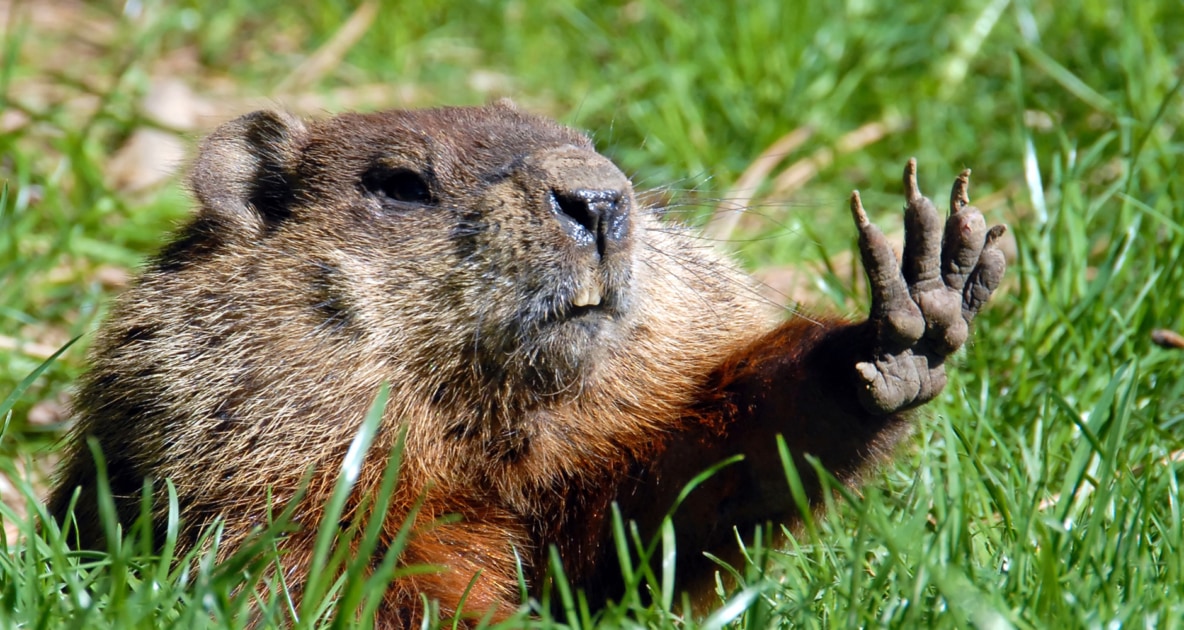
And the name, groundhog, is not their only label. As someone whose family comes from Pennsylvania, I can tell you that I heard much less about groundhogs growing up than I did about woodchucks. Both are names for the same animal, a North American marmot (a large—very large—ground squirrel). Woodchuck comes from the indigenous American names for the animal wuchak, wejack, and possibly otchek. My grandpa and uncle referred to them as something even cuter: whistle pigs.

“Stop right there! I predict six more weeks of winter, people. I’m crawling back into my underground mansion!”

Kara Church | Technical Editor, Advisory | Technical Publications

Pronouns: she/her | Call via Teams | jackhenry.com

Editor’s Corner Archives: https://episystechpubs.com/

Posted by: Jack Henry | February 2, 2023

Editor’s Corner: Rhopalic Sentences

Good morning!

I was just reading an article by Richard Lederer from the San Diego Union Tribune, about the moon and a lot of other topics. There were too many puns for me to continue reading, but I did note something else he mentioned, and that is the word rhopalic. He defines it as: a sentence in which each word is progressively one letter or one syllable longer than its predecessor. Interestingly, it is from the Greek word rhopalikos, which means a club or cudgel. That term sounds like it was coined by someone who did not enjoy grammar lessons. An alternative thought is that trying to produce one of these rhopalic sentences makes you feel like someone beat you over the head.

Here is Richard Lederer’s example of a rhopalic sentence (one syllable added with each word):

I never totally misinterpret administrative, idiosyncratic, uncategorizable, over-intellectualized deinstitutionalization.

The next few are from various searches on the internet. These are based on the number of letters in each word increasing, not the number of syllables.

Dmitri Borgmann:

I do not know where family doctors acquired illegibly perplexing handwriting; nevertheless, extraordinary pharmaceutical intellectuality, counterbalancing indecipherability, transcendentalizes intercommunications’ incomprehensibleness.

Richard Elwes

I am not very happy around strange abstract paintings, preferring portraiture; contemporary postmodernism underestimates picturesqueness, antagonistically mischaracterizing bourgeoisification, exhibitionistically, overenthusiastically overintellectualizing nonrepresentationalism.

And from Atkins Bookshelf, increasing by one letter in each word:

  • I do not hunt birds.
  • Yes, they drink orange extract.

And increasing by one syllable in each word:

  • A lucid manager organizes unregenerate, uncooperative antiphrohibitionists’ incomprehensibility.
  • I am not sure angry people readily perceive happiness everywhere surrounding unencumbered, unpretentious schoolchildren.

Who knew such a thing existed? Judging by what I found as examples, not many people. This sampling is about all I could find.

Good luck to you if you try to take on the challenge of writing arhopalic sentence of either type!

Oh, and Happy Groundhog Day!

Kara Church | Technical Editor, Advisory | Technical Publications

Pronouns: she/her | Call via Teams | jackhenry.com

Editor’s Corner Archives: https://episystechpubs.com/

Posted by: Jack Henry | January 31, 2023

Editor’s Corner: Clichés and Quiz

Good morning, fellow Jack Henrians!

I’m flying solo these days, so I’m going to borrow some pieces of Richard Lederer’s articles from the San Diego Union Tribune and share them with you. He is the ultimate punster and verbivore, and many of you enjoy his articles. Today is from way back in July 2022, and it’s about clichés. You’ve heard from us editors: Stay away from clichés! But Richard uses a ton of them while advising us not to use them—it’s just the kind of guy he is. For the full article, you can click here.

Here’s a like-ly story: Avoid clichés like the plague (by Richard Lederer)

Do you know someone who drinks like a fish and sweats like a pig? Actually, fish don’t drink very much, although they appear to, and pigs don’t have sweat glands. Nonetheless, we continue to say and write, drinks like a fish and sweats like a pig because they are embedded clichés in our language.

The earliest clichés were printing plates, or stereotypes, made first from wood, then clay, and, finally, cast from metal. The figurative sense of clichés and stereotypes arose later because these plates were often reused and were impervious to change.

One of the ironies of language is that striking figures of speech and vivid comparisons soon become clichés precisely because they initially express an idea so well. These phrases catch on, are picked up by a host of people, and quickly become trite or dead as a doornail (itself a cliché) as their originality and cleverness vanish into thin air (another cliché).

Like is a preposition you can’t refuse in our language. Complete each likely expression, and you’ll be in like Flynn (who was a real 1940s New York politician, not the handsome movie actor Errol Flynn), not out like a light. Answers repose after each cluster of questions.

Solve the first 15 posers with animal kingdom answers. I hope you’ll take to this quiz like a duck to water. [KC – Answers below.]

  1. bleeding like
  2. breed like
  3. clever like
  4. dropping like
  5. eats like
  6. fighting like
  7. He looks awful; he looks like
  8. March comes in like a __________ and goes out like a __________.
  9. A memory like
  10. Rolls of him like
  11. Runs around like
  12. Runs like
  13. Soars like
  14. Watch like
  15. Works like

Answers

  1. a stuck pig
  2. bunnies / rabbits
  3. a fox
  4. flies
  5. a bird / horse / pig
  6. cats and dogs
  7. something the cat dragged in
  8. a lion / a lamb
  9. an elephant(‘s)
  10. water off a duck’s back
  11. a chicken with its head cut off
  12. a deer
  13. an eagle
  14. a hawk
  15. a dog

Kara Church | Technical Editor, Advisory | Technical Publications

Pronouns: she/her | Call via Teams | jackhenry.com

Editor’s Corner Archives: https://episystechpubs.com/
Posted by: Jack Henry | January 26, 2023

Editor’s Corner: Sunken Ships and Poop Decks

Fairly recently in San Diego, we’ve had a major climate change: rain. Along with that, the ocean has been particularly active, with giant waves and king tides. I think I shared this photo with you before: it was my snapshot of the SS Monte Carlo, a ship that sank off the coast of Coronado Island, in 1937. I was so excited when the low tides last year gave me this fantastic glimpse of the sunken ship, up close and personal:

Well, my friends, that was child’s play. This year’s rocking and rolling waves (and the local news chopper) gave us a picture of the ship you might find more interesting:

What does this have to do with English, though? Well, my mom sent me the photo above because we walk that beach almost every weekend, but we didn’t do it when “the boat was out,” because there was a water contamination notice. A lot of different “pollutants” were headed our way from the Tijuana River. Mom and I joked about the sunken ship and “poop decks” (because we’re very mature women), and of course, we started wondering where the heck that term came from.

As promised, Mom, here’s what I found. According to Wikipedia:

The name originates from the French word for stern, la poupe, from Latin puppis. Thus, the poop deck is technically a stern deck, which in sailing ships was usually elevated as the roof of the stern or “after” cabin, also known as the “poop cabin.”

On sailing ships, the helmsman would steer the craft from the quarterdeck, immediately in front of the poop deck. At the stern, the poop deck provides an elevated position ideal for observation. On modern, motorized warships, the ship functions which were once carried out on the poop deck have been moved to the bridge, usually located in a superstructure.

There you have it! Now a few interesting facts about the SS Monte Carlo, pictured floating (below):

The ship

  • Was launched in 1921 as the oil tanker SS Old North State, later named McKittrick.
  • Is made of concrete.
  • Became a gambling and prostitution ship (in international waters) in the 1930s.
  • Was originally located off of Long Beach.
  • Was later moved to Coronado in 1936.
  • Lost its anchor hold and drifted towards shore on New Year’s Day, 1937.
  • Became illegal when it left international waters and touched the shore, so nobody claimed the ship.
  • Is speculated to still contain up to $150,000 worth of silver dollar coins in the wreckage.

I hope you’ve enjoyed today’s history and English lesson!

Kara Church | Technical Editor, Advisory | Technical Publications

Pronouns: she/her | Call via Teams | jackhenry.com

Editor’s Corner Archives: https://episystechpubs.com/

Posted by: Jack Henry | January 24, 2023

Editor’s Corner: Financial Wellness and a Mermaid’s Purse

Good morning, folks!

January is Financial Wellness Month, and I’ve been trying to think of some ways to honor that here with Editor’s Corner. I’ve written articles on percentages, dollars, money, and other topics, but that doesn’t seem like enough.

Today I have an offering from the Purpose Office itself, which is perfect for readers and language lovers, while also backing Jack Henry’s support of our financial wellness: a new book club! For more information and to fill out the form, click here. These are the basics about the book:

The Seven Phases of Financial Wellness: A Simplified Personal Finance System That Will Transform How You View Money, by Joe Brown. The book is available for purchase here, it is currently less than six dollars on Kindle®, and it is under 80 pages. Here is an excerpt from the book cover:

“This book summarizes the essential elements of personal finance and teaches you how to begin the journey to experience real financial wellness. The key actions include earning money, giving money, tracking money, protecting money, saving money, spending money, and enjoying money.”

How could you go wrong? Read a bit, learn a bit, and hopefully reach a state of financial wellness—maybe you’ll even reach nirvana? Join us and become part of the club. In the meantime, there are some additional resources on jhDaily.

And now, for the term of the day: mermaid’s purse.

A mermaid’s purse is a capsule made of collagen protein strands. I thought it must contain sand dollars, but instead it holds the eggs of some sharks, skates, and chimaeras. It usually holds just one embryo per purse, but sometimes as many as seven. They are generally rectangular with projections (horns) at each corner. Here is a photo of a mermaid’s purse:

And some Northern California sand dollars, which I’d rather have than shark eggs:

Enjoy your day!

Kara Church | Technical Editor, Advisory | Technical Publications

Pronouns: she/her | Call via Teams | jackhenry.com

Editor’s Corner Archives: https://episystechpubs.com/
Posted by: Jack Henry | January 19, 2023

Editor’s Corner: Fits or Bits?

Dear Editrix,

I’ve always used and heard the phrase “bits and spurts,” but the other day someone used the phrase “fits and starts” in the same manner I would have used “bits and spurts.” It made me wonder if I had been using the wrong words this entire time, like singing the wrong words to a song for decades unknowingly!

Sincerely,

Singing in Bits and Spurts

Dear Reader,

This is an interesting question, and I couldn’t find an exact answer for you. I have heard “fits and starts,” which seems to be the more common way to describe something as intermittent or sporadic, or possibly just a little bit at a time. That does sound very much like your use of “bits and spurts.”

It looks like “fits and starts” is more common in England and the U.S., so I thought maybe it was a more regional thing and that wherever you are from, “bits and spurts” is more common, yet I couldn’t find anything confirming that either.

I found various articles using “bits and spurts” to describe intermittent growth in children, the coming of spring in Kansas, sports performance, and growing pains about the hip and pelvis.

“Fits and starts” was used similarly to talk about the negative aspect of studying sporadically vs. studying consistently; the progression of military technology; and stopping and starting a host of other activities.

I’m sorry I couldn’t give you more of a definitive answer, but if you use your version of the phrase, just note that “fits and starts” might be understandable to more people.

Kara Church | Technical Editor, Advisory | Technical Publications

Pronouns: she/her | Call via Teams | jackhenry.com

Editor’s Corner Archives: https://episystechpubs.com/

Posted by: Jack Henry | January 17, 2023

Editor’s Corner: Dollar Signs

I recently sent out an Editor’s Corner about percentages, which raised some additional questions about other symbols we use with numbers. Getting a precise answer out of the Chicago Manual of Style was like herding cats, only more difficult. I found the rules about using symbols with monetary amounts much simpler on this site about business writing.

Amounts of Money Less than $1

Other than isolated references, followers of Chicago style should use the cent sign for amounts of money less than $1. However, if the reference appears near another amount of money $1 or greater, the cents should be formatted with the dollar sign and numerals.

§ The dairy charges a deposit per bottle.

§ The price of widgets has increased from $0.75 to $2.12 over the course of six months.

Although I personally follow Chicago style, I prefer the AP guide’s recommendation for spelling out cent because the cent sign is not readily available on standard keyboards.

Check out “Three Ways to Insert Currency Symbols in Microsoft Word” to learn how to insert the cent sign in your Word documents.

Amounts of Money Greater than 99¢ but Less than $1 Million

Use the dollar sign and numerals for specific amounts of money greater than 99¢ but less than $1 million.

§ This desk sells for $249 in New York and $239 in Chicago.

§ Our storage fee is $895.99 per month.

$1 Million and Greater

Simplify large numbers by spelling out million, billion, and trillion. You can include up to two numerals after a decimal point, if necessary.

§ The equipment upgrades will cost $1.25 million over three years.

§ We bought this startup for $990,000; it is now valued at $2 billion.

Final Thoughts

Although not an official style recommendation from any of our primary style guides, you may also want to consider streamlining large amounts of money by using approximate whole numbers if your readers don’t need to know the exact figure.

§ The neighboring property is listed for more than $6 million. (Instead of “The neighboring property is listed for $6,120,595.”)

§ Sales soared above $1 billion last year. (Instead of “Sales soared to $1,000,105,000 last year.”)

Have a lovely (short) week!

Kara Church | Technical Editor, Advisory | Technical Publications

Pronouns: she/her | Call via Teams | jackhenry.com

Editor’s Corner Archives: https://episystechpubs.com/

Posted by: Jack Henry | January 12, 2023

Editor’s Corner: Friday the 13th

Good morning! Tomorrow is Friday the 13th, which is considered by some to be an unlucky day. If you’re like me, you may be wondering why.

According to an article on the History™ website, aptly called Friday the 13th, while the number 13 is considered unlucky, the number 12 is associated with completeness: “…there are 12 days of Christmas, 12 months and zodiac signs, 12 labors of Hercules, 12 gods of Olympus, and 12 tribes of Israel, just to name a few examples…its successor 13 has a long history as a sign of bad luck.” The article points out that this superstition has been around for centuries and has its roots in the Western world and in Christianity. First mentioned is the fact that there were 13 guests at Christ’s Last Supper. In addition, the fall of the Knights Templar (a monastic military order devoted to protecting pilgrims traveling to the Holy Land following the Christian capture of Jerusalem during the First Crusade) began on Friday, October 13, 1307.

Along with 13 being the unluckiest number, some believe that Friday may be the unluckiest day of the week, and this belief is also rooted in Christianity, as Jesus was crucified on a Friday, and Friday is believed to be the day that Adam and Eve ate the apple from the Tree of Knowledge.

The article points out that there have been attempts to remove the stigma of Friday the 13th. A New Yorker named Captain William Fowler (1827–1897) founded an exclusive society called the Thirteen Club whose members dined on the 13th day of the month in room 13 of the Knickerbocker Cottage and partook of a 13-course meal. Members of this club walked under a ladder beneath a banner reading “Morituri te Salutamus,” which is Latin for “Those of us who are about to die salute you.” Four former presidents (Chester A. Arthur, Grover Cleveland, Benjamin Harrison, and Theodore Roosevelt) were all members at one time or another. And I might point out that they’re all dead now, so…

Anyway, since tomorrow is the 13th, I thought you might be interested in 13 synonyms for unlucky. These come to you from Thesaurus.com. You can watch the slide show by clicking the link (which also provides examples and additional information), or you can read on at your own risk.

  1. hapless: unlucky; luckless; unfortunate
  2. inauspicious: boding ill; ill-omened; unfavorable
  3. star-crossed: ill-fated; related to the idea that one’s fate is foretold by the position of the stars
  4. sinister: threatening or portending evil
  5. ominous: portending evil or harm; foreboding; threatening; comes from the word omen meaning a sign or symbol of the future
  6. dire: causing or involving great fear or suffering; dreadful; terrible
  7. donsie: (Scottish) unfortunate; ill-fated; unlucky
  8. withershins: (Scottish) in a direction contrary to the natural one, especially contrary to the apparent course of the sun; counterclockwise in the sense of being unlucky or causing disaster
  9. unsonsy (Scottish) bringing or boding ill luck
  10. evil eye: expression meaning “a look thought capable of inflicting injury or bad luck on the person at whom it is directed”
  11. schlimazel: someone who has experienced more than their fair share of bad luck
  12. infelicity: misfortune; bad luck
  13. fey: (British English) doomed, fated to die

I have a premonition that we are all going to have a lucky day tomorrow followed by a wonderful weekend. It will be the first day of my three-week vacation—it’s a very lucky day for me!

Donna Bradley Burcher |Technical Editor, Advisory | jack henry™

8985 Balboa Ave. | San Diego, CA 92123

Pronouns she/her/hers

Symitar Documentation Services

About Editor’s Corner

Editor’s Corner keeps your communication skills sharp by providing information on grammar, punctuation, JHA style, and all things English. As editors, we spend our days reading, researching, and revising other people’s writing. We love to spend a few extra minutes to share what we learn with you and keep it fun while we’re doing it.

Did someone forward this email to you? Click here to subscribe.

Don’t want to get Editor’s Corner anymore? Click here to unsubscribe.

Do you have a question or an idea for Editor’s Corner? Send your suggestions or feedback to Kara and <a href="mailto:DBurcher.

NOTICE: This electronic mail message and any files transmitted with it are intended
exclusively for the individual or entity to which it is addressed. The message,
together with any attachment, may contain confidential and/or privileged information.
Any unauthorized review, use, printing, saving, copying, disclosure or distribution
is strictly prohibited. If you have received this message in error, please
immediately advise the sender by reply email and delete all copies.

« Newer Posts - Older Posts »

Categories