Posted by: Jack Henry | June 8, 2023

Editor’s Corner: Words with Multiple Meanings

Hello to my favorite people! I was just looking through some of my emails and I stumbled on one about words with multiple meanings. In English, that’s pretty darn common, so why did I choose these? Well, I follow this fellow Anu Garg (at wordsmith.org) and he discusses five words a week that have a general theme. These two words amused me personally, so I’m sharing them with you.

I know what decolletage is, but I was curious how it might relate to decollate. Now you’ll find out too!

decollate

1. To behead.
2. To separate sheets of paper, from a multiple-copy printout, for example.

ETYMOLOGY:

For 1: From Latin decollare, from de– (from) + collum (neck). Earliest documented use: 1599.
For 2: From de– (from) + collate (to gather, merge, etc.), from conferre (to bring together). Earliest documented use: 1967.

NOTES:

Sometimes the word decollate is used as an alternate spelling for the decollete (which is short for decolletage: a low neckline on a woman’s dress). But when you need to refer to a low neckline in a formal context—an office memo, a research paper, a court brief, a patent application, etc.—it’s best to go with decollete. [KC – Hmm…I don’t think this will be in any of our office memos!]

This next one (with multiple meanings and spellings) reminds me of my mom. She’s the one that taught me what a dickey was when I was a little kid. She went to an all-girl Catholic college where they had to wear their black graduation gown over their clothes for certain events. Once you see the first definition for dickey, you’ll understand why it might’ve been useful for a quick change with the graduation gown.

dickey, dicky, or dickie

noun: 1. A detachable shirtfront, collar, bib, etc.
2. A small bird.
3. A donkey.
4. The driver’s seat or rear seat in a carriage.
5. The luggage compartment of a vehicle; also known as trunk or a boot.
adjective: 1. Not working properly.
2. In poor health.

ETYMOLOGY:

For noun: A diminutive of Dick, a nickname for Richard. Earliest documented use: 1753.
For adjective: Of uncertain origin. Earliest documented use: 1788.

And now you can buy a four-pack of dickeys from Amazon, for under $20!

Kara Church | Technical Editor, Advisory | Technical Publications

Pronouns: she/her | Call via Teams | jackhenry.com

Editor’s Corner Archives: https://episystechpubs.com/

Posted by: Jack Henry | June 6, 2023

Editor’s Corner: AI and Writing

A few months ago, our manager had us try ChatGPT and test how this artificial intelligence might work for documentation in the future. We produced a few fun items, but we found that ChatGPT is not able to write detailed instructions very well. In addition, you don’t want to test with company material because it becomes part of ChatGPT’s “encyclopedia” of information for the public.

Outside of testing ChatGPT, I’ve received numerous emails about how AI is going to make writers and editors unnecessary, and other emails about how you can’t just throw writers and editors away, because AI cannot understand the subtleties of writing and being human.

I heard an interview the other day with David Simon, the writer of the scripts for The Wire, among other shows. The interviewer was trying to get Mr. Simon to admit he might try AI for writing scripts. Simon’s response was one of disgust and he said, essentially, he’d rather be dead.

And I agree. It will be some time before creativity can be programmed…and why? It’s a great thing to be a human and be able to write stories, make things with your hands, and use your imagination. But I digress. I read a great article that my former manager sent my way. I’m only going to include some of it here, but the link is below if you’d like to all of it.

Why Learning to Write Well Is Still Important in the Age of A.I.

…It’s clear A.I. is advancing incredibly rapidly and soon will transform how a lot of white collar work gets done.

What exactly those changes will look like is the subject of fierce debate and is probably anybody’s guess at this point. But already impressive tools like ChatGPT make plain that a lot of routine writing will probably be done by bots in the future.

Marketers are already experimenting with having chatbots write social-media posts and ads. College professors are rethinking the essay for the age of A.I. Real estate agents are handing off writing listings to the bots. So if you’re a young person today, should you conclude that it’s time to decrease the time and effort you invest in learning to write well?

Writing makes you smarter.

Actually no, answers a chorus of experts. …(W)riting isn’t just banging out the right string of words to get your meaning across…. The most important function of writing isn’t to teach others, but to teach yourself.

"Writing is the process by which you realize that you do not understand what you are talking about. Importantly, writing is also the process by which you figure it out," writes Farnam Street blogger Shane Parrish. "Writing about something is one of the best ways to learn about it."

…(E)ven those with not a shred of literary ambition—should perfect their writing. Not to persuade others, but to make themselves smarter.

"Everyone is full of ideas they’re not aware of. They’re gut feelings. Intuitions. You use them a dozen times a day. But you’d shrug your shoulders if someone asked why. How you react to career risk. Why you invest the way you do. Why you like some people and question others. We’re all brimming with opinions on these topics that we may never discuss, even with ourselves," Housel argues. Writing is the way to turn that "phantom intelligence" of hunches and half-formed opinions into usable tools for the betterment of yourself and your career….

If you want to learn to think, you need to learn to write.

One day in the not-too-distant future, a chatbot may be able to write a convincing email to your boss or polish up that important presentation in minutes. Use those abilities to your advantage. But no bot is going to figure out how complex ideas fit together and apply that to your specific situation any time soon. No bot can help you pick your way through a challenging intellectual puzzle. [KC-Emphasis mine. No bot can do this, but editors can!]

Chatbots can convincingly regurgitate human knowledge, but they still struggle to expand it or even combine it in new and enlightening ways.

In this world, empathetic, experimental, humane writing may end up being an even more valuable career skill. But even if you don’t plan to market yourself as a wordsmith or communicator, you still need to be able to think. And the best tool for thinking humans have ever invented—up to and including these mind-bending new A.I. tools—is good old-fashioned writing. So if you want to be able to think clearly and well, you still need to learn to write.

NOTICE: This electronic mail message and any files transmitted with it are intended
exclusively for the individual or entity to which it is addressed. The message,
together with any attachment, may contain confidential and/or privileged information.
Any unauthorized review, use, printing, saving, copying, disclosure or distribution
is strictly prohibited. If you have received this message in error, please
immediately advise the sender by reply email and delete all copies.

Posted by: Jack Henry | June 1, 2023

Editor’s Corner: Looking for Verbs

Good morning, friends!

Most of the time when I have a topic to discuss that requires examples, I make the examples up. Well, I’ve been saving a bunch of phrases from the editing I’ve been doing so I can provide some alternatives to the material we receive.

This started out because I was feeling peevish. Today I’m a happy camper, so perhaps I will advise more gently. I would file most of these examples under “hidden verbs,” but I have also noticed the overuse of this formation: the ____ of ____. It’s a way of “hiding” verbs with unnecessary words.

Here are some examples:

  • The application of payments
  • The sharing of programs
  • The tracking and reporting of products
  • Support the tracking of disbursements

Can you feel the passiveness? Can you see where those verbs are hiding? Let’s look at making those statements more active, lively, and exposed!

Before After
The application of payments Applying payments
The sharing of programs Sharing programs
The tracking and reporting of products Tracking and reporting products
Support the tracking of disbursements Support tracking disbursements
With the display of the error message Displaying the error message

As you can see, I’ve taken the nouns—the application, the sharing, the tracking, etc.—and turned them into verbs: applying, sharing, tracking. I’ve also gotten rid of “of,” and just used the objects alone after the verbs, “payments, programs, products, etc.”

Here are some other phrases I found that could just be clearer and more direct. They don’t all follow the pattern above, but you’ll see the phrases are padded with extra words, which diverts the reader from understanding your basic message.

Before After
By use of Using
Are not able to be transferred Cannot be transferred
Complete your registration Register
For disbursal of funds to participants To disburse funds to participants

For more information check out our Symitar Knowledge Base lesson:

Hidden Verbs

Posted by: Jack Henry | May 30, 2023

Editor’s Corner: Run and Ran, Revisited

Dear Editrix,

Shouldn’t this message say Reports can be run?

Or am I wrong? I see this quite a bit. 😊 We “run” reports, we don’t “ran” reports, unless we are referring to reports that we have already “run.”

Dear reader,

Yes, this is like reading something and being beaten over the head with a lead pipe at the same time. The confusion is understandable, but let’s see if we can unconfuse people and put a stop to this error.

The first issue is using can or could, which are modal verbs (can, could, would, shall, etc.), in the error message. These auxiliary verbs make things cloudier and tend to cause confusion, so we avoid them in documentation when possible.

The present tense of run is run.

  • The community center instructors run a fantastic tennis program.
  • The credit union runs their reports every evening after closing.

The past tense of run is ran.

  • Heranto the stadium to get tickets to the show, but they were already sold out.
  • The report ran for an hour and produced 300 pages.

The past participle is also run (with the appropriate conjugation of “to have”).

  • I have run this 5k every year for the past seven years, but this year’s was the most fun.
  • He has run the specfile three times, and each time it has produced a blank report.

The problem occurs when people use the past tense (ran) rather than the past participle (have run). The following are both incorrect:

  • I have ran this 5k every year…
  • He has ran the specfile three times…

If those last two items seem okay to you, they aren’t. Please lather, rinse, and repeat reading from the top again. If the last two examples make you want to pull your hair out, and you see someone using them in an error message or documentation, please send this Editor’s Corner to them and ask them to make some updates.

Thank you for checking in with us about this common mistake!

Kara Church | Technical Editor, Advisory | Technical Publications

Pronouns: she/her | Call via Teams | jackhenry.com

Editor’s Corner Archives: https://episystechpubs.com/

Posted by: Jack Henry | May 25, 2023

Editor’s Corner: Dangling Modifiers

Hello, good morning, greetings!

Last week I covered misplaced modifiers (descriptive words or phrases that are misplaced in a sentence so that they cause ambiguity), and as promised, this time we’re looking at dangling modifiers. A dangling modifier is a word or phrase that has nothing to modify. It’s just dangling, unattached to anything else in the sentence. Typically, these sentences are missing a subject (the person or thing doing the action). I know, I know. We need examples!

  • Walking through the park, the squirrels were chattering.

The phrase “walking through the park” is a dangling modifier. It’s not modifying anything. Who is walking through the park? Here is one way you could rewrite the sentence:

Walking through the park, Darius heard the squirrels chattering.

  • Waiting in line, the time went by slowly.

Who is waiting in line? For whom is time going by slowly? Here’s a possible revision:

While Merced was waiting in line, the time went by slowly.

  • While driving to the park, my dog stuck his head out of the window.

I think you’ve got this figured out. We’re missing the subject—the person driving the car.

While I was driving to the park, my dog stuck his head out of the window.

The takeaway is to make sure that your sentences have a clear subject. Don’t leave us dangling.

Donna Bradley Burcher |Technical Editor, Advisory | jack henry™

Pronouns she/her/hers

9660 Granite Ridge Drive, San Diego CA 92123

Symitar Documentation Services

About Editor’s Corner

Editor’s Corner keeps your communication skills sharp by providing information on grammar, punctuation, JHA style, and all things English. As editors, we spend our days reading, researching, and revising other people’s writing. We love to spend a few extra minutes to share what we learn with you and keep it fun while we’re doing it.

Did someone forward this email to you? Click here to subscribe.

Don’t want to get Editor’s Corner anymore? Click here to unsubscribe.

Do you have a question or an idea for Editor’s Corner? Send your suggestions or feedback to Kara and <a href="mailto:DBurcher.

NOTICE: This electronic mail message and any files transmitted with it are intended
exclusively for the individual or entity to which it is addressed. The message,
together with any attachment, may contain confidential and/or privileged information.
Any unauthorized review, use, printing, saving, copying, disclosure or distribution
is strictly prohibited. If you have received this message in error, please
immediately advise the sender by reply email and delete all copies.

Posted by: Jack Henry | May 23, 2023

Editor’s Corner: Maximize Your Maxims!

Welcome to a new day and another literary term: maxim. No, I’m not talking about the magazine Maxim, which purports to be a magazine that caters “to the modern man with content that promises to seduce, entertain, and continuously surprise readers.” Our friends at Merriam-Webster offer this definition:

: a general truth, fundamental principle, or rule of conduct

: a proverbial saying

With the term maxim, you will see some crossover with other terms we’ve discussed (or will discuss soon). As mentioned with fables, they are followed by a moral, or perhaps you might call it a maxim. When we get to proverbs, you will also see some crossover. Here are some examples of maxims from ThoughtCo:

  • Actions speak louder than words.
  • The pen is mightier than the sword.
  • You’re never too old to learn.
  • You can’t teach an old dog new tricks.
  • All good things come to those who wait.
  • Many hands make light work.
  • Too many cooks spoil the broth.

In researching maxims, I tried to find out what set them apart from similar literary terms like axiom or proverb. A scholar by the last name of Grice said there are four types of maxim, as follows:

  • Quality. Must be truthful and supported with evidence.
  • Quantity. Must provide as much information as required.
  • Relation. Must be relevant.
  • Manner. Must avoid ambiguity.

Hmm. These explanations of the different types didn’t really shed any light on what makes a maxim a maxim. I decided to dig further and found an interesting article on the Literary Terms website.

A maxim is a brief statement that contains a little piece of wisdom or a general rule of behavior. Maxims are sometimes written by a single author, for example in the form of philosophical quotations. When a maxim has no specific author, it becomes a kind of proverb–something that just emerges from the culture and survives because people use it, not because any specific person wrote it in a book.

The defining characteristic of a maxim is that it’s pithy–that is, it packs a lot of meaning into just a few words. [KC – There we go. More “pithy” words as I mentioned in my Aphorism article. Wait! These folks give us a difference between pithy aphorisms and pithy maxims!]

Maxims are very nearly the same as aphorisms. The only difference is that maxims are often more straightforward. Whereas aphorisms tend to use metaphor, maxims may or may not do this.

Hmm. Here are two examples and explanations of maxims, that I hope will help:

Rome wasn’t built in a day.

This famous saying is a good example of a maxim with a metaphor in it. Rome is a metaphor for whatever you might be working on – a career, a relationship, a long-term project, etc. Whatever it is, the idea of building Rome reminds you that these things take time.

A designer knows he has achieved perfection not when there is nothing left to add, but when there is nothing left to take away. (Antoine de Saint-Exupery)

A maxim without a metaphor. This one is the essence of pithiness – pithy writing is writing that uses the bare minimum number of words while packing in a lot of wisdom and information, without sacrificing clarity!

Here’s hoping that you maximize the fun parts of your day!

Kara Church | Technical Editor, Advisory | Technical Publications

Pronouns: she/her | Call via Teams | jackhenry.com

Editor’s Corner Archives: https://episystechpubs.com/
Posted by: Jack Henry | May 18, 2023

Editor’s Corner: Misplaced Modifiers

Good morning, my people.

Today I want to share information about how to avoid using misplaced modifiers. Kara and I have covered this subject before, but it’s been a while. And since this is a persistent issue that we deal with when editing, it is a good topic to revisit.

First, what is a misplaced modifier? It is a descriptive word or phrase that is misplaced in a sentence so that it causes ambiguity or outright confusion (sometimes they can be pretty funny!).

To make sure we’re on the same page, let me give you some examples:

  • When Jenny got home, she fell onto the sofa covered in sweat.

The misplaced modifier in this sentence is covered in sweat. The misplacement of the phrase makes it sound like the sofa, rather than Jenny, is covered in sweat. We can rewrite the sentence this way to correct it:

When Jenny got home, covered in sweat, she fell onto the sofa.

  • Shahin bought a puppy for his son called Sniffy.

You see how this works now. The pup’s name is Sniffy, but the misplaced modifier makes it sound like Shahin’s son is called Sniffy.

Those are examples of misplaced modifier phrases, but single words can also be modifiers. The following words are known as limiting modifiers: almost, hardly, just, nearly, and only. To avoid ambiguity, we also need to be careful about where we place these words in our sentences. Notice how moving these words in the following sentences changes the meaning. I gathered these examples from the Grammar Diva:

  • Only Judy kicked her friend in the leg. (Modifies Judy. No one else kicked the friend, just good old Judy.)
  • Judy only kicked her friend in the leg. (Modifies kicked; she kicked her friend, but she didn’t do anything else to her.)
  • Judy kicked only her friend in the leg. (Slightly different meaning: Judy didn’t kick anyone else, just her friend, thank goodness!)
  • Judy kicked her only friend in the leg. (Modifies friend; no surprise this was her only friend.)
  • Judy kicked her friend only in the leg. (She didn’t kick her anywhere else.)
  • Judy kicked her friend in her only leg. (Modifies leg; poor friend.)

The trick is to make sure the limiting modifier is next to the word it modifies as in the examples above.

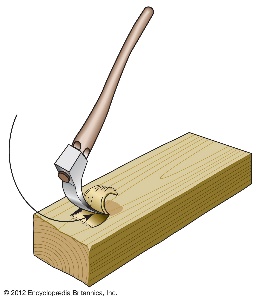
Here’s a lovely old, misplaced modifier you may have heard before:

That’s it! Now you’re an expert on misplaced modifiers. Next time, we’ll tackle dangling modifiers.

Donna Bradley Burcher |Technical Editor, Advisory | jack henry™

Pronouns she/her/hers

9660 Granite Ridge Drive, San Diego CA 92123

Symitar Documentation Services

About Editor’s Corner

Editor’s Corner keeps your communication skills sharp by providing information on grammar, punctuation, JHA style, and all things English. As editors, we spend our days reading, researching, and revising other people’s writing. We love to spend a few extra minutes to share what we learn with you and keep it fun while we’re doing it.

Did someone forward this email to you? Click here to subscribe.

Don’t want to get Editor’s Corner anymore? Click here to unsubscribe.

Do you have a question or an idea for Editor’s Corner? Send your suggestions or feedback to Kara and <a href="mailto:DBurcher.

NOTICE: This electronic mail message and any files transmitted with it are intended
exclusively for the individual or entity to which it is addressed. The message,
together with any attachment, may contain confidential and/or privileged information.
Any unauthorized review, use, printing, saving, copying, disclosure or distribution
is strictly prohibited. If you have received this message in error, please
immediately advise the sender by reply email and delete all copies.

Posted by: Jack Henry | May 16, 2023

Editor’s Corner: Return to literary terms – Proverb

Today’s literary term is proverb. As you will see, it is defined using some of the terms we’ve already discussed in past weeks. Merriam-Webster says a proverb is a brief popular epigram or maxim, also called an adage. Again, we have some crossover. Literary Terms provides this additional information.

A proverb is a short saying or piece of folk wisdom that emerges from the general culture rather than being written by a single, individual author. Proverbs often use metaphors or creative imagery to express a broader truth.

And a little more, from Grammarly.com:

Proverbs and idioms are similar and easily confused with one another. Both are forms of expression that are natural to groups of people and are short and pithy, and both are very challenging for English language learners to understand because they include innate meaning that isn’t always discernible just by reading the words.

But they do have a few key differences. Idioms express an idea or thought and are phrases that contain a group of words that typically wouldn’t make sense together (e.g., it’s raining cats and dogs, pulling someone’s leg, by the skin of your teeth). They are also frequently used in poetry. Proverbs have a literal meaning and tend to express a truth or dispense advice such as actions speak louder than words; all’s well that ends well; a leopard never changes its spots.

For fun, I’m giving you a few proverbs from languages besides English, from ESLGrammar:

§ “To make the tea cloudy” – Japanese proverb

It means to be evasive or non-committal about something, it comes from a Japanese wedding and tea rituals.

§ “A drink precedes a story” – Irish proverb

When a man is inebriated, they are more likely to tell the stories or occurrences that they normally wouldn’t if they were sober.

§ “He who buys what he does not need, steals from himself.” – Swedish proverb

A person should spend only on essential or necessary items and avoid frivolous expenses.

§ “An axe forgets what the tree remembers.” – African proverb

It is easy for someone who is hurting another person to forget the wrong and move on but the person who was hurt never forgets.

§ “The eyes believe themselves, the ears believe other people.” – German proverb

Do not believe everything that everyone says to you, trust your own judgement or wait to see something with your own eyes before believing someone.

§ “A clear conscience is a soft pillow.” – French proverb

If a person is guilty of some wrongdoing, their guilty conscience will let them have no rest, while an innocent person will be peaceful and calm.

§ “To call a man a thief gives him the right to be one.” – Old Arabic proverb

Treating someone in an unfair or cruel way will ensure a similar behavior from them in the future.

§ “Opportunity knocks only once.” – Spanish proverb

Always seize an opportunity when it comes your way as you may not get another chance at it.

§ “Your elbow is close but you can’t bite it.” – Russian proverb

A way to express when someone is physically present but emotionally distant or when something can be seen but is just beyond your reach.

Kara Church | Technical Editor, Advisory | Technical Publications

Pronouns: she/her | Call via Teams | jackhenry.com

Editor’s Corner Archives: https://episystechpubs.com/

Good morning, curious readers. Recently, I read one of my daily emails from Dictionary.com—it covered a pair of often confused words that are very relevant today: misinformation and disinformation.

Let’s start with a definition of and some background about the word misinformation. The first recorded use of this word was in the 1500s. The prefix mis-, means wrong or mistaken. With that in mind, we can deduce that misinformation simply means information that is mistaken or incorrect (I think we knew that). For example, maybe you saw on social media that one of your favorite actors died and you spread the word to your friends and family, and then you found out it isn’t true; the actor is alive and well. You’ve just misinformed all those people. Oops. You didn’t mean any harm; it was all a big mistake. Misinformation is false information, but it is shared with no intention to mislead or misrepresent.

And that leads us right into disinformation. The first recorded use of this word was sometime between 1965 and 1970. According to Dictionary.com “It’s a translation of the Russian word dezinformátsiya, in turn based on the French désinfomer (to misinform).” The prefix dis- is used to indicate a reversal or negative instance of the word that follows the prefix. The examples provided by Dictionary.com are disrespect and disobedience.

Disinformation is misinformation that is knowingly spread. It is intended to mislead or misrepresent. For example, maybe you are interested in buying a house, so you attend the open house and it seems to be everything you are looking for in a home. You begin talking to someone at the open house who informs you that the house has had a history of plumbing and electrical issues, so you decide to take some time to do more research. After a few days, you find out there is nothing to worry about, but in the meantime, the person who disinformed you has put in a bid and the bid has been accepted. In this case, you were disinformed.

According to the article, “…disinformation is very powerful, destructive, and divisive, and is a common tool of espionage. Countries often have an interest in intentionally spreading fake information to their rival nations, as the Soviet Union and United States did during the Cold War, for instance. When a country or group coordinates a complicated plan of spreading disinformation, it is often referred to as a disinformation campaign.”

What can you do to avoid being misinformed or disinformed? Be sure that the information you are ingesting or sharing is vetted—not just someone’s opinion. Improve your media literacy (the ability to critically analyze for accuracy, credibility, or evidence of bias the content created and consumed in various media, including radio and television, the internet, and social media).

There is a glut of information available to us. It’s more important than ever to make sure the information we receive is unbiased and accurate. Go forth and find the facts.

Donna Bradley Burcher |Technical Editor, Advisory | jack henry™

Pronouns she/her/hers

9660 Granite Ridge Drive, San Diego CA 92123

Symitar Documentation Services

About Editor’s Corner

Editor’s Corner keeps your communication skills sharp by providing information on grammar, punctuation, JHA style, and all things English. As editors, we spend our days reading, researching, and revising other people’s writing. We love to spend a few extra minutes to share what we learn with you and keep it fun while we’re doing it.

Did someone forward this email to you? Click here to subscribe.

Don’t want to get Editor’s Corner anymore? Click here to unsubscribe.

Do you have a question or an idea for Editor’s Corner? Send your suggestions or feedback to Kara and <a href="mailto:DBurcher.

NOTICE: This electronic mail message and any files transmitted with it are intended
exclusively for the individual or entity to which it is addressed. The message,
together with any attachment, may contain confidential and/or privileged information.
Any unauthorized review, use, printing, saving, copying, disclosure or distribution
is strictly prohibited. If you have received this message in error, please
immediately advise the sender by reply email and delete all copies.

Posted by: Jack Henry | May 2, 2023

Editor’s Corner: The final haiku submissions

Hail to the haiku writers! Today’s submissions are from those who sent in one, two, and three haiku. I hope you enjoy them! The first one is a personal favorite!

Michelle Cornell

Editor’s Corner

What would we do without it?

English still be bad

Debbie Seufert

The grass is now green

Cows are grazing happily

Baby calves bouncing

Cousin visiting

Brought a bottle of whiskey

What is my own name?

Donna Bradley Burcher

Yes, of course I did

I won’t say no to chocolate

Even your last piece

I was first to wake

You were left to dream some more

Just make the bed, dude

Mayme O’Neill

Summer, please come soon.

Bring bright mornings and warm nights.

Bring crickets and calm.

Woke up too early

compensated with caffeine.

Now I cannot sleep.

I’m in Pacific.

You’re in Central or Eastern.

Siri, what time is…?

Stephanie Hrnack

Southwest Airlines Federal Credit Union

Texas in Spring

Sunshine and blue skies,

Twisters, thunder, rain, and hail

The weather’s fickle!

Teams Meeting Séance

Someone tries to speak.

Olivia, are you there?

We cannot hear you.

Jane Sampsel

Frustration

Baby is asleep.

Mom is able to sleep, too.

Oh no! Doorbell rings!

Laundry

Dirty laundry cleaned.

A sense of accomplishment!

Ugh! Pile is growing.

Aging

Crinkles near my eyes

Laugh lines surrounding my mouth

Signs of life well-lived

Vicki Decker

new at Jack Henry

the phenomenal culture

makes all days good ones

it is Easter time

chocolate eggs and jelly beans

add to my waistline

Jeff Brady

Wordle

Once more I prevail

The evil word is vanquished

Victory is sweet

Sheila Walter

Oh Spring, please come soon.

Sun, fun, splashing and smiles.

Snow, stay away now!

Billie Jean Montle

A light in my dream

She came to me to assure

Joy and Happiness

Patty Moore

One Company

My dear jack henry

No longer separate groups

We have become one

Paul Davis

Teams meet sneeze starting

Reaching up to mute my mic

Enable camera oops

Jack Ford

Haiku time again

I know I can kill this stuff

well darn, thought I could

David Pullara

Nantucket Haiku

Is very naughty, it’s true

Five bucks gets you two

Angel Wilborn

Am I sick she asks

cough wheeze sneeze Ahchoo Oh No

To bed I must go

Tyler Bible

A PowerShell Haiku

DollarVar Equal

Help my PowerShell Haiku

Write-Host DollarVar

Richard Sunbury

Here is one from ChatGPT:

Artificial brain

Endless calculations made

Forgot where it parked

Kearn Lacey and AI

AI writes haiku,

Poetry from a machine,

Beauty in code form.

Candice Washington

Amazon, my pal.

From A to Z, you and me.

Our friendship is Prime!

3’oclock pick-up.

I’m in a meeting right now.

She’ll have to walk home.

70 degrees!

A warm, Michigan Spring day.

Soon, there will be snow.

Joan Parish

Reading the paper

Gives me a panic attack

Skip to the comics!

Babe smiling so sweet

I smile in loving exchange

As she passes gas

Jennifer Prier

Rain is falling down.

Flowers are trying to bloom.

Begging for sunshine.

Bikinis are small.

Getting into shape is hard.

Screw it! Eat the cake!

The lake is calling.

Friends, drinks, and fun on the waves.

Jump in and get wet!

Peggy Esch

Slow moon in the East

Spent the night hopping over

My short house – now West!

Kara Church | Technical Editor, Advisory | Technical Publications

Pronouns: she/her | Call via Teams | jackhenry.com

Editor’s Corner Archives: https://episystechpubs.com/
« Newer Posts - Older Posts »

Categories