Posted by: Jack Henry | August 12, 2013

Editor’s Corner: Between, among, and a mung

When is it appropriate to use the words between and among? You may be surprised by the answer! Under certain circumstances, it is correct to use between for more than two entities.

Between

· Between is used for one-to-one relationships.

o You have to choose between Kyle and Mickey, but you can’t invite both.

o Please keep this secret between you and me.

· Between can be used for more than two objects if multiple one-to-one relationships are understood from the context.

o The school allowed marble-trading between the kids in first grade and second grade.

o Congress allowed discussions between the groups of lobbyists.

· Between can be used by more than two distinct items, groups, or people.

o He had to choose between the chocolate mousse, the pear tart, and the sorbet.

o The talks between North Park residents, small business owners, and Jack-in-the-Box’s lawyers were not going well.

o There are many differences between omnivores, herbivores, and carnivores.

Among

· Among indicates undefined or collective relationships (things that are not distinct items or individuals).

o The news about the mayor’s scandalous behavior spread among the city folk.

o Kyle and Mickey are among the friends you can ask to spend the night.

· Among is used for a group of people, or someone left out of a group.

o She felt like a lamb among a pack of wolves.

o Tony was happy to find another unicyclist among the Tour de France contenders.

Location

Between and among also refer to physical location. Note the difference between “the dog was between the trees” and “the dog was among the trees”:

· Between

· Among

Amongst

Used in the same places you would use among, but unless you are writing historical fiction or you are British, using amongst tends to sound like Mr. or Ms. Pretentious Fancy-Pants.

A Mung

A small, round green bean, commonly grown as a source of bean sprouts.

Kara Church

Senior Technical Editor

Posted by: Jack Henry | August 9, 2013

Editor’s Corner: Punctuation Saves Lives!

Yesterday I received an e-mail asking me to point out examples where misused punctuation (or lack of punctuation) could result in embarrassment, misunderstanding, or lost business. There are plenty of opportunities for embarrassment and misunderstandings, and as this articles demonstrates, missing punctuation can have big results: Story of the Million-Dollar Comma

Luckily, the results aren’t usually so drastic. Here are some phrases and photos from all over the Internet that I would file under “The Importance of Punctuation.”

  • From a t-shirt…

Commas save lives:

Let’s eat grandpa.

Let’s eat, grandpa.

  • Missing punctuation turns the NMB Police into the bad guys:
  • Say NO to drugs from the NMB Police D.A.R.E Officers.
  • An extra comma turns a vegetarian salad into a meaty nightmare:
  • “Goat cheese salad ingredients: lettuce, tomato, goat, cheese”
  • KC – Here are two good examples of why I am a die-hard serial comma fan, though without the second comma these are definitely more amusing:
  • “I’d like to thank my parents, Jesus and Oprah Winfrey.”
  • “A notorious gambler, Charlie Sheen owed money to his ex-wives, Billy Bob Thornton and Hugh Grant.”

And now for more punctuation gone bad (my favorite, a repeat, is at the end of the list). Happy Friday!

Kara Church
Senior Technical Editor

Posted by: Jack Henry | August 9, 2013

Editor’s Corner: Punctuation Saves Lives!

Yesterday I received an e-mail asking me to point out examples where misused punctuation (or lack of punctuation) could result in embarrassment, misunderstanding, or lost business. There are plenty of opportunities for embarrassment and misunderstandings, and as this articles demonstrates, missing punctuation can have big results: Story of the Million-Dollar Comma

Luckily, the results aren’t usually so drastic. Here are some phrases and photos from all over the Internet that I would file under “The Importance of Punctuation.”

  • From a t-shirt…

Commas save lives:

Let’s eat grandpa.

Let’s eat, grandpa.

  • Missing punctuation turns the NMB Police into the bad guys:
  • Say NO to drugs from the NMB Police D.A.R.E Officers.
  • An extra comma turns a vegetarian salad into a meaty nightmare:
  • “Goat cheese salad ingredients: lettuce, tomato, goat, cheese”
  • KC – Here are two good examples of why I am a die-hard serial comma fan, though without the second comma these are definitely more amusing:
  • “I’d like to thank my parents, Jesus and Oprah Winfrey.”
  • “A notorious gambler, Charlie Sheen owed money to his ex-wives, Billy Bob Thornton and Hugh Grant.”

And now for more punctuation gone bad (my favorite, a repeat, is at the end of the list). Happy Friday!

Kara Church
Senior Technical Editor

I’ve covered dashes before, but here’s a refresher for inquiring minds.

  • Hyphen (-) used for compound words, compound names, word divisions, and separators. No space before or after.
  • Compound words: end-of-line, son-in-law
  • Compound names: James Burke-Frazier, Catherine Zeta-Jones
  • Word divisions: dynamite (dy-na-mite)
  • Separators: 1-619-555-1212, “My name is Kara; that’s spelled K-A-R-A.”

Where is it? It is the key on the same row as the number keys (after zero) on most of our keyboards.

  • En dash (–) generally used in place of the word “to,” or for an unfinished number range. No space before or after.
  • In place of the word to:
  • The score was 20–30
  • The show is from 3:00 p.m.–5:00 p.m.
  • January 2013–August 2013
  • In an unfinished number range:
  • John Doe (1966–?)
  • Other uses
  • Compound adjectives (most people do not distinguish between the hyphen and en dash for this use)
  • Minus sign (though there is a separate symbol for the minus sign)

Where is it? There are several ways to add an en dash in Word. Here are two easy ways:

  • Click Insert → Symbol→ Special Characters and select en dash.
  • Keyboard shortcut Ctrl+-(on numeric keypad)
  • Em dash (—) is the most versatile, but not in our world. The em dash is used in prose and can take the place of commas, parentheses, or colons in certain circumstances. The mark is generally used to show a break in thought.
  • Jane saw Barney across the room—she knew she’d never seen anyone so handsome. A lot of times these come in pairs—like parentheses—but I digress.

Where is it? There are several ways to add an em dash in Word, but unless you are writing the great American novel on company time, you should not need them at work. Here are two easy ways:

  • Click Insert → Symbol→ Special Characters and select em dash.
  • Keyboard shortcut Alt+Ctrl+-(on numeric keypad)

Two other dashes that you will not see in our documentation are the 2-em dash and the 3-em dash. The following information is from the Chicago Manual of Style:

  • The 2-em dash (——) Represents a missing word or part of a word, either omitted to disguise a name (or occasionally an expletive). Also used to indicate missing or illegible text in quoted or reprinted material. When a whole word is missing, space appears on both sides of the dash.
  • Admiral N—— and Lady R—— were among the guests.
  • The 3-em dash (———) For successive entries by the same author, editor, translator, or compiler, a 3-em dash (followed by a period or comma, depending on the presence of an abbreviation such as ed.) replaces the name after the first appearance.
  • ———. Reappraisals: Reflections on the Forgotten Twentieth Century. New York: Penguin Press, 2008.
  • ———, ed. Resistance and Revolution in Mediterranean Europe, 1939–1948. New York: Routledge, 1989.

Kara Church
Senior Technical Editor
619-542-6773 | Ext: 766773

www.symitar.com

0

NOTICE: This electronic mail message and any files transmitted with it are intended
exclusively for the individual or entity to which it is addressed. The message,
together with any attachment, may contain confidential and/or privileged information.
Any unauthorized review, use, printing, saving, copying, disclosure or distribution
is strictly prohibited. If you have received this message in error, please
immediately advise the sender by reply email and delete all copies.


Posted by: Jack Henry | August 6, 2013

Editor’s Corner: Amount vs. Number

Re: Yesterday’s Editor’s Corner
My apologies to “the husband” for referring to “best wishes on an impeding marriage” rather than an impending one; and thank you to Mr. Foss for your eagle eye and for giving me a good laugh at my Freudian slip. Now for today’s topic!

When using the wordsless and fewer, people often get confused. This stems from a misunderstanding of count nouns (e.g., pig, gherkin, toe) and non-count nouns (e.g., love, harmony, milk) and whether to use amount or number when referring to them. Here’s a refresher on all of the above from Common Errors in English Usage, by Paul Brians.

Amount/Number

This is a vast subject. I will try to limit the number of words I expend on it so as not to use up too great an amount of space. The confusion between the two categories of words relating to amount and number is so pervasive that those of us who still distinguish between them constitute an endangered species; but if you want to avoid our ire, learn the difference. Amount words relate to quantities of things that are measured in bulk; number to things that can be counted.

In the second sentence above, it would have been improper to write “the amount of words” because words are discrete entities which can be counted, or numbered.

Here is a handy chart to distinguish the two categories of words:
[KC – I added the first two rows to his list.]

Amount Number
non-count noun count noun
Examples: water, misery, courage Examples: bottle, eyeball, puppy
quantity number
little few
less fewer
much many

You can eat fewer cookies, but you drink less milk. If you eat too many cookies, people would probably think you’ve had too much dessert. If the thing being measured is being considered in countable units, then use number words. Even a substance which is considered in bulk can also be measured by number of units. For instance, you shouldn’t drink too much wine, but you should also avoid drinking too many glasses of wine. Note that here you are counting glasses. They can be numbered.

The most common mistake of this kind is to refer to an “amount” of people instead of a “number” of people.

Just to confuse things, “more” can be used either way: you can eat more cookies and drink more milk.

Exceptions to the less/fewer pattern are references to units of time and money, which are usually treated as amounts: less than an hour, less than five dollars. Only when you are referring to specific coins or bills would you use fewer: “I have fewer than five state quarters to go to make my collection complete.”

Kara Church
Senior Technical Editor
619-542-6773 | Ext: 766773
www.symitar.com

0

NOTICE: This electronic mail message and any files transmitted with it are intended
exclusively for the individual or entity to which it is addressed. The message,
together with any attachment, may contain confidential and/or privileged information.
Any unauthorized review, use, printing, saving, copying, disclosure or distribution
is strictly prohibited. If you have received this message in error, please
immediately advise the sender by reply email and delete all copies.
Posted by: Jack Henry | August 5, 2013

Editor’s Corner: Sometimes it’s tough to say goodbye.

We’ve talked a little before about the capitalization of e-mail salutations in the past, but this article is about the options you can use to sign off when sending an e-mail and how they might be interpreted.
The article is from Entrepreneur and the answers are from two business communication experts: Suzanne Bates, president and CEO of Bates Communications, Inc. and Cherie Kerr, founder of ExecuProv and author of The Bliss or "Diss" Connection? Email Etiquette for the Business Professional.
Continue below to find out what message your e-mail goodbye might be sending.
The salutation: "Thanks"
Bates: It’s OK if you’re actually thanking people. But keep in mind it’s casual; you should know them if you’re using this sign-off.
Kerr: This is one of the safest and most courteous of the salutations. It keeps it pleasant, but professional.
Church: I like it, especially if you are thanking them for something specific, such as attention or time.
The salutation: "Ciao"
Bates: This isn’t for business, except for fashion, art, or real Italians.
Kerr: "Ciao" should only be used for close buddies or work pals. It’s not appropriate for business purposes.
Church: The same goes for “Adios, muchacho,” particularly if you are saying goodbye to a female.
The salutation: "Sincerely"
Bates: Tried and true for a formal business close, and you’ll never offend anyone.
Kerr: A bit too formal for e-mail. This salutation can put people off. People really expect this in a letter, not an e-mail.
Church: Depends on the sender and the audience. A collections letter signed “Sincerely” sounds more like a taunt.
The salutation: "Kind regards"
Bates: This is a great all-purpose business salutation. It may be best for people you have corresponded with in the past.
Kerr: This is one I use quite often. I like some kind of warmth, but also keep it business-like. I tend to use "Kindest regards."
Church: Agreed, though “Nasty regards” does have some power of its own.
The salutation: "Regards"
Bates: It’s less friendly than "Kind regards," and can be a bit perfunctory, but it generally works well.
Kerr: This salutation is a little short and a little distant, but at least it’s a closing message.
Church: I agree with both, but if you want to be a little less distant you can always sign it “Give my regards to Broadway.”
The salutation: "Best"
Bates: "Best" is colloquial, but fine for someone you know. "Best wishes" or "Best regards" would be better for business.
Kerr: This is another acceptable sign-off, especially if you’re using it with someone you know really well.
Church: I don’t think “Best wishes” seems appropriate for general business occasions. It seems useful in more specific circumstances, such as wishing someone “best wishes for your impeding marriage,” “best wishes on your retirement,” “best wishes on your gallbladder surgery,” etc. But that’s just me.
The salutation: "Cheers"
Bates: Only use this sign-off for friends and business colleagues you might meet for coffee.
Kerr: You can use this with someone you know well, but if you’re trying to make a business impression, this is not a great way to say goodbye when you’re first doing business with someone. Save it for after having established a bond.
Church: Unless you want people to associate your business behavior with a pub, the ‘80s, or a guy name Norm Peterson, I’d skip this. Note: Natives of the UK are exempt.
The salutation: "TGIF"
Bates: Never use this salutation for your boss.
Kerr: Use it for a good work buddy at clock-out time on Friday.
The salutation: "Talk soon"
Bates: Very nice for a friend, but you better mean it.
Kerr: It’s a nice way to sign-off. It lets the other person know there will be phone or face time soon, and that’s important and appreciated in this wacky age of e-mail. People need to talk more.
Church: This sounds awkward to me. Are you saying we’ll talk soon? Or are you commanding me to talk soon?]
The salutation: "Later"
Bates: Not appropriate for business correspondence; it sounds like you’re 14 years old.
Kerr: Only use this salutation in friendly business relationships.
Church: I guess that means “L8R,” “Later gator,” and “Later skater” are all off the list then?
The salutation: "Cordially"
Bates: It’s a little old-fashioned, but not offensive.
Kerr: This is safe and pleasant and gives people a "feel good" close at the end of your e-mail.
Church: Cordial…makes me think of chocolate cordials. Chocolate = goodness.
The salutation: "Yours truly"
Bates: Excellent for formal business.
Kerr: Too formal for e-mail.
Church: I have to agree with Ms. Kerr on this one—I think it’s too formal for e-mail. “Dear Mr. Gates, I am writing to inform you that my lawyers will be contacting your lawyers regarding your obnoxious copyrighting of the word Windows. Yours truly, Skeeter.”
The salutation: No salutation at all–just an electronic signature
Bates: There is a school of thought that an e-mail is not a letter; I don’t subscribe to that. I think most people come to the end of a note and expect a closing. It could come across as abrupt without one. It may also subtly say, "I’m in a hurry," "I don’t know how to sign off," or "I’m not someone who cares about niceties."
Kerr: Always use a salutation, but don’t be redundant. Change it up. That makes people think you care by taking the time to "converse" with them by e-mail.

For more information and the full article see Entrepreneur.

Your humble servant,
Kara

NOTICE: This electronic mail message and any files transmitted with it are intended
exclusively for the individual or entity to which it is addressed. The message,
together with any attachment, may contain confidential and/or privileged information.
Any unauthorized review, use, printing, saving, copying, disclosure or distribution
is strictly prohibited. If you have received this message in error, please
immediately advise the sender by reply email and delete all copies.

While we always advise that people use a spellchecker before they submit documents to editing, there are certain errors that won’t be caught by the application. One benefit of having a human editor is that we (usually) catch these errors of context. For example, when you write a document about a field, the spellchecker won’t tag “filed” as incorrect because the spelling is just fine. But an editor will read “Use the drop-down box and select the Name filed” and change it to “field” so it makes sense in the context.

So, the lesson for today is use spellcheckers, but love and trust your editors. 🙂

Some of my mistakes found by colleagues and editors:

  • Parameter Manager written as Parameter Manger (where holy parameters go to give birth)
  • Cubicle written as cuticle (and cute instead of cube—an infraction committed just today)
  • Bill Payment Posting written as Billy Payment Posting (I’d never heard my editor laugh so hard)

Here are a few more things that spellcheckers (and autocorrectors) “helped” writers with. (Names and some details have been changed to protect the innocent, but the errors are all real.) Thanks to those who contributed to the list!

  • A kind person desired to give credit where it was due and mentioned that several of her slides were “curtsey of Bob.” I wonder if Bob curtsied as a courtesy to the presenter?
  • In preparing for the Symitar Educational Conference (SEC), several of our Instructional Designers live in fear of the C key’s neighbor, Mr. X. Don’t worry about slipping to the wrong key; I imagine the SEX conference will also be quite popular.
  • A fellow San Diegan was typing her return address on Sorrento Valley Road (and apparently wishing for Prince Charming) when she discovered she had inadvertently typed her return address as Sorrento Valley Toad.
  • The notes accompanying a new product included “Another item worth nothing…” though I think the intention was to note the item instead.
  • One co-worker tells me that sometimes she responds to comments and requests defiantly, rather than definitely.
  • The last slide in a presentation encouraged people to bring up additional discussion items. The intention was to call this slide Et cetera. Unfortunately, spellcheck decided it knew better and changed it to Excreta. Or maybe it wasn’t a spellcheck error and the presenter just didn’t hold the discussion topics in high regard. 🙂

And this is my favorite of all:

  • “I was texting someone to let her know that ‘I woke up with a migraine.’ Autocorrect changed it to ‘I woke up with a migrant.’”

Have a fantastic weekend!

Kara

NOTICE: This electronic mail message and any files transmitted with it are intended
exclusively for the individual or entity to which it is addressed. The message,
together with any attachment, may contain confidential and/or privileged information.
Any unauthorized review, use, printing, saving, copying, disclosure or distribution
is strictly prohibited. If you have received this message in error, please
immediately advise the sender by reply email and delete all copies.
Posted by: Jack Henry | August 1, 2013

Editor’s Corner: Mnemonics

This morning while we were getting our chai and coffee, Jackie and I shared different mnemonics we’d learned as kids. Mnemonic devices are little phrases, rhymes, and songs used to remember lists, spelling, or other things. There are mnemonics for bones, geographical locations, chemistry, grammar, colors—pretty much anything. Jackie said she had to memorize words for a spelling bee and arithmetic was the one word giving her trouble. Her mom helped her memorize the spelling using this charming mnemonic phrase: A rat in the house may eat the Italian cheese.
Here, for your reading pleasure, are a few more mnemonic tools:

  • The spelling of the word rhythm
  • Rhythm Helps Your Two Hips Move
  • The order of colors in the rainbow

(red, orange, yellow, green, blue, indigo, violet)

  • Richard Of York Gave Battle In Vain, or ROYGBIV pronounced as one word (RoyGeeBIV).
  • The Great Lakes
  • In an arbitrary order: HOMES (Huron, Ontario, Michigan, Erie, Superior)
  • In order of decreasing surface area: Super Heroes Must Eat Oats (Superior, Huron, Michigan, Erie, Ontario)
  • In order from west to east: Super Man Helps Every One (Superior, Michigan, Huron, Erie, Ontario)
  • The planets in order from the sun (not including the demoted planet Pluto)

(Mercury, Venus, Earth, Mars, Jupiter, Saturn, Uranus, and Neptune)

  • My Very Educated Mother Just Served Us Noodles.
  • The order of taxonomy (biology)

(Kingdom, Phylum, Class, Order, Family, Genus, Species)

  • Kevin’s Poor Cow Only Feels Good Sometimes.
  • King Phillip Cried Out For Good Soup.
  • Kids Playing Catch On Freeway Get Squashed.
  • The seven deadly sins

(Pride, Avarice [greed], Lust, Envy, Gluttony, Anger [wrath], Sloth)

  • PALE GAS
  • Units of measure (the metric system)

(kilo-, hecto-, deca-, base unit, deci-, centi-, milli-, in descending order of magnitude)

  • King Henry Died By Drinking Chocolate Milk.
  • Mineral Hardness scale 1-10 (geology)

(Talc [=1] Gypsum [=2] Calcite [=3] Fluorite [=4] Apatite [=5] Orthoclase [=6] Quartz [=7] Topaz [=8] Corundum [=9] Diamond [=10])

  • Toronto Girls Can Flirt And Only Quit To Chase Dwarves
  • Terrible Giants Can Find Alligators Or Quaint Trolls Conveniently Digestible
  • Coordinating conjunctions (used to join two clauses together)

(for, and, nor, but, or, yet, so)

  • FANBOYS
  • Four Apes Nibbled Big Orange Yams Slowly.
  • Order of streets in downtown Seattle (south to north)

(Jefferson/James, Cherry/Columbia, Marion/Madison, Spring/Seneca, University/Union, Pike/Pine)

  • Jesus Christ Made Seattle Under Protest
  • Jesus Christ Made Seattle Under Pressure

To find more mnemonics, just search Google for common mnemonic devices.

Kara Church
Senior Technical Editor

Posted by: Jack Henry | July 31, 2013

Editor’s Corner: Wicked Witch of the Wild West

For those new to Editor’s Corner:

  • I usually put my contributions in blue or add comments with my initials [KC]
  • Sometime I add two mysterious tags to the end of the e-mail: and [end]. These allow photos to display on our Word Press web page.

*****************
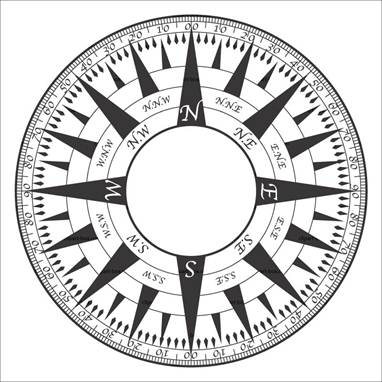
Last night at my favorite restaurant (Jyoti Bihanga), my mom asked if there was some sort of rule for capitalizing directional adjectives and nouns, such as East Coast or the Midwest. I have a few general rules, but even the Chicago Manual of Style is a little vague. Hopefully some of these (edited) guidelines and examples from the CMOS will help.
Rule 1:
The first rule of Fight Club is: You do not talk about Fight Club.

Rule 2:
Compass points and terms derived from them are lowercased if they simply indicate direction or location.
Examples:
pointing toward the north; a north wind; a northern climate
to fly east; an eastward move; in the southwest of France; southwesterly

Rule 3:
Terms that denote regions of the world or a particular country are often capitalized, as are a few of the adjectives and nouns derived from such terms.

Examples:
The following examples illustrate not only the principles of the “down style” (the sparing use of capital letters) but also variations based on context and usage.

[KC – After reviewing this list, I think it would be easier to say there aren’t really any rules. Some of these things seem fairly random. If you plan on writing any geography reports or non-fiction books about different wars, you may just
want to keep this list nearby.]

the Swiss Alps; the Australian Alps; the Alps; an Alpine village (if in the European or Australian Alps); Alpine skiing; but alpine pastures in the Rockies
Antarctica; the Antarctic Circle; the Antarctic Continent
the Arctic; the Arctic Circle; Arctic waters; a mass of Arctic air (but lowercased when used metaphorically, as in “an arctic stare”)
Central America, Central American countries; central Asia; central Illinois; central France; central Europe (but Central Europe when referring to the political division of World War I)
the continental United States; the continent of Europe; but on the Continent (used to denote mainland Europe); Continental cuisine; but continental breakfast
the East, eastern, an easterner (referring to the eastern part of the United States or other country); the Eastern Seaboard (or Atlantic Seaboard), East Coast (referring to the eastern United States); the East, the Far East, Eastern (referring to the Orient and Asian culture); the Middle East (or, formerly more common, the Near East), Middle Eastern (referring to Iran, Iraq, etc.); the Eastern Hemisphere; eastern Europe (but Eastern Europe when referring to the post–World War II division of Europe); east, eastern, eastward, to the east (directions)
the equator; equatorial climate; the Equatorial Current; Equatorial Guinea (formerly Spanish Guinea)
the Great Plains; the northern plains; the plains (but Plains Indians)
the Midwest, midwestern, a midwesterner (as of the United States)
the North, northern, a northerner (of a country); the North, Northern, Northerner (in American Civil War contexts); Northern California; North Africa, North African countries, in northern Africa; North America, North American, the North American continent; the North Atlantic, a northern Atlantic route; the Northern Hemisphere; the Far North; north, northern, northward, to the north (directions)
the Northeast, the Northwest, northwestern, northeastern, a northwesterner, a northeasterner (as of the United States); the Pacific Northwest; the Northwest Passage
the poles; the North Pole; the North Polar ice cap; the South Pole; polar regions (see also Antarctica; the Arctic)
the South, southern, a southerner (of a country); the South, Southern, a Southerner (in American Civil War contexts); the Deep South; Southern California; the South of France (region); Southeast Asia; South Africa, South African (referring to the Republic of South Africa); southern Africa (referring to the southern part of the continent); south, southern, southward, to the south (directions)
the Southeast, the Southwest, southeastern, southwestern, a southeasterner, a southwesterner (as of the United States)
the tropics, tropical; the Tropic of Cancer; the Neotropics, Neotropical (of the New World biogeographical region); the subtropics, subtropical
the Upper Peninsula (of Michigan); the upper reaches of the Thames
the West, western, a westerner (of a country); the West Coast; the West, Western (referring to the culture of the Occident, or Europe and the Western Hemisphere); west, western, westward, to the west (directions)

Rule 4:
For terms not included here or for which no suitable analogy can be made, consult the Merriam-Webster dictionary.

If an otherwise generic term is not listed there (either capitalized or, for dictionary entries, with the indication capitalized next to the applicable subentry), opt for lowercase. Note that exceptions based on specific regional, political, or historical contexts are inevitable.

Kara Church
Senior Technical Editor
619-542-6773 | Ext: 766773
www.symitar.com

0

NOTICE: This electronic mail message and any files transmitted with it are intended
exclusively for the individual or entity to which it is addressed. The message,
together with any attachment, may contain confidential and/or privileged information.
Any unauthorized review, use, printing, saving, copying, disclosure or distribution
is strictly prohibited. If you have received this message in error, please
immediately advise the sender by reply email and delete all copies.
Posted by: Jack Henry | July 30, 2013

Editor’s Corner: Colon Q&A

Here’s a Q&A about using colons in the middle of a sentence, brought to you by BizWritingTip.
Question: We are having a debate in the office as to whether you can use a colon after the word “including” in the middle of a sentence. Can you please help us?
Answer:A colon signals to the reader that an explanation follows. You can only use a colon if a complete sentence precedes it.

  • Example (incorrect)
    Our trip covers many countries including: England, France, and Germany.

    Explanation
    The words before the colon (Our trip covers many countries including…) do not form a complete sentence. You cannot use a colon.

  • Example (correct – without a colon)
    Our trip covers many countries including England, France, and Germany.

    Explanation
    The words form a complete sentence and do not require any punctuation after including.

  • Example (correct)
    Our trip covers many countries: England, France, and Germany.

    Explanation
    By omitting the word including, you have a complete sentence.

Contest Reminder
Don’t forget—we’re having a contest to get more folks to read the Editor’s Corner. For those of you who’ve already participated online and entered a Mad Lib, I will be sending your “story” to you. In August, the writer of the funniest contribution will win a prize. Full details are on JHA Today under Editor’s Corner Contest (July 25, 2013).

Kara Church
Senior Technical Editor
619-542-6773 | Ext: 766773
www.symitar.com

0

NOTICE: This electronic mail message and any files transmitted with it are intended
exclusively for the individual or entity to which it is addressed. The message,
together with any attachment, may contain confidential and/or privileged information.
Any unauthorized review, use, printing, saving, copying, disclosure or distribution
is strictly prohibited. If you have received this message in error, please
immediately advise the sender by reply email and delete all copies.

« Newer Posts - Older Posts »

Categories
