Posted by: Jack Henry | August 26, 2014

Editor’s Corner: Function and Functionality

Now here are two words that know how to cause trouble: function and functionality. One of our savvy readers asked me about these two words the other day and provided several examples from JHA documentation. She wanted to know which word was correct in the different situations. Ah, this is one of those questions I’ve been dreading. Why? Because it is another case of taking some perfectly decent nouns (function, role, purpose, process, etc.), replacing those words with a word that is 1) longer, 2) almost exactly the same word, 3) more vague—and then overusing the word until editors everywhere go bald from trichotillomania.

Here are the definitions of function and functionality that apply to our circumstances (from Merriam-Webster):

· function (noun)

The action for which a person or thing is specially fitted, used, or responsible or for which a thing exists: the activity appropriate to the nature or position of a person or thing: role, duty, work. [KC – Other synonyms include: purpose, job, task, process.]

· functionality (noun)

The quality, state, or relation of being functional: utility, interrelation. [KC – Other synonyms include: usefulness, purpose, use, performance, range of capabilities.]

Yes, they are both real words. Yes, you can use both of them. But please, before you opt for sounding fancy, look at the definitions and synonyms for both words. Ask yourself:

· Which word fits my situation the best?

· Which word provides the most clarity?

· Is there a synonym that fits even better?

And please, for the love of all that is sacred and holy, don’t use it more than once per sentence or paragraph. Your editors thank you.

Thanks to Jolie L. for the grammar humor!

Kara Church

Technical Editor, Advisory

Posted by: Jack Henry | August 26, 2014

Nifty Nuggets: Verb Tense

Per the JHA Style Guide for Technical Communication and Training, use the present tense rather than the future tense for documentation.

  • Example
  • Incorrect:
    • This parameter will allow you to change an alternate rate for FDIC insurance on accounts with a balance in excess of the maximum.
    • When you press Enter, a warning message will appear.
    • This enhancement will add additional editing options to the PowerOn Deluxe Editor.
  • Correct:
    • This parameter allows you to charge an alternate rate for FDIC insurance on accounts with a balance in excess of the maximum.
    • When you press Enter, a warning message appears.
    • This enhancement adds additional editing options to the PowerOn Deluxe Editor.

Thank you,

Jackie Solano

Technical Writer, Episys Technical Publications

Symitar®

8985 Balboa Avenue

San Diego, California 92123

Direct Line: 619-542-6711

NOTICE: This electronic mail message and any files transmitted with it are intended
exclusively for the individual or entity to which it is addressed. The message,
together with any attachment, may contain confidential and/or privileged information.
Any unauthorized review, use, printing, saving, copying, disclosure or distribution
is strictly prohibited. If you have received this message in error, please
immediately advise the sender by reply email and delete all copies.


Posted by: Jack Henry | August 25, 2014

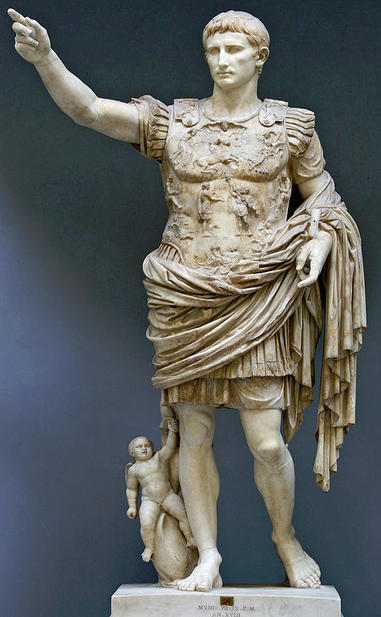
Editor’s Corner: August and Augustus

I can hardly resist the mix of Roman history and the etymology of words—throw in the mention of unlucky circus clowns and I am hooked! Today’s tidbit is about August, from Dictionary.com.

Which Overachiever is August Named For?

…August is the eighth month of the Gregorian calendar, and the sixth month of the Roman calendar. Its original name was Sextilus, Latin for “sixth month.” In 8 BCE, the month was named in honor of Augustus Caesar, the first Roman emperor.

The emperor was a man of many names. He was born Gaius Octavius, the grandnephew of Julius Caesar. He took the extended name Gaius Julius Caesar Octavianus in 44 after Caesar’s assassination. Though in English texts, he was often referred to simply as Octavian. Then in 31, he defeated Mark Antony and Cleopatra to gain control over the empire. Finally in 27, when he was named emperor, he was given the honorary title Augustus.

When we describe something as august, we are saying it is majestic and inspires reverence or admiration. The word can also take the form of an adverb (augustly) and a noun (augustness). August also relates to augury, the act of divination (telling the future), particularly by the behavior of birds and animals and the examination of their entrails and other parts. Augurs were the official Roman soothsayers, whose job was not to tell the future so much as to determine if the Roman gods approved of a planned course of action.

August is cause for great celebration in Korea, India, Pakistan, and Indonesia. It is the month when all four countries became independent. And here’s a usage not heard often: an auguste (or august) is a “type of circus clown who usually wears battered ordinary clothes and is habitually maladroit or unlucky.” May your August be filled with favorable omens and devoid of unlucky circus clowns.

Kara Church

Technical Editor, Advisory

Posted by: Jack Henry | August 22, 2014

Editor’s Corner: Painfully Bad Analogies

Hi folks!

It’s the Friday before the Symitar Educational Conference and things are hopping here! Since the Symitar Technical Publications and Education departments are tied together, the editors, writers, and education staff will be busy helping in classrooms, ushering at the conference, staffing our community booth, and doing whatever is necessary to make things run smoothly. There is a good chance that it will not involve writing a daily column. J

I was hoping to have my new mondegreen (misheard song lyrics) books so I could share something fun with you today; alas, I think they are being walked here from Maine by a sick donkey. Instead, I did a search for “fun with language” and came up with these “Painfully Bad Analogies” from the Washington Post. Hopefully they will provide some entertainment. The full list is here.

· He fell for her like his heart was a mob informant and she was the East River. (Brian Broadus, Charlottesville)

· The plan was simple, like my brother-in-law Phil. But unlike Phil, this plan just might work. (Malcolm Fleschner, Arlington)

· She grew on him like she was a colony of E. coli and he was room-temperature Canadian beef. (Brian Broadus, Charlottesville)

· Shots rang out, as shots are wont to do. (Jerry Pannullo, Kensington)

· He was as lame as a duck. Not the metaphorical lame duck, either, but a real duck that was actually lame. Maybe from stepping on a land mine or something. (John Kammer, Herndon)

· It was an American tradition, like fathers chasing kids around with power tools. (Brian Broadus, Charlottesville)

· The dandelion swayed in the gentle breeze like an oscillating electric fan set on medium.
(Ralph Scott, Washington)

· He was deeply in love. When she spoke, he thought he heard bells, as if she were a garbage truck backing up. (Susan Reese, Arlington)

· She walked into my office like a centipede with 98 missing legs. (Jonathan Paul, Garrett Park)

· Her voice had that tense, grating quality, like a first-generation thermal paper fax machine that needed a band tightened. (Sue Lin Chong, Washington)

· Her face was a perfect oval, like a circle that had its two other sides gently compressed by a ThighMaster. (Sue Lin Chong, Washington)

Kara Church

Technical Editor, Advisory

619-542-6773 | Ext: 766773

www.symitar.com

NOTICE: This electronic mail message and any files transmitted with it are intended
exclusively for the individual or entity to which it is addressed. The message,
together with any attachment, may contain confidential and/or privileged information.
Any unauthorized review, use, printing, saving, copying, disclosure or distribution
is strictly prohibited. If you have received this message in error, please
immediately advise the sender by reply email and delete all copies.
Posted by: Jack Henry | August 21, 2014

Nifty Nuggets: “End-of” Terms

Here is another guideline update from the JHA Style Guide for Technical Communication and Training to remember when writing about end-ofterms.

· Always hyphenate end-of-year, end-of-quarter, end-of-month, and end-of-day. Although not in the style guide, also hyphenate year-end, quarter-end, and month-end.

· Use the acronyms EOY, EOQ, EOM, and EOD to abbreviate these terms as needed. Please spell out the term unless there is a spacing issue.

Thank you,

Jackie Solano

Technical Writer, Episys Technical Publications

Symitar®

8985 Balboa Avenue

San Diego, California 92123

Direct Line: 619-542-6711

NOTICE: This electronic mail message and any files transmitted with it are intended
exclusively for the individual or entity to which it is addressed. The message,
together with any attachment, may contain confidential and/or privileged information.
Any unauthorized review, use, printing, saving, copying, disclosure or distribution
is strictly prohibited. If you have received this message in error, please
immediately advise the sender by reply email and delete all copies.

Posted by: Jack Henry | August 20, 2014

Editor’s Corner: Cat’s-paws and Onomasticons

Good morning! Over the past couple of months, I’ve collected a few “words of the day” that I thought were interesting for one reason or another. Today I thought I’d share them with you, along with their definitions, quotes using the words, and the words’ origins. These are all courtesy of Dictionary.com.

Note: I’ve reformatted these to make them a little easier to read, but saved the punctuation and lowercase letters at the beginning of the numbered lists. I’ve also put them in alphabetical order rather than the order in which they were published as “Word of the Day.”

cat’s-paw

noun

1. a person used to serve the purposes of another; tool.

2. Nautical.

a. a hitch made in the bight of a rope so that two eyes are formed to hold the hook of one block of a tackle.

b. a light breeze that ruffles the surface of the water over a comparatively small area.

c. the small area ruffled by such a breeze.

Quote:

I found out later what he’d done — used me for a cat’s-paw to keep this company I’d bought from selling out to someone else and spoiling another deal he had on the fire.

My apologies. I don’t usually send out two things in one day, but a handful of people have pointed out a typo and that my examples aren’t very good, so I am sending this with updated examples that will hopefully help you rather than hinder your learning!

· Third, consider these rules for the verbs you use with the either/or and neither/nor pairs:

· When both elements are singular, use a singular verb.

o Either LeBron James or Kobe Bryant was here; I saw a size 16 shoeprint on the doorstep. (LeBron James and Kobe Bryant are singular, so the singular verb “was” is used.)

o Neither Rocky nor Leo knows how to fix a flat tire. (Rocky and Leo are singular, so the singular verb “knows” is used.)

· When one element is plural, use a plural verb.

o Either your father or his friends are going to clean up the beer and peanuts. (Friends is plural, so the verb “are” is used.)

o Neither my brother nor my grandfathers have hair. (Grandfathers is plural, so the verb “have” is used.)

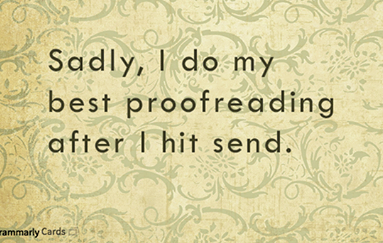
Thanks to eagle-eyed grammarians Mary F., Kathy M., June T., Mark W., Jon H., and James H. for being the fastest to point out my email’s earlier shortcomings. I hope these examples are better. And now, it is the perfect time for this message from Grammarly Cards:

Kara Church

Technical Editor, Advisory

619-542-6773 | Ext: 766773

www.symitar.com

NOTICE: This electronic mail message and any files transmitted with it are intended
exclusively for the individual or entity to which it is addressed. The message,
together with any attachment, may contain confidential and/or privileged information.
Any unauthorized review, use, printing, saving, copying, disclosure or distribution
is strictly prohibited. If you have received this message in error, please
immediately advise the sender by reply email and delete all copies.

Posted by: Jack Henry | August 19, 2014

Editor’s Corner: Let’s Call the Whole Thing Off

Fred Astaire and Ginger Rogers sang it, danced it, and skated it; Ella Fitzgerald and Louis Armstrong took it to another level when they crooned the argument about who says toe-MAY-toe and who says toe-MAH-toe—but we’re here to talk about either and neither today. No matter how you say them, here are a few tips on these words and their pals “or” and “nor.”

· First, remember this mantra:

Either/or, neither/nor

Either/or, neither/nor

· Second, look at when to use them:

The either/or pair is used for positive, affirmative situations, when there is a choice between two possibilities. For example:

· You can have either the sapphire tiara or the aquamarine tiara.

· We can either swim or sail, but we don’t have time for both.

The neither/nor pair is used in a negative sense (think neither/nor—negative) to show that two things are not true. For example:

· Neither business nor pleasure brought Mr. Bond to the Poconos; he was there to fight.

· I find neither mountains nor molehills much of an obstacle.

· Third, consider these rules for the verbs you use with the either/or and neither/nor pairs:

· When both elements are singular, use a singular verb.

o Either the dog or the cat can stay in the garage. (Dog and cat are singular, so the singular verb “can” is used.)

o Neither Rocky nor Leo knows how to fix a flat tire. (Rocky and Leo are singular, so the singular verb “know” is used.)

· When one element is plural, use a plural verb.

o Either your father or his friends are going to clean up the beer and peanuts. (Friends is plural, so the verb “are” is used.)

o Neither the basketball nor the soccer balls came filled with air. (Balls is plural, so the verb “came” is used.)

Kara Church

Technical Editor, Advisory

619-542-6773 | Ext: 766773

www.symitar.com

NOTICE: This electronic mail message and any files transmitted with it are intended
exclusively for the individual or entity to which it is addressed. The message,
together with any attachment, may contain confidential and/or privileged information.
Any unauthorized review, use, printing, saving, copying, disclosure or distribution
is strictly prohibited. If you have received this message in error, please
immediately advise the sender by reply email and delete all copies.
Posted by: Jack Henry | August 19, 2014

Nifty Nuggets: Log on/Logon/Sign in

Per the JHA Style Guide for Technical Communication and Training:

  • You may use log on and Log on to to refer to creating a user session. To describe ending a user session, use log off or log off from.
    • Do not use log in, login, log onto, logout, or log off of.
    • You may deviate from this rule if necessary to follow the software interface.
  • You may also use sign in and sign in to to refer to creating a user session. To describe ending a user session, use sign out.
    • Do not use sign on, sign into, or sign off.
    • You may deviate from this rule if necessary to follow the software interface.
  • The verb from of log on is two words, while the noun and adjectives are one word without a hyphen.

Examples:

o Create a logon name.

o Log onto your account.

Thank you,

Jackie Solano

Technical Writer, Episys Technical Publications

Symitar®

8985 Balboa Avenue

San Diego, California 92123

Direct Line: 619-542-6711

NOTICE: This electronic mail message and any files transmitted with it are intended
exclusively for the individual or entity to which it is addressed. The message,
together with any attachment, may contain confidential and/or privileged information.
Any unauthorized review, use, printing, saving, copying, disclosure or distribution
is strictly prohibited. If you have received this message in error, please
immediately advise the sender by reply email and delete all copies.

Posted by: Jack Henry | August 18, 2014

Editor’s Corner: Does Grammar Really Matter?

Today’s Editor’s Corner is an excerpt from Quick & Dirty Tips (Grammar Girl), written by guest blogger Martha Brockenbrough (author of the book Things That Make Us [Sic]. The question of the day is “Does Grammar Really Matter?” Here are Ms. Brockenbrough’s reasons for why it does.

Getting a Job

It matters, for example, when you’re applying for a job. In one survey of hiring managers, 75 percent said it was worse for an applicant to have a spelling or grammar error on his application than for him to show up late or—get this—swear during an interview. Holy bleep.

Keeping a Job

It continues to matter when you’ve landed that job. Remember the fictional TV lawyer Ed? He lost his job in a Manhattan law firm because of a misplaced comma in a contract. Just in case you think this sort of thing only happens on TV, think again. A utility company in Canada had to pay an extra $2.13 million in 2006 to lease power poles because someone stuck a comma in the wrong spot.

Staying Out of Jail

Grammar matters even if you have an illegal job. A bank robber once got nabbed, in part, because he spelled "money" M-U-N-Y. The bank teller realized the man was such an idiot, he could be tricked into robbing the bank across the street—where police summoned by the teller were waiting.

And get this: A woman who killed her husband and then wrote notes to the police was caught in part because of her tendency to misuse dashes and quotation marks. All police had to do was compare her regular correspondence to the anonymous taunts sent to the police and they had a powerful piece of evidence against her.

Finding Love

Grammar also matters if you’re looking for love. Raise your hand if you’d want to go out with someone whose personal ad contains spelling and grammar errors. That’s right. It’s a turnoff. It’s the equivalent of having spinach in your teeth, or having the zipper on your jeans undone. [KC – I’m not sure I’d put
any of these things in the same category.]

Understanding Appropriateness

Speaking of jeans, grammar and clothing have a lot in common.

Let’s say you see a man in a Speedo. Are you at the beach? Let’s hope so. If he’s wearing a Speedo on public transportation, the man’s probably a lunatic. [KC – In some countries, this is just called “confident.”] At the very least, you don’t want to sit next to him on the bus.

In just the same way, using the wrong kind of language in the wrong place can send some pretty nutty messages.

Let’s say you sent your company president e-mail and you used the number 2 as shorthand for "to." Essentially, you’re saying, "I don’t need that raise this year after all. In fact, I might not really even need this job."

That doesn’t mean you can never use shortcuts like this. Even though people who love grammar are less likely to do so, it’s fine to save your thumbs when you’re texting. It’s all about context.

You don’t wear a Speedo or other super-abbreviated forms of pants on the bus. Likewise, you don’t use really abbreviated language where it doesn’t belong.

Of course, you know this already, you with your pants carefully zipped, you with your shirt covering your navel.

Getting and Giving Respect

You know that being grammatical isn’t just about following the rules like some sort of robot. It’s about paying attention to context. It’s using language that’s most likely to be understood. It’s about sending a message that will be met with respect, just as it shows respect.

So thank you for caring—and good luck out there.

For the full article and surrounding info from Mignon Fogarty, see Grammar Girl’s website.

Kara Church

Technical Editor, Advisory

619-542-6773 | Ext: 766773

www.symitar.com

NOTICE: This electronic mail message and any files transmitted with it are intended
exclusively for the individual or entity to which it is addressed. The message,
together with any attachment, may contain confidential and/or privileged information.
Any unauthorized review, use, printing, saving, copying, disclosure or distribution
is strictly prohibited. If you have received this message in error, please
immediately advise the sender by reply email and delete all copies.

« Newer Posts - Older Posts »

Categories